With the arrival of Trench Crusade 1.0, our team finally has the chance to look across the full game and dive in deep on each of the factions -- representing both the armies battling to save the world from the forces of Hell, and those very forces themselves. In this article, we'll be looking at the armies of the fallen. We've also taken a
look at the faithful factions here, and
the core rules in their own piece.
We'd like to thank Factory Fortress, Inc., for providing us with a review copy of these rules.
Heretic Legion
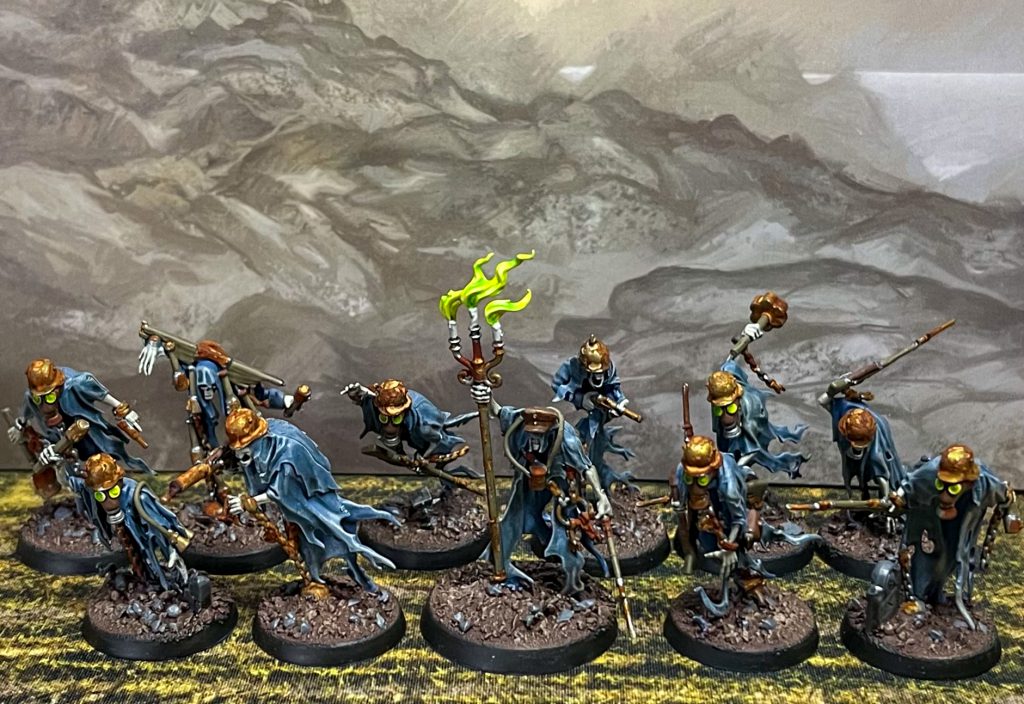 Trench Crusade, Trench Ghost Warband - Credit: Bair
The Heretic Legion represents the myriad of mortals aligned with Hell in their war against Heaven. They take many forms and hail from many different parts of the world, but what is consistent is their hatred for the divine. They employ some mundane weaponry like machine guns and grenades but are also aided with hellforged artifice like the Artillery Witch and War Wolf.
Heretic Legion are a generalist faction who can do a little bit of everything. They tend to skew more elite than something like New Antioch and have some more specialized tools like the War Wolf and the Artillery Witch, but generally speaking if there’s a way you want to play Heretics can do it.
Unit wise, you’ll always be taking the Heretic Priest who has +2 dice in ranged and melee, TOUGH and the powerful Puppet Master ability which allows you to move your opponent’s models D6”, potentially into harm's way. Your other elite options are the Cloister, a powerful melee debuff piece that causes all nearby actions to be harder and the Death Commando, an infiltrating sneaky precision killer.
Your more rank and file models are no less interesting. The Artillery Witch, perhaps the most iconic model in the game, throws bombs summoned from the factories of hell at your enemies. She makes for a very strong piece to apply early pressure on your opponent and when you reach the point in your campaign where you can take two, you can truly rain hell on your opponent. Meanwhile your big guy is the War Wolf, a heavily armored, fast as hell, melee unit that can rip enemy heavy armor to shreds. He’s pretty simple in how he operates but is very effective.
Your normal men come in two flavors: Infernal Heavy Infantry and Heretic Troopers. The heavy infantry get STRONG and always have Reinforced Armor, making them reliable anchors who can perform in any context. Troopers meanwhile are just rank and file idiots who have access to most of the armory. You can upgrade up to half of them to be Legionaires, which lets them specialize a bit.
In addition to having access to most of the default armoury picks, the Heretic Legion also gets a set of bespoke gear. The Blasphemous Staff has the FIRE keyword and helps you perform some of your more non standard actions, perfect for helping a Heretic Priest with their Puppet Master ability. The Sacrificial Dagger is the perfect tool for your Cloister, giving them +2 to their Injury roll in exchange for the attacks being RISKY. The Tartarus Claws let you do your best Wolverine impression, giving you an extra attack and allowing you to fight again if you down your initial target. Lastly, the Hellblade is a great melee weapon to grab late game when you’ve got some Glory in your roster, giving you +1 Injury Dice and the FIRE keyword.
If you wanna focus more on just dudes, you can skew into the Naval Raiders subfaction. This warband doesn’t allow you to take War Wolves and limits your Heavy Infantry and Artillery Witches but in exchange your whole army gets +1 Dice to Dash rolls and can buy Submachine guns for 25 Ducats. These may seem like small bonuses but these are incredibly strong for giving you command of the table and allowing you to put the hurt on some losers.
Meanwhile if you want to go more elite, you can do a Knights of Avarice warband. Every model in the warband needs to be worth at least 80 Ducats and you can’t use any weapons that have the Fire or Shrapnel keywords since they might damage the loot. This warband is a more dramatic change from vanilla Heretic Legion, coming with its own set of armory picks and the ability to add Goetic Warlocks to your army for Ducats.
Even more dramatic of a shift is the Trench Ghost warband. You can’t take any War Wolves or Artillery Witches, you can’t take mercenaries, and your entire warband dashes on a D3. In exchange all your models are tougher at range, you can take living bombs, and the ability to get tank armor for your Heretic Priest. It's a very different way to play the faction, but one well worth exploring.
Trench Crusade, Trench Ghost Warband - Credit: Bair
The Heretic Legion represents the myriad of mortals aligned with Hell in their war against Heaven. They take many forms and hail from many different parts of the world, but what is consistent is their hatred for the divine. They employ some mundane weaponry like machine guns and grenades but are also aided with hellforged artifice like the Artillery Witch and War Wolf.
Heretic Legion are a generalist faction who can do a little bit of everything. They tend to skew more elite than something like New Antioch and have some more specialized tools like the War Wolf and the Artillery Witch, but generally speaking if there’s a way you want to play Heretics can do it.
Unit wise, you’ll always be taking the Heretic Priest who has +2 dice in ranged and melee, TOUGH and the powerful Puppet Master ability which allows you to move your opponent’s models D6”, potentially into harm's way. Your other elite options are the Cloister, a powerful melee debuff piece that causes all nearby actions to be harder and the Death Commando, an infiltrating sneaky precision killer.
Your more rank and file models are no less interesting. The Artillery Witch, perhaps the most iconic model in the game, throws bombs summoned from the factories of hell at your enemies. She makes for a very strong piece to apply early pressure on your opponent and when you reach the point in your campaign where you can take two, you can truly rain hell on your opponent. Meanwhile your big guy is the War Wolf, a heavily armored, fast as hell, melee unit that can rip enemy heavy armor to shreds. He’s pretty simple in how he operates but is very effective.
Your normal men come in two flavors: Infernal Heavy Infantry and Heretic Troopers. The heavy infantry get STRONG and always have Reinforced Armor, making them reliable anchors who can perform in any context. Troopers meanwhile are just rank and file idiots who have access to most of the armory. You can upgrade up to half of them to be Legionaires, which lets them specialize a bit.
In addition to having access to most of the default armoury picks, the Heretic Legion also gets a set of bespoke gear. The Blasphemous Staff has the FIRE keyword and helps you perform some of your more non standard actions, perfect for helping a Heretic Priest with their Puppet Master ability. The Sacrificial Dagger is the perfect tool for your Cloister, giving them +2 to their Injury roll in exchange for the attacks being RISKY. The Tartarus Claws let you do your best Wolverine impression, giving you an extra attack and allowing you to fight again if you down your initial target. Lastly, the Hellblade is a great melee weapon to grab late game when you’ve got some Glory in your roster, giving you +1 Injury Dice and the FIRE keyword.
If you wanna focus more on just dudes, you can skew into the Naval Raiders subfaction. This warband doesn’t allow you to take War Wolves and limits your Heavy Infantry and Artillery Witches but in exchange your whole army gets +1 Dice to Dash rolls and can buy Submachine guns for 25 Ducats. These may seem like small bonuses but these are incredibly strong for giving you command of the table and allowing you to put the hurt on some losers.
Meanwhile if you want to go more elite, you can do a Knights of Avarice warband. Every model in the warband needs to be worth at least 80 Ducats and you can’t use any weapons that have the Fire or Shrapnel keywords since they might damage the loot. This warband is a more dramatic change from vanilla Heretic Legion, coming with its own set of armory picks and the ability to add Goetic Warlocks to your army for Ducats.
Even more dramatic of a shift is the Trench Ghost warband. You can’t take any War Wolves or Artillery Witches, you can’t take mercenaries, and your entire warband dashes on a D3. In exchange all your models are tougher at range, you can take living bombs, and the ability to get tank armor for your Heretic Priest. It's a very different way to play the faction, but one well worth exploring.
Notable Changes
Artillery Witch: The bombs the artillery witch now work based on the new keywords, basically ignoring everything and using the Blast and Scatter rules. They also gained the ability to force models caught in the blast to move, allowing you to use the Artillery Witch as more of a utility piece.
Trench Ghosts: Sarcophagus Mines are now reworked to auto explode if something comes near and blow up on an action on their turn if they want. The Tank Palanquin can now not be knocked down, which combos with tough in some wild ways, but can only charge +D3”.
Black Grail
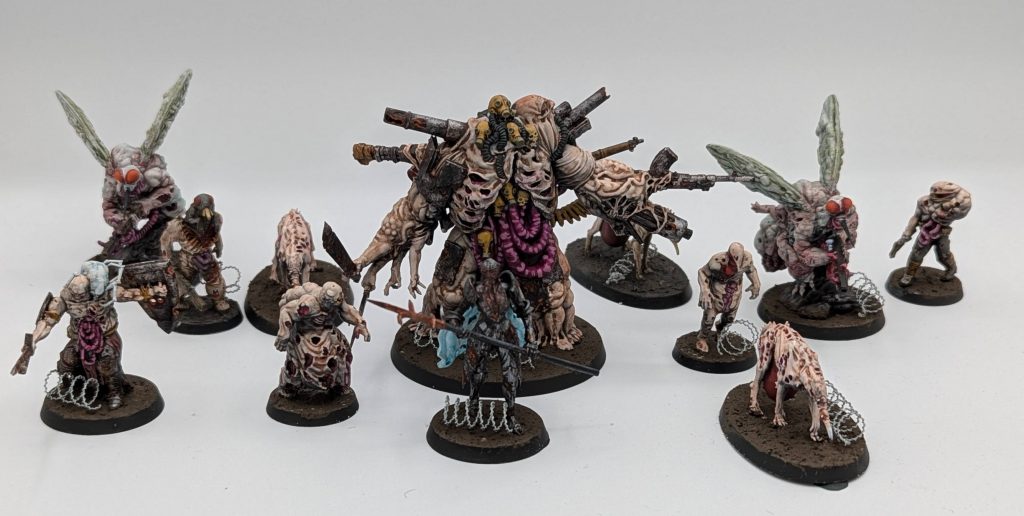 Credit: MildNorman
All the forces of Hell conduct their war against Heaven in their own way, but none are more splintered from the main offensive as the forces of Beelzebub. The Black Grail represents the putrecent diseased forces belonging to the Lord of the Flies in his fight to destroy life itself. Some, like the Plague Knights and the Lord of Tumors submit themselves to his service willingly. Others like Grail Thralls and Fly Thralls are simply what happens when a person is exposed to the plagues of Beelzebub and somehow don’t die. Still more like the Amalgam and Heralds of Beelzebub are reanimated corpse matter, given animus in a pale parody of life itself. If words like “ichor,” “pus,” “putrescence,” or “goop” are appealing to you, Black Grail might be something you find interesting.
Play wise the Black Grail are a heavily specialized warband. Each model has a very specific role to play and very few are generalists. Overall they’re tough thanks to the Unholy Resilience rule which gives them -1 Dice for Injury Rolls and melee focused with very few bonuses to ranged being present in the army.
They also get the
Credit: MildNorman
All the forces of Hell conduct their war against Heaven in their own way, but none are more splintered from the main offensive as the forces of Beelzebub. The Black Grail represents the putrecent diseased forces belonging to the Lord of the Flies in his fight to destroy life itself. Some, like the Plague Knights and the Lord of Tumors submit themselves to his service willingly. Others like Grail Thralls and Fly Thralls are simply what happens when a person is exposed to the plagues of Beelzebub and somehow don’t die. Still more like the Amalgam and Heralds of Beelzebub are reanimated corpse matter, given animus in a pale parody of life itself. If words like “ichor,” “pus,” “putrescence,” or “goop” are appealing to you, Black Grail might be something you find interesting.
Play wise the Black Grail are a heavily specialized warband. Each model has a very specific role to play and very few are generalists. Overall they’re tough thanks to the Unholy Resilience rule which gives them -1 Dice for Injury Rolls and melee focused with very few bonuses to ranged being present in the army.
They also get the Infection Marker
special rule. Infection Markers
operate similarly to Blood Markers but they tick up every time the model they’re placed next to activates. They also can’t be healed the same way a lot of Blood Markers can, making a lot of your opponent’s methods for dealing with damage ineffective.
You have a few options for elites. Your leader can either be a Lord of Tumors, or you can bring an extra Plague Knight to be in charge of your warband. The Lord of Tumors is a hyper elite piece, with STRONG, TOUGH and a staggering +4 Dice in melee he’s a force to be reckoned with. If you give him no weapons he can fight twice, but with a weapon that does Infection Markers, he always causes a second one. Plague Knights meanwhile are more generalist, there are a few upgrades you can get for them but the most interesting one is Knight of the Rotten Cross which allows them to purchase a weapon from the New Antioch and Heretic Legion armouries and use it. This lets you cook up some really interesting combos when used with Grail Devotees. Lastly, there’s Corpse Guard, who act as bodyguards for other models. They can intercept incoming attacks and can heal when they do infection markers as damage, making them pretty good skirmishers.
The Grail troops are incredibly varied. On the simple end you have Grail Thralls and Fly Thralls. Both are -1 Dice in melee and can’t take any equipment but get bonuses in melee for each nearby friendly model. Grail Thralls get the Unholy Resilience rule where Fly Thralls trade it for the ability to fly. Meanwhile, Heralds are some of the fastest moving units in the game, but simultaneously can’t take any armor and lack Unholy Resilience. They’re fantastic skirmish units, allowing you to pressure your opponent early until your melee front line crashes into them. Speaking of skirmishers, you also have access to Grail Hounds, who are more melee focused fast movers, meant to tie down your opponent early. You can upgrade them to do Infection Markers as damage and enemy units generate Infection Markers by just activating near them, making them a very interesting missile piece. Lastly there’s the big guy, the Amalgam. He’s got six arms and attacks for each weapon he’s equipped with. With no bonuses to hit he’s best used with auto hitting weapons like Corruption Belchers or just as many attacks as possible.
Black Grail also gets its own set of equipment. There are items like the humble Infested Rifle which gets Armor-Piercing or the vile Viscera Cannon, which lets you put Blood Markers on yourself in order to put more on your opponent’s models. The most impactful items here are Devotees, who grant +1 to the injury roll in melee for each one on the model. You can give a model up to two Devotees and for glory you can give a second model up to two Devotees. You’ll want to maximize these early, as they make things like the unarmed Lord of Tumors or a Plague Knight with a Sacrificial Dagger very interesting. The Compound Eyes helmet is also an interesting pick, giving you +1 Dice to hit at ranged.
The issue with the Black Grail armory is there are a lot of ranged weapons but not a lot of models that can use them. This is solved by the subfaction Dirge of the Great Hegemon, which allows Thralls to use ranged weapons and certain equipment. If you want to play a more traditional warband with some neat out of sequence activation tricks, this subfaction is for you.
Notable Changes
- Lord of Tumors: The Lord of Tumors no longer automatically does an infection marker in melee and with his unarmed attacks. You now have to decide if you want either two attacks or you can give him a weapon that does Infection Markers to double them up. According to our math, there’s an interesting pick between a LoT with 2 devotees vs a LoT with a shield and Beelzebub’s axe. One is more consistent and can do some nasty bloodbath shenanigans with Gas Grenades, where the other is more reliably killy in a vacuum with very little set up.
- Devotees: You can now purchase devotees with ducats as you did before, but then purchase up to two more with Glory on another model. This may seem like a small change but it fully changes list calculus for Black Grail warbands, enabling Rotten Cross knights while also allowing you to juice up your Lord of Tumors. The trade off is they now only work in melee, this removes a few important combos that the faction had before and means you'll need to now focus on melee to seal the deal.
- Parasite Grenades: Parasite Grenades no longer are blocked by IMMUNE TO FEAR. This makes their utility much more interesting, but I don’t think they override just how good Gas Grenades are.
Court of the Seven-Headed Serpent
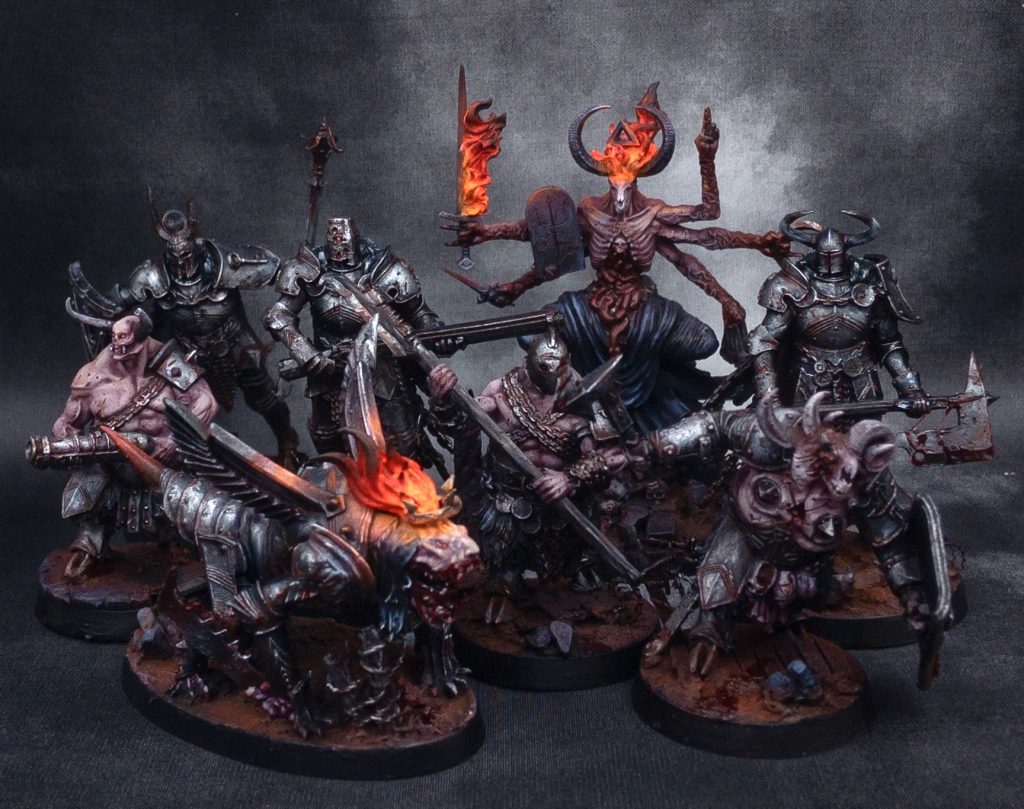 Credit: darius_minis
The demonic forces that are confined within Hell desire nothing more than to blight God’s land and unleash untold suffering. Yet, the covenant of Heaven and Hell prevents true demons from soiling the world, for if they should set foot upon its once green pastures, the retribution of God awaits them. However, demons are cunning creatures and have found ways to circumvent the pact by mixing with creatures of the earth, thus allowing them to walk freely and fight in the name of their associated Arch-Devil. The Serpent is truly a sneaky snake.
Gameplay-wise, you’re almost always going to be outnumbered, doubly so as a good chunk of your units are going to be weaker fodder hidden away to be tortured (that’ll make sense later), but your important units can more than make up for it. Many within the Court of the Seven-Headed Serpent are some of the most stacked units in the game, with high attack and defensive stats and a plethora of abilities that keep those units around for as long as possible. You can also recruit from four Elite models, instead of the usual three seen with other vanilla factions. So, when it comes to campaign play, you can potentially collect experience and skills for more Elites, more quickly. The defining characteristic of the Court is its ability to cast Goetic Spells. As the name suggests, it allows the caster to cast spells through the use of Blood Markers. Taken from non-demonic friends or foes, they fuel magical abilities that have a wide range of effects. Some are damaging spells, some are defensive, and some are more focused on movement or board control. Spells are bought like upgrades, and the spells that you can choose from vary depending on your chosen Sin, with some general spells on top. A change you will see in 1.0 is the inclusion of the Goetic Spell Action. Some spells will use up this “action” once cast, which means that you can no longer use this spell, or another spell that requires a spell action, for the rest of the model’s activation.
Battlekit wise, the Court have some spectacular weapons and armour, such as the deadly Serpent Assault Gun and the dreaded Malabranche Sword. The former is a two-handed gun with a 36” range that has the Assault, Automatic 2 and Gas keywords. Put this on your Praetor whenever possible, and it will do wonders in mowing down your opponents. The Malabranche Sword is also another amazing choice to give your Praetor, but also your Desecrated Saint. Simply put, it’s an attack that acts in the same way as a Bloodbath, granting a +1 Dice to your pool, but adding the result of all three together. Other great melee weapons from the Court Battlekit are the Headtaker and the Hellblade. The former grants +2 injury modifier as long as the target has not yet activated (your Hunter of the Left-Hand Path will love this), and the latter grants +1 Injury Dice and the Fire Keyword. If you like your ranged weapons unique, then the Ophidian Rifle is just for you. Instead of gaining -1 Dice when attacking at long-range or against an enemy in cover, you instead gain +1 Dice. So shooting an enemy at long-range and in cover gives you a +2 Dice to that attack roll!
When it comes to the roster, your Elites are essentially going to be the models that the rest of the warband revolves around. Starting with the Praetor, this behemoth rocks a +3 in both melee and ranged, as well as Strong, Tough and Fear, and access to up to two Goetic Spells. Add an 8” movement with Fly, and you have a demonic missile that wants to shoot and get into your opponent's face as much as it can. Next up is the Sorcerer, who is another potential leader choice and everyone’s favourite capra conjurer. With “just” a +1 for Ranged attacks, the Sorcerer can select up to 3 spells, but one of them must be their built-in “Blessing of the Serpent Moon” spell, which allows them to reduce incoming injury rolls by one, for each two Blood Markers spent. Slap on some Reinforced Armour and a Trench shield alongside this spell, and you have a somewhat fortified spellcaster. Whilst not a beatstick in the same sense as the Praetor, the Hunter of the Left-Hand Path epitomises the slippery snake aspect of the Court, able to use spells to ignore a killing blow, retreat safely and teleport across the map. The Hunter comes with the Bow of Lethe built into their profile, which provides a versatile means to take out different types of opponents, whether they are heavily armoured or not. Top it off with the Infiltrator keyword, and this guy is going to cause problems for an opponent that is unaware of this unit's capabilities. Lastly, for your Elites, Hell Knights form a solid backbone, as up to three can be taken in your warband. Their +2 in Melee and -2 Impervious Armour thanks to the Infernal Iron Armour means they are fantastic melee powerhouses that your opponent doesn’t want to engage, but will have to deal with them. Whilst lacking any ranged bonus, giving them an Ophidian Rifle can be a great way to make them still effective at range. Couple this with their built-in Goetic Spell, “Blood Magic”, which can give them +1 Injury Dice in melee or range, and you have yourself a versatile killer that is hard to shift.
Troops wise, the power pair that makes The Court function at all are the Yoke Fiend and Wretched. Equipping the former with a torture instrument allows them to hit allies (and by that I mean Wretched primarily) without taking them out of action, and producing twice as many Blood Markers. The torture must continue until morale improves! Getting a couple of Yokes paired with Wretched is going to be the foundation of your Blood Marker economy, which does come at the cost of those units doing little else, outside of hiding far away. It creates a sense of passivity for these units, and they contribute little to the rest of the game, which is disappointing. The Pit Locust combines the fast flying melee attacker of the Praetor, albeit a little less intense, but easier to hide due to its smaller size. Coming with a built-in -2 armour, it can fly up the board with a little more safety. Once it is in melee, though, it can attack twice with no off-hand penalty, and the first attack grants the Shrapnel keyword, meaning it can rack up some Blood Markers pretty reliably. Give it the Crown of Hellfire as well, and you have a means to build up Blood Markers quickly and effectively. Rounding out the roster is another beatstick in the form of the Desecrated Saint, with a +3 in melee and -3 Armour. All this model wants to do is to hit things in melee, mostly because that is what it is best at, but also because it can’t take ranged weapons. All you have to worry about is getting it up the board, as it is the largest model in the game (by official model standards), and it will 100% be attracting every bullet, grenade and flame your opponent has. Luckily, it comes with Tough, so it can take a little punishment, but the sooner it gets into melee, the better. Given the once-divine nature of this unit, with each captured saint typically belonging to an Arch-Devil or Demon Prince associated with a particular Sin, the Saints themselves reflect their unholy masters’ power. Each Saint grants an aura ability depending on which of the Sins your warband belongs to.
The Sin you choose dictates not only the Desecrated Saint’s aura, but what Goetic Spells, powers or other upgrades you can purchase. Let’s take a look at each of the serpent’s heads and see which one you may be tempted by.
Credit: darius_minis
The demonic forces that are confined within Hell desire nothing more than to blight God’s land and unleash untold suffering. Yet, the covenant of Heaven and Hell prevents true demons from soiling the world, for if they should set foot upon its once green pastures, the retribution of God awaits them. However, demons are cunning creatures and have found ways to circumvent the pact by mixing with creatures of the earth, thus allowing them to walk freely and fight in the name of their associated Arch-Devil. The Serpent is truly a sneaky snake.
Gameplay-wise, you’re almost always going to be outnumbered, doubly so as a good chunk of your units are going to be weaker fodder hidden away to be tortured (that’ll make sense later), but your important units can more than make up for it. Many within the Court of the Seven-Headed Serpent are some of the most stacked units in the game, with high attack and defensive stats and a plethora of abilities that keep those units around for as long as possible. You can also recruit from four Elite models, instead of the usual three seen with other vanilla factions. So, when it comes to campaign play, you can potentially collect experience and skills for more Elites, more quickly. The defining characteristic of the Court is its ability to cast Goetic Spells. As the name suggests, it allows the caster to cast spells through the use of Blood Markers. Taken from non-demonic friends or foes, they fuel magical abilities that have a wide range of effects. Some are damaging spells, some are defensive, and some are more focused on movement or board control. Spells are bought like upgrades, and the spells that you can choose from vary depending on your chosen Sin, with some general spells on top. A change you will see in 1.0 is the inclusion of the Goetic Spell Action. Some spells will use up this “action” once cast, which means that you can no longer use this spell, or another spell that requires a spell action, for the rest of the model’s activation.
Battlekit wise, the Court have some spectacular weapons and armour, such as the deadly Serpent Assault Gun and the dreaded Malabranche Sword. The former is a two-handed gun with a 36” range that has the Assault, Automatic 2 and Gas keywords. Put this on your Praetor whenever possible, and it will do wonders in mowing down your opponents. The Malabranche Sword is also another amazing choice to give your Praetor, but also your Desecrated Saint. Simply put, it’s an attack that acts in the same way as a Bloodbath, granting a +1 Dice to your pool, but adding the result of all three together. Other great melee weapons from the Court Battlekit are the Headtaker and the Hellblade. The former grants +2 injury modifier as long as the target has not yet activated (your Hunter of the Left-Hand Path will love this), and the latter grants +1 Injury Dice and the Fire Keyword. If you like your ranged weapons unique, then the Ophidian Rifle is just for you. Instead of gaining -1 Dice when attacking at long-range or against an enemy in cover, you instead gain +1 Dice. So shooting an enemy at long-range and in cover gives you a +2 Dice to that attack roll!
When it comes to the roster, your Elites are essentially going to be the models that the rest of the warband revolves around. Starting with the Praetor, this behemoth rocks a +3 in both melee and ranged, as well as Strong, Tough and Fear, and access to up to two Goetic Spells. Add an 8” movement with Fly, and you have a demonic missile that wants to shoot and get into your opponent's face as much as it can. Next up is the Sorcerer, who is another potential leader choice and everyone’s favourite capra conjurer. With “just” a +1 for Ranged attacks, the Sorcerer can select up to 3 spells, but one of them must be their built-in “Blessing of the Serpent Moon” spell, which allows them to reduce incoming injury rolls by one, for each two Blood Markers spent. Slap on some Reinforced Armour and a Trench shield alongside this spell, and you have a somewhat fortified spellcaster. Whilst not a beatstick in the same sense as the Praetor, the Hunter of the Left-Hand Path epitomises the slippery snake aspect of the Court, able to use spells to ignore a killing blow, retreat safely and teleport across the map. The Hunter comes with the Bow of Lethe built into their profile, which provides a versatile means to take out different types of opponents, whether they are heavily armoured or not. Top it off with the Infiltrator keyword, and this guy is going to cause problems for an opponent that is unaware of this unit's capabilities. Lastly, for your Elites, Hell Knights form a solid backbone, as up to three can be taken in your warband. Their +2 in Melee and -2 Impervious Armour thanks to the Infernal Iron Armour means they are fantastic melee powerhouses that your opponent doesn’t want to engage, but will have to deal with them. Whilst lacking any ranged bonus, giving them an Ophidian Rifle can be a great way to make them still effective at range. Couple this with their built-in Goetic Spell, “Blood Magic”, which can give them +1 Injury Dice in melee or range, and you have yourself a versatile killer that is hard to shift.
Troops wise, the power pair that makes The Court function at all are the Yoke Fiend and Wretched. Equipping the former with a torture instrument allows them to hit allies (and by that I mean Wretched primarily) without taking them out of action, and producing twice as many Blood Markers. The torture must continue until morale improves! Getting a couple of Yokes paired with Wretched is going to be the foundation of your Blood Marker economy, which does come at the cost of those units doing little else, outside of hiding far away. It creates a sense of passivity for these units, and they contribute little to the rest of the game, which is disappointing. The Pit Locust combines the fast flying melee attacker of the Praetor, albeit a little less intense, but easier to hide due to its smaller size. Coming with a built-in -2 armour, it can fly up the board with a little more safety. Once it is in melee, though, it can attack twice with no off-hand penalty, and the first attack grants the Shrapnel keyword, meaning it can rack up some Blood Markers pretty reliably. Give it the Crown of Hellfire as well, and you have a means to build up Blood Markers quickly and effectively. Rounding out the roster is another beatstick in the form of the Desecrated Saint, with a +3 in melee and -3 Armour. All this model wants to do is to hit things in melee, mostly because that is what it is best at, but also because it can’t take ranged weapons. All you have to worry about is getting it up the board, as it is the largest model in the game (by official model standards), and it will 100% be attracting every bullet, grenade and flame your opponent has. Luckily, it comes with Tough, so it can take a little punishment, but the sooner it gets into melee, the better. Given the once-divine nature of this unit, with each captured saint typically belonging to an Arch-Devil or Demon Prince associated with a particular Sin, the Saints themselves reflect their unholy masters’ power. Each Saint grants an aura ability depending on which of the Sins your warband belongs to.
The Sin you choose dictates not only the Desecrated Saint’s aura, but what Goetic Spells, powers or other upgrades you can purchase. Let’s take a look at each of the serpent’s heads and see which one you may be tempted by.
Wrath
If you find yourself like me (Dandy), getting a case of “the smooth brain” when playing wargames, or think “subtlety” and “patience” are just silly words with too many syllables, then Wrath is your sin. Wrath wants to get up close and get in quickly, and it just so happens that the Wrath abilities allow just that! Blind Rage can give up to three Elites a +1 Dice to their Dash actions, and Charge of Hatred can give up to 3 Elites a max charge distance, as long as they charge the closest Model. If you’re worried about your big Praetor or other significant threat piece being taken out of action, then let the Lesser Mark of Cain allay your fears by granting a single Elite the -1 Injury Dice keyword. Lastly, your Desecrated Saint aura grants +1 Dice to Melee attacks and Dash Actions for allies within 8” of this model (including themselves). All in all, a great packet of abilities that synergise well with each other and what this Sin is trying to achieve. It’s even simple enough for my koala brain to understand.
Envy
The Sin of Envy is to hold a maddening jealousy of all you cannot have or be. But upon the Black Klismos of Envy is Moloch, the demon Prince of Envy, and he bestows his followers with the means to take what they desire. Starting with Coveted Position, this spell allows a Praetor or Sorcerer to swap places with any model it can see, as long as it is not in combat and both models can fit in their new positions on the board. Right away, this makes your opponent's positioning absolutely vital, as one wrong move could result in a Praetor in their backline, or one of their activated threat pieces in the middle of yours, ready to be destroyed. Envious Eyes ensures your Praetor or Sorcerer are ready for any situation, by allowing them to purchase a single Battlekit from New Antioch, Trench Pilgrims or Iron Sultanate, as long as they meet the requirements to wield it. This opens up such excellent possibilities and freedom to experiment with different loadouts. Take the aforementioned Praetor in the backline example above and imagine pulling off this move with a Praetor with Machine Armour, allowing it to have -3 Armour, and still possessing two hands to wield a Serpent Assault Gun and a Malabranche sword. Lastly, for the Goetic Powers and Spell, we have What is Yours is Mine, allowing an Elite model to take either a Blood Marker or Blessing Marker from any model it can see and place it on them instead. Whilst transferring Blood Markers to yourself may have some niche uses, being able to take a Blessing Marker from an opponent can be a nice bonus. For your Saint aura, they project a 12” bubble where enemy models cannot charge an ally, as long as they are within 1” of another friendly model. An absolutely brutal aura that can outright deny many melee warbands if you position well. Move up as a castle of power pairs and then teleport out with your Praetor when the time is right. Envy is looking very hot in 1.0, with Coveted Position especially seeing a notable boost due to it now requiring only line of sight.
Lust
Those who walk the path of Luxuria are not burned, but illuminated. For Lust is a truth that none can resist. With Call of the Flesh, you can force your opponent’s next activated model to move as close as they can to the spellcaster, whilst being unable to be targeted by that model's attacks for the rest of the turn. Exquisite Pain allows the Elite spellcaster to place the Blood Markers used to cast the spell onto a visible model, which pairs well with the Blood Magic spell from the Hell knights, allowing for some potent long-ranged damage. Forbidden Pleasure boosts your initial Blood Marker generation machine, allowing you to place two Blood Markers next to a chosen model at the start of the game. This will always go on your Wretched, enabling you to start casting spells right away. With your Saint Aura, all are laid bare, as all enemy models receive no benefit from their armour whilst within 4” of the saint. Lust has taken a bit of a hit in 1.0, as it was by far the most used and tuned Sin in the playtest rules. It remains a formidable option that offers some truly threatening ranged potential. A Sorcerer, Hunter and Hell Knights with Ophidian Rifles will still do work to those unprepared.
Pride
Considered the root of all Sin, for it was due to his Pride that Lucifer fell. That and the whole going against God thing. Pride is all about defiance and the light of judgment. With Light of Samael, your Praetor or Sorcerer can make an injury roll to an enemy model within 24”. If the model is on a 32mm or smaller base, they are then also pushed back D6” if they are not taken out of action. Being able to force an injury roll on an enemy model is beneficial, and some clever tricks can be employed if they are not taken out of action immediately. Cast this in melee and then shoot. Charge back in and hit them with a melee attack afterwards; this is a nice, sneaky way to maximise your action economy. Proud Defiance means that you don’t have to worry about Morale Checks as long as a model with this ability is alive. It’s a nice way to shore up a weakness of The Court, as it usually has a lower model count. Too Proud to Fall can be used after a Praetor or Sorcerer is downed, and allows them to ignore that Down result (but still take the Blood Marker) and remain standing. A nice way to keep your important units from being overwhelmed and projecting their power. Your Desecrated Saint’s aura is nice and simple: Each enemy unit with 8” gains a Blood Marker once the Saint’s activation ends. Pride is going to be a tricky Sin to master and relies heavily on squeezing out every last drop of power from your big hitters. Play it right, and your super Elite warband will be taking out warbands that overwhelm you model-wise.
Sloth
Relax in the silky bed of Sloth, and worry about conquering Earth another time. As the name suggests, Sloth is all about slowing down your opponent's tempo, ensuring that they fight at your own (slow) pace. The Charm of Acedia allows your Elites to spend Blood Markers to succeed Success Rolls or Risky Success Rolls automatically. This is a great spell to have in the back pocket when you really need an Action to succeed. Daemonium Meridanum gives a single Elite model an aura, turning Open and Dangerous terrain within 6” of the model into Difficult Terrain, slowing their movement speed. With Morphean Mind, an opposing player cannot spend more than one Blood Marker to add -1 Dice when you make a Success Roll. Your Saint aura turns all Minor Hit results suffered by enemies with 8” of the Saint to Down results instead. Importantly, this works even on those that turn Down results into Minor Hits instead. Speed matters not when inevitability is the name of the game.
Gluttony
The head of Gluttony was once the position held by Beezlebub, until he decided to go solo. It is not yet known who holds the mantle now, but their hunger for power is not yet satiated. For the appetiser, we have Belly of the Beast. A model with this Goetic Power reflects back a Blood Marker to the attacker should it suffer any Blood Markers. This only works in melee, but it can make opponents hesitant to attack your Elite models. For the main course, we have Eater of the Fleshy, allowing your Praetor or Sorcerer to remove a Blood Marker for each Blood Marker they inflict in a given Melee attack. The restriction, however, is that it doesn’t work on Black Grail or other Demonic units. Regardless, it's a great way to keep your Praetor topped off and fresh. For dessert, we have Uncaring Gluttony, which is an interesting utility spell that allows your spellcaster to pick a unit not yet activated and a piece of equipment (so no Weapons or Armour), and render it useless for the rest of the game (because they are nom nom nomming on it. I’m serious). Whilst you gorge on your fallen foes, your Saint emits an aura of famine around you, causing enemy models within 8” of the Saint to add -1 Dice to all of their rolls, unless they are Black Grail or have the Artificial keyword.
Greed
The most stylish of the Arch-Devils (probably) is none other than the bling-king himself, Mammon. Sitting upon the Golden Seat of Greed, he bestows upon his followers power only matched by the power of their own avarice. Black Heart allows an Elite model to add +1 Dice to a Success or Risky Success roll before it is made. Whilst similar to Sloth’s Charm of Acedia, Black Heart is just ⅓ of the cost. Body of Gold turns an Elite into what is essentially a model with the Golem Keyword, meaning they ignore Fear, Gas and can only be taken out of action by a Bloodbath. The only downside is that they can not have their Blood Markers removed unless your opponent removes them. Greedy Hearts has excellent utility as the campaign progresses, granting a Blessing Marker to a model with this ability for each enemy model that costs 150 ducats or more. Lastly, your Saint forces all enemy models within 12” to charge the Saint, as long as it is in Line of Sight, and can be reached without having to cross certain terrain or make specific acrobatic actions.
Notable Changes:
- Spells: Having some spells require an Action, thus limiting on what spells you can cast at a given time is going to change up the way Court players are going to be planning their activations.
- Lust: Taken a bit of a hit, due to the changes to Forbidden Pleasures and the reduction in range of the Saint aura.
- Envy: On the other side, Envy has seen a glow up, with the way that Coveted Position now works and the change to the Saint’s aura.
Have any questions or feedback? Drop us a note in the comments below or email us at contact@goonhammer.com. Want articles like this linked in your inbox every Monday morning? Sign up for our newsletter. And don't forget that you can support us on Patreon for backer rewards like early video content, Administratum access, an ad-free experience on our website and more.Thank you for being a friend.
 This website uses cookies. Learn more.


 Goonhammer Hobby Round-Up: March 2026
 Goonhammer Reviews: Tribal Conquest
 Conquest: Weaver Courts Gemred Knights and Scaile Dancers Model Review