 Image credit: Games Workshop
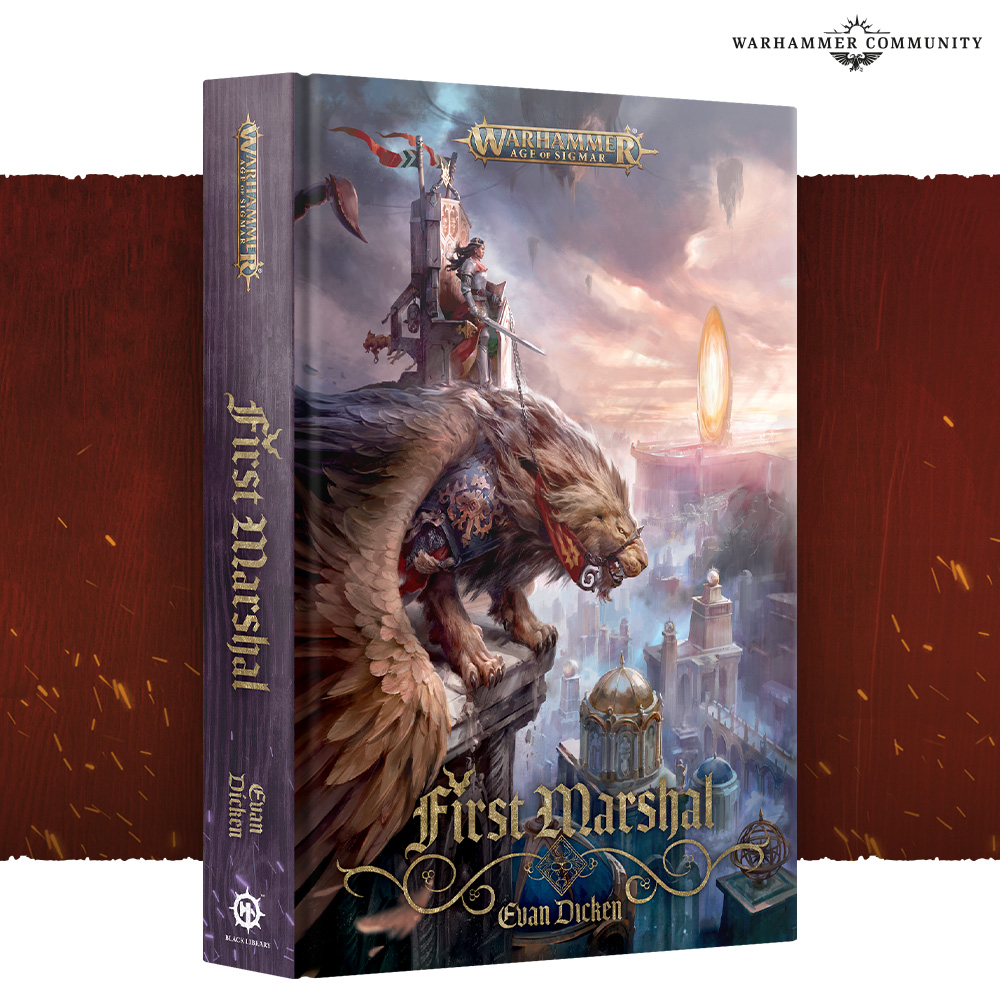
First Marshal
Image credit: Games Workshop
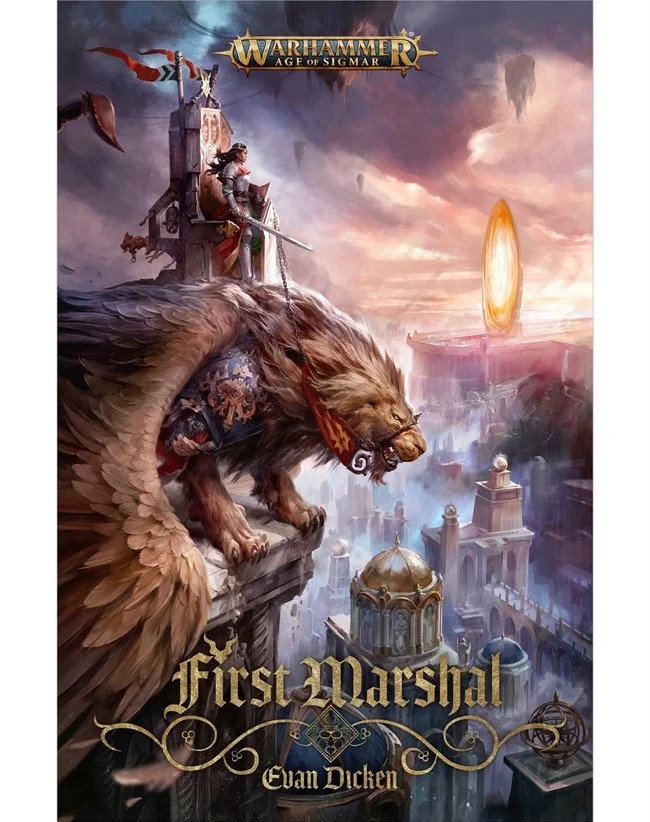
First Marshal by
Evan Dicken is the follow up to 2024's
Lioness of the Parch. It follows Tahlia Vedra, First Marshal of Hammerhal, on her quest to try and get a nice long soak in the bath.
Hammerhal’s resources were already dangerously depleted following the Twin Tail Crusades, which saw massive amounts of the twin-city’s military and civic resources launched into the wilderness to pant two new settlements, one in Aqshy, one in Ghyran. Then came Korghos Khul and his Goretide to attack the half of the city built in Aqshy, after which the Shudderblight plague was unleashed by Nurgle upon the Ghyran portion of the city. Both causing untold damage on both sides of its central realmgate. Then just as the city was at breaking point, the cataclysmic Skavendoom occurs and the realms, especially Aqshy, becomes flooded with verminous chaos.
With scant Sigmarite resources being ever stretched, at the forefront of the resistance against all of these powers is Tahlia Vedra, a former street-urchin pick-pocket now turned war hero and general of Hammerhals forces. Known across the realm as the Lioness of the Parch, she is rough around the edges, uncompromising, hard drinking, brash, and also a master strategist. We are also reminded in virtually every other paragraph in the book that all she wants is a bath, but instead has to fight a seemingly never-ending tide of enemies.
We begin the book in Aqshy, the realm of fire, with Tahliah and some of the characters from the first book hunting Skaven. Much to her horror, an order arrives, calling her back from her routing of rats and sending her to Ghyran, the realms of life, to deal with yet another threat that has emerged: the Helsmiths of Hashut.
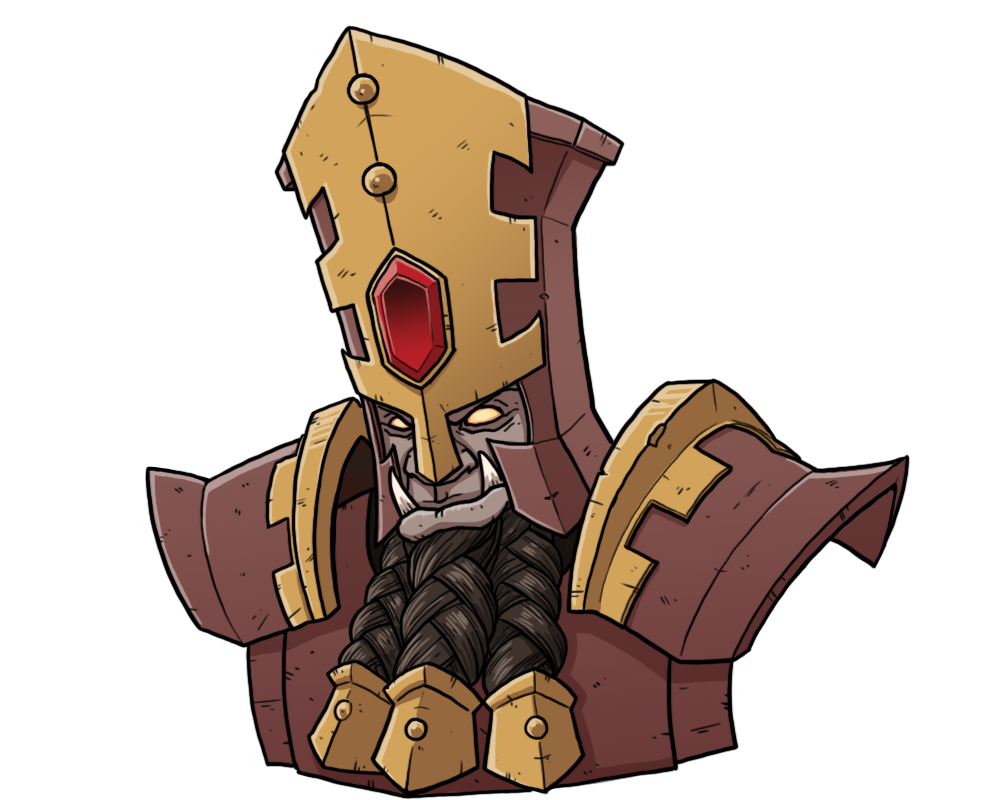
If you’ve been living under a rock for the past few months, the Helsmiths of Hashut are Chaos Dwarfs (who also live under rocks), duardin who have been tainted by Chaos. They’re the newest faction to hit the Age of Sigmar narrative, and this story does a great job of introducing them.
The Helsmiths have just made a whole Freeguild army vanish from the face of the earth, along with Hammerhal Ghyra's self-titled Prime Marshal Vidurn. By all accounts, Vidurn was a bit of a knob- and no one hated him more than Tahlia- but everyone is in agreement that an army that has the capacity to just outright obliterate a couple of regiments of Ghyra’s finest troops has the potential to cause a few problems for Sigmar’s people and needs to be dealt with.
As far as plot goes,
First Marshal is pretty by-the-book. There are no real surprises, and you’ll be on pretty familiar ground if you’ve ever read a Warhammer book before. There's some fighting, some inner soul-searching by the hero, a betrayal, a desperate hold-out for reinforcements, you know the stuff. And that's absolutely fine. It's a good, honest Warhammer read.
 Credit: Robert "TheChirurgeon" Jones
The Helsmiths cast a bit of a mysterious shadow over the first half of the book, but not in quite so powerful a way as Ebonpyre did in the
Lioness of the Parch. But still, you're curious and anxious to meet them.
When they do show up, they definitely get a really good outing. I’ve seen the models and I’ve even played against them on the table top, but this book really helps me feel like I know these little fanged duardin better. The image of them levelling whole forests under their grinding demonic machinery, belching out foul smoke in their wake, is really nicely done. We also get a good sense of their society too– formal, cruel, lacking subtlety. Their leader Sarukh won’t go down in Black Library history as one of the most memorable or unique villains, but he does establish and embody who the Helsmiths are, which is what he’s supposed to do as a character.
We also get a glimpse into the inner workings of a Helsmith stronghold, and it’s pretty much what I’d hoped it would be. In the Age of Sigmar setting, daemons are usually the big bads, the scary bastards that scare everyone, the monsters that the goodies have to face their fears and overcome. But in Helsmith society, daemons are prey. They’re captured and exploited for use in Helsmith machinery. Hearing the tortured screams of daemons thronging the air is such a nice reversal of roles and adds an extra layer of threat to the Helsmiths' ever progressing war machine.
In fact, the worldbuilding in this book is a real strength. The portraits of Ghyran in particular are nicely done, and you feel sticky with humid jungle air and itchy with insect bites just by reading it. But as well as doing a great job of introducing the Helsmiths and of building up the setting itself, this book gives us some wonderful glimpses into the Cities of Sigmar.
Lioness of the Parch already did a very effective job of portraying some of the tensions between Aqshyan Sigmarites and Azyrian Sigmarites, one being fiery and hot headed and the other being arrogant and haughty, as well as the tensions between the political and military classes.
First Marshal really develops those themes, and into the tinderbox of tensions between Azyr’s and Aqshy’s citizens are thrown the Ghyranites. "Ghyran is not Aqshy... Strong will and decisive action may be applauded on the other side of the Stormrift, but here relationships must be cultivated."
Thahlia has to try to build relationships and prove herself to the Veridians of Gyran, who are none to pleased about having an Aqshyan placed in charge. In the same way that she had to learn to play at politics in book one, in this book she now has to learn to understand and work with people from a fundamentally different culture. It’s a sensible progression of the themes raised in the first book and makes perfect sense of her arc.
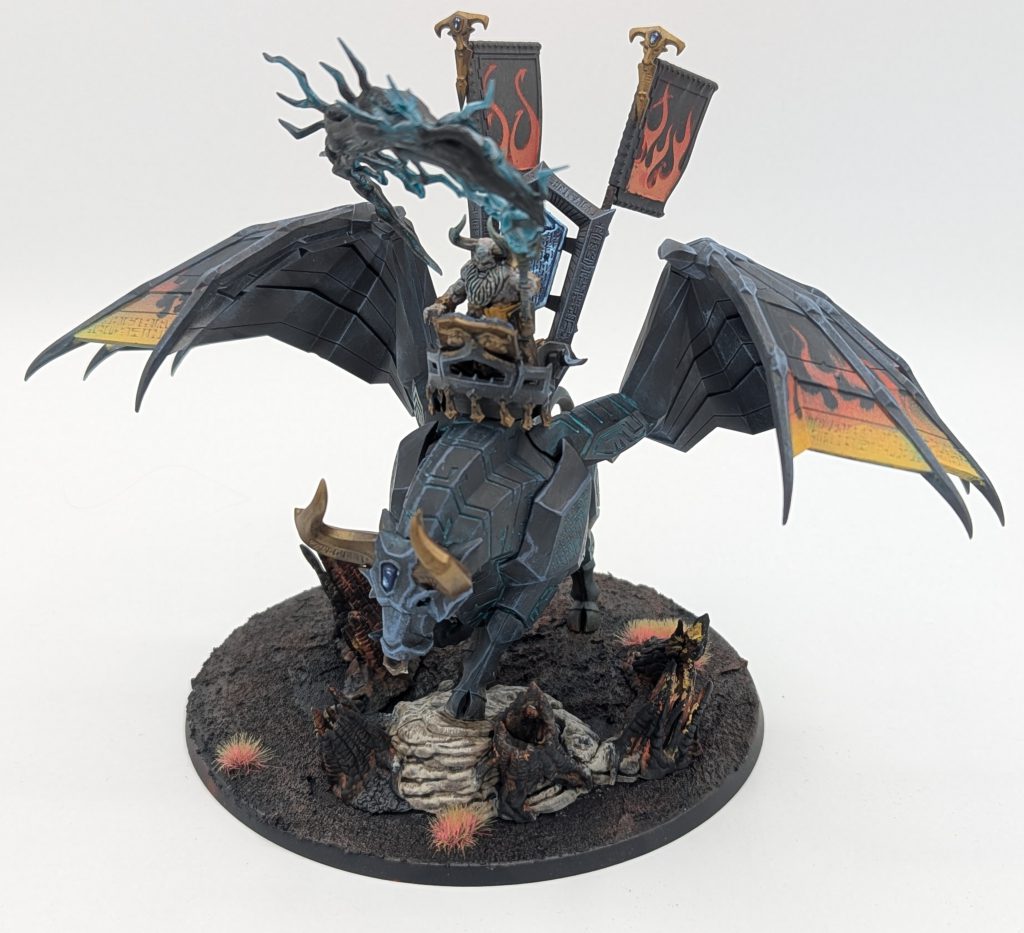 Urak Tarr Credit: Mildnorman
Her right-hand-man, Wintrath, is an Azyrian Silverspine who embodies everything she hated about Azyrites from the first book, but she is thrust together with him and has to learn to get on with him. It’s a really nice little sub-plot to see how their friendship and respect grows throughout the course of the story.
But the story also brings out further tensions within the Cities, not just between realms. The peasants of Ghyran are none-to-pleased with having to work themselves into the ground to feed the war effort on fronts whole realms away (the Ghyran half of Hammerhal is the breadbasket of the Cities of Sigmar, exporting much of its food). Tahlia's presence exacerbates these tensions, as she was the one who ordered the quotas be increased in the first place. The tensions rise to the point of open rebellion, and Tahlia finds herself having to act as peacemaker, funny considering that all of her skill and training is in the business of waging war.
There clearly is growth and development in the character of Tahlia. On the whole there is movement from the first book, and she still remains an interesting character to follow. There were one or two areas that felt unsatisfactory for the character, such as at one point she runs off gung-ho into a fight she almost certainly cannot win. This was something she was always very cautious to avoid doing in the first book, so she seems to have regressed since the last book, just so that she could then go on to learn that lesson in this book. It felt like a bit of a false character arc to me.
I was also continuing to ask myself the same question I did in the last book, is this a female protagonist, or a male protagonist in disguise? The hard-drinking laddish side is still pretty prominent, but there is also a side of her that is inter-personal and relational. Whilst I do not believe there are hard-and-fast 'male' and 'female' traits, I do like to see traits other than what we’ve come to expect from your typical male lead character. I want something my daughter can relate to.
We’re maybe getting closer to that with the character now, as I think she rings truer now as a female character. In the last three Black Library novels I’ve read with female leads, (
Bad Loon Rising,
Blacktalon,
Lioness of the Parch) the female leads have all been a bit ambiguously lesbian. Of course, this could be that I’ve just happened to read the only three series where this has been the case, but it has felt a bit lazy. I think representation matters a lot, but not as an add on. It has to be done in an authentic way.
Having said that, the relationship between Katik and Tahlia is actually quite nicely explored here. The way their positions force them to manipulate each other and not to invest in their relationship. The power dynamics that come with one of them being of senior rank whilst the other is of greater renown. It’s a nice dynamic that I’m really looking forward to reading more about in future books, so I can feel my fears of tokenism being assuaged a little.
Other stand out characters include Wintrash and Lord-Celestant Telemon. Wintrash is a man of loyalty and integrity, a stickler for regulation who learns to work with the impulsive and brash Tahlia. It’s a nice dynamic. Part of what I loved about the last book was the way in which Tahlia depended on those around her, so it was really nice to see these two characters not only learn to put up with one another but also play to each other's strengths.
The portrayal of the Stormcast in this book is also great, nowhere is this better personified than in Telemon. He’s totally cracked! I love to see Black Library being a bit braver with its treatment of Stormcast Eternals. I want to see what the prospect of an eternity of war, of constant relentless dying and reforging, does to a person. You really get that here with the Hallowed Knights. These aren't your grandmother's Hallowed Knights. They're a long way from
Plague Garden and all the Realmgate Wars stuff, and I love to see it.
There are a cast of other characters, but they kind of just felt – there. They were very functional, but didn't feel particularly rich. The witch-hunter Machiavellian villain, the spy with questionable allegiances, the rebel leader who’s actually not a bad guy who just wants to stand up for the working man, the wizened old politician, the skeptical and hot-headed commander who doesn’t like the new boss. At some point in the book there is a betrayal – I don’t think it’s a spoiler to say so, this is a Warhammer book after all. I won’t tell you who. But, to me, their motivations for doing so don’t ring true. I didn’t really get a sense of why the character would do what they did.
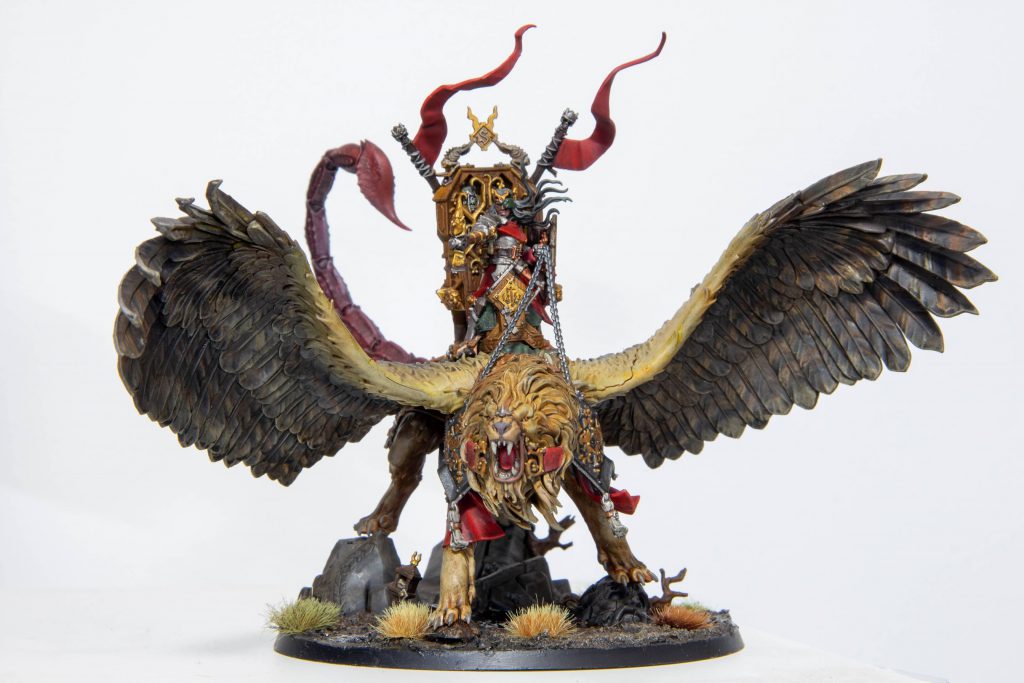 Tahlia Vedra. Credit - Soggy
Oh yeah, and then there’s Infernadine, Tahlia's manticore. In many ways an interesting character in his own right actually. He’s fiercely loyal and protective of Tahlia- but is more than happy to remind her he is not hers to own. It reminds me a lot of the Chronicles of Narnia when they make clear that Aslan might be one of the good guys, but he’s not a tame lion. In many ways it’s a good metaphor for Tahlia herself – who may have risen to the ranks of First Marshall, but she is still a wild and rough child of the streets.
Why would you read this book? It’s a good, honest Warhammer book. You’re not going to get any curveballs thrown at you. It’s not trying to do anything clever. It’s well written and easy to dip into even if you don’t know lots about AOS lore. In fact, if anyone asked me to recommend just a couple of books that could get them up to date with the Age of Sigmar universe, then the two Vedra novels would not be a bad place to start. Their worldbuilding is wonderful and they introduce you to the core struggle of Sigmar’s people, trying to keep the candle flickering amidst a tide of darkness. It is also set in, pretty much, the most central location in the Mortal Realms.
Maybe give it a read over a nice hot bath.
Have any questions or feedback? Drop us a note in the comments below or email us at contact@goonhammer.com. Want articles like this linked in your inbox every Monday morning? Sign up for our newsletter. And don't forget that you can support us on Patreon for backer rewards like early video content, Administratum access, an ad-free experience on our website, and subscriber-only content covering competitive Warhammer 40K!Thank you for being a friend.
 This website uses cookies. Learn more.
 Goonhammer Reviews: First Marshal by Evan Dicken