 This website uses cookies. Learn more.
This website uses cookies. Learn more.
This website uses cookies. Learn more.
Retrospectives | Historicals | Board Games
 Games from the Crypt #11 - The Advanced Squad Lifestyle
I’ve mentioned previously here in the pages of Games From the Crypt that I’ve been sort of reconnecting with proper wargaming over the past few months mostly through some choice PC titles that capture that old timey hex-and-counter vibe that I crave. Playing hardcore, obsessively detailed wargames digitally has really cast into sharp relief how much more accessible and, well, actually playable these sorts of designs are on a screen rather than a tabletop. This isn’t 1978; we don’t have to book out a weekend to play a couple of turns of the Ardennes Offensive or the Battle of Hastings, hunkered over maps and sweating over tidily clipped counters. Granted, that can all be lots of fun with the right people and a general agreement to observe hygiene standards but I’m simply able to really dig into this kind of game more when it’s me, alone in my garage, at 2am.
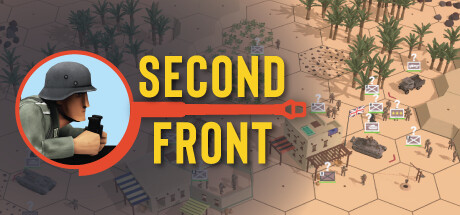
One of the best of these games that I’ve played to date is Second Front, available on Steam and published by the storied and legendary firm Microprose. It looked doofy as hell with some sort of silly 3D models that reminded me of Team Fortress but it promised hardcore squad-level WWII antics. And not only did it deliver exactly that, it also delivered something I’ve been wishing would exist for many years. It didn’t even take a full game for me to realize that the folks that made this game clearly had an agenda to make an Advanced Squad Leader PC game.
In 1977, Avalon Hill published the John Hill design Squad Leader, which was at the time quite revolutionary – it was a simulation-based wargame with an almost RPG-like level of detail focused on small-scale engagements. As a design, it did a lot of things that were very influential in future games development with geomorphic map boards allowing for modular scenarios; line of sight rules accounting for factors such as terrain, weather, and elevation; and perhaps most importantly a strong emphasis on morale and its impact on fighting capability. Squad Leader was very successful – in fact, one of Avalon Hill’s best-selling games – but in 1985 AH’s legendary (and somewhat divisive) Don Greenwood saw fit to revise the whole thing into a new game, Advanced Squad Leader. Which somehow managed to get lost on the way to streamlining the original design and wound up at something much, much more complicated. It was smart business too, breaking up tons of content into sold-separately modules that turned the ASL brand into a product line.
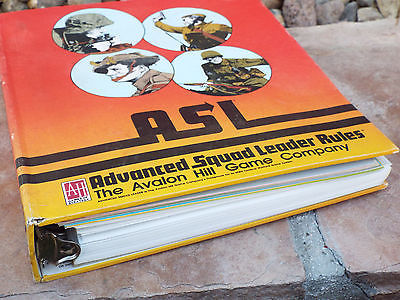
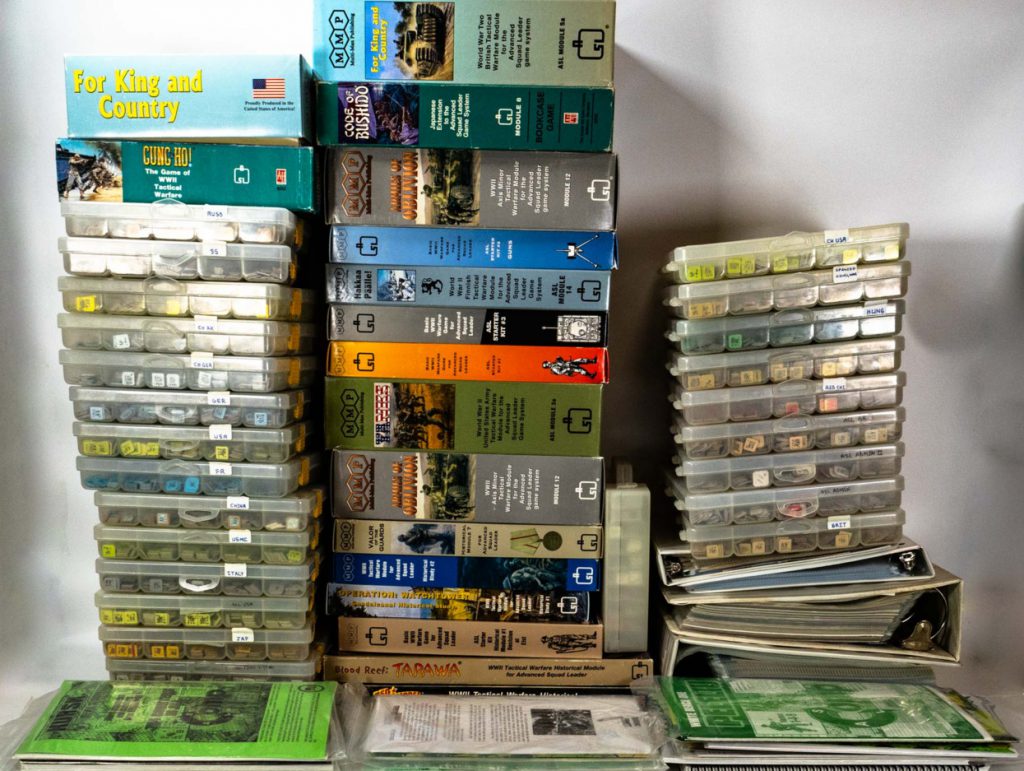
Advanced Squad Leader (ASL if you’re nasty) is something of a hobby gaming monolith. Growing up around game shops and conventions in the 80s and 90s, you’d see these dudes with huge binders full of rules shuffling around counters in what looked to be the world’s most complicated game- Campaign for North Africa notwithstanding. It also didn’t look like much fun, and it seemed very much to my punk ass young adult self like it was a game for middle-aged men taking a break from model trains. ASL was almost a meme before memes were a thing, a shared joke among game players and a point of comparison for any game bloated beyond all reason.
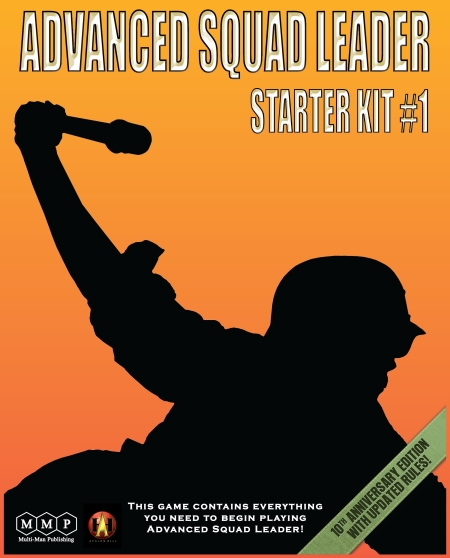
I actually didn’t even try the game until about 20 years ago, when my friend Billy picked up the ASL Starter Kit published as an attempt to simplify the onboarding process. By that time, Multiman Publishing (a company and owned by pro baseball player and Nazi memorabilia collector Curt Schilling) had acquired the license to publish ASL from Hasbro/Avalon Hill and were carrying the torch into the 21st century. The starter kit was really well done and introduced everything to do with infantry. You had to get the second kit to add in artillery, the third to summon forth Panzers, and so on.
I was surprised to find that I loved the game. The level of detail was especially refreshing at a time when most hobby game designers were abstracting the life out of any setting they could get their hands on. This was during the peak Eurogames boom, and I loved the narrative that the game generated. You’d have a GI squad pinned down in the bocage by an MG42 team posted up in a farm house, barely able to get a shot in edgewise and teetering on the brink of the dreaded Desperation Morale. The turn sequence was complex, accounting for opportunity fire and a kinda-sorta simulation of simultaneous action. The scenarios were challenging and unforgiving of stupid tactical decisions – there were no guardrails to make sure you didn’t blunder into a hail of gunfire and see an entire squad evaporate.
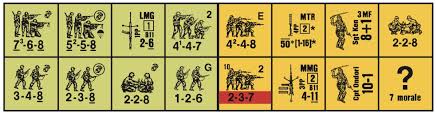
But man, it was cumbersome to play. As much as I enjoyed it, in retrospect I’m not sure the game itself was actually fun. Billy and I would meet up at his work and play in a conference room after hours. A lot of that time was flipping through the rulebook and feeling like we weren’t doing something right. And this was without bringing in the absolute deluge of special rules for everything to do with military action in World War II from leadership effects to accurate orders of battle to differences between tank types to unique National units. The list just goes on and on- transport, artillery, the slope of tank armor versus different munitions. We never even played with any of the modules beyond the starter kits and it was still overwhelming. There’s a reason ASL is considered a “lifestyle” game.
But here’s the thing: Around 2006 or 2007 you start to see games riding on this wave of greater abstraction and an emphasis on playability that were highly influenced by ASL. GMT Games’ excellent Combat Commander is a good example as is Mark Walker’s Lock N’ Load. The whole “ain’t nobody got time for that” zeitgeist toward extremely complex, simulation heavy games during that time resulted in designs that were ASL in spirit, but much more manageable and, yes, actually fun to play. Although Billy and I did play ASL on VASL beyond that, which was a software tool designed specifically to play Virtual ASL, it was also something that I left behind as far as playing on the tabletop.
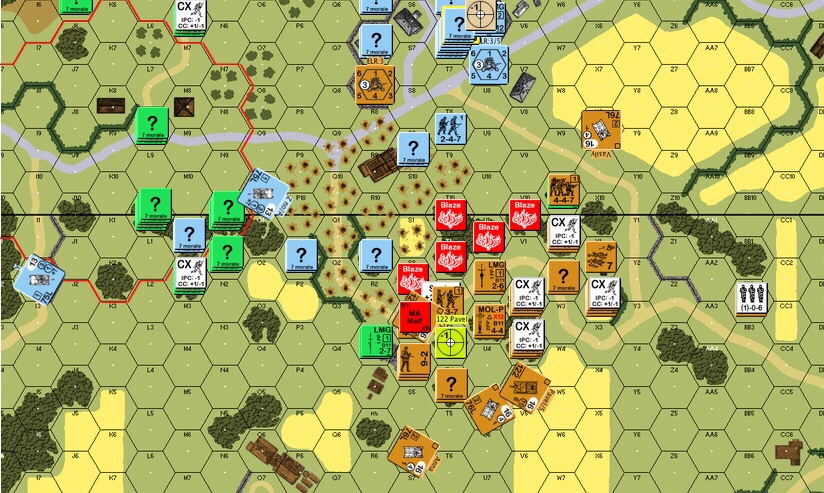
But the fan-developed VASL, as decent as it was, was still a burden. Over the past 20 years I found myself wishing that there was just a full-on digital implementation of ASL. And by jingo, Second Front is pretty much it and it’s shockingly lithe and accessible for a game with so much going on under the hood. As it stands, the game is still in development and some things aren’t implemented yet (such as artillery and air support) but they are promised, and I’m totally onboard for whatever they do.
In my exploration of heavy wargames I’ve also run into other games that capture that ASL feel. Wargame Design Studios, founded by John Tiller, has a range of Squad Battles games that are arguably even more complex than ASL but run tidily in a very dated Windows 95 looking GUI. The Troop offers a more beer-and-pretzels take with fancy graphics rather than Second Front’s caricatures or Squad Battles’ archaic counters. The janky-as-hell but sometimes amazing Combat Mission games were designed to be sort of a quasi-real time ASL experience. There’s an excellent adaptation of Lock n’ Load that takes ASL-style gameplay into Vietnam and other conflicts. I can even detect ASL’s fingerprints in X-Com and other squad-level tactical games.
All of this is to say that ASL may be one of the few Games from the Crypt that I actually appreciate and respect more than I enjoy. I would go so far as to suggest that unless you are going all-in and plan for it to be the only game you are going to play with at least one dedicated partner or access to players online via Vassal or another platform, it is borderline unplayable as a tabletop game in today’s modern age. I think the value of ASL is really more in its influence over the decades than in the actual design or product itself. They say that when the Sex Pistols did their first UK tour, they launched a thousand other bands. I feel like ASL is a lot like that- anyone who has played and loved it has wanted it to be better, and it’s inspired designers to try to “fix” it. And I hope they keep trying.
Have any questions or feedback? Drop us a note in the comments below or email us at contact@goonhammer.com. Want articles like this linked in your inbox every Monday morning? Sign up for our newsletter. And don't forget that you can support us on Patreon for backer rewards like early video content, Administratum access, an ad-free experience on our website, and subscriber-only content covering competitive Warhammer 40K!Tags: board games | games from the crypt | avalon hill | advanced sqaud leader | ASL

Thank you for being a friend.
Support us on Patreon to get access to our Discord and exclusive App features.
Thank you for being a friend.
Already a Patron? Login with Patreon.
Visit our incredibly official store on RedBubble.
Support us on Patreon to get access to our Discord and exclusive App features.
Thank you for being a friend.