In this week’s Fabricator General, Mike revists the Uniformation GK3 Pro. We’d like to thank Uniformation for providing this unit for review.
After an extended break from 3D printing for various reasons, it was time to fire up the Uniformation GK3 Pro again and really put it through its paces. Modiphius recently ran a sale across their site, and I grabbed the Brotherhood of Steel Camp STLs. A huge archive of models suitable for not only Fallout but many of the files can easily pull double duty for moderns and other post-Apocalyptic settings. I've used the print for long enough that it's warned me it's time to replace the FEP, and Uniformation include one with the printer which is a really nice touch. The road to getting through the first FEP life time wasn't without bumps but overall it was a smooth ride and a trip I'd happily make again.
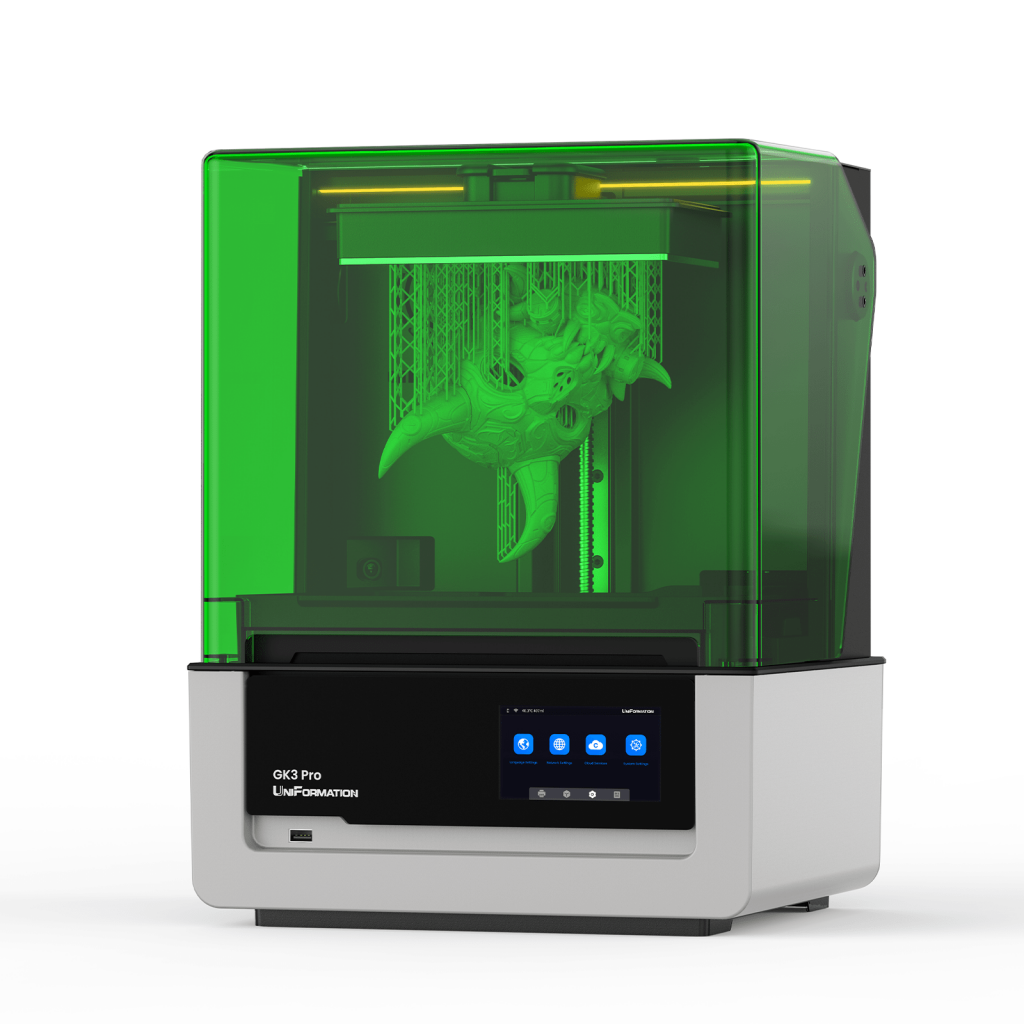
Uniformation GK3 Pro. Credit: Uniformation
Uniformation Slicer
I mentioned in my previous review that I’d be trying out Uniformation's own slicer, and true to this I spent a good chunk of my printing time running off slices with it. The initial installation for the version I was using kept me on my toes, with the installation wizard disregarding my language choice for the installed application. I thought I'd made a mistake somewhere so after I carefully reinstalled and it was still in Chinese I had to navigate menus to find a way to manually change it over to English. Given the layout and overall experience is fairly similar to Slic3r this didn't take too much figuring out. It did contribute to the overall user experience being a little opaque to begin with, and I wouldn’t recommend it for those brand new to the hobby. One of the major benefits of Uniformations Slicer is the output file size. Comparing identical slices between Chitubox and Slicer, using the same base files, Chitubox comes in at 2.3GB and Slicer at 1.1GB. This makes managing any attached and internal storage much easier, and it wasn't something I had to put much thought in to until I'd switched slicers. Putting aside the initial learning curve, once you have your settings dialled in it’s a similar experience to many other slicers for pre-supported files. I didn’t have an opportunity to trial the support generation, due to the focus on printing the Fallout board.
Firmware and Print Experience
During my initial testing I had been warned by the Uniformation team that the level of firmware I’d moved to may cause issues. While I initially didn’t encounter any, after a few prints I started getting unrecoverable hangs mid-print. I'd kick off an overnight print and wake up to half a print and a good amount of wasted resin. After losing a few prints this way, I decided to take the nuclear option rolling back the firmware and moving back to Chitubox slicer. I’d like to think it was just the firmware rollback that was needed, but I wanted to be sure. Once I’d done that we were back in business and I blew through another kilo of resin without issue.
Loading...
Firmly in to the darkest part of the year here in the UK, and the temperatures dropping to accompany the longer days, the vat heater turned out to be a huge help. Before starting a new print, the GK3 Pro would check the vat temperature to make sure the resin was at the right temperature for reliable printing. There's the option to configure a pre-set minimum temperature of either 25C or 30C and this is a lot easier to manage than my other set up, which involves an foil lined tent and space heater.
Don't forget your seatbelt!
Printing an entire board in resin, even for a skirmish sized game, is a huge undertaking. I’m not a stranger to large printing projects, but this would be my first full resin board. I was grateful the majority of the clean up and assembly was straightforward, with it being large tents and barricades for the most part. The smaller and more detailed scatter takes extra time to clean to ensure there aren’t breakages, adding to the overall production time. Even then, the models are well supported so removing them isn't too much of a chore. The real limiting factor was the size of my wash and cure station. The Elegoo system I currently have was designed for the Mars 3, and tackling the output from the Uniformation was challenging at times. Taking multiple baskets and curing runs, extending the time I was exposing myself to the worst part of resin printing. The board is looking fantastic though, and I don’t have any regrets embarking on this journey into the wasteland.
Loading...
Final Thoughts
For anyone considering a project like this, I’d suggest starting with scatter terrain and smaller pieces of scenery. The extra detail you get from resin looks great and really opens up the possibilities with sculpts due to the difference in design considerations for support free FDM and resin scenery. I haven’t spent significant time testing the durability of terrain but in the process of priming the tents I managed to drop one on to my flagstone patio. I was relieved to see it bounce instead of break. I’m not suggesting you start spiking your resin prints on to the floor, but the odd knock or drop should be okay. If you want to make your own journey across the Wasteland, the Uniformation GK3 Pro would be a fine companion to add to the party. Let me know if you've embraced a challenge like this yourself or just have questions by leaving a comment or get in touch via contact@goonhammer.com.
Have any questions or feedback? Drop us a note in the comments below or email us at contact@goonhammer.com. Want articles like this linked in your inbox every Monday morning? Sign up for our newsletter. And don't forget that you can support us on Patreon for backer rewards like early video content, Administratum access, an ad-free experience on our website, and subscriber-only content covering competitive Warhammer 40K!
 This website uses cookies. Learn more.
 Uniformation GK3 Pro. Credit: Uniformation
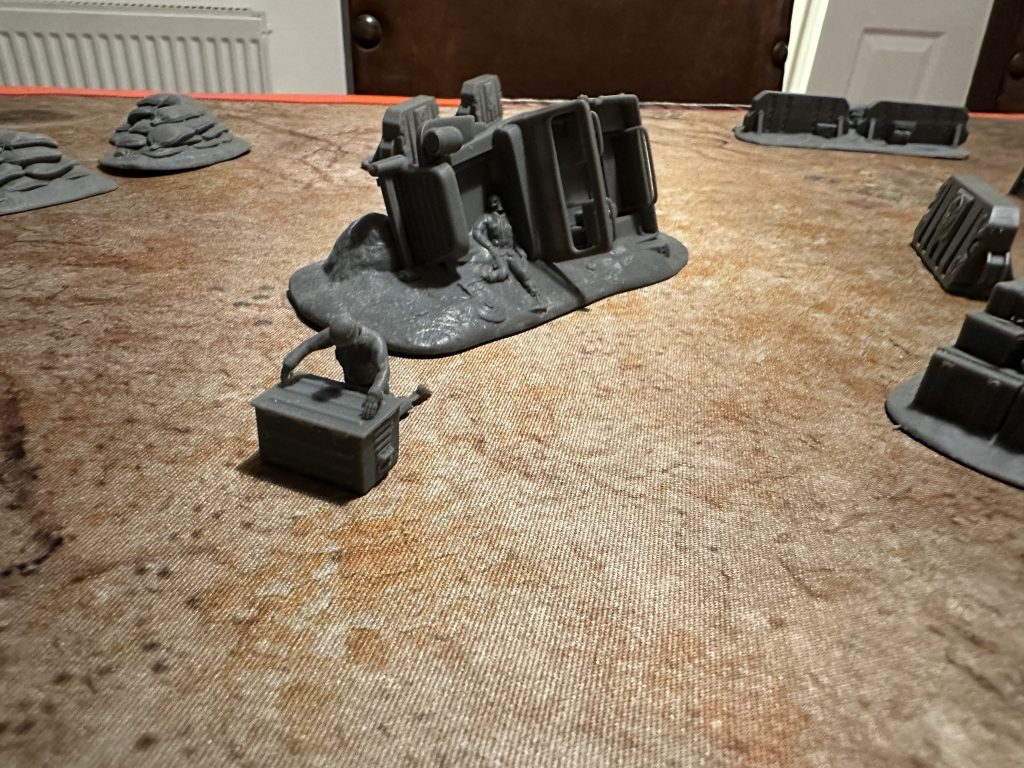 Don't forget your seatbelt!

 Goonhammer App and Patron Updates: April, 2026
 Kill Team Tournament Report: Engage, Party, Repeat's March Madness 2026
 Goonhammer Reviews: Tribal Conquest