If you’ve been playing Warhammer for a minute, you’ve probably heard a bunch of terms that don’t really appear in the rules. Some are just abbreviations of existing rules, while others sound abjectly ridiculous, like Uppy Downy. Now we’re not gonna go defining every rule in the main rulebook - that’s literally what the rules already do - but we’ll try and clear up some of those cockamamie competitive colloquialisms and make things just a bit clearer. This article will be updated over time as new concepts come and go, as Warhammer 40k is a living game with a community always willing to come up with some new inscrutable phrase.
The Video Version(s)
If you’d rather hear this information in a husky baritone and watch some pretty miniatures spin around, we cover these concepts in a few videos:
Part 1:
Part 2:
ABBREVIATIONS
Before we get too into the weeds, there are a few abbreviations that show up pretty often. These are particularly handy in our own writing on Goonhammer, but I’ll break them down here.
DZ refers to “Deployment Zone”. Let’s start things off simple.
FNP refers to the “Feel No Pain” ability.
X++ Saves are usually abbreviated as a number and a plus sign, so if a unit needs to roll a 3 or better to save, we’ll usually say it needs a “3+” or a “3 up”. To represent an invulnerable save, that’ll sometimes be written with two pluses, like 3++. Real sickos will put three plusses after a save to represent a Feel no Pain, but instead of 3+++, it’s often preferred to write 3+ FNP.
AOC is an acronym for Armor of Contempt, a Space Marine stratagem that reduces the armor penetration of incoming attacks by 1. Now this stratagem is widely available across a number of Marine detachments, but other factions have similar takes, like the Votann Void Hardened stratagem. No matter the name, it’s Armor of Contempt in spirit.
Crits are short for Critical Hits and Critical Wounds. These happen on natural rolls of 6 - that is, with no modifiers - and sometimes abilities like a Black Templar Marshal’s Inspirational Exemplar rule let you score critical hits on a different number - in his case, on 5s. In these cases, you might say Crit 5s. Critical wounds work the same way. Those usually lead into Devastating Wounds and Lethal Hits, and whaddayaknow, those get abbreviated too.
Dev Wounds/Lethals/Sustains are short for Devastating Wounds, Lethal Hits, and Sustained Hits respectively. While those are always assumed to be on 6s as per the Critical Hit rule, if those crits are triggering on a different number, you might see that summed up as something like Lethal 5s. Or, my personal favorite, Lethal and Sustained Hits on fives, or Lethal Sussy Five Plussy. Yes I’m trying to make it happen, I designed the stupid shirt and everything. Shut up.
MEQ gets used often in Hammer of Math, and is used to denote “Marine Equivalent.” It’s used to refer to any unit with T4, and a 3+ save, and usually 2 wounds.
TEQ stands for “Terminator Equivalent,” and refers to T5, 3-wound models with a 2+/4++ save.
GEQ stands for "Guardsman Equivalent," referring to T3, 1-wound models with either a 5+ or 6+ save.
MSU is another three letter acronym - god, you need an MLS for all these TLAs. MSU stands for Multiple Small Units or Minimum Sized Units.This is when you take, well, just that - a load of small units. It’s generally good for flexibility and flooding the board, though you don’t usually get as much out of characters or stratagems as a result.
WAAC is, well, wack. It’s short for Win At All Costs, and is more of a socially constructed boogeyman than anything concrete in Warhammer. It’s the notion that you’ll forego friendly competition, sportsmanship, or even the boundaries of the rules of the game just to win, and even at top tournament tables, isn’t something that exists outside the wildest edge cases. There’s a huge difference between wanting to be good at Warhammer and win events and just being a jerk willing to cheat over some plastic space barbies, and jerks show up just as often outside of tournaments and competitive play.
Ingress is short for Rapid Ingress, and is often used like a verb, i.e. “I ingressed this unit.”
Oaths is short for the Oath of Moment rule that Space Marines have, which allows you to pick a unit against which you’ll re-roll hit rolls. Marines aren’t the only ones who get something like this, but that’s where you see it the most.
Heroic refers to the Heroic Intervention Stratagem and similar abilities, i.e. when you can charge a unit that just finished charging one of your own, or charge an enemy unit that’s close by in your opponent’s charge phase.
CONCEPTS
With the abbreviations out of the way, let’s move on to the core of this article, which is defining all those inscrutable terms surrounding and infusing competitive Warhammer. Some might seem pretty self explanatory, while others might be as impenetrable as the walls of Terra. As an aging millennial, this is the only new slang that still makes sense to me.
Alpha Strike
An Alpha Strike is an all-out first turn blitz meant to wipe your opponent off the table, usually with shooting but sometimes through melee or a combination of the two. This term comes from BattleTech, where an Alpha Strike involves shooting all of a mech’s weapons in an attempt to blow away your enemy, consequences be damned. The risk here is if it doesn’t do enough damage, usually leaving your units exposed. Alpha strikes are early game gambles where you try to do as much damage as possible.
Basing
Basing isn’t just the sand and tufts you glue on your models’ bases, but the practice of getting into base to base contact with two or more models. This mostly matters for the fight phase, when units in base contact with friendly models that are in base contact with enemy models can fight, but sometimes it plays into other abilities too. Not everything has a base, so assume we’re also talking about when two vehicles with hulls touch too. Basing is when two or more models physically touch in base to base contact.
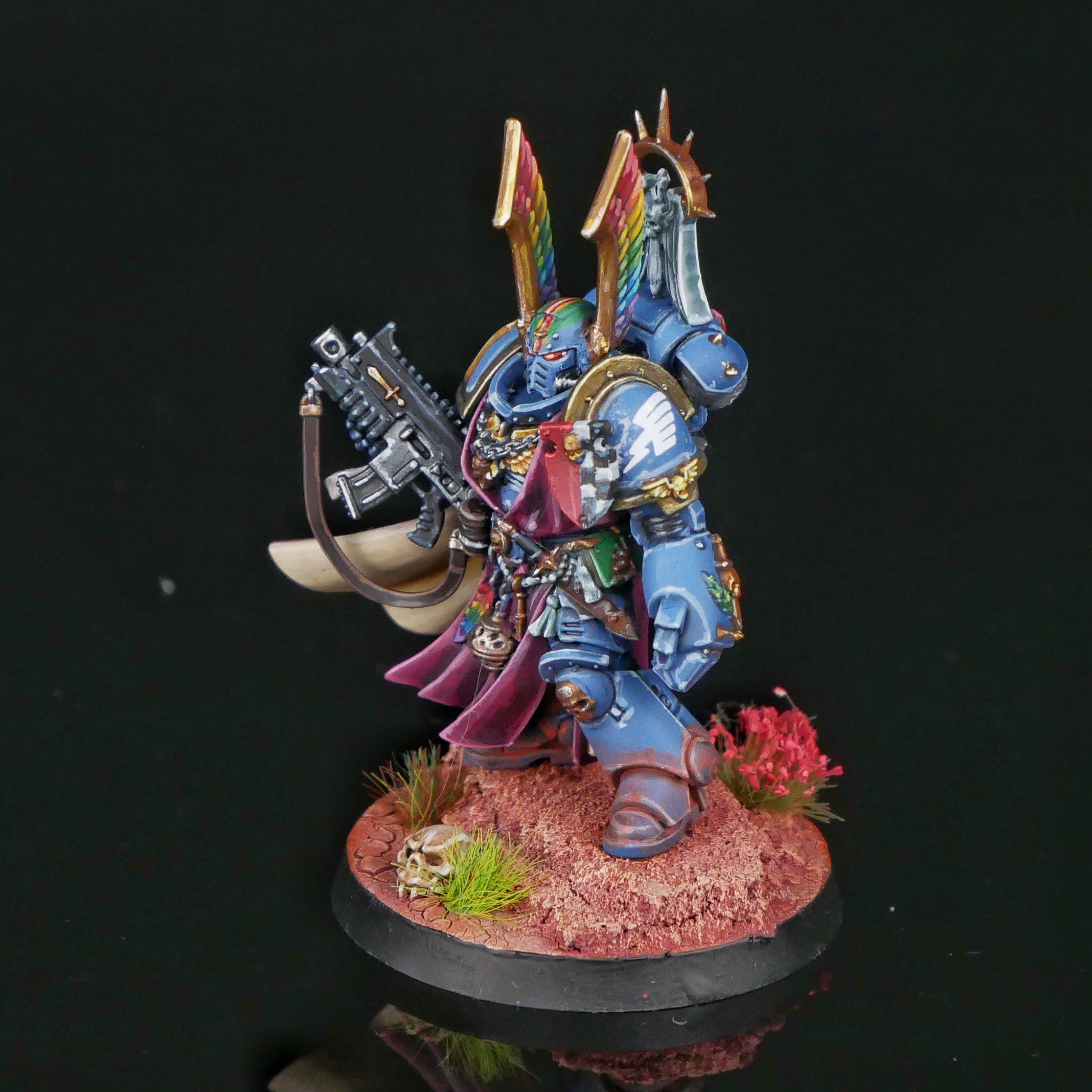
Rainbow Warriors Captain by Craig "MasterSlowPoke" Sniffen
Best Day Ever
This started getting thrown around in Age of Sigmar before finding its way to 40k. In that game’s third edition, heroes could use an ability called Their Finest Hour, giving them buffs for a single turn. Aside from just being an opportunity to quote a formative Spongebob Squarepants episode, this term started getting applied to units with once per game abilities in 40k. Most prominently this is the Space Marine Captain’s identically named Finest Hour ability, where once per game they get some extra attacks and gain Devastating Wounds, while Chaos Lords and a few other characters have similar abilities.These are usually used at the start of the Fight phase, and tend to be “use it or lose it,” so think carefully about how you deploy them! However spiky or smooth your power armor is, Best Day Ever is a once per game ability that typically buffs a unit’s offense.
Blanking
Occasionally you’ll find a unit with the ability to reduce incoming damage to zero. The Emperor’s Champion is great for this, as his Armour of Faith ability changes the damage of a failed save to 0. This is often called “blanking” and it’s always limited somehow, like only being usable once per phase, turn, or game. It also doesn’t help against bonus damage from things like Melta, but that’s its own weird rules interaction, and this is vocabulary class, not math or science or whatever that would be. Anyway, Blanking is when you reduce the damage of an attack to zero.
Bracketing
There’s loads of units in 40k - usually monsters and vehicles - which have some change to their rules after being reduced to a lower number of wounds. Usually when they’re below a third of their wounds, they have a damaged rule, which is often referred to as bracketing. Most of the time this is just a -1 to hit for their attacks, but sometimes it can have a different effect, like Skarbrand gaining extra attacks because he’s just so dang mad you shot him. Bracketing is when a unit’s rules change after taking a certain amount of damage.
CP Reduction
CP Reduction - short for Command Point Reduction - bridges the gap between just being an abbreviation and being a general rule you find around the game. It’s the ability to reduce the cost of a stratagem, usually by 1 command point. It’s common across Marine armies, where Captains of all armor types usually have it, but it shows up elsewhere too, typically on characters like the Votann’s Uthar the Destined. It does exactly what it says on the tin - reduces the Command Point cost of stratagems.
Cycle Charge
When units charge in 40k, they get a load of benefits like fighting first, plus special rules like Lance or some other effect that makes charging extra good for them. Sometimes there’s abilities that let a unit fall back and charge, letting them gain those benefits again. This is called cycle charging, where a unit intentionally falls back to charge again, usually to gain some charge bonus.
Damage Reduction
Put simply, damage reduction abilities, like the Redemptor Dreadnought’s Duty Eternal ability, subtract damage from failed saves, usually to a minimum of 1.
Deep Strike Screening
While regular screening units are better used for forming a barrier between your opponent and something you very much don’t want them to touch, screening for Deep Strikes and reserves is a little different. This is when you try and prevent your opponent’s Deep Striking units from being able to set up where they want to, often by stretching units across your backfield to maximize the amount of ground they cover. Since units can’t usually deep strike within 9” of one of yours, you might conga line some Grots across your home objective, or take advantage of units that deny Deep Strikes in a larger range, like Space Marine Infiltrators. Deep Strike screening is when you position your units to prevent enemy units from being set up.
Deploying on the Line
This refers to deploying your entire army against the line marking the edge of your deployment zone, as far forward as you can, and often in the open. This is generally a bad idea unless you either know you’re going first or your opponent won’t be able to punish you for doing it. It can help some melee-heavy armies by letting them get into combat sooner, but it’s a risk you’ll have to weigh against your opponent’s shooting and their own positioning. There is a certain freedom to just putting a wall of Killa Kans as far up the board as they can go and letting the dice decide what happens next though. You have nothing to lose but your chains, Warhammer himbos. Deploying on the Line is when you deploy as far forward as possible, right at the edge of your Deployment Zone.
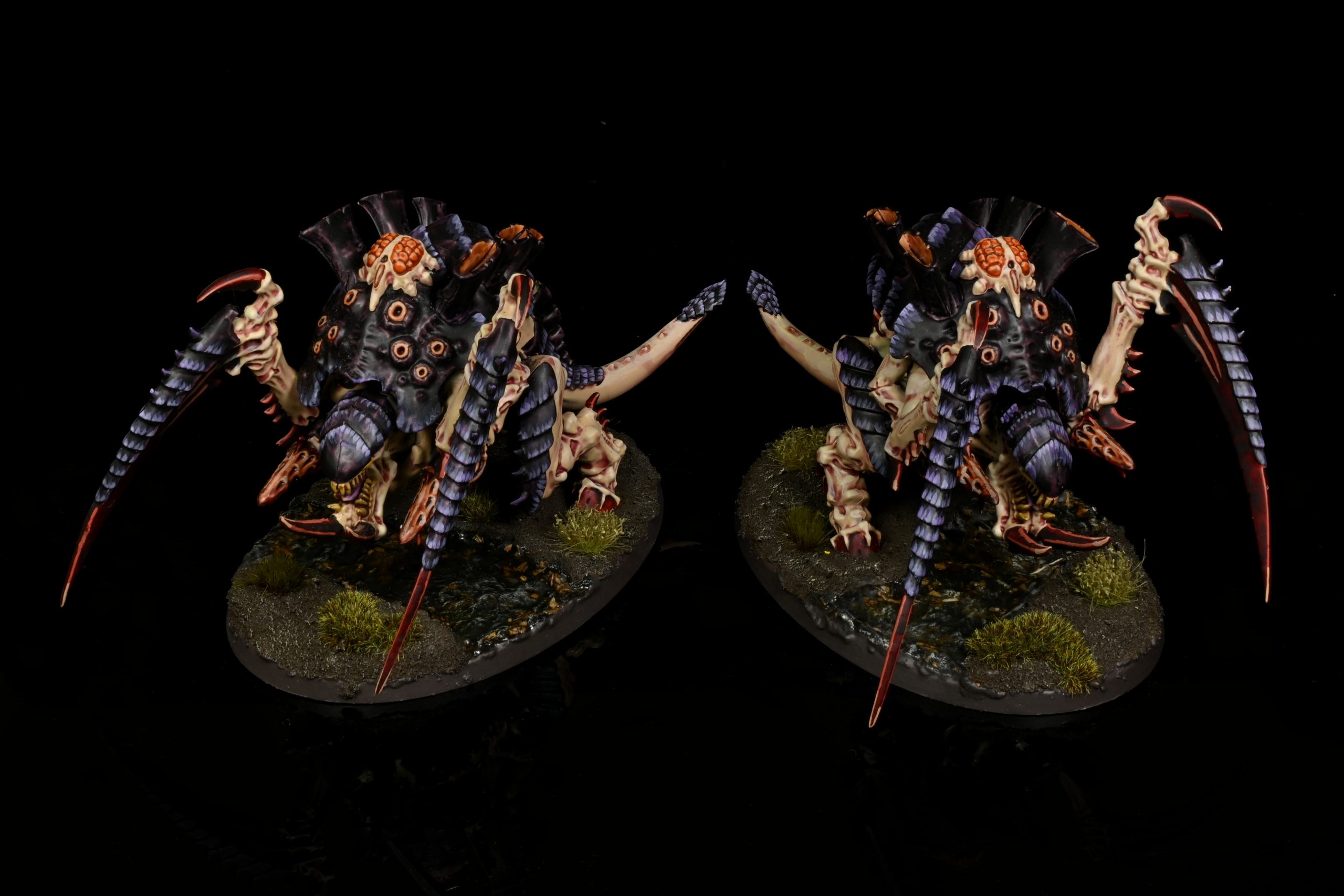
Carnifexes. Credit: Rockfish
Distraction Carnifex
I think I first heard this one in like, 4th edition, but the concept hasn’t changed much. This is the practice of taking a modestly dangerous, modestly durable unit - like, say, a Carnifex, imagine that - and forcing your opponent to deal with it. That Dreadnought might not be key to your plan, but as long as it’s running up the board zapping stuff with its plasma cannon, it’s going to be a thorn in your opponent’s side. The key here is that your distraction Carnifex has to be threatening enough to draw fire from other, more valuable units but cheap enough that you can afford to lose it. What “cheap” means changes based on your list and faction, but generally you don’t wanna spend more than 120 or so points on something like this. The goal is to distract your opponent with a modestly dangerous unit that isn’t part of your gameplan.
Expansion
This is an old StarCraft term ported into Warhammer. This refers to the objective in No Man’s Land that’s closest to your deployment zone, though only some layouts have this - sometimes they’re equidistant instead. I’ve since been informed by people who watch more competitive StarCraft than I do that these should be called “Natural Expansions” but we’ll keep it brief here. Expansions are the closest No Man’s Land objective to your deployment zone.
Feelsbad
A feelbad or feelsbad situation is a point in the game where a player feels especially bad about something that happened - typically something out of their control or at the whims of the dice. That mission where going first means automatically winning the game? Losing an entire unit trying to fall back or get out of a transport? That time your Forgefiend blew up from failing its Dark Pact and all three Hazardous checks? Ok that last one is rad as hell, but they’re all feelsbad moments. Feelsbad is, well, stuff that feels bad.
Flipping an Objective
This is how you refer to taking an objective controlled by an opponent and making it yours, flipping control of it. You’ll hear it come up a lot in our Detachment Focus articles and videos, where some ability will increase the Objective Control characteristic of a unit or Battle-shock an enemy unit on an objective, letting you take an objective right out from under your opponent’s nose. Wiping an enemy unit and taking the objective would also be flipping it - after all, they can’t hold an objective when they’re dead - but Flipping an Objective usually refers to taking an objective previously held by your opponent.
Fluff and Crunch
You’ve probably noticed that most rules in 40k have cool names and story explanations for what they are. Those Chaos Terminators don’t just have access to an ability that lets them get lethal hits, they’re making Dark Pacts with the Chaos powers and might get punished for their hubris. Those aren’t just melee weapons with good stats, they’re accursed weapons infused with the power of the Dark Gods. The fluff is the reasoning and the story behind what a unit or faction does, while the crunch is how that’s utilized on the tabletop. One of the biggest disconnects in 40k happens when that narrative and the rules don’t quite line up, but concessions have to be made to make this an actual game. After all, if it really only took three Ultramarines to defeat a whole Tyranid invasion, that wouldn’t be much fun for the Tyranid player. Fluff and Crunch are the narrative of the game world and the rules that reflect those, respectively.
The “Go” Turn
You might spend the first few turns driving your transports around, hiding in cover, and making some pot shots, but not committing particularly hard to any flank and largely keeping your army protected. Then, it’s the time when the magic happens - that one big turn where you bring in your reserves, jump out of your transports, blow your command points and go all out trying to break the enemy’s back. This is what we call the “go” turn. Think of it like the turn where your army really does what it does best, enacting your game plan and committing to the table. The biggest risk here is when it doesn’t pop off - maybe you fail those clutch charges and leave your hammer unit in the open, or the damage rolls on your gunline just go cold. Maybe you wait too long and just don’t have the assets left on the board to actually go for broke anymore. Sometimes we just have to do the best we can with what we’ve got. The Go Turn is when you fully commit to the battle and send your units at the enemy.
Gotchas
That’s Gotcha as in “got ya”, not Gacha as in Gachapon. We already have a column about horse girl waifus. Gotchas are unexpected abilities or rules that can feel like traps and aren’t always immediately apparent. For instance, a unit with Fights First might be a gotcha, as your opponent would normally expect to fight first if they charged you. A Fight on Death ability could be a Gotcha, as maybe you wouldn’t charge that melee unit if you know they’ll kill your guys once you charge in. It’s common to ask your opponent at the start of the game if they have any Gotchas just so you’re on the same page. Gotchas aren’t the same as making a tactical mistake - warning me that you can react to my move with one of your units using an army rule is a good example of avoiding a “gotcha” moment; using Heroic Intervention to charge my unit when I charge yours is not. Gotchas are when a player is caught off guard by a rule they could have known, but didn’t.
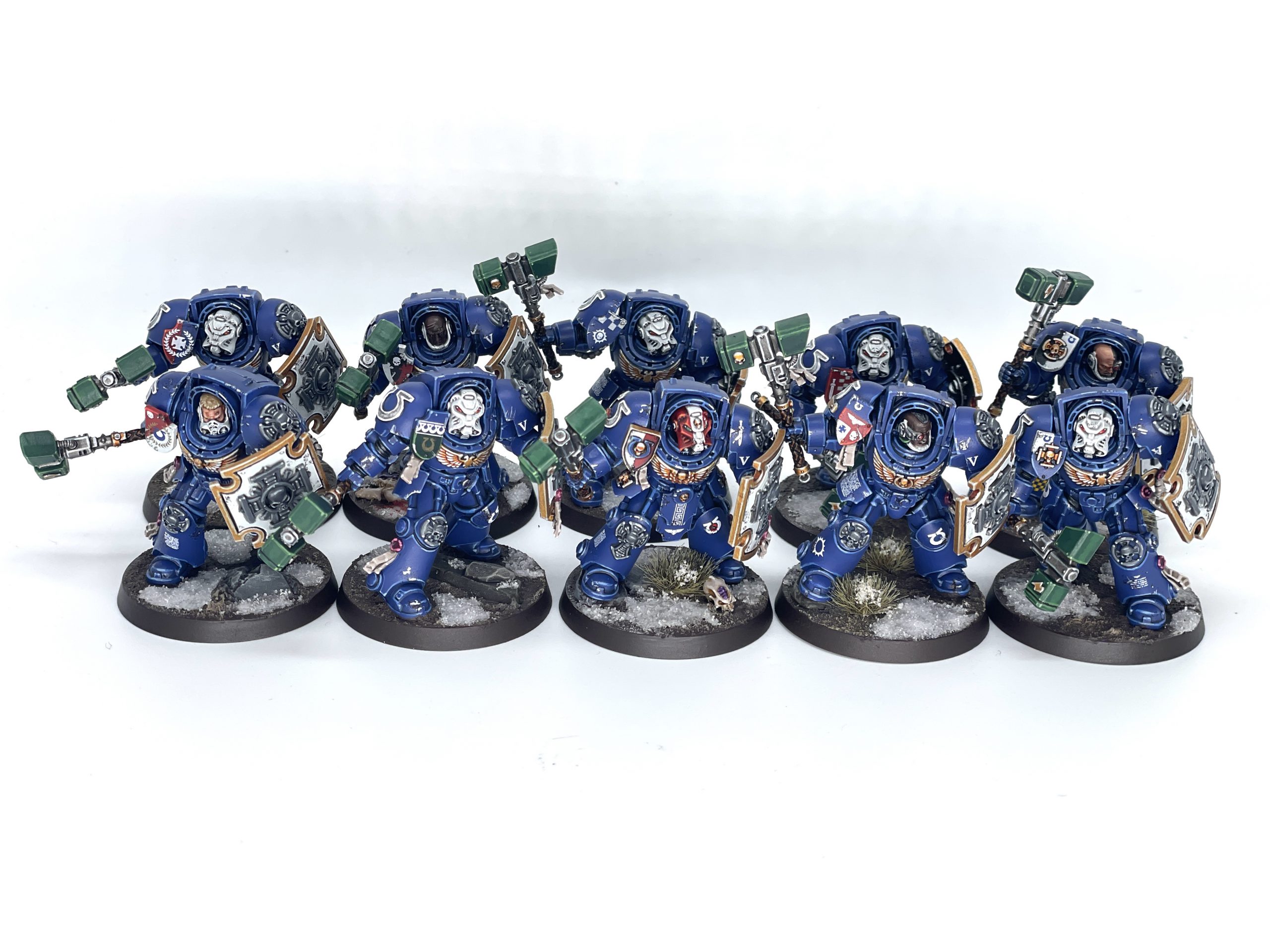
Ultramarines Terminator Assault Squad with Thunder Hammers and Storm Shields. Credit: SRM
Hammer Unit/Deathstar
Hammer units are the big threats you often build an army around. This might be a big squad with a load of attached characters, sometimes called a Deathstar, and it’s more often than not a melee threat of some sort. They’ve got their roots in the benighted days of 6th and 7th edition, but still show up occasionally in modern 40k. This could be 20 Black Templar Crusaders with High Marshal Helbrecht, it could be 10 Tempestus Scions with an attached command squad and all the plasma in the world, a big brick of Deathshroud Terminators with a Lord of Contagion, or 10 Terminators with a pair of characters and enhancements to make them nearly unkillable. These units tend to be expensive, are often pretty durable, and positioning with them is key, as you don’t want your big 500 point squad hanging out on an objective in your backfield. Hammer Units are the key threats you build your army around.
Herohammer
Herohammer is a concept that comes and goes, and has reared its head in every Warhammer game out there, from Fantasy, to Age of Sigmar, to 40k. It refers to an army list or even edition of the game that heavily favors characters. That might be because characters get a bunch of special rules that make them extra effective, or because you can buy a buttload of gear for your warlord and make them a one-model army. It can sometimes look different, but Herohammer is when the game or army list heavily favors characters over other units.
“Honest Warhammer”
This is a term used to refer to armies and lists that just play the regular game of Warhammer 40k - they don’t move out of sequence, they can’t shoot things they can’t see, and they can’t leave the table and come back onto it. With these armies, what you see is what you get. These armies aren’t bad per se - you can play Honest Warhammer and do just fine - but they can often find themselves at a disadvantage against armies which can move multiple times per turn or turn off Overwatch. Honest Warhammer refers to a straightforward playstyle without any tricks.
Impact Hits
In Warhammer Fantasy Battle and The Old World, there’s this concept of impact hits - basically when something big like a chariot or monster charges into something, that target will take damage just from the sheer mass of the thing ramming into them. 40k has a bunch of rules very similar to this on various datasheets, like on Assault Intercessors with Jump Packs, who each cause a mortal wound on a 4+ whenever they complete a charge. Tank Shock is basically a way to turn this on for every vehicle in the game, provided you spend a command point. Impact Hits are mortal wounds caused by a unit when it completes a charge.
Credit: "Contemptor" Kevin Stillman
Jail
A recurring theme in 10th edition has been jail lists. We’ve had Wolf Jail, Cultist Jail, Poxwalker Jail, and more besides, and while there is a soul in Wolf Jail, I am not free. These are lists that flood the board early on, usually trapping their opponent in their deployment zone with durable units that take up a lot of real estate on the board. They might not kill that much, but that's not the point - that horde of zombies or beefy dogs are there to tie up the enemy while speedy units nab objectives behind them, or more powerful units get into position to actually do some damage. A good jail list traps the enemy in their deployment zone with large numbers of durable units.
Jump Shoot Jump/Move Shoot Move
Also known as Shoot N’ Scoot among the more whimsical members of our team, Jump Shoot Jump is when a unit can move, shoot, and then move again. It’s one of the more confounding abilities out there, and can make some armies extremely hard to catch. Classic examples of this are T’au Battlesuits, which have historically been able to move after shooting, coming out of cover, blasting away, then hiding again. Aeldari of most flavors often have some similar ability at their disposal too, and it typically doesn’t allow moving into combat. Regardless of the flavor text or character of the army, Jump Shoot Jump is when a unit can move, shoot, then move again.
Mathhammer
Occasionally called stathammer or theoryhammer, mathhammer is when you try and figure out the statistical likelihood of an outcome. Sometimes this is used in online arguments for why one unit or tactic is better, while other times it’s done in the moment on the tabletop as a player tries to decide what’s the best course of action. This could be the sort of back of napkin math that determines what unit your Eradicators are more likely to blow up, then using that calculation to inform what they shoot at. Hell, we have a whole column about this called Hammer of Math, since while none of us paid much attention in precalc, those equations didn’t have chainswords in them. Mathhammer is when a player uses math and statistics to calculate the likelihood of an outcome.
Move Blocking
If screens are there to protect your own units, move blockers are there to get in the way of your opponent. Think of move blocking like a more proactive version of the same concept. Little 5-woman units of Seraphim, 3-bike units of Outriders, or any number of scouting and infiltrating units can drive, fly, or advance up the board, and just stand in the way of some major melee threat. That big Berserker squad can’t move through the wall of bodies you stuck in front of them, so they’re going to have to waste their charge on that cheapo unit, stand back and shoot, or find a way around. Move blocking is when you place a unit in your opponent’s way, and force them to find a way around.
Meta
Short for “the metagame,” the meta is a shifting concept that has nothing to do with Mark Zuckerberg’s bajillion dollar wiretap company. This is basically what the greater state of the game is outside of just your table, or the larger game taking place around games. This makes more sense if you think of choosing and building an army as a game all by itself, where the object is to build the best list possible given what you know about the game and what other people are likely to bring.
For instance, if there’s a few months where Aeldari are especially busted, they’re likely to see a boost in popularity, making it likely you’ll face them at any given event. We’d call this an “Eldar-heavy meta.” Or maybe your local gaming group is dominated by people running melee marines in land raiders - couldn’t be me - which gives that local meta its own texture. Maybe this one game store is full of inexperienced players who just run what looks cool and don’t actually play that much - that might be a soft meta, where a more experienced player would likely dominate their competition.
What you choose to bring to the table will often be influenced by both what’s currently strong and what you expect other people to bring - if you expect to see a lot of 3-wound Victrix bodies, then bringing 3-damage weapons is a meta pick.
The meta is the greater state of the game, dictated by what units and factions are strongest, and your personal geography.
Netlist
So you’re scrolling Competitive Innovations like any red-blooded Warhammer player, and you see some list that just won an event. If it won a Grand Tournament it’s gotta be good, right? So you copy that list down and build the exact same army, in the hopes that it’ll also do well for you, only to absolutely beef it and end up in the 0-4 bracket. Maybe that Netlist leans into what units are mathematically most effective at the time or what missions are currently in play, but without talking to the person who wrote it, the best you can do is make assumptions. There’s nothing inherently wrong with a netlist - and people telling you otherwise tend to be salty about losing - but it’s important to know that just because a list worked for the person who played it a hundred games with it and figured out all its tricks doesn’t mean it’ll work for you. Netlists are a good starting point, but you’ll typically get better results from a worse list you’ve had more practice with. A Netlist is an army list taken from the Internet, usually because it is assumed to be powerful.
Rainbow Warriors Captain with Intercessors in a Drop Pod by Craig "MasterSlowPoke" Sniffen
Null Deploy
A typical game of 40k involves two armies setting up opposite each other, then going at it. However, over the various editions there’s been a load of ways to null deploy - that is deploying nothing or next to nothing at the start of the game. That might be through reserves shenanigans, like characters or Detachments that let you put units into strategic reserves. That might be through gimmick lists that lean heavily on deep striking, like an Orbital Assault Force full of dudes in Drop Pods. This tends to be a way to control engagements and keep your opponent guessing, but can lead to a scattered or less concentrated army once your models actually deploy. A null deployment is when you start the game with nothing, or next to nothing on the table.
Off-Meta
Reflecting the meta entry above, you may choose to bring something weirder or counter to the current meta picks to throw players off their game, punishing them for trying to play the meta. Let’s go back to that Victrix example: If lots of players are bringing 3-wound units like Victrix Guard or Chosen, then 3-damage weapons suddenly become the meta pick, making 3-wound units less valuable. So instead you opt for a horde approach, with more 1-wound units. These cost a fraction of the price per model and turn those extra points spent on 3 damage weapons a waste. Or you may run marines but decide to go vehicle-heavy rather than relying on 3-wound infantry, to throw opponents off when they expect to face Victrix and don’t. Off-meta refers to list-building decisions designed to run counter to the current meta and player expectations.
On/Off the Wall
A lot of the maneuvering of 10th edition 40k revolves around ruins. Love em or hate em, they make for pretty clean and unambiguous terrain rules. However there’s a lot of nuance in how units position around them, especially when it comes to melee engagement range. Since models touching a wall can be fought by opposing models on the other side, it’s pretty common practice to deploy models back a bit, often just an inch, to make charging them more difficult. In some cases this can often make charges really tough, especially if the unit you’re trying to avoid is on a base more than 1” wide. Tough luck for all those Terminators on their Oreo cookie-sized bases. It’s a common thing for players to say their models are either on or off the wall when players are trying to make their intentions clear. On or off the wall refers to whether models are within 1” of a wall or not.
Playing by Intent
We've done entire articles on just this concept, but playing by intent is more of a social practice than any sort of hard rule. It’s the gentlepersonly agreement that what you’re doing is above board and intentional, and serves as a reminder that while this game may be at its heart one of competition where you’re both trying to win, there’s still a collaborative element to it. I might say that these models are supposed to be more than 3” away from yours so you can’t pile into them, but don’t want to spend five minutes finagling with the models and individually measuring them all to make sure they’re 3.01” away. You might say that you intend to pull your Scout squad up at the end of my turn, or that your Deep Strikers are going to go on that one objective even if we’re not at that part of your movement phase yet. It’s up to the other player to challenge these intentions if they don’t think they’re possible or break the flow of the game too much, but for the most part it’s pretty minor, nuts and bolts stuff that gets sorted into this category. In short, playing by intent is announcing your intentions before or during the game and honoring those intentions.
Primary/Secondaries
Primary is short for Primary Objective, which is the mission you’re trying to play. If you scored a full 50 points on a mission by going hard on objectives, we’d say you "maxed Primary", while if you scored a full 40 points on Secondary Objectives we'd similarly say you "maxed Secondary". Secondaries is shorthand for Secondary Objectives, which are either the cards you draw for Tactical Objectives, or the Fixed Secondary Objectives you choose at the start of a game. It’s pretty self explanatory, but we say it enough in our games that we figured it would be worth having here. You might say an army struggles with Action-based Secondaries, or you drew bad Secondaries this turn. Primary and Secondaries are shorthand terms for Primary and Secondary Objectives.
SRM's DIY Drop Pod Circa 2005. Credit: SRM
Proxy/Counts-As
So one time in college I had a 2000 point game against a Necron player, and he had two Monoliths. The first was the GW kit of the time, all built and painted, while the second was roughly two dozen Yu-Gi-Oh! cards taped together to form the silhouette of a second Monolith. A friend of mine would run a paper cutout of an Autarch standing upright on a plastic base, as he didn’t have the model yet. As no Warhammer player is free from sin, in high school, I wanted a Drop Pod, but couldn’t afford the expensive Forgeworld model. Instead, I used a cup with a stormbolter glued to it and the words “DROP POD” hastily scrawled on the side. These are jankier examples of proxies colored by the follies of youth, but the practice can also range from using a Repulsor as a Repulsor Executioner for a game, or using some unofficial but similar third party or scratch built miniature instead of an official model. It’s a common practice when trying out new units you haven’t painted yet, or if you just want to express your creativity and make something unique. Whether it’s using a tissue box for a Rhino or a lovingly crafted and unique piece of art, the concept remains the same regardless of execution: A proxy is astand-in for another model.
Reactive Moves
Most armies have some way to make a reactive move, usually letting a unit move after an enemy unit ends their own move within 9” or so. This is a little different than a surge move since it doesn’t usually let you get into engagement range, but mechanically it’s pretty similar. It can be particularly devious as a way to move units out of charge range, onto objectives, into the safety of a transport, or to move one unit in the way of another one. Reactive moves let one of your units make a normal move after an enemy unit ends a move within a certain distance.
Recursion
Recursion is when you take a unit that’s been destroyed and bring it back onto the battlefield. Sometimes this is called recycling, but the only greenwashing happening here is in our" frameborder="0"> painting tutorials. There’s often a limit on this ability - for instance, the Reinforcements stratagem from the Combined Arms detachment in the Astra Militarum codex can only be used once per game, so you better make it count. While the specifics may change, Recursion is what happens when you bring a dead unit back to the board.
Skew List
If you think of 40k as a complicated game of rock-paper-scissors, a Skew List is kind of like going all in on scissors. In a way, Statcheck armies (defined in detail further down) are a type of Skew List - they’re skewed towards big, tough vehicles - but another skew list could be a horde of 120 Poxwalkers or a classic green tide of Orks. If your opponent was expecting a more balanced spread of units in your army, they probably won’t have enough weight of fire to clear out over a hundred infantry models. A skew list is an army that commits hard to one particular kind of unit, in the hope that opponents won’t have the means of dealing with all of them.
Spam
Like your average 40k player, spam is salty, cheap, and doesn’t get out much. On the tabletop, it instead refers to taking multitudes of the same unit or the same type of unit, usually because it’s just something that’s very good in that moment, or commits to a theme. For instance, Venom spam has been really common with Drukhari over the years, since they’re fast, cheap, and can be very dangerous depending on what they’re armed with and carrying. Vindicator or Repulsor Executioner spam has been common in Marine armies of various flavors, and Flying Hive Tyrant spam was so prevalent back in 8th edition that Games Workshop introduced the Rule of Three to limit taking too many instances of the same unit. After all, if one is good, three is better, and five is busted. The term comes from an old ">Monty Pythonbit, cementing this as the Old Lore for nerd vernacular. Spam is taking excessive copies of the same unit.
Staging
As someone who clearly struggles with object permanence, Staging can be a hard one. While it’s tempting to fully yeet your units as far forward as possible in the hopes that they live through your opponent’s turn, sometimes it’s smarter to plan a turn or two ahead and get your pieces into position. While you could jump out of that Impulsor and maybe make a lucky long bomb charge, it’s probably smarter to Stage for a turn, driving that tank up into a hidden position so the Marines inside can get out next turn closer to where they want to be. Staging is when you move units into position so they’ll be in a better position in a later turn, typically setting up for charge moves.
Seraphim. Credit: Corrode
Screens
Screens - they’re not just for doors on submarines anymore! Screening units are usually cheap, chaff units that are there to get in the way of your opponent and protect your better stuff. Classic examples of this would be your poor bloody infantry standing in front of your Rogals Dorn and Lemans Russ, standing there to keep your more valuable units safe - preferably more than a few inches away, so people can’t just charge your squishy screening unit and pile into your more valuable stuff behind it. Screens are generally cheap units that protect your more valuable units.
Speedbump
Speedbumps are cheap, crummy little units you put out ahead of your main force, deployed with the intent of slowing down your opponent. This is often accomplished with Move Blocking, where your guys just stand in the way of something big and scary and force it to move around or waste time dealing with your unit in the way. The expectation is that your scouting squad of Catachans will absolutely bite it, but they’ll keep that Maulerfiend from touching your tanks for a turn. A Speedbump is a unit that is intended to slow the enemy down, usually dying in the process.
Statcheck
Picture this: it’s your first time facing Knights, and despite the fusilades of bolter fire you put into them, you just can’t crack their armor. That’s when you realize you really wish you had a few more lascannons in your backfield. You’ve been Statchecked, as you just don’t have enough high Strength damage output to deal with that wall of high Toughness units. These types of lists are inherent to armies like Knights, but any sort of collection of hard to kill targets that some armies just might not have the tools to deal with can carry this definition too, like loads of big Tyranids or Necron C’tan. These can lead to feelsbad moments and a bad reputation for armies like Knights, as unprepared players might not be able to even scratch them. A Statcheck is when a list is built around high toughness targets that an opponent might not have the tools to deal with.
Black Templars Intercessors. Credit: SRM
Sticky
Like your three year old nephew, some units are just sticky. How? I have no clue, I made sure he washed his hands after we had pancakes and there’s still maple syrup handprints everywhere. In 40k terms, this is when a unit lets you maintain control of an objective without actively standing on it, which is sometimes known as Objective Secured or ObSec. The best known version of this is with Intercessors, who let an objective stay yours after leaving it, but there are other, more sophisticated versions in other armies, like Chaos Knights who can sticky an objective with an exact Objective Control score, making it harder for a single enemy model to pop in and take it. Specifics aside, Sticky lets you control an objective even after a controlling unit moves off it.
Surge Moves
These have been codified into the main rules, but only fairly recently, so we thought we’d touch on them here. These started with Black Templars back in fourth edition and have moved to other equally bloodthirsty factions since. These are abilities that allow out of phase movement, usually after something specific happens. The current term is named for the Khorne Berzerkers’ Blood Surge ability, where a unit could move after losing a model to shooting. Every unit with one of these is a little different, with some kind of stipulations on where they can go, how fast they move, what they can go towards, and if they can end up within engagement range of an enemy unit or not. In short, they let a unit move in some phase other than their own movement phase, when specific events occur. Most of the time, this means when you shoot that unit, they’ll move toward you.
Tarpit
Sometimes a unit isn’t meant to actually do much damage, but is instead there to just slow somebody down. Jail lists thrive on units like this, but a tarpit is a unit that’s just extremely hard to kill, and will waste your opponent’s time as they get stuck in it. The prime example of this is Canoptek Wraiths with a Technomancer, where they’ve got fat piles of wounds, medium-high Toughness, invulnerable saves, and Feel No Pains, with the ability to regenerate wounds or lost models, functionally locking units down for the entire game, even if they don’t do any damage. When tarpits can regenerate, that’s where they get really rude. Tarpits are units which bog your opponent down, wasting their time and resources.
Threat Range
One thing you’ll need to think about with any given unit is its Threat Range. That is the area in which it can project force and cause the most damage. If a squad of Crusaders is in a Land Raider Redeemer, that tank can move 12”, the Crusaders can get out 3”, and then charge up to 12”. That’s a potential 25” threat range for that unit to do its job. Meanwhile a unit of Dark Reapers can move 6” and shoot out to 48”, meaning they’ve got a 54” threat range with their missile launchers, provided they’ve got line of sight. A Gladiator Lancer might only have 24” of range with its storm bolters, but 72” with its laser destroyer, which is the actual weapon you care about, and where the tank will do its damage. As it can move 10”, that gives it an 82” threat range, as the weapons that actually matter on it have such long range. Threat Range is the distance in which a unit can do the most damage.
Trades
Trading units is pretty straightforward and easy to understand. While it’s smart to assume that everything in your army will die - death comes for us all - you want to make sure that when your units do inevitably expire, they take something down with them. Now if your 3 man unit of Eradicators rocked up, blew up a Knight, then were immediately killed, that’s a pretty good trade - those dudes were cheap, and that Knight most certainly was not. Now if your Dorn Commander came out of cover to blow up a Chaos Rhino then was promptly lasered out of existence in exchange, that would be a bad trade, as your Dorn provided more damage output and utility at a higher cost than the little shoebox it blew up. Trades are when you sacrifice a unit to destroy another unit.
Uppy Downy
Winning the award for the dumbest title but most prevalent ability here is Uppy Downy. This is a hugely useful rule that lets you pull a unit off the battlefield at one point, and place it back down in another, letting you get those shooting units into a better position or getting your cheap little scoring pieces where they need to be. There’s usually stipulations on where they can pop back up, typically outside of 9” of any enemy models. Units like Space Marine Scouts have this built into their datasheet, while some detachments like the Aeldari Windrider Host or the Grey Knights’ core army rule let you do this too. In short, Uppy Downy lets you take a unit from one place on the board, and put it back into reserves, where it can emerge someplace else on a following turn.
Credit: Robert "TheChirurgeon" Jones
Vect
So back in the day there was a Drukhari character named Asdrubael Vect. He still exists in the fluff, but he was a big mean elf on a pleasure barge with some regrettably sculpted slaves aboard. In 8th edition, with the introduction of command points, Drukhari gained the Agents of Vect Stratagem, which could make a stratagem cost an extra command point. This was great for shutting down your opponent’s plans, and even now, realizing you can’t Overwatch or use a key stratagem because somebody is hanging out nearby can absolutely make or break a turn. In the years since, similar abilities have cropped up with the Lord of Deceit rule on units like the Callidus Assassin, Cypher, Logan Grimnar, and others, but the gist remains the same - increasing the cost of stratagems, and making them more expensive or impossible for your opponent to use.
WYSIWYG
WYSIWYG is the acronym for What You See is What You Get. It’s telling your opponent that the various units, equipment, and other options modeled on your units are exactly as they appear. It’s saying you actually took that hunter killer missile on one vehicle, that pintle mounted heavy stubber on another, and that power sword on a sergeant. It matters more in editions where you have to pay points for upgrades, because nobody in their right mind would pay to give an Imperial Guard officer a power sword, but at time of writing those upgrades are free, so WYSIWYG is more common. It’ll often be something addressed in tournament packs, as some are more lenient than others. WYSIWYG is when the upgrades and equipment modeled on your miniatures reflect what they’re actually equipped with in your army list.
CONCLUSION
While that isn’t everything under the sun - I’m sure someone in a hyper-local meta has something they call the “Buttchug Dracula Maneuver” - that’s everything we could think of at time of writing. If we missed anything or you’ve got your own definitions, feel free to write us or comment on the article, and if it’s something that’s got some traction we’ll put it in. Until then, we’ll see you in vocabulary class.
Have any questions or feedback? Drop us a note in the comments below or email us at contact@goonhammer.com. Want articles like this linked in your inbox every Monday morning? Sign up for our newsletter. And don't forget that you can support us on Patreon for backer rewards like early video content, Administratum access, an ad-free experience on our website, and subscriber-only content covering competitive Warhammer 40K!
 This website uses cookies. Learn more.

 Rainbow Warriors Captain by Craig "MasterSlowPoke" Sniffen
 Carnifexes. Credit: Rockfish
 Ultramarines Terminator Assault Squad with Thunder Hammers and Storm Shields. Credit: SRM
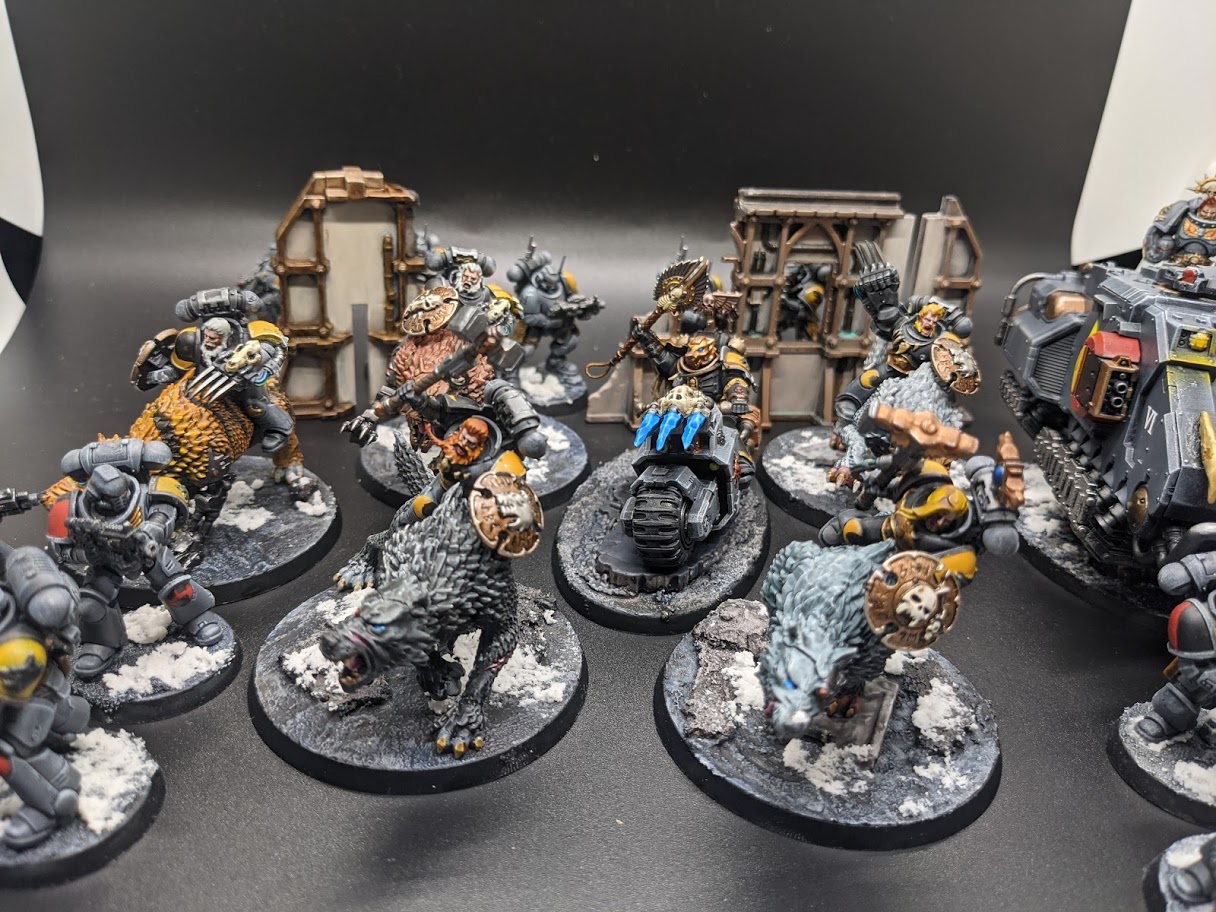 Credit: "Contemptor" Kevin Stillman
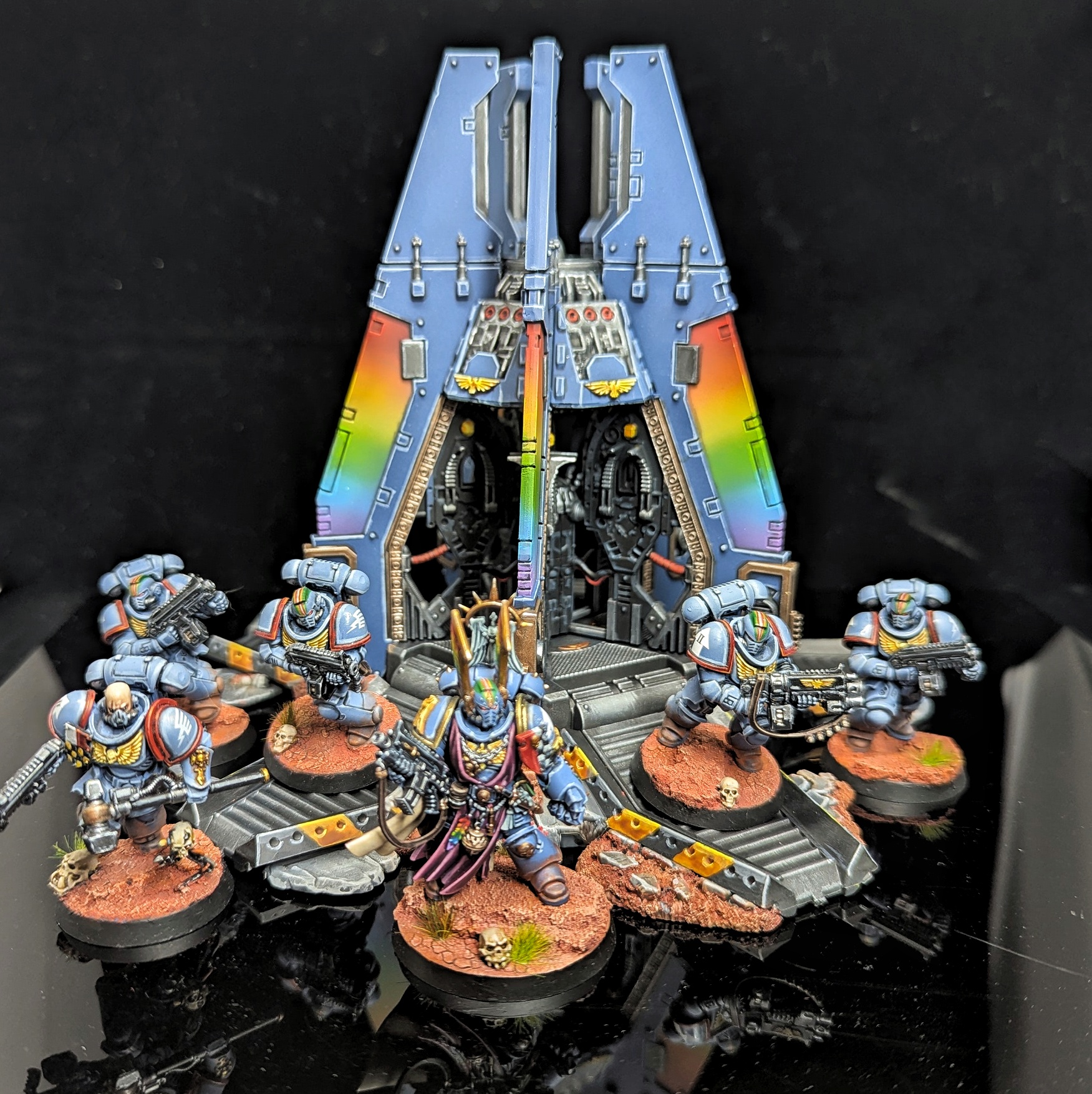 Rainbow Warriors Captain with Intercessors in a Drop Pod by Craig "MasterSlowPoke" Sniffen
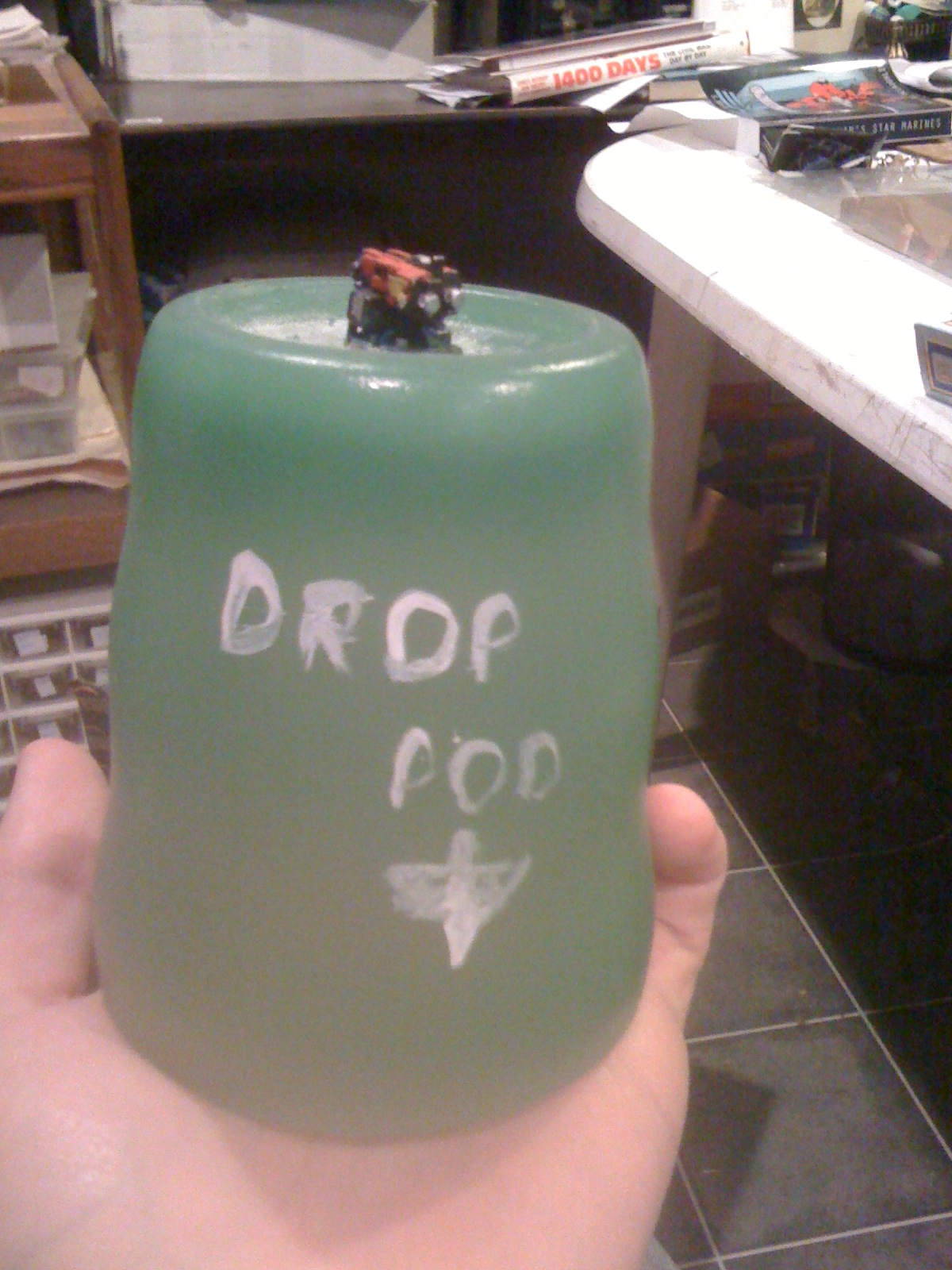 SRM's DIY Drop Pod Circa 2005. Credit: SRM
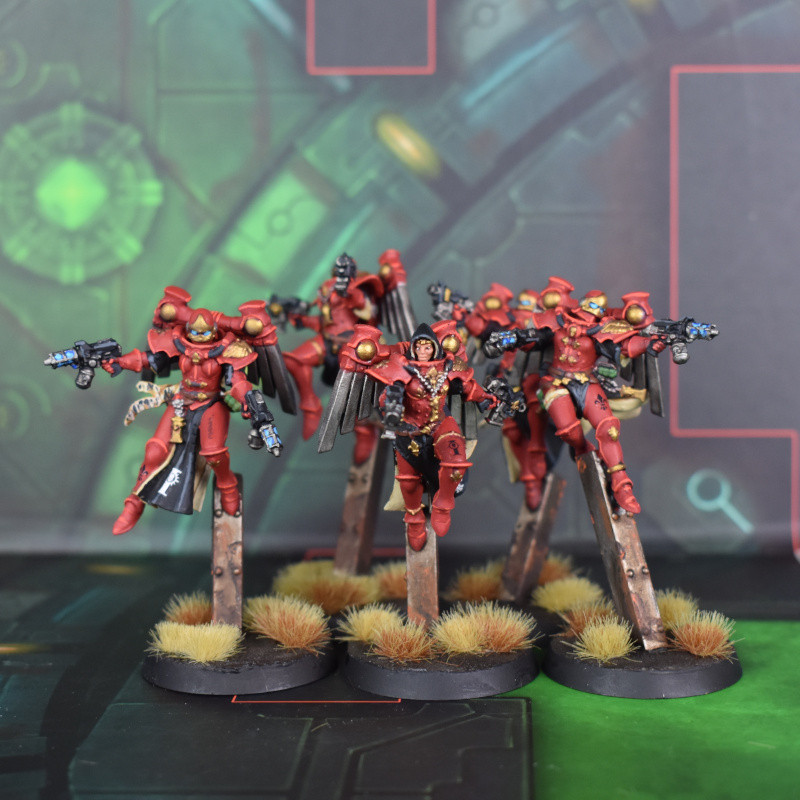 Seraphim. Credit: Corrode
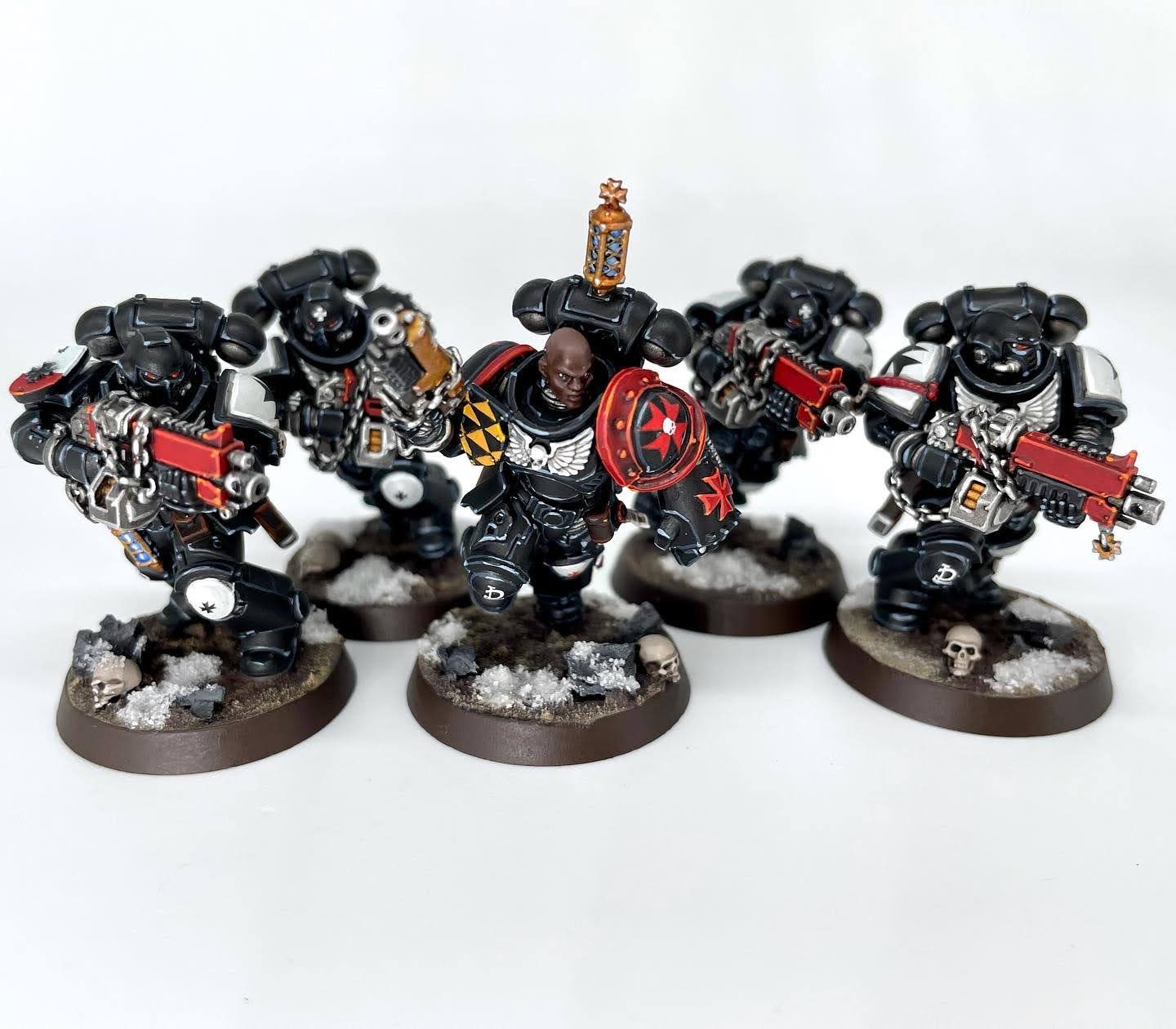 Black Templars Intercessors. Credit: SRM
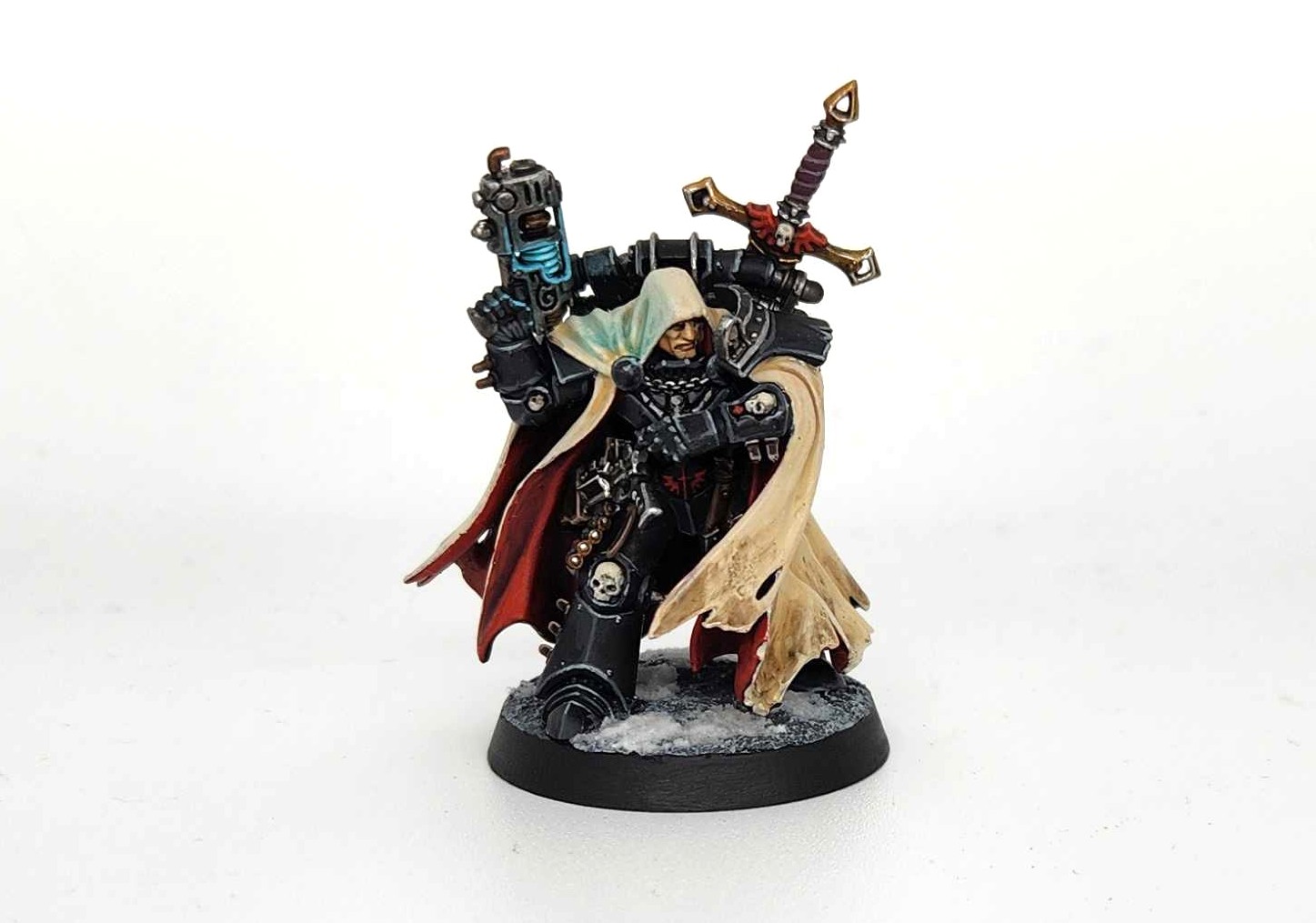 Credit: Robert "TheChirurgeon" Jones

 Goonhammer App and Patron Updates: April, 2026
 Kill Team Tournament Report: Engage, Party, Repeat's March Madness 2026
 Goonhammer Reviews: Tribal Conquest