Welcome to another installment of Starting Hex, a series about Warhammer Underworlds. I'm going to be revisiting the Rivals decks that have been released since second edition of Warhammer Underworlds has come out – consider them a companion piece to the initial preview reviews that I wrote when they were all brand new, but now with more hands-on experience behind the thoughts. It's intended to be a resource for players to familiarize themselves with the decks and assist in picking some out to play with as well as just learning what options are out there. Most of the content covering individual decks out there is preview content, so there's a lot of speculation and assertions made on very little reps. Now that these have been around for a while, I'll hit on the rough game plan of each deck, key cards that are worth focusing on, potential trap cards that could be pitfalls to take, and various sample Nemesis pairings that have seen success.
The first entry will start with two of the four decks that come bundled with the Embergard release – Blazing Assault and Emberstone Sentinels. If you want to go back in time to November 2024 and laugh at how off-base I was with my initial impressions, you can find my coverage of these two decks
in this article.
Embergard Decks
These four decks have firmly established themselves as the foundational Rivals decks for the entire second edition of Underworlds so far. Not only were they the first decks released in what is meant to be the starter box for the game, but they also contain a large amount of the strongest and most generically useful cards. If you're interested in playing Nemesis, you will do just fine by only having these four decks in your roster to mix between. Even when introducing further decks to combine with, one of these are quite often used as half of a Nemesis pairing. As a quick example, of the top 36 decks at the World Championship, 32 of them had at least one of these decks in their pairings.
On the one hand, this is great for new players because they can pick up the starter box and get not only all the basic tools for the game (dice, board, tokens, etc.) but also some of the most flexible and potent decks to get right into the game. On the other, it's meant that many of the subsequent decks that have been released have struggled to make as much of an impact. These four are definitely the kings of the hill and have been difficult to dislodge.
Gameplan
This Strike deck has taken a prominent place in the meta because it offers a variety of incredibly easy to score objectives as well as one of the strongest power decks in the game so far. Sure, the objectives are almost entirely focused on attacking but the key thing is that
every game plan in second edition Underworlds involves attacking in some form (aside from sickos like the
Staggerer's Pacifist Skaven). The power cards do offer a lot of offensive boosts, but even more key is that they also supply a lot of movement enhancement options. Like any other wargame, having more maneuverability is always good and can help you regardless of your warband or game plan.
Key Cards
 credit: UnderworldsDB.com
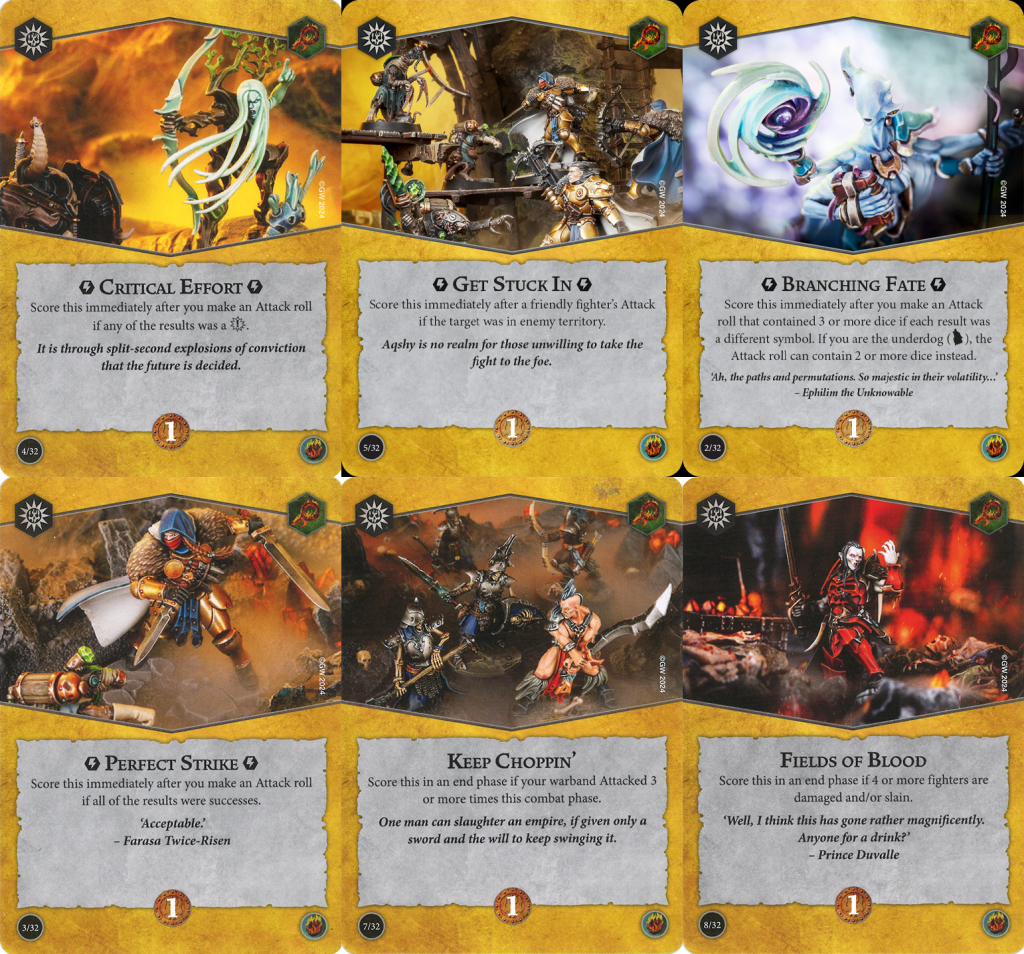
The surge objective suite offers plenty of "free" objectives that will just happen during the course of a game. Cards like Critical Effort and Get Stuck In are nearly guaranteed to score without any extra setup required. Branching Fate and Perfect Strike may sit in your hand for a few turns before you meet their criteria, but they're also just going to happen at some point in many games. That's not even considering tipping the scales in your favor by leveraging flanked/surrounded and re-rolls, which make them even more reliable.
One of the weaknesses of this deck is typically considered to be the end phase objectives because, barring one, they're only worth a single glory. That said, some of them are also pretty easy to score. Keep Choppin' and Fields of Blood feel similar to the surges pointed out above in that you're rarely going to need to go out of your way to score them because their conditions are just how the game plays out.
 credit: UnderworldsDB.com
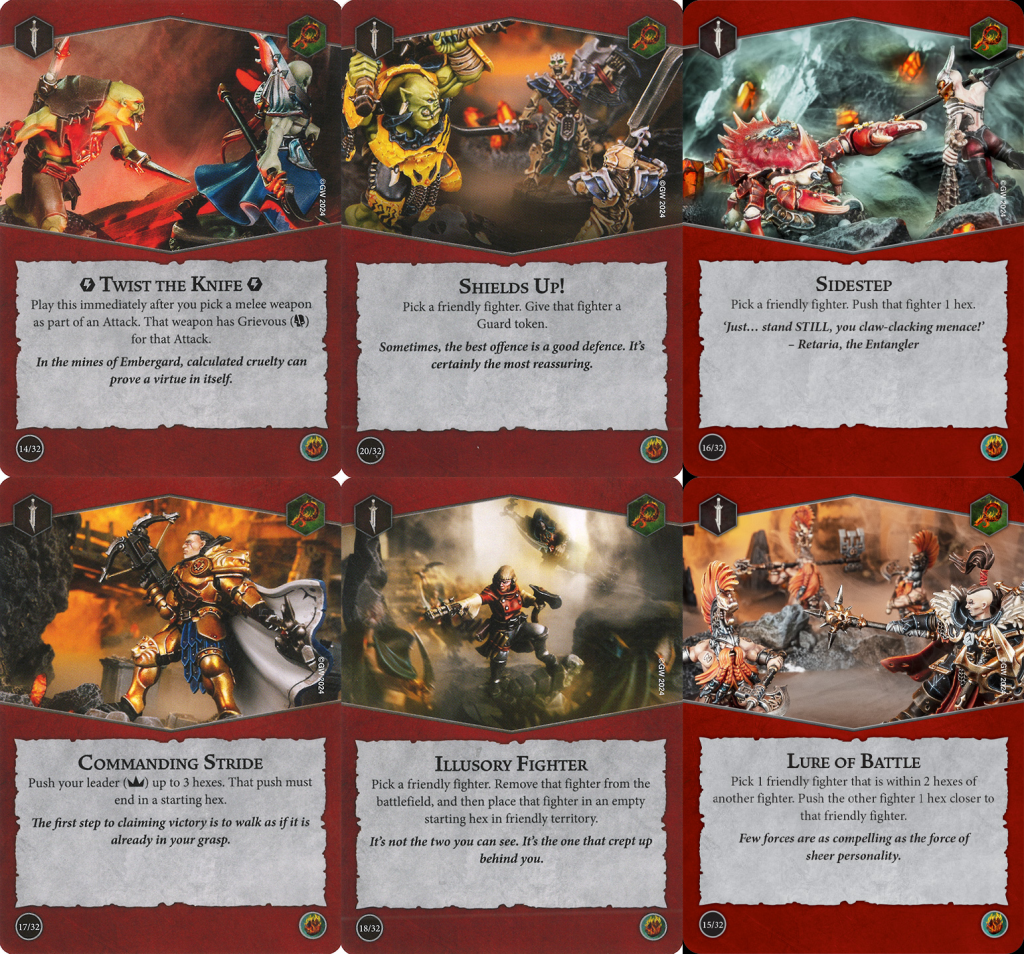
The power cards are so good that you can often end up with a Nemesis deck where 90% of your power cards come from this deck. Many decks have some kind of +attack dice ploy to boost accuracy, and Blazing Assault's version in Determined Effort gives it to you with zero hoops to jump through. Twist the Knife is a way to surprise the opponent with a suddenly lethal attack with next to zero chance for them to respond – one of the only effects like it in the game. The defensive tools are likewise solid with Healing Potion and, weirdly, Shields Up! which is the best guard ploy out there. The majority of the rest of the ploys are pushes, teleports, and movement boosts which are
always great cards. Sidestep, Commanding Stride, Illusory Fighter (restricted in Nemesis but still a solid contender most of the time), and Wings of War offer fantastic repositioning potential and Lure of Battle can be employed in the same way or as a uniquely disruptive tool for pulling enemy fighters off of tokens to seriously mess with opposing scoring.
 credit: UnderworldsDB.com
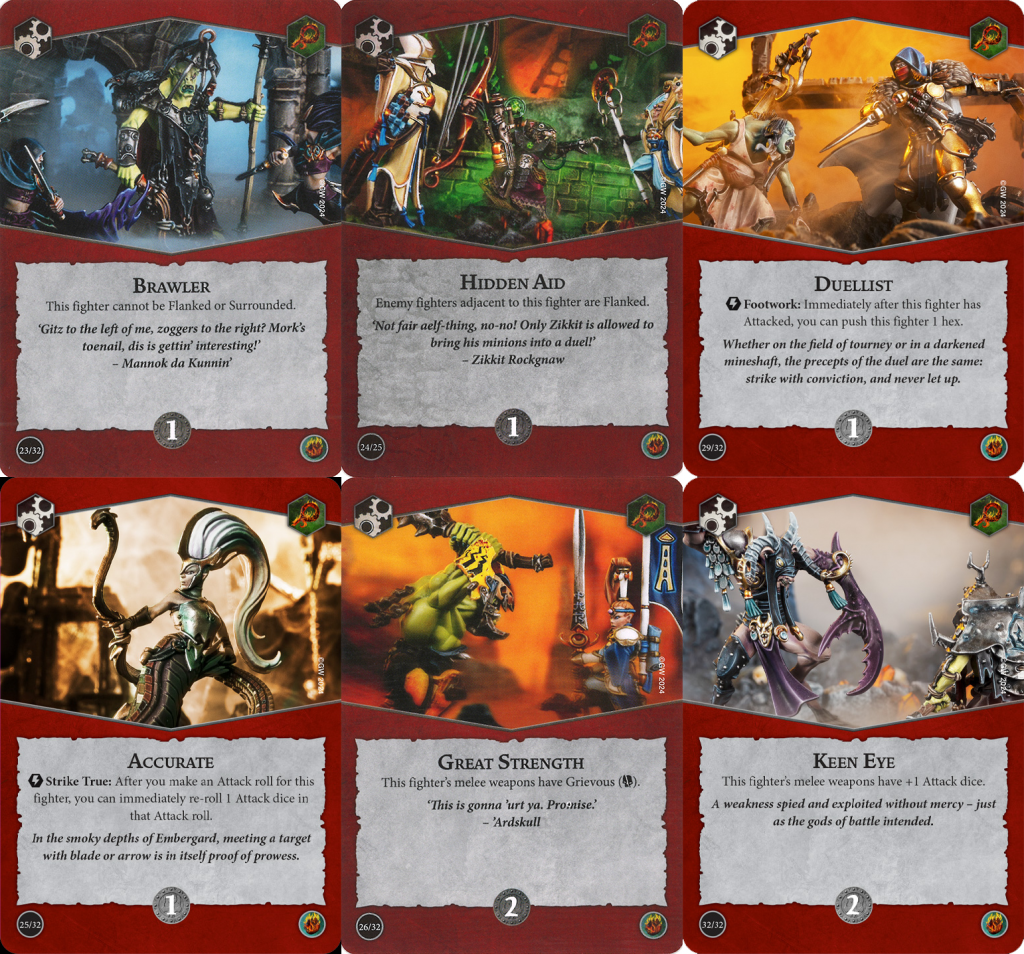
The upgrades continue the trend. Many of the generic upgrades that are reprinted across various decks are found here, but that's fine because they're all so good. Offensive bangers like Accurate, Great Strength, and Keen Eye can be found in multiple places but since they're here you'll probably take them. Defensively, you have Brawler which is especially great with the introduction of Deadly Synergy and the generically useful Great Fortitude. While situational, having access to ensnare and cleave through Deadly Aim and Sharpened Points is appreciated. This deck actually has the best versions of these cards that grant the runemark to
every attack from the fighter, not just their melee attacks. Hidden Aid pulls double duty by boosting a fighter's defensive and offensive profiles and is nearly always welcome to see.
Trap Cards
 credit: UnderworldsDB.com
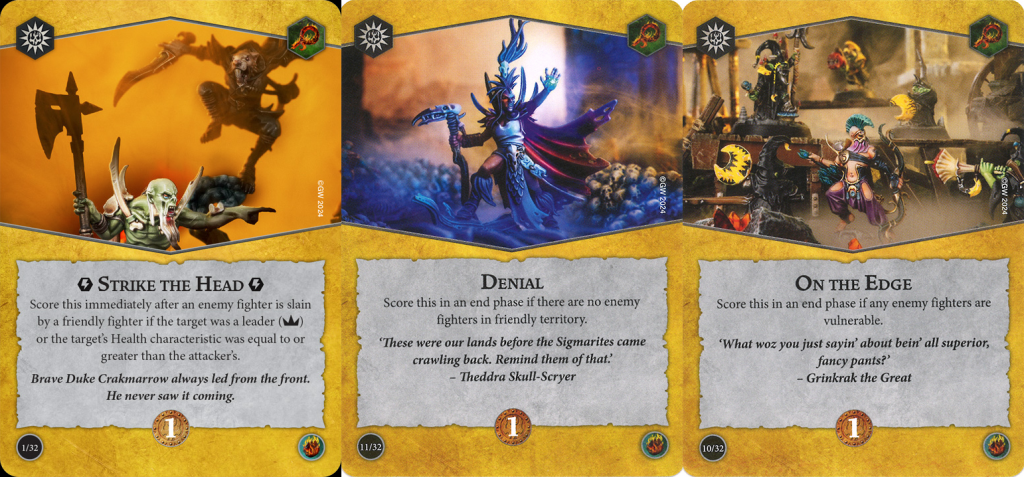
It's not all roses and rainbows because there are some cards that don't quite pull their weight. For objectives, Strike the Head and Strong Start are both what get referred to as "kill surges" which are inherently unreliable. They're not universally panned but you do need to be wary including them because it's a lot harder to kill an enemy on command compared to simply making attacks. Annihilation is also a massive ask because even the most aggressive warband and play is not always guaranteed to wipe the opponent due to dice randomness or playing into tanky opponents, not to mention the awful feeling of seeing it in your opening hand. I guess these three don't exactly meet the criteria of being bad picks, but they are ones that need consideration before choosing.
On the Edge and Denial, however, are cards I have never chosen or seen played against me. You don't want to leave enemy fighters vulnerable when you could instead kill them, and Denial is something opponents are going to be countering without even trying.
 credit: UnderworldsDB.com
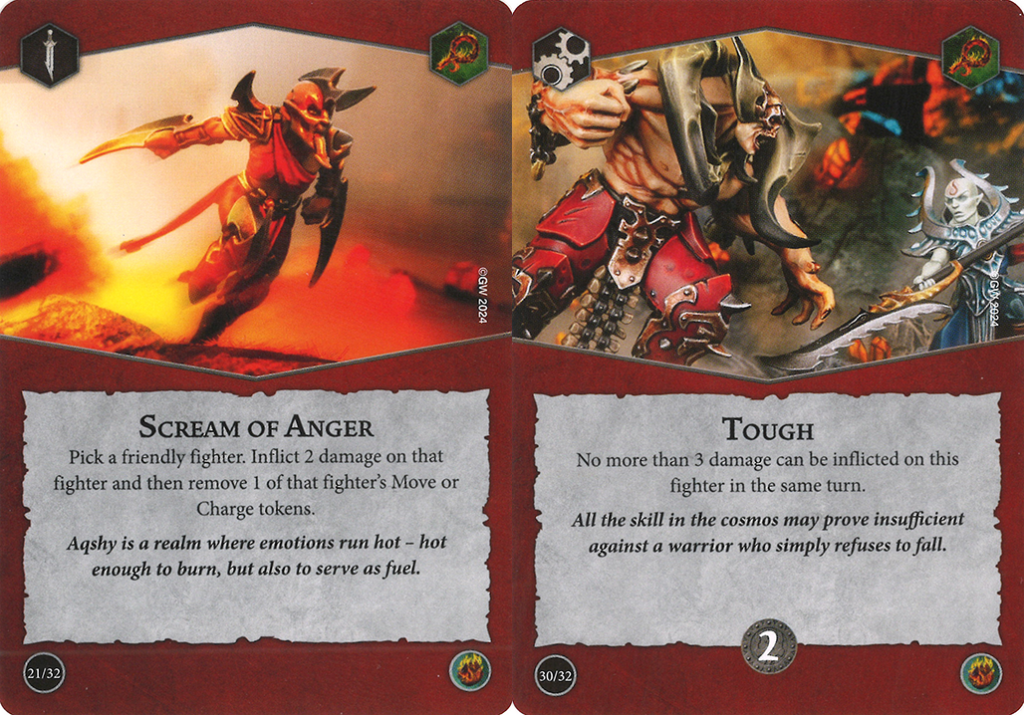
On the power side, the irony of both of these cards being on my list of cards I picked out in the initial review isn't lost on me. Scream of Anger is incredibly niche in use. Not only do you need a warband with fighters that can afford to get domed for 2 damage, but you also need to be in situations where it's useful. They exist, but aren't as common as it seemed to me on first glance. Tough, on the other hand, is just bad. Capping incoming damage is a very potent mechanic, but the threshold of 3 is so high that it's not going to come up in 99% of games. Heck, I did a write-up on
Heavy Hitters in Underworlds recently and the criteria there was being able to hit for 3, meaning almost all of those brutes aren't going to be affected by this card at all.
Nemesis Pairings
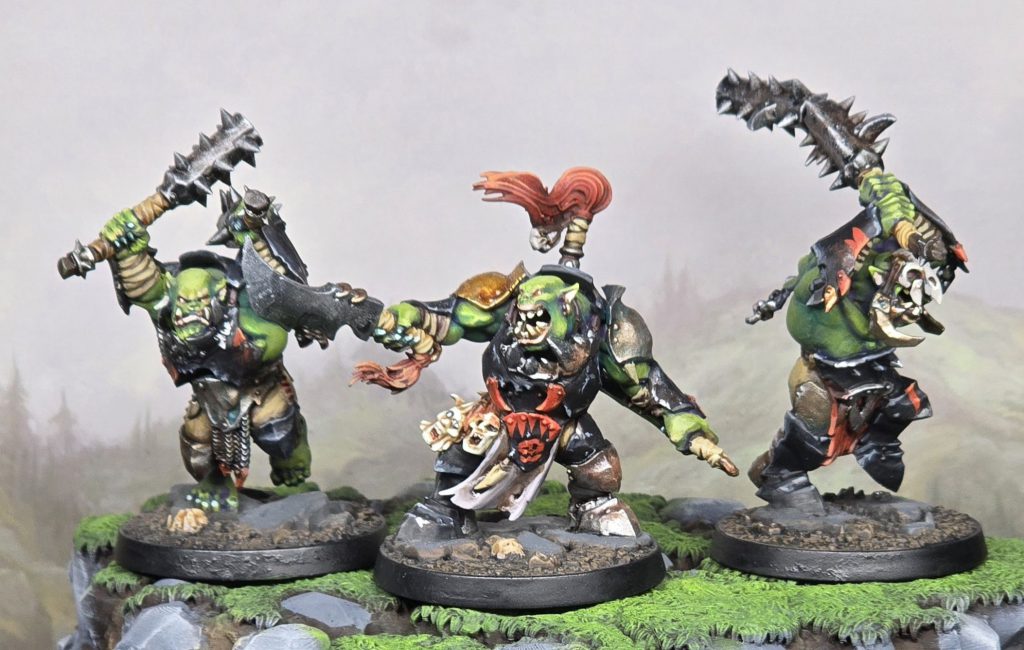 Morgok's Krushas. Credit: keewa
Anything. Okay, maybe not
anything but it pairs very well with many of the available decks.
If you want to go all out aggro, Blazing Assault pairs quite well with either Reckless Fury or Deadly Synergy. BARF has been a staple pairing since the edition's launch and it even won the latest World Championship. Deadly Synergy is all about having fighters in the right place and Blazing Assault, as we've seen, provides that movement power. I've had some limited success with pairing Raging Slayers and embracing the full HULK SMASH mentality, but that does mean you're going to be sporting a very low glory ceiling and some subpar objectives.
 Thorns of the Briar Queen. Credit: Rockfish
Some warbands can also take Edge of the Knife if they're elite enough or horde enough. Pillage & Plunder is a common pairing to leverage the objective package from Pillage with the power package from Blazing to result in a highly flexible deck that can do almost anything. Blazing/Pillage was the deck combo that took second place at Worlds, coincidentally.
Other pairings can certainly work as well, even if they're not as commonly seen. Anything coming out in the future that can shore up the objective package weakness can lean heavily on Blazing's superb power cards.

The next deck is the (currently) only Take and Hold deck of Emberstone Sentinels. Despite being centered around holding treasure tokens, a lot of the objectives in here require you to make attacks and/or be in enemy territory which was likely done to prevent any passive "sit on my side of the board and not engage" play styles from becoming prevalent. Well, mission accomplished in that regard. It hasn't seen quite as much success as Blazing Assault because it's a little more niche in use – every game will involves attacks and moving, but not every warband or paired deck in Nemesis cares about treasure tokens.
Gameplan
As mentioned above, the general plan when taking Emberstone Sentinels will revolve around securing treasure tokens. If you're playing Rivals, you'll need to commit to invading at least somewhat due to some of the surges, Slow Advance, and potentially the Hold Treasure Token # objectives. In Nemesis, there are a few ways to take this. The most typical approach is to ditch as many of the objectives that require you to be in enemy territory and instead focus on ones that allow you to stay (relatively) safely in your own territory. There's also a world where you embrace the invasion and dive deep into enemy territory, but that's a much riskier plan without a ton of upside to make it worthwhile (other than being fun).
Key Cards
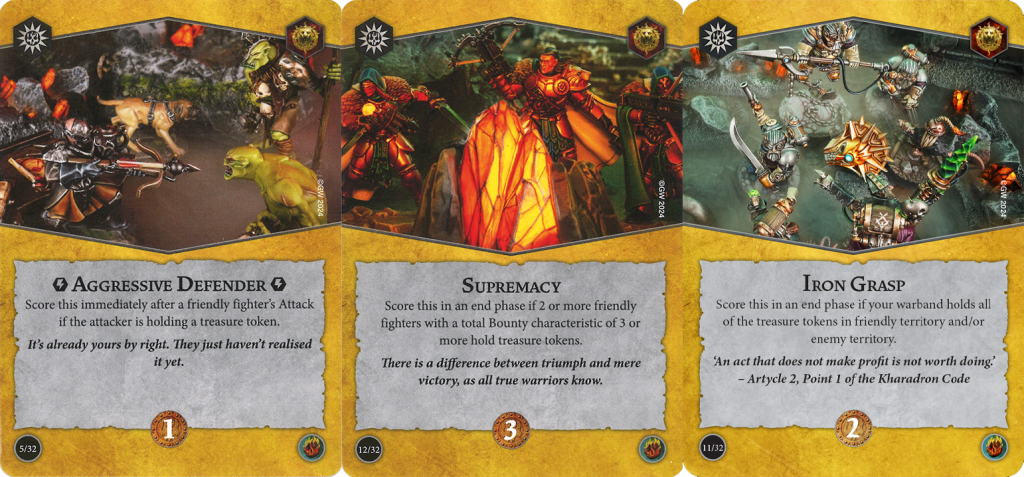 credit: UnderworldsDB.com
For surge objectives, Aggressive Defender is the one with the fewest restrictions on it. It doesn't even need to be a successful attack, so getting into position to score this is pretty simple especially with a ranged attack.
End phases offer two particularly appealing, high scoring cards with Supremacy and Iron Grasp. Between the two of these, you're able to score 5 glory just from hanging out in your territory and plopping fighters on tokens. Supremacy is restricted and often has to fight with other very tempting cards in Nemesis, though, so take that into consideration. If you're in need of a filler objective, Hold Treasure Token 3 or 4 (as well as 1 or 2) are decent enough because you have a pretty good chance of having access to one of those tokens.
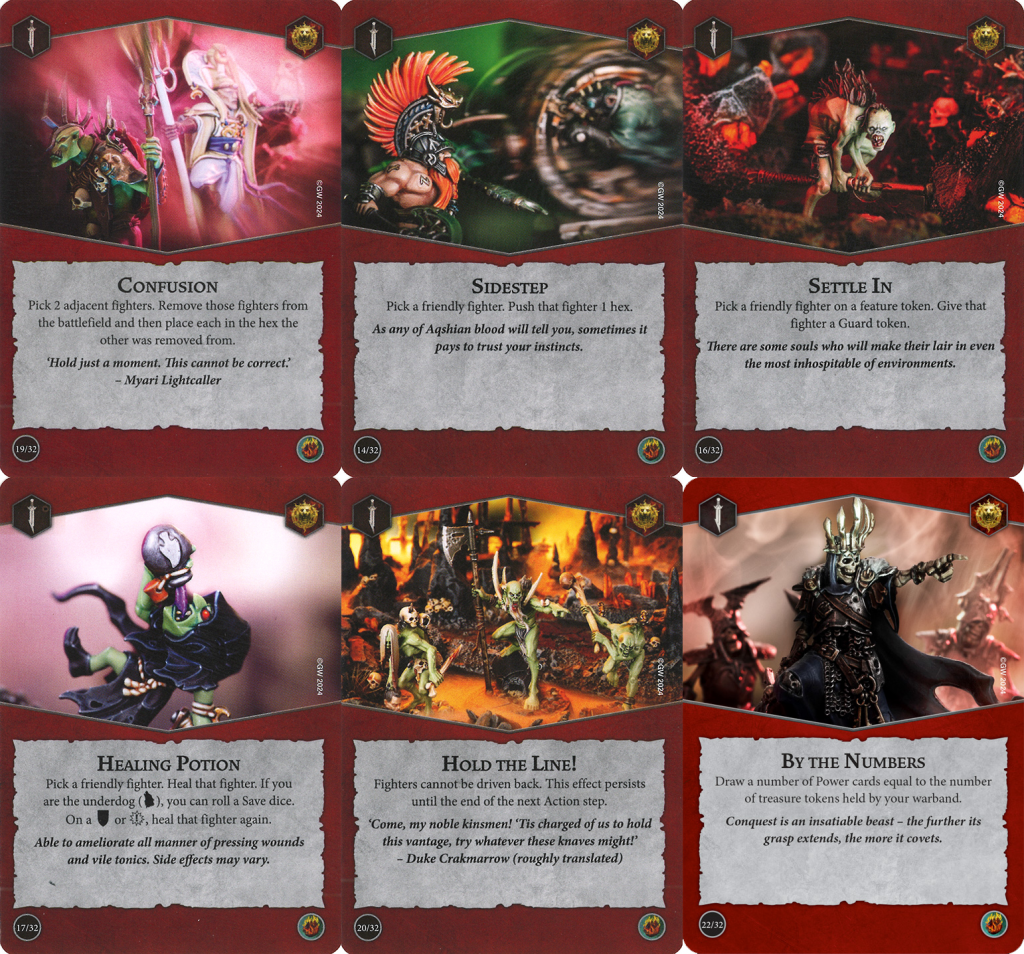 credit: UnderworldsDB.com
Blazing Assault set the bar high with an absolute fire power deck, but Emberstone Sentinels is no slouch. Confusion and Sidestep are valuable positioning cards on their own, but their value jumps even higher when you're using them to secure treasure tokens to score objectives. Defensively, Settle In is a guard ploy that is fairly flexible – it can be used for fighters on treasure or cover tokens, but also Aqua Ghyranis tokens. Healing Potion is always solid if your fighters are able to take a hit without crumpling and likewise Hold the Line can be played prior to your opponent's last turn in a round to make it even harder for them to disrupt your end phase scoring. By The Numbers can lead to some very exciting power steps where you draw 3+ cards in one go provided your warband has some push/move tech.
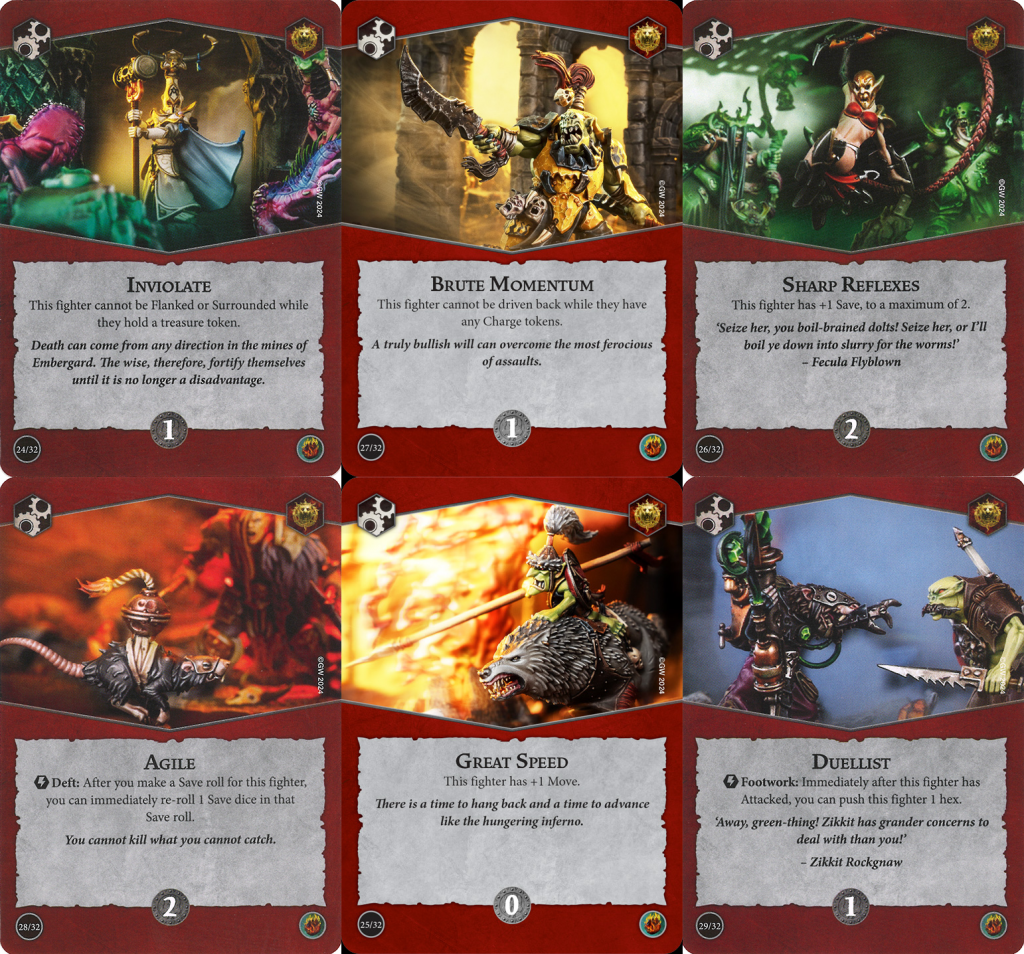 credit: UnderworldsDB.com
For upgrades, there are some thematically appropriate ways to ensure your fighters can more reliably hold treasure tokens. Inviolate, like Brawler in Blazing Assault, is picking up extra value lately with the introduction of Deadly Synergy. Brute Momentum requires you to want to charge with your fighters, but even the most passive of gameplay styles still usually involves a few charges. Sharp Reflexes and Agile boost fighter save characteristics which is a fairly uncommon effect, so having access to both of them at once is great. Likewise, Great Fortitude is generic but can help push your fighters to a health threshold that requires an additional attack from your opponent. It's not all purely defensive, either. Great Strength and Keen Eye are generic but powerful, and Great Speed functions more like an 11th ploy than an upgrade given its 0 glory cost. Duellist rocks, especially with any attackers who can hit from 2+ hexes away. It can be used to hop onto a treasure token after an attack and even serve as a pseudo-Overrun on demand.
Trap Cards
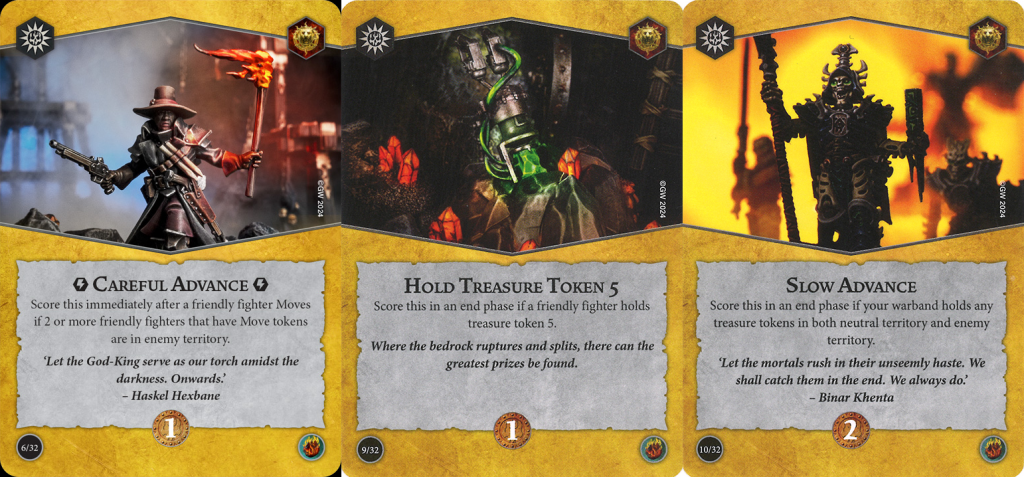 credit: UnderworldsDB.com
Depending on your approach, a lot of the surge objectives are going to cause you to overextend. Taking all four of Sally Forth, Stand Firm, Step by Step, and Careful Advance is rarely done, but one or two will typically wind up in a deck as the 5th and 6th surges. Of these, I've had the most luck with Sally Forth and Stand Firm. I wouldn't exactly consider any of these to be bad, however, but make sure you realize what you're getting into when taking them.
Hold Treasure Token 5 is just flat out worse than the other versions of this objective. The other two allow you to score it from holding either of two different treasures, but HTT5 will only score off of treasure 5 without giving any extra reward for doing so. Slow Advance isn't necessarily a trap, but do keep in mind it forces extending into enemy territory
and placing a treasure token in neutral territory now that it is no longer required. Doing so often telegraphs you having this card in your deck, so expect your opponent to try and deny it.
 credit: UnderworldsDB.com
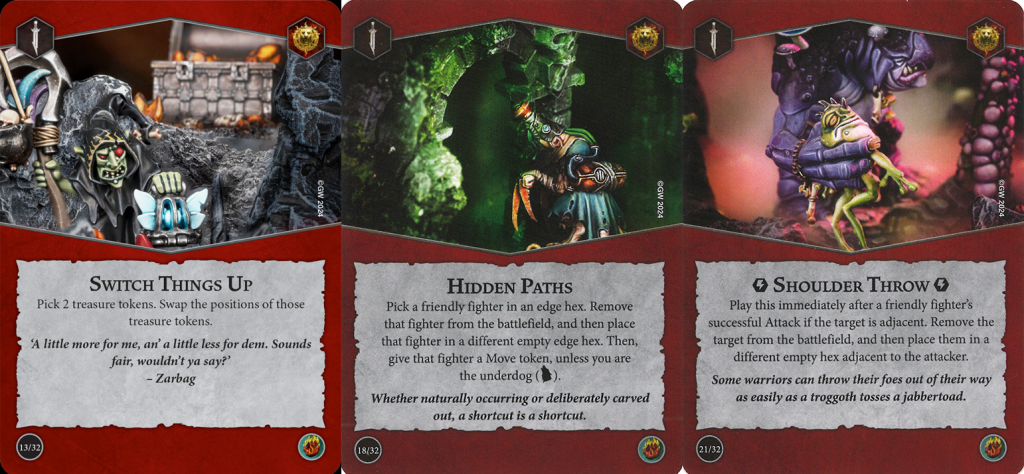
Some of the ploys have very limited use, but I also don't know if I'd call them bad. Switch Things Up can help with some scoring and can do some cute desecration spreading with Khagra's Ravagers, but it's usually my 11th ploy (and thus cut). Hidden Paths is a teleport which is powerful, but it has too many restrictions on it to reliably make my decks. I'm also a big dummy and want to find a use for Shoulder Throw, but it's honestly probably the worst card in the entire deck and I've never seen anyone use it. You're probably safe to skip it.
 credit: UnderworldsDB.com
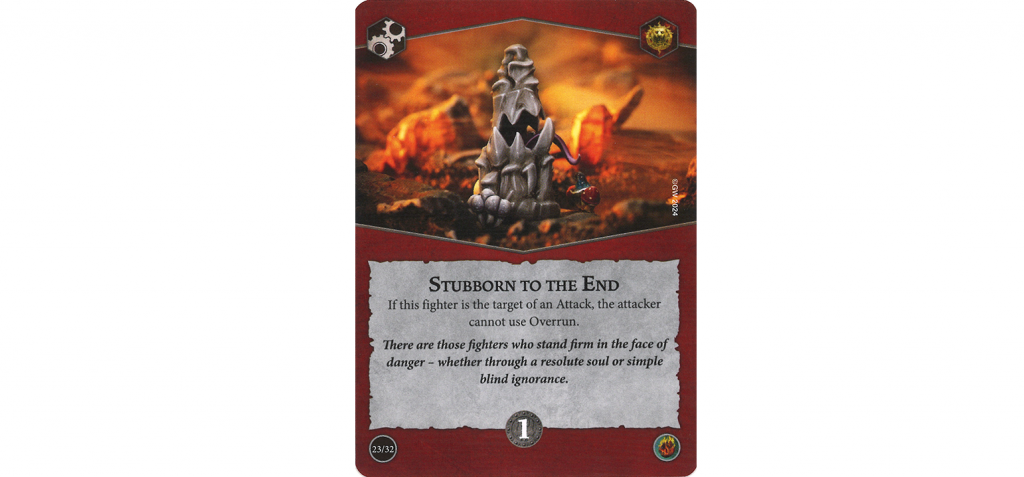
Stubborn to the End is really the only upgrade I wouldn't be happy to put into a Nemesis deck. Needing to devote a card to counter something as rare as Overrun isn't something I'm fond of. I've seen it show up in decks of people a lot better than me at the game, but I never quite understand why.
Nemesis Pairings
 Khagra's Ravagers. Credit: SRM
One of the most common pairings with Emberstone Sentinels is one that feels a little counterintuitive at first. Pillage and Plunder wants you to delve treasure tokens away while Emberstone Sentinels wants you to stand on them, but by picking and choosing between the two decks you're able to take a pretty high glory ceiling that allows you to (mostly) play a passive game plan.
You can also lean heavily into the "stand on tokens" bit by pairing with Countdown to Cataclysm, which itself has a few objectives that rely on holding treasure tokens. The biggest downside here is that Supremacy is restricted along with Spread Havoc, CtC's most reliable high scoring end phase objective, so you'll have to pick which of these you'll take in Nemesis.
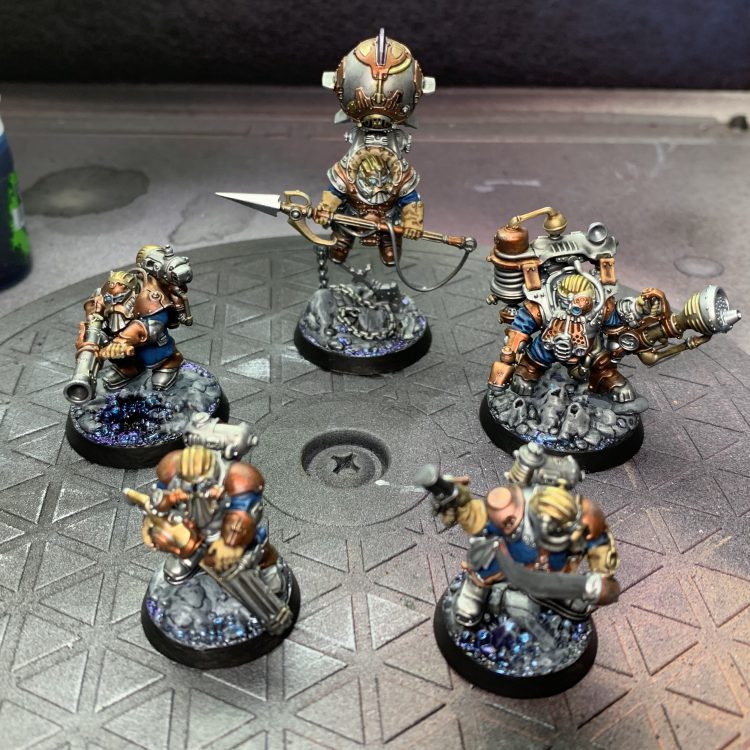 Thundrik's Profiteers. Credit: Raf Cordero
I've seen some experiments being done with Hunting Grounds where the idea is that you can threaten passive scoring with Emberstone Sentinels to give your opponent incentive to come into your territory, which then turns on all your Hunting Grounds cards. So far it has had limited success. It's just hard to compete with the two above combinations.
I've personally been toying with an Emberstone Sentinels and Reckless Fury deck for a little while – I stole the idea from someone much better than me – and it feels like there's something there, but it's overall a little disjointed. It makes for a cool flex plan, at the very least.
Personally, I also wish Supremacy wasn't restricted. It doesn't feel as egregious as most of the other restricted cards. By taking it off of the restricted list, Emberstone Sentinels would offer more potential glory for the higher risk of standing on tokens. Pillage and Plunder can just delve and then run away or die, offensive decks can score by making attacks, but Emberstone has to survive a full round standing in certain locations. It feels like they should be rewarded a little for the extra effort required to score.
Wrap Up
That's it for now. The next installment will tackle the other two decks in the Emberstone box, then work chronologically through the decks that have been released. Until then, have fun playing Underworlds!
Have any questions or feedback? Drop us a note in the comments below or email us at contact@goonhammer.com. Want articles like this linked in your inbox every Monday morning? Sign up for our newsletter. And don’t forget that you can support us on Patreon for backer rewards like early video content, Administratum access, an ad-free experience on our website, and more.Thank you for being a friend.
 This website uses cookies. Learn more.


 Goonhammer App and Patron Updates: April, 2026
 Kill Team Tournament Report: Engage, Party, Repeat's March Madness 2026
 Goonhammer Reviews: Tribal Conquest