We’ve written a ton about competitive terrain layouts but in this short series we’re looking at how to make good layouts for narrative play – layouts which go above and beyond the paintball arenas and bare MDF often presented in competitive formats. Last time around, I looked at making and using hills in your games. If you’ve missed our previous articles in this series, you can find them here:
This time around I’ll be answering another request, looking at how to incorporate verticality and vertical features into your games.
Anyone who has looked at that
Plunging Fire rule has thought about when and how it would be applied, and in that respects tenth edition is a bit of an anomaly - vertical and raised terrain tended to be much more common in prior editions of Warhammer 40k, where buildings were often taller and models with FLY could just move any vertical distance with impunity.
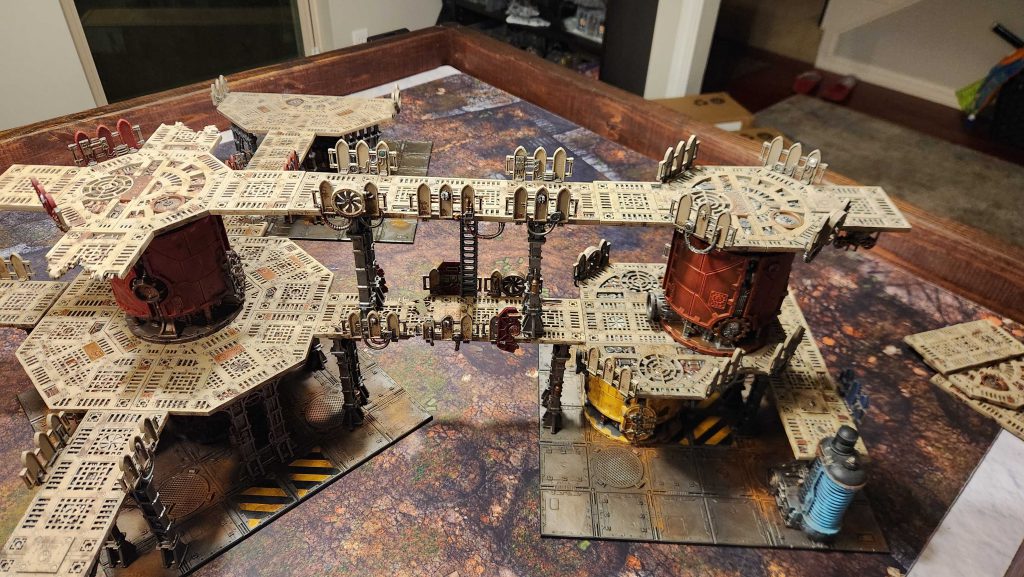
When it comes to actually playing with raised terrain features, there are four key factors you have to worry about, and they're all pretty major issues:
1. Model Accessibility. How are models going to get up there? How do they get down? If models can't scale the terrain effectively, they're not going to. And while the rules of tenth edition 40k lets you use your Movement characteristic to move vertically, spending an entire turn moving up one level is pretty brutal.
2. Value. Is there a compelling reason for going up onto higher terrain? If not, why would I put minis there, especially if they risk being easily seen? Your mission and layout needs to present a reason for taking the high ground.
3. Interactivity. Once units are up top, is there room for them to move around and interact with other units? Can units fight up there? Can they avoid each other? It's easy to create raised platforms, but harder to create actual raised play spaces.
4. Real Estate. You can build raised buildings and platforms, but these take up real space on the battlefield. If that space is closed off, then you're essentially trading off ground floor real estate on your battlefield for raised areas, which can make the table feel even smaller and either advantage melee armies or cause problems if they can't move through your closed off buildings or structures. And if you leave them open underneath, that introduces a different problem...
5. Player Accessibility. Sure, your minis can fit under there, but can your hands? Having raised parts of the battlefield that don't just block off the ground level means having spaces beneath those raised areas, and you want to make sure those spaces are places where you can actually reach to place and move models around.
On top of those five issues, we also have to account for the rules in tenth edition 40k, which give models a 5" vertical engagement range. this means that any catwalk or platform positioned 5" or less in height over the battlefield or another floor will create an impassible engagement range for models moving underneath. In the image below, these two combatants are locked in mortal combat with each other despite being separated by the gantry and several inches.
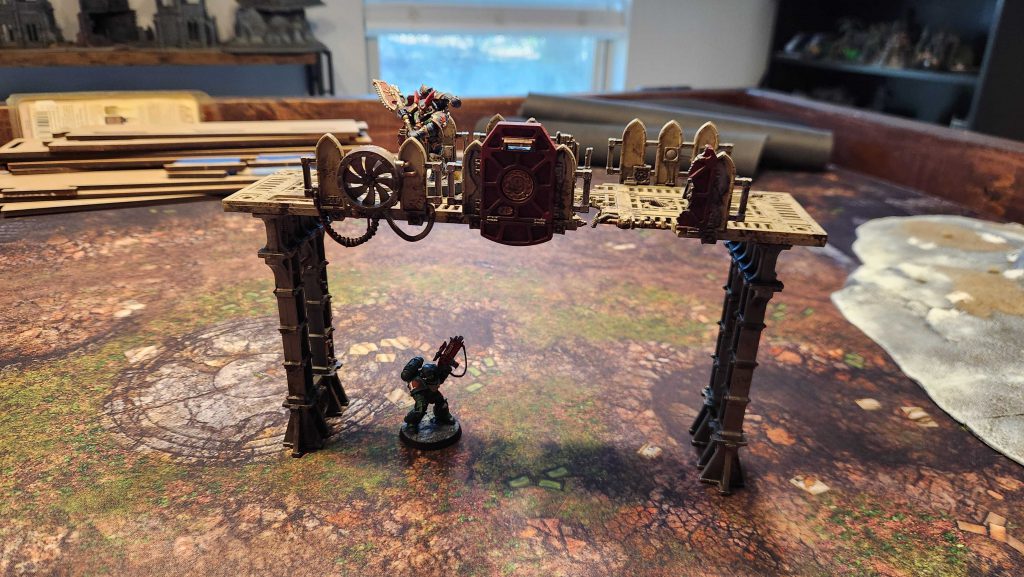
This means a unit can't move under a unit on a raised platform unless it's more than 5" off the ground unless it's charging or able to move through Engagement Range (ironically having FLY lets you do this despite moving under). As a result your raised features either need to be placed with this in mind or built tall enough to prevent this from being an issue. And when you take these factors into account it's easy to understand why you don't see a lot of raised terrain features - they're a challenge to build well and use effectively.
Challenge 1. Model Accessibility
Let's start with the first challenge - how are our units going to get up there? In an ideal world you want to give units an easy path to climbing and descending to raised areas. Spending an entire turn moving vertically just feels terrible, and may not even be possible for a unit like Terminators with a 5" movement characteristic. Even for units with FLY, moving large vertical distances will take a lot of movement and reduce how far they can move, and doing the measurement on those jumps is always a pain in the ass.
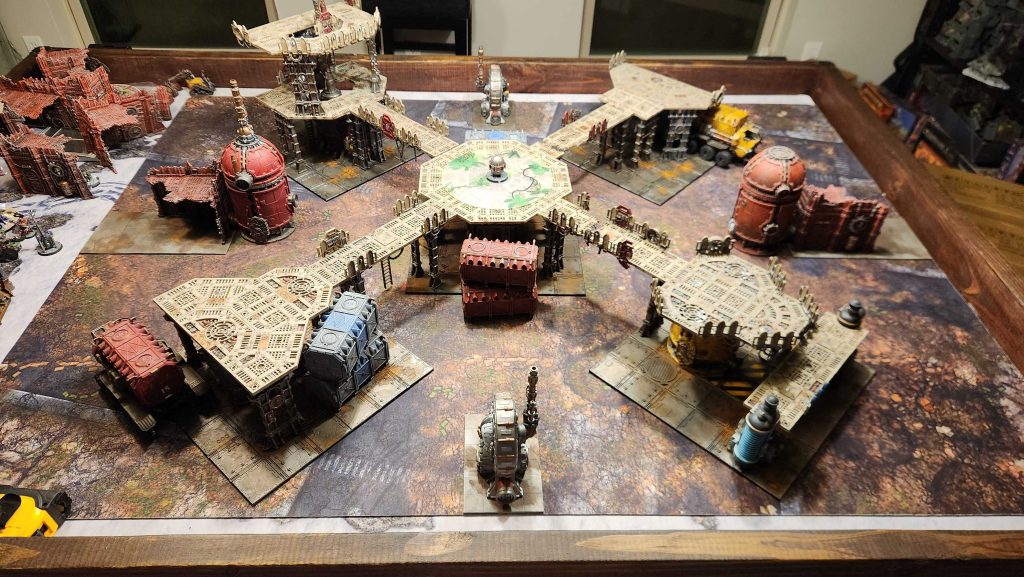
One way you can fix this is by putting raised areas in player deployment zones and giving them the option of deploying "up top." In the example above, players can deploy on one of the raised corner platforms, giving them a way to start up top with some of their forces and start down below (and more hidden) with others. This gives you a way to at least have some of your slower forces engaging with the raised parts of your terrain from the outset. And of course, while jumping up or down can be a pain, jumping from one raised platform to another doesn't incur the same penalty, so units with FLY can manage those gaps easier.
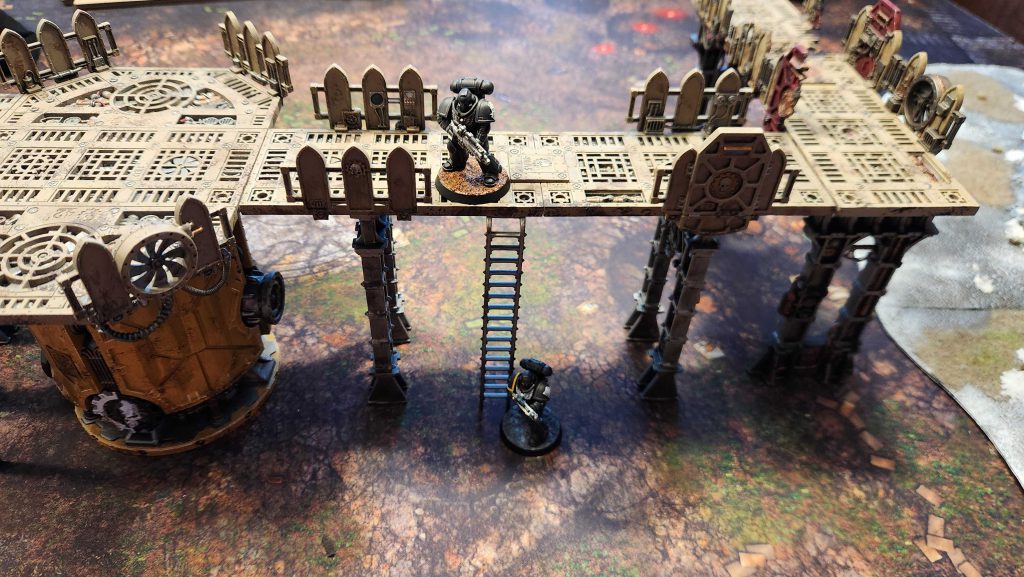
Another way to fix this is with custom rules and terrain features. Three easy fixes for your games:
- Ladders. Let Infantry units move up and down Ladders at a reduced cost - this can either be free or something like 2" of your move. This makes it easy - but not backbreaking - for units to move up in the right spots and lets you predict and control the upward movement flow.
- Free Drops. Let units drop for free. If you want to get real adventurous, give them a penalty for falling more than 5". My recommendation there is to roll a D6 for each model without FLY dropping down, adding 1 for each inch over 5" in height they fall. For each 7+, that unit suffers a mortal wound. If the unit is a monster or vehicle, they take D3 mortal wounds instead.
- Grappling Hooks. Urban Conquest had a great Stratagem for this - you introduce a 1 CP stratagem called Grappling Hooks that lets an infantry unit ignore vertical distance during a Normal or Advance move. This is an easy way to help a unit get around, and extra helpful if a player is getting extra CP as the underdog.
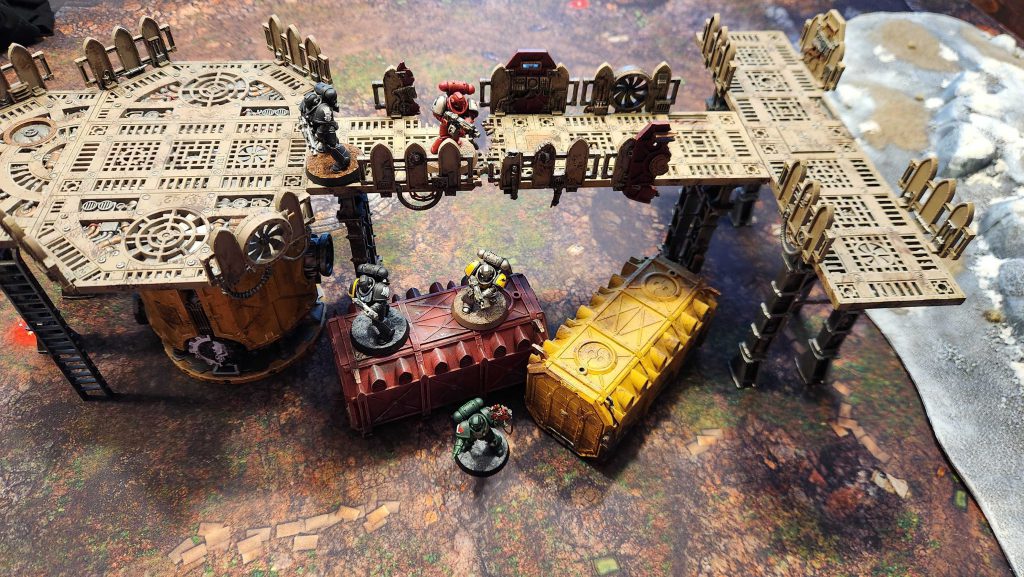
I'm also a fan of intermediate platforms like crates and shorter platforms to give units a halfway point if they're trying to get up, so they can use some but not all of their movement and leave themselves options on the following turn.
Challenge 2. Value
You need to make sure there's a reason to go up top. That can
sometimes be an advantage like Plunging Fire but that's really only an advantage for units with indirect or long-ranged weapons capable of seeing targets. It does you no good for a melee unit. If you're going to have a significant raised portion of your terrain, it should also have objectives on it or provide some kind of benefit for units, otherwise it's just going to look nice and you're not going to get that kind of dynamic, multilevel battle you're looking for.
Challenge 3. Interactivity
On the subject of multilevel battles, those can only really occur if you have space to move around. Similar to our discussion on hills last week, you need large, open areas for units to move around and interact in when you build elevated platforms.
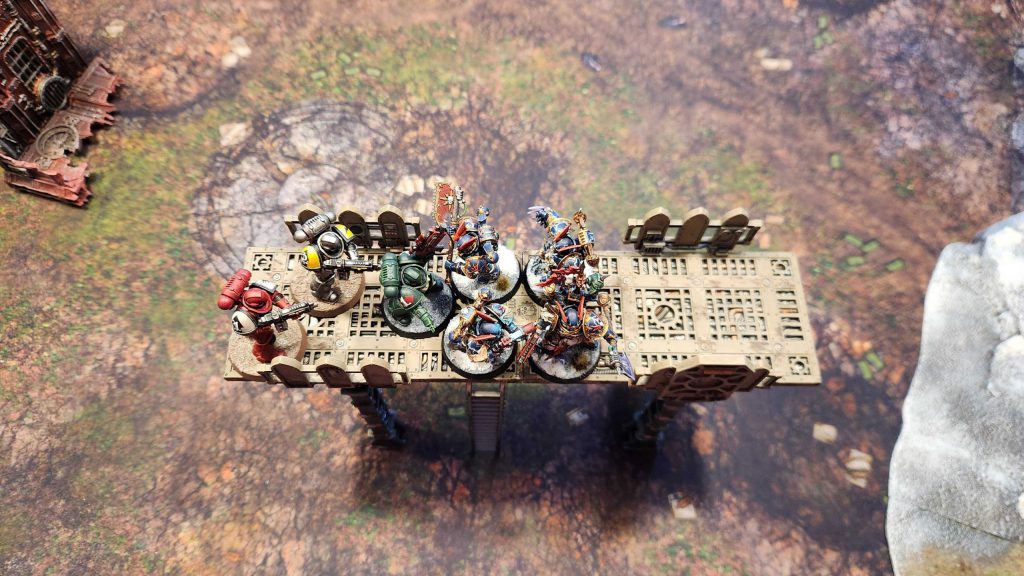
On the walkway up above we can see the issue - the walkways aren't wide enough for units to walk past each other and if they want to fight, you can fit at most two models side by side, meaning only four models can fight in any combat - and that's if you're on 32mm bases or smaller. Models on 40mm bases can only fit in a single file line on that walkway.
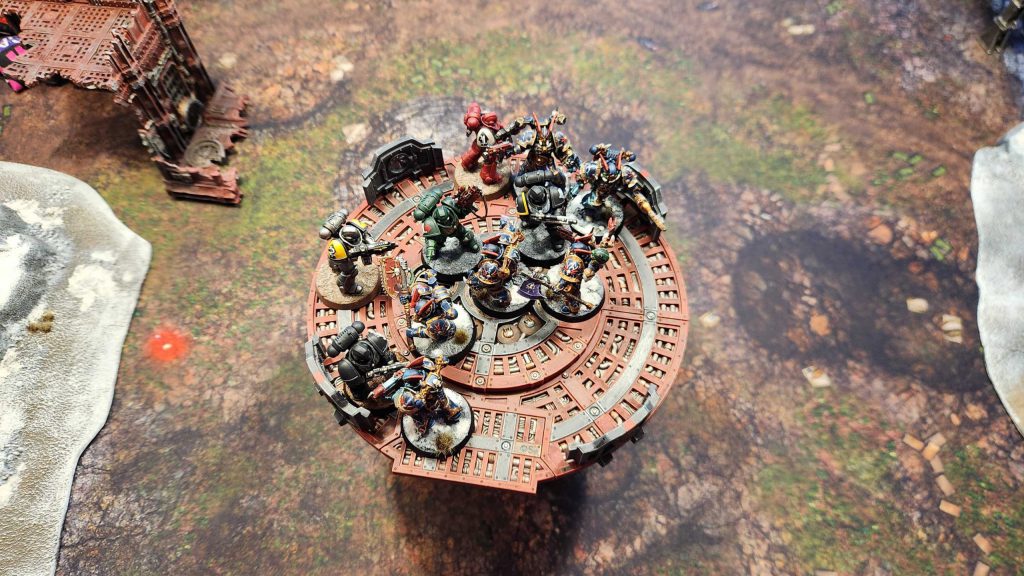
To really make this viable you don't need a ton of space - a 6" diameter circle will give you plenty of room to move around and smash models together, while a 7" diameter circle will give you a full objective marker plus its control area. Ideally you have several of these you can connect together. Having the narrow walkways isn't the end of the world but you need those to be limited and terminate at larger areas so you can take the walkways to larger areas where you can spread out and interact with other units. And ideally those areas feature something worth fighting over, like an objective.
Challenge 4. Real Estate
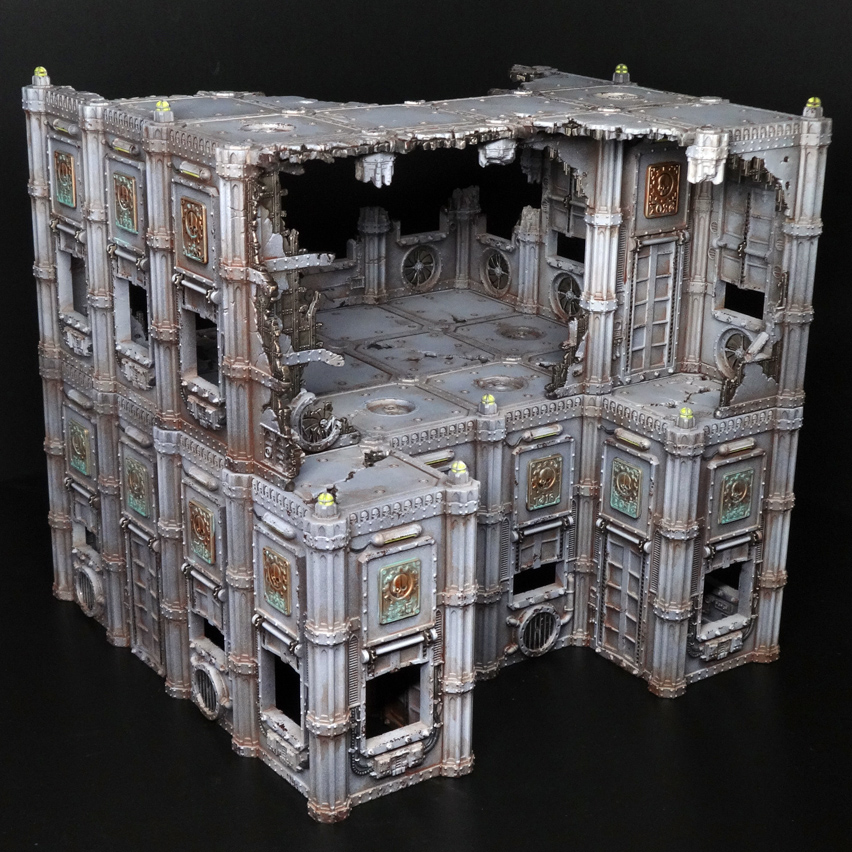 Sanctum Administratus city ruin. Credit: Charlie Brassley
This is a tough one - building large, raised terrain features is naturally going to take up space on your table, and building them where they don't interfere with models underneath means building extra tall with nothing underneath, which can be difficult and costly when you're trying to build terrain. Those features also end up taking extra movement - 6" or more - to make it up to their level, which can make it impossible for slower models to climb up and engage on that higher level.
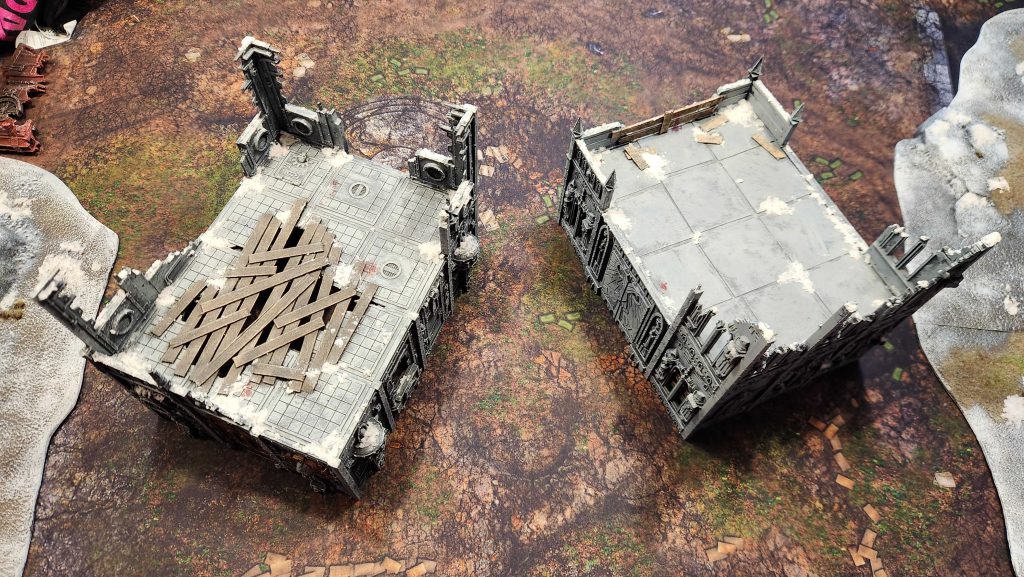
I like to use smaller raised buildings for something like this, which offer both benefit of cover and line of sight blocking footprints for units behind them, though admittedly these definitely eat up real estate on the table. That said, this is only really an issue for Infantry, who can move more easily over 3" platforms, or just move through them wholesale - I don't allow models to stop inside the ruins so as to avoid the "magic box" problem.
Challenge 5. Player Accessibility
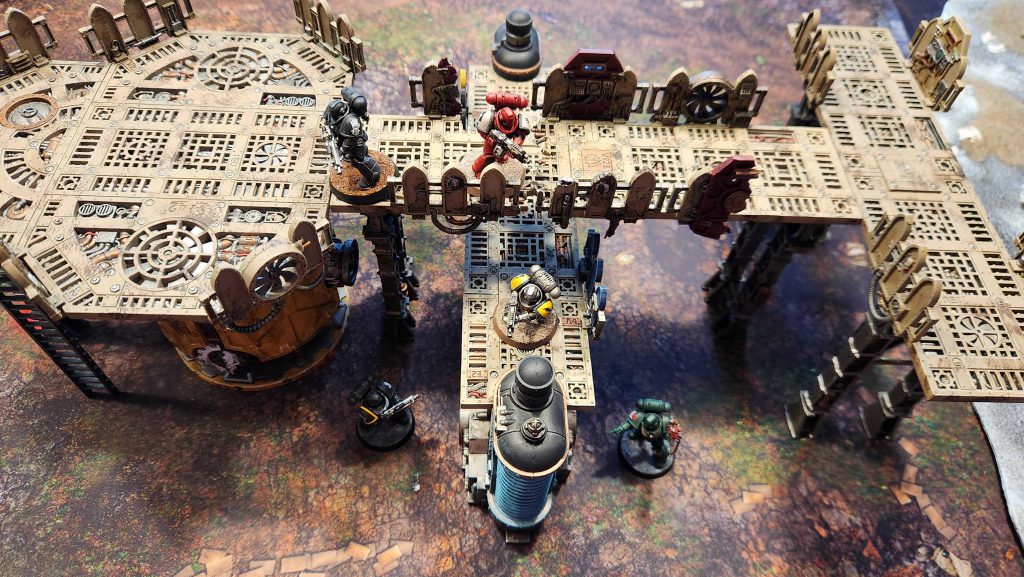
This one's pretty easy - just have large vertical gaps and open spaces beneath your raised terrain if it isn't closed off. You need to be able to get in and move your models around beneath the raised terrain features, and you should be able to see them most of the time. Avoid having really tight spaces for models to move under, as those aren't just a pain to access physically but they also cut off movement to larger units.
Final Thoughts
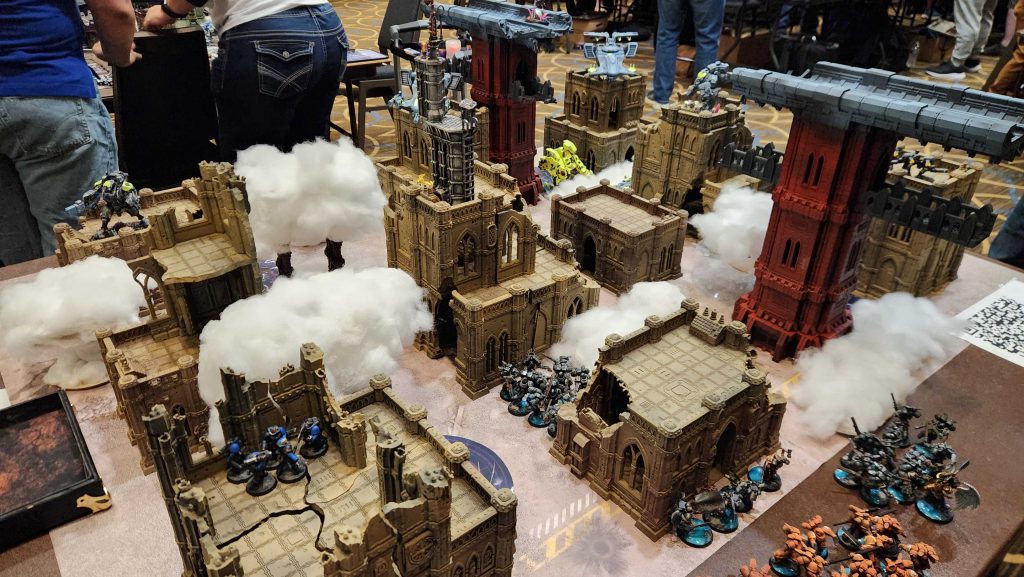
You can can do a lot with vertical terrain but the reality is that it's always going to look cooler than it plays. Building truly vertical boards really means splitting the battlefield into what are effectively smaller battles or fronts. This can be tactically interesting but can lead to some lopsided battles if you don't have a good way of moving between levels or interacting with units on another level. That said, you can make for some really cool, thematic battles using raised terrain features, especially if you make players aware up front that they need to bring units with FLY or capable of moving between different levels. This can also help you solve some of the movement problems by just making sure players don't show up unprepared for a battle that will require a lot of vertical movement.
That's it for this week's article but next week we'll cover asymmetrical missions and building layouts where you have a clear attacker and defender.
Have any questions or feedback? Drop us a note in the comments below or email us at contact@goonhammer.com. Want articles like this linked in your inbox every Monday morning? Sign up for our newsletter. And don’t forget that you can support us on Patreon for backer rewards like early video content, Administratum access, an ad-free experience on our website and more.Thank you for being a friend.
 This website uses cookies. Learn more.

 Goonhammer App and Patron Updates: April, 2026
 Kill Team Tournament Report: Engage, Party, Repeat's March Madness 2026
 Goonhammer Reviews: Tribal Conquest