We’ve written a ton about competitive terrain layouts but in this short series we’re looking at how to make good layouts for narrative play – layouts which go above and beyond the paintball arenas and bare MDF often presented in competitive formats. Last time around, I looked at building large centerpiece terrain pieces and how to use them in a game. If you’ve missed our previous articles in this series, you can find them here:
This time around I’ll be answering another request, looking at hills and raised areas, and how you can build better hills and incorporate them into your narrative games.
Hills, Inclines, and Physics Problems
Hills are a natural and common terrain feature and tend to be much more common on fantasy and historical battlefields than the futuristic battlefields of the 41st millennium. And once you actually start trying to make hills work in Warhammer 40k, you quickly start to see why: Hills are
really hard to make work in 40k. And unfortunately, their problems are very hard to solve because they're more or less physics problems you can't solve while maintaining the desired aesthetic. let's run through them:
Problem 1: Inclines and Grade
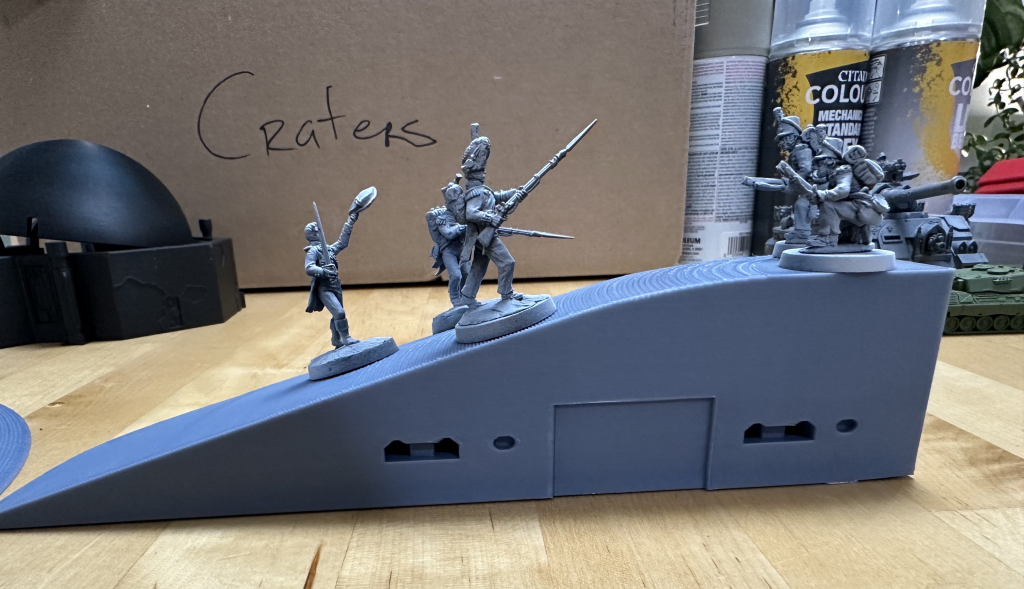
The main feature and appeal of a hill is adding sloped surfaces to your table, breaking up the monotony of having everything come in steps or walls. But there's a big problem with inclines and anyone who has played on a table with hills knows it immediately: Models tend to either slide down hills or fall over when placed on them, depending on how they're built and how the hill is constructed. This happens when the incline grade is too steep. As a quick refresher, the grade is a measure of the steepness of a slope, calculated as Rise / Run x 100. This means that a 45-degree angle slope will give you 100% while a flat surface will give you 0%. In most municipalities, a "moderately steep" slope is generally anything over 15% (or about 12 degrees), and "very steep" slopes are anything over 25% (15 degrees).
That slope you're looking at in the image above is about a 35% grade, or a 20 degree incline. That is more or less the maximum steepness you can get away with before your minis either slide or tumble down a slope, and even then you'll want to give them help staying on the hill - texturing the surface with flock and grit, or in the case of the above hill, striations from 3d printing, can give your minis' bases something to cling to and keep them from toppling over or just sliding back down. My recommendation is to start with textured paint and add flock and other basing elements to give units something to grip.
If we look at the same type of hill with only half the height (but still keeping the same length), you can see how this creates a much gentler slope:
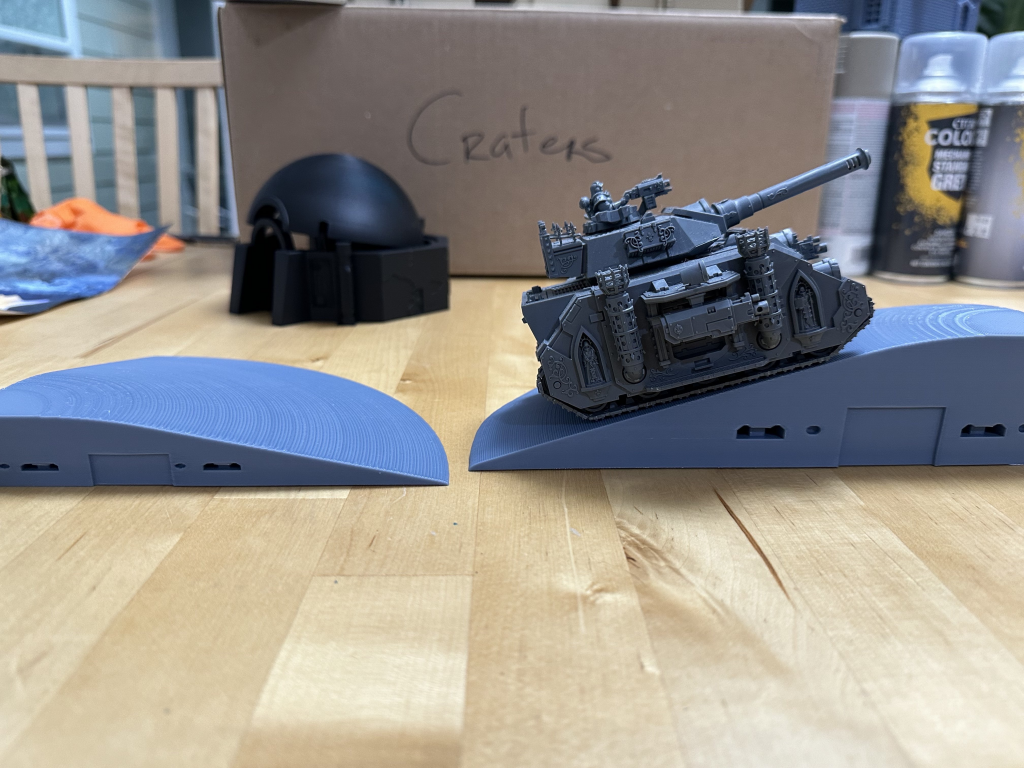
So solving this problem is relatively straightforward: You need longer slopes to compensate for the height of your hills. A good rule of thumb here is to use the guidelines for reliable ramps set forth in the Americans with Disabilities Act. These call for a 1:12 slope for commercial ramps used in public spaces and a 2:12 slope for residential ramps if space is limited. The former gives you 5 degrees of incline and the latter about 10 degrees of incline.
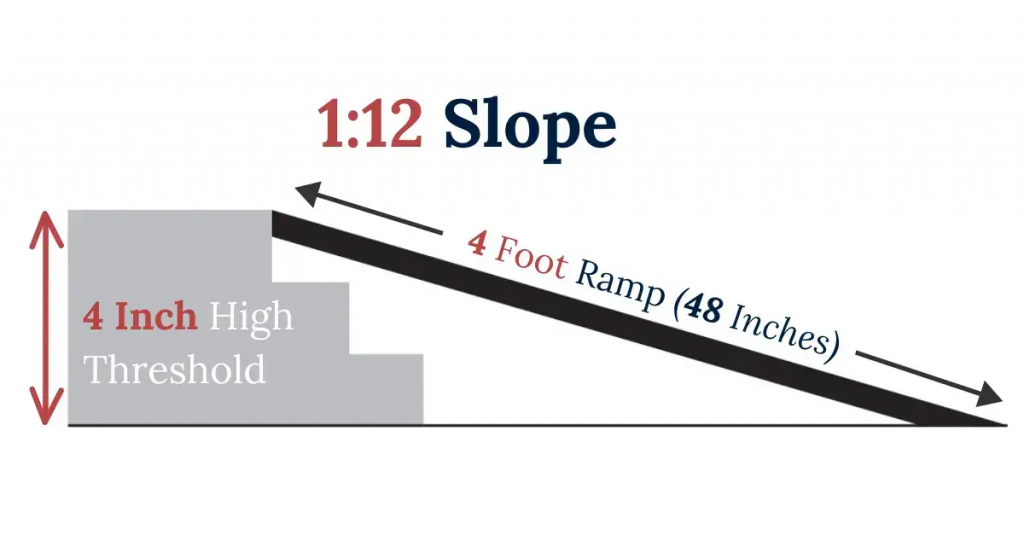
Of course, this creates a new problem: Space on your table. If you want a hill to be 5" in height, the same as a large ruin which can block line of sight to most vehicles, the slope leading up to the top of that hill needs to be between 30" and 60" long. That's basically your entire table, eating up by one big hill. If you go with a steeper angle like we showed above and top out at 20 degrees, then you'll need less, but you're still looking at a need for 15" of run to cover 5" of rise (a 4:12 slope).
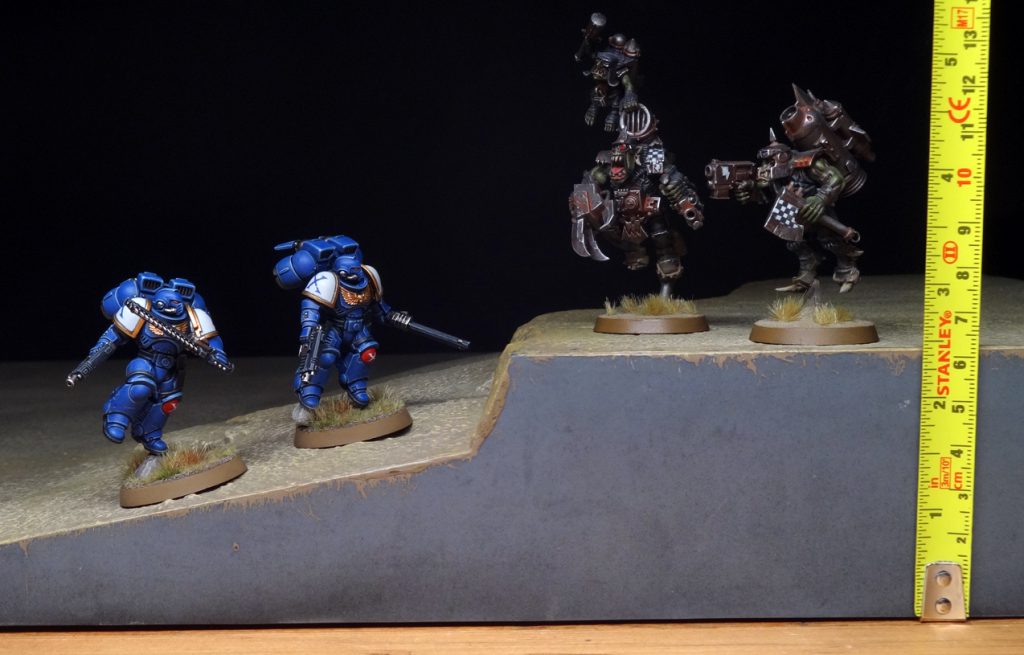
A lot of hills, particularly the plastic hills made by Games Workshop, both the standalone type and the ones built into their Realm of Battle tiles, "cheat" at this by having some incline and then topping it with a small step. this allows them to have something more like the 20% grade/12 degree slope shown in the above photo, then tack on an extra inch or two of height to give them a feeling of real height while acting as a reasonable compromise for placing units and other terrain - we'll come back to that latter part in a moment.
So what does this mean? Well, it means that your hills have to be pretty big, especially if you want them to be meaningfully tall enough to actually block line of sight to other units on the table.
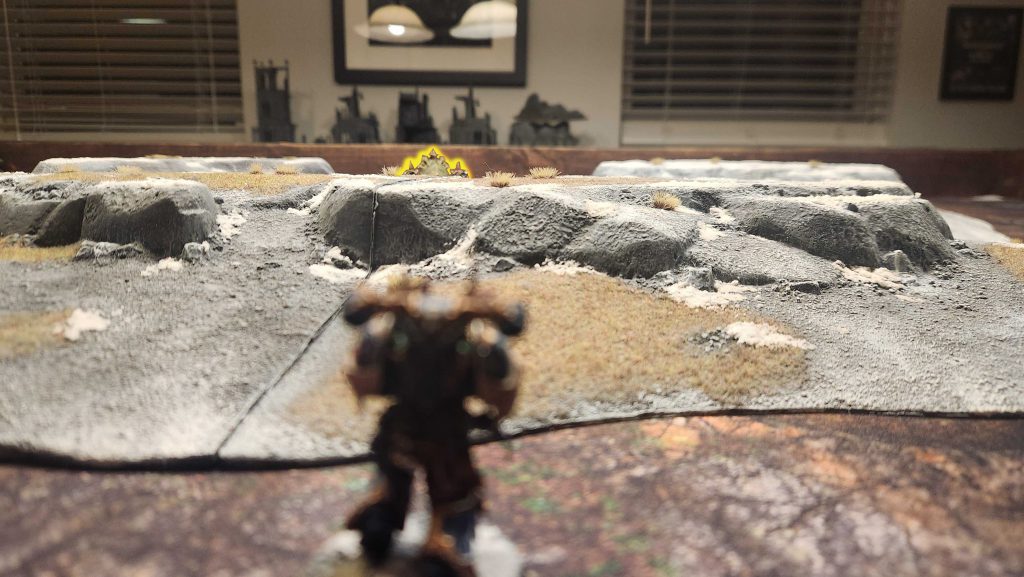
Even when you're using one of the large Games Workshop hills, those only really hit 3" in height with their added rock outcrops, and as you can see in the photo above where I've highlighted the model, that's not enough to even block line of sight to a Myphitic Blight Hauler, a relatively low-profile vehicle. That's a problem given that hills don't directly block line of sight.
Problem 2: They Don't Do Anything
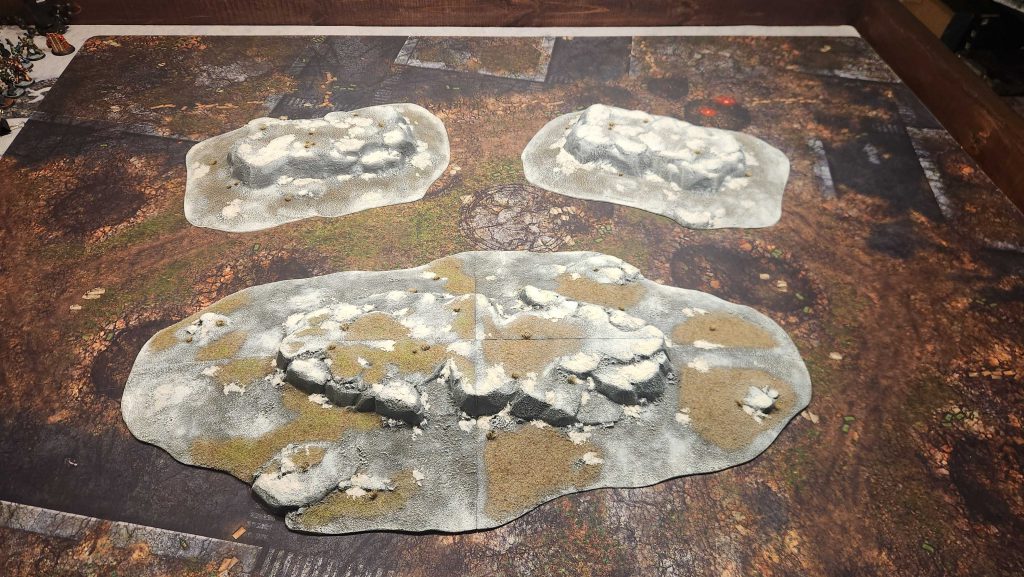
As terrain features, hills are purely aesthetic. You don't get cover from them and they do a poor job blocking line of sight. In game rules for most systems, being on a hill doesn't help you in any way, and tends to make you both more visible and more likely to slide down or fall over. That's not ideal, and it means that you need to combine hills with other terrain features in order to actually make them useful or meaningful in the game.
Which brings us to our third problem, and it's the same one we had with Sector Mechanicus ruins:
Problem 3: Room at the Top
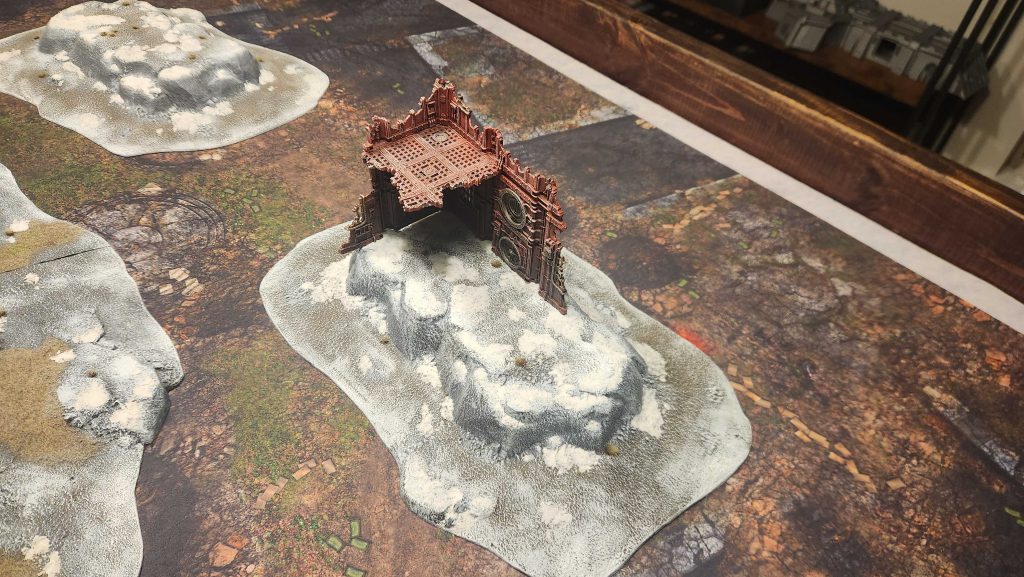
Even for large hills, the problems with making sure you have a gentle slope cascade into other areas. As I mentioned in Parts two and three of this series, your terrain needs to be functional - bigger terrain pieces need large, flat, open areas for minis to stand on and interact with each other. Hills struggle with this, because they have to spend so much area on their slope, leaving little room at the top to place other structures and leave room for models. The best version of this you get is probably the massive hill you can construct with the realm of battle tiles, but even that is only about 1" tall when you consider the board's starting height and the slopes on the opposite side.
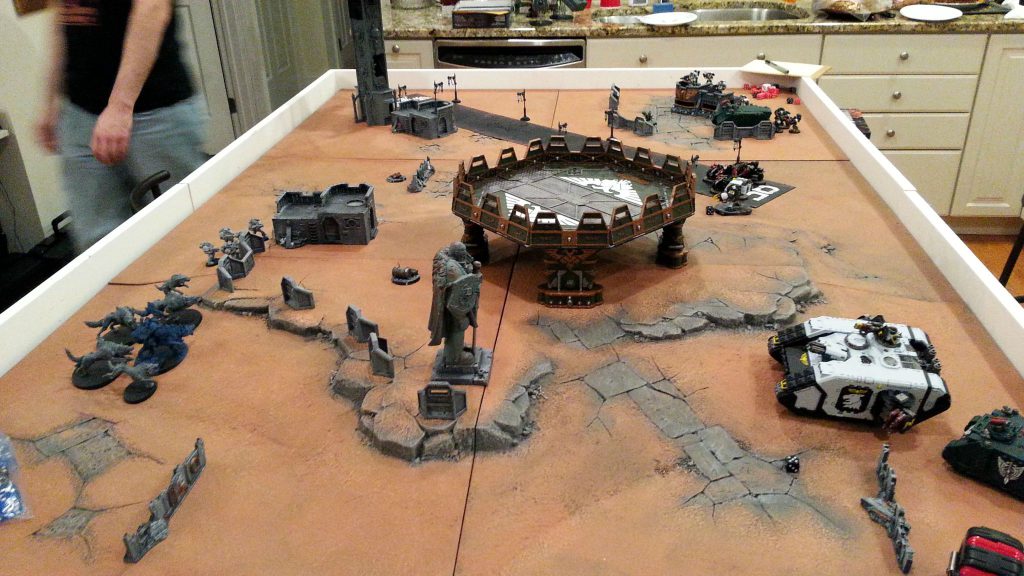
What this really does for you is give you a large area you can put other terrain on, and use that terrain to block line of sight, while having a large area where units can stand and interact with each other.
The Gameplay compromise: Stepped Hills
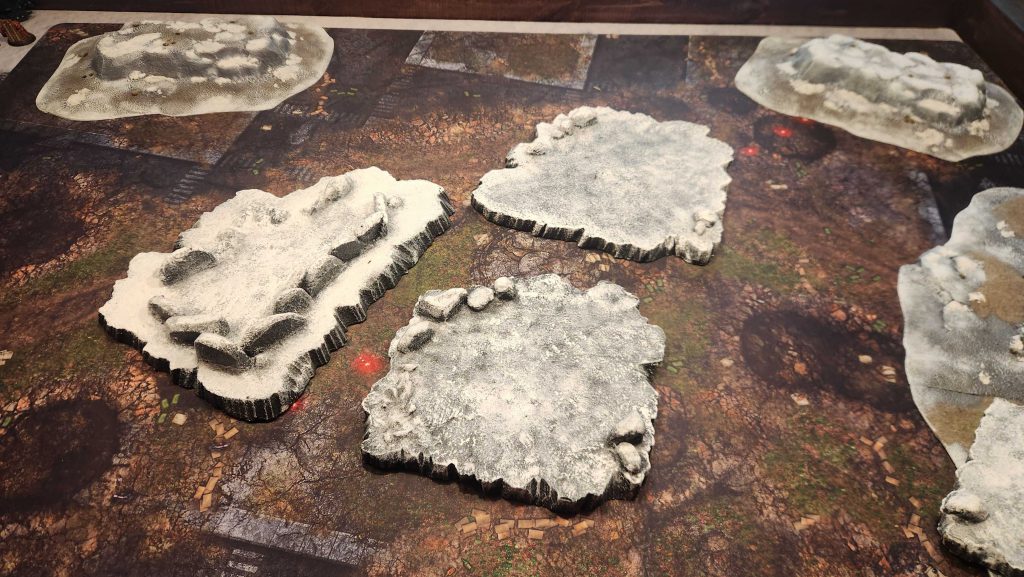
if you want to use hills effectively in your game, the easiest compromise is going with a stepped approach to your hills. While this means you won't have those perfect, gently sloped hills, you can create some reasonable facsimiles which work for the intended purpose and make for more fun gameplay. In the above image I've got 1" tall raised sections of ground carved out of insulation foam using a foam cutter. These are varying sizes, but mostly fill a 10"x10" area. They're not super tall but they offer some rocks to provide cover. What matters here however, is that they're great for putting other terrain on:
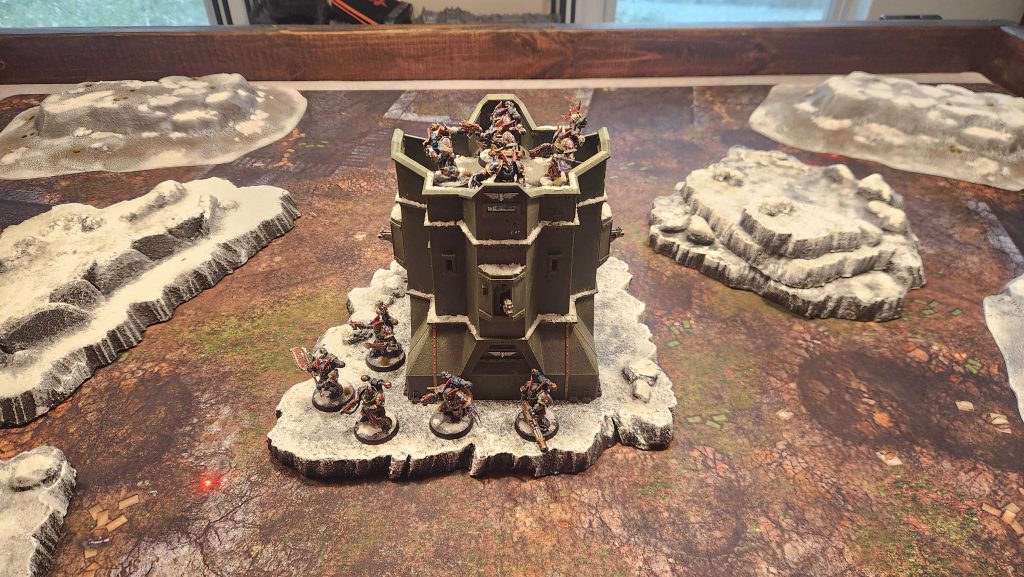
And as you can see, they have another key benefit - they can be
stacked to create larger, higher hills that are easy to climb and place minis on while blocking line of sight more effectively. Going with a 1" height for your step is also ideal here - it gives you a solid base to work with while letting you be visually suggestive of a hill even if the slope is a bit steep on each step. Just be sure to leave lots of open room on your steps.
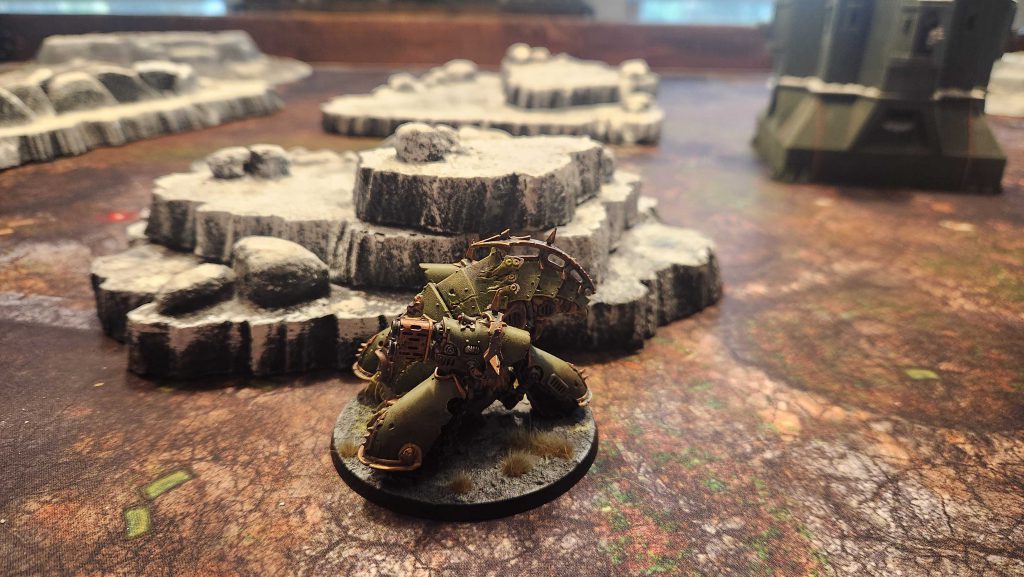
Providing space to hide and blocking line of sight are still the most important aspects of 40k terrain, and will likely remain so given the game is going to keep having ranged weapons for some time.
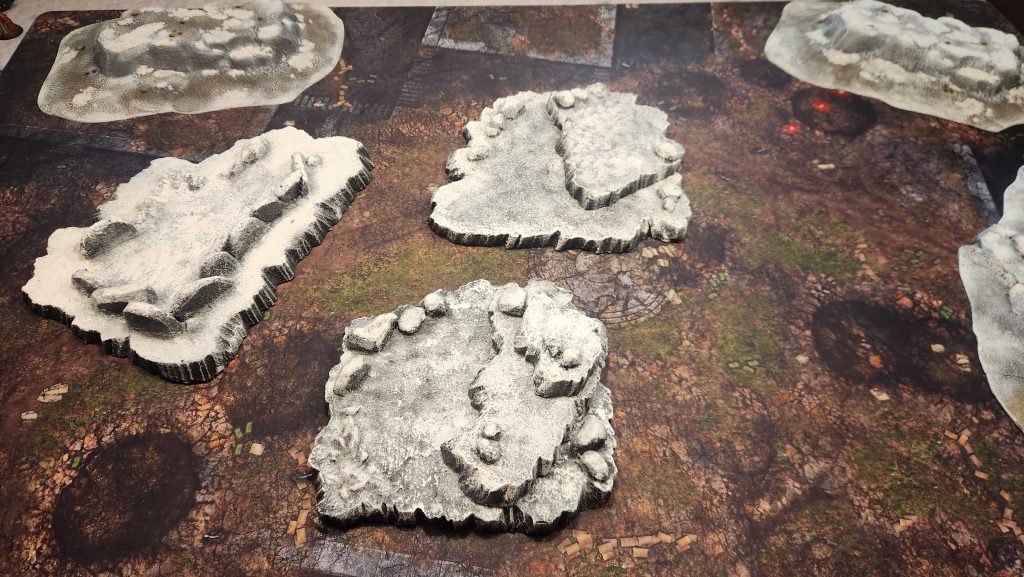
It's easy to make these pretty modular, and if you have the time you can end up with some very good combinations that let you mix and match and go lighter/harder with your layouts. This is also where you can take a page from Games Workshop's playbook and have varying slopes on the hills you carve - do some with gentler slopes, or which have a mix of gentle slope on one side and rocky face on the other, then mix and match them to create more dynamic hills.
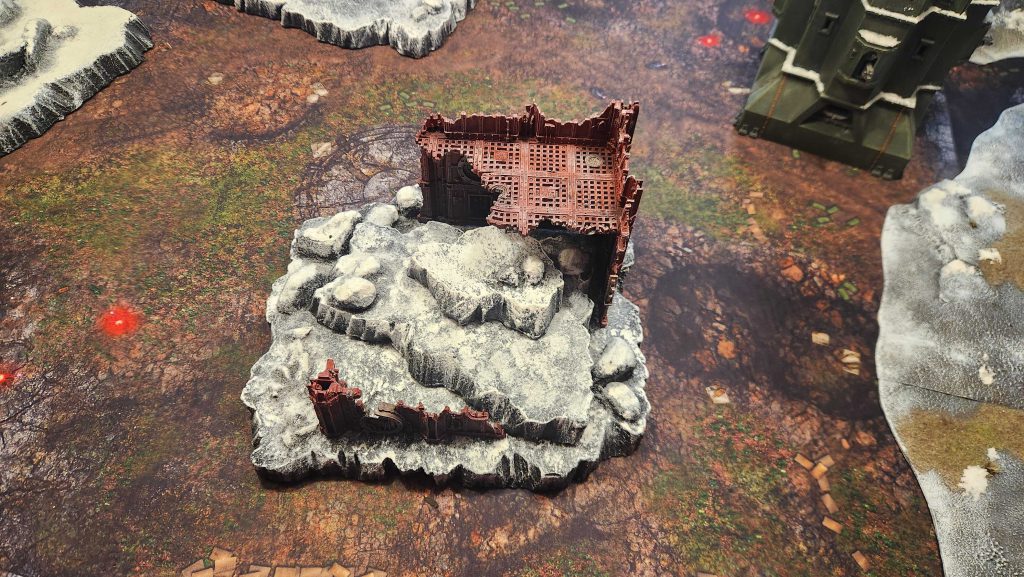
You can also mix and match these with ruins and other terrain features to create more complex features that get that vertical feel across but still act as decent places to place minis and can be suggestive of a cave-in or collapse.
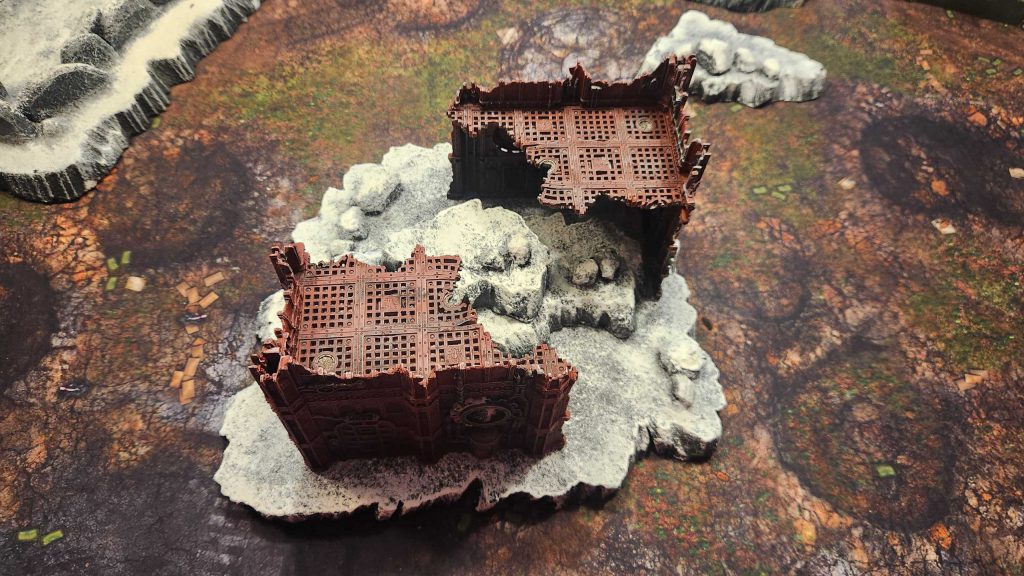
The key here is to give yourself a mix of different sizes, but to start with some very large bases to work on and build up. My hills tend to be square but yours needn't be, and if you make some which are roughly 12"x6", 10"x5", or 4"x6" you'll have some great diversity of hills which can also double as area terrain bases, giving you more interesting visual options for your terrain layouts if you use a mix of raised bases and standard bases for your terrain.
Final Thoughts
Hills are tough to work with. They look great and make battlefields look natural, but they struggle to be functional. It's hard to make work arounds which still look like real, natural hills and make them fun to play on and fitting on a 40k table, but it's possible to get pretty close to that with some clever workarounds. Of course, they're only one part of going vertical, and next time around we'll talk about building and working with raised structures in your games. See you then.
Have any questions or feedback? Drop us a note in the comments below or email us at contact@goonhammer.com. Want articles like this linked in your inbox every Monday morning? Sign up for our newsletter. And don’t forget that you can support us on Patreon for backer rewards like early video content, Administratum access, an ad-free experience on our website and more.Thank you for being a friend.
 This website uses cookies. Learn more.

 Goonhammer App and Patron Updates: April, 2026
 Kill Team Tournament Report: Engage, Party, Repeat's March Madness 2026
 Goonhammer Reviews: Tribal Conquest