Hello, Dear Reader. I'm not a big wishlist person but since tenth edition started I've been really ramping up the number of games I play of 40k and as that number passed one hundred this year I've started to think about the rules for tenth edition 40k more and how some of them really need an adjustment. So in the spirit of Christmas or whatever, here are the five rules in 40k that I think need to change in 11th edition. Or more accurately, five areas of the game where I think the rules need an overhaul.
While this is an editorial, it's not
just an editorial - each of these areas of the game is a mess, and I'll be talking about why and what you need to know with regard to the rules. Hence why this is a Ruleshammer article.
Before I dive into that however, let me start this article off by saying two things:
- No one has confirmed 11th edition is coming yet. But we're all adults here and capable of counting to three and it sure seems like Games Workshop is working on three year cycles for all of its games, so if I were to put money down, it'd be on 11th happening next summer.
- I'm generally a fan of tenth edition. I like a lot of things the edition does, and I think it's a tighter ruleset than ninth. There's more internal balance, better balance between factions (well, now anyways - the start was a mess), and the Detachment system makes it so almost every faction in the game has at least two viable ways you can run it.
Alright I'm not here to praise Caesar, so let's get on with the complaints.
1. Timing Rules
Pop Quiz: What's the difference between "After" and "Just After" in the rules of Warhammer 40,000?


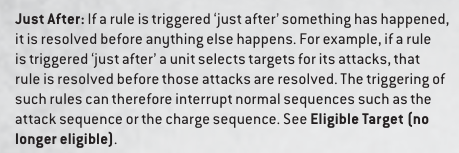 The Answer:
 Nothing!
Tenth edition 40k added a large number of rules to Warhammer 40k which trigger at specific times or off certain actions. From effects that happen when an enemy unit completes a move such as reactive moves or Overwatch to effects that happen when a unit becomes the target of an attack. Currently, a good number of these are covered by one of two sets of rules:
- Standard Sequencing. The reason the attacker typically has to use Stratagems before the defender is because attack sequencing goes "Select Eligible Unit > Select Targets," so effects and Stratagems that have to be used when you select a unit to shoot or fight have to be used before you select a target for your attack, at which point that unit's controlling player can opt to use effects or Stratagems which can be used when a unit is chosen as the target of an attack.
- Active Player Priority. Unless it is the start or end of a battle round (in those cases you roll off), the Active player chooses the order in which effects resolve. So if you have two effects that happen at the end of the turn - such as burning an objective and scoring primary victory points for holding that objective on the final battle round - the Active player can choose to resolve primary scoring first, then remove the objective burned via an action, scoring both.
This covers a decent amount of interactions, but leaves out a major one, which are triggered effects that can occur "after" or "just after" something else does. And more specifically, how are those effects triggered? If an enemy unit ends a move within 9" of two of my units and each has the ability to make a reactive move, can they both do so?
This has led to an interesting issue where events have ruled on whether you can react with multiple effects to a single action. At the World Championships there was a "secret" ruling that was in effect for the entire event, which said that each player could only react to a given event once - I say "secret" because this wasn't stated publicly but rather in an email to one of the attendees asking a rules query, and was in effect for the full event.
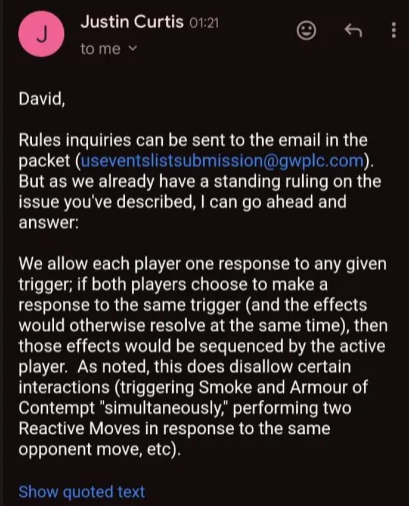
This is bonkers, and I don't even mean the ruling itself. First off, it's a ruling used at Games Workshop competitive events but not officially published anywhere, and just left for players and tournament organizers to figure out on their own. Second, it's not codified into the rules of the game, and for good reason: It has major balance implications that likely haven't been fully considered. First off, it's not clear if it's one reaction
per player or one reaction
at all. For the World Championships, the rule was limited to one per player, which means they'd be sequenced by the active player. But both have serious implications for game balance:
- One Reaction Per Player: This effectively prevents one unit from using multiple effects, so the Brutalis Dreadnought cannot use both its Brutalis Charge and the Tank Shock ability, and stops things like Armor of Contempt and Smokescreen from being used on the same unit, or from using a defensive stratagem and also a Fight on Death Stratagem. It also stops multiple units from responding, even with built-in abilities: If you split fire into two units of Khorne Berzerkers, only one can opt to make a surge move afterward, even if both lose models. Or if you finish a move within 9" of two units with reactive moves, only one can use their ability. That seems unintended, and makes those units substantially worse when taken in multiples - not ideal for a battleline unit.
- One Reaction At All: This is even worse, as it can be gamed by a player - you can use Tank Shock to prevent an enemy unit from performing a Heroic Intervention, for example.
Fun thing to note: If both players are allowed to react, then because the active player determines the order, in the situation where you Tank Shock and an opponent does a Heroic Intervention, you can choose to let Heroic Intervention resolve first, then resolve the Tank Shock into the intervening unit.
Overall, the lack of actual timing rules leads to a bunch of relatively common scenarios that the current rules framework just isn't built to handle. If you talk to any Magic player they'll gladly tell you that the answer here is "the Stack," referring to that game's "Last in, first out" way of resolving multiple effects at a time. But I'm not sold that Warhammer 40k needs that kind of complexity; instead I think the game just needs real rules about timing of effects like these, how to resolve activating or doing multiples, and have those written down. Whether that's a stack or a game more appropriately designed around activating only one or multiple effects in response to an event doesn't matter so much to me, so long as one is chosen and implemented.
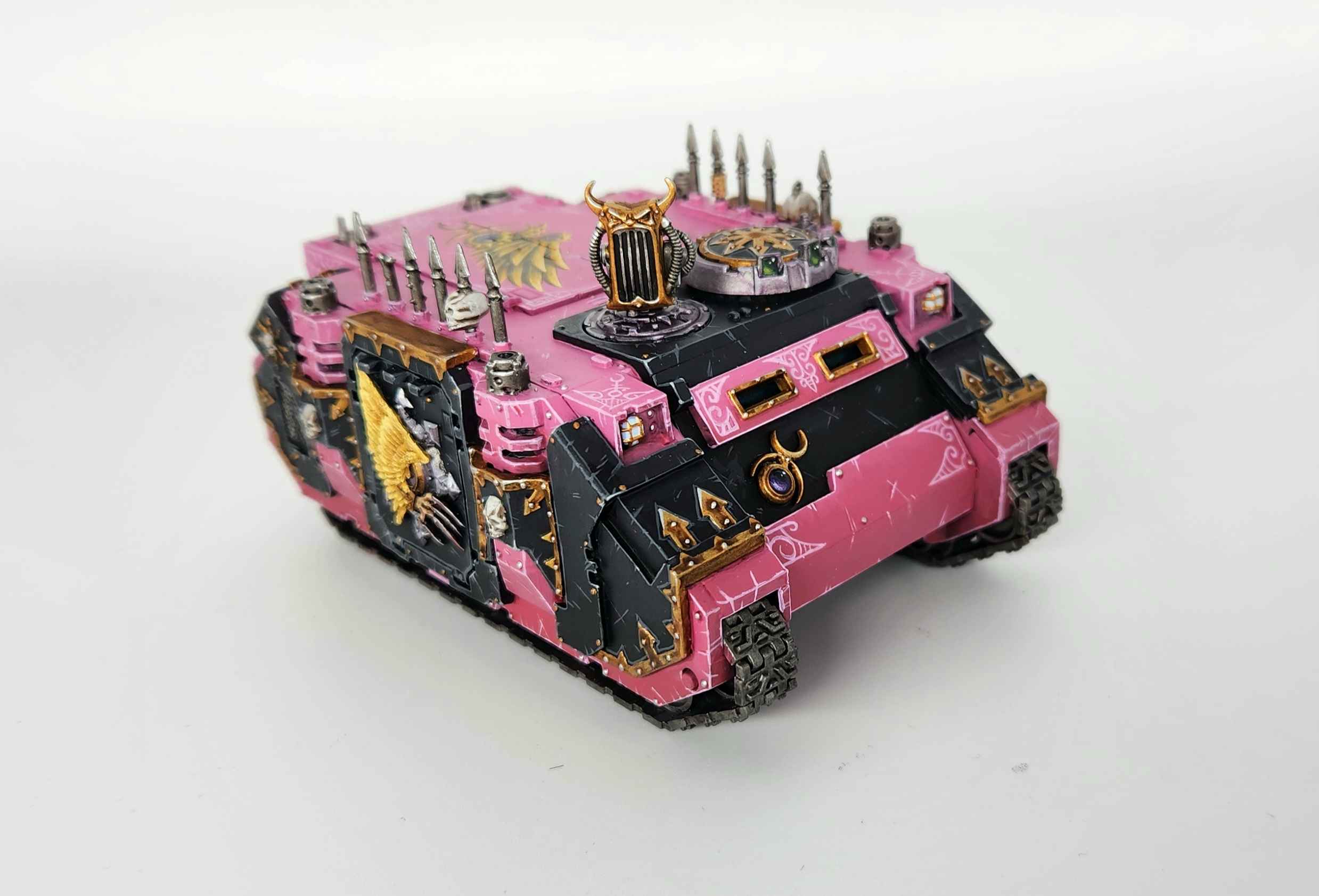
 Credit: Robert "TheChirurgeon" Jones
2. Transports
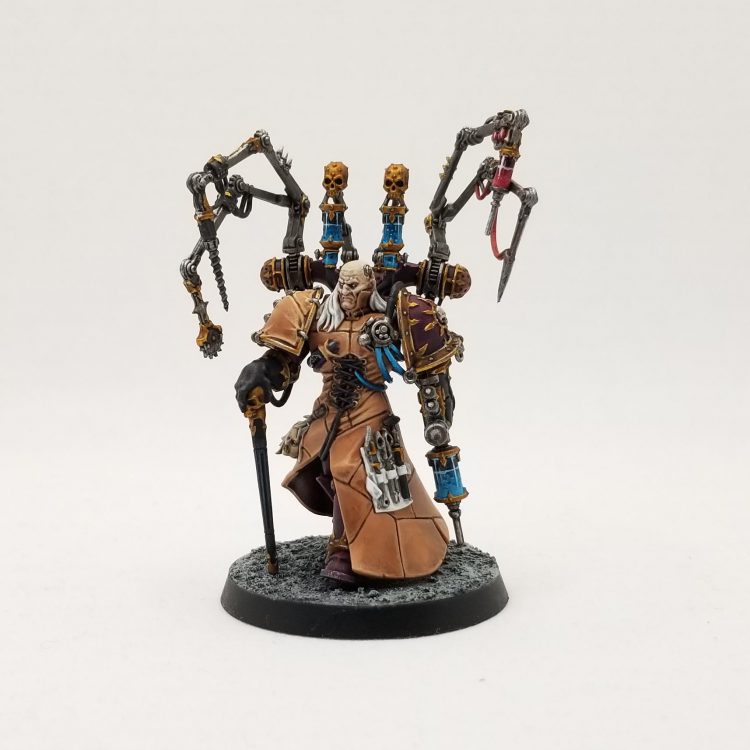
There are few rules in tenth edition less elegant than Transport rules. When a unit is embarked within a Transport they are in a weird space where they are treated as not existing for game purposes - they cannot do anything or be selected as a target for any rules. This is frankly kind of bonkers - it means that units like Abaddon and Chaplain Grimaldus cannot choose one of their abilities while they are embarked in a Transport, Kharn won't kill any of his unit while he's in a Transport and out of combat, and abilities like the Wolf Guard Headtakers'
Headhunters - which have you pick an enemy unit to be your quarry at the start of the battle - don't work. This is why you never see Abaddon in a Land Raider, by the way.
To add insult to injury, these abilities do work when you're not on the table - Abaddon is perfectly fine to select one of his abilities while he's waiting to arrive from reserves. It's just the odd "nonexistent" state of being embarked in a Transport that makes using these rules impossible.
This was "fixed" by essentially adding exceptions on to several rules - Headtakers had an errata which explicitly says "this can be used even if they're in a Transport," since otherwise it would just be a completely dead ability any time you started the unit in a Transport. But that fix is only on certain units where they remembered to change the ability text, and not on others. My favorite: Fabius Bile's rule technically doesn't work, since it increases the Strength and Toughness characteristics of his unit by 1 at the start of the game - something that doesn't happen if he's in a Transport. But we all just collectively decided as a player base that this was stupid, and as far as I can tell, everyone just ignores it.
This is good in the sense that it's the desired outcome, but it's bad in the sense that these rules should be fixed with real text and not a universal agreement to just ignore it because it's dumb.
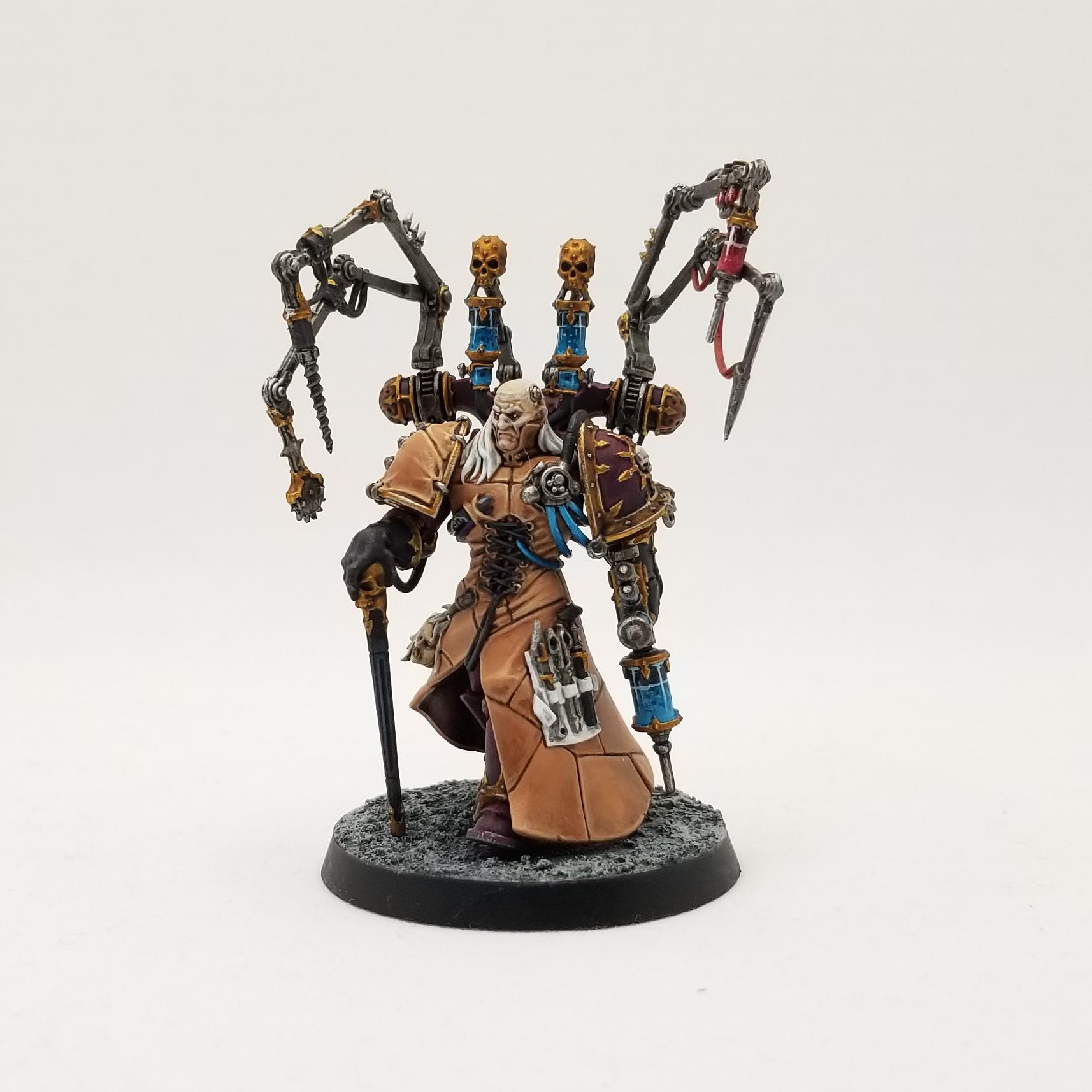
 Credit: Robert "TheChirurgeon" Jones
On a similar note, disembarking also has some odd quirks that need fixing. One of the most notable is the interaction between disembarking and reactive moves. Specifically, reactive moves tend to be triggered by a unit
ending a Normal, Advance, or Fall Back move within 9" of the unit. This doesn't include "being set up," which creates an interesting loophole where a transport can end its move outside of 9" of a unit, then the unit inside can disembark, wholly within 3" of the transport and within 9" of the enemy unit, potentially being up to just outside 6" away, without triggering a reactive move.
Fun Fact: This only works if the TRANSPORT moves beforehand - in those cases, the disembarking unit cannot make any further moves. If the enemy unit is already within 9" of your TRANSPORT and you disembark before moving the TRANSPORT, that disembarking unit
has to move - per the rules, it "cannot choose to remain stationary," and so must make a Normal move, even said move is 0". In these cases you are forced to move the transport away, outside 9",
then disembark. This inability to remain stationary is a byproduct of the need to prevent the unit from gaining a bonus for remaining stationary, such +1 to hit with
[HEAVY] weapons.
This sucks. It's weird and quirky in the worst ways and needs to be fixed. Either by allowing reactive moves as a response to a unit being set up, or by allowing disembarking units to opt to not move - just treat a disembarking unit as having made a Normal move regardless of whether it moves or not.
It's an odd category because most of the rules around Transports are fine. They work pretty well. But the rules around embarking and disembarking need to be tightened up just a bit here to account for rules like those on faction leaders and rules that have you do something at the start of the game.
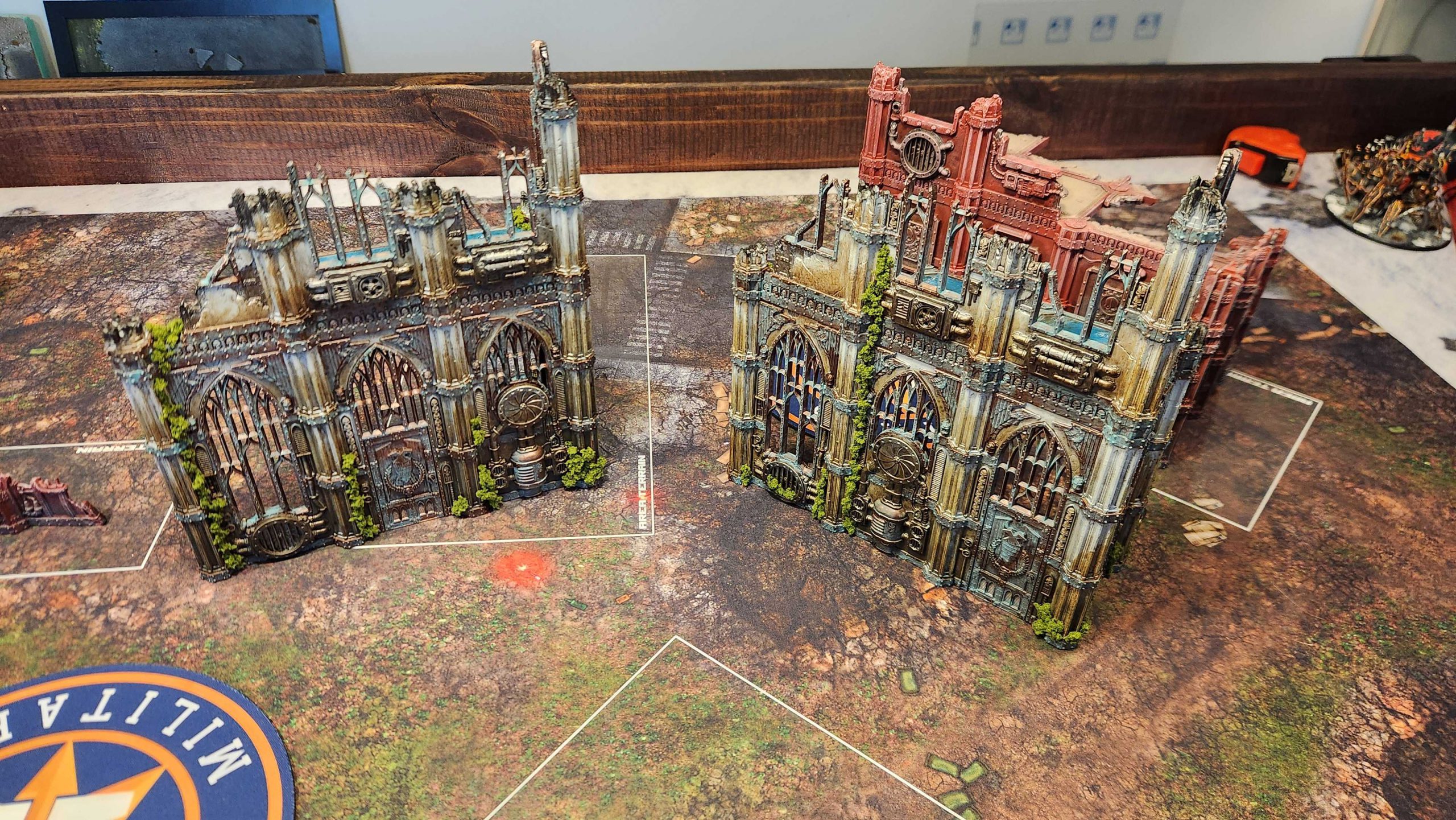
 Credit: Robert "TheChirurgeon" Jones
3. Terrain
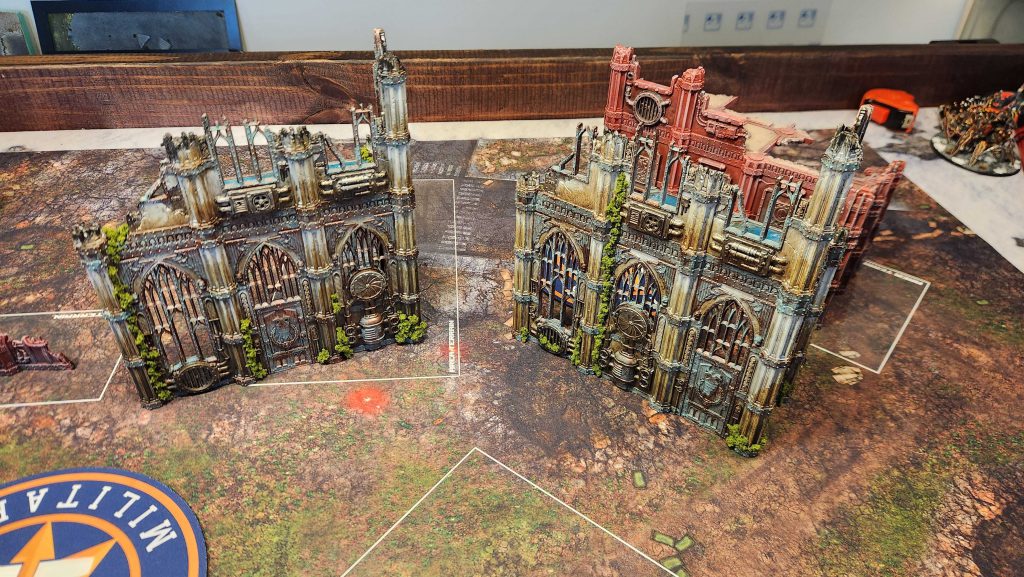
Let me start by saying that it's really hard to get terrain "right" in 40k. Ninth edition gave us a huge step forward by abstracting line of sight and creating the Obscuring rule for ruins, so players could finally have terrain that blocked line of sight without having to use big, flat, featureless walls to do so. As a game that relies on having a mix of deadly ranged attacks and melee to function, 40k relies on these abstractions to make the game playable. A game where the armies can see each across the table from the outset isn't just heavily skewed in favor of the player going first, it's also boring - positioning, using terrain, taking cover, and finding the right times and places to strike are what make a game interesting.
For a part of the game as important as terrain, it's a bit sad to see where we've ended up in tenth edition. I'd currently describe the terrain rules as "functional, but only barely." The general idea - use ruins to block line of sight, and models wholly within them or obstructed from view get the benefit of cover - is largely fine. But it's boring, and it's telling that there are a great many terrain rules which either don't get used because they're either bad/boring, don't work with the terrain you'd actually use in most scenarios, or both.
So let's start with
Terrain Benefits. Generally speaking, the core Benefit of Cover (+1 to saves unless your save is 3+ or better against an attack with AP 0) is solid. Cover is easy enough to come by in the game that the
[IGNORES COVER] ability is both useful and strong. In addition to offering the benefit of cover, Ruins also block line of sight for units which aren't wholly within the terrain, with the exception being TOWERING and AIRCRAFT units (the latter of which we'll talk about later).
 Option 2
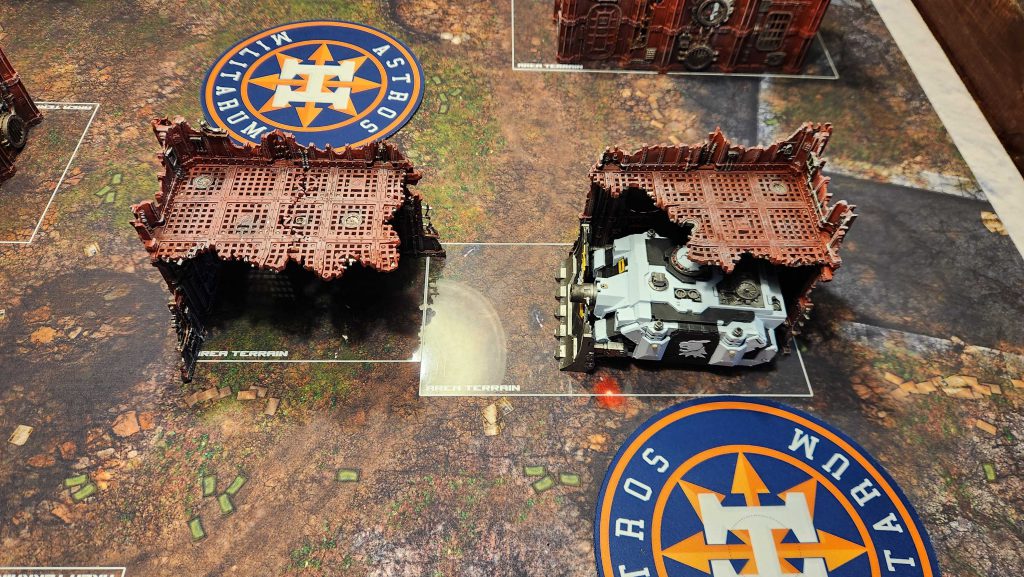
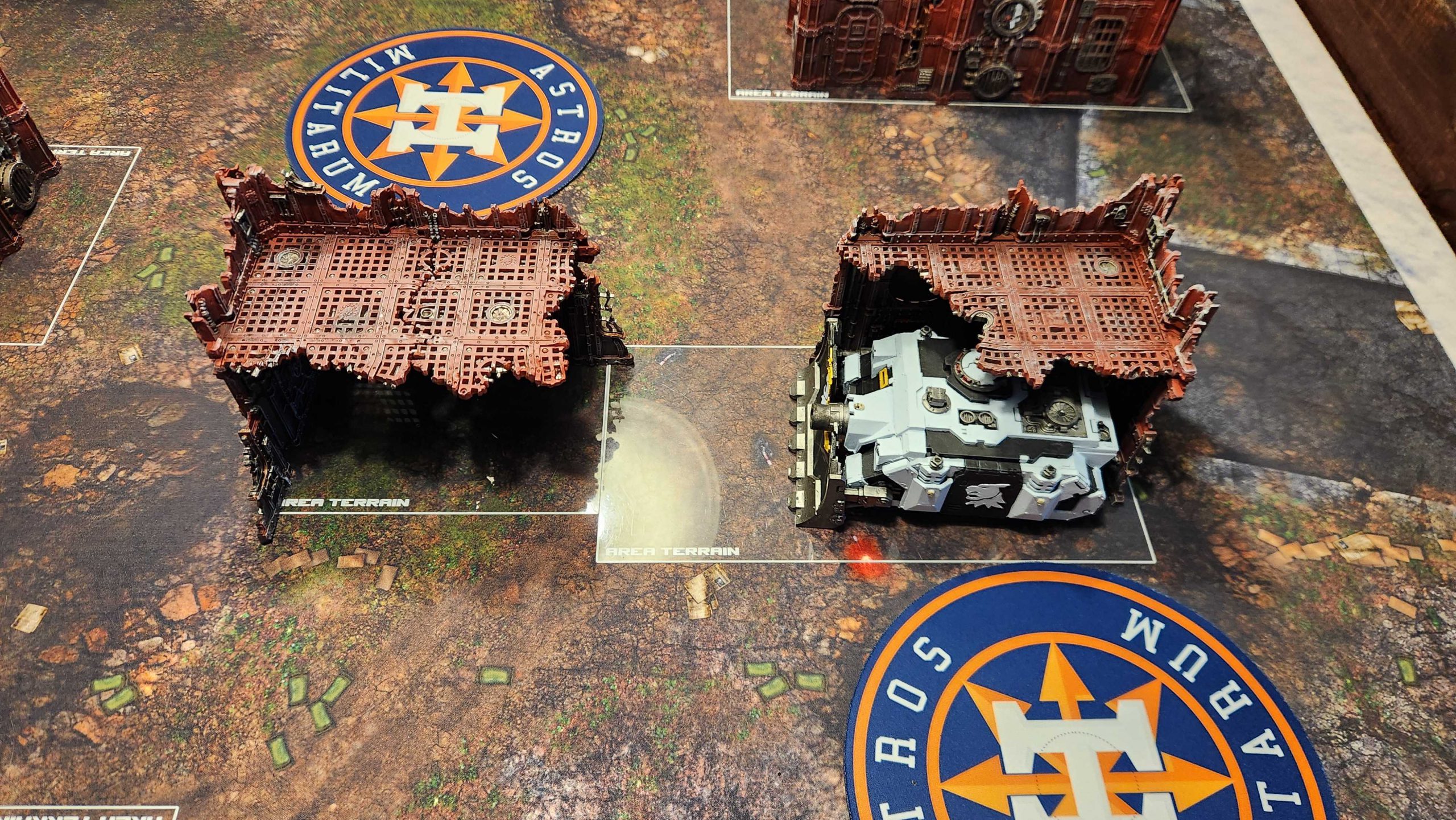
Ruins generally have two rules that make things weird. The first is
Plunging Fire, which seldom if ever gets used, and when it does tends to be in weird "gotcha" or gamesmanship scenarios where you've accidentally stumbled onto a board where your Desolators can start on a tall piece of terrain and suddenly dominate the game. This isn't ideal, and Plunging Fire - though an interesting idea - is much better suited to narrative play than competitive games. And either way you'd want to plan terrain features for it that are closer to the middle of the table, to create a risk/reward for taking that kind of vantage point.
The other weird one is moving through terrain. First off, Swarms being unable to move through Ruin walls is really weird and just doesn't feel right - you're telling me Rippers and Scarabs can't find cracks to burrow through or windows? But there are two larger issues here. The first is blocking movement and charges through walls and the second is moving through walls with vehicles/monsters and special rules.
Blocking charges through walls has been controversial for years, enough so that the World Team Championships format have their own rules on how it works. For the record, I'm not a fan of those rules - I think being able to block units from fighting through walls is fine - but either way you do this, the rules around it aren't adequately spelled out, leading to players having to learn the specific quirks of how terrain works for their event before they can really start playing the game. That's not ideal.
On the other side of things, you have a number of rules around moving through terrain that is 4" or less in height - see units like Fulgrim or the Defiler. The problem is that in competitive 40k, there is no such thing as terrain that is 4" or less in height: Even at events - and this includes Games Workshop events - where 3" tall terrain is used, it's typically house ruled that it be treated as more than 4" tall, making these rules just worthless.
The result is laughable outcomes like Fulgrim gaining a rule via the dataslate to move through terrain less than 4" in height which functionally do nothing. And with more dense tables, simply moving large units can become impossible with ruins which stretch all the way across their bases. This leads to things like WTC maps having designated areas where a knight or larger unit can walk through.
4. Flyers
There are two sets of rules in this category: AIRCRAFT and the FLY keyword. Both need work. But let's start with the more important of the two:
FLY. FLY is for the most part a keyword that only works for moving through and across other units. As a tool for moving over terrain, the rule is worthless, as the amount of movement typically required to move over even a 4" wall will often be more than 12" with the diagonal measurement requirement. This measurement is also difficult and time consuming, and not worth the effort. The net result is that units don't actually fly; they can just hop over enemy units.
The problems with flying over terrain make the 4" wall problem more difficult. Narrow gaps are functionally impassible even to wider vehicles and units with FLY because of the terrain movement requirements. I had a fun game earlier this year where I had a massive advantage on a WTC board because my opponent's Wave Serpent simply could not move through the middle of the table, a gap that was half an inch too narrow to accommodate his transport. This mor or less limited him to one specific lane he could use to travel across the table, while my PBCs were free to fire down the middle lane at his units with impunity.
 Defilers weren't on bases yet and so still playable.
The game needs better rules for vertical movement with the FLY keyword. I understand not wanting to let units move over terrain with impunity but the current rules are clunky, time-consuming, and essentially rob flying units of their utility. The only units in the game that can actually fly are Jump Pack Infantry, since they can just move through ruin walls natively. In some ways we're paying for the mistakes of 8th and 9th edition, where FLY was completely busted. Now when you combine FLY with the fact that all terrain is 4" tall, you need a minimum of 8" to go over any wall in the game you couldn't walk over, and even with FLY most units are better off just going around rather than trying to go over. And I'm of the mind that diagonal measurements shouldn't really exist in Warhammer 40k.
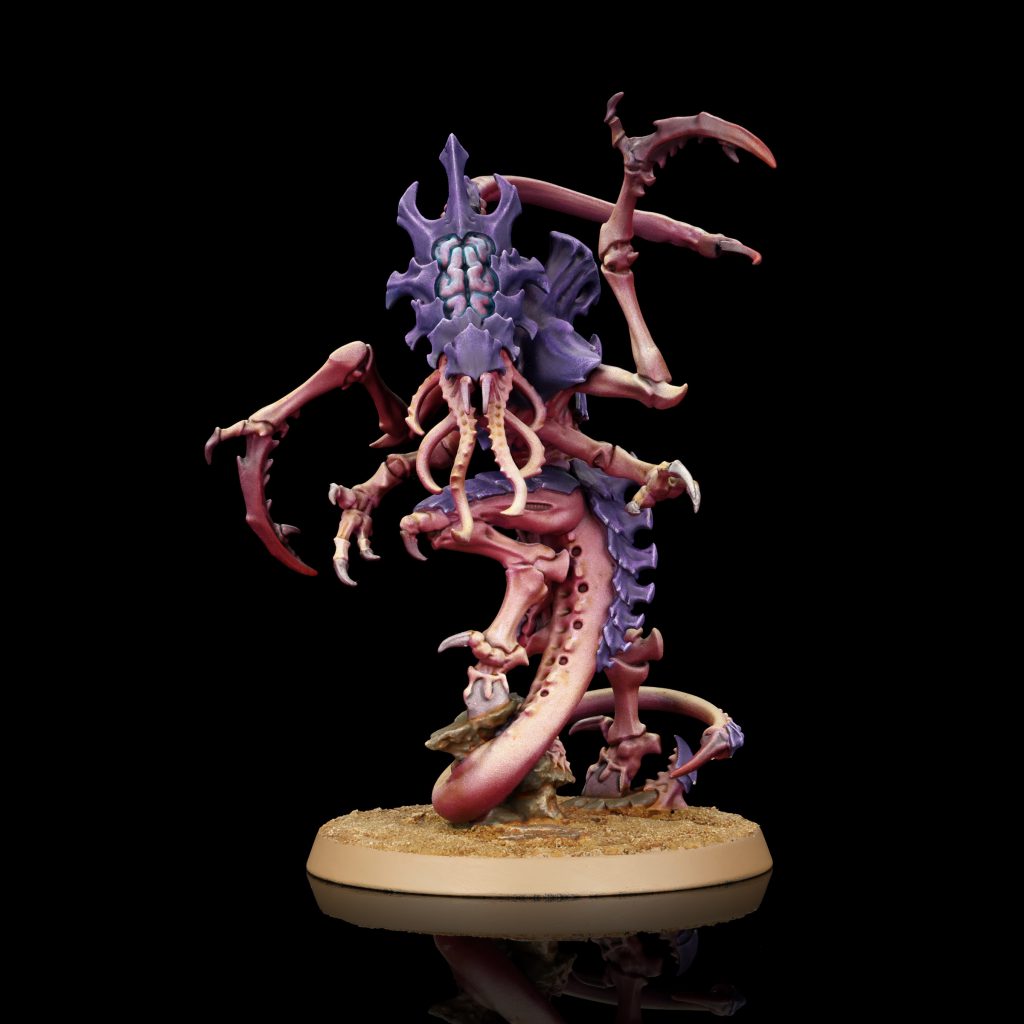
On the other hand you have AIRCRAFT, which are just miserable to play against thanks to the way they ignore line of sight rules for ruins. Unless your event is using full-length ruins on its area terrain bases, going up against AIRCRAFT is going to be a bad time for you. That said, Aircraft just kind of don't belong in the game anyways, particularly on the smaller table sizes introduced in ninth edition. And don't even get me started on how Flyers who measure from the hull interact with terrain when it comes to movement.
My recommendations? First, remove any aircraft which can't hover. Second, do for FLY what you did for Pivots (the pivot rules are amazing, by the way - a good example of finally getting it right after 30 years), and make going over terrain a penalty to your total move. This can even be based on the height if you want to get crazy but I think taking a 2" penalty to move over a 4" wall is a solid way to handle things that makes non-Infantry units with FLY feel much more like actual flying units.
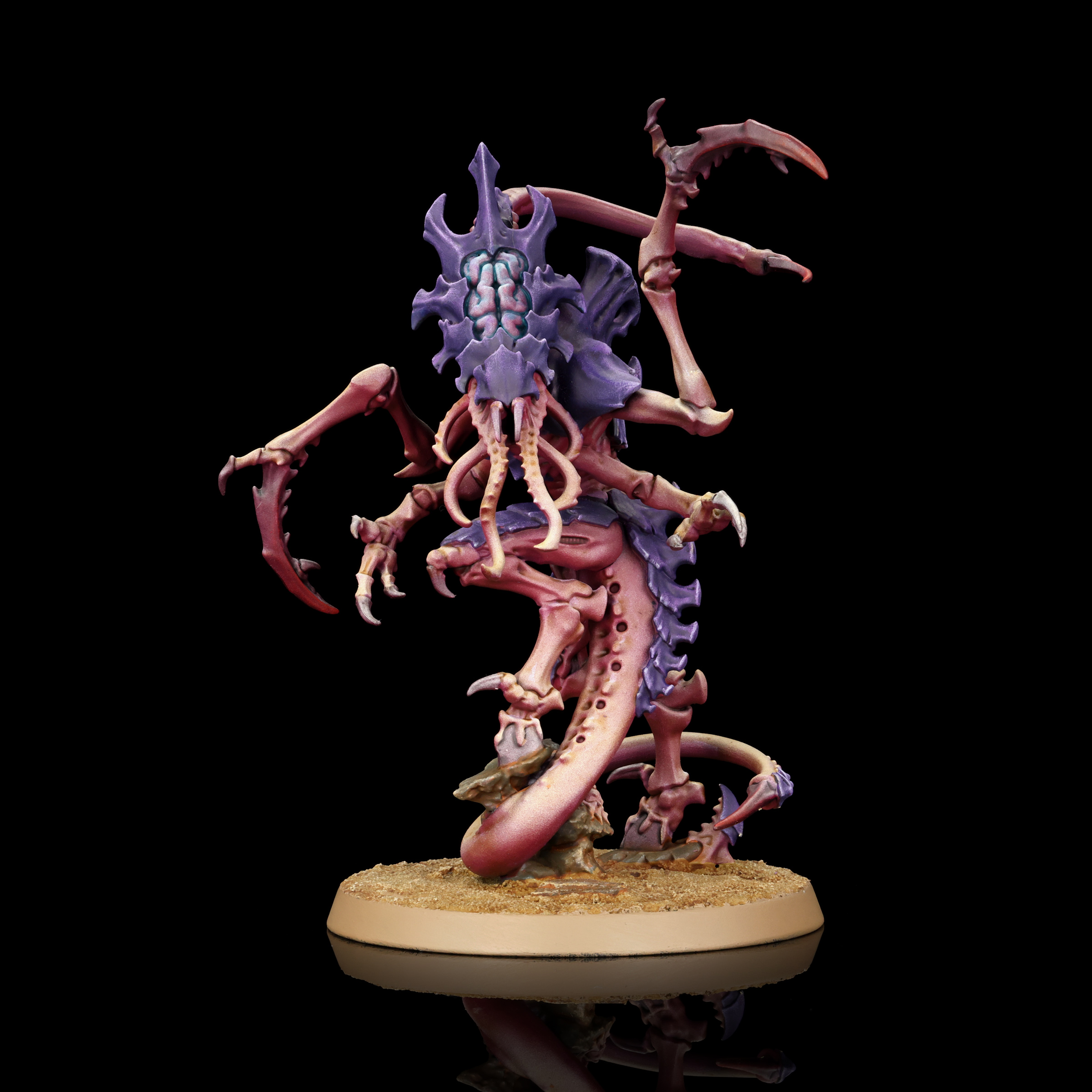
Neurolictor. Credit: Pendulin
5. Morale
Morale is one of those things that has never - and I mean
never - had great rules in Warhammer 40k. I've been playing since second edition, where you had a bunch of Psychology rules that just didn't work on Space Marines thanks to the "And They Shall Know No Fear" rule, essentially having a set of rules that were worthless in a majority of your games. Age of Sigmar's fourth edition finally just jettisoned the idea altogether (correctly) reasoning that Leadership tended to only be a negative attribute - only meaningful when it was bad.
With tenth edition we finally have a set of morale rules that can have a meaningful impact on the game - taking away scoring and the ability to use Stratagems on a unit - but they've created a double-edged sword. Because having non-Battle-shocked units is so integral to scoring, Battle-shock mechanics aren't allowed to be too good or too reliable. If they were, they'd unbalance the game, creating an unfun interaction where one player is just unable to score. But that in turn has a knock-on effect, where army and detachment rules that can cause Battle-shock have to be tightly controlled and reigned in. It leads to odd rules like Leadership being "capped" at a floor of 9+, for reasons which don't seem to make a ton of sense.
This is an area where the general idea makes leadership significant, but tying it to scoring makes it so important that you can't have situations where opponents can just turn it off - even though there are multiple ways to stop players from using their Stratagems (the most common being increasing the cost with a unit like a Callidus Assassin). It makes rules like Shadow in the Warp, Chaos Knight auras, or the Nightmare Hunt Detachment feel anemic when they rely on forcing failed Battle-shock tests to get a benefit. This is an area where it might make sense to separate Leadership/Battle-shock from scoring, but those are rules that would need a lot of trial and testing.
BONUS: Detachments
I love the Detachment system. I think it's great that we have a framework for adding a small number of rules which can dramatically change how an army plays. I love that many armies have 2-3 different viable detachments. I think only having to remember six Stratagems and like 1-2 Enhancements is pretty great. It's a really cool system and I like what the designers have done with it.
...but at the time of this writing we're currently tracking 192 Detachments for Warhammer 40k across the game's factions, with about 172 of those having seen competitive play in the last few months. That's an insane number of Detachments, and while I'm generally a fan of new ones - new ways to play are always exciting and it's good for our business to have more to write about - I'd also rather see old Detachments get updates more than doing this weird "pseudo-replacement" where they have a slightly different version that depends on having a character.
But otherwise, I'm a big fan of them and the way they feel. I'd love to see them keep doing Detachments while finding a way to keep older ones in the mix.
And also maybe tone down Gladius. That one is so overtuned it basically ruins Space Marine Detachments as a whole.
Final Thoughts
That's it. I've said my piece, and while there was a lot of grousing most of this is around the margins. I tend to think tenth edition is really strong from a rules framework standpoint. It's the best version of 40k I've played in my lifetime - a history going back to second edition - and the edition I've played the most. There are a few very rough edges which still need sanding down though and hopefully when the next edition finally rolls around, they'll have tackled these. There are also a ton of rules I think need to make the jump from "Rules Commentary" to "the full rulebook," but I'm sure at least a few of these will.
Have any questions or feedback? Drop us a note in the comments below or email us at contact@goonhammer.com. Want articles like this linked in your inbox every Monday morning? Sign up for our newsletter. And don’t forget that you can support us on Patreon for backer rewards like early video content, Administratum access, an ad-free experience on our website and moreThank you for being a friend.
 This website uses cookies. Learn more.

 Credit: Robert "TheChirurgeon" Jones
 Credit: Robert "TheChirurgeon" Jones
 Credit: Robert "TheChirurgeon" Jones
 Option 2

 Goonhammer App and Patron Updates: April, 2026
 Kill Team Tournament Report: Engage, Party, Repeat's March Madness 2026
 Goonhammer Reviews: Tribal Conquest