 This website uses cookies. Learn more.
This website uses cookies. Learn more.
This website uses cookies. Learn more.
 Ruleshammer: Mailbag 004
Given that models measure from the base except for certain models such as vehicles that don't have bases and instead measure from the hull, how does the measurement to the vehicle interact with "closest" model behaviors? For example: say you have an Eldar Farseer that is standing in front of a Wave Serpent (in that space between the "wings" of the Wave Serpent). Technically the Wave Serpent hull extends around all sides of the Farseer. Does that mean the Farseer is never targetable from any direction while the Wave Serpent is alive? Have I explained this well enough to be comprehensible?
How does wound allocation work with models that cause variable damage? Who chooses which damage is allocated? For example, if a Broodlord is in combat with a unit that has models all with 3 wounds each. Let's say the Broodlord causes 4 wounds, one of them is a 6 which causes a flat 3 damage, and all saves are failed. The rest of the wounds are D3 and cause one wound each. So flat 3 damage plus 3 single damage. If the flat 3 is applied first, it kills one model and then the next 3 single wounds carry over and kill another model. The defending player however might choose to apply one wound, then another, THEN the flat 3 (which kills the model but causes 2 damage to be lost) and apply the final 1 damage onto the next model, leaving them with an extra surviving model with 2 wounds, rather than two slain models.
In order to make several attacks at once, all of the attacks must have the same Ballistic Skill (if it’s a shooting attack) or the same Weapon Skill (if it’s a close combat attack). They must also have the same Strength, Armour Penetration and Damage characteristics, and they must be directed at the same unit. [Core Rules Pg5]
I was poring over rules and discovered a very strange interaction with the Tau Dal'Yth Sept trait. The new wording states that units "gain the advantage of cover even when in the open" and "lose this trait until their next movement phase if they move for any reason"
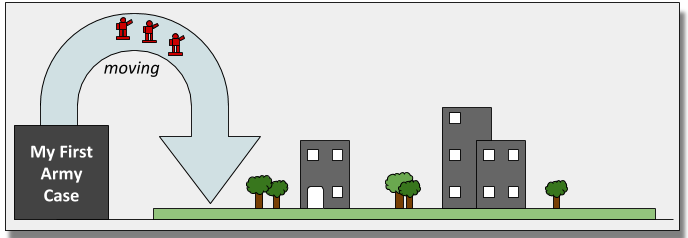
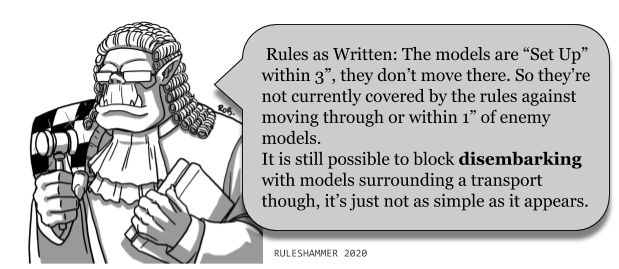
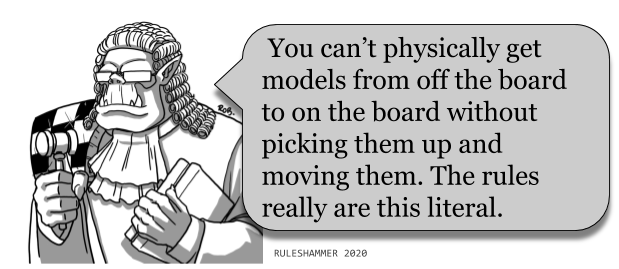
Therefore, arriving via Manta Strike, Low Altitude Drop, or disembarking from a Transport should not remove this trait and the unit should count as being in cover the moment it arrives. These rules state that the units "count as having moved for all rules purposes" but the actual act is Setting Up rather than moving. In my eyes, you can never point to a specific point where the unit DOES MOVE or takes an act that COUNTS AS MOVING, therefore the trait's rule never triggers and cover is never removed. However the people I talk to point to the phrase "counts as having moved for all rules purposes" and say that Dal'Yth Sept's trait is a "rule". It's very messy.
I noticed in your post about transports, you had a judge ruling that specifically addressed the way that disembarking counts as a Set Up rather than a true move, which would seem to support my finding. What do you think?
'I'm writing with a question about the wording of cover benefits in the current rules set of Warhammer 40,000. Is there a difference between being 'in cover', and receiving 'the benefit of cover'? And is there a difference between ignoring the benefit of being 'in cover', and the benefit 'of cover'?
Prepared Positions Use this Stratagem at the start of the first battle round, before the first turn begins. Until the end of the first turn, all units from your army – other than TITANIC units, AIRCRAFT units and units with the Fortification or Flyer Battlefield Roles – that are wholly within your deployment zone receive the benefit of cover, even while they are not entirely on or in a terrain feature. A unit that is already receiving the benefit of cover gains no additional benefit from this Stratagem.
Terrain and Cover The battlefields of the far future are littered with terrain features such as ruins, craters and twisted copses. Models can take shelter within such terrain features to gain protection against incoming weapons’ fire. If a unit is entirely on or within any terrain feature, add 1 to its models’ saving throws against shooting attacks to represent the cover received from the terrain (invulnerable saves are unaffected). Units gain no benefit from cover in the Fight phase (pg 182).
Smart Missiles: This weapon can be fired at units that are not visible to the bearer. Units attacked by this weapon do not gain any bonus to their saving throws for being in cover.
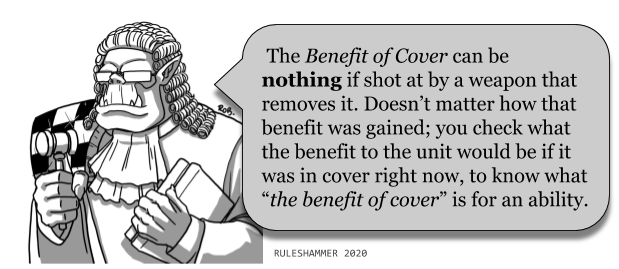
When resolving an attack made with a ranged weapon by a model with this tactic, the target does not receive the benefit of cover to its saving throw and, if that attack was made with a bolt weapon (pg 166), an unmodified hit roll of 6 scores 1 additional hit.
When resolving an attack made with a ranged weapon against a unit with this tactic by a model that is more than 12" away, that unit is treated as having the benefit of cover to its saving throw, and if that unit is not a VEHICLE and is entirely on or within a terrain feature, subtract 1 from the hit roll.
Add 1 to the hit rolls for this weapon when targeting a unit that is in cover.
Q: How do Dragonfire bolts behave when shooting units that aren’t in cover, but have a rule that means they have ‘the benefit of cover’ (e.g. Jormungandr units with the Tunnel Networks ability)? Would you still add 1 to the hit rolls for Dragonfire bolts? A: No. You add 1 to the hit rolls against units that are in cover (i.e. entirely on or within a terrain feature). Units receiving the benefit of cover while not being in cover do not count.
Tags:

Thank you for being a friend.
 Games Industry News Roundup- April 7th, 2026
 Infinity N5 First Principles: Understanding the Outcomes of Face to Face Rolls
 A Brush With Greatness, Part 1: Introductions
Support us on Patreon to get access to our Discord and exclusive App features.
Thank you for being a friend.
Already a Patron? Login with Patreon.
Visit our incredibly official store on RedBubble.


Support us on Patreon to get access to our Discord and exclusive App features.
Thank you for being a friend.