 This website uses cookies. Learn more.
This website uses cookies. Learn more.
This website uses cookies. Learn more.
Mont’ka: In a turn in which a <Sept> Commander unit from your army declared Mont’ka, at the start of your Movement phase you can select any friendly <Sept> units within 6" of that unit. Until the end of that turn, the selected units can shoot as if they did not move this turn.
SYMBIOTIC DEVASTATION Use this Stratagem at the start of your Shooting phase. Select one EXOCRINE unit from your army; until the end of that phase, that unit is treated as not having moved in your Movement phase. [Blood of Baal Pg72]
Q: If an Exocrine model is affected by the Symbiotic Devastation Stratagem in the same turn that it Advanced, can it then shoot that turn? A: No, because it has still Advanced that turn. [Blood of Baal FAQ pg1]
...either make a Normal Move, it can Advance, or it can Remain Stationary (see right). If a unit is within Engagement Range (pg 4) of any enemy models when it is selected to move, it cannot make a Normal Move or Advance; it can either Remain Stationary or it can Fall Back (see right)
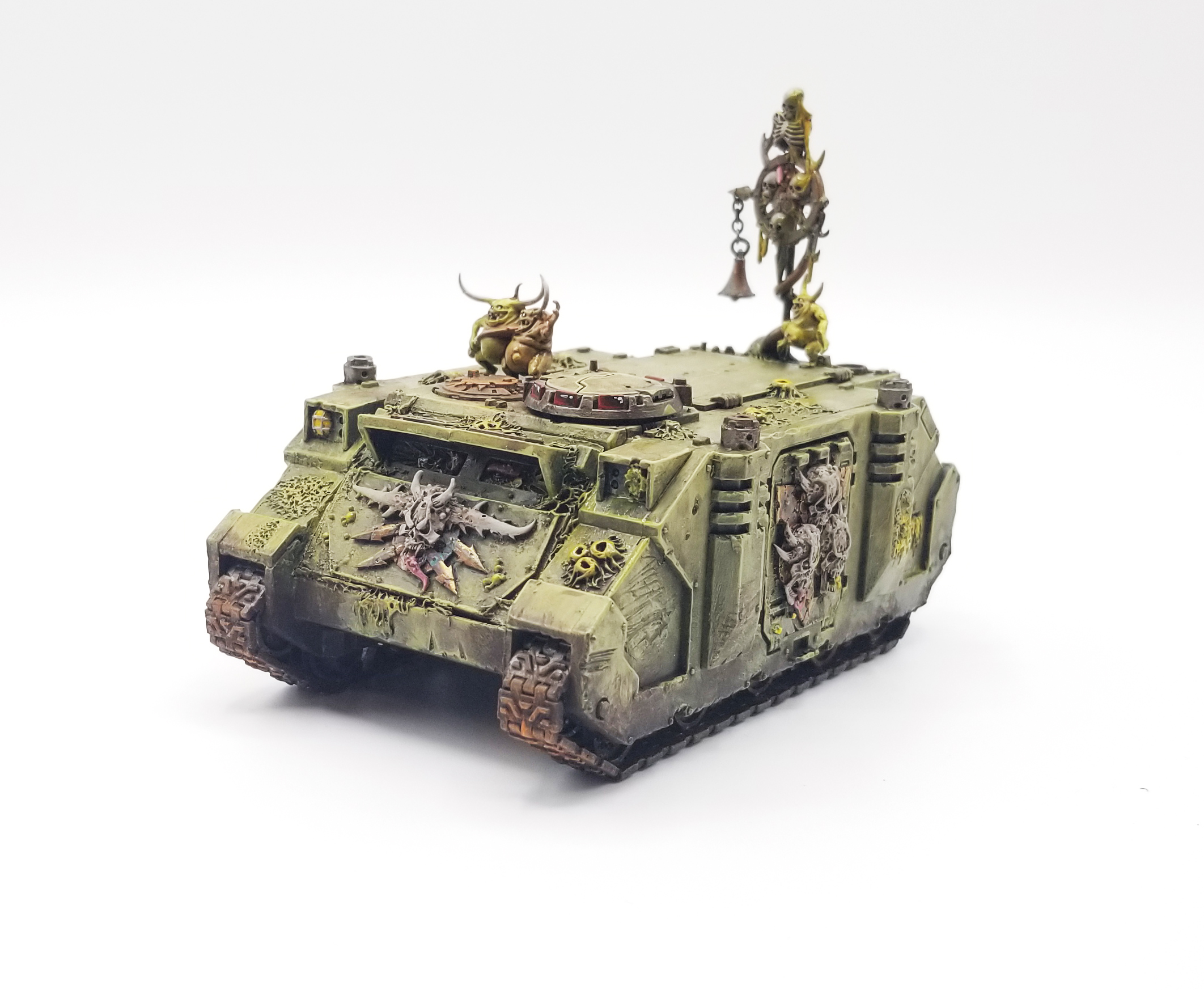 Credit: Robert "TheChirurgeon" Jones
Use this Stratagem at the end of your Movement phase. Select one SALAMANDERS unit from your army that did not Advance or Fall Back that phase. Until the start of your next Movement phase, that unit is treated as having remained stationary during its Movement phase for all rules purposes (such as firing Heavy weapons)...
Transports and Rules that Count as Remaining Stationary Some rules allow a model to count as having Remained Stationary, even if that model has moved during its Movement phase. Even if a Transport model is subject to such a rule, embarked models still cannot disembark from that Transport model during the Movement phase if that Transport model has already moved, unless that Transport model (or the models embarked within it) have a rule that explicitly allows them to disembark after the Transport model has moved.
has not yet made a Normal Move, an Advance or has Fallen Back that phase.
Use this Stratagem during the Declare Reserves and Transports step of your mission. Select one WHITE SCARS unit (excluding ARTILLERY and BUILDINGS) from your army. You can set up that unit in outflank instead of setting it up on the battlefield. If you do, at the end of one of your Movement phases you can set up that unit wholly within 6″ of any battlefield edge and more than 9″ away from any enemy models.
Some rules enable one unit to split up into two or more smaller units. Each time this happens, any rules that the original unit was being affected by when it split, and which would continue to affect it for a specific duration (from abilities, Stratagems, psychic powers, etc.) continue to affect all of the individual units it split into until such a point as they would normally have no longer applied. For example, if the original unit was within range of an aura ability when it split, any given individual smaller unit would only be affected by that aura ability if it was itself still within range of that ability after the split, whereas if the original unit was being affected by a psychic power that lasted until the end of that turn at the point when it split, all of the smaller individual units would still be affected by it until the end of that turn. [Core Book FAQ pg.4]
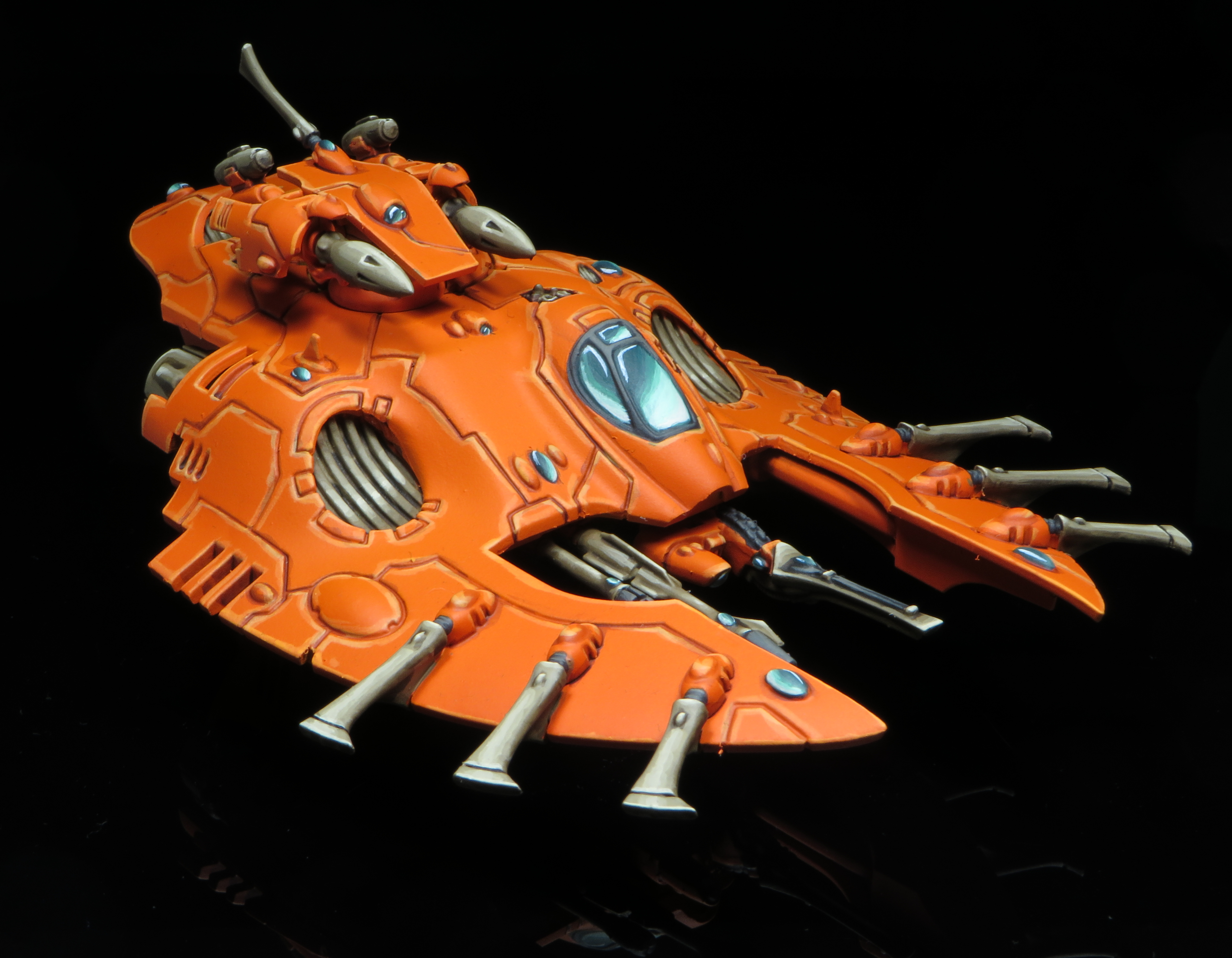 Wave Serpent. Credit: Rockfish
Do rules like Eldar stratagem Fire and Fade, or psychic power Quicken, allow a unit to embark in a transport? – Brandon
OUT OF PHASE RULES AND EMBARKING ON TRANSPORTS We wish to add an example to explain how the Out of Phase rules apply to units. When a unit uses a rule to make a move as if it were the Movement phase, all the normal rules that would apply in the Movement phase apply when making that move. For example, models in that unit cannot finish that move within Engagement Range of any enemy models, and if every model in that unit finishes that move wholly within 3" of a friendly Transport model, they can embark within that Transport model following the normal Movement phase rules regarding embarkation.
*Page 366 – Rules Term Glossary Add the following: Move normally: Rules that refer to move/moves/moving normally are the same thing as making a Normal Move, e.g. a rule that states ‘instead of moving this unit normally’ means ‘instead of making a Normal Move with this unit’. If a rule simply tells you to make a move as if it were the Movement phase, but does not specify what kind of move is being made, it is a Normal Move.
“In the Core Rules PDF, p12, it says models embarked within a transport “cannot normally…be affected in any way while…embarked. Unless specifically stated, abilities have no effect on units while they are embarked.” Note the important exceptions, “normally” and “unless specifically stated.” Likewise, p7 lists auras as an ability. Now, the Jackal Alphus’ Priority Target Sighted ability lets you pick an enemy unit and “add 1 to hit rolls for friendly <CULT> units that target that enemy unit while within 6” of this model.” The Goliath Truck has the CULT keyword, so can be given the modifier. It’s Open-Topped ability states that “any restrictions or modifiers that apply to this model also apply to its passengers.” So, would the Truck pass this +1 to-hit modifier on to its passengers? After all, the Alphus’s aura is not giving them the modifier, the Truck is.
Notes:
1) In the new FAQ, GW added this same restrictions-or-modifiers clause to Ork Trukks and Battlewagons;
2) Shots fired by embarked passengers are measured from any part of the vehicle’s hull, and
3) the Open-Topped rule “specifically states” modifiers are passed on and Open-Topped vehicles are not “normal.” I sent an email to GW but you know how that goes. Personally, I feel like it could go either way. Thanks and sorry for the wordiness but it’s a complicated interaction.” – Kevin
9) If a Transport model is under the effects of a modifier to its ranged attacks (such as a modifier to its hit rolls, wound rolls, etc.) the same modifier applies each time an embarked model makes a ranged attack.
5) Unless specifically stated otherwise, the embarked unit is not affected by the abilities (including aura abilities) of any other unit, even if that unit is also embarked within the same Transport model.
Can harlequin players still shoot pistols from any point on the physical model (hull if hull still existed on models with a base) of an open-topped transport? In case this needs some clarification, there has been some discussion on a TTS Discord about whether “model” now consistently refers to a model’s base due to the new verbiage in the measuring distances section. – Erick
2) Measure distances and draw line of sight from any point on the Transport model when models in that unit make the ranged attacks.
Defensive Rules that Apply to Attacks with Specific Characteristics Some rules only apply against attacks that have a specific characteristic. For example, ‘Each time an attack with an Armour Penetration characteristic of -1 is allocated to a model in this unit, that attack has an Armour Penetration characteristic of 0 instead.’ Each time you determine if such a rule is triggered, and so applies, always use the modified characteristics of that attack at the Allocate Attack step of the attack sequence. In the example above, that means that if an attack which originally has an Armour Penetration characteristic of 0, but then is modified by another rule before the Allocate Attack step to be -1, then at the Allocate Attack step it would then trigger the ability and be changed back to 0 instead.
3. ALLOCATE ATTACK If an attack successfully wounds the target unit, the player commanding the target unit allocates that attack to one model in the target unit (this can be to any model in the unit and does not have to be allocated to a model that is within range of, or visible to, the attacking model). If a model in the target unit has already lost any wounds or has already had attacks allocated to it this phase, the attack must be allocated to that model.
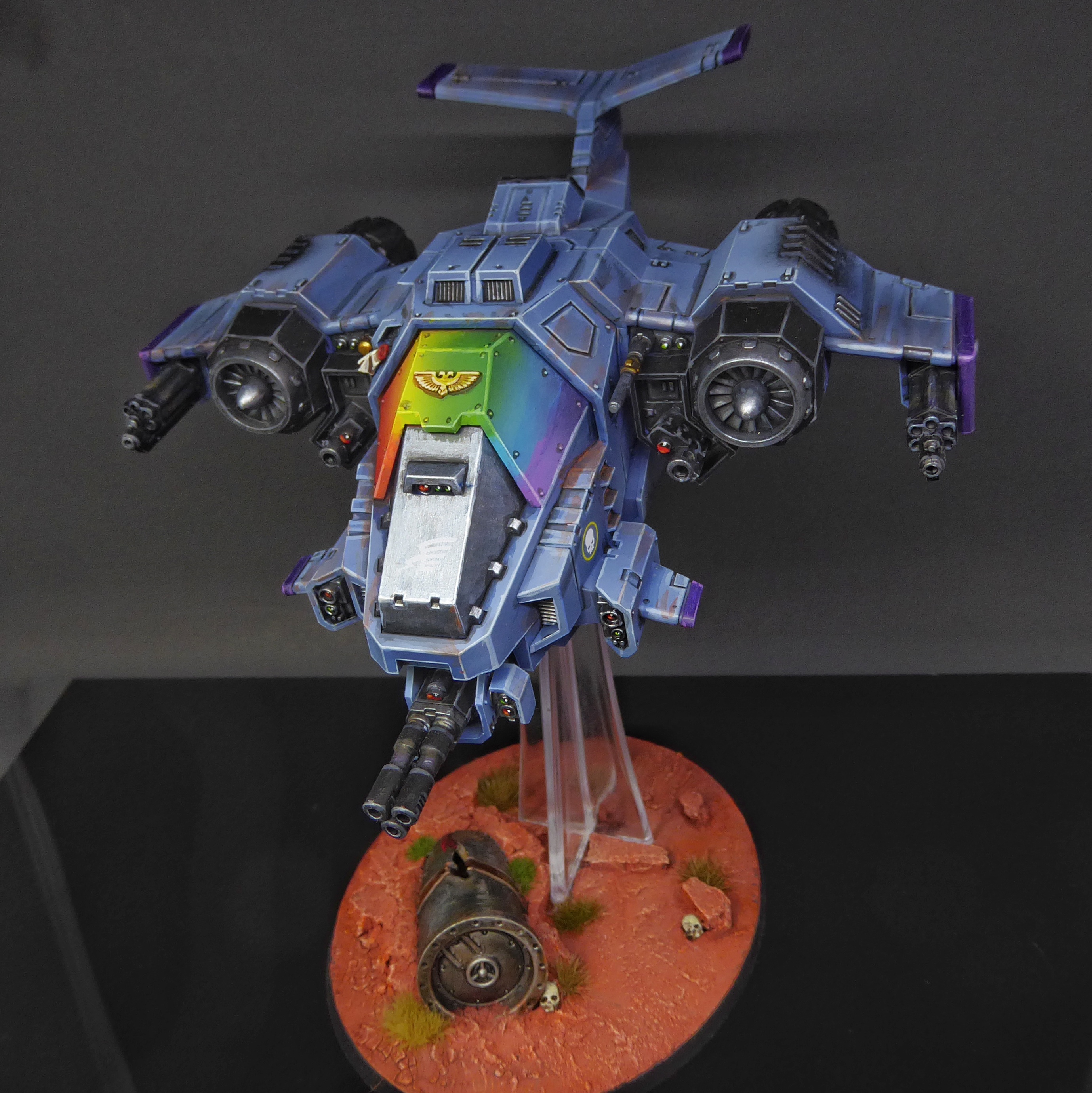
I don’t see what is allowed to charge a unit with Aircraft. I only see where units can’t end their movement within engagement range if a unit wIth the Aircraft keyword. Thanks! – Chris
Whenever a model makes any kind of move, it can be moved across Aircraft models (and their bases) as if they were not there, and they can be moved within an enemy Aircraft model’s Engagement Range, but it cannot end the move on top of another model (or its base), and it cannot end the move within Engagement Range of any enemy Aircraft models.- [GT2020 Pg66, Core PDF Pg13]
It is not normally possible to end any kind of move within Engagement Range of an enemy Aircraft model. However, many Aircraft models have an ability (e.g. Airborne) that specifically says that they can only be charged by enemy units that can Fly. Such rules take precedence over those in the Core book, and units that can Fly can indeed declare a charge against an Aircraft model, and they can end a charge move within Engagement Range of it. [Core Book FAQ pg.3]
Hover Jet: Before this model moves in your Movement phase, you can declare it will hover. Its Move characteristic becomes 20″ until the end of the phase, and it loses the Airborne, Hard to Hit and Supersonic abilities until the beginning of your next Movement phase.
Tags:

Thank you for being a friend.
 Games Industry News Roundup- April 7th, 2026
 Infinity N5 First Principles: Understanding the Outcomes of Face to Face Rolls
 A Brush With Greatness, Part 1: Introductions
Support us on Patreon to get access to our Discord and exclusive App features.
Thank you for being a friend.
Already a Patron? Login with Patreon.
Visit our incredibly official store on RedBubble.


Support us on Patreon to get access to our Discord and exclusive App features.
Thank you for being a friend.