I originally wrote this article for eighth edition, back in 2019. It was a pretty good article at the time, covering the bases, but two editions later we've had a complete revolution in how terrain works and how tables are laid out in the game. And having just finished an entire series on
the core Games Workshop Terrain Layouts, now felt like a good time to revisit this article.
After all, why should Competitive Players get all the attention? Good terrain is just as important in Narrative play - great terrain can help set the stage and turn an encounter from a board game into an epic clash between two desperate forces, hungry for glory. But when it comes to actually building good battlefields, there aren't a ton of resources - players are largely left to figure things out for themselves, or stuck trying to use competitive terrain and layouts.
And look, if you don't like playing on competitive layouts, I'm with you. I think the clear plastic bases look terrible and I hate playing on bare MDF, unpainted plastic, or worse, brightly colored PLA. When casual and narrative players tell me they can't stand tournament terrain and its endless parade of L-shaped ruins, I'm hard-pressed to disagree when I've played games rocking terrain like this:
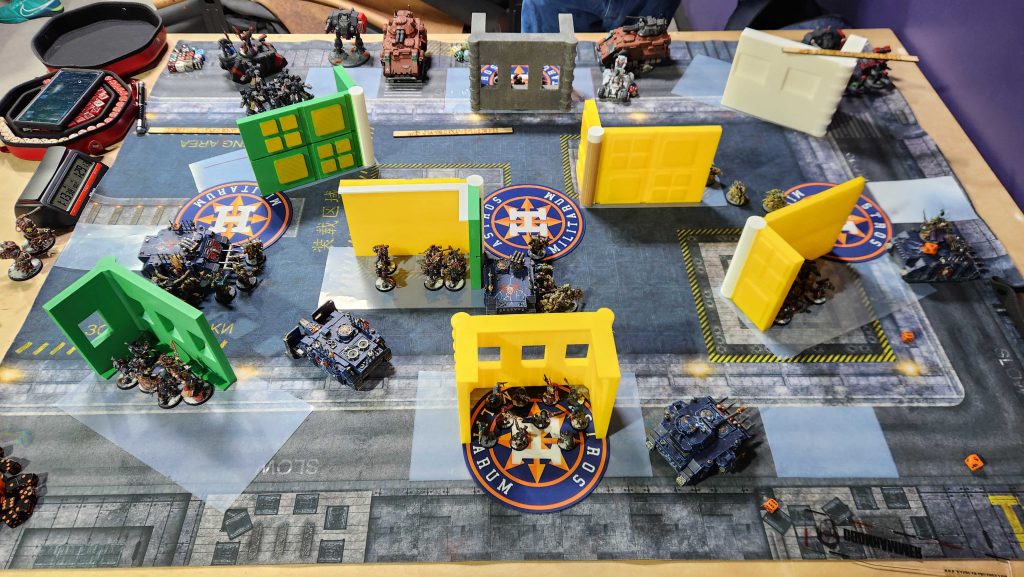 It's playable - and I'll take ugly and playable over pretty and unplayable - but why should we have to choose?
That's an extreme example, but it's just as likely to see a bunch of bare MDF that only looks marginally better. And while the terrain industry has improved a ton - we're big fans of the kits sold by
Bandua and
Frontline Gaming - if you're a fan of detailed terrain and diorama-like battlefields, or if you want something more unique, then they may not cut it for you.
On the flip side, I've seen just as many Narrative players extoll the value of some amazing looking table that had terrain which was either unusable, ineffective, or both. Below is a great example of a table that
looks like it should be functional at a glance, but is actually pretty open and difficult to play on effectively - there just arent' may places to hide and the terrain boundaries aren't well defined.
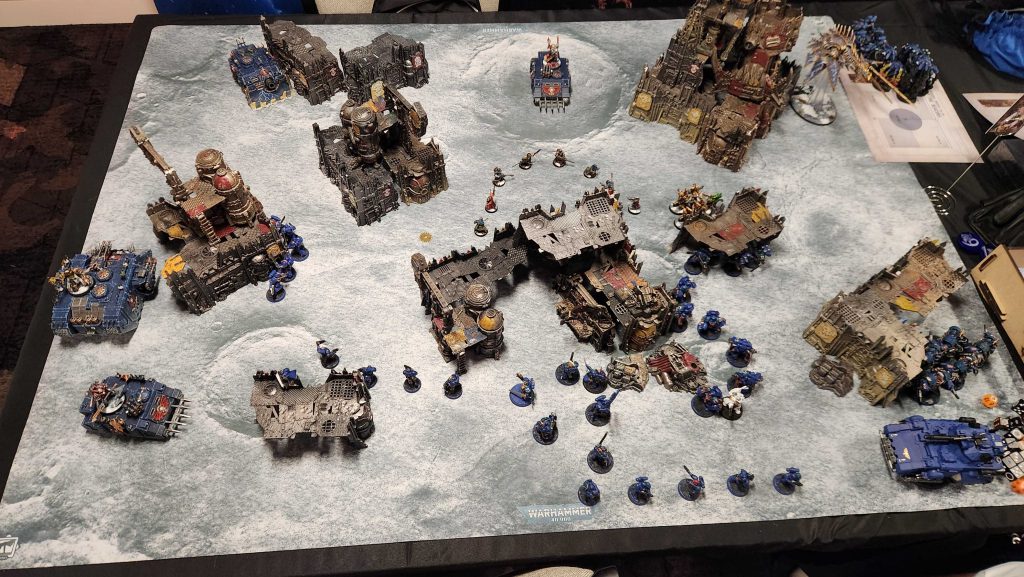 From the 2024 Grand Narrative
Similarly, something like this may have more visually interesting terrain pieces but not be super functional - there's little space to actually put models on the terrain, when you do they can't move around or fight, and the gaps between terrain features aren't large enough to allow larger units to move around effectively, forcing them to deploy in the open and bank on going first in order to be able to play the game.
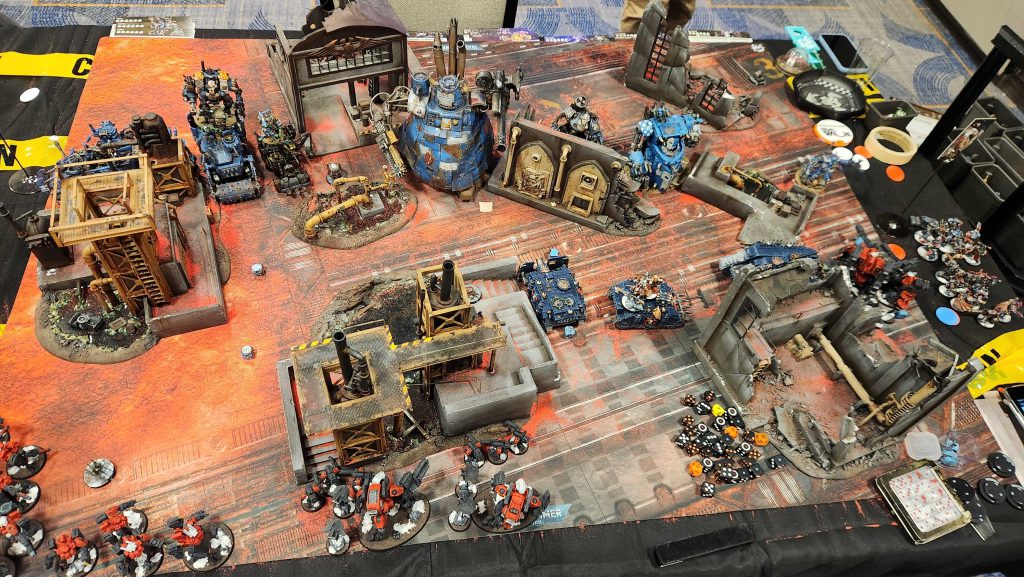
All of this is to say: It's not enough to have terrain that looks good, you need it to be functional and you need to lay it out with intent. In this article - the first of several - we're going to look at what makes a good terrain layout, things we want to encourage and avoid, and we're going to build several example battlefields using those principles, suited to different types of narrative game. Hopefully by the end you'll have some layouts you can use and more importantly, some guiding principles for how you can build and improve your own layouts moving forward.
The Basics
Terrain is an incredibly important part of the game, dictating how units can act, what they can interact with, and how likely the are to survive moment-to-moment. Your terrain layout will dictate which units can even be played, let alone which ones are viable for a given strategy. 40k is an incredibly deadly game; a unit that is in the open and visible to multiple enemy units is likely to be destroyed if the opponent has ranged shooting capable of taking it out. The Benefit of Cover is important and substantial in 40k - +1 to saves is not nothing - but it is not a large enough benefit to bank on the survival of a key unit once it can be seen.
Terrain in 40k tends to fall into three different categories:
- Terrain which blocks line of sight (LOS blocking). This is terrain which explicitly blocks a unit's line of sight, preventing them from seeing past a certain point. This will typically be ruins, buildings, or walls, usually 4" or more in height, and often on an area base.
- Terrain which does not block line of sight. This is terrain which doesn't intentionally block a unit's line of sight. Something like a hill or barricade, which may block line of sight under the right circumstances, but is more designed to provide elevation or the benefit of cover.
- Scatter Terrain. This terrain is incidental, and at most will provide the benefit of cover. Its purpose is primarily aesthetic.
Because shooting in 40k is so deadly, you need lots of terrain to block Line of Sight. If you don't, shooting armies dominate the game as they're able to pick off targets from anywhere on the table, and going first becomes the game's primary strategy, since a player going first will be able to freely kill units in their opponent's army, depleting their forces and blunting their ability to respond. Not having a place to hide or stage melee units makes those less useful, and further pushes the game toward two armies shooting each other from across the table on planet Bowling Ball.
Terrain Density
Let's talk about Terrain Density. This sounds complicated. It's not - it's just generally judging how much terrain is on the table. Low density terrain is great for big vehicles and shooting armies. Medium tends to allow a mix of both but can favor one or the other depending on how its laid out, and High density terrain is great for melee.
Let's see some examples.
Low Density/Very Light Terrain
Welcome to the shooting gallery. At this level. you've got a few sparse terrain features and very little which can block line of sight. Your opponent may get the benefit of cover from being partially behind a tree or crater, but your only real concern here is "how do I go first and can I reach that enemy unit with my guns?
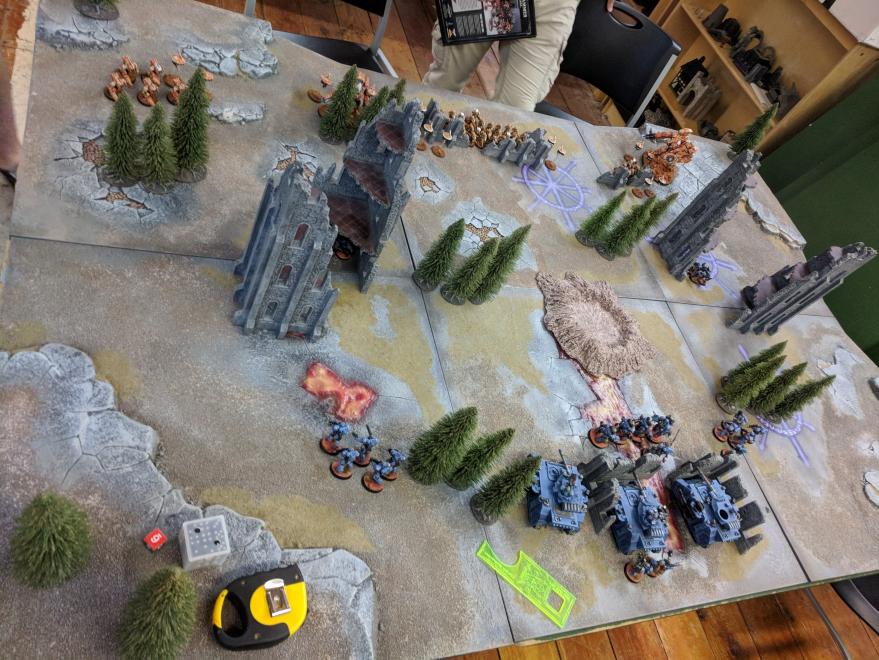 These trees, while visually interesting, are scatter terrain and not woods. They're doing nothing for anyone. This is basically a wide-open table. The ruins also lack bases, but we can house rule around that pre-game if we know what we're doing.
Tables can be deceptively light as well - without proper terrain boundaries or area bases, even a table with lots of
pieces of terrain on it can more or less be open, especially if you don't houserule or agree upon how to handle terrain. Check out this table from the Grand Narrative in 2023:
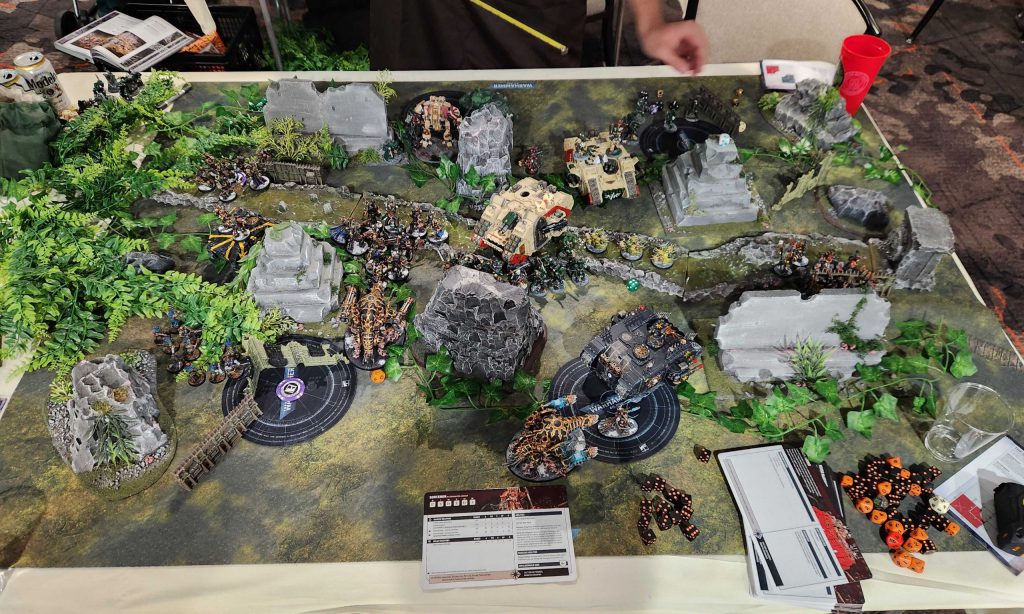
There's a lot of stuff on that table - at least 11 big pieces before you count stuff like the river (the river is particularly cool visually but doesn't
do anything). And what's actually blocking line of sight? There are a few ruins to hide behind, but the primary pieces are those two flat, featureless walls. Otherwise, both armies are shooting across the table, river be damned.
What you end up with is an insane number of sightlines, many of which reach across the table. Even behind that flat wall, enemy units can easily move out and spot you, and that's only if you're even able to deploy behind it - something you'll only have as an option in a Dawn of War-style deployment that has you deploying along the long table edge.
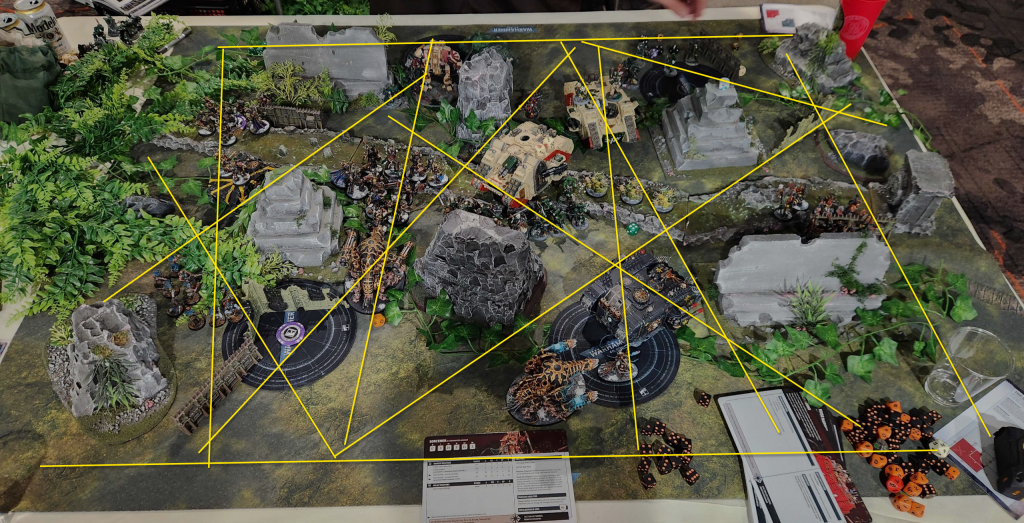
So even though this table looks great, painting the picture of a dense jungle overgrowing ancient ruins, when it actually comes to the game, the player going first is likely to shoot their opponent full of holes, while the terrain itself isn't creating interesting tactical decisions so much as just being there to look pretty.
Medium Density
Tables with a solid amount of functional terrain that can block line of sight. Depending on how this is laid out and used, these can either advantage melee or shooting armies. This is where I'd put the Games Workshop Tournament Layouts, with Layout 2 being pretty open and friendly to shooting armies, especially on Tipping Point/Crucible of Battle:
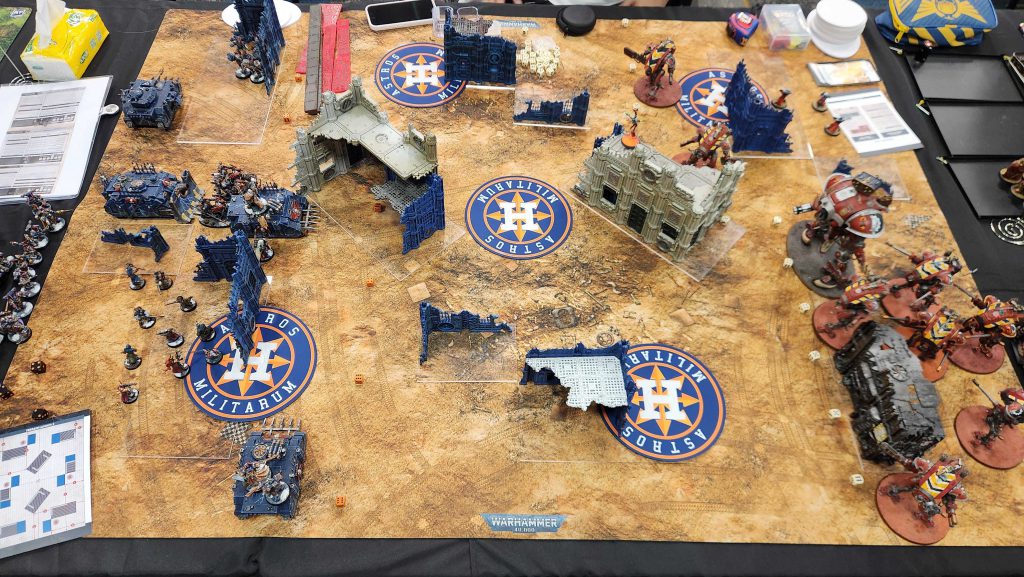 GW Layout 2, Tipping Point Deployment
And layout 8 being much more friendly to melee armies, especially on Hammer and Anvil or Tipping Point. It's worth noting that because GW events tend to use those clear acryllic bases, they often look more sparse than they actually are, especially in photos.
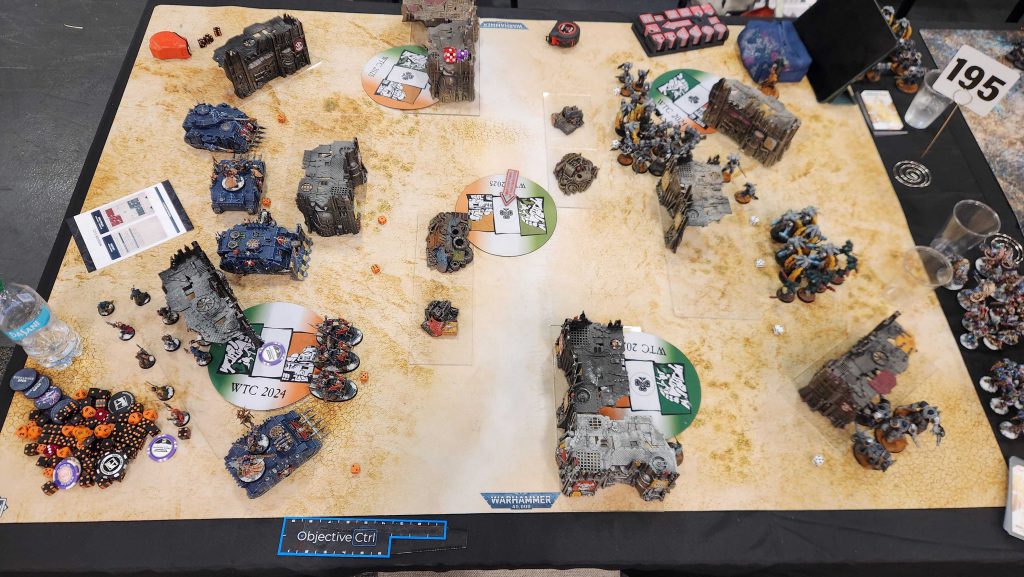 GW Layout 8, Tipping Point Deployment
These tend to offer some longer sightlines but have plenty of places for units to hide, letting them duck into cover during their approach. You may have 1-2 sightlines longer than 30" but most are going to be in the 24" range. The ability to move through Ruin walls is crucial for infantry, as they can use walls for cover as they stage for an assault, then burst through and charge a key unit.
High Density
If you want terrain that forces more intimate encounters, you can add more terrain. A good example of this are some of the "heavy" WTC terrain layouts, which feature additional, taller ruins and crates.
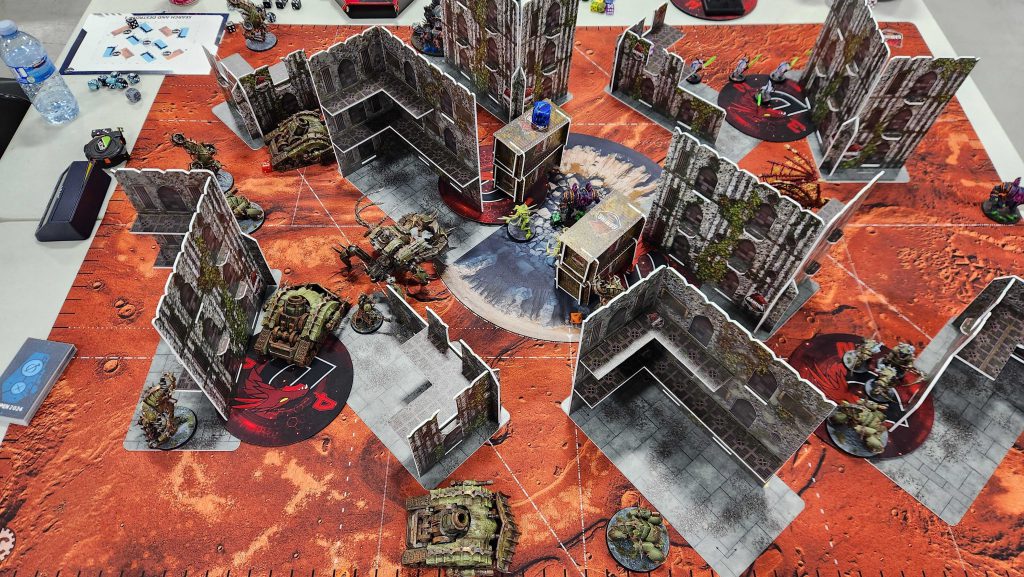
Adding additional features packed closer together reduces sightlines and makes melee armies stronger - it's easier for those units to hide behind walls as they approach, and you may not get to shoot them before they charge. The ruin walls on this terrain are especially deadly in that regard, since Infantry just walk right through them.
Why Does This Matter?
"But Rob," you ask, "why do I care if my narrative terrain blocks long sight lines or has area bases? I play narrative games, not competitive! I don't need my terrain to be balanced or symmetrical."
Well, we'll come back to that notion of symmetry and balance later but there are three key reasons this matters:
- It makes the game more interesting. Games are more interesting when they aren't determined by who goes first and has the best shooting. Warhammer isn't just about shooting, it's also about movement, taking cover, fighting in melee, and
- It makes more armies and strategies viable. People like to play with lots of different armies and play styles. Having varied terrain layouts which are designed to make different kinds of armies viable gives those players a chance to play the game how they want to play it.
- It makes the game more fun. The game is more fun and more narratively interesting when armies have to move through and around terrain, navigate obstacles, consider spacing and lines of sight, and players have to make interesting decisions about risk/reward. At their best, games are a series of interesting decisions and you want your games of 40k to have more than just "who do I shoot first?"
- It literally changes the game. Where your armies fight, who can fight when, and how the game will flow are determined by the terrain. Units like tanks and knights may not even be playable if your terrain set-up doesn't let them move.
Also a table covered in cool terrain just looks rad as hell, and is much more visually interesting than an empty field.
Things a Good Layout Needs
What makes a "good" terrain layout? I've shown some competitive layouts up top, but even competitive players will likely be torn on whether a particular layout is playable. And part of that is because a layout depends on the deployment map - these are inseparable concepts. Layout 2 is very much worse to play on Tipping Point than it is on Search and Destroy. Layout 8 is amazing on Hammer and Anvil and horrible on Dawn of War. Keep that in mind as we review some of the basic things a layout needs.
- Good starting cover. Unless it's a narrative scenario where one side is guaranteed to go first or the game is using uneven point sizes, both armies need to be able to hide from the enemy in Deployment. That means your layout needs places where units can be deployed that won't be visible to units in the enemy deployment zone. They should be able to hide most things, but there can be a trade off there - hiding things should typically mean deploying less aggressively
- Limited sight lines. You want to have some reasonably long sight lines so that better shooting units can do what they're made for, but you don't want them to dominate. You want to limit these to 1-2 sight lines, and those should require moving into position and taking a risk. You generally want to limit most of your sight lines to 18-24" in length. This gives you room to shoot at something that might want to charge you, but still puts you at risk of being shot and charged after if you don't kill them.
- Limit Objective Sight lines. On a similar note, you want to limit the number of sight lines you can draw between objectives. Being able to see one objective clearly from another means that a unit can sit on one objective and shoot enemy units trying to take another, allowing them to be passive and control more of the board without having to actually move onto that second objective. You want to give units a way to "steal" the other objective safely, and force players to commit units to stop them.
- Melee Staging Points. You need to create good, safe spots for melee units to set up and prepare for a charge. Not every melee unit can move 12"+ with advance and charge, and so they need spots where they can hide behind cover and then prepare for a big charge.
- Movement Lanes for vehicles. You don't necessarily need to accommodate Baneblades, but a good terrain layout should have spaces where vehicles like Knights, Land Raiders, and Rogal Dorn tanks can move through. These lanes generally need to be around 5" wide.
- Multiple Paths. You don't want to funnel armies into the same spot every time they play a game on your layout. Good layouts should give players three or more options for moving around the table, allowing them to adapt and react to their opponent's army.
- Defined Features. You generally want your terrain features to be well defined. It should be clear where they start and end, and what it means to be "within" or "wholly within" them. That means bases for things like ruins and forests.
Those are well and good for making balanced and fun games, but what about the narrative aspects? Well if you're focused on making sweet layouts that look like real battlefields and not paintball arenas for your narrative games, here are a few more I'd toss out:
- It should make visual sense. You don't need to be an urban planning expert, but the ruins at least should look like they were part of a real building. The battlefield should look like a real space and not something that was made for fictional armies to fight over in a training exercise.
- More complete buildings. By that token, let's try and avoid just having free-standing L-shaped ruins and try and do things that are more suggestive of complete buildings.
- More than juust ruins. Where possible, we'll try to have more than just ruins. That won't always be the case - if I'm doing an urban layout lots of ruins are fine, but it's OK to have pipes, barricades, crates, trucks, and scatter terrain.
- Vertical spaces. Generally speaking, competitive events are afraid to have tall ruins and use the Plunging Fire rule. That's lame. We're going to try and use those. That said, you still want to avoid having Plunging Fire ruins in a player's deployment zone, since that leads to units with Indirect Fire sitting up there and dominating the map.
Building a Terrain Layout: No Man's Land Showdown
Now that we have our principles laid out for a good layout, let's actually build one. I'm of the mind that most narrative games tend to fall into one of three categories:
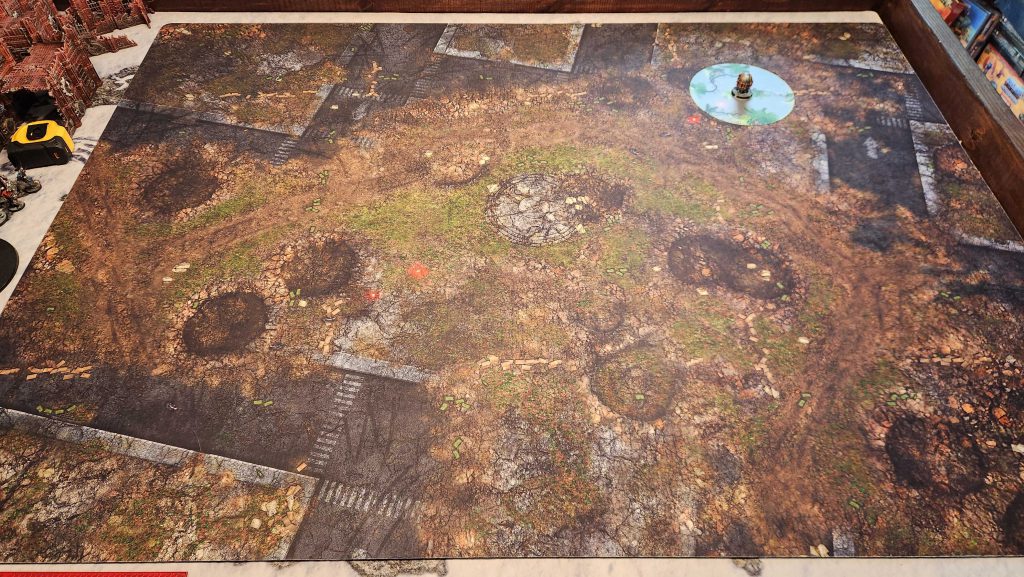
1. King of the Hill - fighting over a single objective in the middle of the table. This can be something on the ground or a high spot.
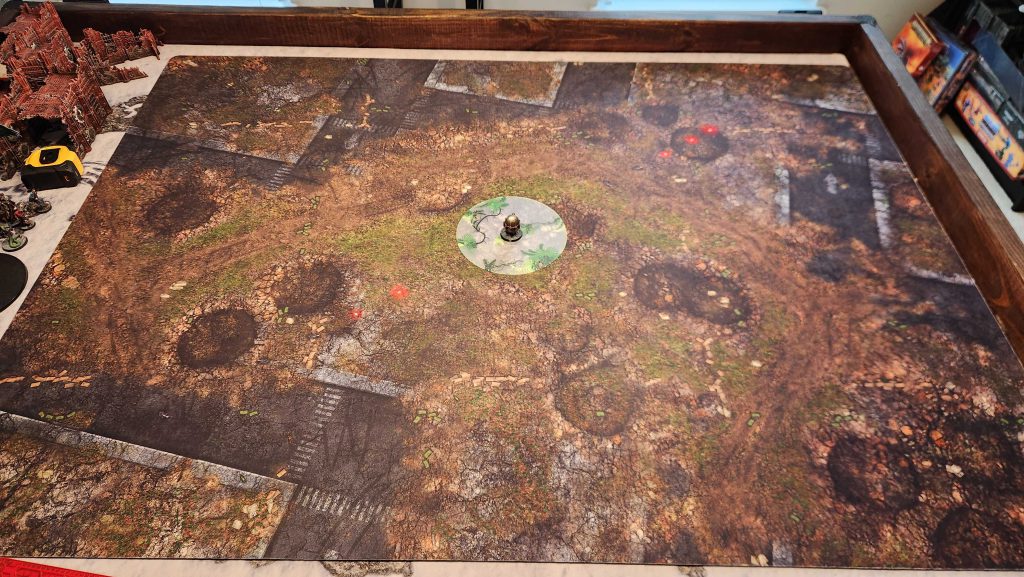 2. No Man's Land
 - fighting over a number of objectives in the middle of the table. This is going to look the most like a standard competitive layout.
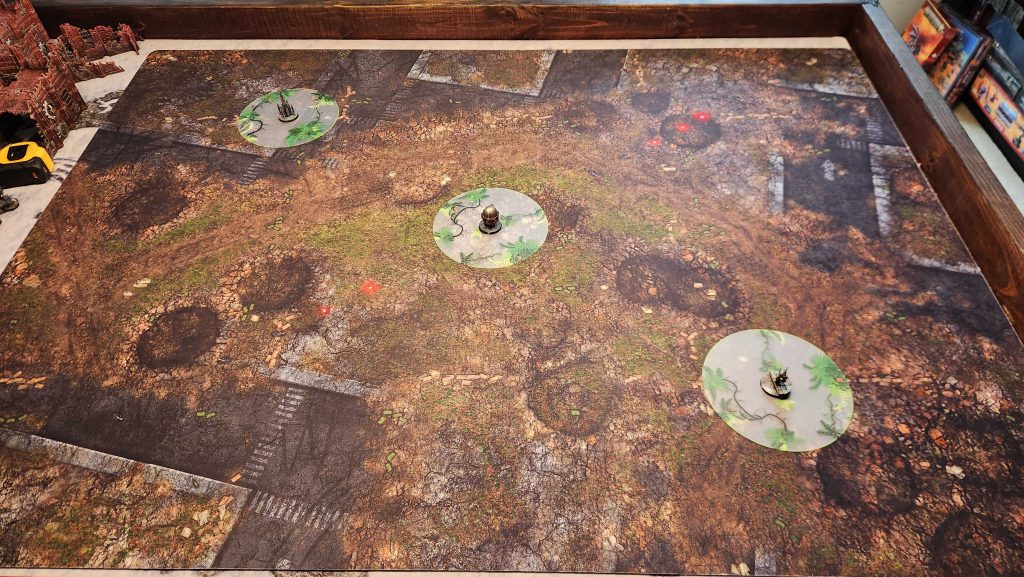 3. Attacker-Defender
 - fighting over an objective controlled by one player from the start of the game. This can be heavily defended or just deep in enemy territory. It may be a building or something else which can be destroyed.
 What About Home Objectives?
 Those are less important in Narrative games than competitive games but home objectives basically give you an incentive to split your forces, keeping some back to hold a key objective (or deny it to your opponent) rather than sending everything forward, full stop. If you don't have them, then both players will naturally push their armies to the middle of the table. Having to protect your backfield is more important when there's an objective there which can be stolen and generally makes for more interesting games, but they won't always make more sense for the story you want to tell. You should have them when you can, or look for other ways to replicate this effect. But that's more a "scenario design" problem than a layout one.
Let's Start with that No Man's Land setup. We've got one objective in the middle of the table players are going to fight over. I've got a mix of different terrain base sizes here but for this one I wanted to go with a Sector Mechanicus, and the best bases I have for that are the Necromunda tiles, which give me a set of 12"x12" bases to work with.
NOTE: As I plan this, I'm thinking about this either as Search and Destroy, Crucible of Battle, or Tipping Point deployment. Those tend to be easier to plan around. This could also work for Hammer and Anvil, probably.
So let's start by putting one of those in the middle of the table. Remember when we talked about sightlines? Well we don't want the objective to be just sitting completely out in the open, such that you can sit back and shoot anything that steps foot on it - that just hands the game to the player going second as they spend all game killing anything on the objective, then move on there on the final turn to steel it. So we add some walls and create the suggestion of a Mechanicus building.
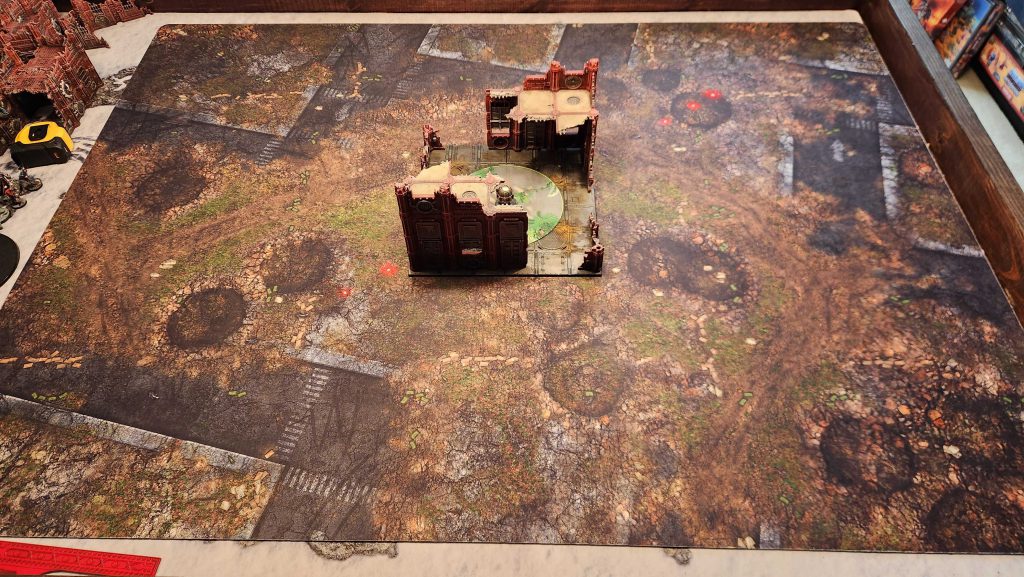
I add some 2" walls around the corners so vehicles can still move in but to give the suggestion of the rest of the building.
Next up: Corner buildings! I want to add a couple of Mechanicus depot buildings here to suggest a busy downtown, provide a lot of cover, and also make for a more dense table. I want these to have more than just walls so I give them some silos as well. I'm not concerned with the distances between buildings and the table edge yet.
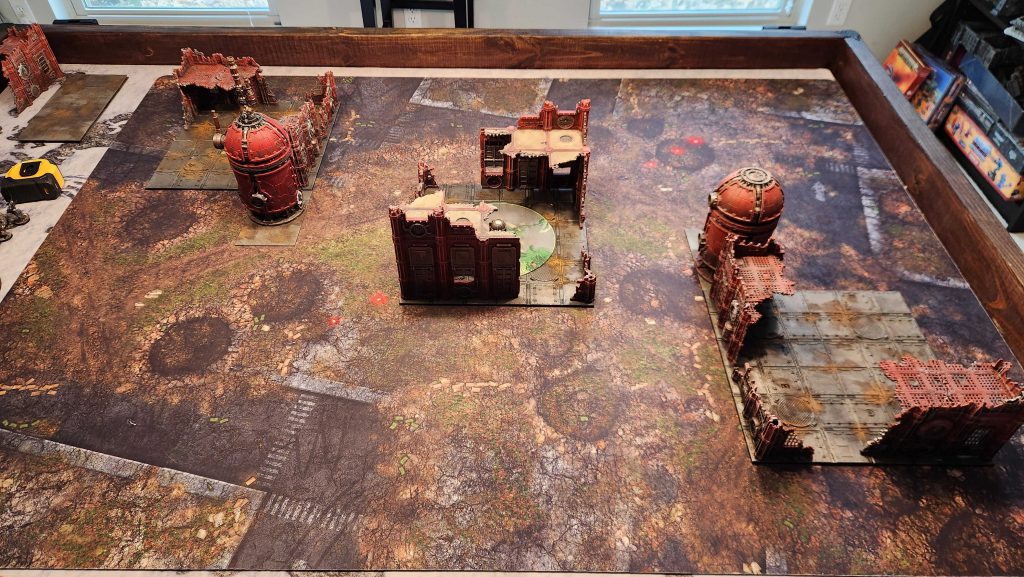
Next up I want to add some ruins on the sides of each table, to break up those long sight lines down the long table edges. So I put the Bheta Decima battery charger on one side and make a ruin on the other. This won't be symmetrical but that's OK - being
mostly symmetrical is fine for a narrative format.
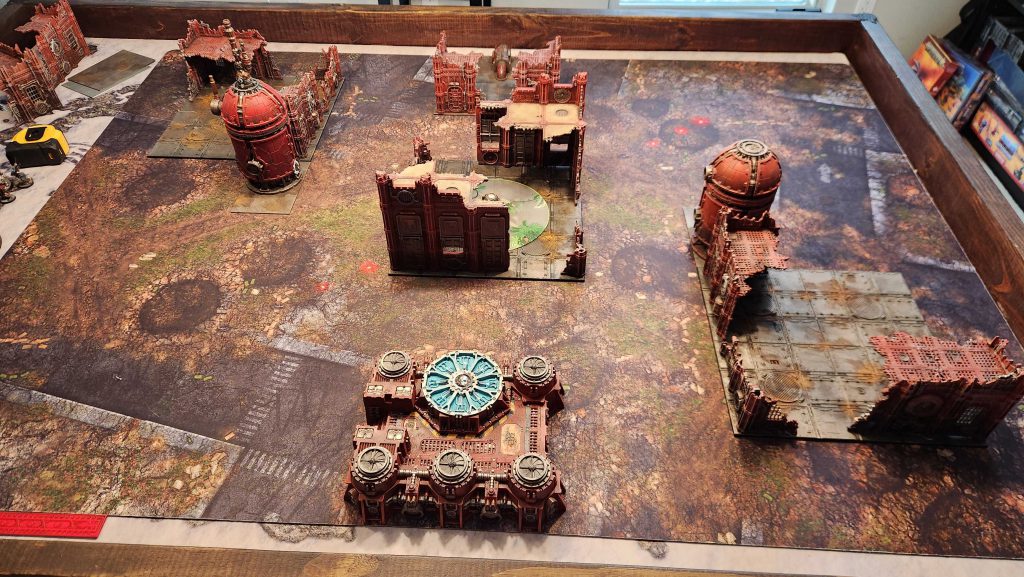
These are different in interesting ways; the one at bottom offers more dense line of sight blocking, but can really only be traversed by infantry.
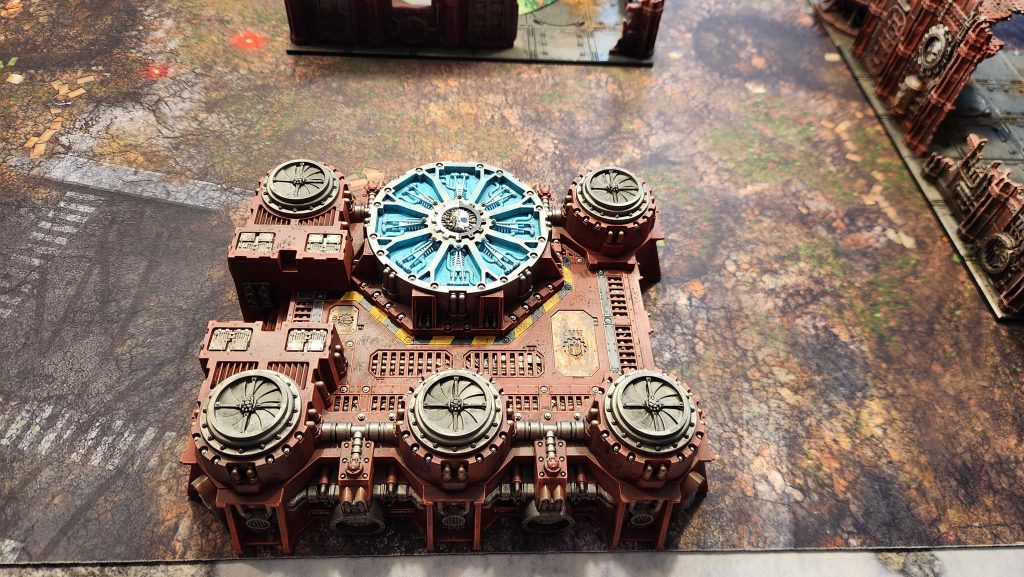
On the other side I've used a pair of 5x10" bases to make another ruin, and added a pipe section to it to make it difficult for a big unit or vehicle to just sit in there. But at less than 2" in height, a vehicle could just drive through.
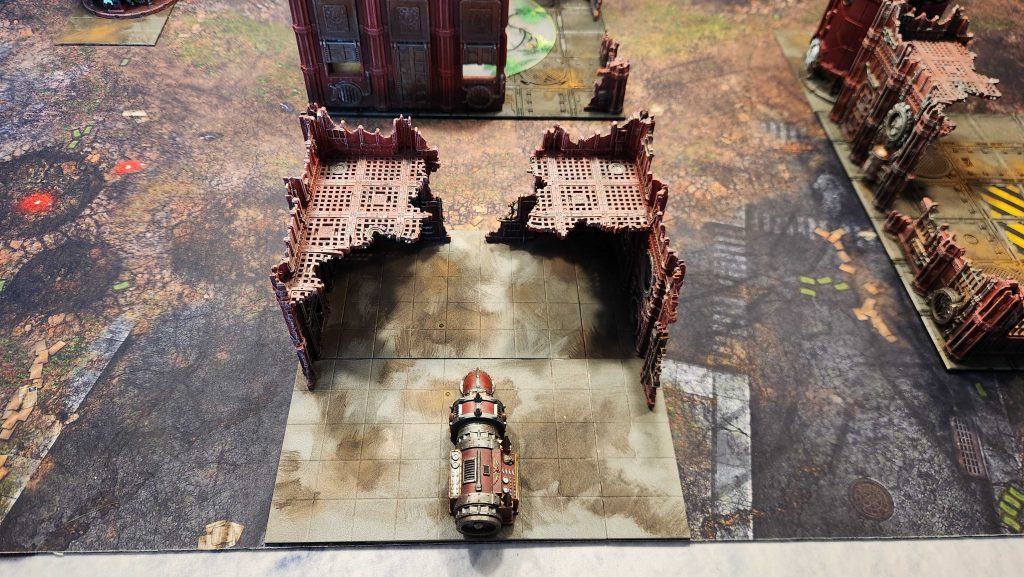
That's solid, and next I'm going to add the "home" ruins for each player, completing our dense downtown of Sector Mechanicus buildings.
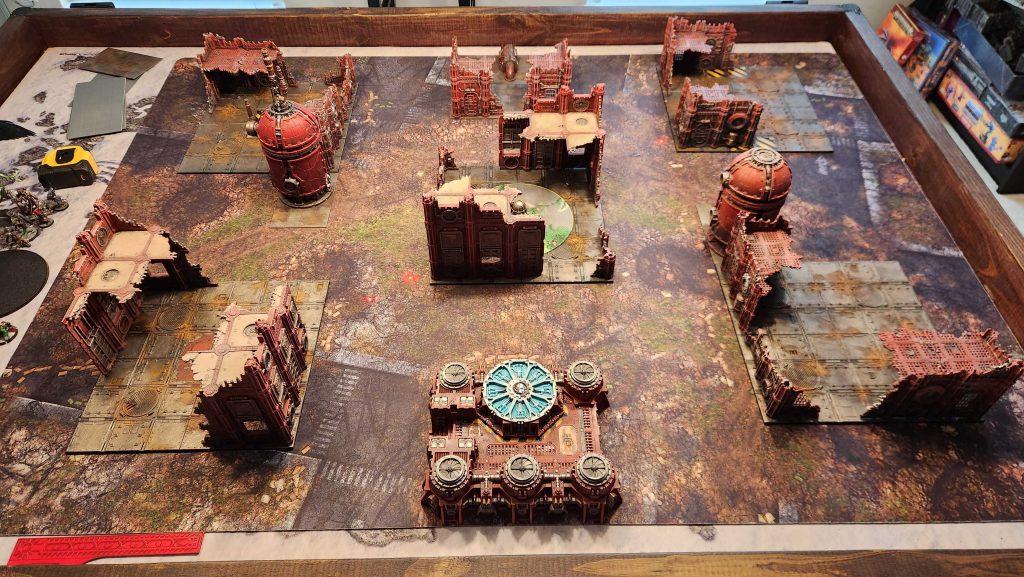
These are similar ruins, and I could have laid them out in a more similar fashion but again, I'm going for a little asymmetry here just to make things more interesting, but I'll probably come back and tweak this.
Next up I need to make sure that the terrain is spaced well. I'm looking to create 5" lanes here between buildings, side enough for a Rogal Dorn or Defiler to walk through. For that same reason, I've moved the corner ruins in, making sure they're 5" away from the sides of the table.
Loading...
Next up comes scatter terrain, and this is a mix of big things to make this interesting - like the trucks and the shipping containers - and some aesthetic pieces like the barrels and ammo crates. I put a decent amount of this down to add ambiance to the table.
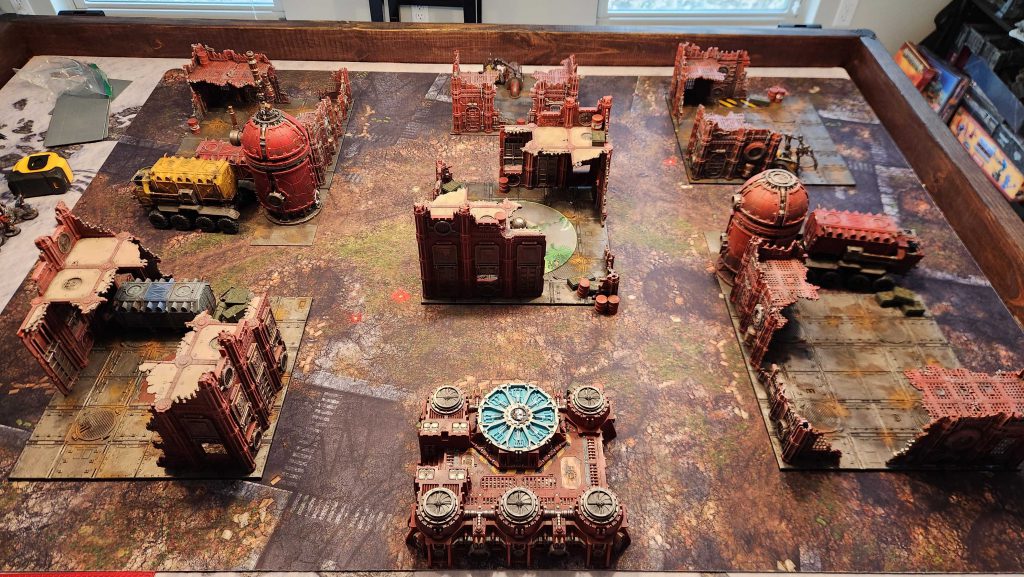
And that's more or less it - it's a great start and a table I'd be happy to play on. It was at this point I started thinking "what if I wanted to add two more objectives along that middle diagonal line?" So I did that.
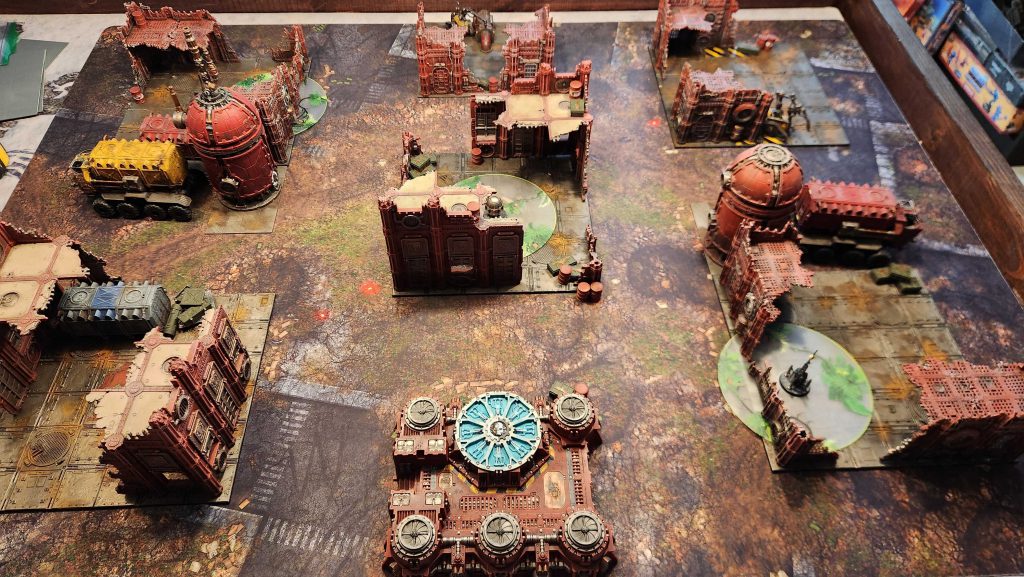
This is easy to do, but I don't like the way both corner objectives can see right into the middle of the table - it makes the center objective too exposed. So I can fix that by rotating the middle building 90 degrees:
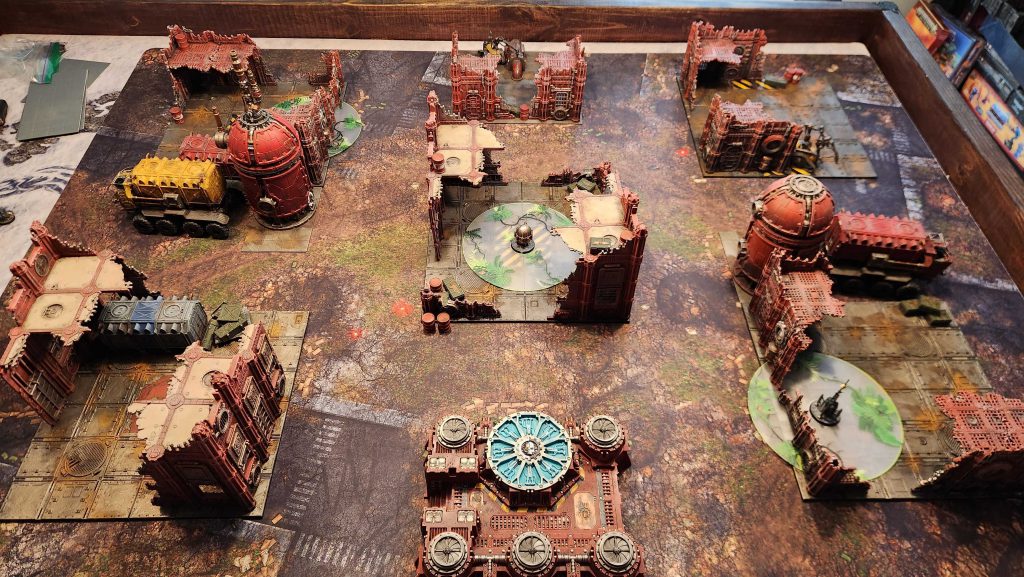
That solves one problem but introduces another - now the "home" corner ruins can see right into the middle building and the objective. So I had to turn those as well. Then I added some extra shipping containers to make the home ruins a little less open and to make it harder to see into the middle of the map. Which then gave me this:
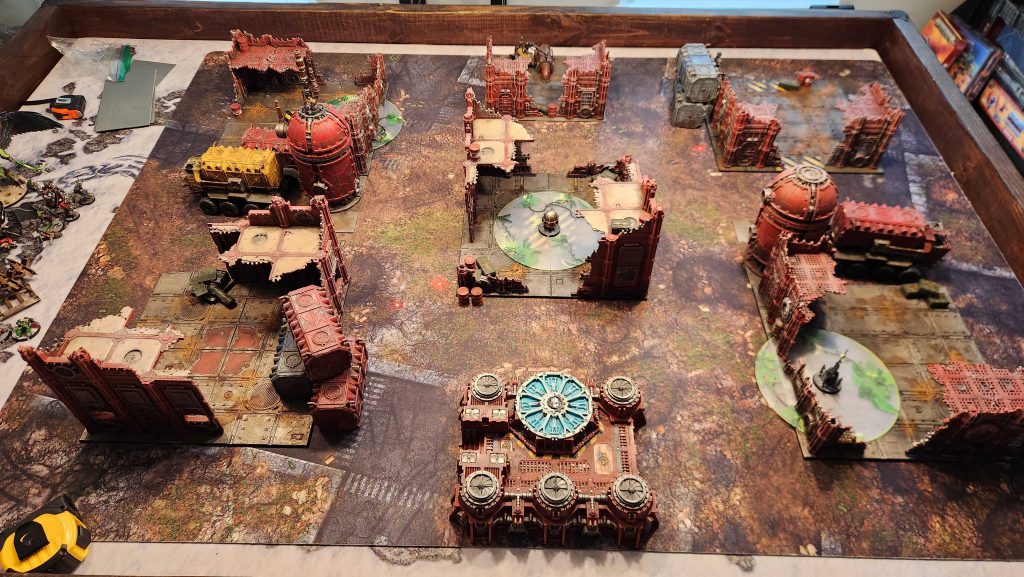
This solves that problem a bit better - models are still vulnerable in the middle of the table but the sightlines across the table aren't super accessible. This wouldn't work super well for Dawn of War or Sweeping Engagement but should be OK for every other deployment map. The only table-length sightlines here are down the short side, and I largely don't care about the ones in deployment zones if there are no home objectives to worry about. The rest are pretty short, capping out around 30".
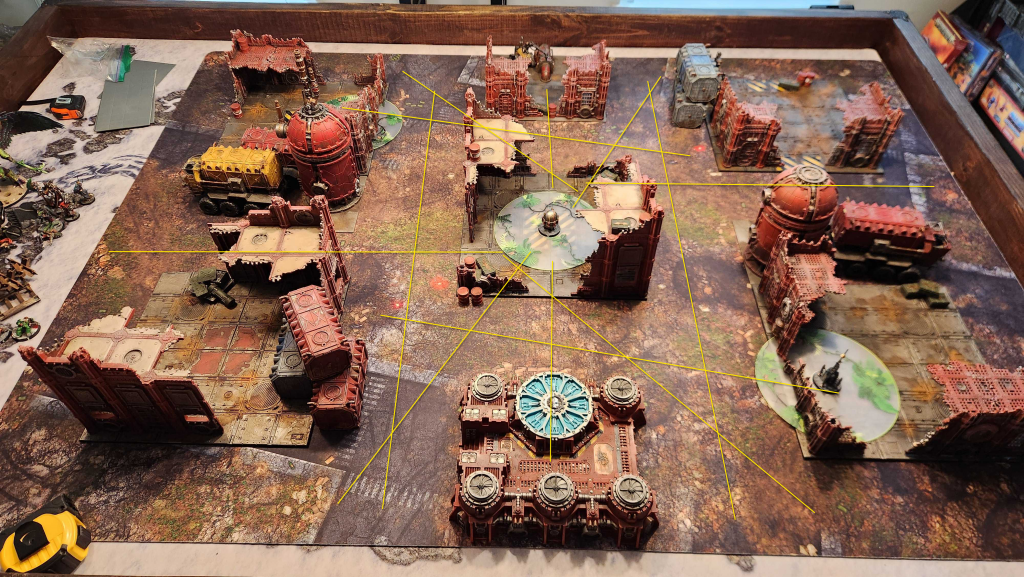
The net result is a table that looks great, has a lot of terrain, but gives players interesting ways to traverse it - there are two open roads across for vehicles, large ruins and walls to hide behind or stage in, and objective placement that forces you to interact with units on the objectives. I wouldn't be upset about playing a competitive game on this type of layout (though I'd prefer more symmetry and probably some smaller ruins).
Loading...
Visually the space looks like a credible munitions depot and is suggestive of roads - if I had actual roads still I'd drop them between the buildings to make something visually more cohesive but I can easily live with this. It runs a proper balance between "good looking terrain" and "something that's actually interesting to play on" and will create lots of the kinds of cool photo ops and cinematic moments that make narrative play work.
Next Time: Making Sector Mechanicus Terrain Work
Did this one seem easy? It's just seven big ruins after all. If you're asking for something more difficult well, I'm with you. I said this was a multi-part series and I meant it. Next time around we're going to tackle a bigger problem with a more difficult set of terrain: Making the Sector Mechanicus Terrain work for 40k. That's a bigger problem than it sounds, as that terrain is not at all made for the tenth edition terrain rules (or the terrain rules in 8th or 9th editions, for that matter). So check back next Tuesday for that one.
Have any questions or feedback? Drop us a note in the comments below or email us at contact@goonhammer.com. Want articles like this linked in your inbox every Monday morning? Sign up for our newsletter. And don’t forget that you can support us on Patreon for backer rewards like early video content, Administratum access, an ad-free experience on our website and more.Thank you for being a friend.
 This website uses cookies. Learn more.

 Goonhammer App and Patron Updates: April, 2026
 Kill Team Tournament Report: Engage, Party, Repeat's March Madness 2026
 Goonhammer Reviews: Tribal Conquest