Welcome to a very special edition of Mayday! Miss Marcy, in which I, your Merry Mistress of Missives, answer YOUR burning questions and provide my cool and collected answers. This week, we have just one question, but it was such a big question that it deserved its own column because it is finally time to put to rest the pedantic question
“Is Die Hard a Christmas Movie”? Well, I think I’ve got the definitive answer for you here, dear readers, but I’m sure I’ll hear all about it in the comments, inbox, and discord. Just remember that even when you’re wrong, I still care about you.
Before we get to the question of the week, a reminder if you would like to have your question appear in this very column, all you have to do is follow the steps below:
Have a question you want answered on just about anything you’d need advice on in this grand hobby space of ours? Board games, 40k, AOS, TTRPGs, MTG, anything and everything that we cover, we can help with!
It’s the Holiday Season, so if you’ve got any questions about the holidays, we’d be happy to field them as well.
For some examples, take a look at previous editions of our column at this link with a handy tag to see all previous questions and answers!
If you want to submit questions, we have a few days you can do it. Patrons can use the Discord bot command to ask questions, which will be received anonymously!
If you’re not a Patron, or just don’t want extra steps, you can comment on this article, or e-mail Marcy directly at marcy@goonhammer.com!
 They don't make em like they used to. (Copyright 20th Century Fox)
And now, grab yourself a Crunch bar, dig your toes into your carpet, and settle in for a long winter’s read.
I Am an Exceptional Discourse, Mrs. McClane.
Dear Miss Marcy,
For real, is there anyone out there making the argument that "Die Hard is NOT a Christmas Movie" because I keep running into people in the community, acting like asserting that Die Hard IS a Christmas Movie is some bold, rebellious stance that makes them Controversial... Yet Cool. This has to come from somewhere. Someone must be anti-Die Hard out there. Where are these people. The nation wonders.
Sincerely, I Don't Have Time For This Christian Nonsense
Dear IDHTFTCN,
Congrats on being the first single question Mayday! Miss Marcy! I felt that your question really tickled a particular part of my brain that would prefer to see a topic put to rest properly. I am not sure how well known this is, but I am considered "Christmas Pilled" by many of my loved ones (I even wrote about
how to repair Christmas decorations right here on Goonhammer) and it just so happened that on the day you asked this, I saw a particularly heinous ‘survey’ from An Island of Misery that claimed the movie was ‘not’ a Christmas Movie. I wonder perhaps if that is what generated your question, and I suppose I did have a curiosity about what you meant by ‘community’. Are we talking about amongst people who celebrate Christmas, religious celebrators, secular, or are we talking about a community of cinema enjoyers and how to best classify the film? So, I think first we must do our due diligence and set our parameters properly, for no true claim can be made without establishing our boundaries and setting forth a claim. So, first:
What Is a Christmas Movie, Exactly?
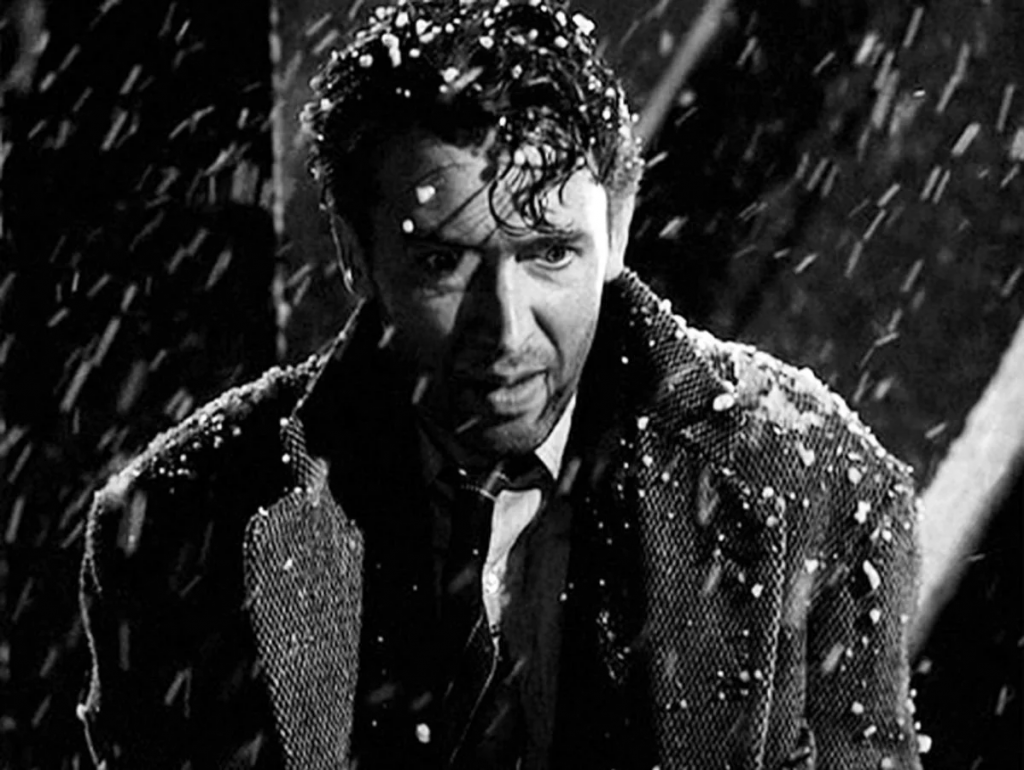 Wouldn't be a Christmas movie without contemplating suicide to escape your crushing depression, right?
The first question that actually needs to be answered here is what, exactly, is a Christmas movie? As I see it, there are four categories that we can establish to determine how we are approaching the category. It is also helpful to understand that we’re working on this as a media study of genre, which is a somewhat theoretical area that I am actually an expert in (as in, this is what I do for a living). If we want to simplify things, we can simply say “Genre = Category”, and then we just have to define what we are categorizing by and how, and start to check boxes on a form. A more in-depth starting place is to recognize that genres are repeating patterns that have conventions and “form”, but also are fluid and evolve slowly over time as new people and new experiences change them. A fairly easy and simplified example of this is the genre of Letter Writing, which has gone from physical hand-written letters to typed, and from typed physical to electronic documents. The “form” or “genre” of letters has remained fairly static (anyone written a cover letter lately? Hasn’t changed much in my 40+ years), but the practice and changes have expanded what qualifies and how.
So, with that in mind, we can set down a few guidelines to help us determine what genre conventions or formulaic concepts we are looking for to define Christmas Movies as a genre, and I’ve devised 4 such guidelines here, focusing on the content of the films themselves:
- A Christmas Movie is a movie set during the season of and particularly the day of Christmas, December 25th.
- A Christmas Movie is a movie whose thematic elements deal with common Christmas themes, such as gift giving, family, togetherness, appreciation of life, seeing value in what one has versus what one wants.
- A Christmas Movie is a movie that features magical characters such as Santa Claus, Krampus, Frosty the Snowman, or “Christmas Magic” as major plot elements.
- A Christmas Movie is a movie about the ficto-historical birth of Jesus Christ, focusing primarily on the Christian traditions and meaning of his birth.
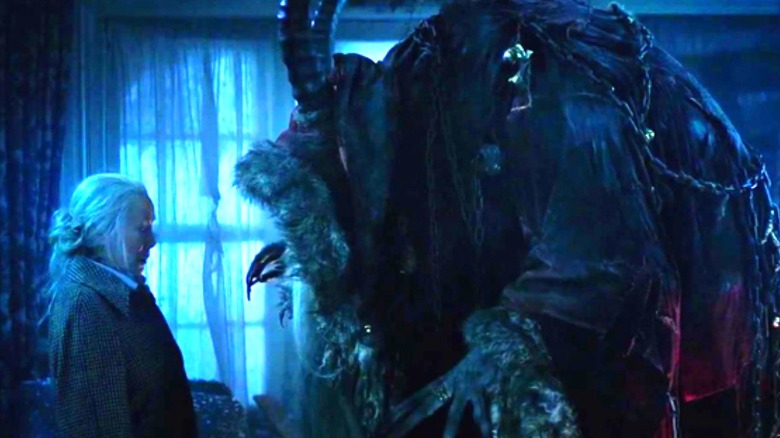 Remember when Krampus punished this woman because the Nazis had ruined her life? Good movie otherwise. (Copyright Universal Pictures)
There are also some other categorical considerations we could use that I don’t feel are applicable, such as “Movie is released before the holiday of Christmas and is meant to be seen by viewers during that season”, which would include films like The Lord of the Rings series, because these films are released
for Christmas but are not
about Christmas. Now, if we were using 4 as our only criteria, then no,
Die Hard is not a Christmas movie, and neither is
Elf or
The Grinch. And, there are certainly numerous movies that are in category 1 that do not qualify as “Christmas Movies”, and there are also numerous films that fit into category 2 that do not qualify either, as Christmas thematics are not inherently unique to the holiday (and, perhaps ironically, is a major theme of works such as
A Christmas Carol, which asks readers/viewers to consider the fact that people only seem to care about one another during Christmas). Category 3 is the most divergent, because it tends to rely on viewing Christmas as mythological/magical concept that first must involve December, and second, Santa Claus and the acceptance of his existence. There are actually a lot of accepted Christmas movies that don’t actually fit this category, such as family comedy
Home Alone, but gory action film
Violent Night does qualify.
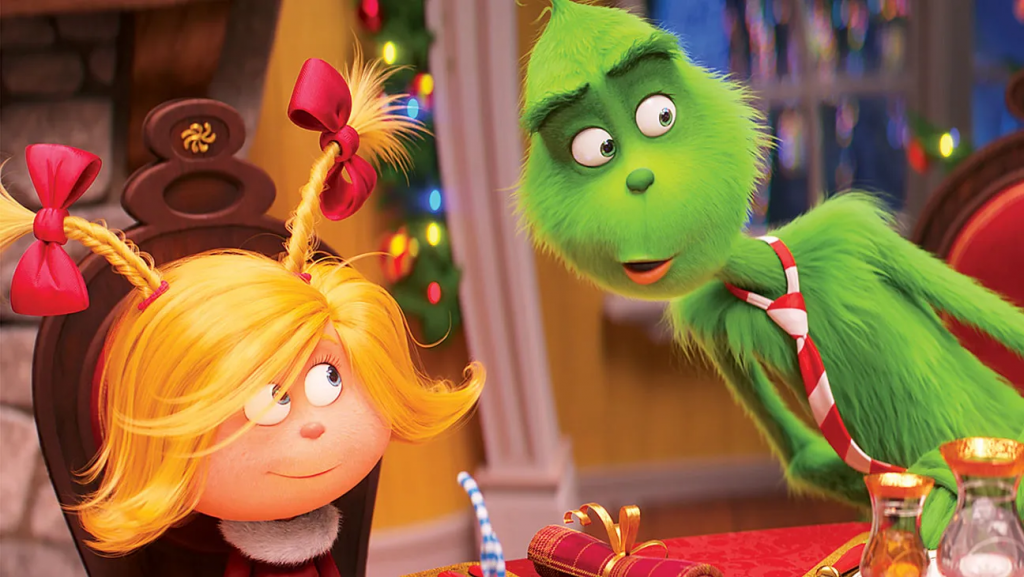 Wild to think this is the highest grossing Christmas movie of all time. (Copyright Universal Pictures)
These categories are more or less trying to define the genre of Christmas movie, which is generally probably best broken down like this:
- A movie qualifies as a Christmas movie if it is 1+2.
- A movie is a Christmas movie if it is 3+1.
- A movie is a Christmas movie if it is 4, and may include 1 or 2.
This falls fairly in line with genre breakdowns and conventions of working with genre media. For example, “Horror movie” as a genre has some core components, but many off-shoot branches, in the sense that Alien, Halloween, Nosferatu and Saw are all “Horror movies”, but all are deeply different and have little in common thematically. By using this criteria, we can now get to answering the question, but let’s first present a nuanced look at both sides to understand the argument a little more clearly.
Why Die Hard is NOT a Christmas Movie
The argument that Die Hard is “not” a Christmas movie often comes from the fact that while it fits Criteria 1 (Set During Christmas Season), it does not feature Criteria 2, 3, or 4. This argument is also often bolstered by the release date of the film, which was July 15th, 1988. Critics of the concept of Die Hard as a Christmas Movie often point to the film’s release date as a reasoning for its exclusion from “Christmas Movie”, and often compare it to Batman Returns, another movie in which the month of December and the holiday of Christmas are mentioned, but are not primary driving forces in the plot, and which was also released in Summer (June 19, 1992).
 I think I speak for a lot of queers but as a lesbian, I will admit that Alan Rickman was sexy as hell as Hans Gruber. (Copyright 20th Century Fox)
Further, arguments often point to the fact that Die Hard is a violent action film, with gratuitous gunplay, death, and adult or mature topics involving sex, drug use, terrorism, and more, which breaks with the concept of Criteria 3, and also lacks any elements of Christ’s birth, thus excluding it from 4. Often the views of cast and crew or other Christmas “celebrities” are also brought in as voices of authority, although that seems to be a split sentiment amongst those who worked on the film (For example, Bruce Willis says it is not, but screenwriters Jeb Stuart and Steven E. de Souza it is). This argument also tends to appeal to concepts of precedent, often pointing to more classic or traditional Christmas movies like
It’s a Wonderful Life,
Home Alone, or
How the Grinch Stole Christmas.
Why Die Hard IS a Christmas Movie
As for the argument that Die Hard is a Christmas movie, many of the basic arguments for this case come from the fact that the movie is set during Christmas, and that alone tends to justify the placement of it as one. There is also some appeal to cultural trends and generational differences, and even arguments that the movie’s release date doesn’t matter compared to the content of the film, often pointing to the fact that movies like
Bad Santa were released in December, but have very little to do with the holiday other than Criteria 1, and that many other films that get given a pass as a Christmas film are simply set during the holiday season, but have little to do with the holiday itself (often drawing examples from numerous Hallmark movies, which are primarily just romance films featuring acceptable adultery).
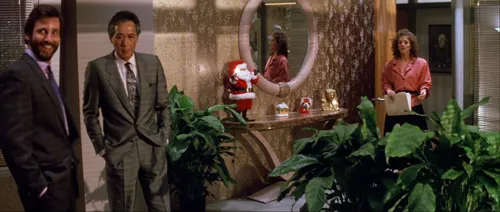 See, look, there's Santa. (Copyright 20th Century Fox)
Most of these arguments for Die Hard as a Christmas movie avoid talking about the content of the film and the thematics of it, simply focusing on aesthetics like decorations, music, costuming as well as dialogue, such as Theo reciting a version of “Night Before Christmas” during the failed police siege on Nakatomi Plaza. Other arguments for the movie being categorized as a Christmas movie tends to argue that Christmas is a larger concept than just a Christian holiday, particularly in the sense that Die Hard is not attempting to be a movie about the Christian holiday, but the secularized version of it, which many other Christmas movies also deal with (
Home Alone is often cited here).
So What IS a Christmas Movie?
Ironically, both of these arguments tend to have very subjective and specious claims to why the film is or is not a Christmas movie, and neither of them deal with considering the thematic plot elements of the film itself, aside from detractors focusing on the violence and vulgarity of the film. But
Violent Night is a far more violent film that also features the magical being of Santa Claus, holiday celebrations, and takes place on Christmas Eve, while
The Grinch (in the newest iteration) places heavy emphasis on Christmas as a secular celebration focusing on decorations and holiday spirit, but makes no real mention of a spiritual element and also does not feature Santa Claus or Jesus Christ.
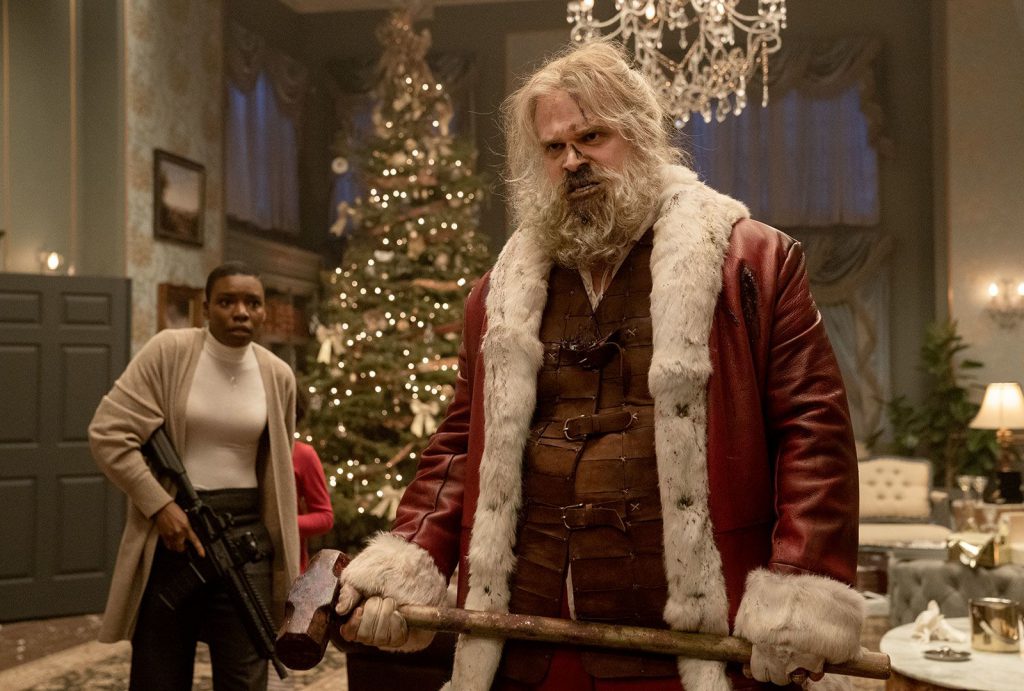 Feels silly to deny Die Hard when a recent Christmas movie classic involves Santa brutally beating people to death with a hammer. (Copyright Universal Pictures)
The film
It's a Wonderful Life is often considered an iconic and perhaps genre standard Christmas film. In it, protagonist George Bailey struggles to see value in his life as debt and overwork in the face of crushing depression send him over the edge after his uncle’s carelessness. George chooses to kill himself, and is saved at the last minute by the intervention of an angel, Clarence, who then allows George to see what the world would have been like had he never been born, which leads George to desire to live again and appreciates the life he has, despite how ugly it can be. It also helps establish a few things genre wise: The film fits Criteria 2 and 4 (As Clarence is an Angel, not a Christmas spirit), but actually only touches on 1 in a general sense; while the film does take place during Christmas at integral parts of the film, viewers actually seem huge swaths of George’s life that do not involve Christmas. Also, while the film takes place on Christmas eve, Christmas the holiday is not actually integral to the plot of the film; Clarence’s message to George at the end comes from Tom Sawyer, not the Bible, and there’s very little of Criteria 4 in the film other than the existence of Angels (and thus Jesus and God).
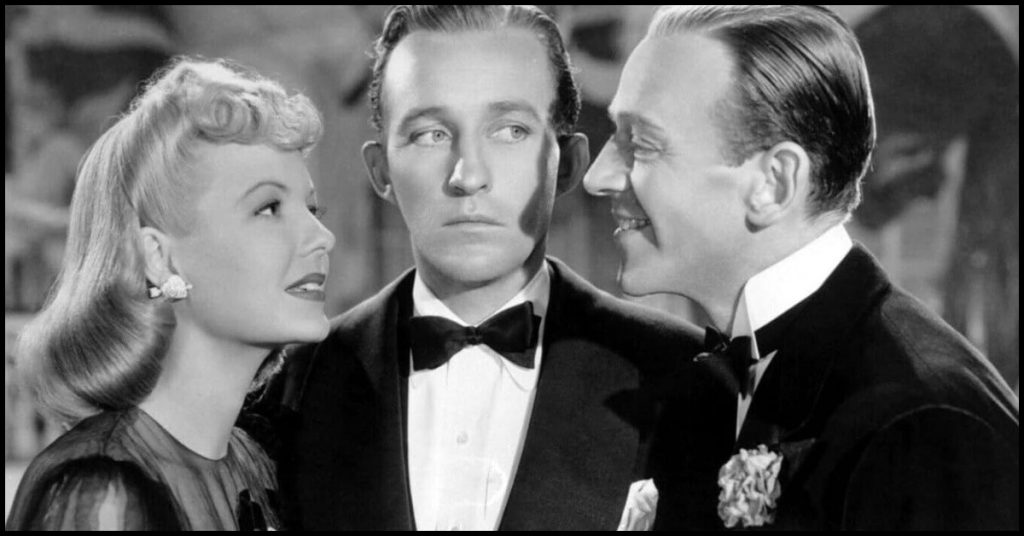 Extremely uncomfortable period racism aside, Holiday Inn really shows Irving Berlin liked his queer bisexual love triangles. This is like the fourth one he did.
So, if we look at the Criteria for Christmas movie, It’s a Wonderful Life really only fits 1, but it is often considered
the Christmas movie. This is because It’s a Wonderful Life exists in a period in which “Christmas movie” wasn’t exactly a genre concept, and many of the “modern” concepts of Christmas media didn’t solidly exist yet because those genre conventions had not been set concretely yet; It’s a Wonderful Life was released a few years after
Holiday Inn, for example, which is the movie that “White Christmas” comes from, but Holiday Inn was not specifically about Christmas, but about holidays, and was later used as the basis for 1954’s
White Christmas, featuring a very similar plot and cast but with a specific focus on Christmas. “Christmas movies” are actually fairly “recent” as a codified genre, because Christmas media is also fairly “recent”, in the sense that A Christmas Carol is often cited as starting “Christmas” in a modern sense (in 19th century being modern), and Christmas media and is mostly post-40s and later.
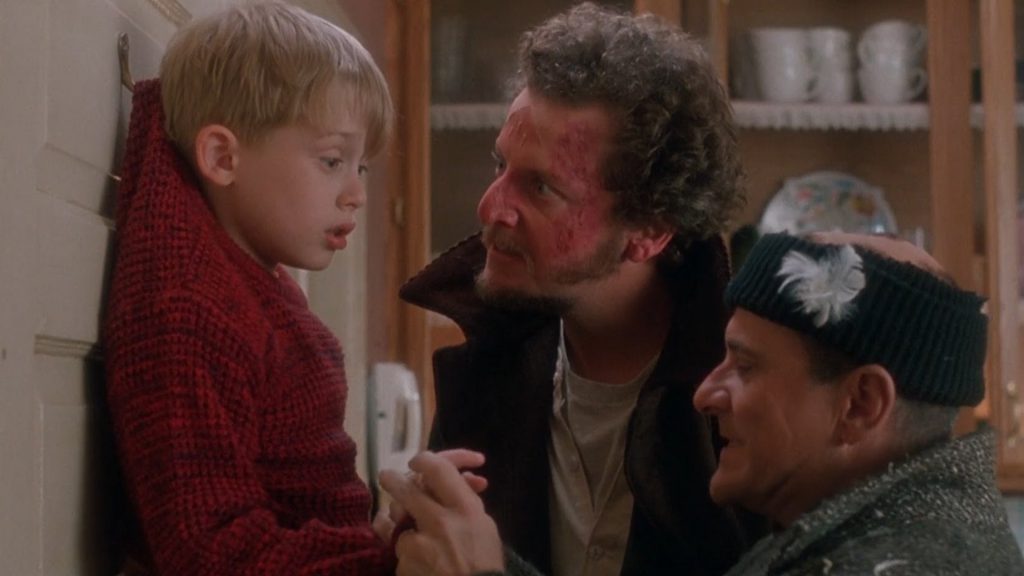 You ever count how many times these guys probably died or were severely injured? (Copyright 20th Century Fox)
So, if It’s a Wonderful Life barely qualifies under the qualities of a modern Christmas movie, then how about a modern classic,
Home Alone? In Home Alone, Kevin McCallister is a kid who feels ignored and disabused by his huge family that generally bullies and teases him. As the family prepares for a holiday trip to France, Kevin wishes that he would never see them again, and when the family forgets him after a power outage causes them to rush to the airport, go through check-in, boards the plane, and takes off, Kevin is left home by himself as his mother tries to desperately get back home to him. In the meantime, a pair of robbers called the Wet Bandits set their sights on the McCallister home, which Kevin fends off with increasingly lethal/comedic home defense contraptions. Eventually, the contraptions run out of steam and Kevin is saved at the last minute by his seemingly creepy, misunderstood neighbor, before he is finally reunited with his mother and family at the end of the film. Home Alone fits Criteria 1, and ostensibly Criteria 2, because Kevin learns his lesson that what matters in life is family and togetherness, with Christmas being the thematic glue tying the film’s message together. Home Alone also notably lacks Criteria 3 and 4, although Kevin does have his big awakening at a Catholic church, where he finally meets and talks to his neighbor, who discusses his failures as a father and his hope to reunite with his family, and how the holidays reminds him of family the most.
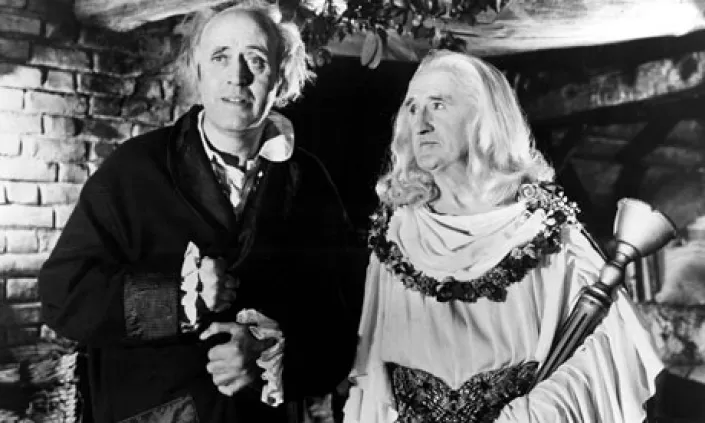 There are many versions of a Christmas Carol, but none of them are as good as the 1951 version featuring Alistair Sims.
In most cases, this means that many films that are codified as examples of Christmas movies, particularly in debates about whether Die Hard is or is not one, are also fulfilling certain criteria but not all of them. In fact, if we return to our Criteria breakdown, many of the most "classic" Christmas films mentioned so far have trouble fulfilling the 1+2 rule. And you might ask, then, does any film actually qualify under all four criteria? If we had to nail it down, then yes:
A Christmas Carol (in all of its iterations), fulfills Criteria 1-4. It takes place during Christmas (Criteria 1), is the birthplace of pop-culture phrases like “God Bless of, Every One” and the importance of the holiday being a reminder of good will, togetherness, and kindness to your fellow man (Criteria 2), features spirits, one of whom is essentially ur-Santa (Criteria 3), and heavily discusses the birth of Jesus Christ as the Reason for the Season (Criteria 4).
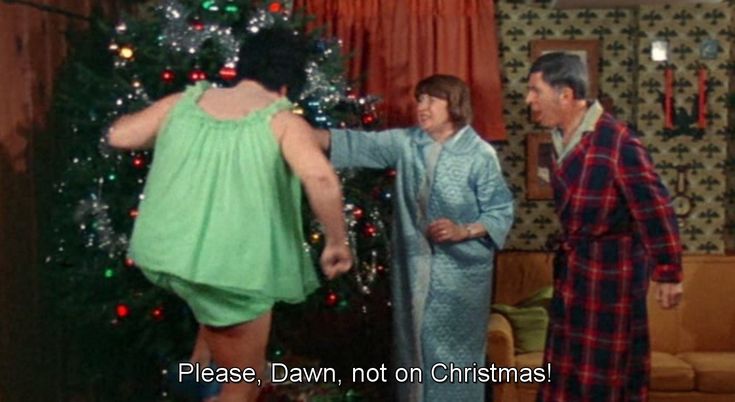 I told you Cha-Cha Heels! Love you, John Waters. (Copyright New Line Cinema)
So that means that we can certainly find films and media that fulfill these four genre requirements, and also that most other genre staples fulfill at least one, and sometimes two, of the other criteria requirements. Sometimes, they even fulfill them in ways you don’t expect, like in the classic
He-Man and She-Ra: A Christmas Special, in which Orko is taught the story of Christmas and the birth of Jesus Christ, while Skeletor learns the meaning of Christmas Spirit. That also means that movies like exploitative proto-slasher
Black Christmas is a Christmas movie, and that John Winter’s
Female Trouble can be viewed as a satire of the sappy cishet mainstream Christmas film. So then, what does that mean for
Die Hard?
The Verdict
So we’ve laid out the general arguments for Is or Is Not, and we’ve explored how most media that gets classified as Christmas media are often pretty diverse and only rarely hit all 4 of the criteria, let alone 2 of them, so now the question you asked: Is Die Hard a Christmas Movie?
Yes, Die Hard IS a Christmas movie, because it fulfills Criteria 1 and 2, but 2 is often the part that people don’t tend to pay much attention to in regards to the film. The plot of Die Hard, as a small recap, is that detective John McClane is travelling to see his estranged wife and mother of his 2 children in Los Angeles at her job for the Nakatomi Corporation. As he arrives at the party, his arrival coincides with a robbery of the company by Hans Gruber and his associates, which culminates in many people dying in the process as John races to save his wife and the other hostages, reuniting with her at the end after saving the day and rekindling their estranged relationship. Remember some of these details while we talk about a few other films for a moment.
If we compare John McClane to George Bailey or Kevin McCallister, all three characters have similar redemptive arcs where they are journeying towards discovering the true value of the loved ones in their lives. Kevin’s is for his mother and his extended family, while George is too disillusioned with a life that he feels he’s wasted and amounted to nothing without recognizing the worth he has to others and the importance of his life to his wife and family. John, then, is a man journeying to try and reestablish his relationship with his wife Holly, having recognized on some level that his life is worse off without her and his children in it, and then rising to the call to save her and their future. Redemption is often the biggest thematic unifier of Christmas media, with characters often overcoming some form of personal block or obstacle to become their best selves in the “spirit of the holiday”:
A Christmas Carol,
Home Alone,
Wonderful Life,
The Grinch,
Elf,
Santa Clause, and even the abysmal
Jingle All the Way or
Christmas With the Kranks have this as a core tenant of their narrative: Personal redemption through feeling the true “Spirit of Christmas” that then brings them back into the fold of their estranged loved ones and fellows.
Well, what do you think happens at the end of Die Hard?
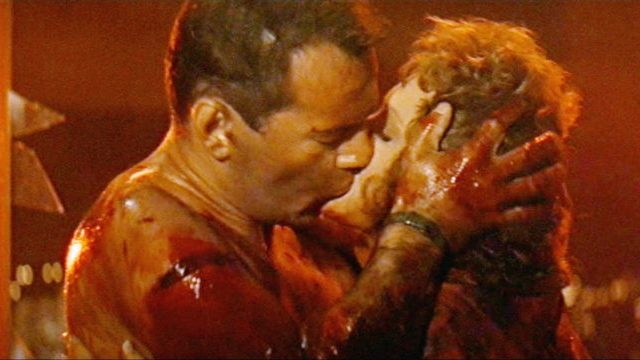 You look at that and tell me it isn't a Christmas kiss. (Copyright 20th Century Fox)
John McClane saves his wife, kills Hans Gruber with her, and then as they embrace while exiting the destroyed Nakatomi Plaza, Holly defends her husband from parasitic journalist Thornberg, and disgraced child killing cop Al Powell saves the day by killing surviving terrorist Klaus as he and McClane share a knowing glance. Everything works out, the heroes are redeemed, the family unit is restored, and “snow” falls while the couple walk off together to the tune of “Let it Snow”. John McClane realizes that what he needed all along was his wife, and stops at nothing to save her, while she too realizes she needs her husband back in her life, completing the (fairly problematic) cisheteronormative holiday romance redemption story; frankly, the only real difference between the narrative of Die Hard and most Hallmark Christmas films is far less people get shot in those. They both really love cops, though.
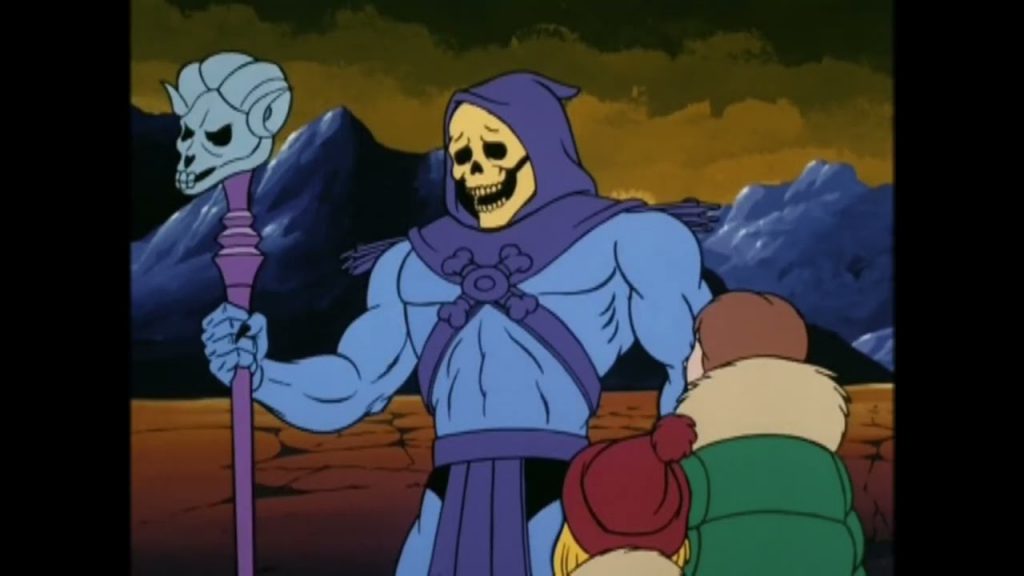 I can't believe I wrote 3500 words about this either, Skeletor. (Copyright Filmation)
So yes, dear readers, Die Hard is a Christmas movie. It fulfills 2 of the criteria set for them (1, set during Christmas, 2, features thematic elements consistent with Christmas narratives), even if it lacks the presence of Christmas magic or Jesus Christ (his name is said a few times, though). The latter part of this question that gets ignored is the implication of
when do you watch Die Hard? This goes back to classifying films by their release date, but it has a somewhat important answer. If you watch Die Hard during Christmas, then of course it is a Christmas movie; you are watching it at that time of year as part of your celebration of the holiday. If you watch it at other times, it does not stop being a Christmas movie (genre-wise), but you aren’t watching it
because of the holiday. If that is your criteria, then a Christmas movie is whatever you watch during the holiday season to celebrate the holiday. And that, fair reader, is a question with an infinite number of answers. And with that, I’m going to go enjoy a warm cup of Earl Greggnog, listen to Laufey and Vince Guaraldi, and decorate my Christmas tree; I still have a few weeks to go before I have to break out my copy of Die Hard. Because it isn’t quite Christmas yet, is it?
Have any questions or feedback? Drop us a note in the comments below or email us at contact@goonhammer.com. Want articles like this linked in your inbox every Monday morning? Sign up for our newsletter. And don't forget that you can support us on Patreon for backer rewards like early video content, Administratum access, an ad-free experience on our website and more.
Thank you for being a friend.
 This website uses cookies. Learn more.


 Goonhammer App and Patron Updates: April, 2026
 Kill Team Tournament Report: Engage, Party, Repeat's March Madness 2026
 Goonhammer Reviews: Tribal Conquest