G’day Goonhammer readers! Kings of War is a game lauded for its gameplay first and foremost, but the world in which Kings of War is set, Pannithor, now has lore to match. With a rich history, a growing catalogue of novels and a really big map, there’s plenty to cover in the first of a series of articles on the lore of Kings of War. In this article, we will introduce the pantheons that have shaped the world of Pannithor.
Pannithor: A World Wracked by Divine Powers
The history of Pannithor is that of a world whose fate is dictated by the whims of gods, three separate pantheons of gods to be exact. The first were the ancient Primogenitors, creators of the world itself and responsible for directly manipulating their chosen creations, the “noble races” of Pannithor. This comfortable arrangement was then completely upended by the arrival of otherworldly beings known as the Celestians, who were themselves so god-like they did away with the old competition and set about reorganizing the noble races to something more civilized and less sacrificial ritual-centric. This was generally praised by all, and for a moment everything was quite pleasant until a certain deluded elf set off a cataclysmic chain reaction that split the Celestians in half. All of a sudden there were the Shining Ones and the Wicked Ones, and they quickly set about warring with each other across the entire world. In the aftermath of this terrible God War we have the current setting for Kings of War, where the two aspects of the Celestians continue to fight bitterly, but the old Primogenitors stir once more. This is the world of Kings of War.
The Most Ancient of Gods: The Primogenitors
The Primogenitors are the creators of Pannithor, numbering seven in total and each embodying a unique aspect of existence:
Bhanek, God of Life
Shobik, God of Death
Ohmpek, God of Light
Lonok, Goddess of Shadows
Threnekka, Goddess of Water
Korgaan, God of Air
Dianek, Goddess of Earth
The primordial beginning of Pannithor was the playground of these gods, their very interactions shaping the landscape for a really, really, really long time.
The first formal timeline of events in Pannithor prior to the Celestians. Published in the Kings of War 4th Edition Rulebook. Credit: Mantic Games
Time did not formally begin in Pannithor (at least in terms of chronologically recorded history) until the creation of the first of the three “noble races”. They’re called “noble races” but that seems to be a self-ascribed title. There exist so many more races in Pannithor (Ogres!) that would contend that the “noble races” are far from noble. Moving on.
At the beginning, the very first noble race was that of the elves. We will go deeper into the various factions in later articles, but the elves were the first creation of Bhanek that he actually liked. This suggests there were plenty of duds abandoned, because when Bhanek made the elves, he ensured they were perfect - beautiful, intelligent and free of the ravages of time. This really pissed off his twin brother, Shobik, who being the God of Death saw the elves as an affront to his whole job description.
Pompous elves. Credit: Mantic Games.
Before Shobik destroyed Bhanek’s new toys, the other Primogenitors suggested that if Bhanek wanted to keep the elves, then he had to create something for Shobik to play with as well. Bhanek said “Fiiiiiiiiiiiiiiiiiine” and set about slapping together a new race for his brother Shobik. Thus humans were created as the second “noble race,” made out of spite with nothing the elves had, including a miniscule lifespan. This suited Shobik.
The last of the noble races was created out of pity. While nearly all the gods got to play around shaping Pannithor and creating playthings, Dianek lived within the earth, away from all the excitement in the dark. Understandably, she was quite unhappy in her solitude. When the other Primogenitors realized Dianek was being left out, they gave her the dwarfs. Unlike humans, the Primogenitors decided Dianek’s dwarfs should be long-lived and as sturdy as the earth, if only to keep Dianek company and assuage their guilty consciences.
The three noble races existed under the guidance of the Primogenitors for a casual 24,000 years. It probably would have continued the same way for another 24,000 if it were not for the fact that the noble races quickly discovered magic (the same magic from which the Primogenitors changed the world and created everything). From that point, it was only a matter of time that something stupid would happen.
Meddlers from Another World: The Celestians
It all started when the greatest archmages of the elves attempted to investigate other worlds with magic. Much like going onto strange internet chatrooms, they had no idea what they were messing with.
It was on one such interplanetary foray that something, or someone, talked back to the elves. These beings from another world professed only good intentions, called themselves the Celestians, and started sharing all kinds of magical advancements with the elves. Soon, the magical prowess of the elves was sufficient to construct elaborate gateways that could transport the Celestians from their distant realm to Pannithor. No one stopped to ask perhaps why they were willing to leave their homeworld permanently. Everyone simply accepted the idea that the Celestians wanted to make Pannithor a better place.
What stepped through the gates were beings of such charisma, beauty and grace, even the elves were impressed. The Celestians were not unlike elves, but grander, more majestic, and immensely powerful physically and magically.
The magical prowess of the Elves was phenomenally enhanced by the knowledge bestowed from the Celestians. Credit: Mantic Games.
The Celestians found a lot in Pannithor to like, but they did not like the old Primogenitors, the worship of which appeared barbaric and unenlightened. The Celestians quickly set about convincing the noble races to turn away from the fading Primogenitors. The civilizations that embraced the Celestians prospered, while those that shunned them were at best ignored and at worst conquered by force. Thus the greatest empire of humans, Primovantor, spread across western Pannithor, boosted by those Celestians that saw in humans the greatest potential.
The next two centuries are referred to as the Time of Light, and in this time there were multiple waves of Celestians that made the journey from their world to Pannithor. Some Celestians of note include:
Mescator: Patriarchal leader of the Celestians and most involved in guiding Primovantor.
Oskan: Mescator's protégé and youngest of the Celestians.
Valandor: Supremely adept in magic and mentor to the elves.
Fulgria: Fire is her nature, within and without.
Belkor: Crafter and artificer extraordinaire and ambassador to the dwarfs (who never abandon Dianek).
Liliana: Matriarchal leader of the Celestians and partner of Kyron.
Kyron: Custodian of Pannithor’s fauna and partner of Liliana.
Karinna: Guardian of nature in Pannithor and cultivator of the Sahlirian fruit trees.
Eoswain: Exceptional sorceress, first to make contact with elves, last Celestian to travel to Pannithor.
This period of Pannithor is fleshed out in detail in the novel Rise of the Celestiansby C.L. Werner. An excellent story that follows the main group of Celestians as they change Pannithor, but eventually they themselves become changed irrevocably, and it is this change that brings about calamity.
Cover of the book "Rise of the Celestians" by C.L. Werner. Left to right is Valandor, Oskan, Mescator, Liliana and Kyron. Credit: Mantic Games
Are the Celestians actually gods? According to the novel, they are certainly more tangible than the Primogenitors, having permanent physical forms in Pannithor, but it is also mentioned that their forms can change. If they talk to humans they look more human, if they converse with elves they look more elfin. Whatever form is required to help the situation, they will adopt it. In terms of strength and constitution, Celestians are incredibly strong, and almost (but not completely) invincible, as evidenced by Mescator duelling an ancient titan to impress the Ogres. They are gods in a similar way to how Thor is a god in the Marvel universe, but then also, quite a bit more as is evidenced in the later God War.
One Pannithor, Too Many Gods
It is clear that by the Time of Light, the world is packed with gods and god-like beings. It can only last for so long before something gives way, and that cataclysmic event is described in the God War, hinted at in our initial summary. Join us in the next article for the breaking of the Fenulian Mirror and the resulting God War.
Have any questions or feedback? Drop us a note in the comments below or email us at contact@goonhammer.com. Want articles like this linked in your inbox every Monday morning? Sign up for our newsletter. And don't forget that you can support us on Patreon for backer rewards like early video content, Administratum access, an ad-free experience on our website, and subscriber-only content covering competitive Warhammer 40K!
 This website uses cookies. Learn more.

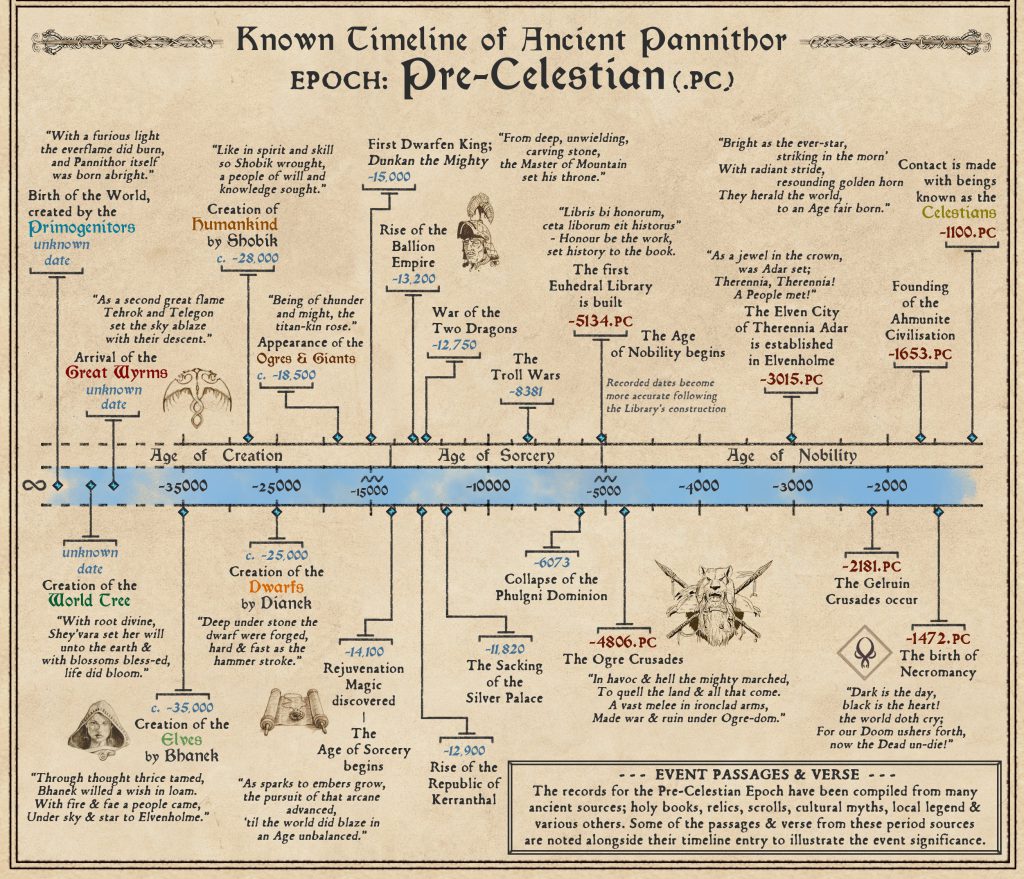 The first formal timeline of events in Pannithor prior to the Celestians. Published in the Kings of War 4th Edition Rulebook. Credit: Mantic Games
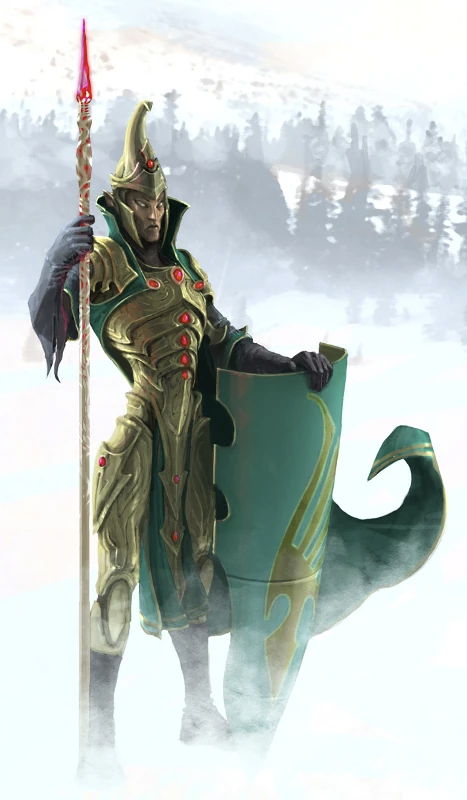 Pompous elves. Credit: Mantic Games.
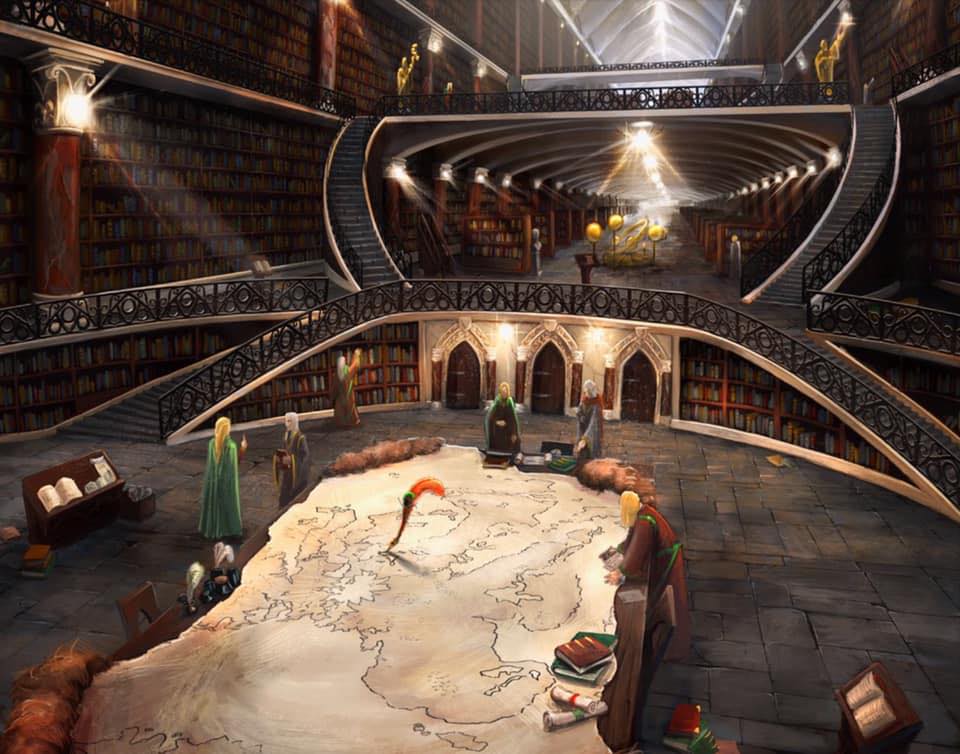 The magical prowess of the Elves was phenomenally enhanced by the knowledge bestowed from the Celestians. Credit: Mantic Games.
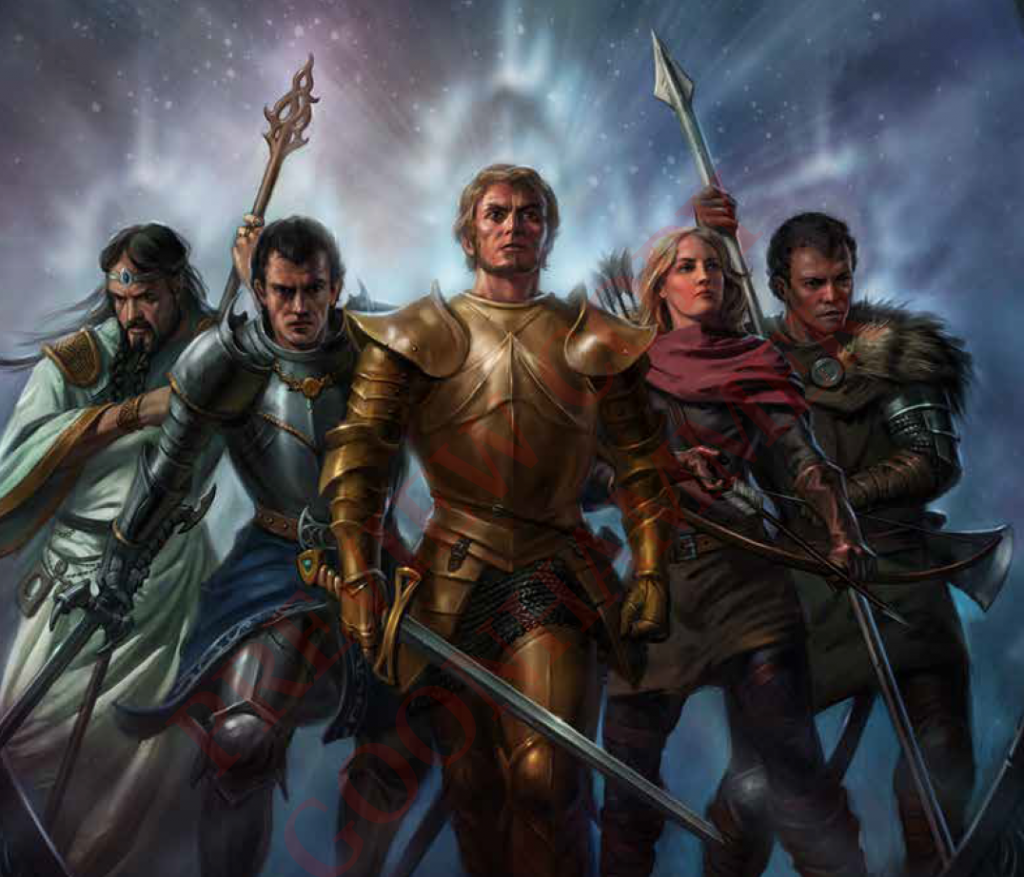 Cover of the book "Rise of the Celestians" by C.L. Werner. Left to right is Valandor, Oskan, Mescator, Liliana and Kyron. Credit: Mantic Games

 Goonhammer App and Patron Updates: April, 2026
 Kill Team Tournament Report: Engage, Party, Repeat's March Madness 2026
 Goonhammer Reviews: Tribal Conquest