We’ve written a ton about competitive terrain layouts but in this short series we’re looking at how to make good layouts for narrative play – layouts which go above and beyond the paintball arenas and bare MDF often presented in competitive formats. Last time around, I looked at how to use the Sector Fronteris terrain associated with the Nachmund Gauntlet campaign. If you’ve missed our previous articles in this series, you can find them here:
This time around I’ll be answering a Patron request - looking at how to build around and think about large centerpiece terrain pieces.
Large Terrain Pieces
Nothing grabs the eye like massive terrain centerpieces in a game. When we design the Goonhammer Open Narrative, we build around these consciously - a narrative event should have tables that look cool. Your goal should be for someone to look at the table and go "oh shit I wish I could play Warhammer on that." At their best, these make a player feel like they're playing in their own White Dwarf battle report, with immersive battlefields that look awesome.
But most players who have been in a narrative will tell you that large centerpieces often look cool but aren't actually fun to play on - or more accurately,
around. Big terrain pieces will more likely push players around them rather than over, and that will be certain if there's nowhere to stand or put models on them. And even if you
can get models on them, there's often a question of what you can actually
do once you're up there.
These buildings from an old NOVA Narrative are a great example of the problem:
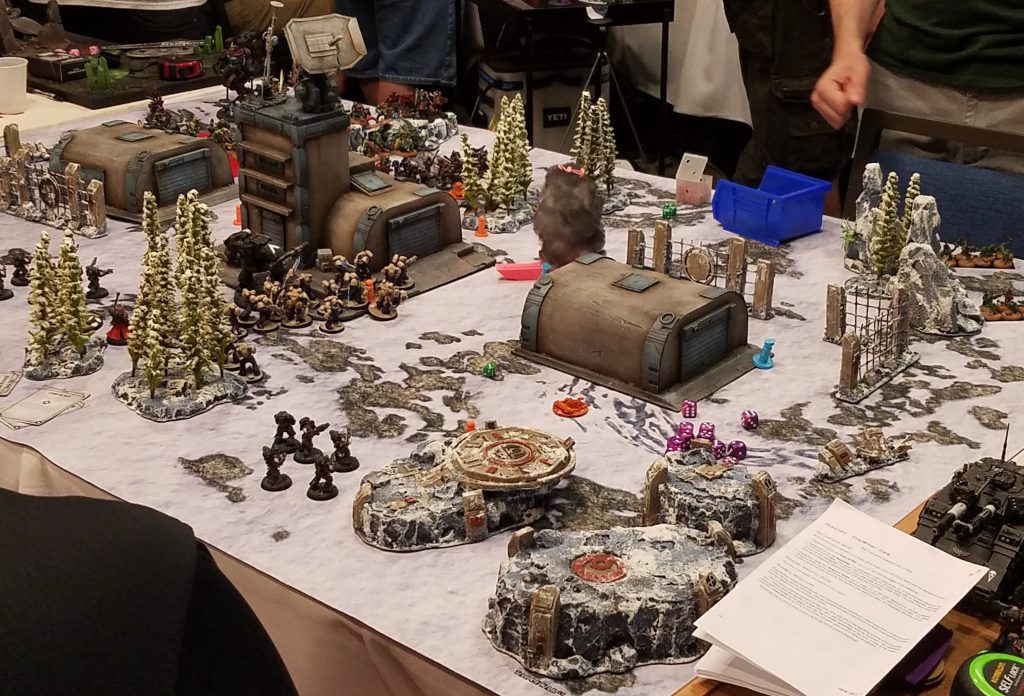
These look great and tell a solid story of what's going on with this battlefield. They also do a great job credibly blocking line of sight across the table - these aren't bad at all. But they're also not interactive - they're just big blocks preventing line of sight and movement. Even if you could move on top of them, you likely wouldn't - you'd be a sitting duck and the movement you'd lose getting up there wouldn't be worth it.
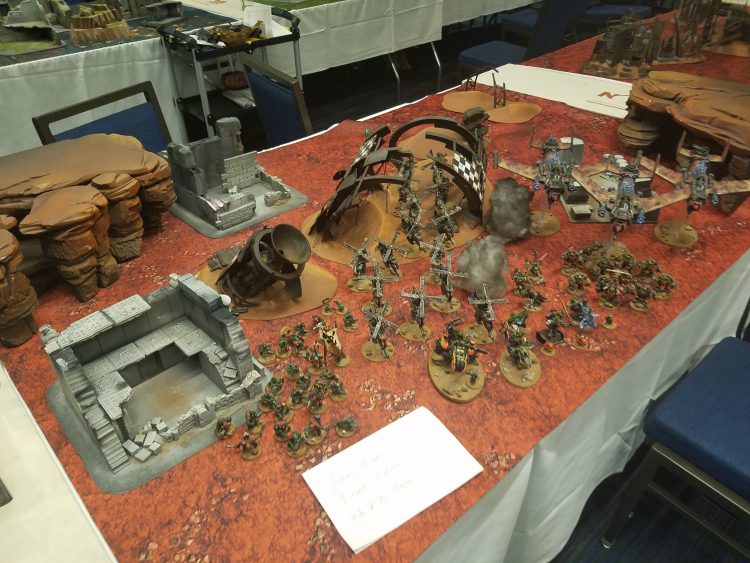
In contrast that large piece of crashed Ork terrain is still evocative but does a much better job, as it's a piece of terrain models can actually move through and fight inside. Is that a bit of a pain in the ass? Yeah, sure. Is it worth it for the cool visual storytelling? Absolutely.
My general notion is that if you're going to build a large terrain centerpiece to fight over it needs to generally do three things:
- Credibly block line of sight. You want to funnel players to the big centerpiece to fight, not shoot through it or past it. It should credibly block line of sight with some high walls and be oriented on the battlefield to do that.
- Be interactive. You want miniatures actually standing on that piece of terrain. That means units have to be able to get in/on there and actually interact in melee. One big problem with Sector Mechanicus terrain is having a bunch of narrow walkways which don't let units move around freely or employ interesting combat movement. You want to have a large, open space for units to interact.
- Be accessible. In order for units to interact on that terrain feature, they need to be able to actually get into or on said feature. This means you can't make it too high a climb or its openings too narrow - you need to have easy ways to get into the terrain and fight over it, otherwise players will just go around it.
On that "interactive" note - while I think very big pieces need lots of spaces to stand on, you also want to have things like sniper towers, staging corners, and walls for units to walk through to add some extra drama.
Building Centerpieces
Let's put some of this into practice. As always, adding bases to your terrain is a big help, giving clear guidelines for where units can be seen and hide around the terrain. One of the first big centerpiece terrain pieces I made was this ruin:
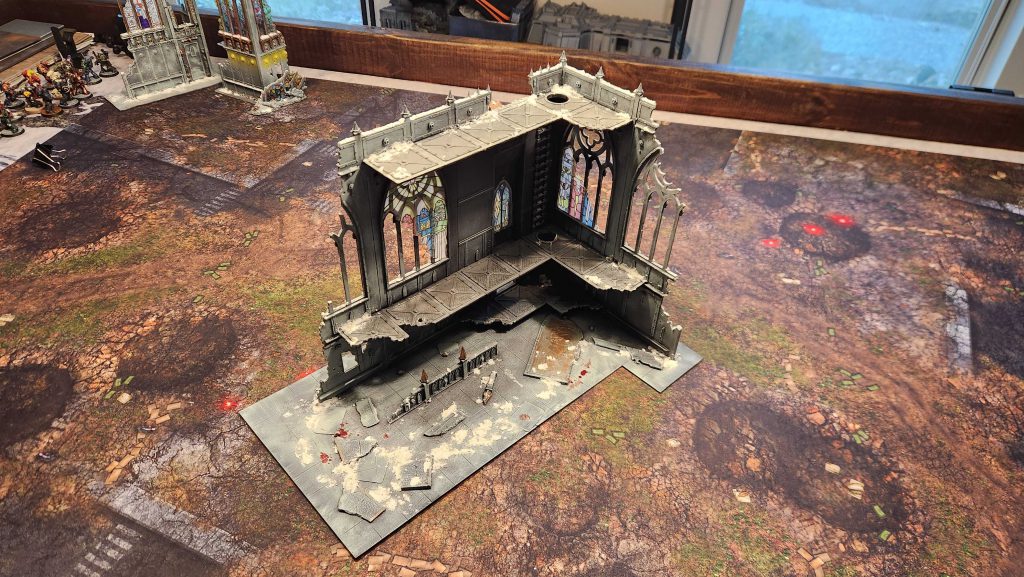
It doesn't look like much - it's the old Shrine of the Aquila - but check out that base (made of Warhammer Fantasy/Old World movement tray bases) - it combines with this opposing ruin I made:
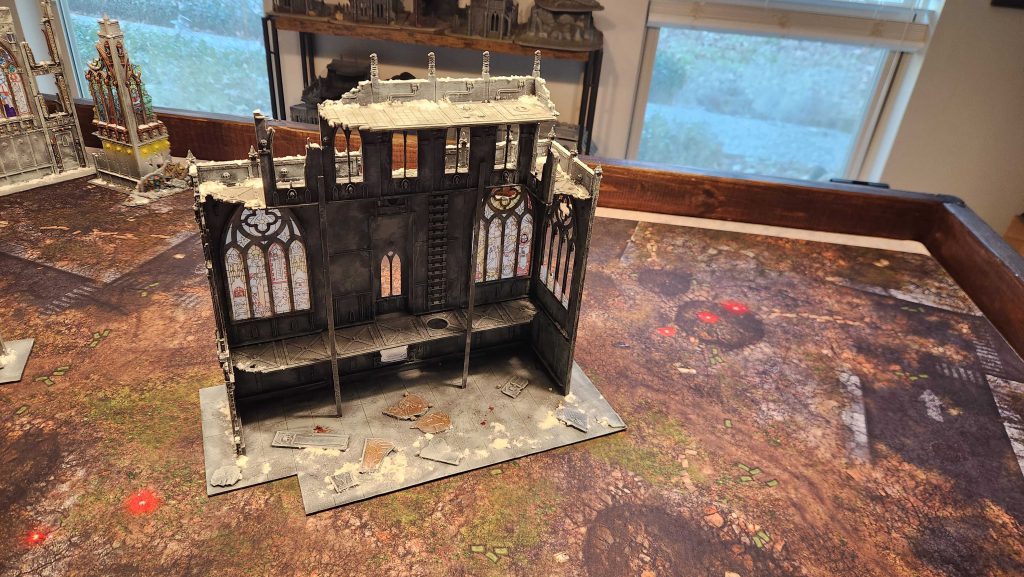
When you take the two and put them together, you get this massive centerpiece ruin, which measures 16"x16" and eats up a large portion of the table as a result:
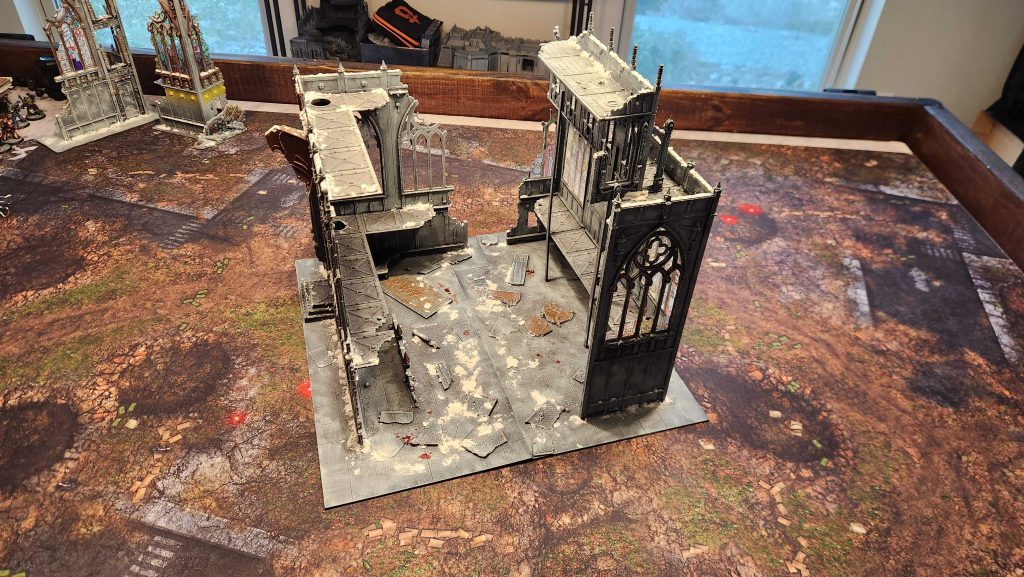
But despite eating up all this space, the terrain feature meets the three the criteria we've talked about pretty well - it has a large open space in the middle to interact, two obvious entry points for bigger units (even if one is a bit small and cut off to vehicles - and big walls to block line of sight to the interior. This one ends up being a regular feature on narrative games when I do cityfight maps and it's always a popular addition.
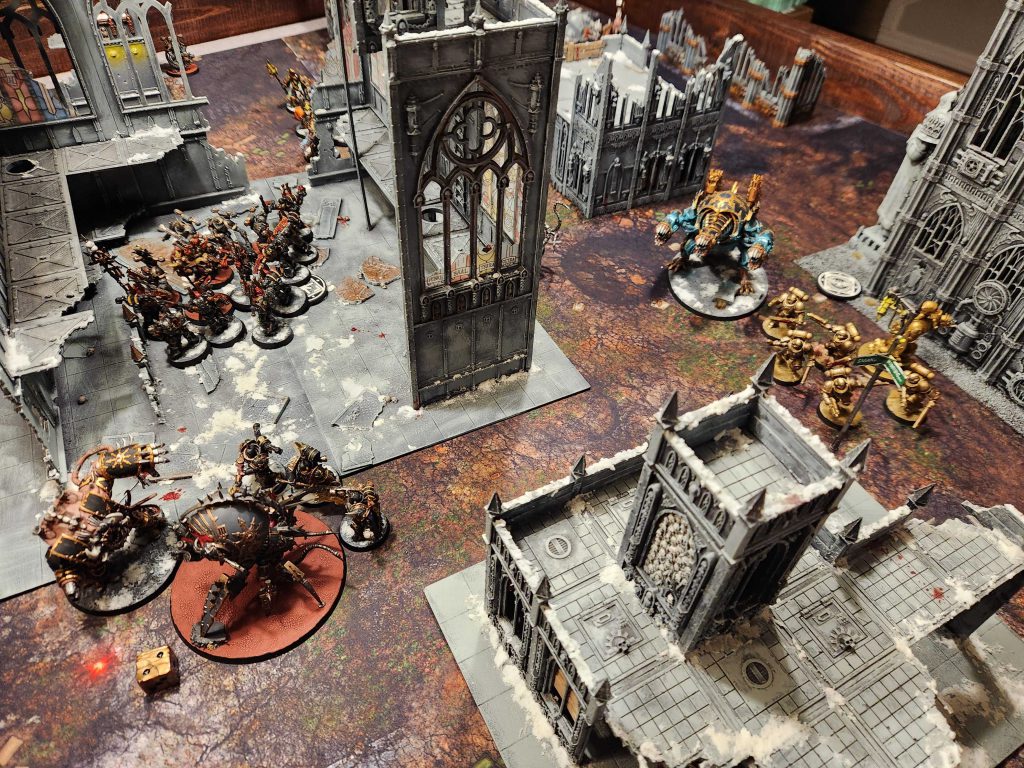
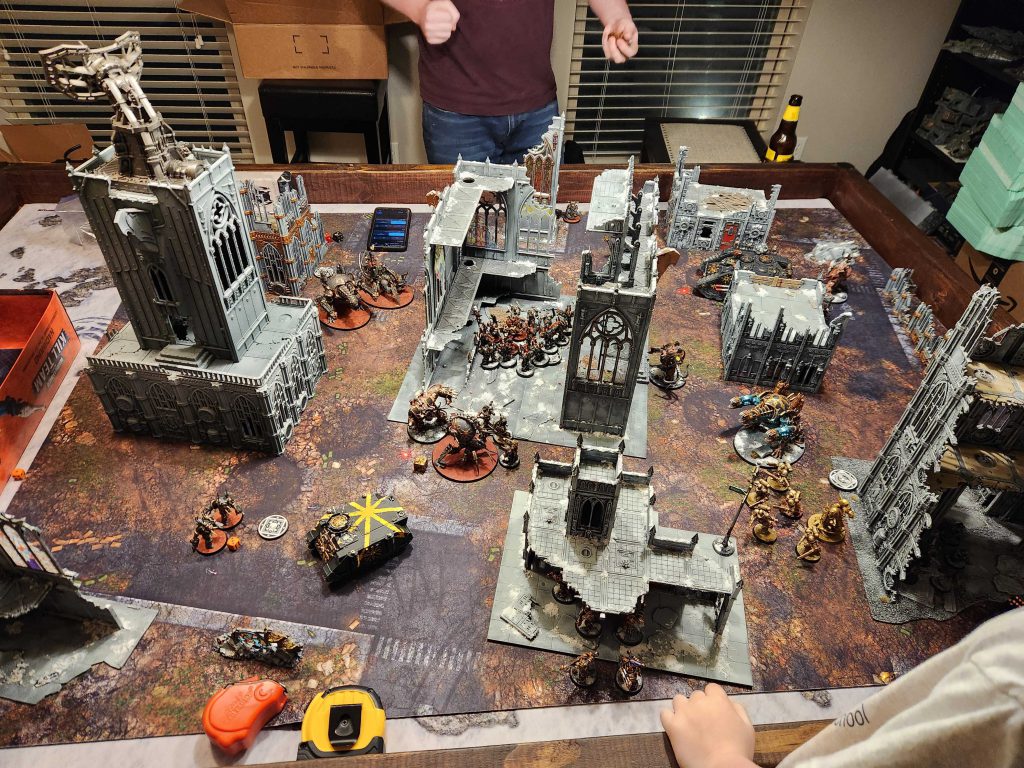
Because many missions put an objective in the dead center of the table it often ends up being a hotly contested area players fight over. You can see this in the photo above where Berzerkers fight a Chaos Lord in the building while a Helbrute and Venomcrawlers clash just outside. Here's what this looks like on a full table, combined with other large ruins to create a dense city center:
On a side note, I'd highly recommend building your big terrain like this - making it modular to break into smaller, more manageable pieces as needed can be a big help and lets you turn smaller pieces into big ones. You can do this with the bases or make them stackable. I built this using more modern Sector Imperialis terrain:
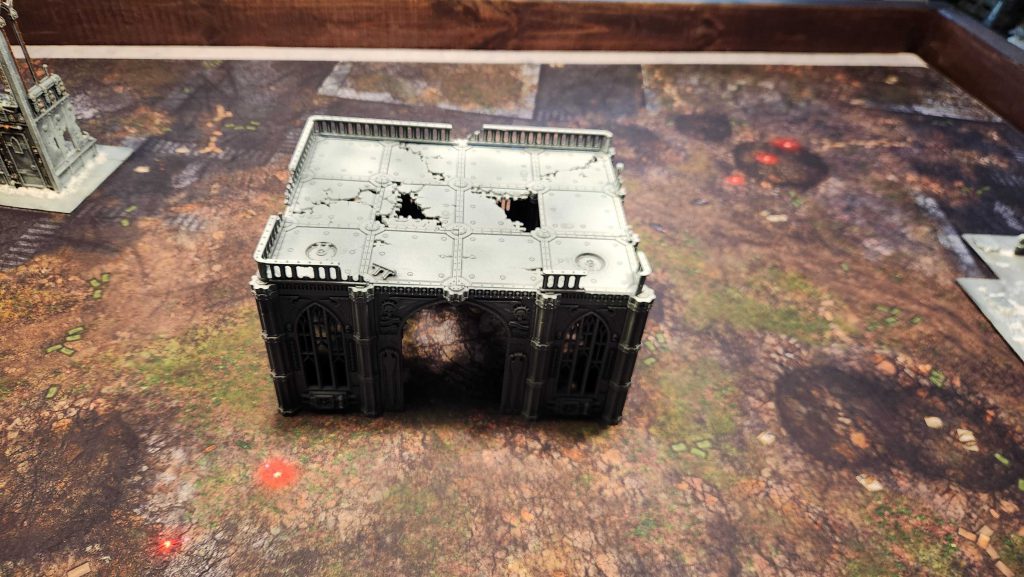
The railings are made from Sector Mechanicus ladders. The biggest issue you're going to have when you build stuff like this is the floors - GW tends to be really stingy with those complete floor tiles. This piece is solid size but not huge - about 9" long and 7" wide - but has lots of room up top for units to stand on. Of course, if I want to add some elevation to this and really make it stand out, I can add this tower I made on top:
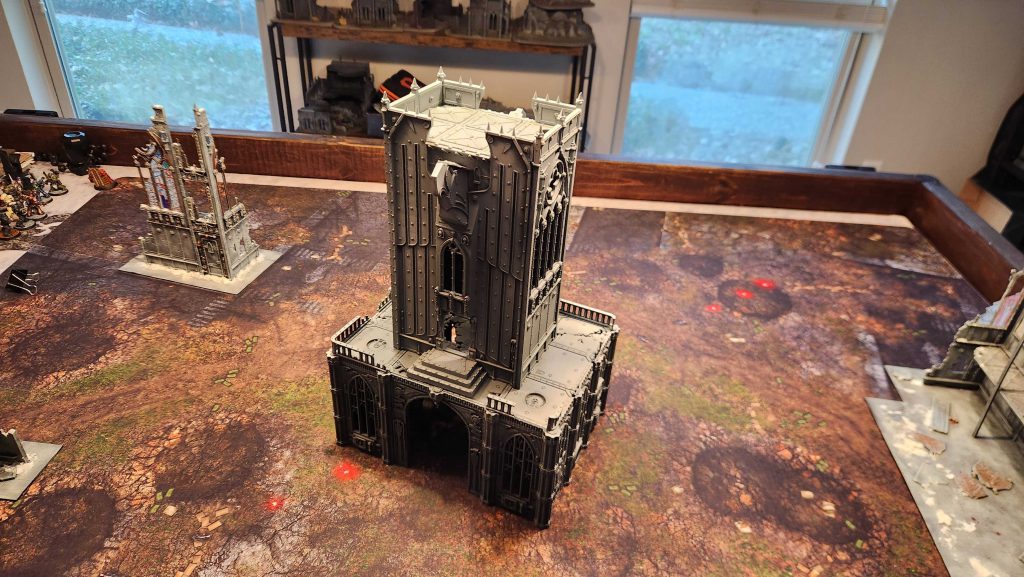
This isn't super practical for games unless you have rules to ignore vertical height but it does give a super elevated second element for snipers or flying units to fight over while still leaving some room on the second floor below. If I don't care about elevation or I want to make the building itself the thing players are fighting over I'll add the satellite dish from Sector Fronteris to the top and make it a signal tower or communications hub.
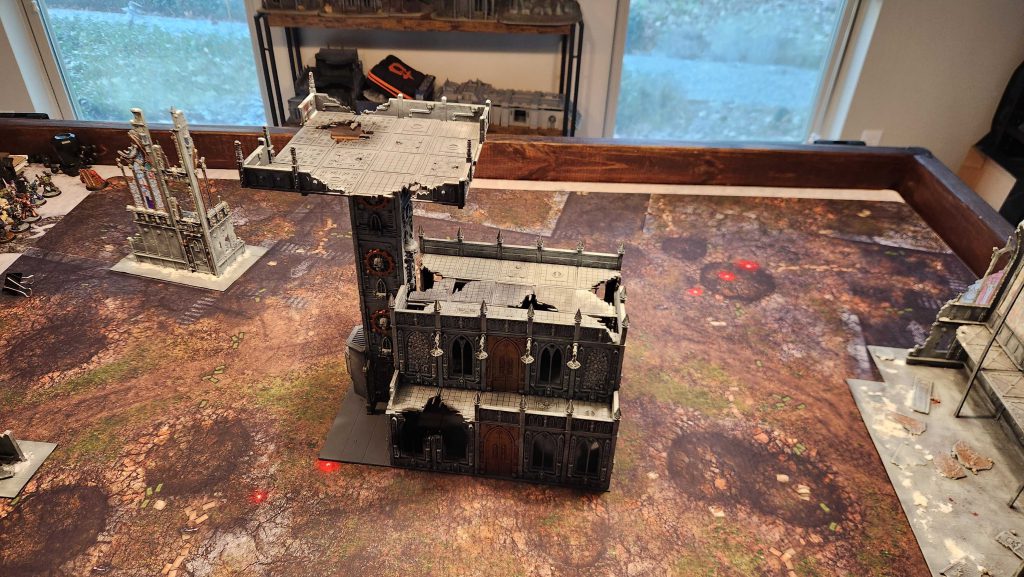
This is a reclamation project I've been working on, made from older Sector Imperialis terrain. It was originally only two tiles/walls wide but that meant it wasn't wide enough to really have two units stand on it, so I widened it by one tile and added the helipad tower to give it some additional floor space. This is again an area you'd only stand on if you could actually do infinite vertical distance movement, but maybe we'll get back there one day.
Doing that comms tower had me thinking about other ways to do large-scale modular terrain and as a result I ended up creating this raised platform, meant to model a raised city block or foundation for a larger building:
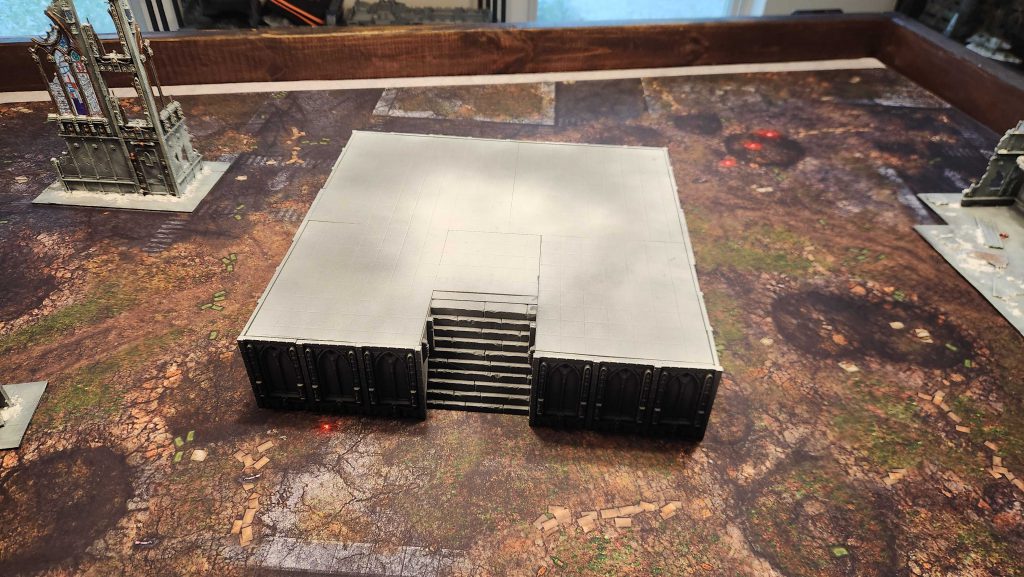
This is again, more or less the ideal, though the stairs are definitely optional (and the hardest part) - it's only 4" tall, so Defilers and the like can walk over it (and that makes sense, really), but it blocks line of sight well especially to smaller units while having a massive open area to fight over. This one is also something like 16"x16" in size and it's very easy to add additional ruins to it.
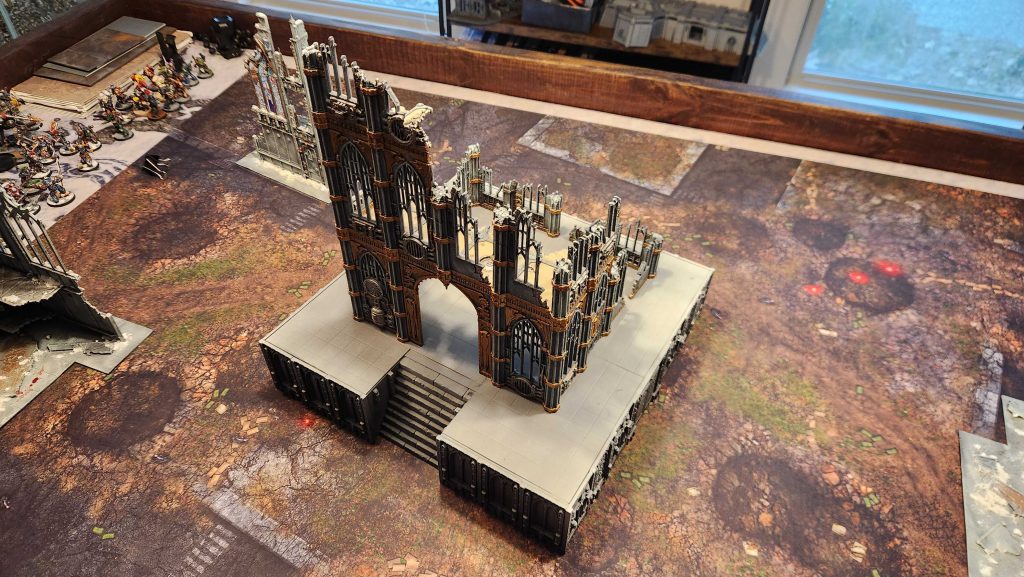
Ruins work plenty well on this without breaking it up; throw an objective in the middle of that and you have a very nice midtable arena to fight over. That said, if I want to go really hard with something like this I can always combine it with something large to create a megastructure, and do something that's more striking and evocative of a massive city center.
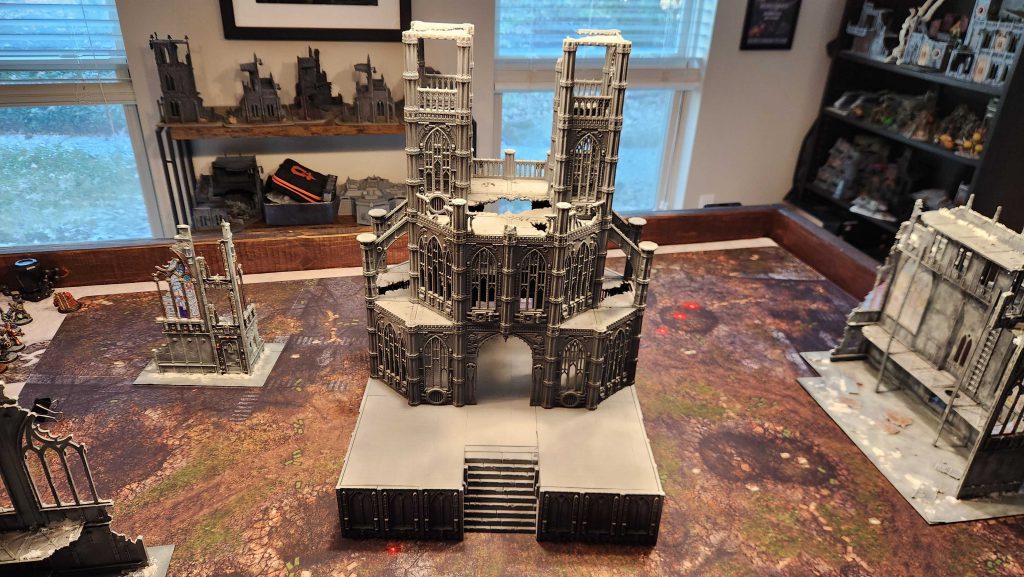
This is a large building but the goal here was to build a platform that could hold this kind of massive building but still leave a large area to stand on (this is why the steps are too steep to pass code - they're not functional so they shouldn't take up too much space). It's a good balance between looking good and being functional, and it's built intentionally for that purpose - the platform it sits on is large enough to hold a lot of different terrain types, while the building is meant to not take up all of it while looking connected.
You don't have to spend a shitload of time and money building a superstructure to have a good large centerpiece, though - you can build one using more mundane. modular pieces. I get a ton of value out of those 12"x12" Necromunda tiles, and they're
just large enough to use for building centerpieces.
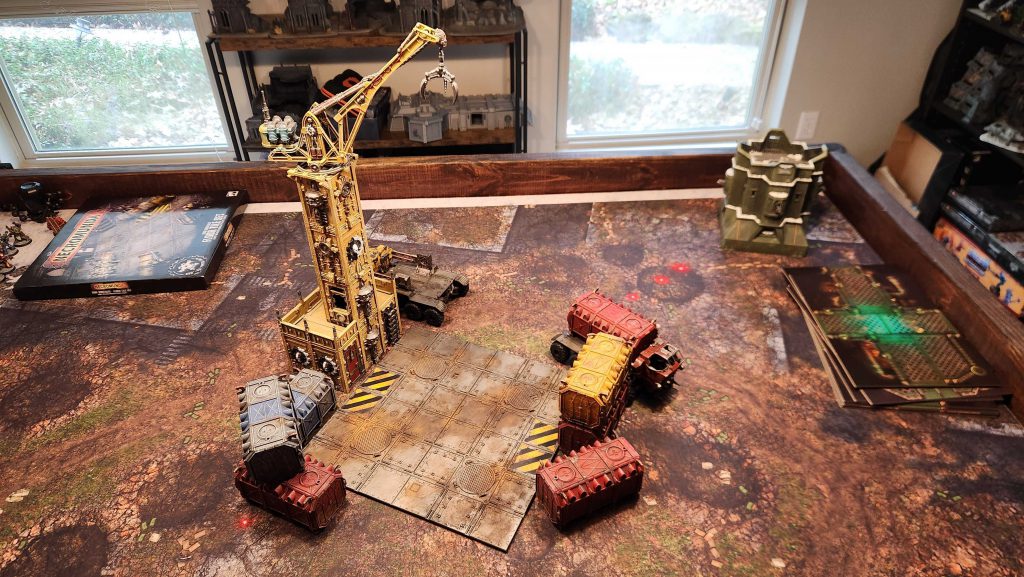
In this example I've built a kind of loading/shipyard center, piling it high with crates near the corners. This both increases the size of its footprint while also walling it off from the surrounding parts of the table, funneling armies to the inside to fight over whatever objective ends up in there. If I think the game will be smaller or more intimate, I might put one crate down in the middle there to further break things up. Again, the goal here is large walls on the sides to block line of sight, two large pathways to the middle, and a large area in the middle where units can fight.
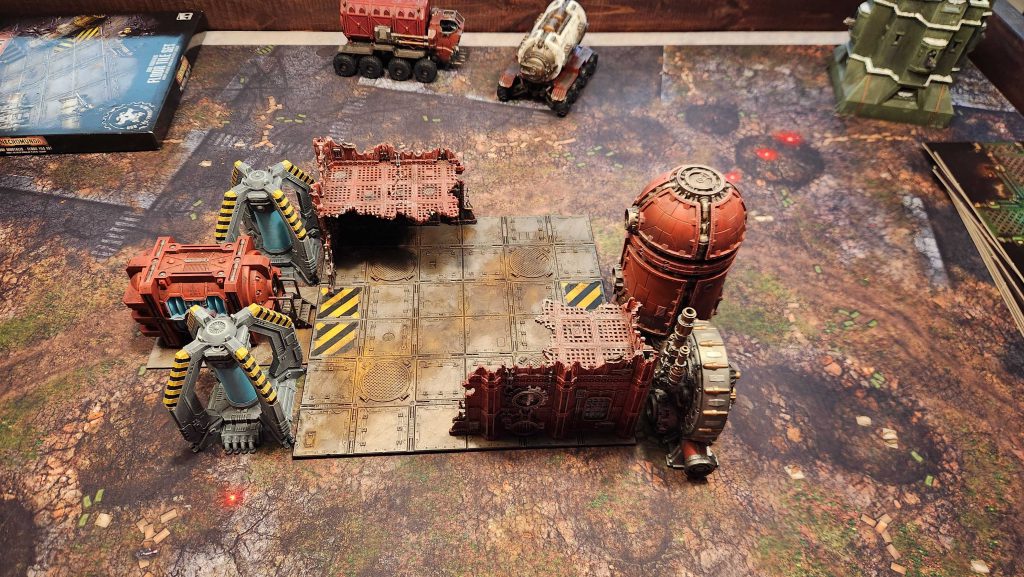
This example is more like a power station, where I've used a pair of smaller ruins and a few extra doodads to similar effect, creating a larger profile with two large entry points that still blocks line of sight and creates a large open area to fight over.
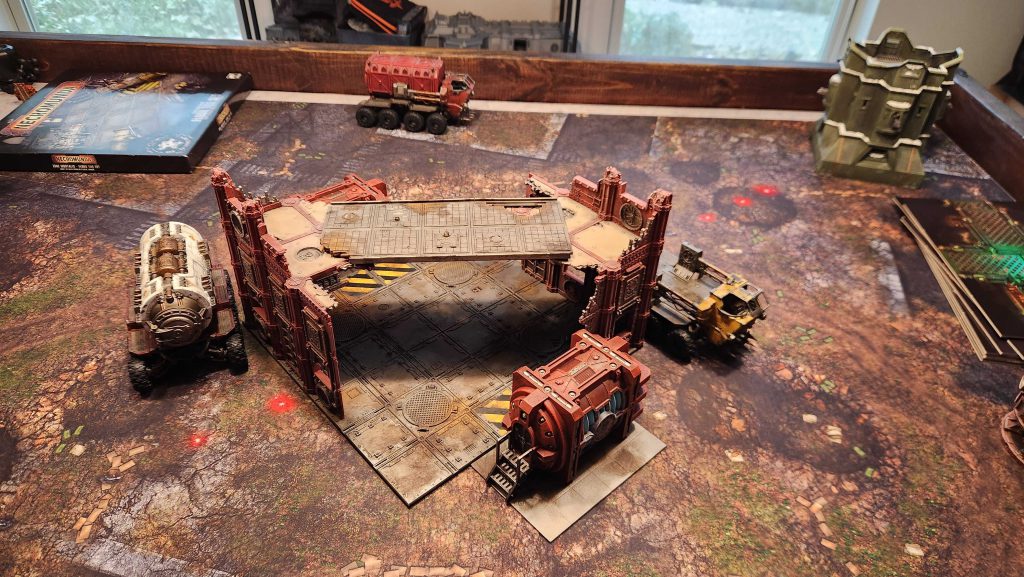
If I go larger with the ruins and add more things around the outsides like trucks and power generations I can make this more imposing, and a double-wide platform on top will give it a spot of extra verticality that the terrain otherwise lacks, giving me a second level that makes sense but is still large enough for a unit to fight on. again, the key here is to focus on those three elements and anything can be an impressive - and functional - centerpiece.
Next Time: Going Vertical
That wraps up this week's look at designing and building centerpieces but come back next week when we'll talk about using hills and cliffs and getting vertical with your layouts. This was a request from the comments last week and one I'm excited to tackle - I've always loved vertical tables but it's hard to make those work in modern 40k.
Have any questions or feedback? Drop us a note in the comments below or email us at contact@goonhammer.com. Want articles like this linked in your inbox every Monday morning? Sign up for our newsletter. And don’t forget that you can support us on Patreon for backer rewards like early video content, Administratum access, an ad-free experience on our website and more.Thank you for being a friend.
 This website uses cookies. Learn more.

 Goonhammer App and Patron Updates: April, 2026
 Kill Team Tournament Report: Engage, Party, Repeat's March Madness 2026
 Goonhammer Reviews: Tribal Conquest