 This website uses cookies. Learn more.
This website uses cookies. Learn more.
This website uses cookies. Learn more.
Making your own wet palette is a straightforward process and you may already have all the necessary supplies on hand.
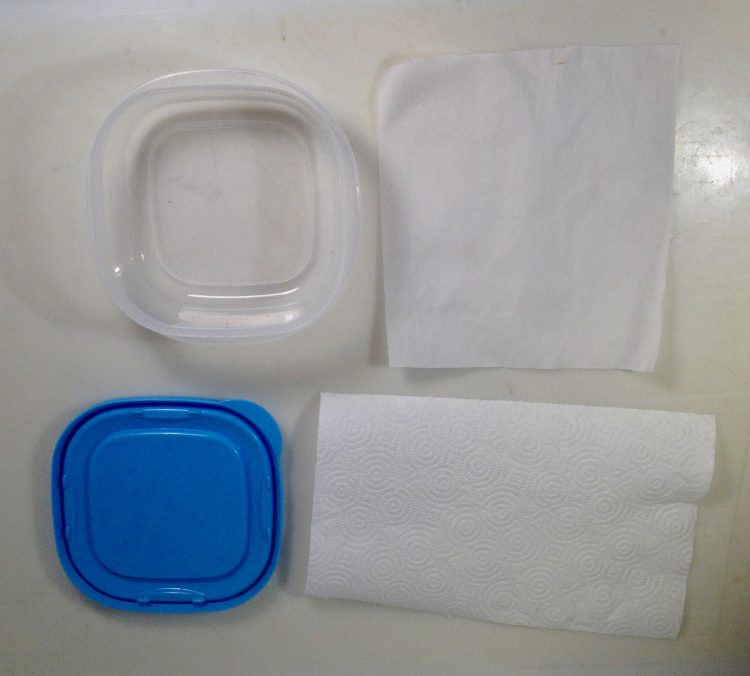 If you don't have any of this steal it from your parents. Or better yet, from work.
The good news is that if you don't have the supplies on hand and have to buy anything specifically for this project, a single run of supplies will give you practically a lifetime supply of materials to work with, provided you don't use them for anything else.
The first thing you'll want to do is cut the paper towel and parchment paper down a size that will lay flat in the bottom of the container. For this exercise I went ahead and measured it out with a ruler, so 4.5 inches fit nicely. I fold the paper towel over to two layers so that it will hold a little more moisture for longer. The walls and corners curve into the floor on this container, so I also cut the corners off the parchment and towel. I cut the parchment paper just a little smaller so that there is a border of paper towel around the edge of it. Note that if you want to get fancy, you can use a sponge cloth instead of a paper towel here, which will do the job a little better and stay moist longer, but will also cost you more to make.
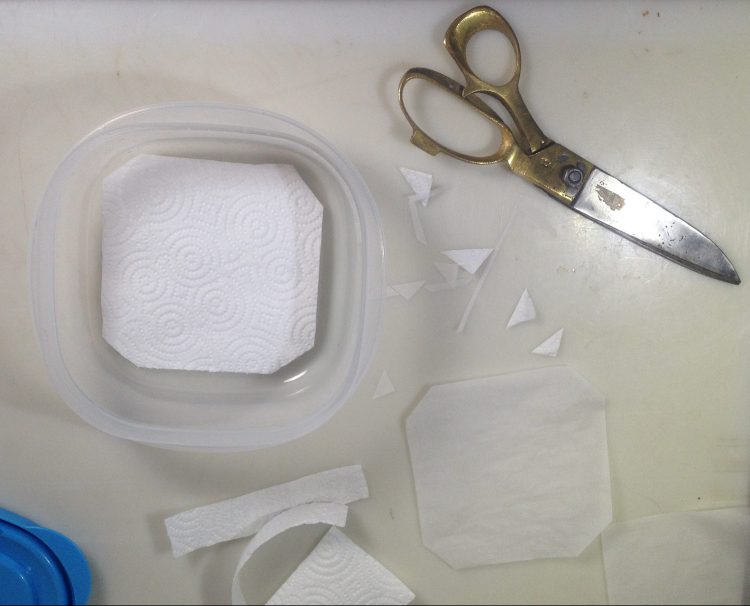 Cut to fit.
The next thing to do is get that paper towel wet. Not too wet though. In this case I put the towel in the bottom and poured a little water into the middle of it. That it soaked almost to the edges of the towel.
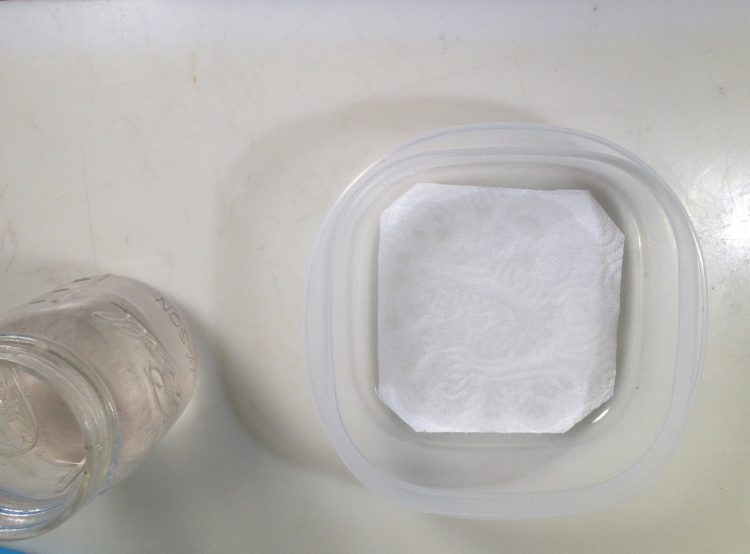 Gettin it wet.
That is just about there. Next thing to do is pour a little water into the edge of the container and tip the whole thing in each direction so that the bead of water soaks all the edges of the towel. This will be the same thing I do later to refresh the palette as it dries when exposed to air.
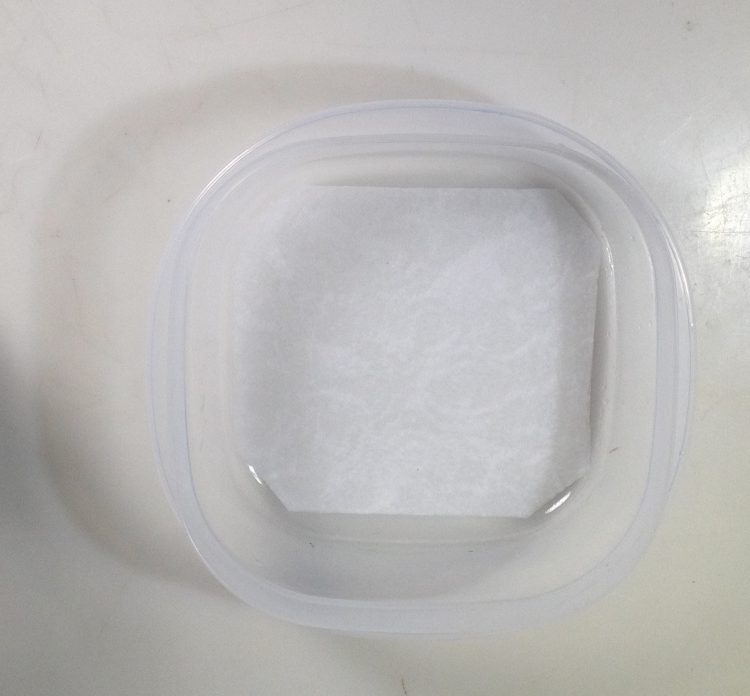 That's better.
Now get that parchment paper on there. Lay it down and smooth it flat with your fingers. Chances are that it will want to roll up, so let it. We'll get both sides damp. Flip the parchment paper over and then take the edge of a credit card (or something of the equivalent thickness and stiffness) and really smooth the paper flat. This will also push any excess water to the edges in which case it can be dumped out.
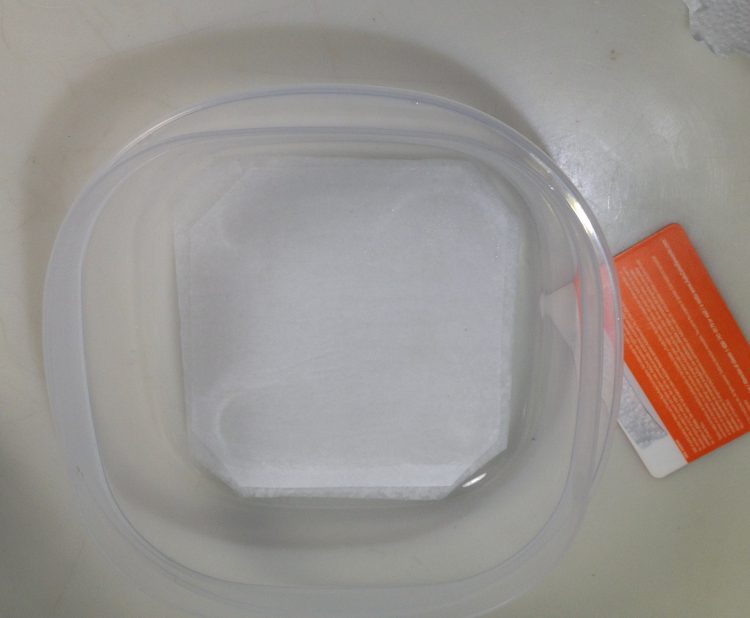 Ready to go.
There it is, all set to get your paint on. The towel will slowly dry out as you work. Usually the edges dry first, you'll notice the towel will look dry and the parchment will start pulling away from it. When it starts looking dry add a little water to a corner and tip the palette from corner to corner, letting the towel soak up the water. I find it usually needs done about once a session or every couple hours. This will vary depending on the humidity of your working environment. Chances are the container will develop a slight musty odor after a while. The process of slowly drying and being rehydrated tends to keep it from getting too bad. Daily use helps keep mold and smells at bay. If it gets really stinky or obviously moldy just bin the paper and wash out the container with warm soapy water, then start the process over with new materials.
Tags: Painting | hobby | tutorials | featured | wet palette | skails

Thank you for being a friend.
 Goonhammer App and Patron Updates: April, 2026
 Kill Team Tournament Report: Engage, Party, Repeat's March Madness 2026
 Goonhammer Reviews: Tribal Conquest
Support us on Patreon to get access to our Discord and exclusive App features.
Thank you for being a friend.
Already a Patron? Login with Patreon.
Visit our incredibly official store on RedBubble.


Support us on Patreon to get access to our Discord and exclusive App features.
Thank you for being a friend.