So my good friend ‘Fabius Bile’s backpack’ asked me if I would write something for his weird nerd blog about my method for painting Nurgle Daemons. My first thought was “lol, what ‘method’”, followed quickly by ‘shit, how DO I paint my Daemons?’. Well, random internet dweller, after much searching I found the answer and it’s However I Goddamn Please, and that’s kind of what got me into Nurgle in the first place.
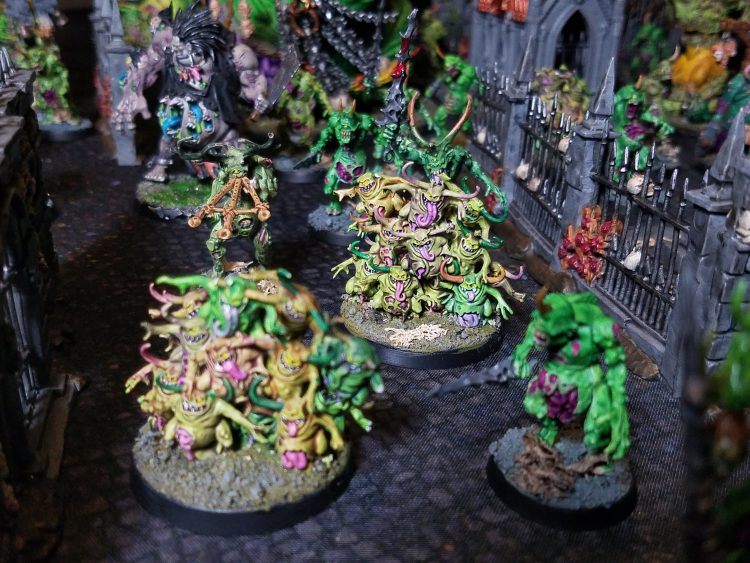 Credit: Brandon Fox
When first learning about the four Chaos gods, what stuck out to me about Nurgle was how much he loves his subjects. Nurgle sees all his little minions as equally valid and equally important, from the smallest Nurgling to the Greatest of Unclean ones. They each carry their own diseases and serve their own role in the plague horde, but none is more or less valued, none more or less worthy of Nurgle’s love. And equality and love are things we can all get behind, right? RIGHT?
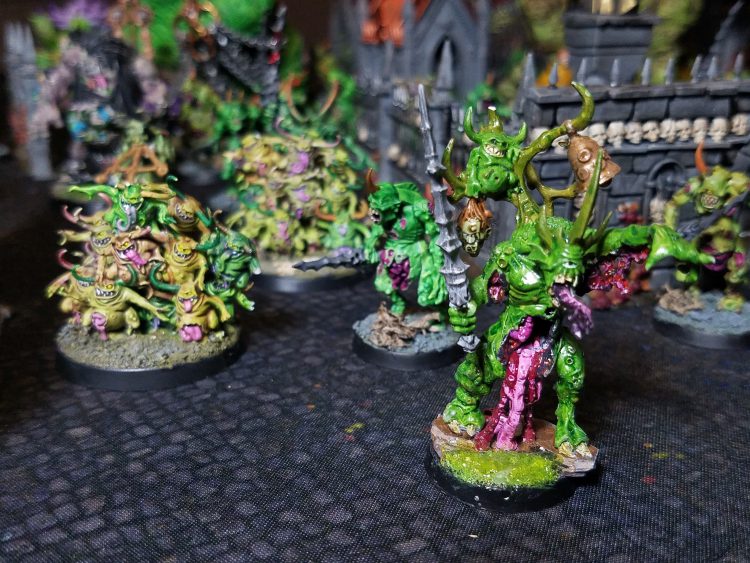
I found very quickly when starting this hobby that I not only am bad at consistency, I also find little joy in it. Painting the same exact thing over and over quickly starts to feel like a chore more than an enjoyable hobby session. However, my fellow rotting flesh pile, there is no need for strict uniformity in the horde and that is the key for how I paint my army. So, rather than take you through painting one full Space Marine that you can follow step by step for 30 uniform bros (not to kink shame, if that’s your thing you do you), I will take you through how I generally paint various features of my daemons. You can then adapt them to your own minis in whatever ways pop your pustules. Remember, there’s no wrong way to eat a [COPYRIGHT INFRINGING STATEMENT REDACTED]
I should note that, against recommendations of everyone I know, I prime all my minis white. I’ve done black but, overall, I find the white makes the colors brighter and pop more. The black gives a ‘grittier’ feel maybe, but in an army prone to darker dingy colors of rot and decay that can end up with a dark, muddy feeling model. There’s nothing saying that disease has to be dark – the diseases teem with a life all their own. It doesn’t have to be all rot and decay – they don’t call them bright bruises for nothing.
Skin (or what’s left of it)
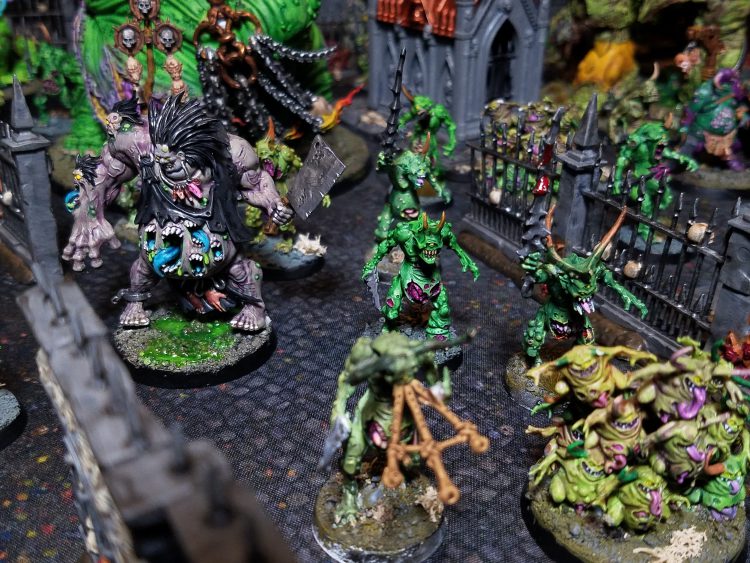 Credit; Brandon Fox
I did opt to go with a classic green for my army for the sake of my opponents. While a wacky blue horde of Plaguebearers sounds super fun, there is some relief for the person you’re playing to see a blob of green and go ‘OK, Nurgle, got it’. And after my very first army being Star Wars minis counts as Eldar, I kind of owed it to my friends to do something a little more straightforward. I do think some concepts of rot and disease in your standard Nurgle fare are very terran centric – what would a diseased tau look like? A rotting Ork would likely not be green, what would that look like? I encourage you, future corpse, to take a swing at it! Nurgle will love you for trying.
What I start with is two or three colors – I generally like
Vallejo Sick Green and
Scorpion Green, and
Army Painter Poisonous Cloud, but also will use
Vallejo Foul Green,
Deep Green, and
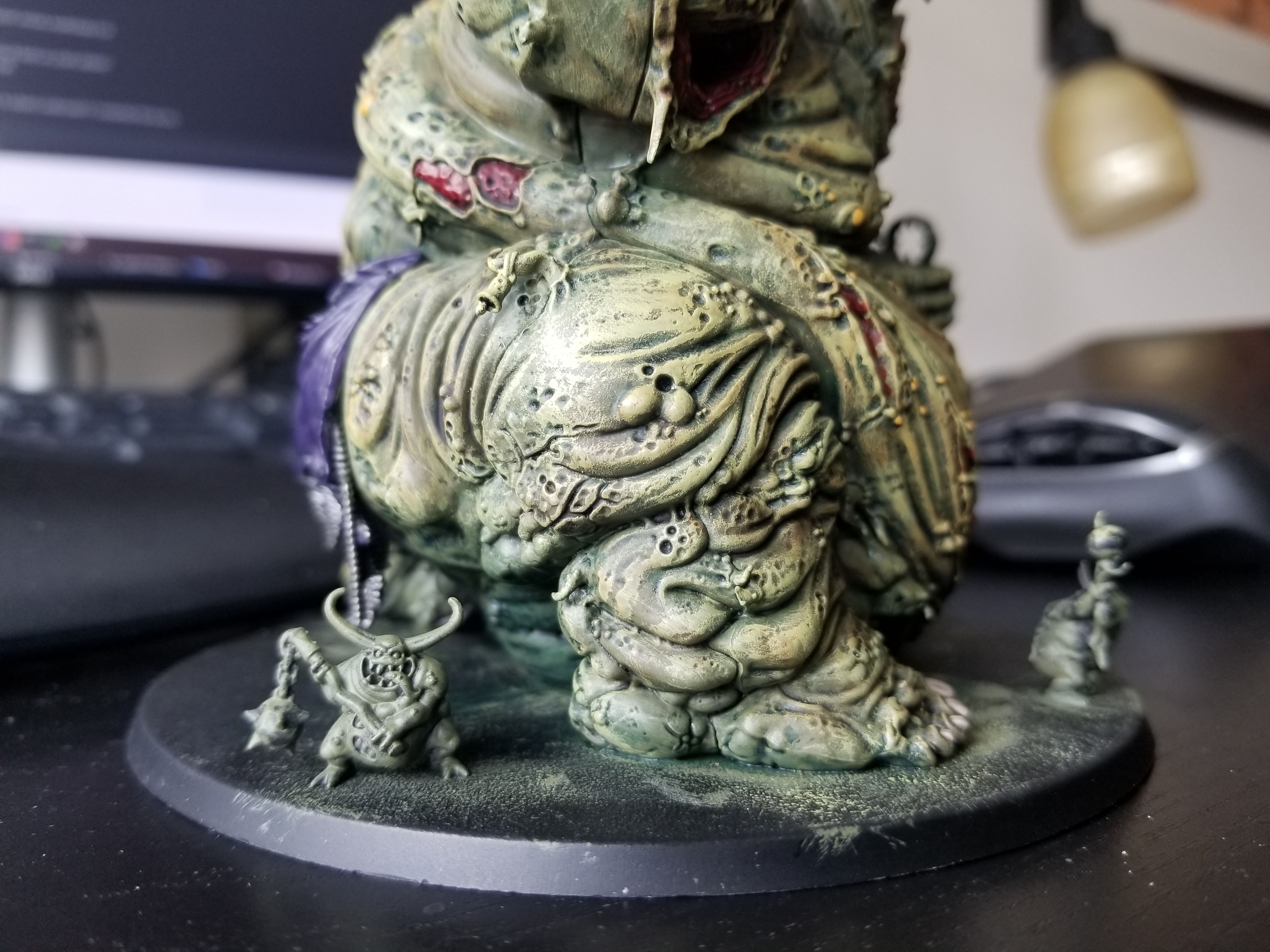
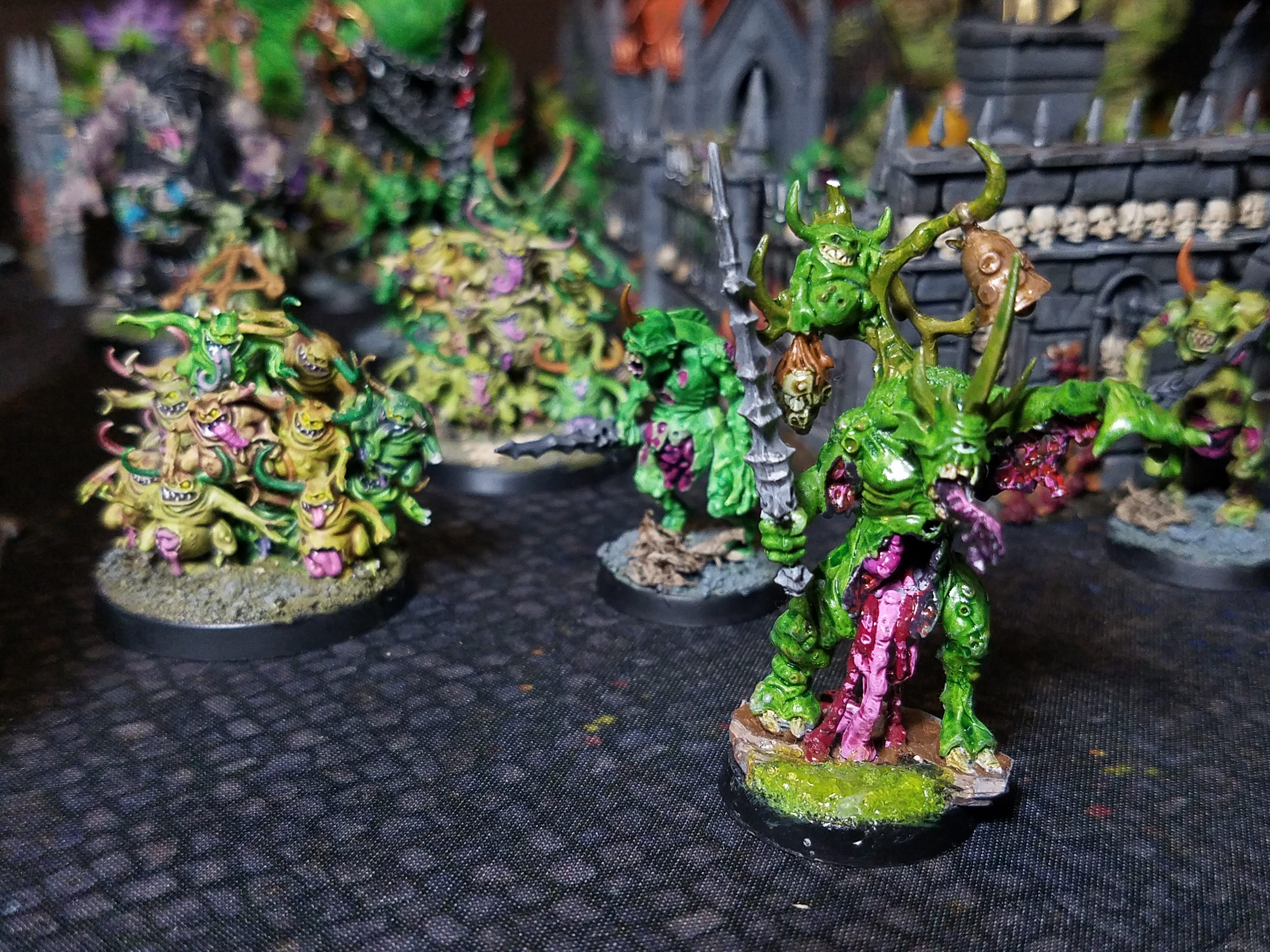
Olive Green. I can’t stress this enough: IT REALLY DOESN’T MATTER. What I do is pick two of the greens and just mix ‘em together in no specific ratio, just until the color makes me feel good, then go to town base coating the good fleshy bits. For a horde of plaguebearers I will refill my color puddle with varying amounts of the colors I have picked, because a few different shades of green within the horde is going to 1) add some variance and 2) not be that noticeable from one model to the next, especially after the wash. For a Character or larger single model like a Great Unclean One I’ll pick a 1:1 or 1:2 mix of two colors so it doesn’t end up looking splotchy, but even that wouldn’t be the worst thing. And also so I can remember what I did.
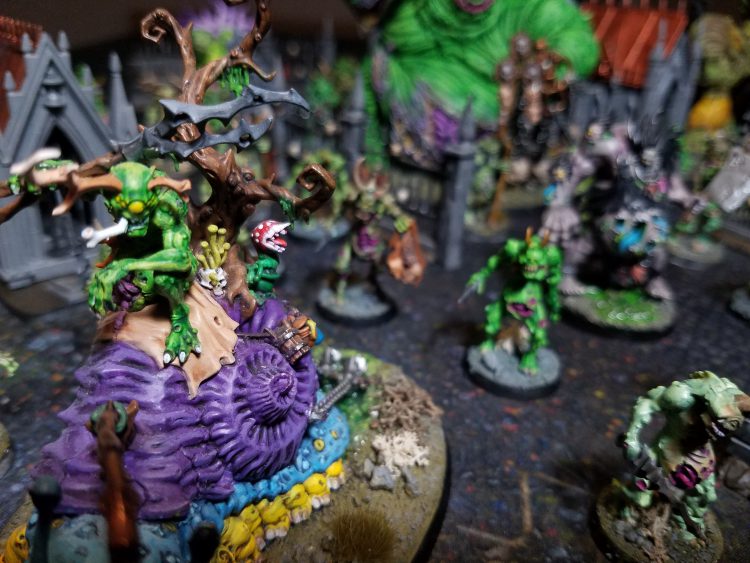 Credit: Brandon Fox
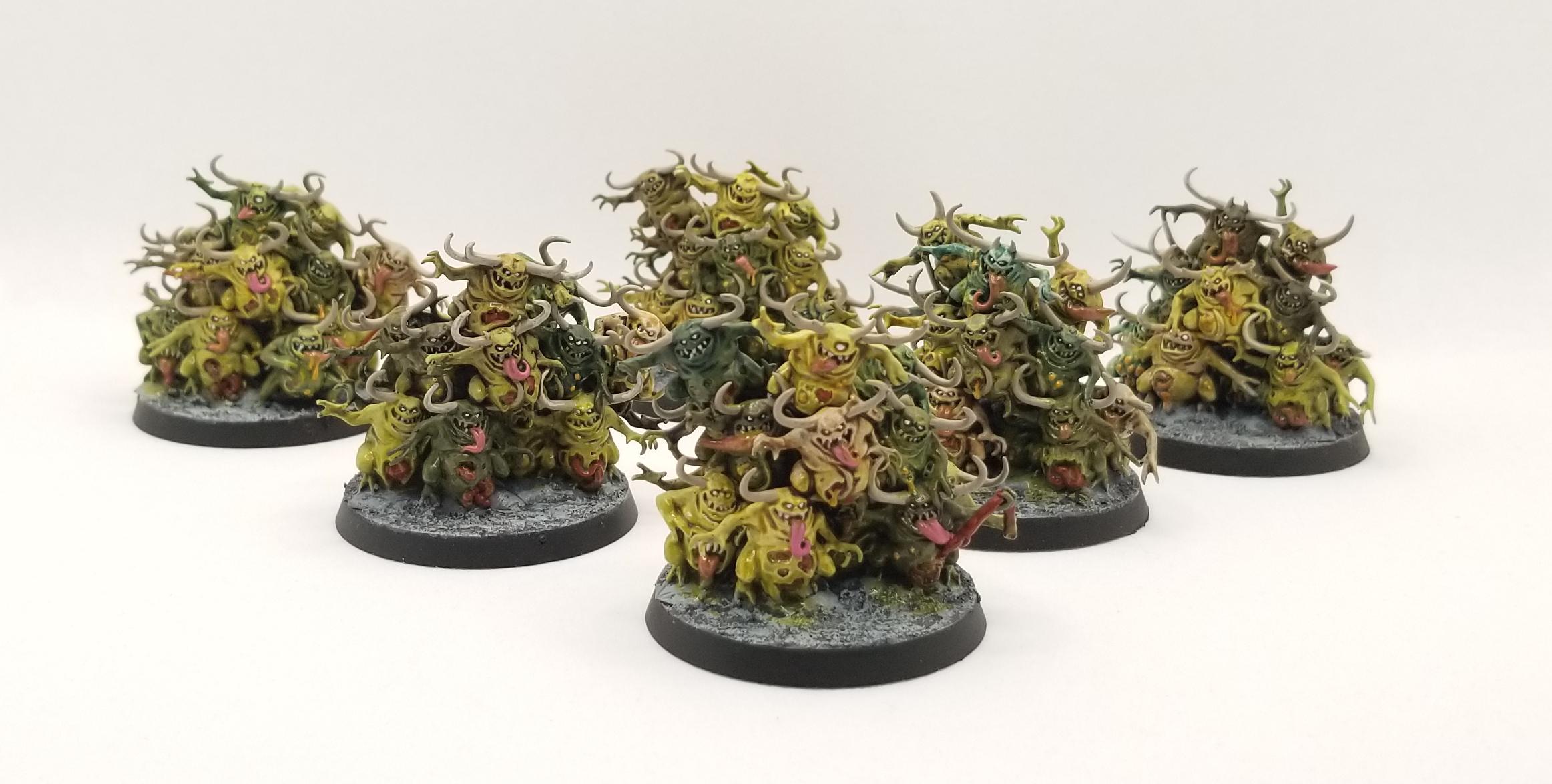
Then we wash the dirties. For the hordes and the Nurgling piles I tend to pick every wash I own. I have probably tried them all at this point, and I can’t say any haven’t worked. I think I use 5-6 different washes, and just pick clusters of dudes to wash those colors. Using 5 washes on 30 plaguebearers that’s 6 each color, which gives you enough of a mix that your horde looks varied but still like they belong together. Same thing with the Nurgling piles – I picked a few in each pile to wash each color to make a nice mix of teeming mischief makers. If you want names, I’ve used the
Biel-Tan Green for that classic green look,
Agrax Earthshade for a nice dirty look,
Reikland Fleshshade or even
Carroburg Crimson for a more gritty/bloody look,
Druchii Violet over green makes a grey sort of flesh color, and I’ve even used the
Drakenhof Nightshade and
Coelia Greenshade on the Nurgling Piles. One thing I’ve learned is the lighter the greens you base coat with the more varied effect the washes will have.
For the highlights I tend to use either the
Scorpion Green on its own or a mix of that and the
Poisonous Cloud, depending how light the base coat is and how much contrast I want with it. I’ve also found that not fully mixing the two colors, or even not fully mixing one color if it has a few pigments, makes a fun little splotchy effect on the highlight. Again, this is the beauty of Nurgle – it doesn’t have to look perfect and polished. In fact, it’s better if it doesn’t!
Guts, Muscles, and Tongues
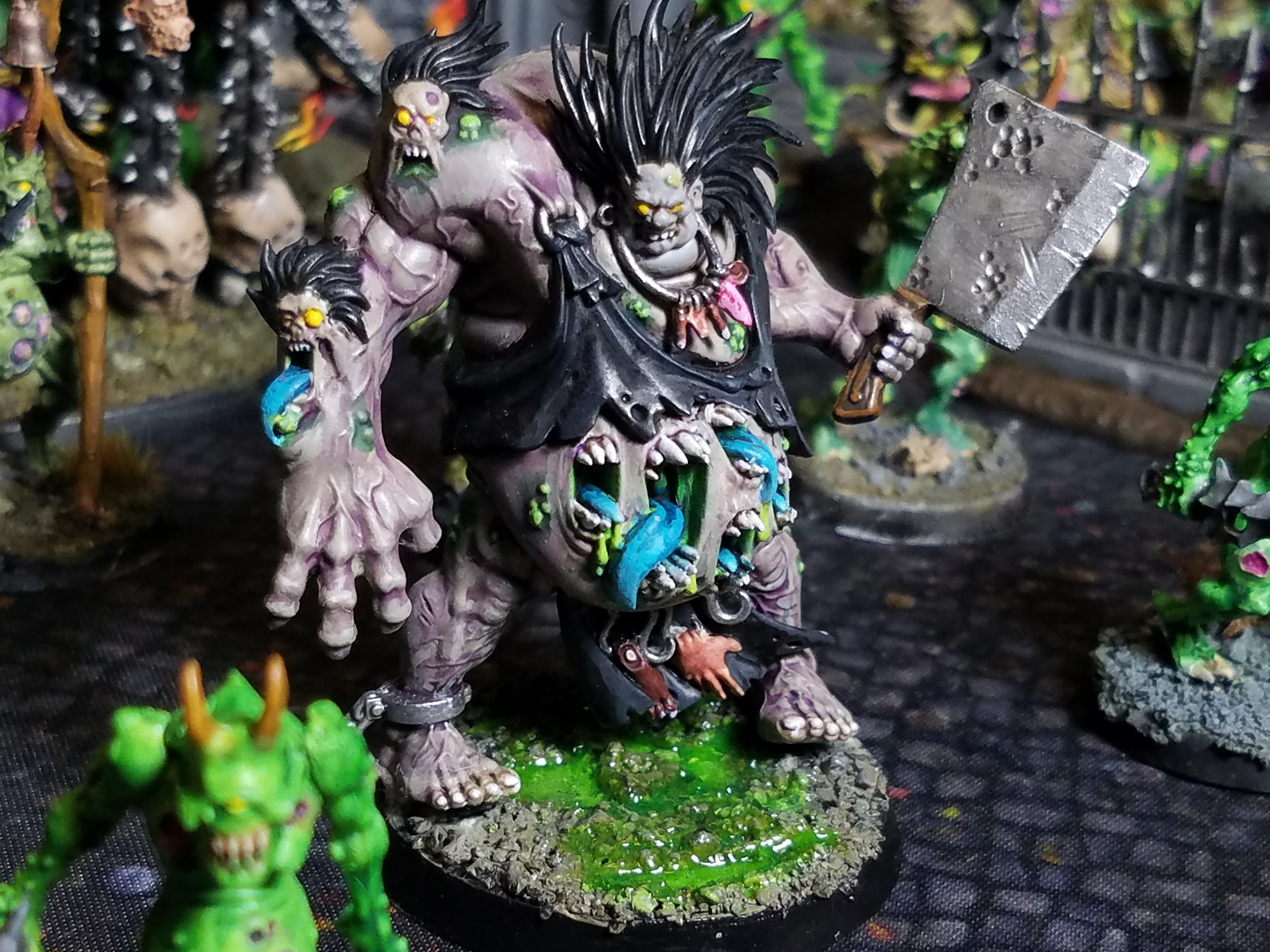
I like to start with a nice dark purple – I’ve got a
Vallejo Warlord Purple or a
Xereus Purple that work well. Generally, then I like to wash with a Red like the
Carroburg Crimson – that nice mix of Purple guts and Red blood filling in the crevices. This works for all of these things, as it’s all kind of the same rotting innards, and the same undercoat helps tie them all together as coming from inside the carcass. I like to start dark because it would be dark and poorly lit inside the body. For muscles I like to go with the
Screamer Pink. It’s a nice reddish purple that gives the idea of muscles without being too bright of a red that it would look like a fresh, bleeding wound. I like to think of these as rotting more than bleeding wounds, but hey I’m not your supervisor.
For guts I have no idea what I’ve done for sure. I’ve probably layered over the purple some
Dechala Lilac, the
Screamer Pink, or
Vallejo Squid Pink, or any mix of those three. And I mean either mixed together, layered on top of each other, or both. I have no idea what looks best, because I don’t remember! But if you recall my main point, it doesn’t matter! Call it different stages of rot, different gut diseases, older or newer wounds, terran guts vs. eldar guts, doesn’t really matter. Find something that works, or find 3 somethings that make you happy, and keep trying. Plaguebearers are the best for experimenting with this, as you can just move on to the next one trying new colors until something looks right. You can even cover it up with some
Blood for the Blood God technical if it looks really bad and you hate it.
For tongues I’ll usually do the
Squid Pink to finish it off, gives it that nice pink tongue look. The same will work for tentacles or other fleshy growths that you want to distinguish from the main mass. But really any colors would work just as well – I just like to start dark at the base and move to light at the tips. I did some nice Blue tongues in the same style on my warlord for the Astradus campaign. I don’t want to say his name, he’s a very litigious misfit.
Horns, Claws, and Teefs
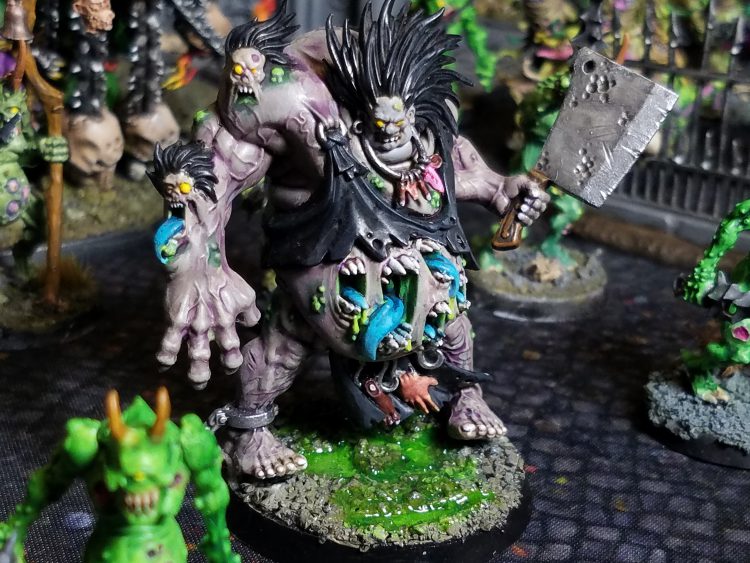 Credit: Brandon Fox
This is one where I am particular – PSYCHE I’M TOTALLY NOT. I use
Army Painter Banshee Brown for most of the teeth and claws now because I found it and I like it. I am sure there are other off white or bone type colors, but I like this one. When I started painting I was using standard white, so there’s a mix of white and off white in my army, which is what I like anyway. I wash them with a nice
Agrax and then highlight with some more white or
Banshee Brown. Nothing crazy. I use the same Banshee brown for any exposed bone as well.
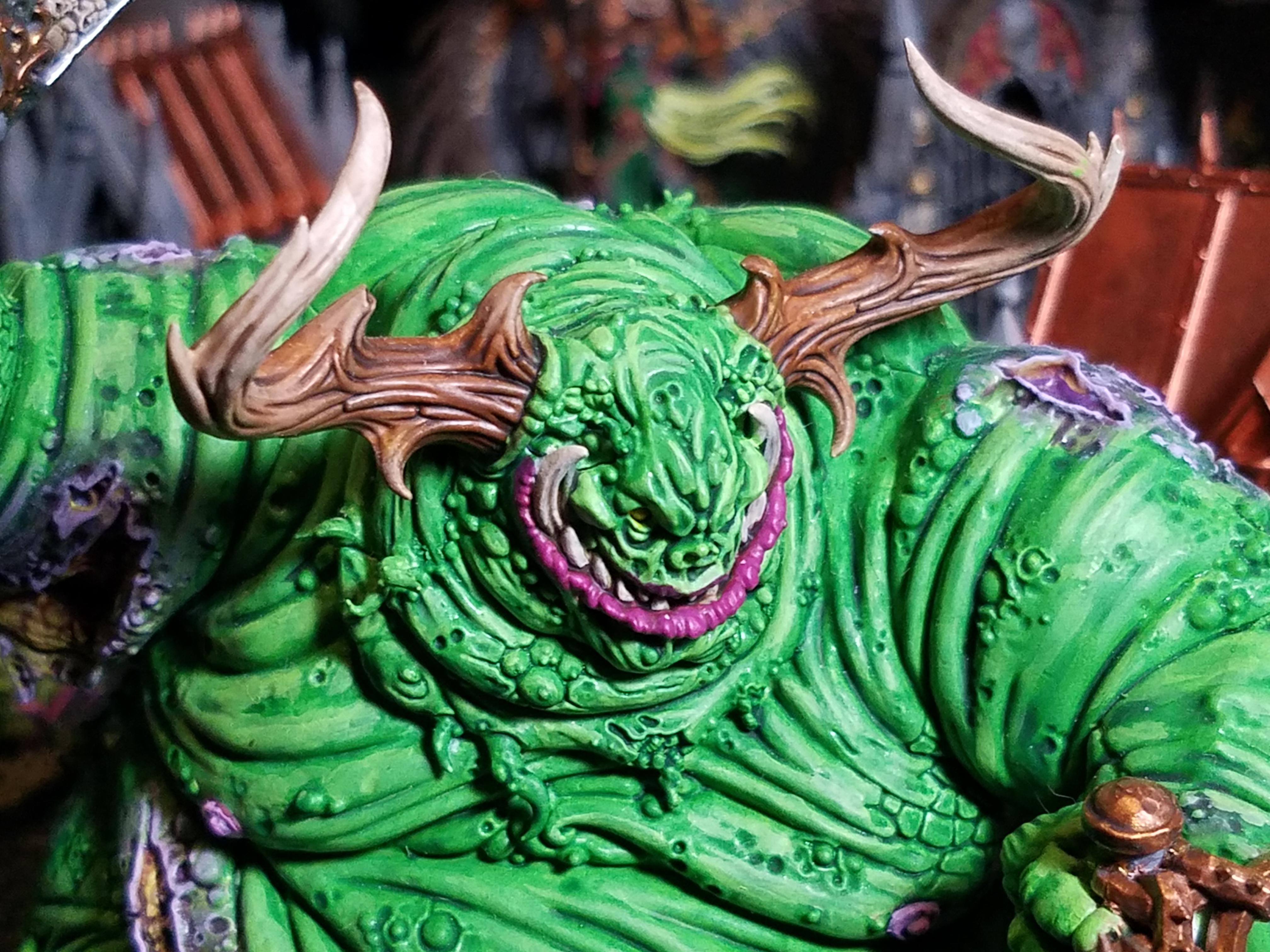
For Horns I generally use
Banshee Brown,
Skrag Brown, or
Deathclaw Brown. I do like to get a bit fancy sometimes. I like to try and wet blend from a
Deathclaw Brown or
Skrag Brown up to the
Banshee for a nice little growth gradient. I’ve done a few where I start with a
Vallejo Beasty Brown or
Charred Brown to the
Deathclaw and then to the Banshee for a real shift in colors. You can help with this gradient by doing a second wash on only the darker part of the gradient after the first has dried. I have also found you can get some interesting effects if you use a second color wash before the first has dried completely – like doing a
Reikland or
Carroburg over the
Agrax just at the very base where it comes out of the flesh. Just make sure to wash your brushes so you don’t cross contaminate your wash pots.
Eyes
 Credit: Brandon Fox
I hate eyes. Seriously. I got these big meaty hands (an art teacher of mine called them bear paws once). I paint the whole damn eyeball yellow, wash with
Agrax, then dot the middle with yellow again. I have never and will never paint a pupil. For Daemons that works fine – spooky possessed glowy eyeballs. Maybe go with a milky white blind cataract eye, or Evil Horse Eye all black (seriously, horses have creepy eyes). If I can’t paint real eyes why should you have to? Eyes, ridiculous.
Weapons
 Credit: Brandon Fox
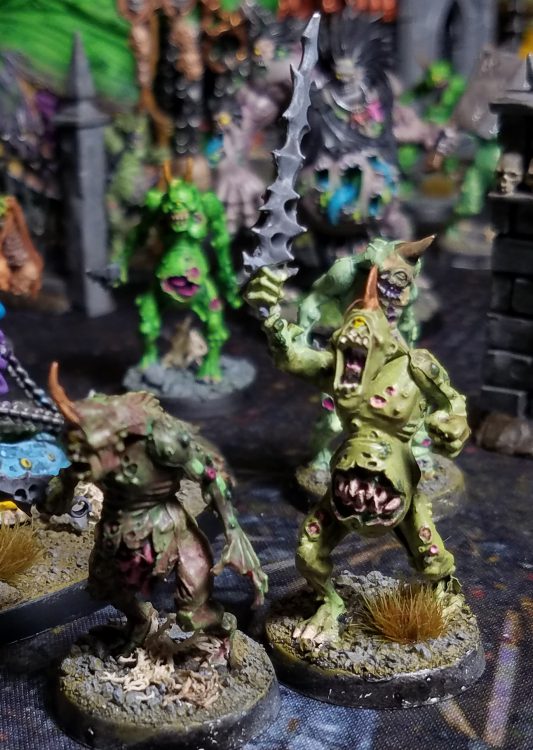
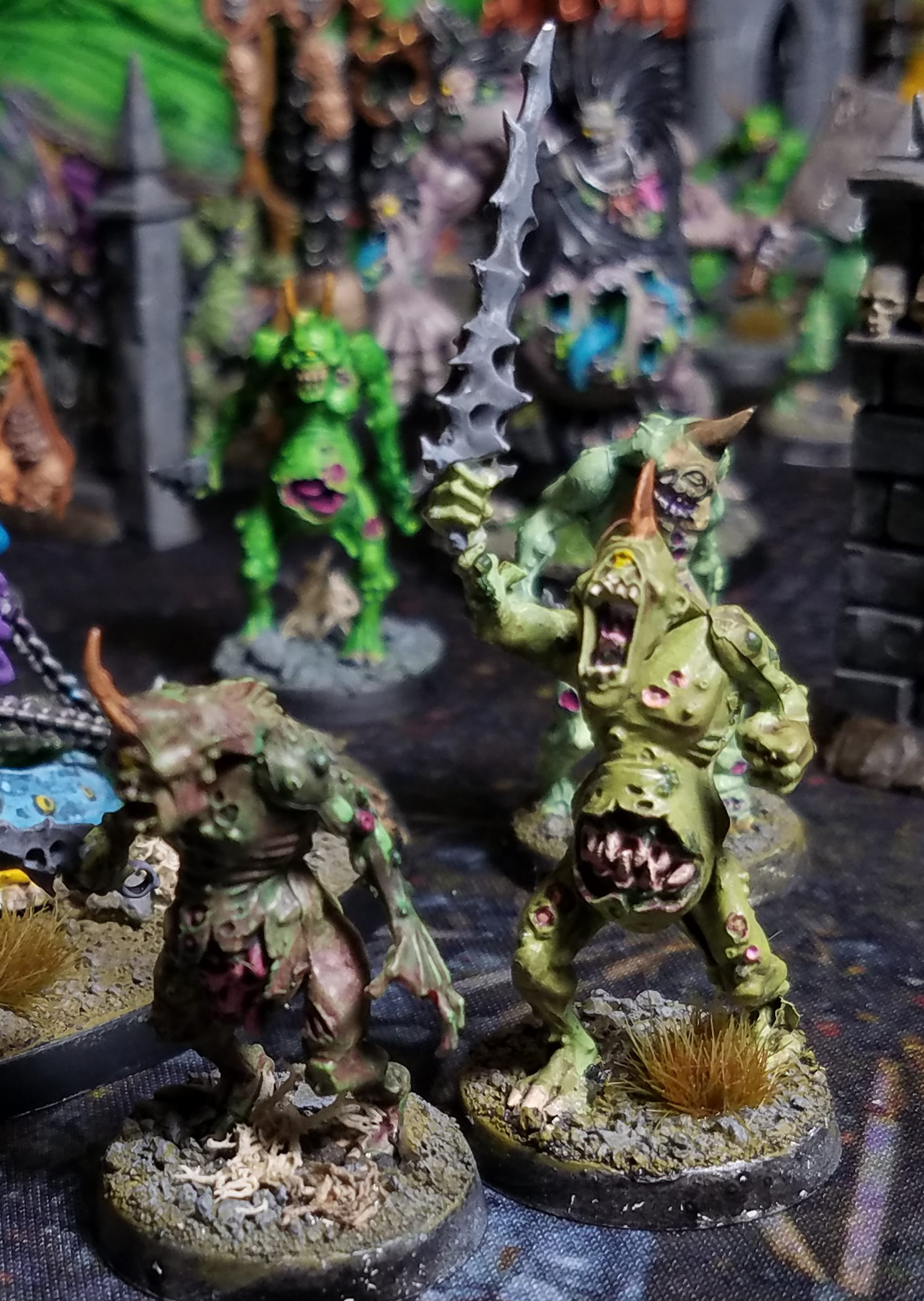
The swords that my plaguebearers have I paint a basic grey. I use the
Vallejo London Grey because it’s the color I already own. My concept was that they just have sharp rocks that they hit you with. They’re washed with
Nuln Oil and any highlights are done with more of the same grey.
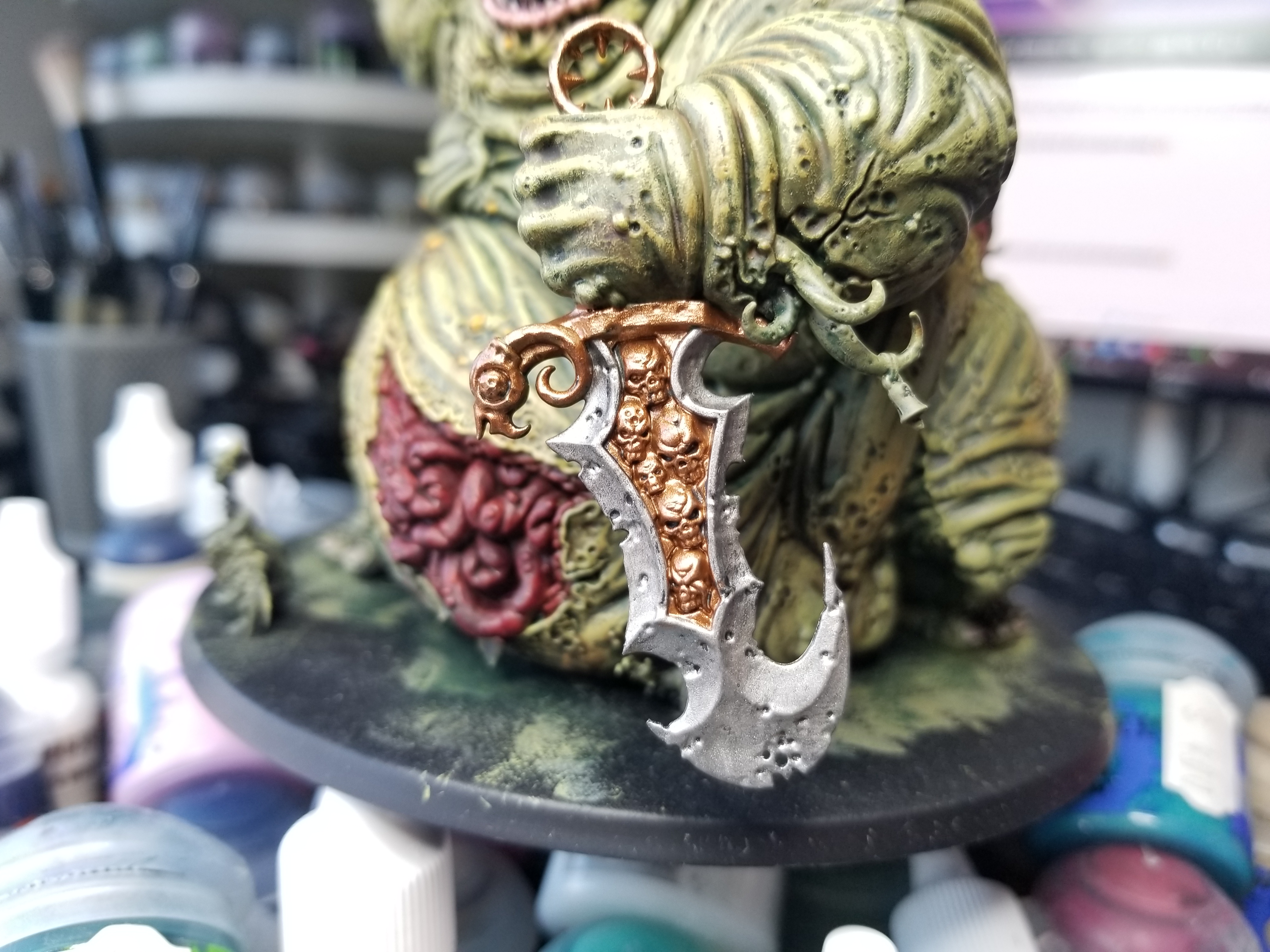
Metals I pretty much only do one of two colors – Silver for most metal chunks and Brass for trim and accent bits.
Vallejo Gunmetal for silvers washed with
Nuln Oil, and
Balthazar Gold washed with
Agrax for brass. Each highlighted with the same color. This is mostly for lack of owning other metallic colors more than anything. I only recently picked up some of the
Nickleback Oxide (or whatever) and have used it on the brass which makes some nice corrosion effects. I’ve used some of the
Typhus Corrosion as well, on the silvers. It’s OK too, but adds more of just a dirty look than a corroded look in my opinion.
Wounds, Blisters, and the like.
 Credit; Brandon Fox
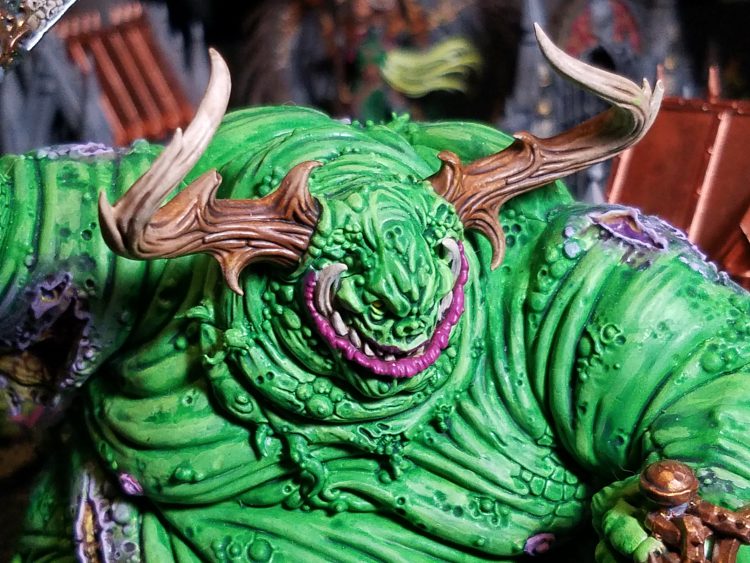
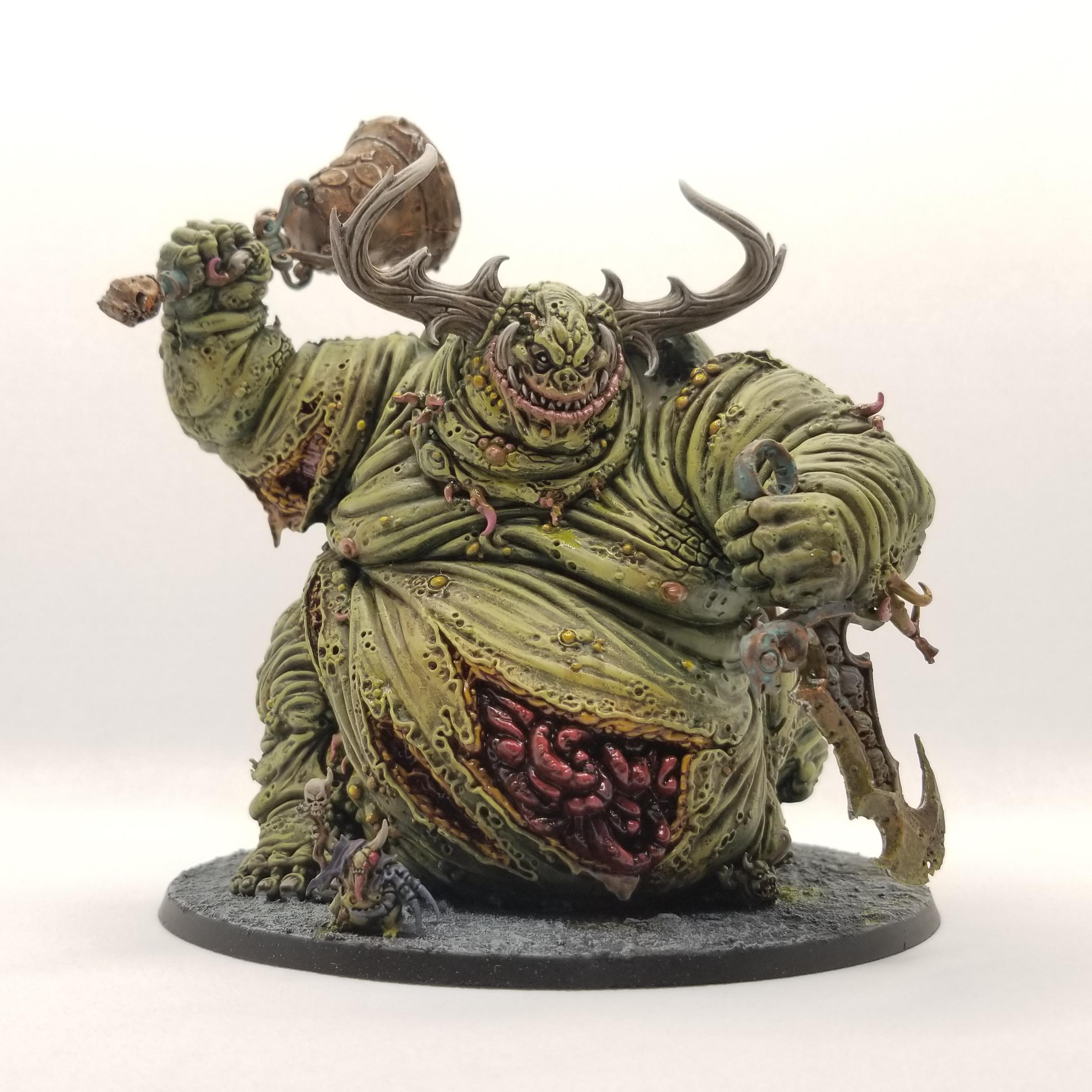
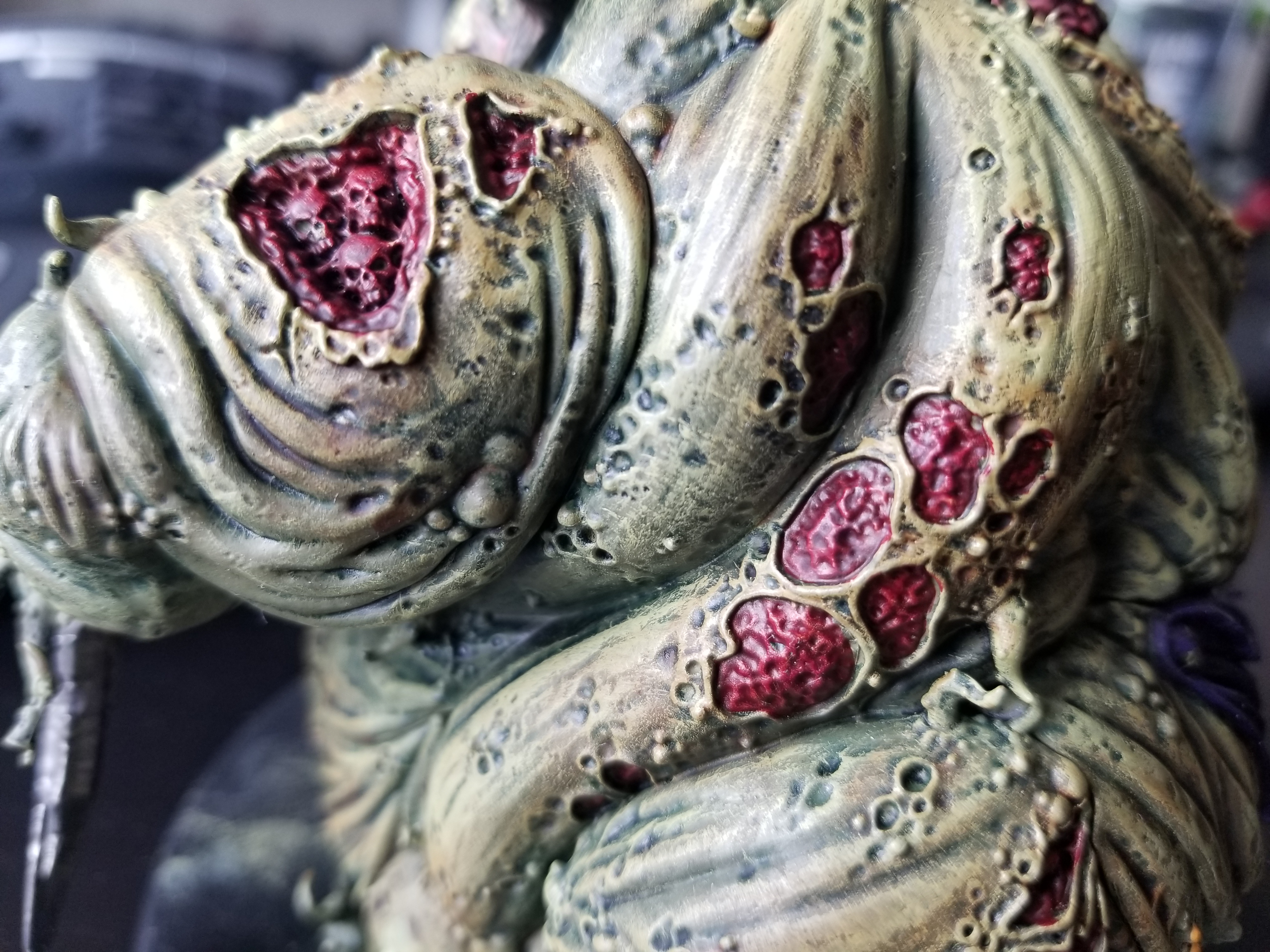
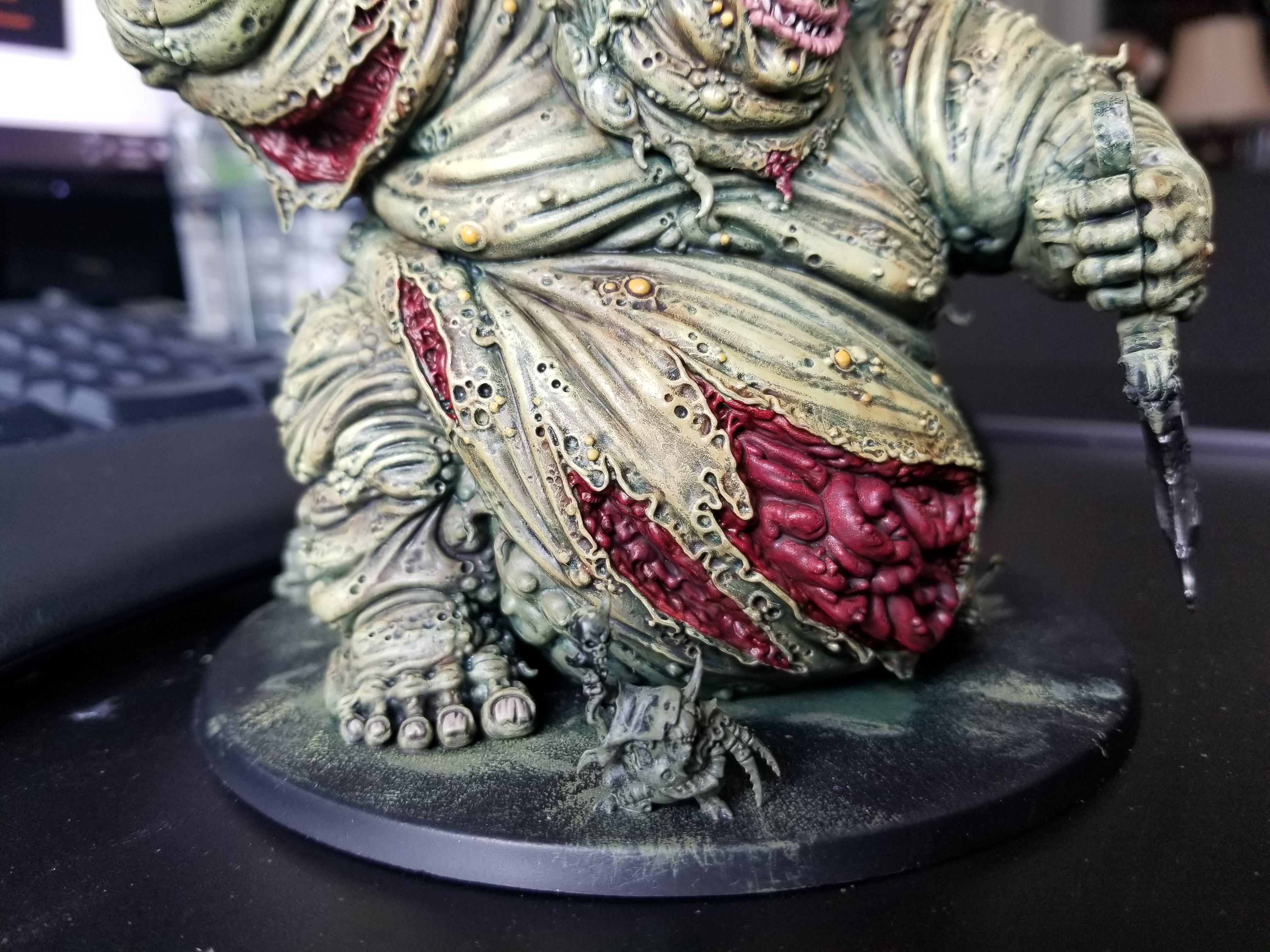
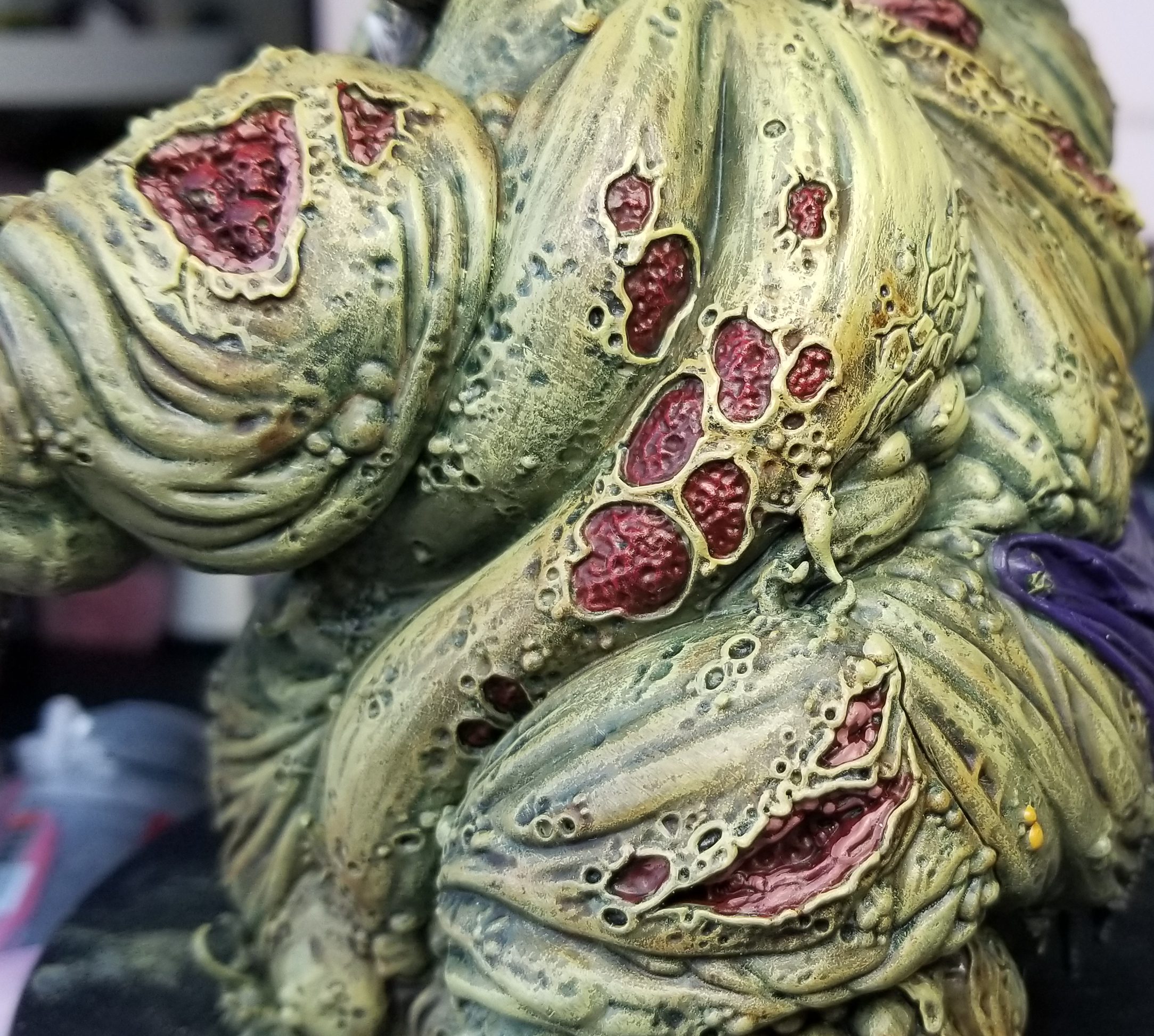
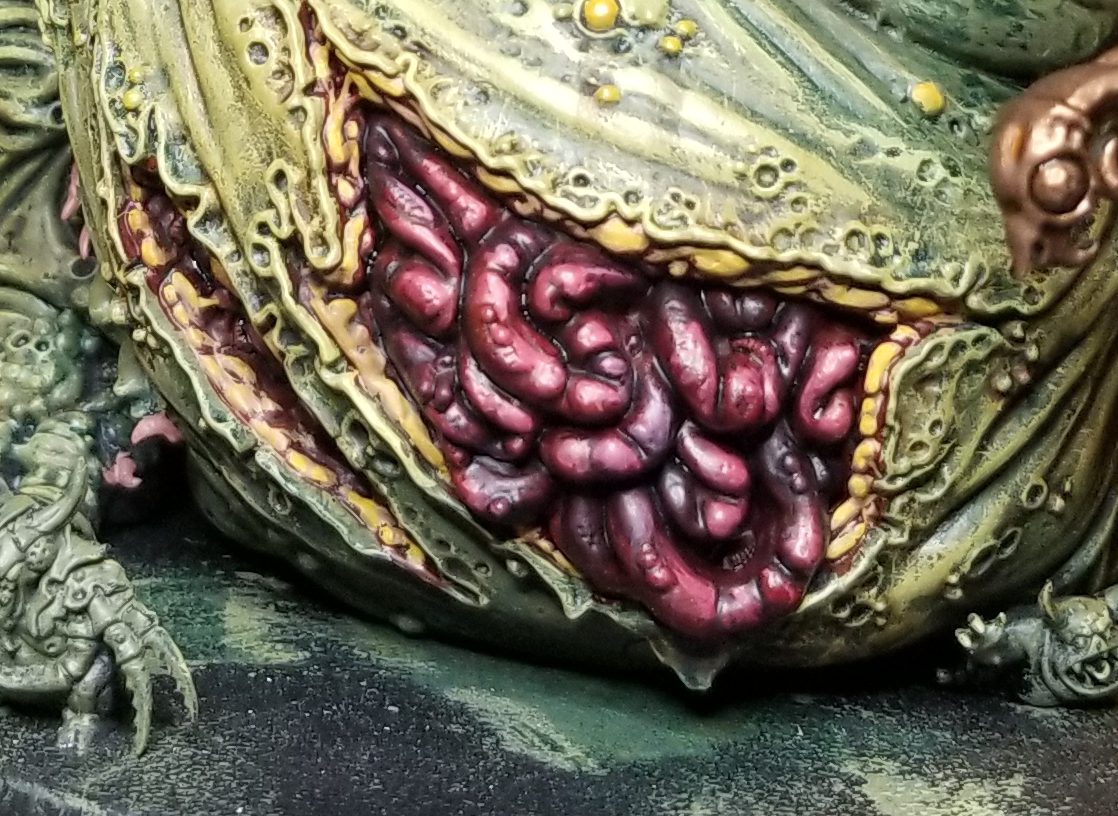
For my Great Unclean One there was a layer of fatty tissue around a big wound. I took a chance and painted the
Poisonous Cloud which is a very light yellow-green and washed with the
Carroburg Crimson (or maybe it was the
Fleshshade. I should write things down). The result was a very good looking fatty-pus layer, or at least I think it came out well. I also dry brushed some of the
Dechala Lilac around the wound to give it a bit of rot and bruising look.
For boils and such I have used a nice bright red to pop out the blisters and contrast with the greens. I use the
Evil Sunz Scarlet for this and use the same for anywhere I need blood in a fresh wound. I’ve also used just a brighter green, like a blister stretching the skin ready to pop. Most of it will look fine if it’s uniform on a single model, and you could pick a few that look good for a few different rots across your horde.
I do also like to make my lips and nips a nice pink. It just feels right and looks creepy. Weird green goop monster all ‘give granny a kiss’ with its pink lips. DISTURBING. A hulking, stinking, green mass charging toward you, nipples pink, glistening, and erect. HORRIFYING. Remember kids – infect their hearts AND their minds!
What other features have I painted? WHO KNOWS! It probably doesn’t matter, and I definitely forgot how I did it. I probably shouldn’t have been drinking while I wrote this! But good life choices don’t lead you to Warhammer, so cheers! Hope you enjoyed, and maybe even learned something!
 This website uses cookies. Learn more.

 Credit: Robert "TheChirurgeon" Jones
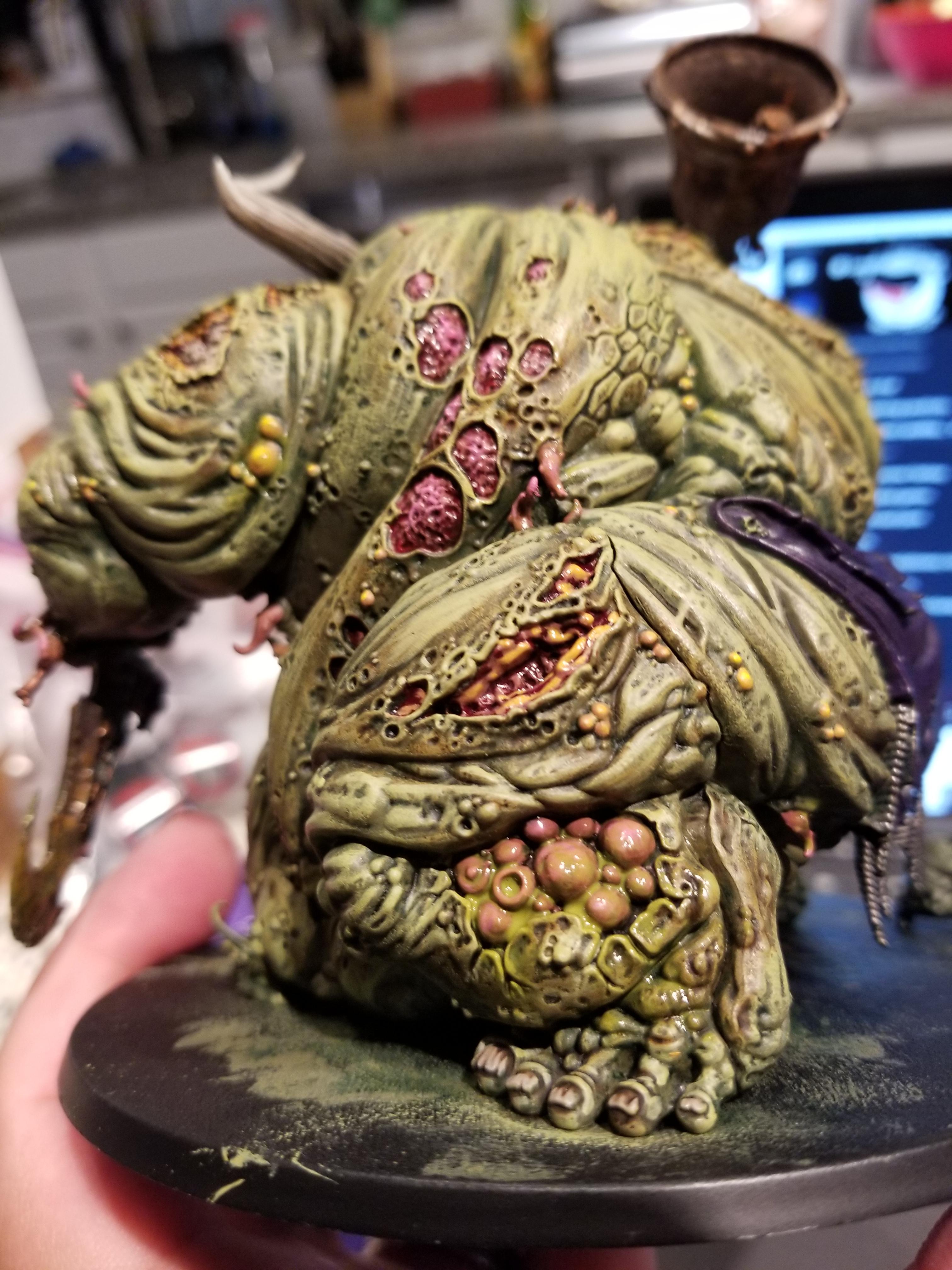 For other pustules I paint those with Bugman's Glow, then highlight them with a mix of Bugman's Glow and Emperor's Children Pink. I'm also going to hit most of these with Nurgle's Rot later, but I'll go very heavy in areas I really want the effect to stand out.
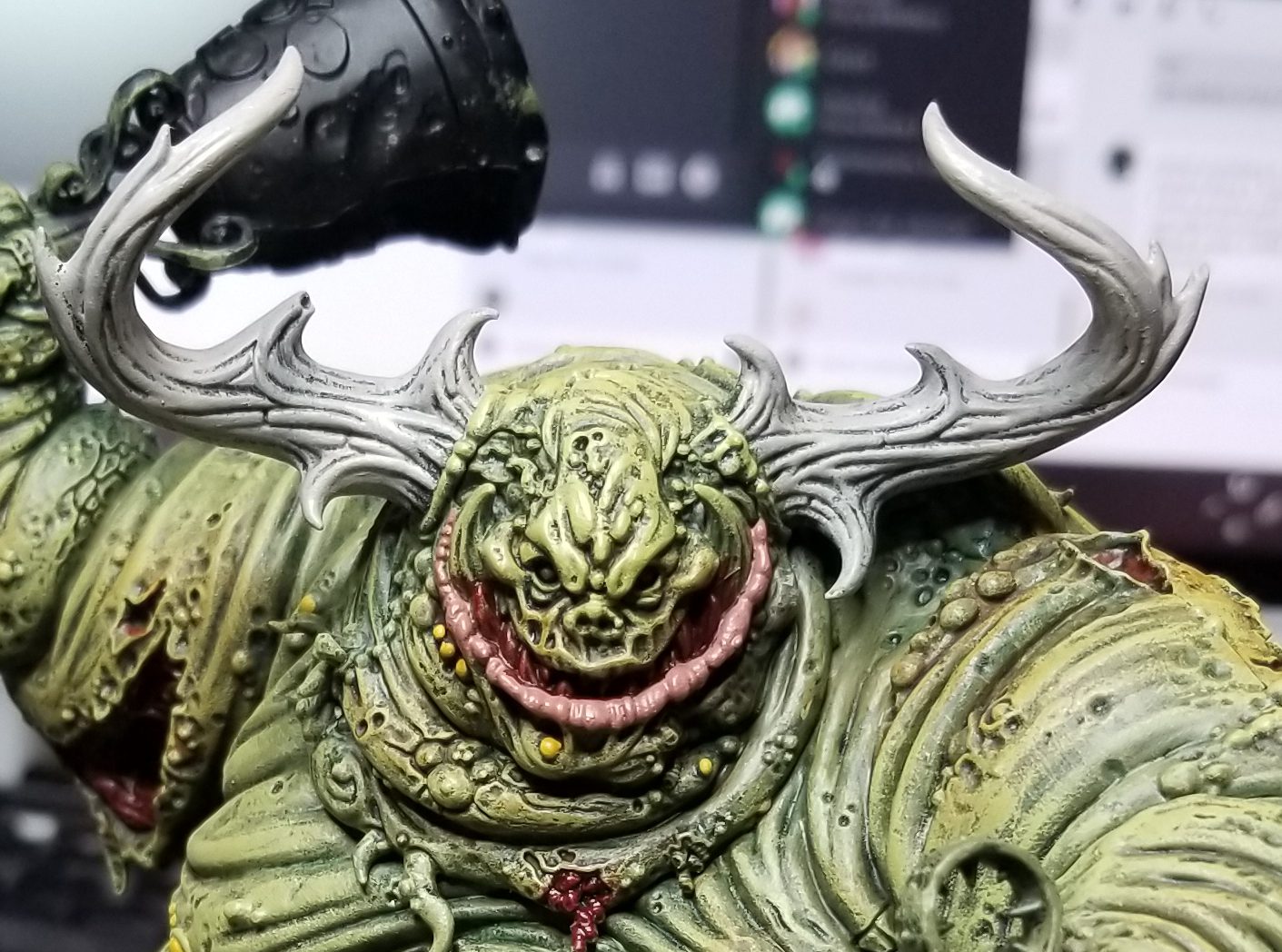
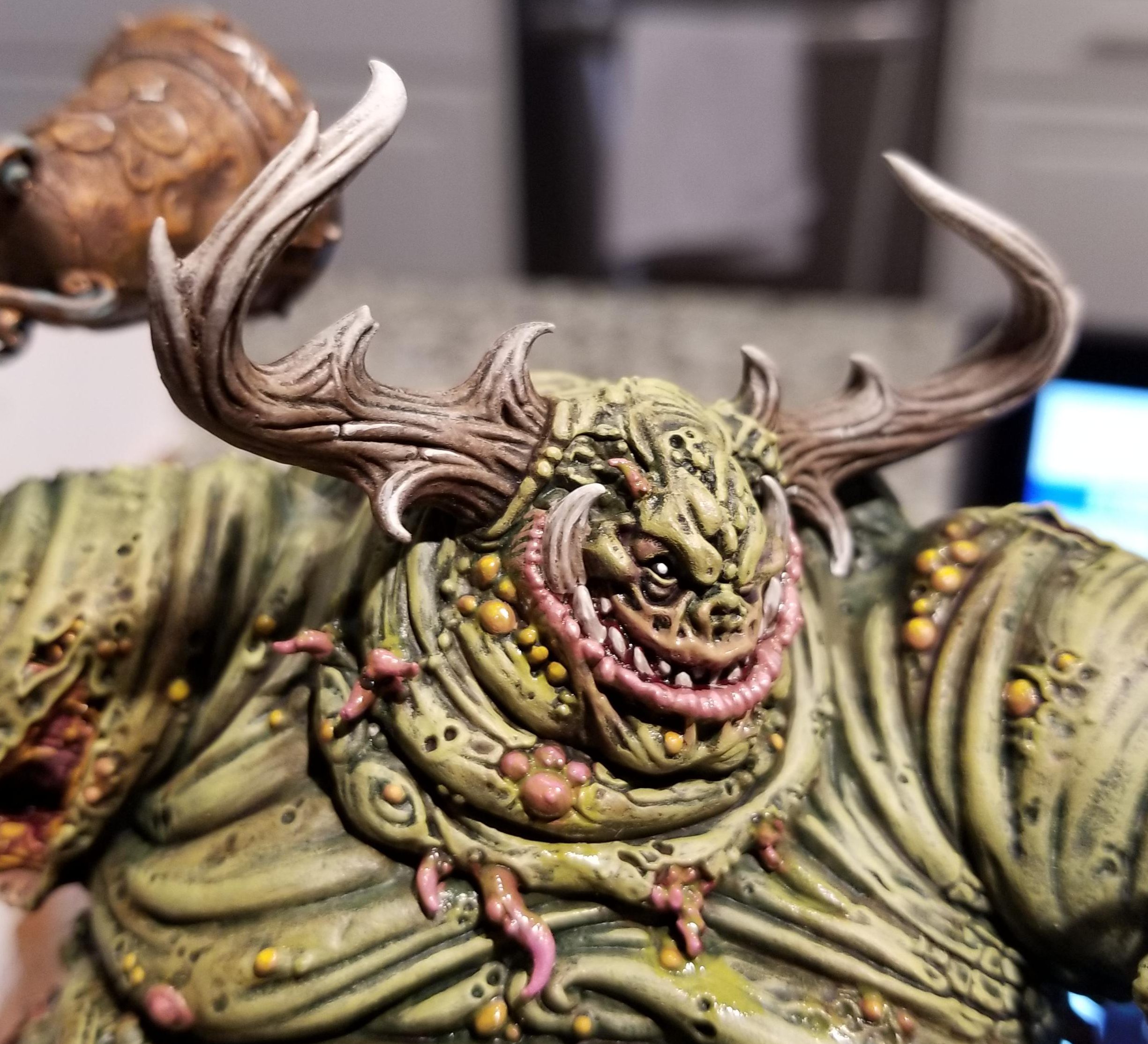
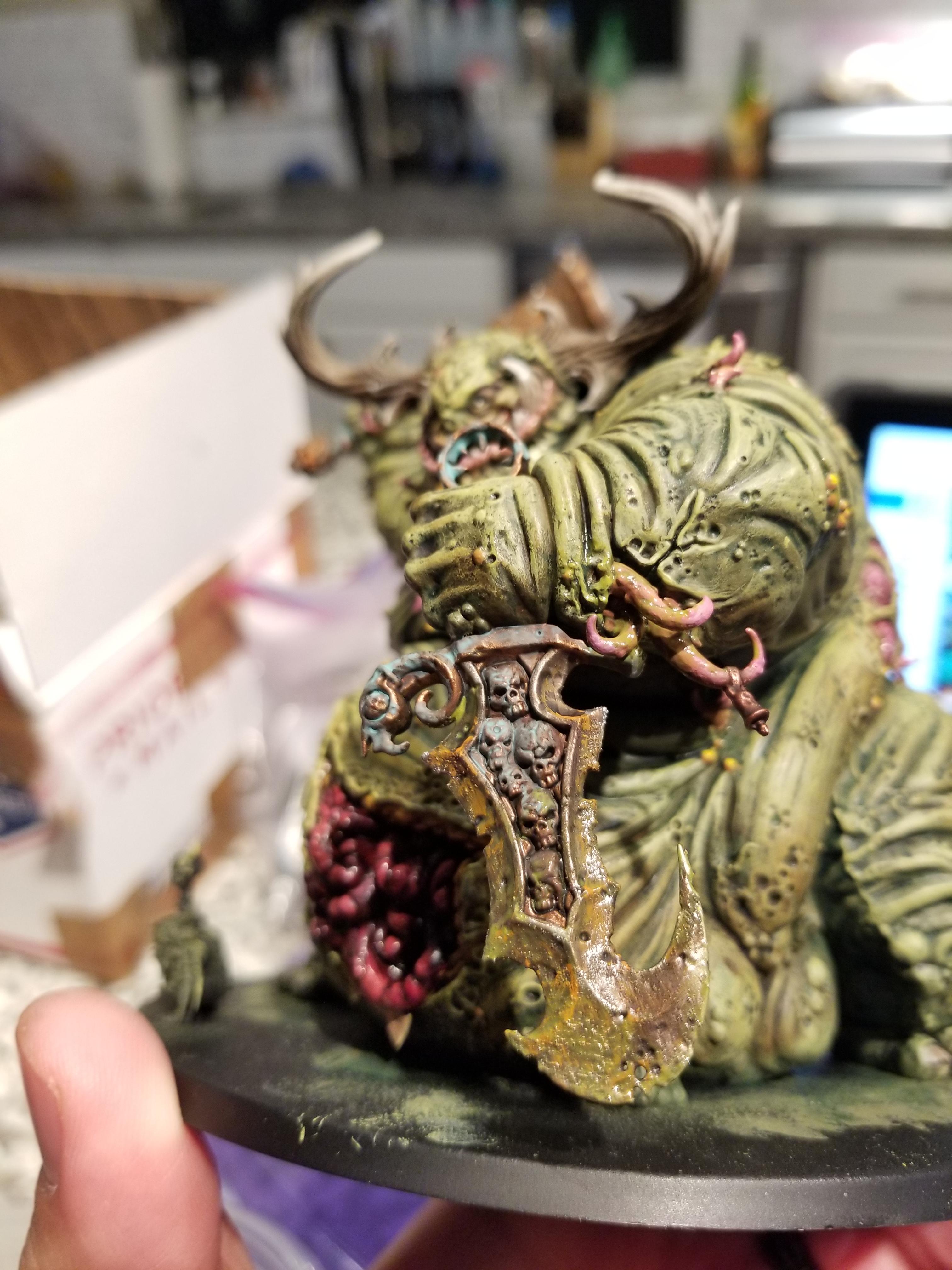
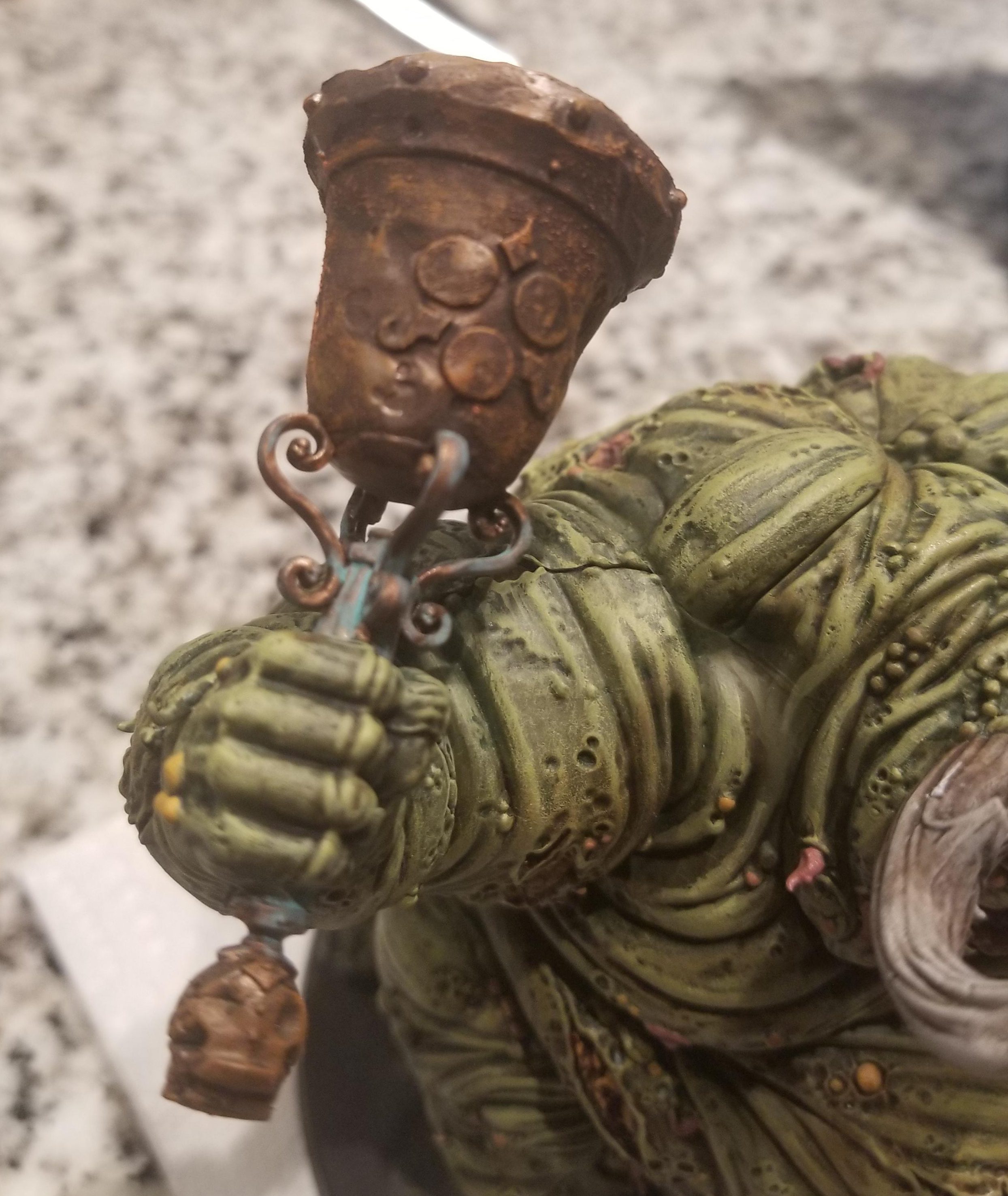
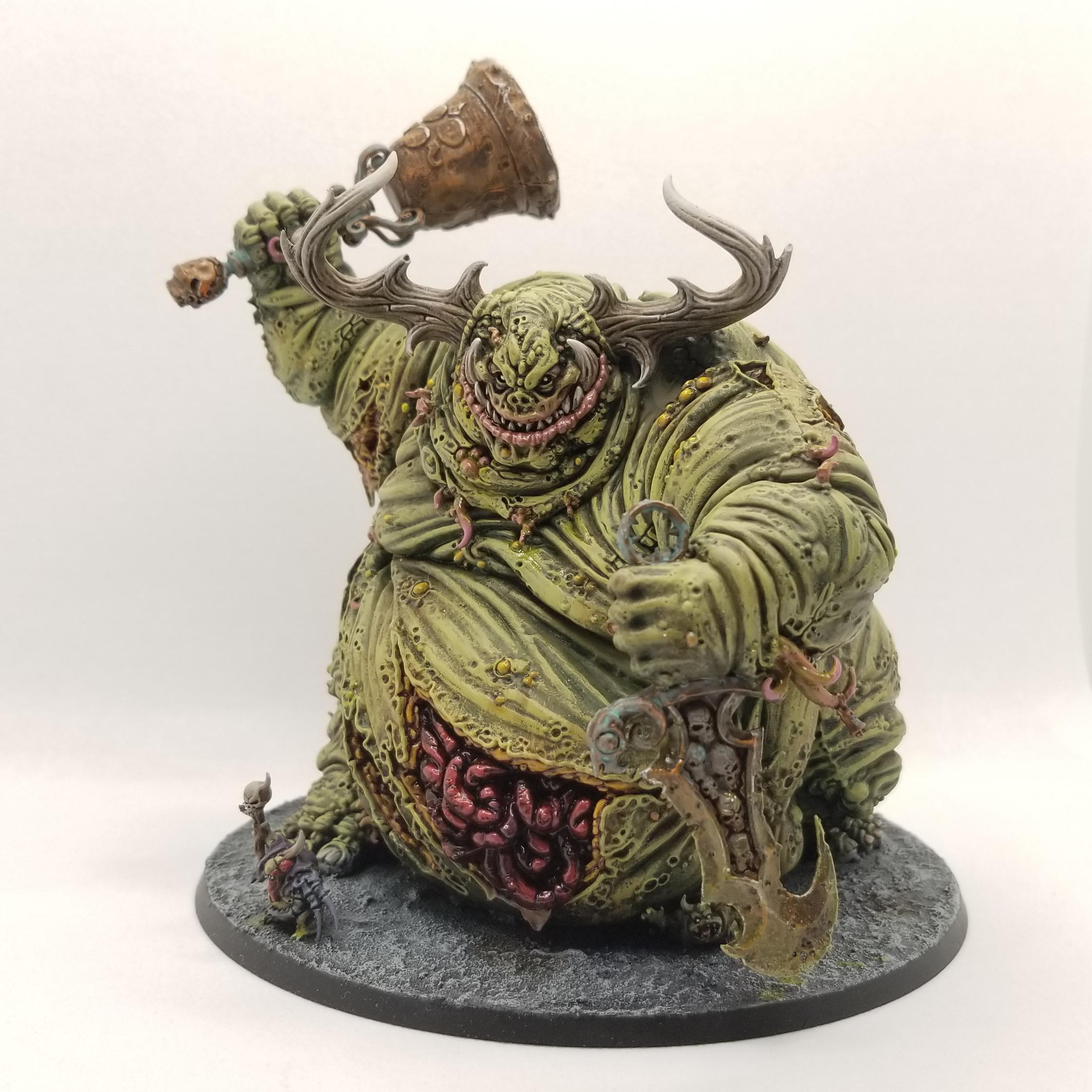
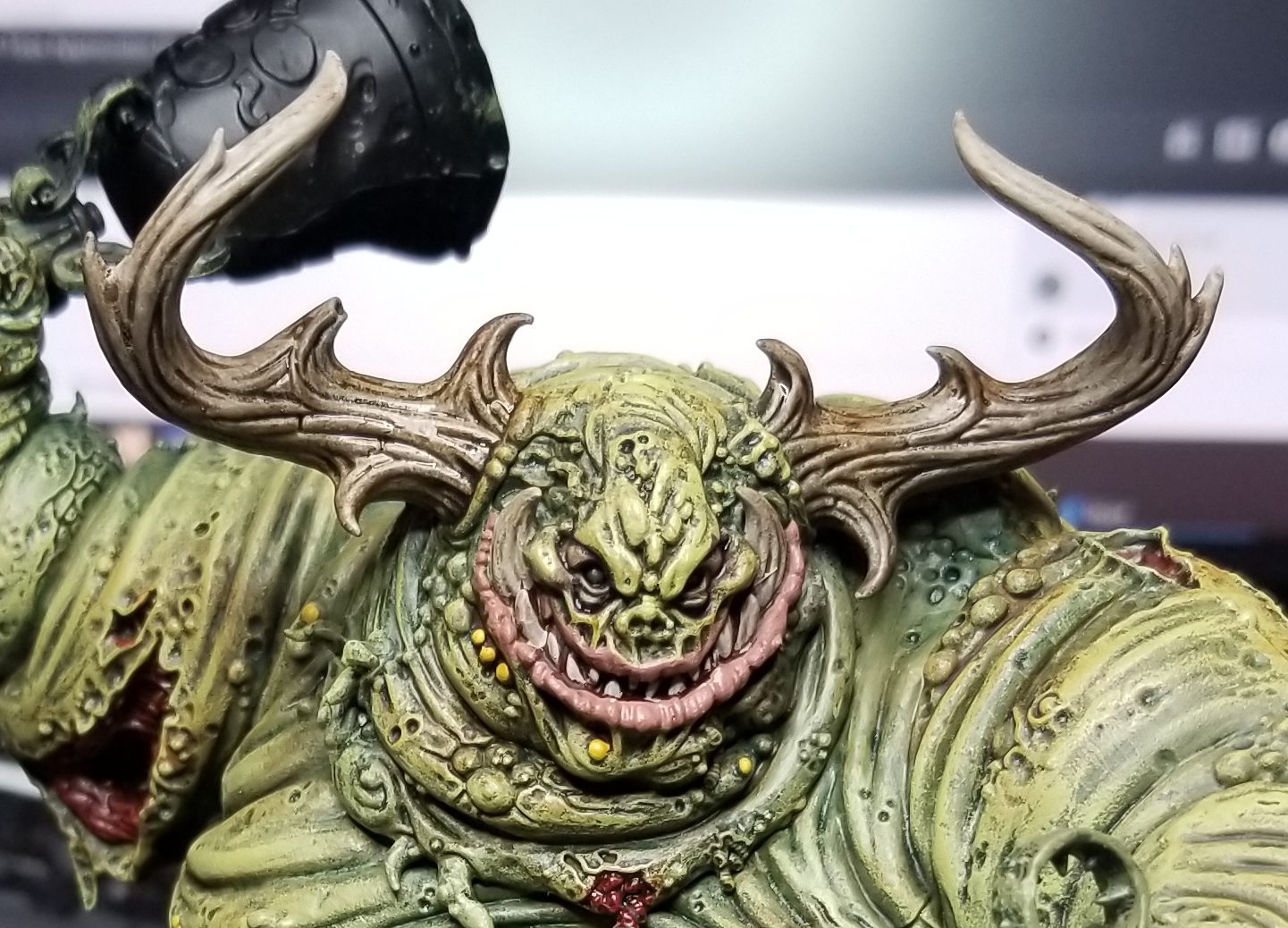 I wash all of it with Agrax Earthshade. I want the eyes to have a bit of a sunken look, so I wash them with a tiny amount of Duruchii Violet. The horns get a second coat of Agrax, working my way down the horns. I want them to be darker at the base than the tips. I also higlight the lower lip with a mix of Bugman's Glow and Emperor's Children pink. I have to do the same for the upper lip, but I blend that into the face by doing a mix of Emperor's Children Pink and Ogryn Camo. I also pick out some of the raised details on the face with Ogryn Camo.
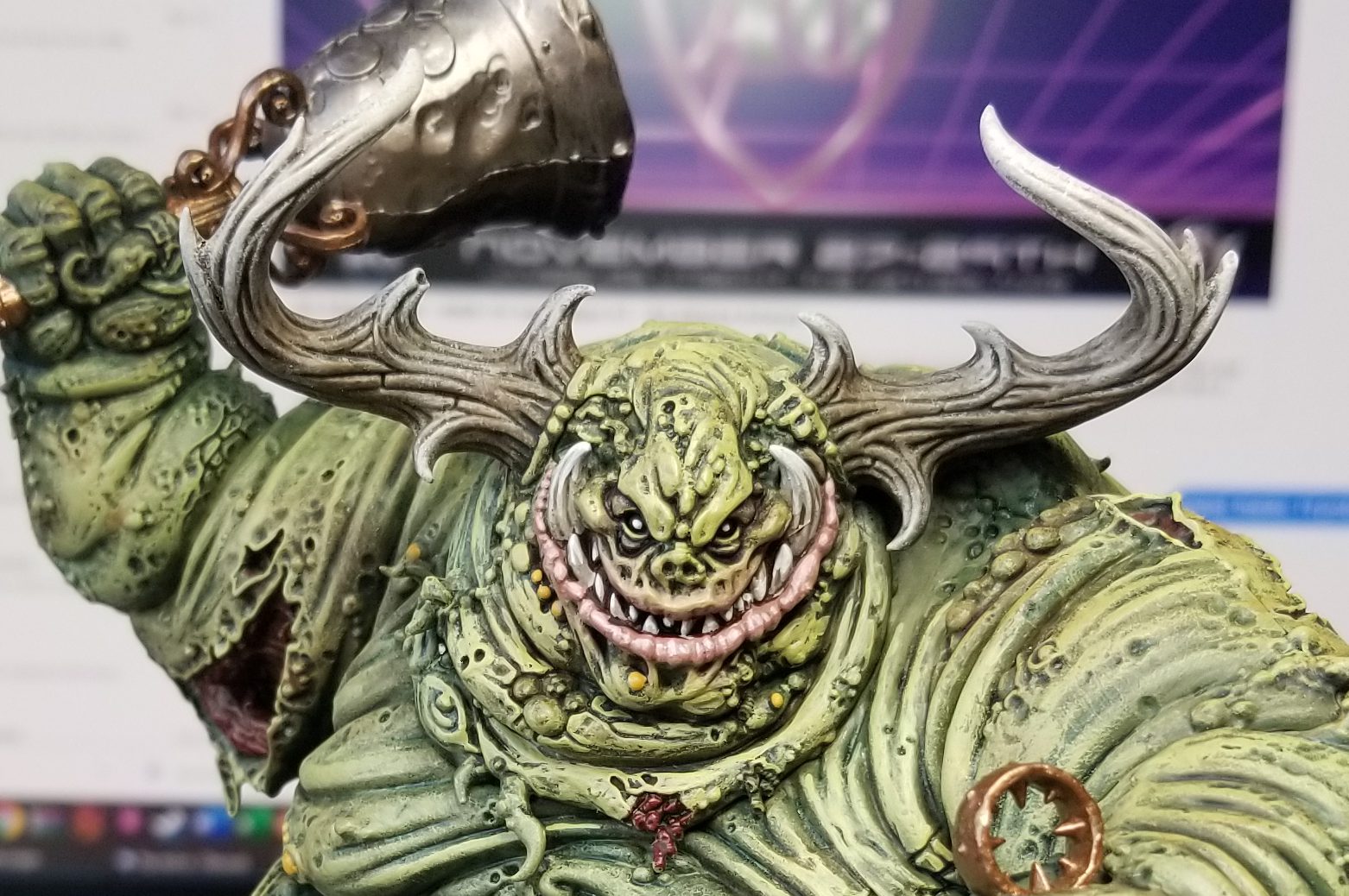
 Credit: Robert "TheChirurgeon" Jones
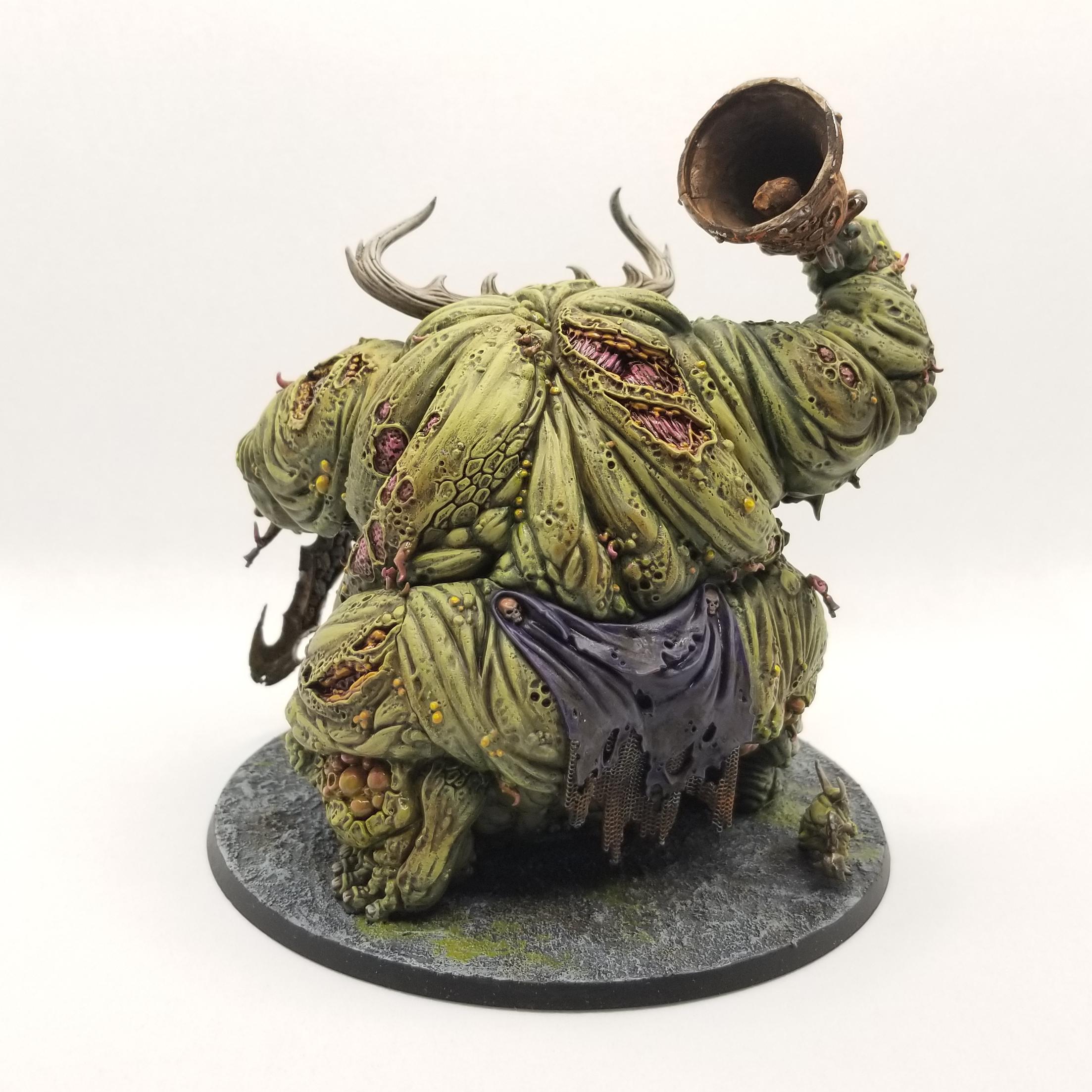 Credit: Robert "TheChirurgeon" Jones
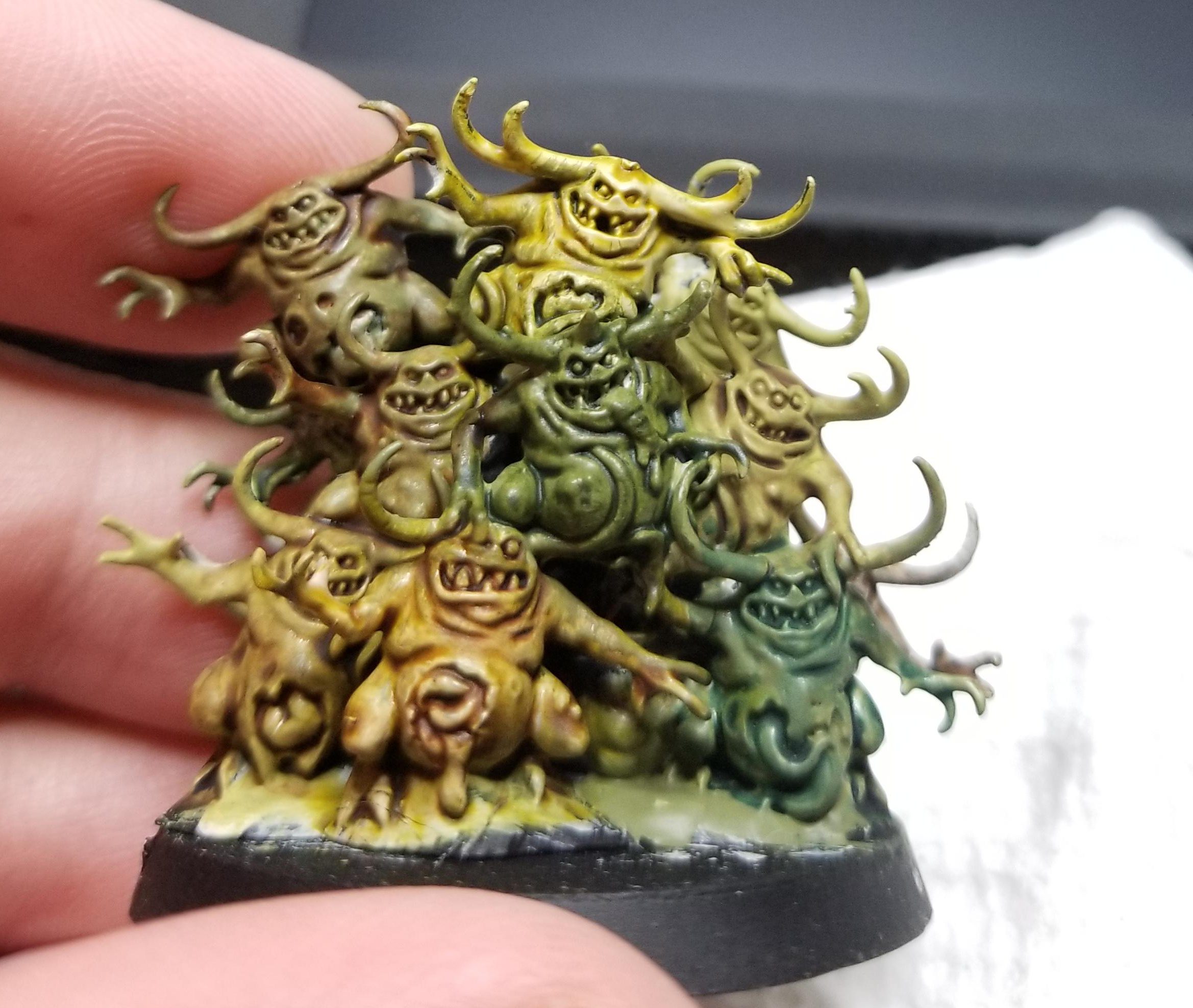
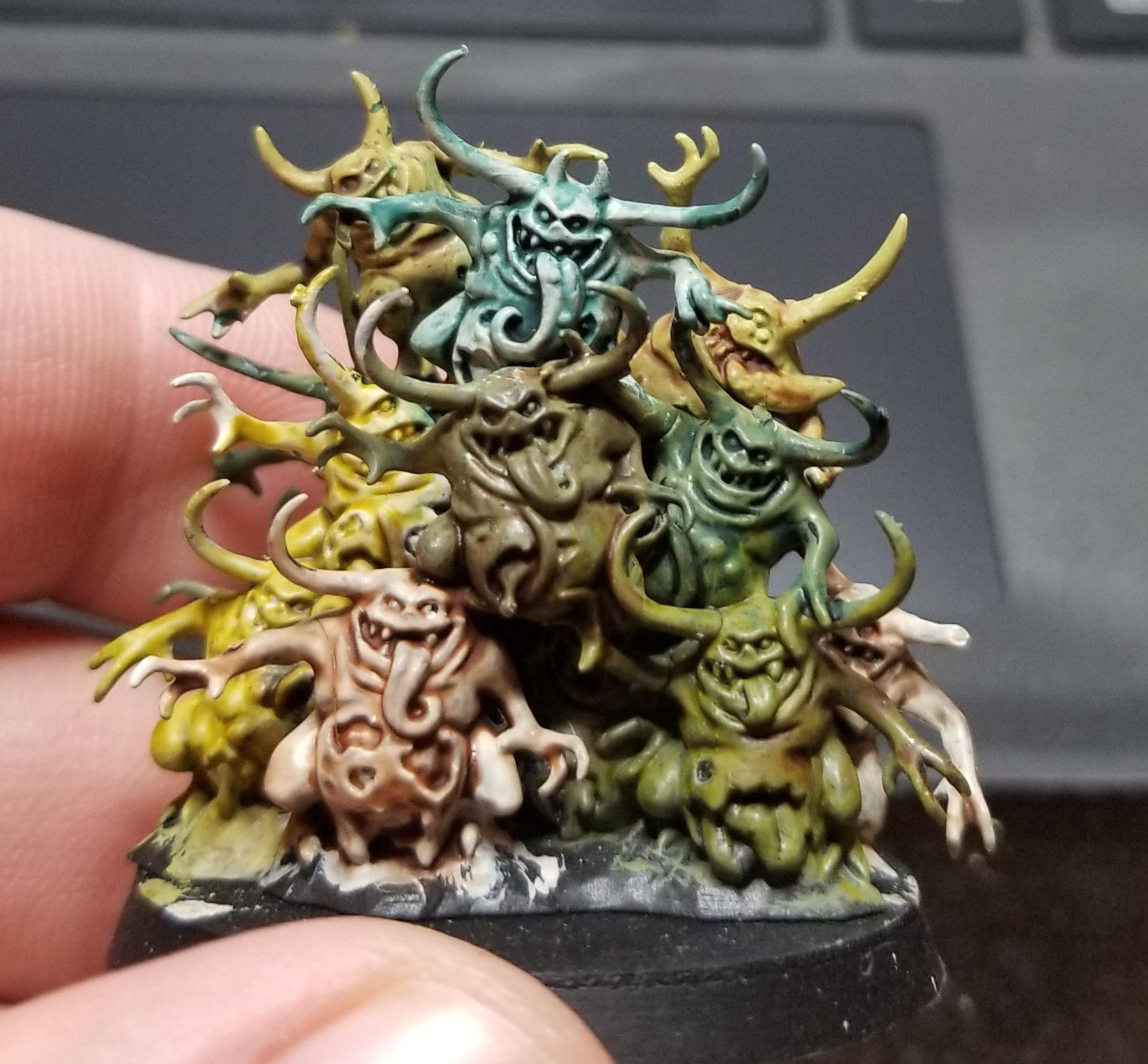
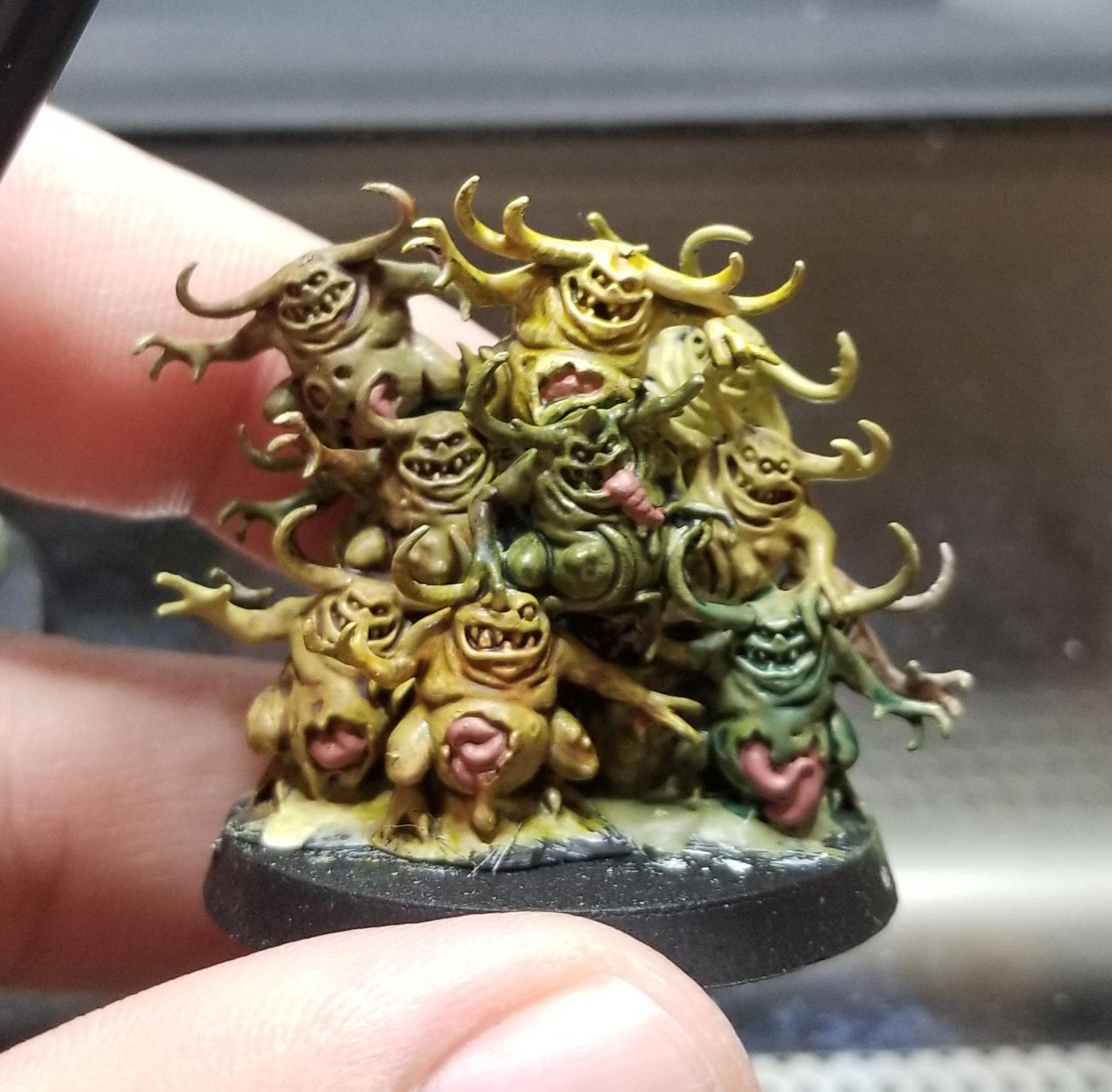
 Credit: Robert "TheChirurgeon" Jones

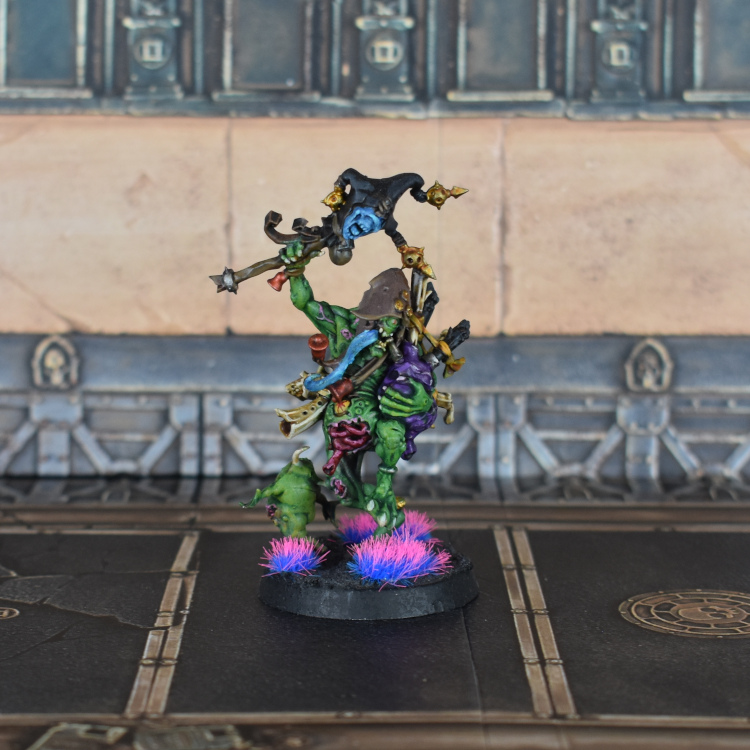 Sloppity Bilepiper. Credit: Corrode

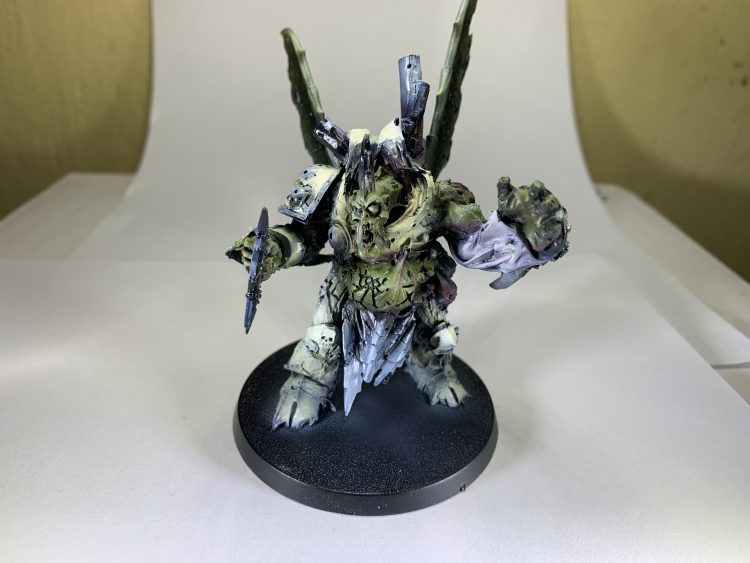 Credit: Charlie A
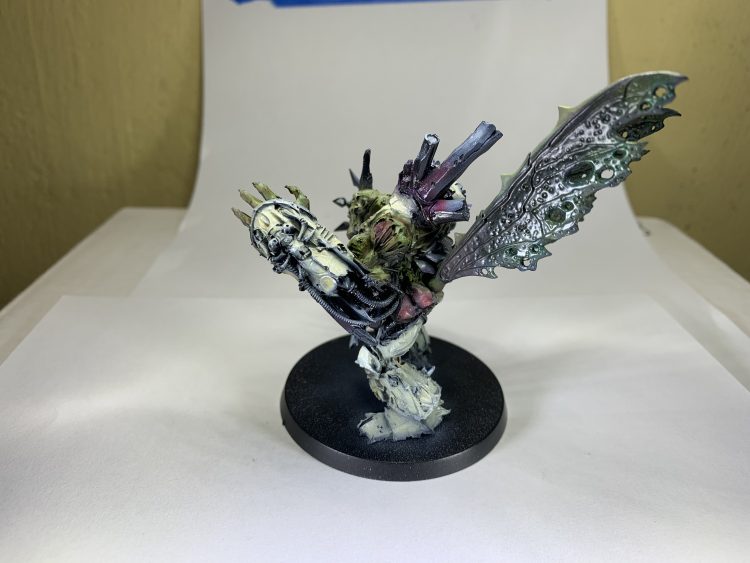 Credit: Charlie A
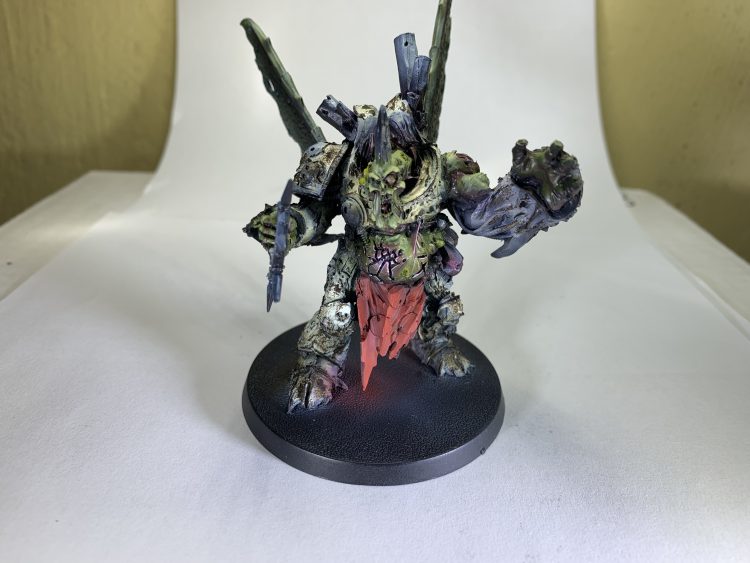 Credit: Charlie A
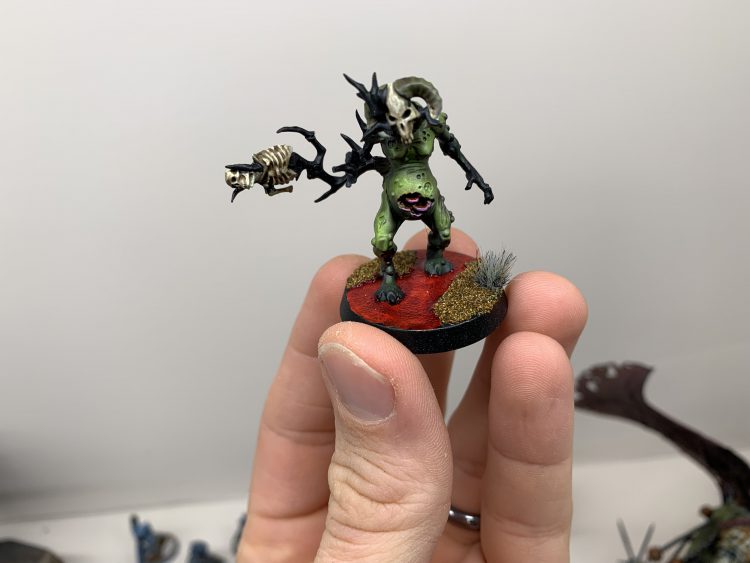 Credit: Charlie A
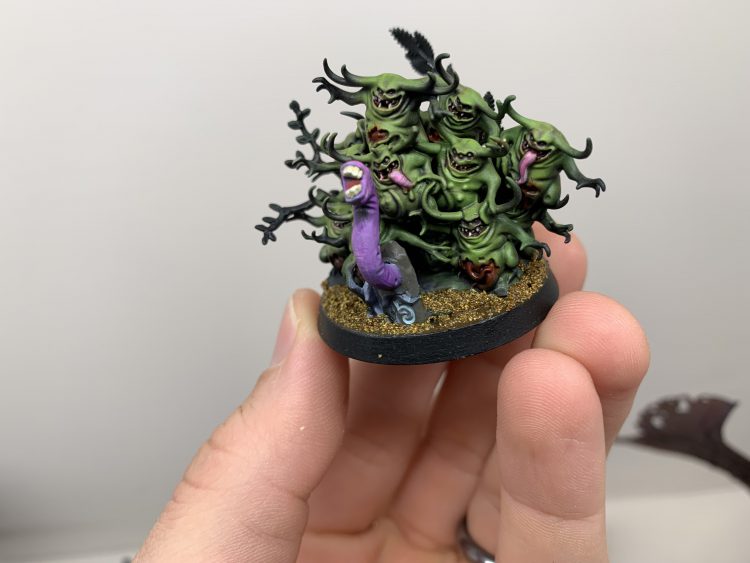 Credit: Charlie A

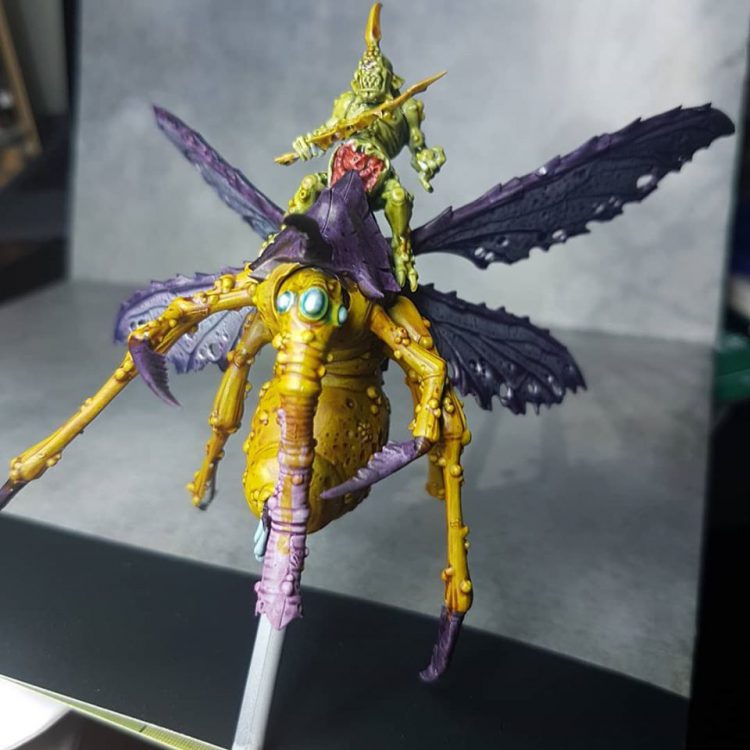 Plague Drone - Credit Beanith
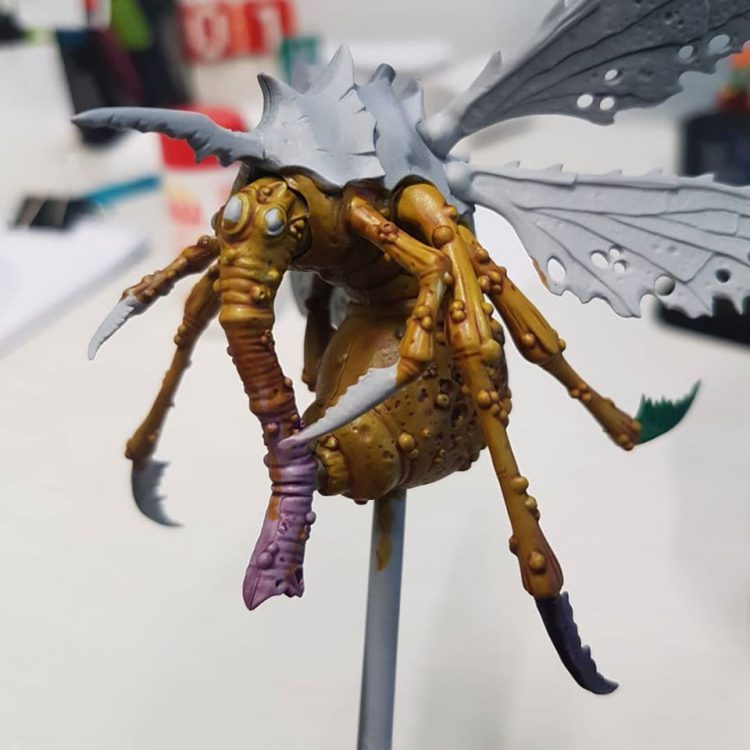 Plague Drone base coat - Credit Beanith
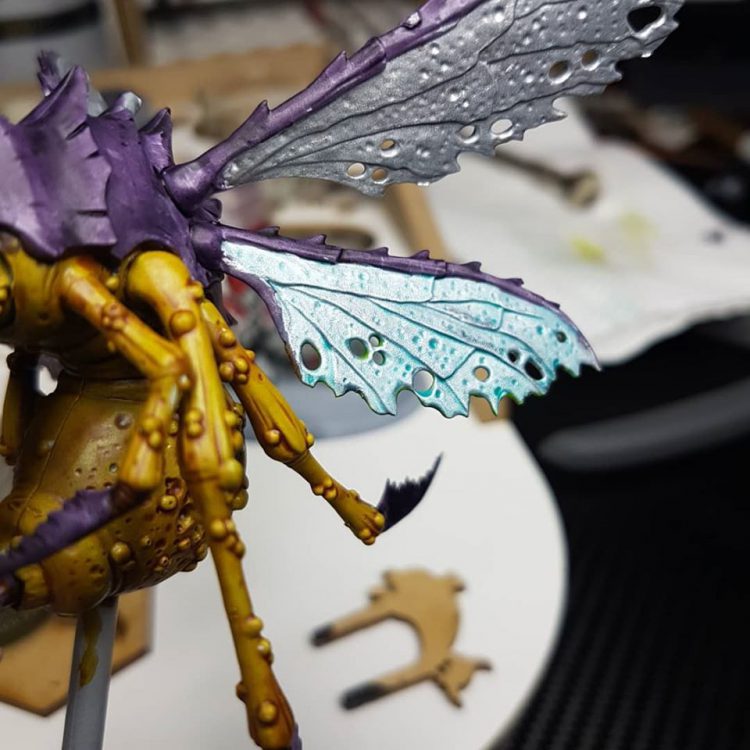 Plague Drone Wing Test - Credit Beanith
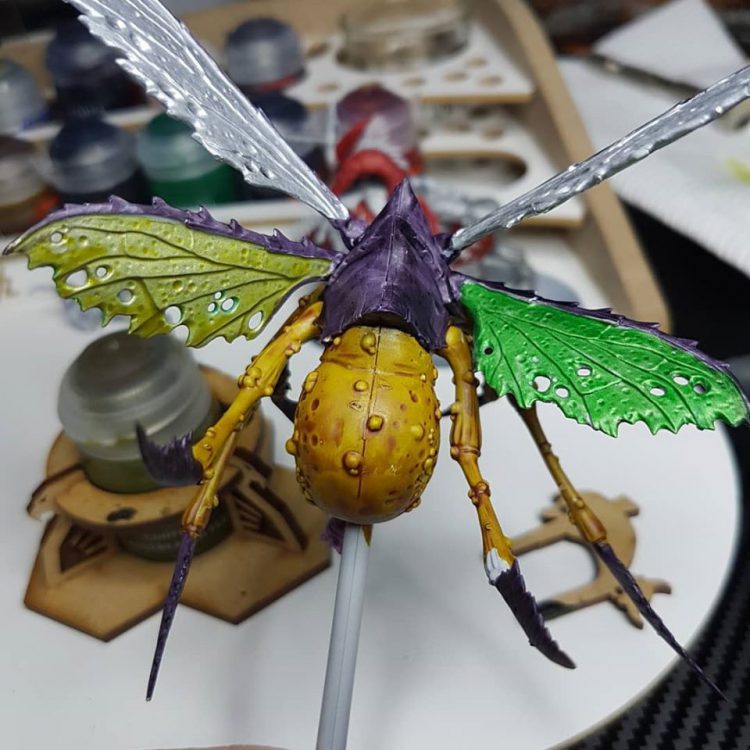 Plague Drone Wing Test 2 - Credit Beanith
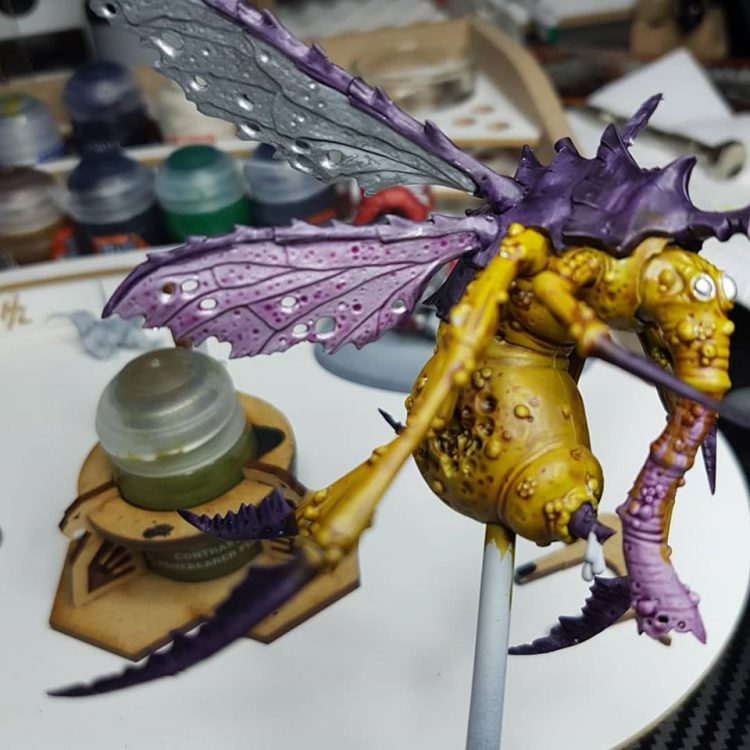 Plague Drone Wing Test 3- Credit Beanith
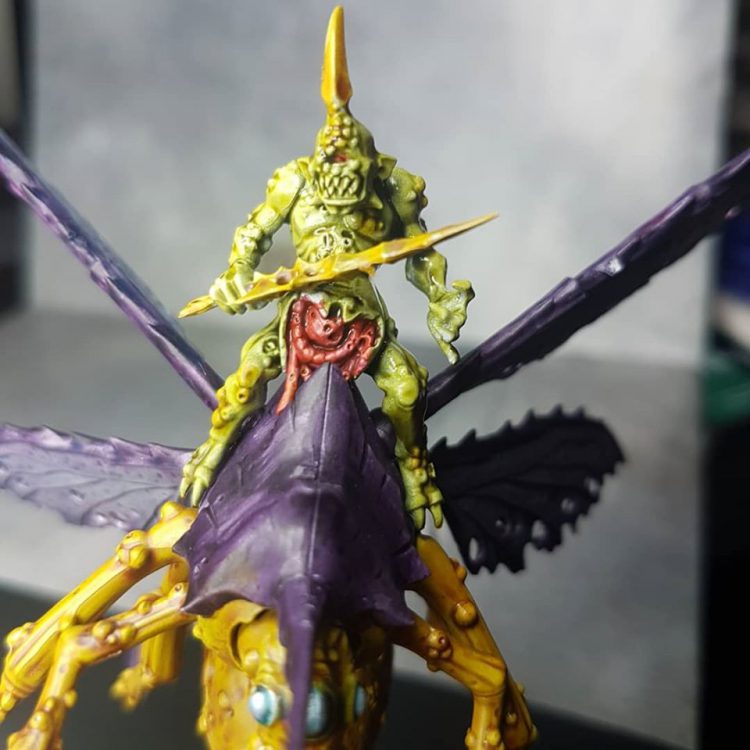 Plague Drone Plaguebearer Rider - Credit Beanith

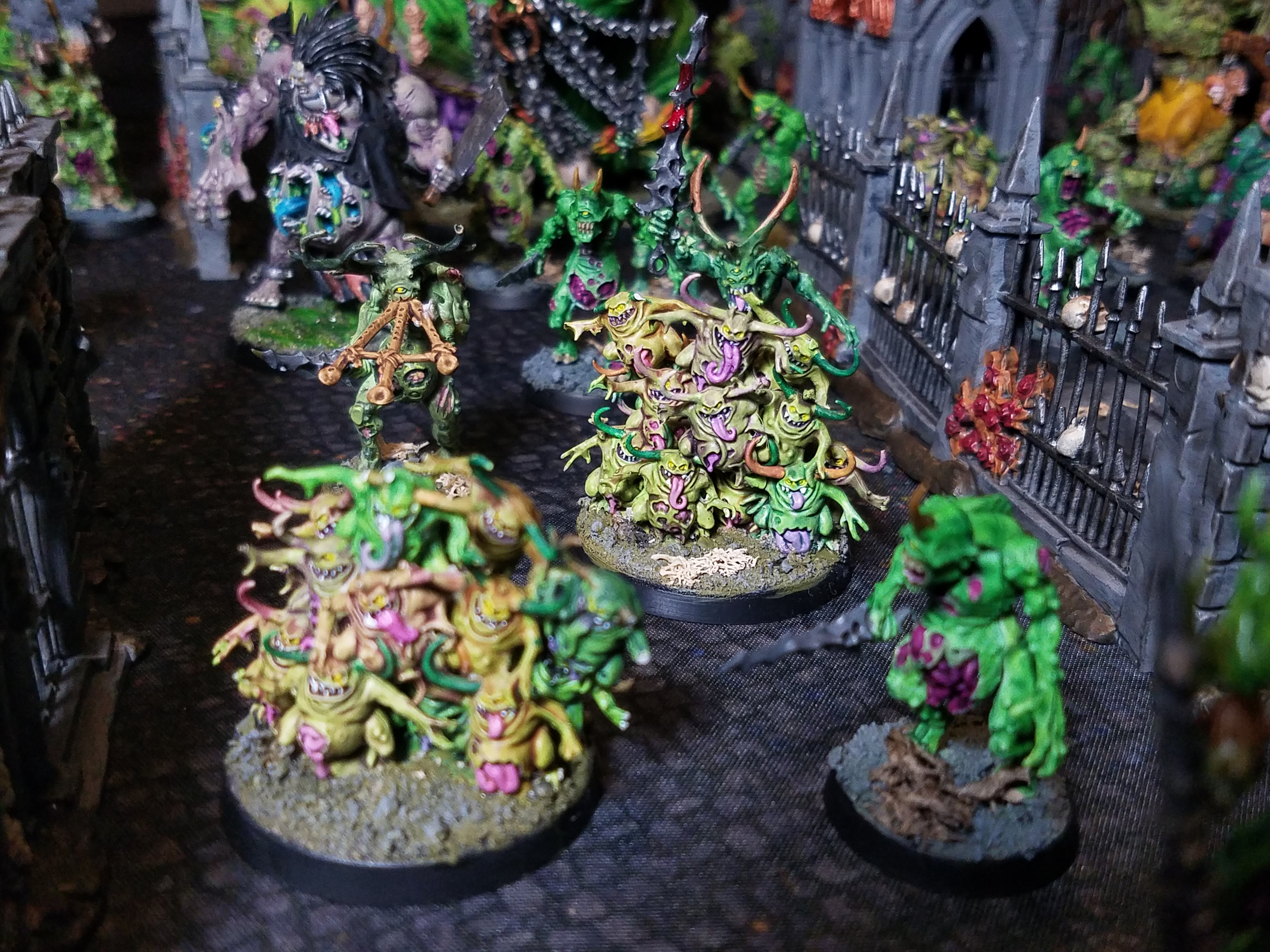 Credit: Brandon Fox
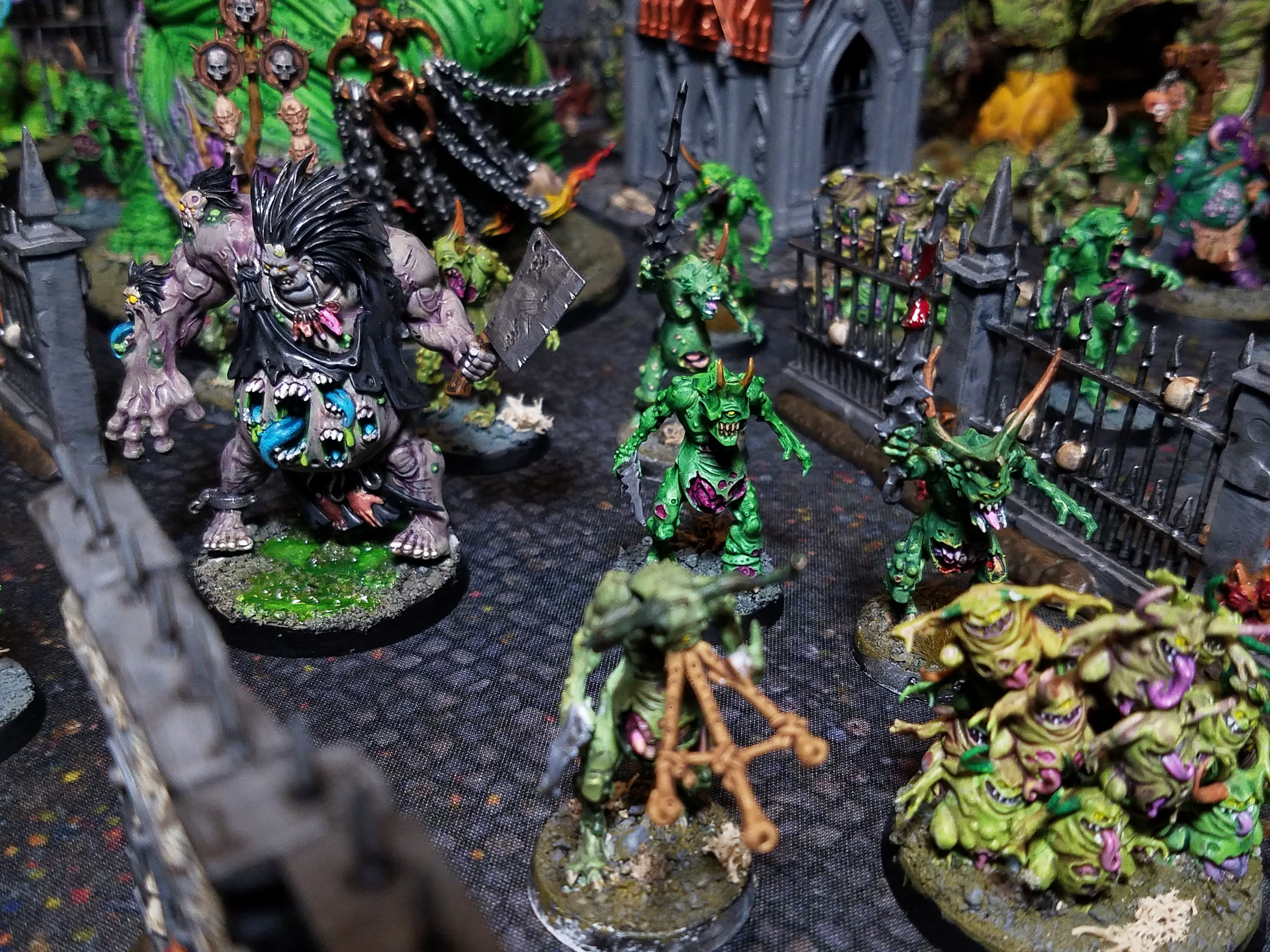 Credit; Brandon Fox
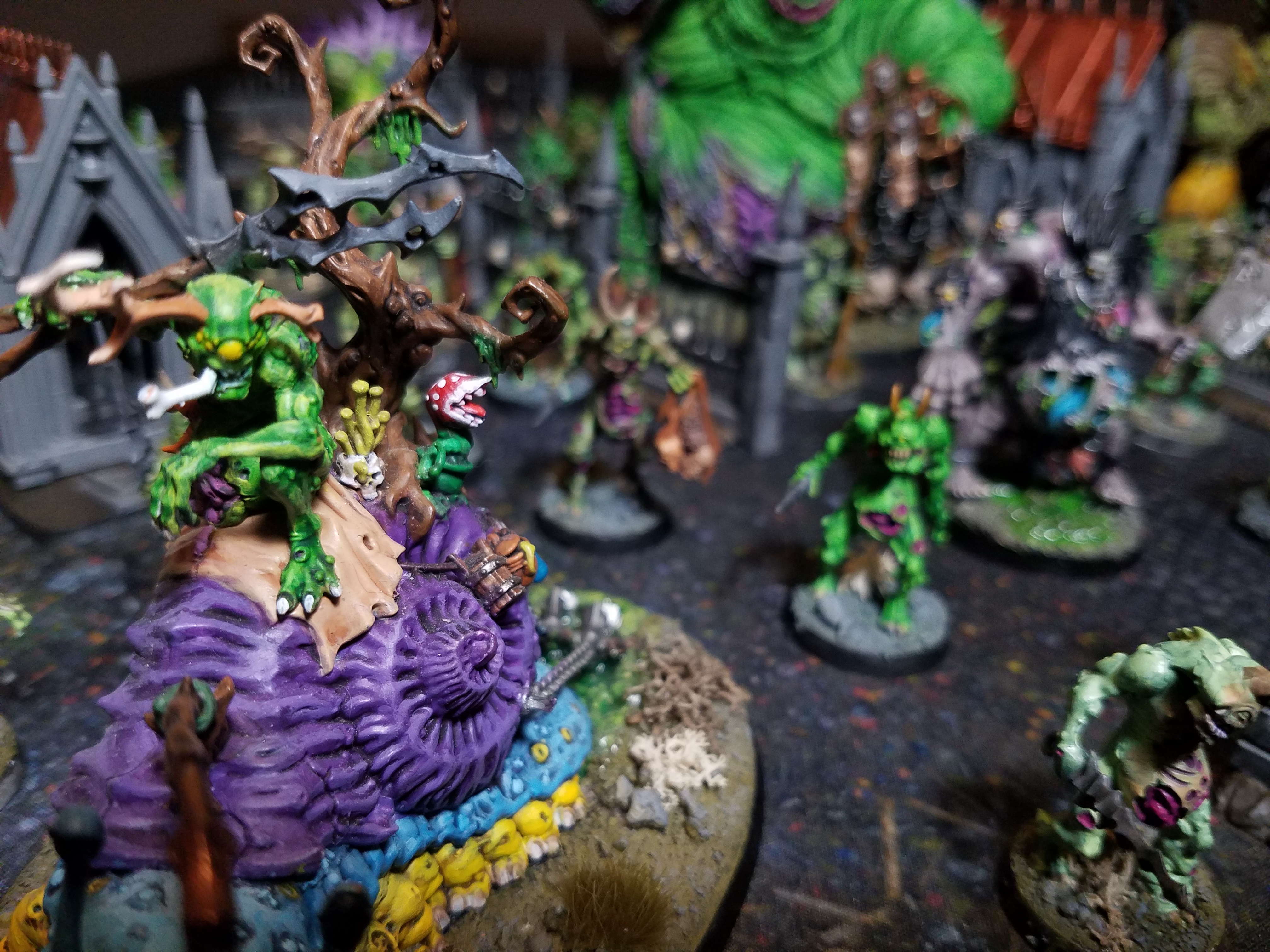 Credit: Brandon Fox
 Credit: Brandon Fox
 Credit: Brandon Fox
 Credit: Brandon Fox
 Credit; Brandon Fox

 Goonhammer App and Patron Updates: April, 2026
 Kill Team Tournament Report: Engage, Party, Repeat's March Madness 2026
 Goonhammer Reviews: Tribal Conquest