This week's Hammer of Math takes a look at 50% of the scoring within an Arks of Omen Grand Tournament game; the secondary objectives.
One of the biggest challenges for new players within competitive 40k is grasping the sheer number of variables involved, and no example of that is more prevalent than in the secondary objective system. In a typical 2,000-point game with a 100 possible victory points, players will be fighting over 5 to 6 objective markers that drive 45 points' worth of primary objective scoring. Taking away the 10 points that are awarded for slapping three colors on your models, that leaves the remaining 45 points for the three secondary objectives each player selects (with a cap of 15 point per secondary). Understanding those secondary objectives and how they drive army composition and strategy is essential to competitive play. Often the most successful armies in a given season are the ones that either have a reliable way to maximize their secondary points, are so egregiously lethal that they can wipe out their opponent, or sometimes both.
Arks of Omen restricts secondary objectives to only the 96 available in the Chapter Approved Book. Every faction has access to the eleven generic secondaries, and most also have three faction-specific objectives. The exception are those factions with the ADEPTUS ASTARTES and TRAITORIS ASTARTES keywords. They gain access to three Astartes level faction secondaries (which are different for loyalists and traitors), as well an individual secondary specific to their Chapter or Legion. Note that this mess does not apply to Grey Knights (who have the SANCTIS ASTARTES keyword), nor the three Chaos Chapters who have their own book (Death Guard, World Eaters, and Thousand Sons), who have the HERETIC ASTARTES keyword but not the TRAITORIS ASTARTES. Yes, it gave me a headache the first time I read it too.
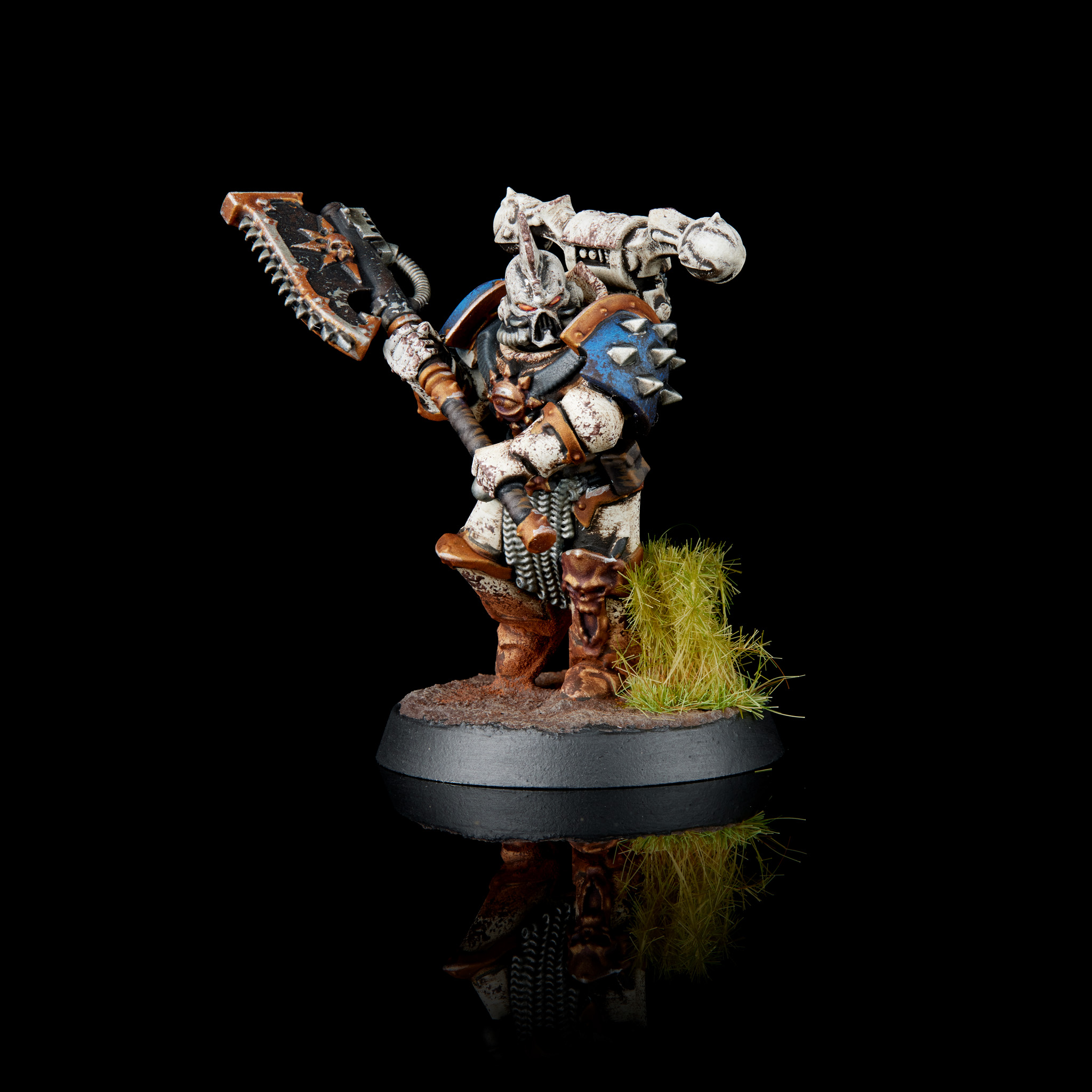
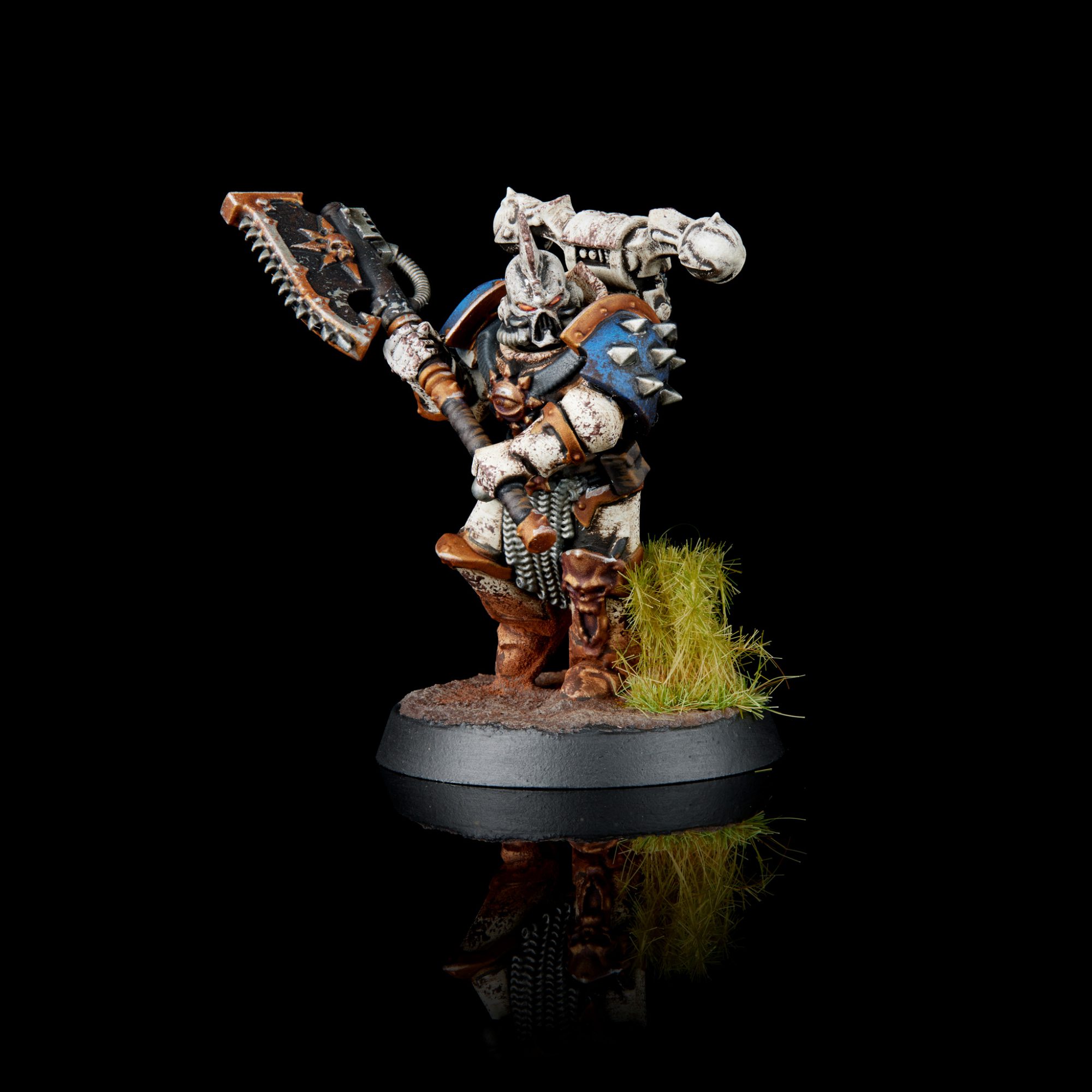 World Eaters Butcher. Credit: Jack Hunter
The Data
I took the liberty of reading all 96 secondary objectives and tabulating them below. The rest of this article will be discussing some findings from the table; I welcome the reader to grab a copy for themselves and see if they find anything of note to add to the comments below (or to tell me where I made a mistake).
- Category: The type of secondary objective (Shadow Operations, Warpcraft, etc).
- Faction: The faction which can use the secondary. "All" can be used by everyone. Note that Space Marines and Chaos Space Marines get access to their chapter specific secondary as well as ADEPTUS ASTARTES and TRAITORIS ASTARIS respectively.
- Name: The secondary name. Self explanatory. I hope.
- Goal: The primary goal of the secondary objective. Can be Kill, Action, Position, Objective, Multiple, or Other.
- Theoretical Maximum VP: The absolute theoretical max that a particular secondary can achieve, ignoring that all secondary objectives are capped at 15 VP.
- Minimum Rounds to Maximize: The minimum number of rounds required for a player to achieve the maximum points possible, which is either 15 VP or less if the secondary specifies a lower level.
- Player Army Influence: If the army composition of the player's army influences the viability of the secondary. For example needing a Troop unit to get a better chance of succeeding at Retrieve Battlefield Data.
- Enemy Army Influence: If the enemy army composition influences the viability of the secondary. For example needing PSYKER targets for Abhor the Witch or World Eaters getting bonus VP if they kill certain units for Blood for the Blood God.
[table id=80 /]
 Credit: Greg "Greggles" Hess
Distribution of Secondary Categories
Secondary Objectives are divided into five categories, and none of the three secondary objectives that a player selects for their army can be from the same category. Of the 96 secondaries in the book, 27% are under No Mercy, No Respite which is heavily focused on kills. 25% are Shadow Operations, which is evenly divided between secondaries that focus on specific actions and those that focus on objective markers. 23% fall under the Battlefield Supremacy category. These objectives are equally divided by focuses on unit positioning and objective markers. 18% are Purge the Enemy, which is purely about enemies killed. The remaining 7% are Warpcraft. Warpcraft secondaries are primarily psychic action-based.
Influence of Army Composition
It's important to understand the level of agency that a player has over secondaries, particularly with respect to army composition. 45% of the universal secondaries (meaning those available to all factions) include an element that is driven by the composition of the defending army, particularly in terms of the more popular ones like
Assassinate,
Bring It Down,
No Prisoners, and
Abhor the Witch. If you expand the scope to all 96 of the secondaries then then percentage that are influenced by the enemy army skyrockets to 71%. This is because there are a large number of secondaries which rely on killing more enemy units than are lost, which is naturally harder to do against armies with smaller unit counts. The easier it is for your opponent to reach the cap of 15 VP the more likely they are to take a particular secondary.
- Assassination targets CHARACTER models and rewards 3 VP per unit destroyed, plus 1 for the WARLORD. Counter this by avoiding excessive CHARACTER units, especially ones that are easily targeted. 3 CHARACTER units is enough to provide 10 VP if they're all killed and it includes the WARLORD.
- Bring It Down rewards killing MONSTER and VEHICLE units based on the Wounds characteristic of the destroyed model. The gates are 1 VP for 9 wounds or less, 2 VP for 10-14, 3 VP for 15-19, and 4 VP for 20 or more. While an inevitable secondary for those facing Knight players, others can make this option less appealing if they're careful about what units they choose. For example, 9 Carnifexes sounds like a good target for this secondary, but they only giving up 9 VP.
- No Prisoners is designed to counter horde armies, providing 1 VP for every 10 wounds of non-VEHICLE, MONSTER, or CHARACTER units destroyed. This secondary is highly army dependent. While few opponents will bring a hundred wounds worth of chaff for you to blow through, block of Necrons or large numbers of high wound models like Terminators or Tyranid Warriors can potentially make this secondary viable. The elimination of mandatory Troops and the presence of the Arks of Omen Detachment changes quite a bit.
- Not taking any PSYKER models allows you to take Abhor the Witch and potentially gain a viable secondary depending on the enemy. On the other hand taking a PSYKER that you can protect might give you an option to use Warp Ritual or Psychic Interrogation depending on the opposition.
A significant portion (56% of all 96 and 73% of the universals) of secondaries are influenced in some way by the composition of the player's army itself. As one would expect all of the Warpcraft secondaries are based on the presence or lack of a PSYKER, but several other secondaries include some kind of bonus based on other units. The default secondaries of
Assassination,
Grind them Down, and
Behind Enemy Lines all provide a bonus CP if a Troop, Armiger, or War Dog unit is involved. Expanding the scope outside the universal secondaries we see that the majority of Action and Objective based secondaries are influenced by composition of the player's army.
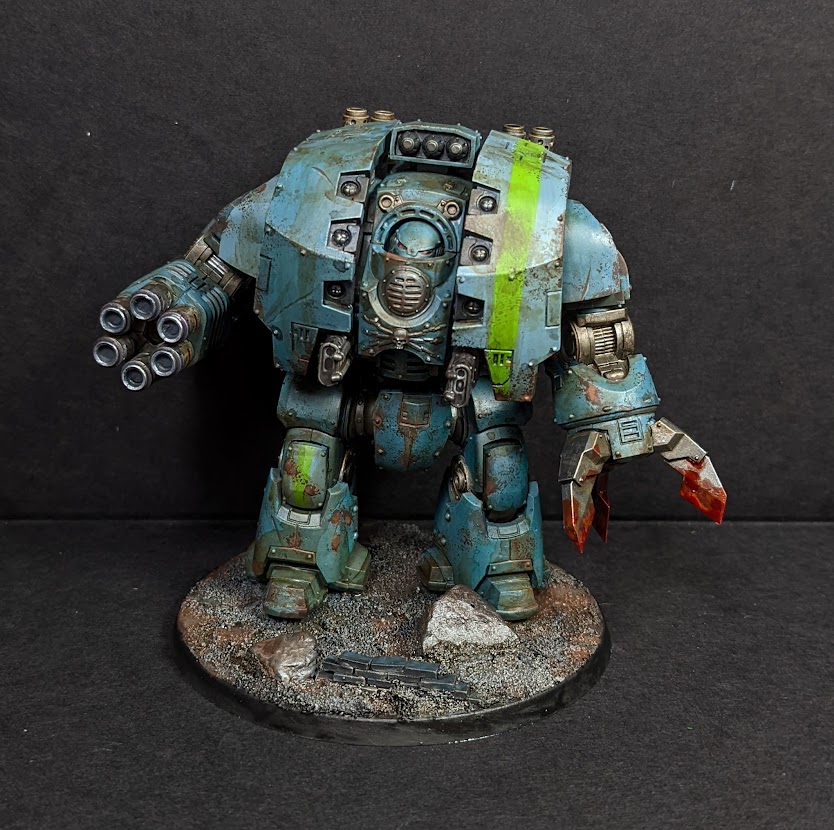 Alpha Legion Leviathan Dreadnought. Credit: Lupe
Theoretical Maximum VP
While each secondary is capped at 15 VP, secondaries which can
theoretically earn more than that can be easier to achieve. The median value for all of the secondaries that have theoretical maximum (ignoring secondaries which are based on the number of units killed) is 20 VP. That value is true for all of the secondary categories as well, with the exception of Warpcraft which has a median value of 15 VP. The secondaries with the most potential are those which have the opportunity to go off on both the player and enemy turn such as
Fleeing Vectors for Death Guard or
The Blood God's Due for World Eaters. Salamanders also have a secondary with a high ceiling with
The Promethium Creed which awards VP every turn that a unit is attacked or attacking.
On the opposite side only 10 of the 96 secondary objectives had a theoretical maximum below the 15 VP cap. Many of these were capped due to a fixed value specified within the secondary, such as the 14 VP cap of
For the Dark Gods or the 12 VP cap of
Warp Ritual. Others were limited based on the rules of the secondary, such as both
Decisive Action and
A Clean Victory for the T'au which are limited to a maximum of three rounds of scoring. None of the secondaries cap out at less than 12 VP, although the T'au ones are the most restrictive in terms of opportunity.
Catch-up Secondaries and Lost Points
In addition to the maximum possible VP a secondary can score for you, it's important to think about how those secondaries are scored and whether they can still be maxed out if you miss an opportunity. One example here is
Grind Them Down where if you fail to score it in the first battle round you can't get those points back and can now score a maximum of 12 VP for the secondary. Comparatively, if you miss scoring points for a secondary like
Raise the Banners High, you can make those points up on a later turn by planting more banners. In general, secondaries that allow you to make up lost ground are going to be better than those that create lost points.
To provide some granularity for this factor, the chart above includes the minimum number of rounds required for the player to maximize scoring. On average Purge the Enemy secondaries were the easiest and needed an average of 1.35 rounds. Shadow Operations averaged 2.58 rounds, No Mercy, No Respite averaged 3 rounds, Battlefield Supremacy averaged 3.32, and Warpcraft took the most with an average of 3.86 rounds. In terms of factions Harlequins, Asuryani, and Imperial Knights got hit the worst; their three secondaries all require 4 or 5 rounds to maximize.
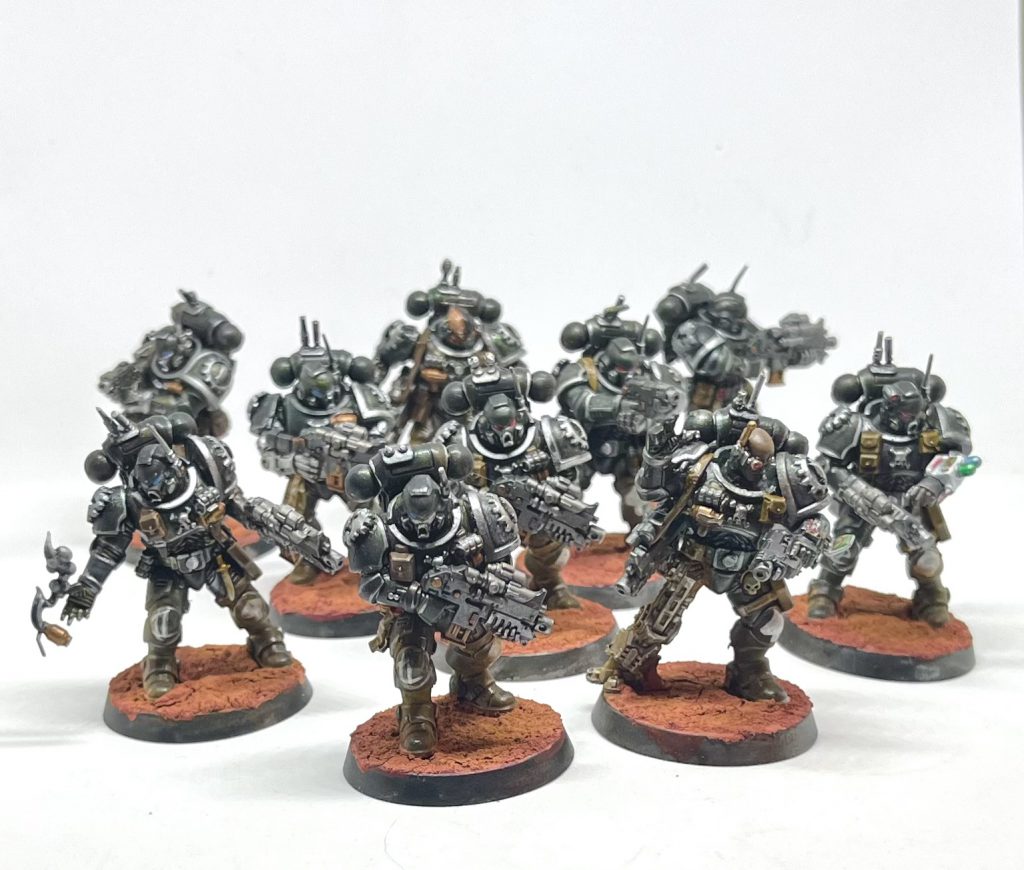 Credit: head58
Wrapping Up
There's a lot to digest here and I hope that you will find something useful in the table I put together. Perhaps it will serve as a useful reference when preparing for a game. It's interesting to see both how diverse the secondaries are, and how several feature a common mechanic with varying results (including different factions getting similar goals but different rewards). How the numbers and viability of the secondaries pan out with the realities of the updated rules and points remains to be seen.
If you have any questions or comments feel free to drop us a note in the Comments below or email us at contact@goonhammer.com. That’s also the best way to suggest topics for future articles.
Thank you for being a friend.
 This website uses cookies. Learn more.
 Hammer of Math: Arks of Omen Secondary Objectives
 World Eaters Butcher. Credit: Jack Hunter
 Credit: head58

 Games Industry News Roundup- April 7th, 2026
 Infinity N5 First Principles: Understanding the Outcomes of Face to Face Rolls
 A Brush With Greatness, Part 1: Introductions