I really enjoyed Andy Clark’s first book in this series, Steel Tread. So much so that I volunteered to organise a vicious pit-fight amongst the Goonhammer Black Library Review Team to see who would win the right to review its sequel. I was, perhaps, mildly surprised that nobody was willing to risk life and limb for this honour. So, instead I just bought the hardcopy release of Demolisher to lock in my claim to review the book for Goonhammer. So, full disclosure: Games Workshop did not supply a review copy of this book and no humans, ab-humans (or animals) were hurt in the writing of this review.Steel Tread was a great little story about a newly promoted tank commander joining a dysfunctional crew and having to get them combat effective before they end up dead (or worse). Goonhammer reviewed the book a while back, you can read about it here.While I was excited to read Demolisher after Steel Tread, the closer the release date came for the book the more I was worried that Andy Clark was stuck between a rock and a hard place with a sequel.What I liked about Steel Tread was how the core conflict/drama of the story was the friction between the newly introduced Tank Commander, Hadeya Etsul and her crew. This was, sorry spoilers, fairly well resolved by the end of the book. Trying to spark up a second inter-crew conflict after resolving the first one was an approach I was worried would be the Imperial equivalent of Jumping the Carcharodon Astra.So, would Andy Clark try to tell the same story again or take the risk of departing from the winning formula and try a new direction?Well, I’m happy to say that Andy has gone and threaded the needle on this dilemma. Demolisher continues to explore the conflict that happens within the armoured hull of a Leman Russ tank while war rages on the outside of it, as well. However, there’s a nice twist to the formula that keeps it fresh.
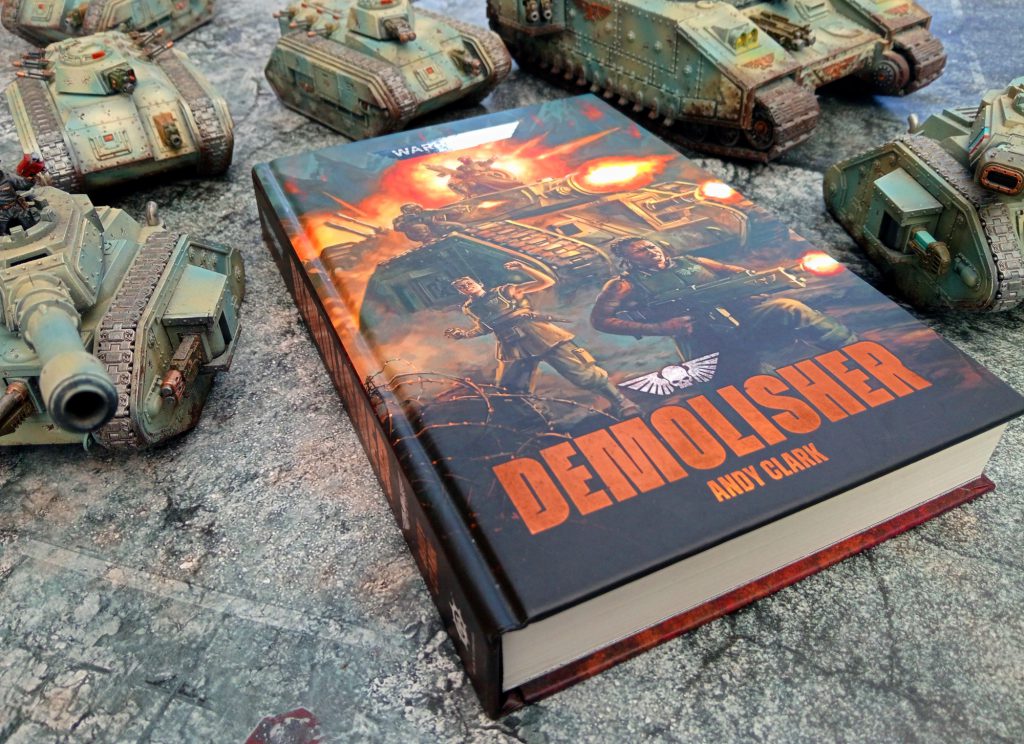
Credit: BuffaloChicken
What's It All About?
The book opens with a short prologue describing a very sneaky person doing very sneaky things in a warzone. Perhaps a spy, assassin or perhaps even a saboteur? This brief section ends with a line that makes it clear that the book is starting with some of the players already in motion:“’We move ahead,’ agreed Yadash. ‘Get back to camp when you’re done here. Tell Odassi to be ready. We’ve almost got her, Cabe. Finally.’We call this foreshadowing. It’s good business, you’re starting the book with some intrigue, and setting up conflict for later. The book then starts proper by re-introducing us to our heroine, Hadeya Etsul (sidenote: I’ve never liked this name, it’s always read to me like the sort of character name someone would give their first Dungeons & Dragons character. In part, this is because I don’t see the linguistic roots of the name if they exist in any sort of real-world language or naming convention. I apologise to Andy Clark if I’m wrong, however). Etsul is in the middle of a cybernetics adjustment administered by a Mechanicus Chiurgeon, again good business, we’re showing that Etsul has gained come cybernetics (arm and eye) since we last caught up with her without saying as much explicitly. Etsul uses this time to brief her various subordinate officer’s on an upcoming mission (an excuse to introduce some key characters by putting them all in the same room). The objective of Operation Helios is to escort Lord Commissar Gardiva Holskein to the Ruega front to bolster the morale of the embattled troops there. We soon learn that the Lord Commissar is not only bringing her commanding personality to the Ruega front but also her own ride, a Rogal Dorn battle tank. Heck yeah.After that, they all prepare for the mission and head out. We are also introduced to a new member of the crew, with Sgt Grieger joining the crew to replace the recently promoted Vaslav. Grieger is a bit of a jerk. This is the vehicle (ha!) through which Clark reintroduces dysfunction into the tank crew. Grieger is in charge, below Lt. Etsul (who is more concerned with the strategic concerns of Operation Helios), but is stirring up trouble with the crew, being particularly judgmental of one person’s history.The book proceeds to detail the convoy’s progression up a mountain through to Saint’s Vantage, a small outpost they plan to stop at before making the final descent to their final destination. As is proper for any book involving the Astra Militarum, things go horribly wrong. Communications are cut off, the fog of war descends and a vicious and unknown enemy assault the woefully outmatched Imperials. From there, the book details the various side-stories and perspectives to give you, the reader, an understanding of what’s actually happening while Etsul is bombarded by a series of catastrophes that demand she resolve some unpleasant dilemmas and make complex command decisions with incredibly limited information. Without risking any spoilers, I’ll just go on to note that the story plays out the various side-plots as they weave into and around the core conflict of the book before everything explodes in a messy yet exciting finale.
What's Good? What's Real Good?
I liked a lot about this book. It did a good job of engaging with my expectations coming from the previous novel without being predictable. The fog of war is well communicated here, Lt. Etsul has to make a lot of split-second decisions while people are dying around her, each with potentially catastrophic outcomes if she plays her cards wrong. The Lord Commissar, imperiously silent from the safety of her Rogal Dorn (arguably the single most powerful military asset in the convoy), judging each of Hadeya’s decisions without comment is an additional pressure on Etsul laid upon her shoulders on top of the actual war she’s fighting in the meantime.I liked the way Clark played with the reader’s expectations, taking what we assume will happen with any particular development and then spinning a new direction for the story to take. This keeps what could have been a very methodical book (Accept fetch-quest, go to assigned location. Find bad guys. Fight bad guys. Acquire McGuffin. Everyone Wins.) very fresh and exciting throughout.
What Could Have Been Different?
I find myself holding a small grudge with how utterly nonsensical it was to have a Senior Lieutenant lead a troop of tanks, as well as several elements of Armoured Infantry, mounted Scouts and support elements, all while a Lord Commissar trundles behind them and waits for someone with stripes on their shoulders to make a mistake and pull off the classic Bolt-Pistol Punchline. There’s a number of times that Etsul consults with this senior commander, who gives her absolutely nothing to work with except: ‘Get it wrong and I’ll have to execute you…’. Which does not meet any threshold for common sense but I suppose, arguably, the 40k universe (and the Imperium in particular) is characterised as having disposed of such quaint notions a long time ago. Still, it rankles me somewhat and I’m allowed to have my grievances.
Atmosphere
Demolisher does a really good job of selling the reader on the utter confusion of the battlefield, with Etsul having to make a variety of hard decisions with very limited information, communications channels falling over, units being wiped out without warning and other aspects of the fog of war. She’s a junior combat officer faced with a series of increasingly high-stakes an desperate tactical decisions and is clearly out of her depth.The main location/setting for the story is described in haunting detail. This is a militarised village that has been transformed into an eerie ghost-town. The hints of intense conflict combined with the absence of corpses (Imperial or otherwise) terrifies the Astra Militarum convoy that Etsul is leading. Clark does a good job of stirring up the tension here using haunting imagery.
Character Development
One test I like to apply to a story is whether the characters in the book have measurably changed (for the better or worse) compared to who they were at the start of the novel. Within Demolisher, I think we see some development here. Etsul start the book relatively comfortable with her crew and position in life, she gets put through the wringer over the course of the story and I think she emerges from her ordeals a changed (perhaps not improved) person. The crew dynamic also undergoes some changes, I won’t speak to exactly what happens or who survives but rest assured, it’s worth tuning in to find out.Do we learn the secret history of Moretzin’s mysterious cybernetic arm? Oh, I couldn’t possibly say…
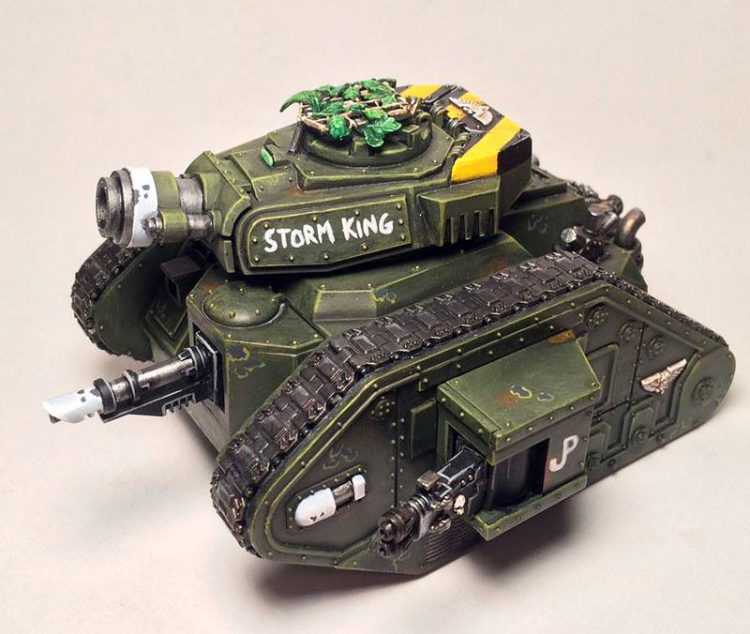
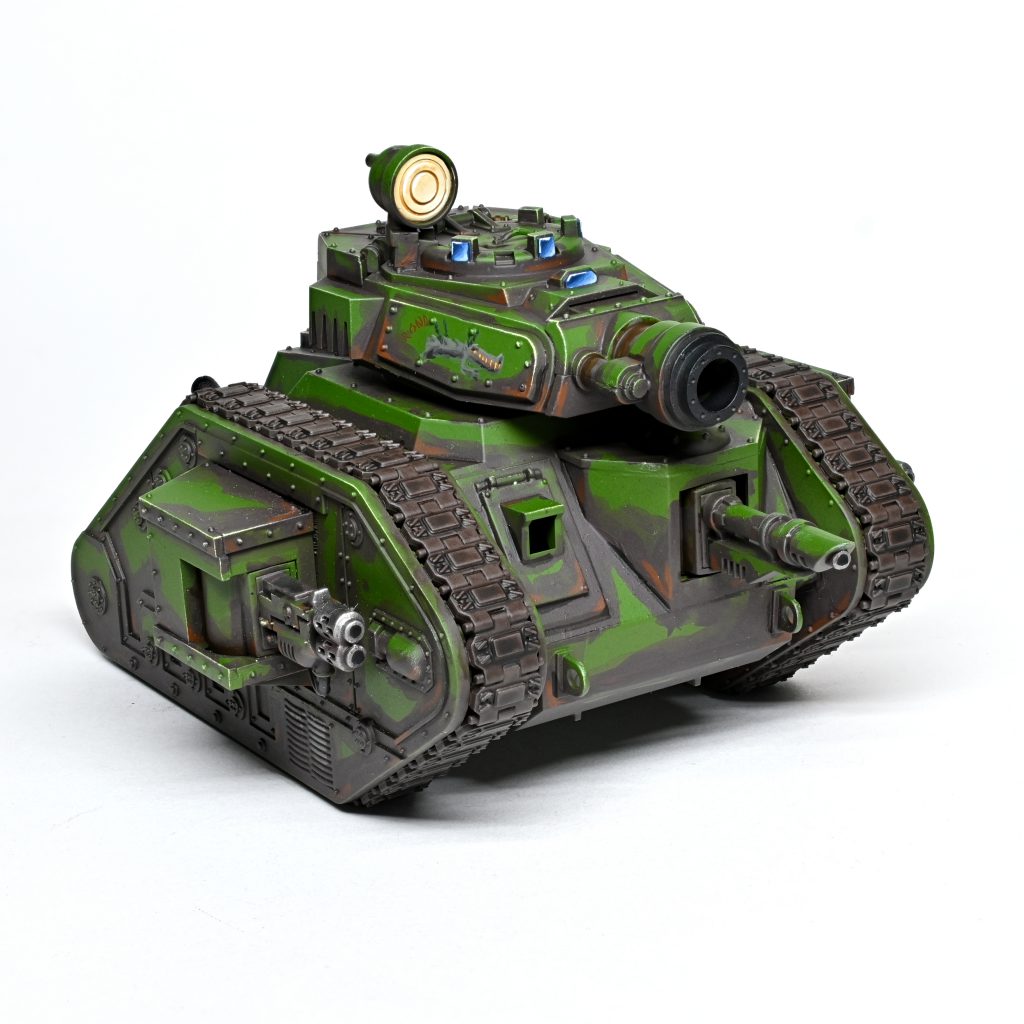
Leman Russ Demolisher. Credit: Rockfish
The Hobby Factor
As a Games Workshop novel, my absolutely milquetoast conspiracy theory (as opposed to a Spicy/Hot Take) is that these books are intended to support the wargaming line and help sell models. So, the question I always ask when I review these books is: Did I come away from this story inspired to do some hobby?In my opinion, yes. After reading the story I’ve been keen to build a Demolisher kit to support my Guard army, convert up a Tank Commander in the cupola to match Lt. Etsul, model it with the same loadout as the Steel Tread and possibly even have some of the crew scampering over the hull firing their lasguns just like on the cover of the book. Which, might I add, is an absolute banger of an art piece.The primary antagonist of the book (as ever, no spoilers!) is also really cool and well conceived. I think the canny hobbyist could absolutely start putting together some conversions inspired by the villains of this book. Who knows, maybe we’ll see the antagonist faction get some love from GW in the next year or so? Hint hint James Workshop, you know we want this.
Final Thoughts
Steel Tread is recommended but not required reading for understanding this book, there’s enough implicit and explicit characterisation and exposition that you’ll understand where each of the characters are coming from without reading the previous book.Fundamentally, if you like character-heavy stories with a generous helping of good old fashion Astra Militarum-grade grinding warfare then I think you do a lot worse than read Demolisher. It’s not high art, not a book that’s going to held up as the peak of 40k prose in the years to come but it’s so far above the average when it comes to Bolter-porn novels that I can definitively declare my enthusiasm for a third book in the Hadeya Etsul story arc. My only regret is that ‘Baneblade’ is a title that’s already been taken, so I suspect the next book in what I hope is a trilogy won’t see the resourceful and resilient Lt. Etsul upgraded to the command of a Super-Heavy. But, maybe ‘Rogal Dorn’, though?
Have any questions or feedback? Drop us a note in the comments below or email us at contact@goonhammer.com. Want articles like this linked in your inbox every Monday morning? Sign up for our newsletter. And don't forget that you can support us on Patreon for backer rewards like early video content, Administratum access, an ad-free experience on our website, and subscriber-only content covering competitive Warhammer 40K!
 This website uses cookies. Learn more.

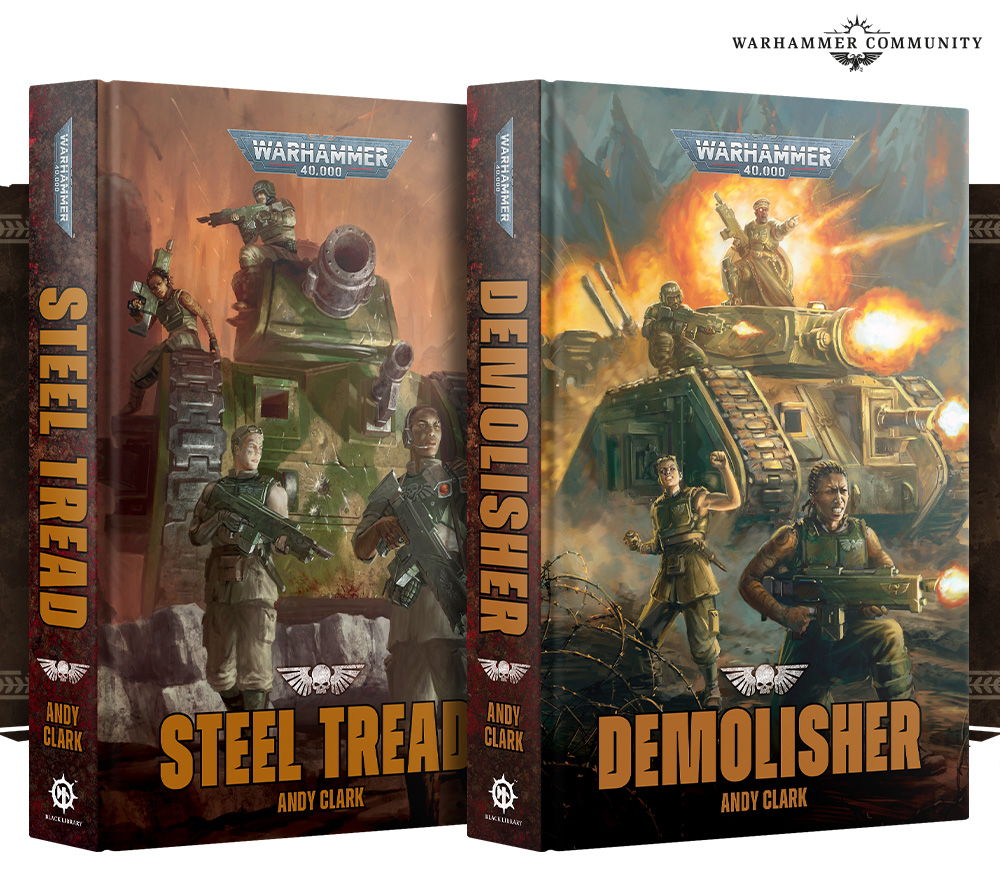 Image credit: Games Workshop
 Credit: BuffaloChicken
 Leman Russ Demolisher. Credit: Rockfish

 Goonhammer App and Patron Updates: April, 2026
 Kill Team Tournament Report: Engage, Party, Repeat's March Madness 2026
 Goonhammer Reviews: Tribal Conquest