Zograt may be a skinny little runt with a gammy leg, but he’s smarter than the average grot. And he’s got big plans. He plans to finish shoveling the big pile of squig shit in front of him before the boss gets back and gives him a hiding for being too slow.
It’s a miserable life at the bottom of the pecking order in the moonclan of Badwater Drop. But when the Bad Moon casts its eyes on Zograt and bestows the blessings of the Clammy Hand upon him, the runt knows he’s about to go somewhere in the world.
With his newfound magical powers, his above-average cunning brain and a big old Dankhold Troggoth by the name of Skrog by his side, it doesn’t take long until Zograt starts amassing a following among the local grot tribes, claiming to be the new Loonking.
But bossdom is a precarious place to be in grot society, there are always dozens of stabbas waiting to be slid into your back, and plenty of other grots ready to take your place, so as well as facing down his enemies Zograt has to work hard to outsmart his own underlings.
In order to secure his place as the unrivalled Loonking (and yes, he knows there is already one, and doesn’t like to be reminded), Zograt knows he needs to do something big to galvanize his hoard behind him.
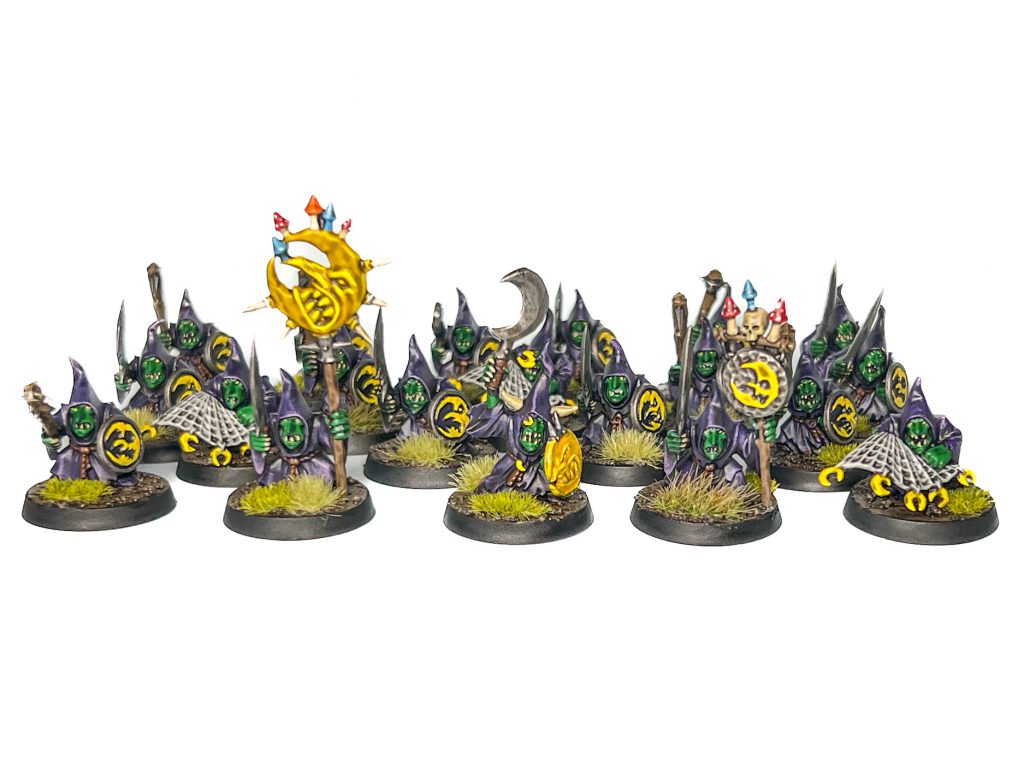 Moonclan Grot Stabbas Credit: Bair
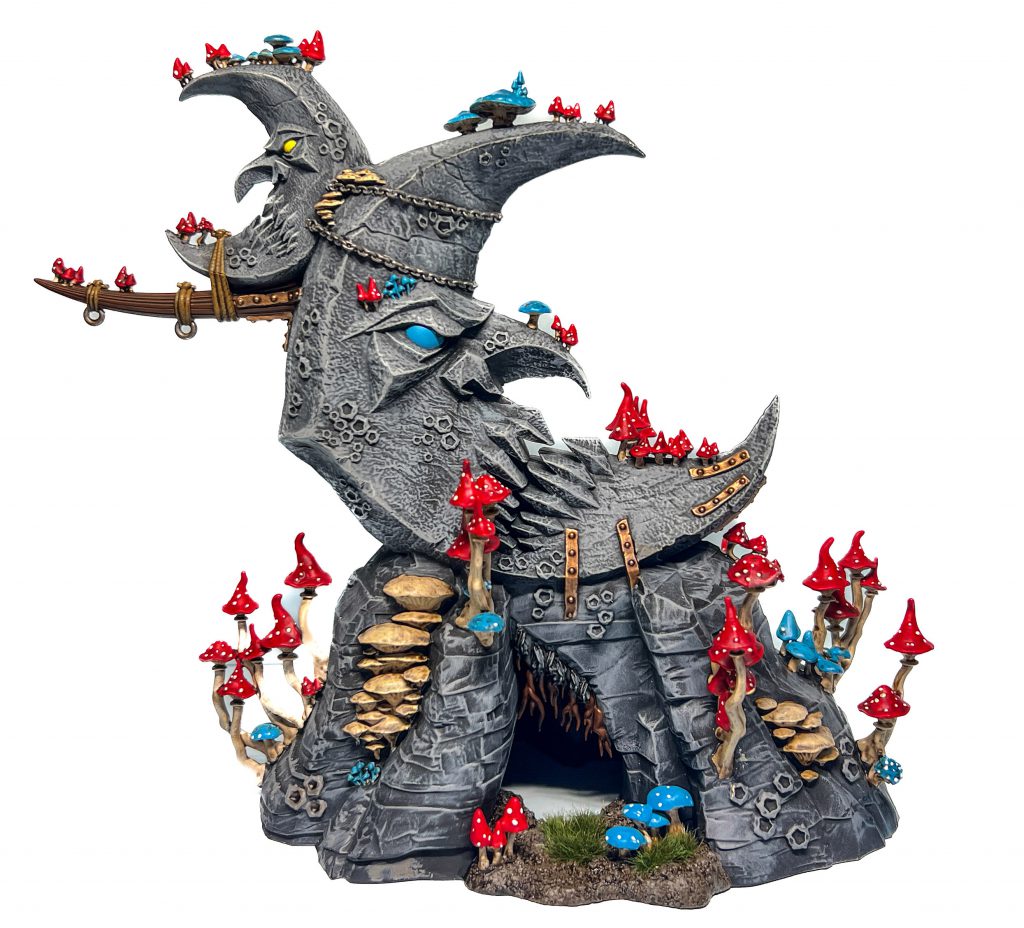
This is when the ambitious little fella sets his eyes up on the Muttering Peak mountain nearby. Within the heart of the mountain swells an ancient power which, if channeled, would grant Zograt unrivalled ability.
But it is not only Zograt who has his eye on this prize. Wilhomelda Borchase, Sigmarite Magister Princep, and her second in command Lanette- both powerful mages and veteran warriors- have appeared at the mountain with a small army in search of the very same power, which Wilamelda believes to be an ancient god-beast. Her hope is to use this power for Sigmar’s war effort- but we all know that power corrupts.
Wilhomelda is single-minded, driven and unwilling to listen to the concerns of her friend, Lanette. What if the god-beast trapped in the mountain turns out to be yet another evil force to deal with? What if it is tainted by chaos? What if it corrupts those who try to utilize it? Wilhomelda ignores these warnings, driving a wedge between the two.
Wilhomelda is also a drunkard and an addict. I’m not sure the book is supposed to be as on-the-nose as all this, but it I found it interesting to watch the character struggle with her own inner demons, as well the literal demon she’s trying to seize control of in the mountain- both of which threaten to take over her life and ruin her. The psychological wrangling within Wilhomelda, the path to destruction she undergoes, and its effect on her friendship is really nicely explored and gives a good counterweight to the slightly more light-hearted journey of Zograt.
That’s not to say Zograt’s character arc isn’t interesting in itself. He’s a grot, so his motivation is all about survival and beating down his rivals. You may not expect too much emotional nuance and depth from a greenskin, but the character does wrestle with the full range of feelings: ambition, self-doubt, fear, insecurity and even unexpected moments of loyalty and affection. He develops into an emotionally rich protagonist throughout the course of the book.
What I like the most is that Zograt doesn’t fall into the category of the ‘main character in the waiting’. He’s not some worthy protagonist who gets power and with it the opportunity to show his worth. He’s not a natural leader and he’s not nearly as clever as he thinks he is. He’s a squig-shit-shoveller. Even with the power of the Clammy Hand upon him, everything is a struggle for him as he learns to cope with defeat and his own shortcomings. That’s what makes his arc really engaging. Yes, grots are silly, but Zograt emerges as an interesting character nevertheless.
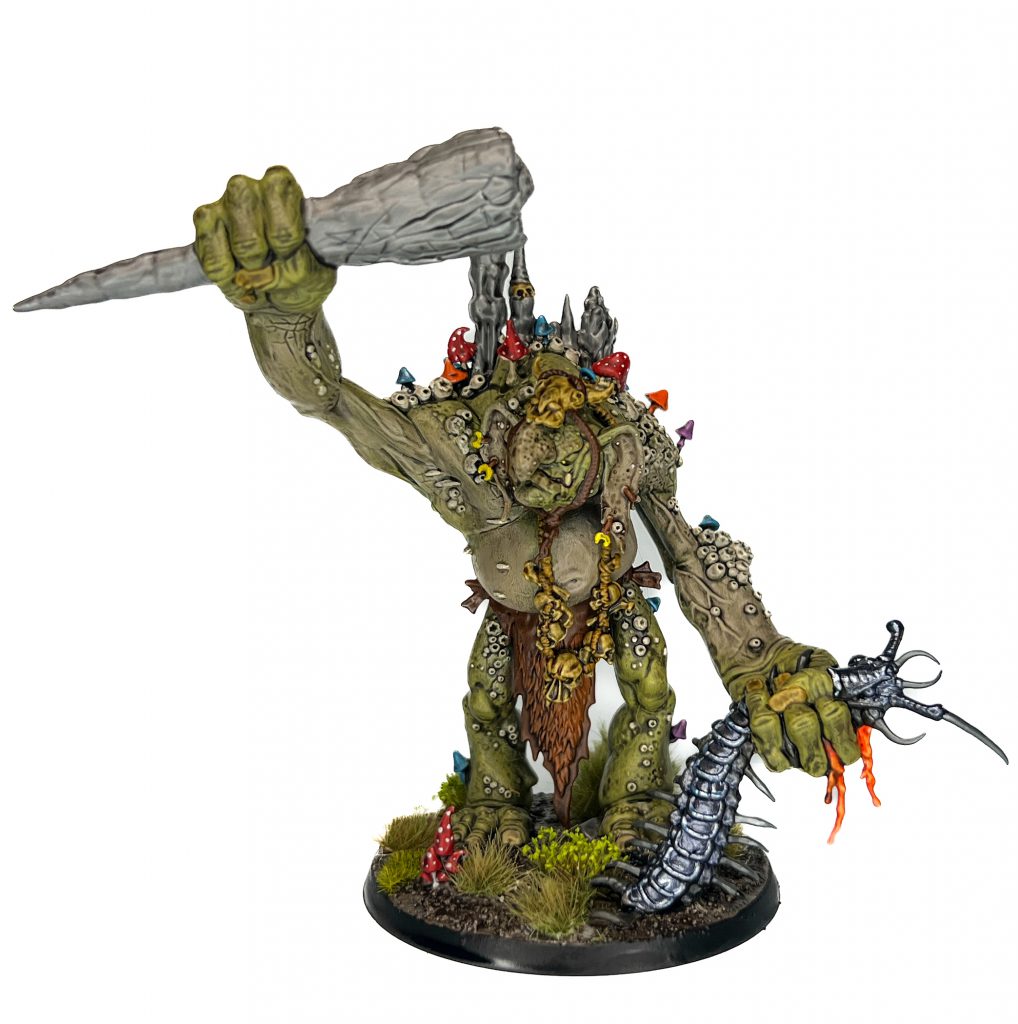 Dankhold Troggboss credit: Bair
It was Zograt’s arc that maintained me through the first part of the book. At first I wasn’t really feeling the human focused side of the story. It felt a little out of place. The tone-shift was a little jarring, going from daft grot stuff to the more serious human strand, but I did get used to it and became more engaged in Wilhomelda as the book went on.
In fact, the human mages of the story offer a really good counterbalance to Zograt and Skrog’s story. As Zograt builds and overcomes, Wilhomelda unravels. As Zograt learns to create new relationships, Wilhomelda tears hers down.
In particular, it is the comparison between Zograt’s relationship with Skrog and Wilhomelda’s with Lanette that is particularly pronounced. Whilst Skrog and Lanette are both devotedly loyal to their friends, the human relationship is full of complexities and psychological undercurrents. Lanette is torn between loving her friend and her duty to protect the world from her.
But it is the relationship between the goblin and the troll which is the simplest and yet most wholesome of the two friendships. Both Skrog and Lanette are devoted to the point that they would willingly give their own lives to protect their friend, and both Zograt and Wilhomelda don’t quite know how to deal with that kind of loyalty. It is interesting to see how different the two characters manage this as it poses the question: just who is supposed to be the most enlightened and civilized of the two pairs?
Anyway, I’m sure an exploration of the emotional and psychological intricacies of interpersonal connection is exactly the reason you picked up a goblin story. Or maybe you prefer body-horror, goofiness and lots and shrooms in your Gitz books. Don’t worry,
Andy Clark’s got you covered. There’s plenty of grot stuff in this book. The cast of goblins we meet won’t disappoint you: from spider-riding arachnid worshippers to swamp-dwelling shamans through to a trogherd that gradually makes its way in an endless circle due to its leader having a limp and, of course, a full Gobbapaluza’s worth of excentric mystics and shroom heads. It’s every bit as psychedelic and bonkers as you’d hoped.
It takes a completely different path to
Gloomspite, also by Andy Clark (which is probably my favourite Warhammer book of all time). In
Gloomspite, the grots are terrifying. It’s a horror book. But in
Bad Loon Rising Clark takes goblins in the more traditional clownish direction, proving that he can write them well in both ways.
As far as world-building goes, if you want a good book to introduce you to the wide expanse of Gloomspite Gitz lore, then this is the book for you. As much as a masterpiece as
Gloomspite is, it’s not something that’s going to give you much of a perspective on who the goblins are, whereas Bad Loon shows you every aspect of the Gitz army range (except that Snarlfang Riders, which don’t feature.) It also gives you a bit of a glimpse into Ulgu and something of the Cities of Sigmar’s struggle to survive in a dark land.
As far as the story itself goes, its as simple and easy to follow as a grot novel should be. There are no twists and turns or surprises. Pretty much every plot point is predictable. But that’s how it’s supposed to be, and it works. It’s great fun, but there’s also a little something in there to give it grounding and depth. Give it a read.
 Have any questions or feedback? Drop us a note in the comments below or email us at contact@goonhammer.com. Want articles like this linked in your inbox every Monday morning? Sign up for our newsletter. And don't forget that you can support us on Patreon for backer rewards like early video content, Administratum access, an ad-free experience on our website, and subscriber-only content covering competitive Warhammer 40K!
Thank you for being a friend.
 This website uses cookies. Learn more.


 Goonhammer App and Patron Updates: April, 2026
 Kill Team Tournament Report: Engage, Party, Repeat's March Madness 2026
 Goonhammer Reviews: Tribal Conquest