 Image credit: Games Workshop
There's a lot to be said about the nature of variety, isn't there? I've often noted that the number of ways Warhammer is accessible as a hobby has been instrumntal in its success and longevity. Whether through gaming (either digitally or on the tabletop), the art and craft of assembling and/or painting minis, or reading the stories and novels, all these avenues attract different people to the hobby.
In a similar vein, having a number of different win conditions are what keeps many players coming back to games like Civilization. In one playthrough you might take over the world at the point of a sword (or barrel of a gun). Another, by becoming the world's dominant culture, or being elected world leader at the United Nations. By offering such variety they insure games can be dramatically different, and players never know what's going to happen when they fire up a new game- or even press the space bar for 'one more turn.'
Civilization VI, originally released back in 2016, added a new standard victory path to the game
1: religion. Players could found their own pantheon, then send out missionaries and apostles to convert neighboring cities and city-states. Having played many such games myself, it was always a kind of subversive glee when you undermined a more powerful neighbor from within by sending a steady stream of religious units to convert their populations to your faith.
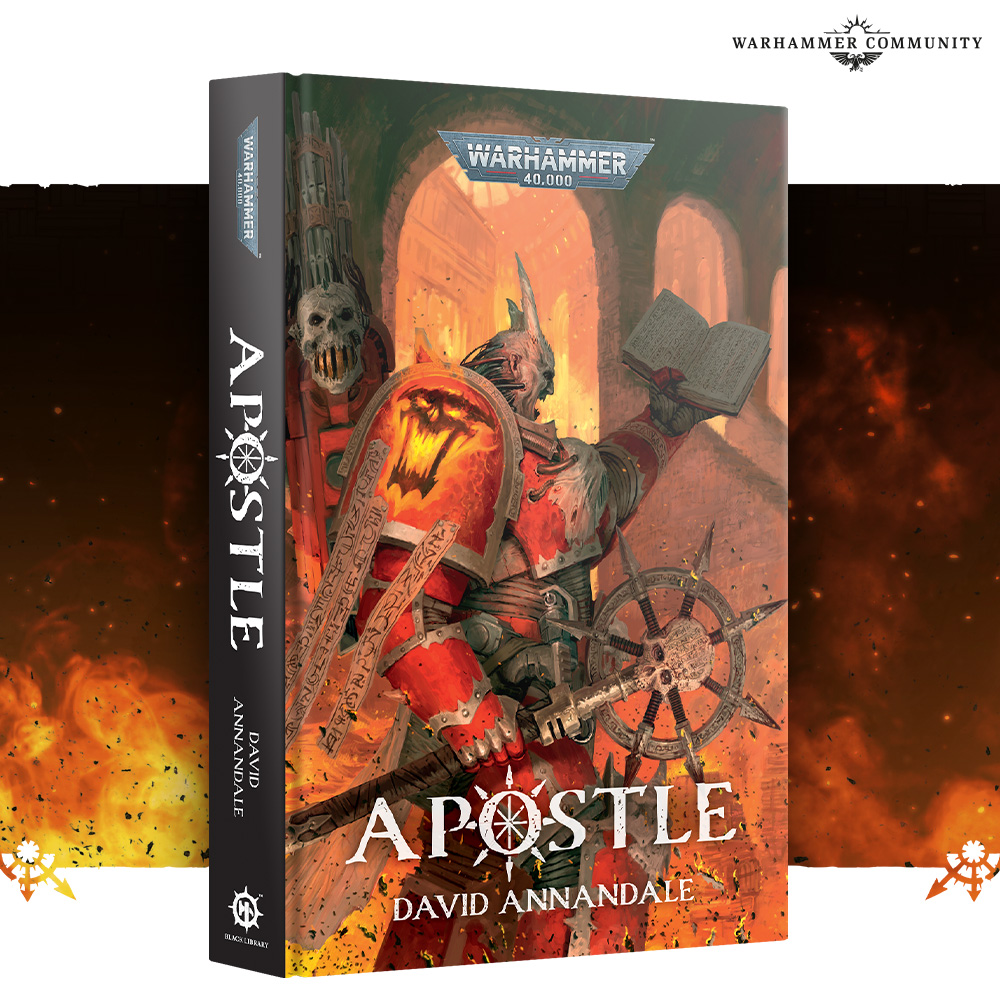
That, in a nutshell, is the plot of
David Annandale's latest Black Library offering,
Apostle, and it too is a wicked kind of fun.
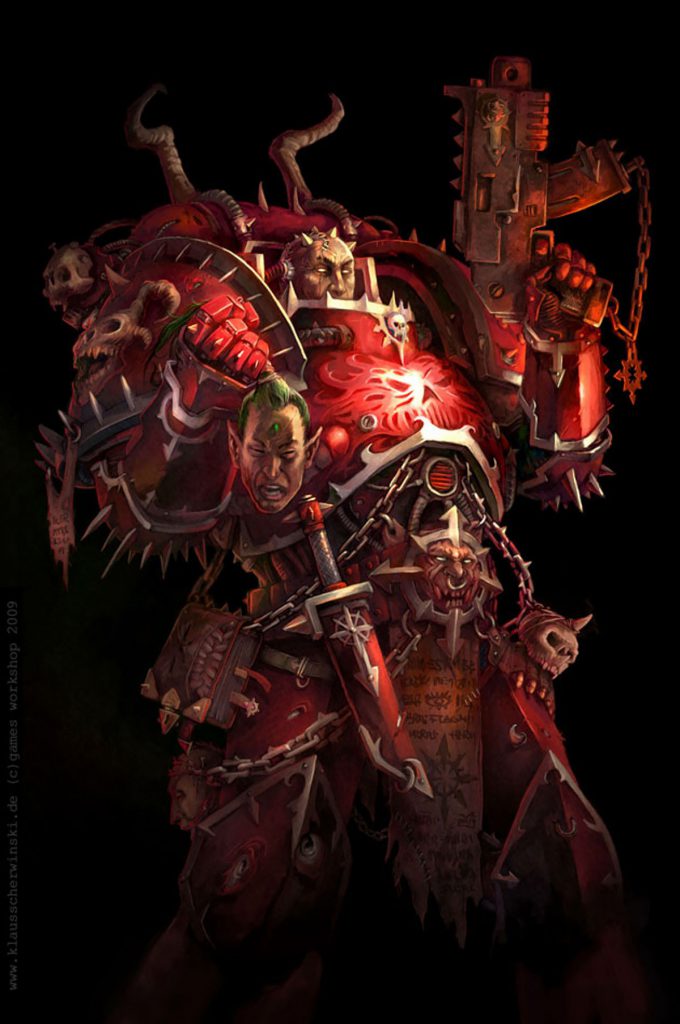 Image credit: Games Workshop
The Story
Annandale is a veteran writer for the Black Library, but it's been awhile since we've heard his name in the context of Warhammer 40,000. Sure we were treated to a Yarrick Box Set last October, but those were tales that had already long been told. His last Black Library novel saw print in March of 2024, but that one (
Callis & Toll) was for the Age of Sigmar setting. To find his last 40K book, we have to go all the way back to 2021 and Warhammer Horror's
The Deacon of Wounds2.
As it turns out, that's not a bad place to look. Stories like
Deacon and
The House of Night and Chain were far removed from the combat-heavy stories (dismissed as 'bolter porn' by some), instead focusing on exploring other means of conflict and its resolution. That's not to say they were violence-free (this
is still Warhammer, after all), but the focus of
Apostle on the battle for hearts, minds, and souls as much as what comes out the business end of a bolter was refreshing- and exactly what you'd hope for out of a Word Bearers novel that approached its subject with regard to what makes it different from others beyond just the color of the ceramite and crest on the pauldron.
Apostle takes place on the Ecclesiarchal world of Legitur, a place that- like so many worlds in the Imperium- has a very pronounced social divide between those in power and the rest of mass and press of Imperial citizenry. The structure of the world, much like Necromunda, reflects ones place in it: the important above, and the forgotten and discarded below.
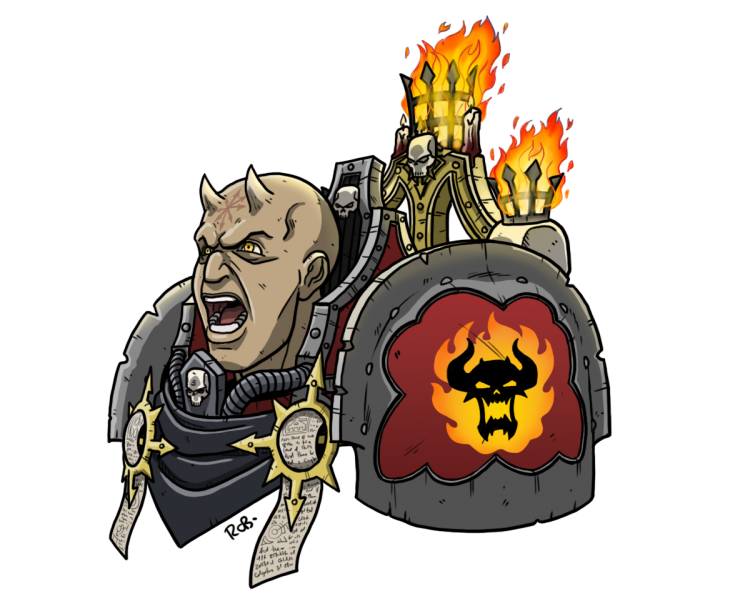
After narrowly surviving a run-in with the Adepta Sororitas in the void that kills almost all of his brethren, Cerastes, a Dark Apostle of the Word Bearers, becomes convinced that his destiny lies on turning nearby Legitur to the embrace of the Chaos gods. It's a tall order, but he's also got homefield advantage: it's the planet he grew up on prior to becoming an Astartes. He knows its ways, its culture, and its people, and can use all three to win.
Warhammer 40,000, being as much science fantasy as science fiction, is like an impressionist painting in that it looks it's best when you don't peer too closely at it. The notion that single Astartes could take over an entire planet seems based more on the 'rule of cool' than actual logistical feasibility, but here Annandale puts that conceit through its paces. See, Certastes isn't looking to take it over by force of arms (at least not at first), but rather by force of
idea.
He's assisted in this mission by Legitur itself, whose extreme class stratification and dire poverty give Cerastes plenty of help in recruitment. While at first his efforts go unnoticed, it doesn't take long to attract the attention of the planet's power structures: Cardinal Mazarine of the Ecclesiarchy, the local Astra Militarum (the Zealot Spears), and eventually the Adepta Sororitas.
 Credit: Robert "TheChirurgeon" Jones
A Spirited Debate
In assessing the book, the first place to start is in its central conceit of a battle of faith. There are two different approaches you see in
Apostle, the first being a two-way dialogue as Cerastes looks to recruit Acolytes to his dark cause. The other is a more one-way approach, as seen when Cerastes is preaching to the low and the lowly. Here there is no debate, but rather the power of persuasion.
Let's be clear, nobody's reading
Apostle looking for
The Screwtape Letters here. Annandale could easily have hand-waved the conversions with little impact to the story. For example: "Cerastes countered her every objection, answered her every question, and when she had run out of both there was nothing left save for the embrace of what had once been unthinkable." Nobody would likely feel terribly cheated at that.
To his credit, Annandale instead takes a real run at this. Opting to play out the debate and battles of wits that are required for a genuine religious conversion of the wary and unwilling, he gives us a real look at the parry-and-thrust of a conversation between Cerastes and his eventual disciples as he severs their attachment to the Emperor- and replaces it with something far more sinister.
Ultimately, the result is a bit uneven, particularly with the early conversion of a member of the Ecclesiarchy. Certastes fairly does enough work to expose some doubt in his target, but the instant leap from doubt to, you know,
actually embracing Chaos, maybe not so much. Overall, Annandale did more than what you'd expect from a Warhammer novel, but it never really gets quite as deep into actual
faith as, say,
Steven B. Fischer's Broken Crusade (
review3).
Annandale also does handwave the mass conversions a bit, the recruitment of the anonymous, expendable masses that make up the ranks of the Chaos cultists. These felt a bit compressed, not quite "he spoke and 10,000 more joined his ranks" but not as far off from that as I'd have liked. When you have a less buildup, you usually end up with less stakes. Less stakes means less payoff. Annandale
tells more than
shows the powerful, magnetic charisma you'd expect to find in a Word Bearers Dark Apostle raising an army of followers from nothing.
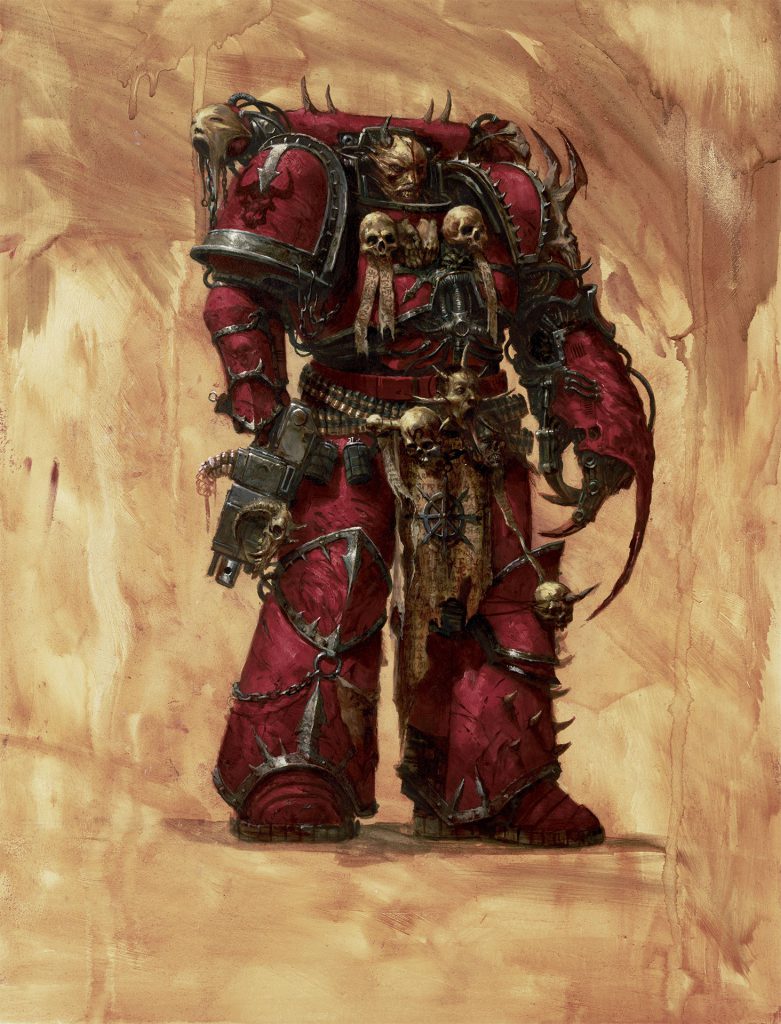 Image credit: Games Workshop
A Tale of Faith
One thing I really did appreciate with Annandale's treatment of Cerastes is that this isn't a story that takes the protagonist from strength to strength, rolling like a snowball downhill towards a preordained climactic triumph. Our friendly neighborhood Dark Apostle has setbacks as well as triumphs, including one sequence where his takeaway was- with delightful candor-
what the hell was I thinking? Cerastes is refreshingly human for a transhuman protagonist, capable of errors in judgment and having to learn from his mistakes.
Throughout it all he has that kind of abiding faith in every card dealt his hand present in the kinds of people who believe that losing their job is a "sign from the universe" that they need and deserve to get a better one. We all know the type, those for whom "there are no coincidences" but only lessons if they would only listen closely enough.
It's a quirky compulsion not unlike the Death Guard's
counting of things, but one with a bit more nuance and personality behind it. And there are real consequences. It's messy. Cerastes has to beg and bargain for his power, even at one point offer up a literal piece of himself.
Apostle is no Astartes power fantasy, but rather a reminder that Chaos moves through force of mortal will only at great cost.
Also 'refreshingly human' was Cerastes' capacity for doubt. Not the Adepta Sororitas-flavored "Am I worthy of the Emperor?" style of doubt, but rather the occasional doubts about his destiny, in his reading of the signs. Doubts in the strength of faith of others, doubts that things will all go to plan, or the possibility that he's inadvertently part of a
different plan to which he's unaware (o hai, Tzeentch!). Annandale sprinkles this in judiciously, never too much to cause imbalance in the portrayal of his protagonist, and just enough to give him a little added depth. If the motto of the Imperium is
blessed is the mind too small for doubt, it makes sense that one rejecting that by casting his devotion to the 'true gods' might have to contend with it.
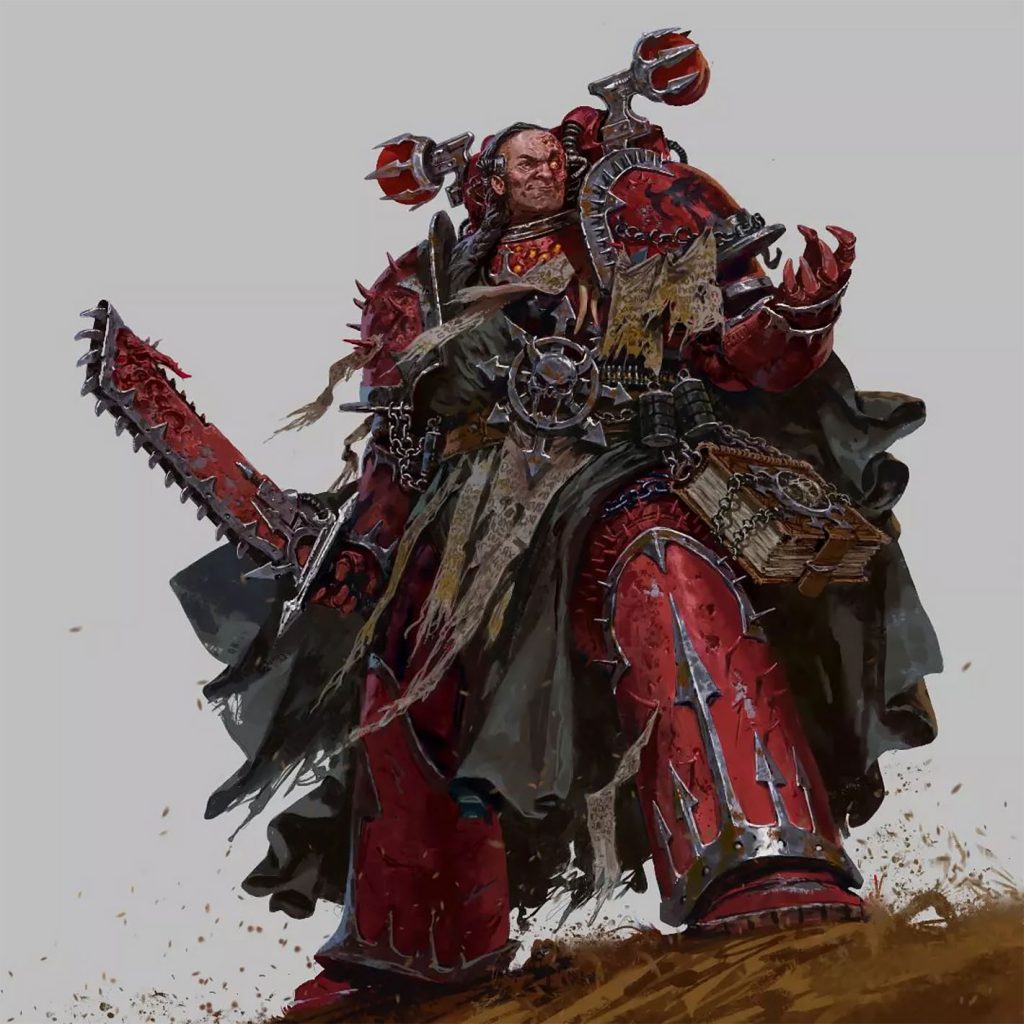 Image credit: Games Workshop
Holding a Mirror
Though she doesn't take center stage until later in the tale, Annandale gives us an absolute gift of an opponent for Cerastes in Palatine Aesura, leader of the Adepta Sororitas forces aligned against the Word Bearers here. Aesura is everything the Battle Sisters in
The Relentless Dead were not. Here's how I took issue with author
Steve Lyons' characterization
in our review:
I have to feel for Adepta Sororitas fans who, time and again, see their heroes and their faith reduced to almost cartoonish levels of obstinacy. “What do you mean every clue points back to the Building of Our Sacred Faith, the enemy could not possibly be hiding in there because our faith is so faithfully faithful. And no, you can’t peek inside really quick to make sure, because that would be questioning the strength of our faith.”
For Aesura, the Palatine's service to the Emperor doesn't come through as naïveté or impulsiveness, but rather through cold, brutal efficiency. She's the type who doesn't lose a wink of sleep in shelling civilians in a Chaos-invaded hab block, because 'all the good ones' would have already given their lives for the Emperor in resisting. Anyone cowardly enough to still be alive, she reckons, deserves whatever they get. This is exactly the flavor of grimdark I can get behind, and Annandale writes it terrifically. Aesura never veers into cartoon territory, and her conversations with the increasingly-squeamish native authorities of Legitur provide the opportunity to square her deeds with her beliefs.
In a sense, it's a bit reminiscent of the character study
Dale Lucas performed in
Ushoran, Mortarch of Delusion (
review). His aim, as he noted in the Afterword in the Limited Edition, was "to examine one character by contrasting them with the other." Ushoran was a study in contrasts, but
Apostle, intriguingly, is a study in parallel. Underneath the facade of their chosen faiths, Annandale seems to be asking us, how much of a difference is there
really between them?
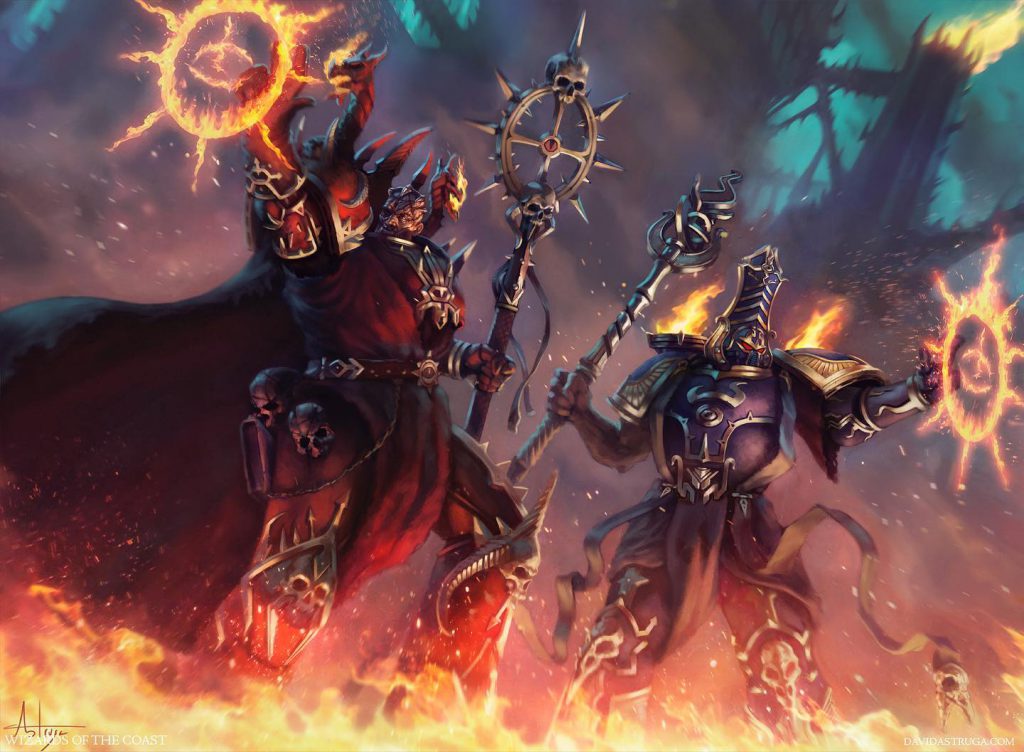 Image credit: Games Workshop
Final Thoughts
Apostle has been getting a lot of acclaim in the Black Library online gathering spaces (Reddit, Facebook, etc), and it's not hard to see why. The Word Bearers are one of the 'suffering sons' legions that doesn't get a lot of time in the center stage, overshadowed in the literature by the 'core four' of Death Guard, Emperor's Children, Thousand Sons, and World Eaters. As with
Mike Vincent's The Remnant Blade (
review) for the Night Lords, I feel like Games Workshop missed an opportunity by not giving us a Limited or Special Edition here. I, for one, would have loved to see an Afterword from Annandale discussing his thoughts on the book.
Apostle is an ambitious work, largely because it looks to make the battle of ideas coequal with the waging of war. There's plenty of action to be found in its pages, especially as the momentum picks up and Cerastes makes his play for control of Legitur. But delightfully, there's also plenty of dialogues around the nature of faith in the Emperor, flaws and all. If Annandale perhaps doesn't quite hit the bullseye squarely on them, I can only applaud the audacity of the shot.
Being an Annandale book, I'd hoped for a little bit more of the eldritch vibe he so wonderfully channeled for his Warhammer Horror work, and some of the pacing is a little off in the second half of the book. After spending a lot of ink in recruitment conversations with his eventual disciples, Apostle clearly enjoys the hunt more than the kill. Once they've converted, their relationships with Cerastes (and each other) are essentially speedrun on autopilot. Coming in at just under 250 pages, I think the book might have benefited from another twenty to let some of his cast breathe and develop more.
All the same, it's a very good read and one I enjoyed. I'm heartened by the Black Library editors greenlighting a work that gave the Word Bearers some room to stand on their own. Without getting into spoiler territory, Apostle leaves the door open for more.
I hope to see it!
Footnotes
- Technically, this was introduced in Civilization V's expansion Gods & Kings, but was refined and included as a part of Civ VI's default experience.
- If you classify the Black Library broadly enough to consider Horus Heresy under the 40K umbrella, 2022's Mortarion: The Pale King gets the nod here instead. Either way, it's been awhile.
- This was my first book review for Goonhammer, written a year ago. It's a bit rough looking back at it a year on with a few dozen more of these things under my belt.
Have any questions or feedback? Drop us a note in the comments below or email us at contact@goonhammer.com. Want articles like this linked in your inbox every Monday morning? Sign up for our newsletter. And don't forget that you can support us on Patreon for backer rewards like early video content, Administratum access, an ad-free experience on our website, and subscriber-only content covering competitive Warhammer 40K!Thank you for being a friend.
 This website uses cookies. Learn more.


 Goonhammer App and Patron Updates: April, 2026
 Kill Team Tournament Report: Engage, Party, Repeat's March Madness 2026
 Goonhammer Reviews: Tribal Conquest