Every so often a wargame launches a failed update. These are always fascinating because while success is a narrow line there are as many different failure points as there are stars. Sometimes the numbers are too big or too small, sometimes there is an unforeseen combination or rules interaction - those are the easy ones because they’re a FAQ or errata away from being put back in the box. Other times, like this time, they're...
fine.
They're fine! But they lack coherency, continuity, or vision.
We don’t want to be too hard on Para Bellum here; we aren’t privy to their development process, so it’s difficult to tell how the production of the rework proceeded, but we’re forced to conclude that this Conquest update was troubled. It leaves
completely unaddressed a number of problem list archetypes in the broader game that we expected to receive at least small updates before the highly publicised and very visible Conquest event at Adepticon, it introduces a number of small rules updates that have a clear intent but function poorly or break existing rules or interactions, and a seemingly inoffensive change to command stand rules appears to have accidentally let Dweghom players drop almost thirty dice of offensive spellcasting on any enemy unit anywhere on the board on turn two. Between this and everything on display in the Spires rework, the end result was clearly rushed out the door, presumably to meet the deadline of the Consumption Beast/Desolation Beast release.
You can play with these rules, they’re fine (there's that word again); mechanically
powerful even, with a lot of things that range from independently good to great. But the old identity has been entirely lost in this process, and a new identity struggles to be born. All of the hard and troublesome and difficult to balance Spires mechanics have been excised entirely. Biomancers and Pheromancers are now almost indistinguishable from entirely ordinary spellcasters, the same as every other faction’s, who will get most of their value out of casting Useful Spell #1 every turn. Command card manipulation is virtually nonexistent, relegated to an army rule you won’t usually pick. The Spires are no longer fast and fragile - fast and fragile is hard to balance, now all the troublesome units have been dialed back into mediocrity rather than faction defining strengths, and the extra surge range from Burnout/Unstable Enhancement has been cut out. Spires was originally a
top heavy faction, where all the units were very straightforward because all the special rules were embedded in the characters; now that’s all gone in the opposite direction, with each unit having bespoke rules and abilities, often ones that don’t exist anywhere else in the game, which do not rely on oversight from characters to activate. Bound Clones went from having one special rule - Support 2 - to
seven, transforming from basic line infantry to elites.
So. This is not so much a modernization of Spires as much as an entirely new faction. The old faction identity is gone entirely, all previous experience is useless, we need to take this from the top and approach it from scratch - and we will, going forward, now that our initial complaining is over. There is a lot to mourn though. The Spires was previously a unique gemstone of design, but the archetype it was closest to was probably that of ‘undead elves’.
So what is their identity now? Well, we can actually see this pretty clearly - their identity is the Free Folk, from the Song of Ice and Fire wargame. The designers of this update were clearly reading the SOIAF rules very closely because there are many abilities here that are just straight lifts from SOIAF, some which have not even changed their names. Diversion Tactics, Price of Failure, two inch shifts, Disrupt, Regroup and Reform, all my old friends are here again, just when I thought I’d gotten away from them. Now to be clear, that part is
not a complaint - SOIAF had some of the most interesting, clever and creative mechanical design in the wargaming space and more wargames should copy their homework. I just hope next time around they get to do it more elegantly and less of a straight drag-and-drop, because the Free Folk play
very differently to the Spires of old.
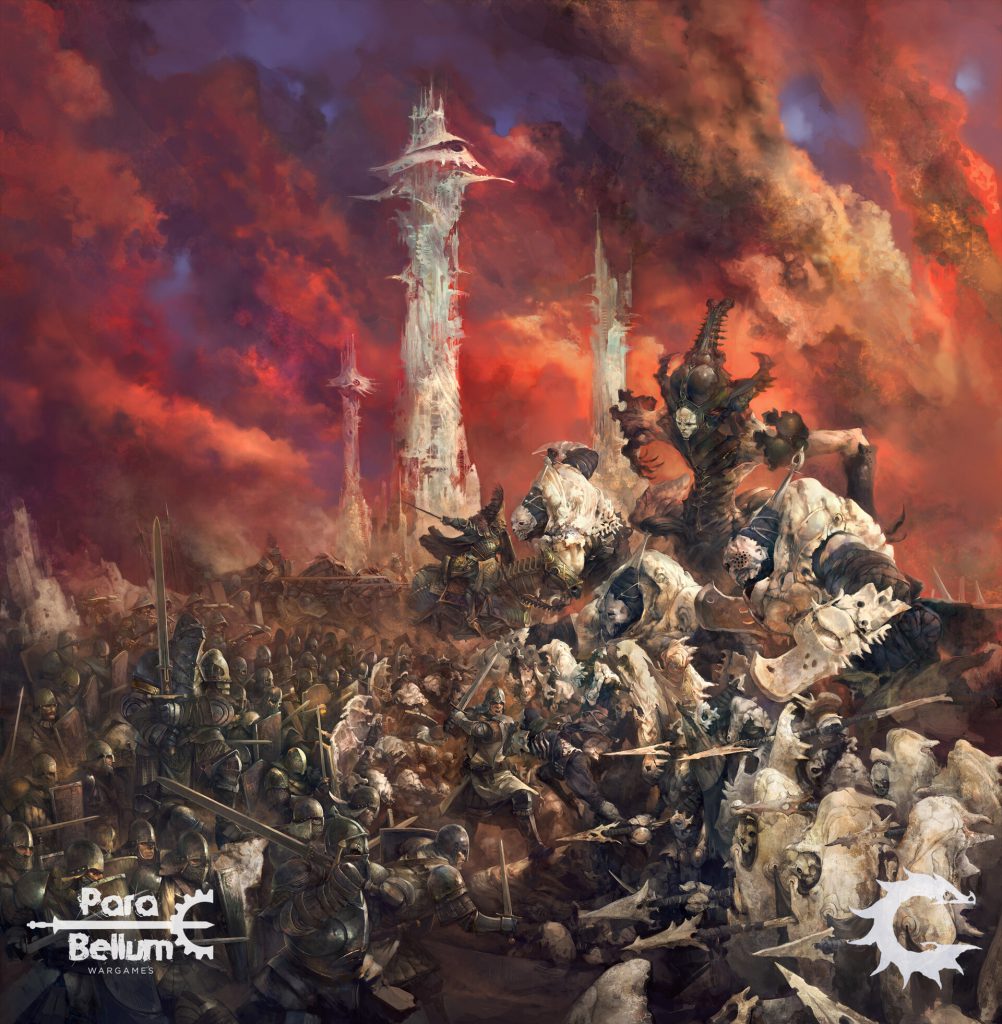 Conquest Core Box Set artwork. Credit: Othon Nikolaidis/Para Bellum Games
Faction Rules
Spires faction rules have a lot of text that boil down to a couple of relatively simple concepts. Firstly, every regiment in the army has the Strain Expression draw event, which lets the regiment gain some benefit in exchange for sustaining damage at the end of its activation. Secondly, your army picks one of three Sects to belong to, each with a different benefit.
The thing to understand about Strain Expression is that it is almost universally a bad decision to use when considered in a vacuum. In
very nearly 100% of possible use cases, even the most favourable, the benefit you get will deal more damage to your army than it will to the enemy. Even examples that look favourable are unlikely to be, when considered purely in terms of what they cost you versus what they cost the enemy.
This means that a large part of the list construction for Spires is now about figuring out ways to use your Strain Expression without it being a negative effective value play, and a large part of the
play for Spires is figuring out when that negative effective value play is worthwhile. A bit like the Burnout of old, accepting Strain Expression damage to secure a kill that might otherwise be borderline is a play you’ll regularly make even if it’s not necessarily optimal in a narrow mathematical sense, because increasing your chance to succeed at a play that has significant knock-on effects might be very worthwhile.
In terms of Army Rules, things are a bit simpler: by default, play Underspires. Giving a small amount of regeneration to your Clone and Drone regiments gives you that touch of healing you need to use Strain Expression on these units more freely. It’s consistent, it opens up a lot of capability, and you should always choose it unless you have a reason not to.
If you’re looking for a reason not to, you can consider a switch to Sovereign Lineage if you’re running a veritable menagerie of Leonine Avatara (as the conditionally free Aimed Shot is very powerful; the conditionally free Inspire is nearly useless), or a switch to Directorate if you’re running such a concentrated Monster Mash list that the Underspires benefit is very limited.
A Note About Language
One thing to be aware of about the Spires Update is that it contains a preponderance of impenetrably sesquipedalian loquacity which it brings to the rules text on many units. While we’re a fan of using rules to evoke imagery in general, and many regiments in the Spires update
do have rules that really communicate some disgusting detail (like ‘Visceral Bombardment’ and ‘Haliotic Fetor’), telling your opponent that you’ve just activated Apex Hyperparaxia or Telencephalic Lateralisation or Cortical
Delateralisation is going to draw a blank look while they wait patiently for you to explain what that fucking
means. We expect most players to very quickly adopt the relevant shorthand; “I’m activating the regiment’s strain for Juggernaut / Disruptive / Precise Shot”, but we’d appreciate it if the rules team could dial the thesaurus use back down from an 11 to maybe a 9 in future.
With that; on to the characters and regiments in this all-new army.
Characters
The Merchant Prince
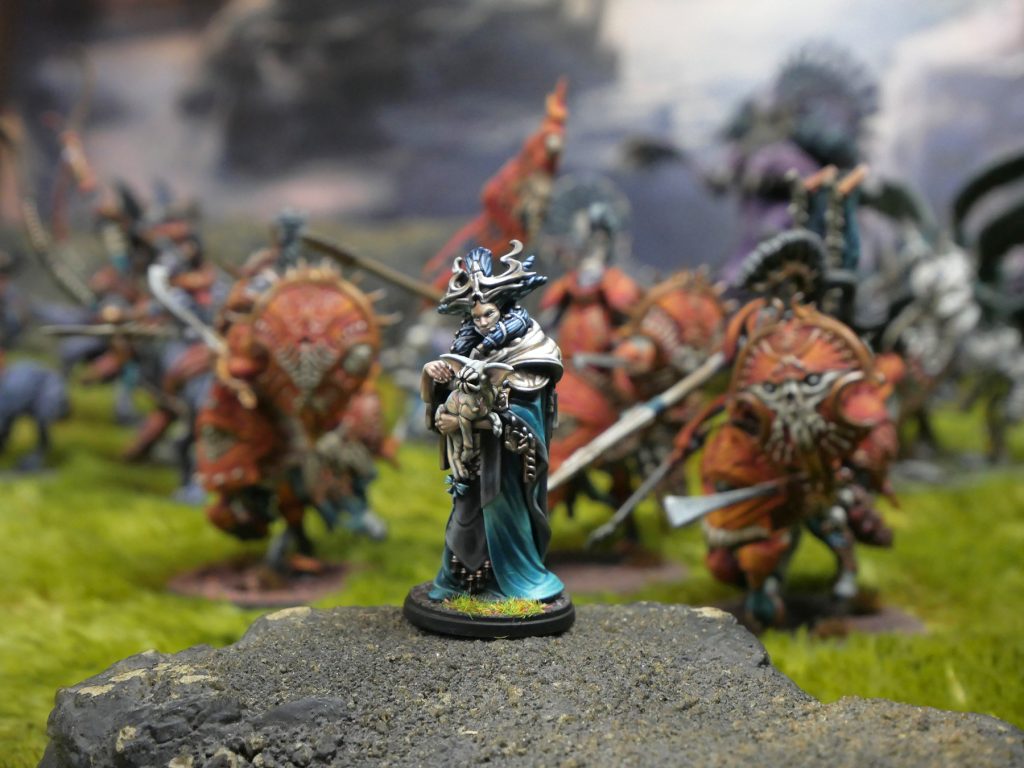 Spires Merchant Prince - Credit Para Bellum Games
This one has achieved a polarizing response in the community. Some people think it’s amazing. For my money, it’s the worst unit in the game.
Firstly, it’s 120 points. That is
very expensive. Secondly, it has the worst stat block in the game, losing fights to human wizards or desiccated old mummies. Thirdly, the single non-supremacy ability it does have, and the sole reason to bring it if it’s not your warlord,
benefits both players equally.
I can’t get past that. Yes, you get to Flank on an extra unit every round,
but so does your opponent. That’s not an ability you pay points for, that’s a scenario rule; an environmental quirk. It is perfectly symmetrical violence - and perfectly symmetrical violence never solved anything. So really, all you’re getting for 120 points is Vanguard 3 once per round. There may be metagames out there where that is in fact a deal worth taking, but they’re a long way from the shores of our sunburnt country.
As a warlord - it’s interesting. The pre-rolled Fate Dice are on loan from Tzeentch and I am not sure what is supposed to be happening in the fiction when one is used, but the mechanic is a very powerful risk mitigation tactic, and Conquest helpfully has uses for both high and low numbers. Even so, I don’t think it’s nearly enough - it’s 120 points and your warlord slot, and you can mitigate a lot of risk on charges by just taking Endocrine Overstimulation for 30 points.
Lineage Highborne
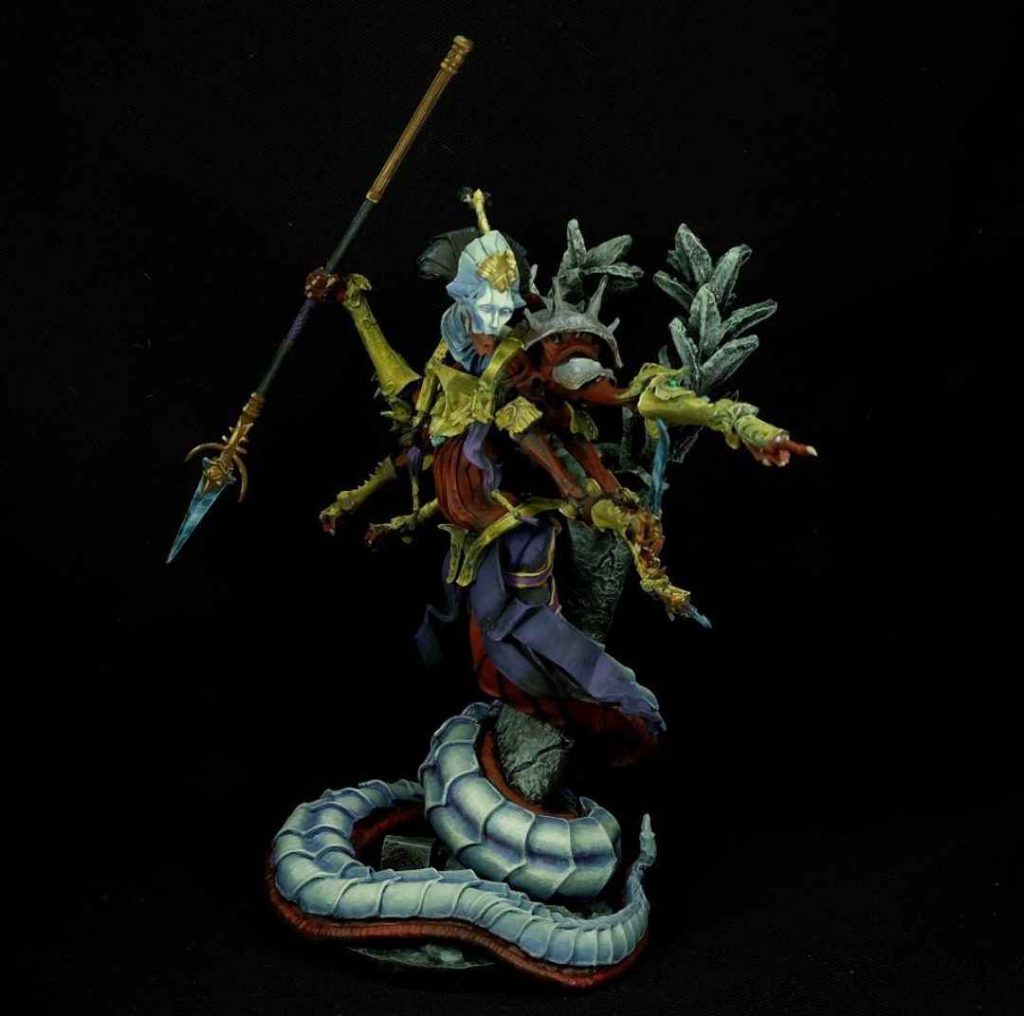
She is very expensive for what she brings - and my recommendation is to spend even more points on her. Cultivated Muscle Memory lacks the common max of +4 for Clash characteristics, so taking it and Grafted Limbs means she averages almost 7 hits with cleave or flawless strikes a turn. That’s a lot of damage!
Also worth noting is her Imposing Excellence ability. Parry is a conditional but
very powerful rule when it matters. It’s not completely clear from the wording whether she gains Parry even if she isn’t in a Husk regiment, but we assume she does, and because Parry triggers on every stand engaged with a unit with the rule, it’s still very useful to have her in a regiment of Incarnates providing that re-roll denial to enemies she’s engaging personally.
High Clone Executor
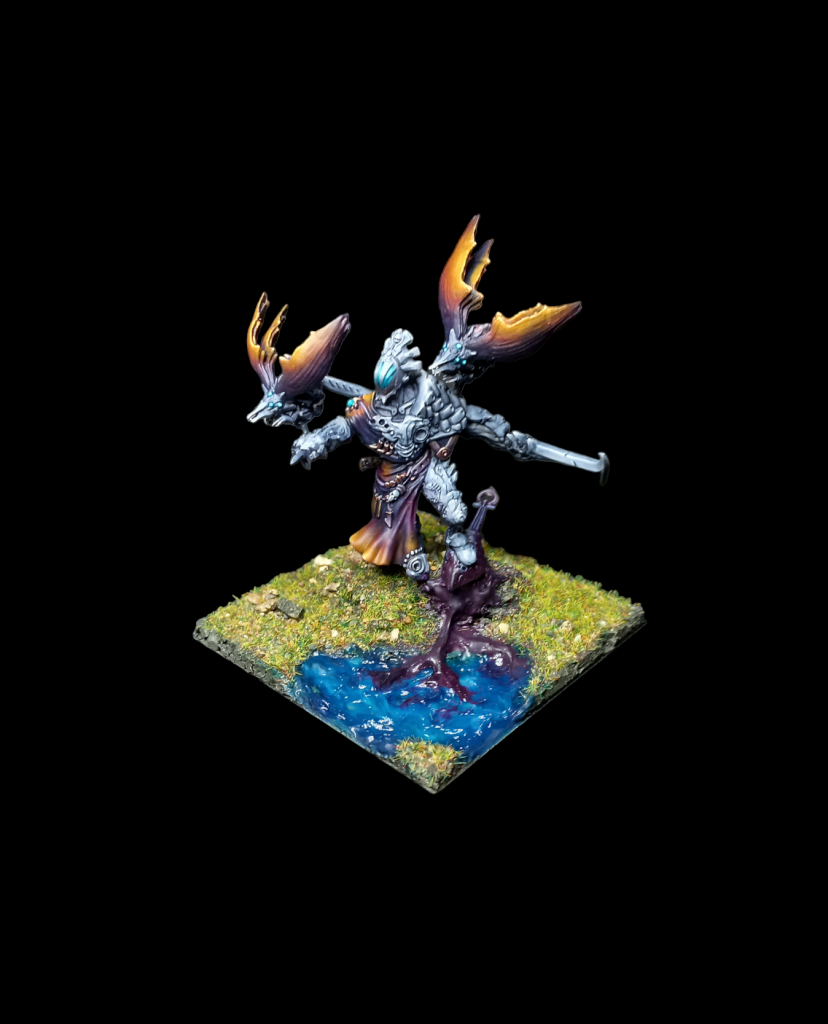
With a combat statline that allows her to bully weak characters with impunity, the ability to hand out a triple-march once per turn, and a supremacy ability that brings the fearsome Diversion Tactics of Westeros to Eä, the High Clone now stands on her own a lot better than her previous incarnation who at times felt like a tax to unlock valuable clone units (ability to hand out loose formation notwithstanding). That is good, because the clarity of the old Spires warbands has been significantly undermined - Vanguard Clones, Marksman Clones and Infiltrators can all be found in other warbands now.
The baseline resting place for the Executor is in a unit of six or more Bound Clones. Finding the 5 points to add +1 Attacks will go a long way; the unit is tough enough to slog it out for multiple turns and natively has Bodyguard meaning that you won’t get duelled out unless you want to.
Lineage Prideborne
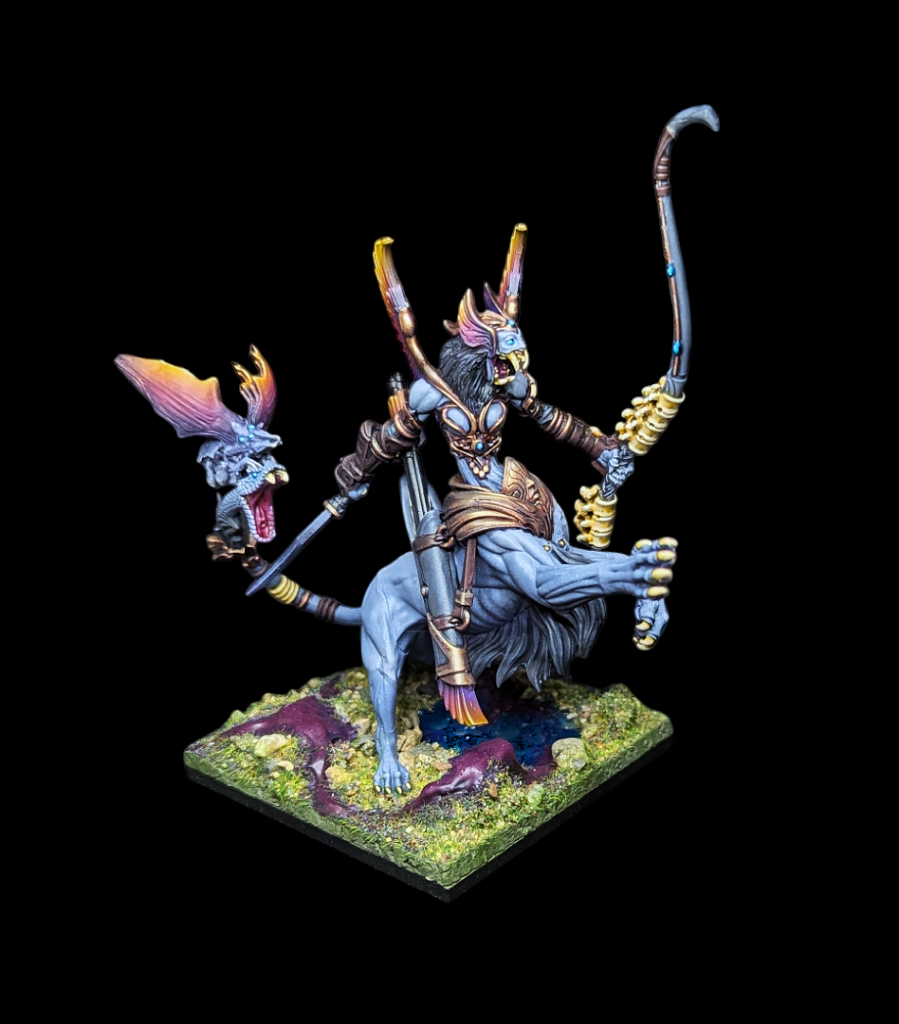
A serviceable if expensive ranged character, the Lineage Prideborne goes from good to great when you look at her warband. Leonine Avatara as Mainstay and Marksmen Clones as Restricted ushers in the era of oops-all-ranged spires armies (which combine well with her supremacy ability for a turn of sureshot and always-in-effective range), and even if you prefer to run a more mixed arms force, you can always rely on the Prideborn to provide any ranged support you might need without having to worry about the pesky mainstay requirements that dogged the Spires’ previous incarnations.
Pheromancer
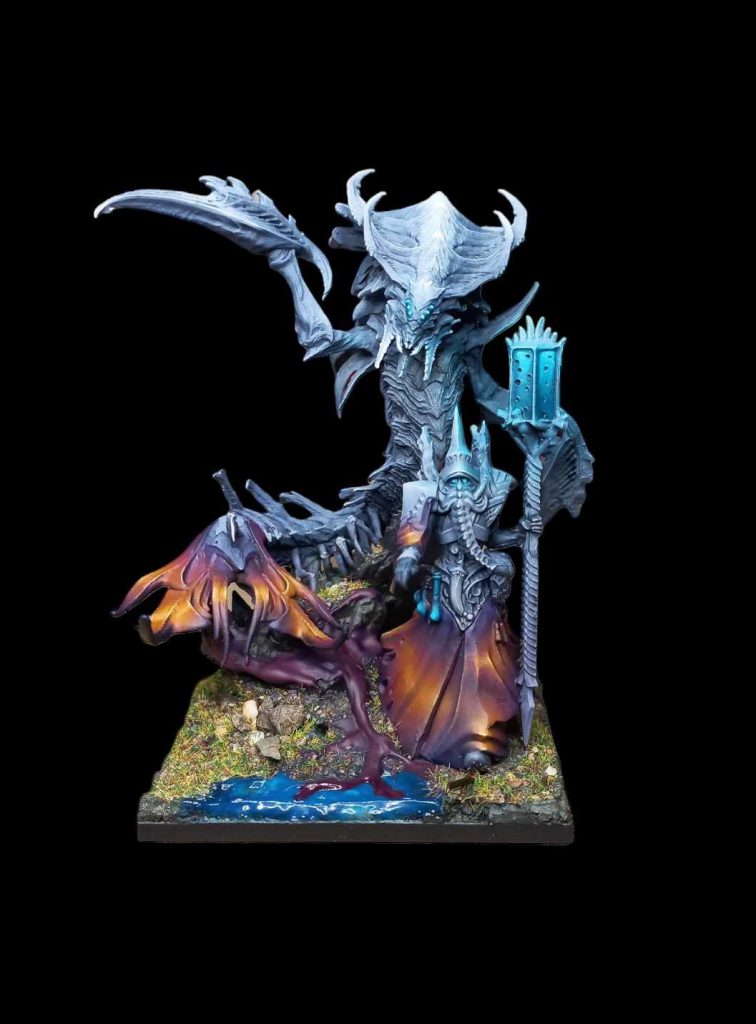
The Pheromancer warlord provides one of the most important abilities you could ask for to enable some spires builds: no conditions, always on, immunity to Strain Expression damage. It’s only for her regiment, but that unlocks larger regiment strain utilisation, which in turn combines well with her alternate Strain Expression option to give +1 March and +1 Clash. This makes her especially at home in Brute Thralls, who benefit from the speed and, as an Impact (3) Linebreaker regiment, develop weirdly credible impact attacks in larger unit sizes.
The Pheromancies themselves are all entirely serviceable. Assuming she’s in Brute Drones, Pheromantic Drive for Tenacious and a resolve bubble will be your go-to option, and if she’s a warlord she can still throw out any of the other options depending on what the situation calls for. Being able to turn off Monster scoring is a potentially hilarious back-pocket tech if Monster Mash lists get uppity in your local community, but the other buff and debuff options are all fine too. The only challenge with them is that demand activation priority; a Pheromancer
needs to activate before the enemy to get value. That’s fine, especially as a one-of character, but it means you generally don’t want a second Pheromancer in most lists.
Biomancer
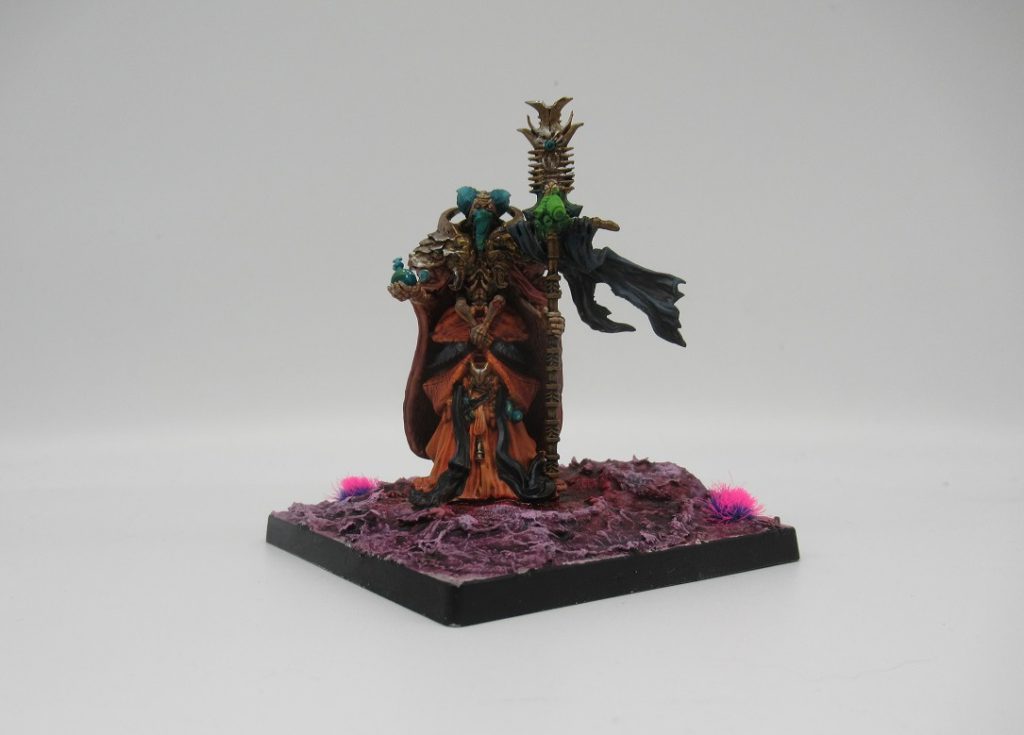
Waiter, I’d like to make a complaint. There’s a Skaven in my Spires update. Perhaps it was in the design brief to include
wacky randomness somewhere in the update, and it seems to have nested in the Biomancer. This makes Biomancies a very mixed bag, but there’s some utility to be found in Essence Transfer especially; yes, it comes at a (
wacky, random!) cost, but Force Grown Drones are a very cheap source of wounds, regenerate even outside of Underspires, and trading Drone wounds for entire stands of Avatara or Clones is a strong trade-up. Combine this with a reliably useful draw event, the occasional use case for the (
wacky, random!) offensive biomancies and a good warband, and the Biomancer is a fine character, just one with a lot of superfluous text most of the time.
As the warlord, their supremacy is conceptually (and narratively!) interesting but can’t impact the battle until after decisive clashes have begun to occur, so will usually be passed over in favour of more proactive options.
Mimetic Assassin
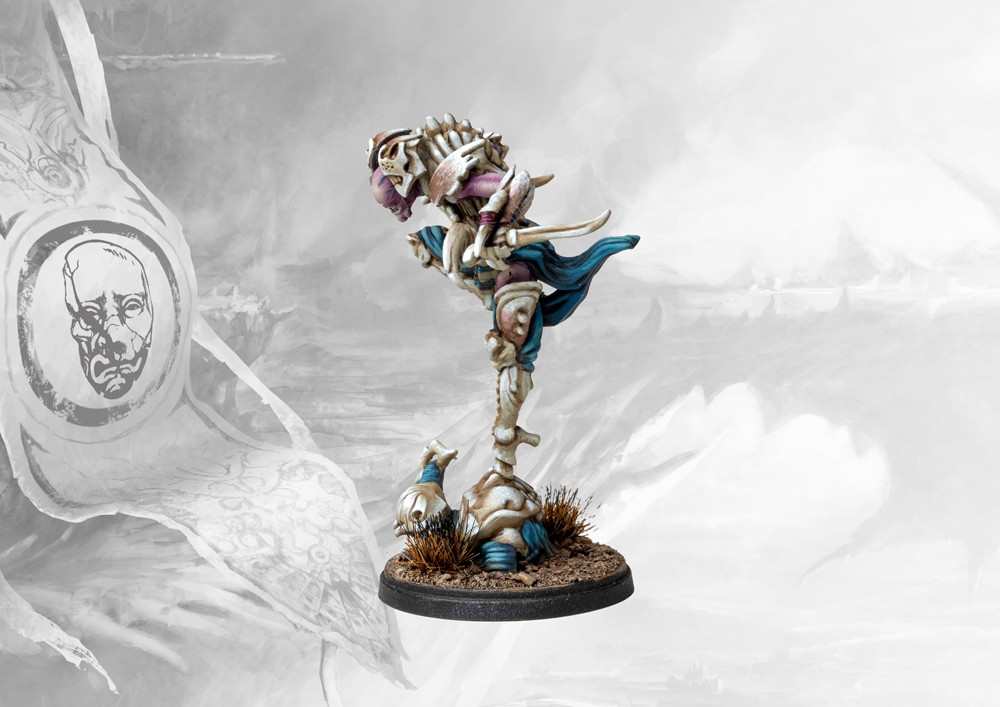 Spires Mimetic Assassin - Credit Para Bellum Games
They finally did it! They finally did what they always should have done with the Assassin: Give it the old Dark Elf Assassin ability where it only reveals its location when its assassination mission begins. They did it in a very elegant way, too - killing a stand as it ‘erupts’, giving out some free hits as compensation, prevents any awkward reform timings. The Assassin couples extremely well with Vanguard Clones and the Convulsive Doom mutation - one Clash from the Assassin probably doesn’t get you 60 points of value (let alone the 100-odd points of value you want to recoup when you factor in the cost of the friendly stand he eats in his birthing convulsion), but two clashes guaranteed minimum gives you very good odds of making you back the cost (12 x cleave 2 hits average, will take two stands off most targets, and the value only gets better if it survives to clash a third time).
Infantry
Stryx
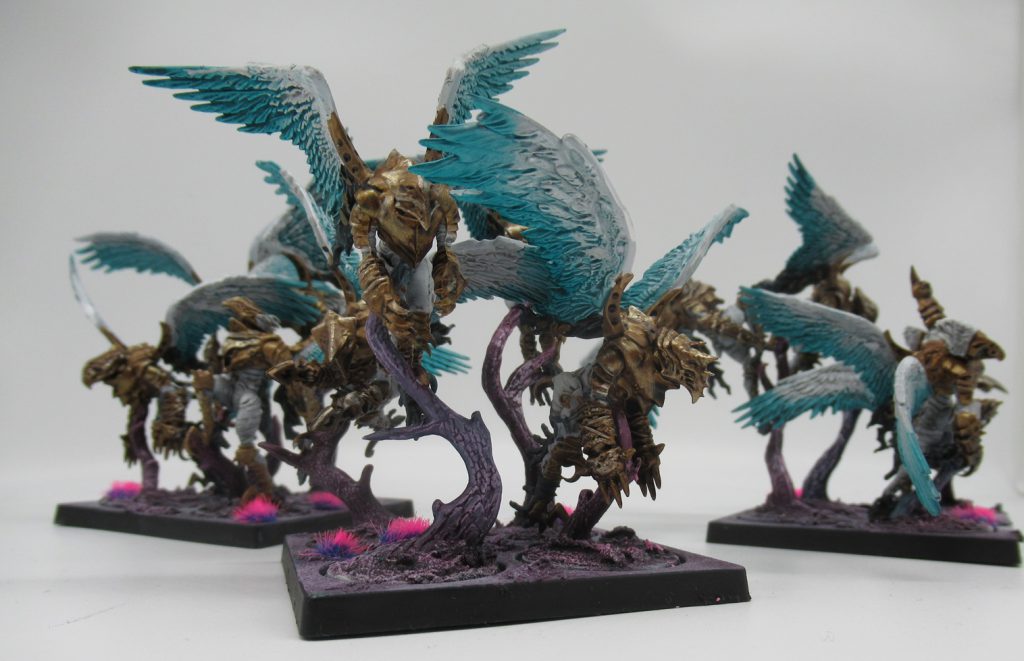
Can I just say I’m happy these are bad now? I am happy because now I no longer need to play Tetris with the big flappy wings of my Stryx models to get everything to line up properly.
I think these are, unfortunately, irrecoverably bad. They now have exactly one (1) role, which is diving onto the flanks of a big fight in progress and using their Strain ability to annoy the opponent. The problem with this is that Strain is a draw event, which makes them extremely initiative hungry, and they are very vulnerable to being cleaned off with an offensive spellcast or two, which are very common in my local meta. The real thing that does for them, though, is they’re in the same role and price bracket as Vanguard Clones, and I think Vanguard Clones do everything they do significantly better.
Bound Clones
These are a consolidation of all the various tricks and synergies that could possibly be put onto the old Bound Clones; they have the old Assault Preceptors and Ward Preceptors built in, a Deadly Blades biomancy buff converted into Cleave 1, and the old
old Biomancer escape mastery refactored into the Bodyguards rule. Adding Iron Discipline to that just makes these a really shocking bag of rules and abilities before you add either Parry or Double Time from the associated character - and if you’re committing that far, a little extra will add Tenacious 1 on top of everything.
I considered taking Bound Clones when I had to assemble all of those pieces individually; now they’re just
juiced right out of the gate. They used to have a single special rule, support 2, and now they’ve got up to seven, reimagined from weedy jobbers to elite infantry. Big change.
As is frequently the case, you will never want to pull the trigger on their Strain ability outside of
exceptional circumstances. Mathematically, it works out much worse for you than your opponent.
Vanguard Clones
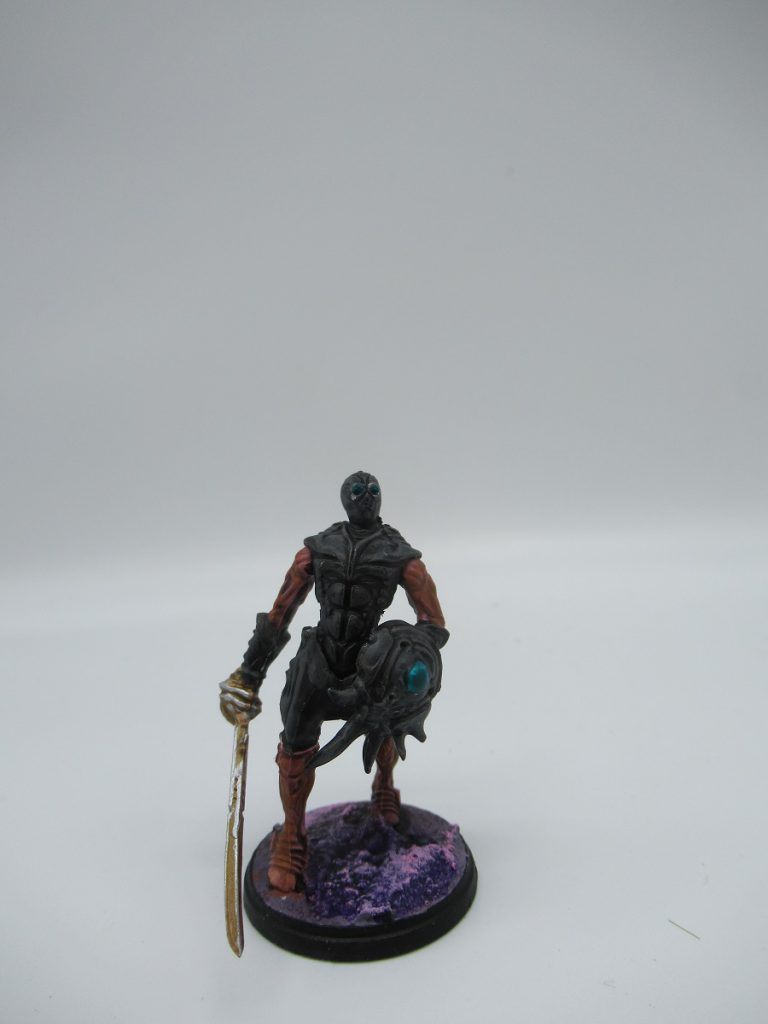
Vanguard Clones were always a marginal unit in Spires list construction, but the new version combines just enough interlocking abilities to give them a very clear role - that of the independent early game piece. They are quick, they are dangerous-ish, they are very resistant to ranged fire - especially with the Underspires for Regeneration 2 - and they can set aggressive reinforcement lines. But most importantly, they do not need or even particularly want any additional synergies, characters or buffs; they are totally fine going out there on their own asking for nothing more than their 145 points. That’s a very pleasant thing to have in a unit.
Marksman Clones
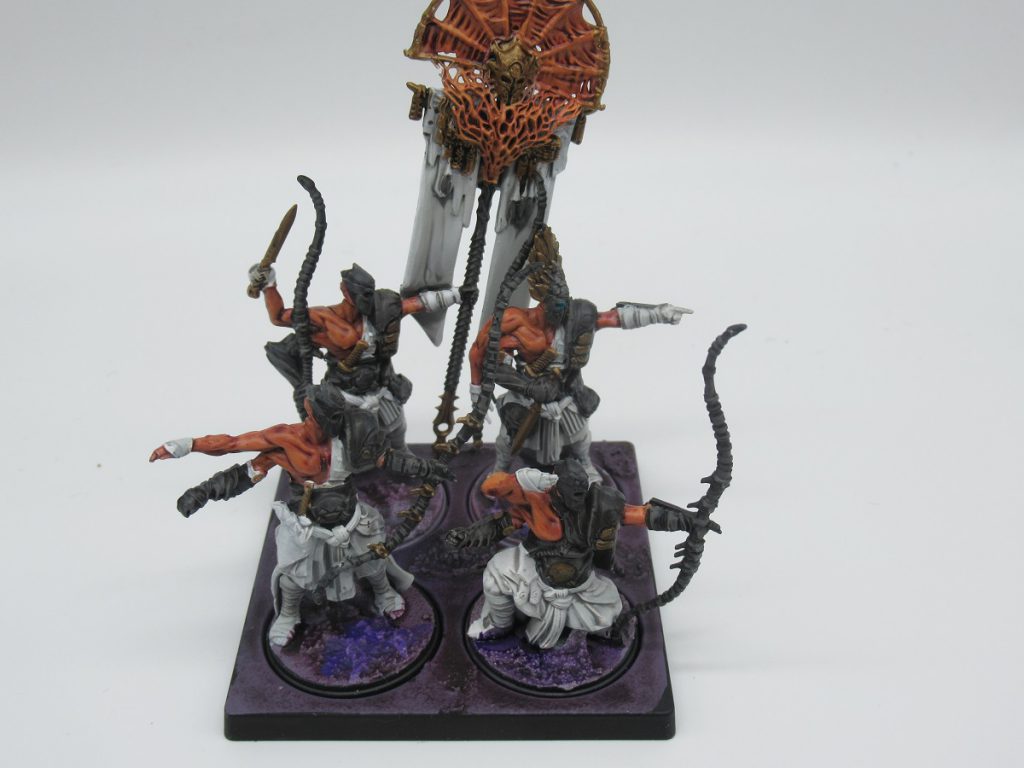
This is one of very few units that actually wants to pull the trigger on its Strain ability regularly, with the caveat that you should online do so if you’re playing Underspires. Assuming it is not taking any return fire you can get the advantage of AP-1 every second turn, more or less, without losing a stand’s worth of firepower. This is important, because if you evaluate the unit without its Strain, it’s a
strictly inferior Danhur Disciple; slower, more fragile, more expensive and with less powerful support. Getting yourself that Amour Piercing is
important, but Underspires provides the infrastructure to make it happen.
Other than that, they’re medium units that pair well with Vanguard Clones, who can’t hold objectives. It’s very possible to build a Vanguard-heavy list with only a small number of scoring units, so Marksmen fill a very important role.
Vanguard Clone Infiltrators
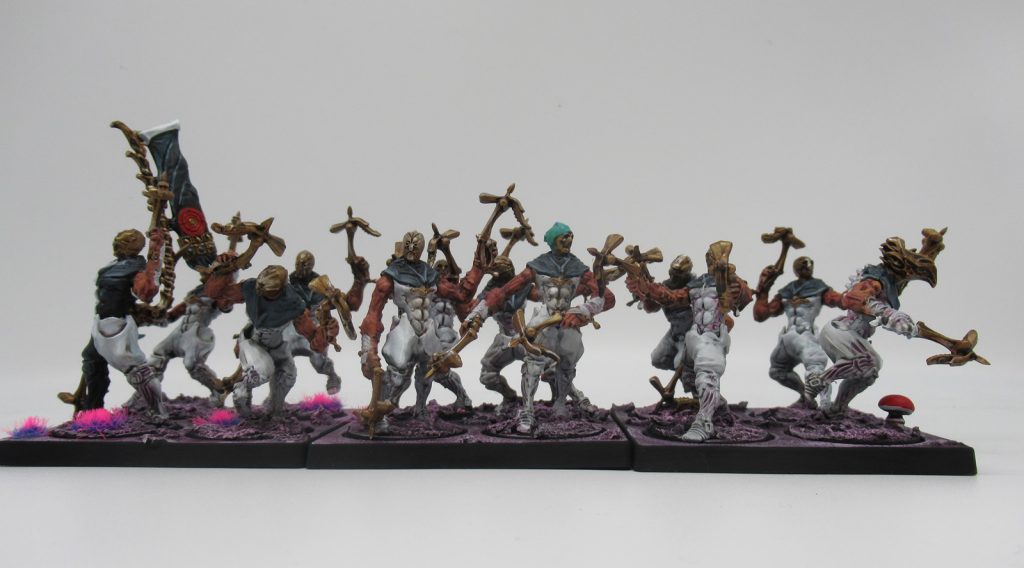
Pour one out for Fluid Formation; one of the most fun rules in Conquest which, apparently, could never quite be made to work in a way that didn’t cause a new player somewhere to insist it couldn’t possibly work the way it did about once every few weeks. And to be fair, if a rule consistently produces player confusion, maybe it’s time to go. It’s been replaced with Acute Senses, which is an
enormously pale shadow with none of the playmaking potential of its predecessor, but we must move with the times.
With Fluid Formation gone, what’s left is a unit that follows the trend of incorporating buffs you’d previously have gotten from external sources - notably, Loose Formation, historically granted to the Infiltrators by an attached High Clone - and incorporates it into the base unit. The cost, here, is a range reduction to 12”. That’s… non-trivial. The Marksman Clones suffer a little going from 20” to 18”, but both those numbers are within the important category of “not going to get immediately charge-clashed by something they shoot”. Infiltrators, on the other hand, now need to be very careful with their targets. Provided you exercise that care, though, being able to combine with regular Vanguard Clones to conjure a light front line with all loose formation and regeneration goes a long way in managing the threat posed by things like the Dweghom magma spellcasters using Inferno Automata to explode your oncoming units on round two; Vanguard regiments can zone those out and make space for your lines to actually form up.
Desolation Drones
The sole remaining holdout from the Spires’ previous faction identity of layering debuffs and applying volume fire, Desolation Drones survive mostly intact and with broadly the same synergies as before; a little more durable in their own right at the cost of having to trigger Strain Expression to get Deadly Shot (which, as usual, is a bad trade much of the time but can be worthwhile in some cases). In the post-update world, Desolations feel almost a little vestigial; there’s no shortage of units that deal independently with armour in the brave new world, and having units that 'work together'
feels like it belongs back in 2025.
Brutes & Cavalry
Avatara
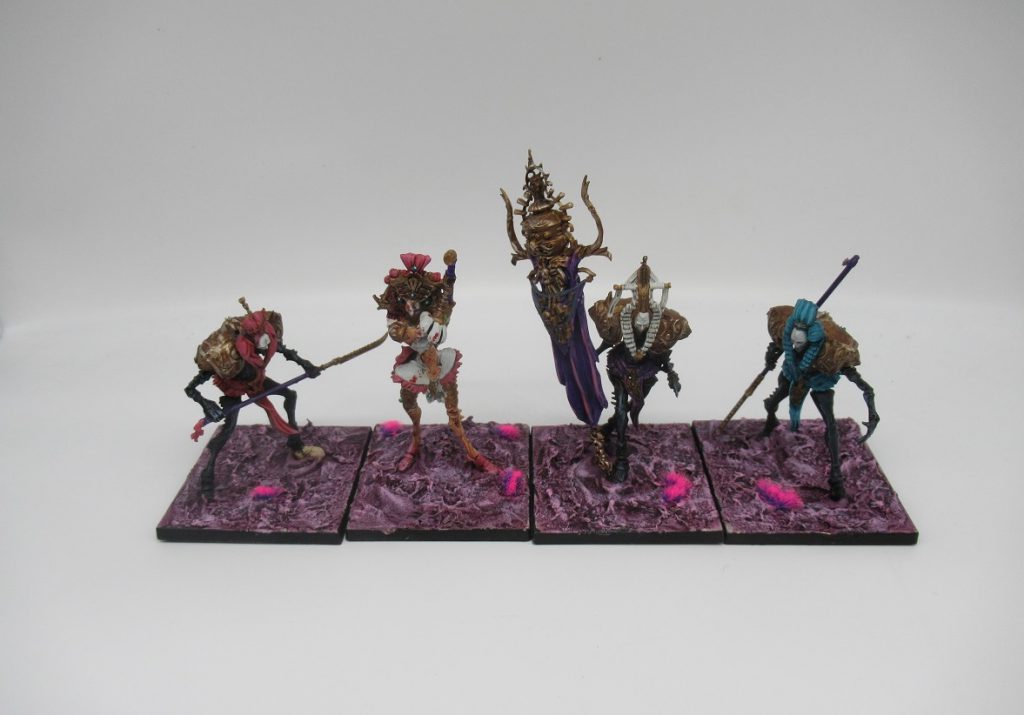
Since the dawn of Conquest it has been hard to have strong opinions about Avatar; they’re always just kind of fine, always reasonably balanced, always the mainstay regiments you reach past to take the wilder stuff on the restricted shelf. As always they’ll do okay against a variety of targets and work very well as a minimum unit operating independently - and they’re also one of very few units that actually gets positive expected value out of its Strain event (specifically, using it against enemy D4 or Hardened regiments is worthwhile just for the damage trade, even if you aren’t trying to secure a kill).
Incarnate Sentinels
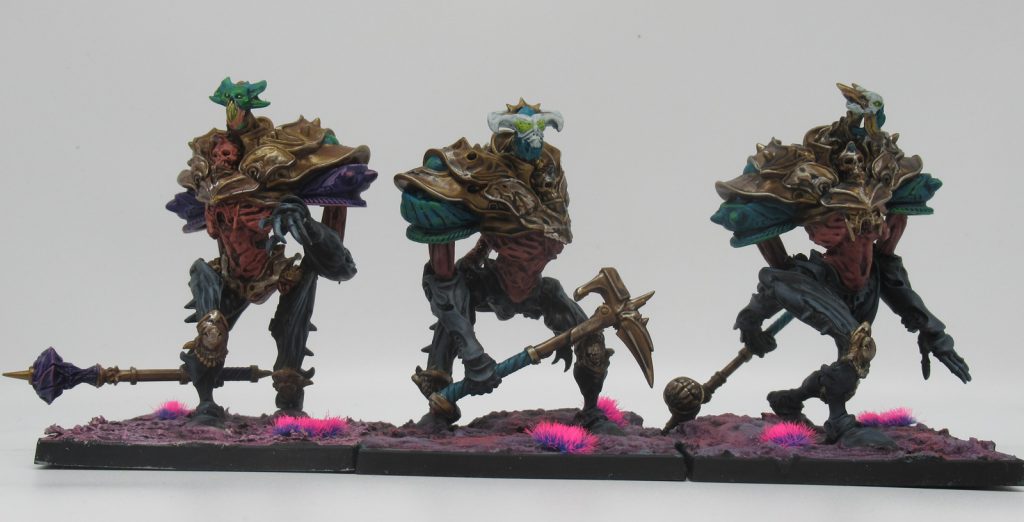
Pre-update, the main check on the power of Incarnate Sentinels was Resolve 3. This meant that to make the most out of these otherwise terrifyingly effective monsters you ended to spring for a large unit size or a character attachment.
This limitation is no more; Incarnates are now Resolve 4 and Fearless making them into take-all-comers independent operators. You can deploy these anywhere on the table without any support and they’ll trade into anything that they’re facing. They may be one of the most baseline
solid heavy regiments in the game, with the lack of Unstoppable or a similar rule being the only thing missing - and which Spires has multiple ways to correct for.
Brute Drones
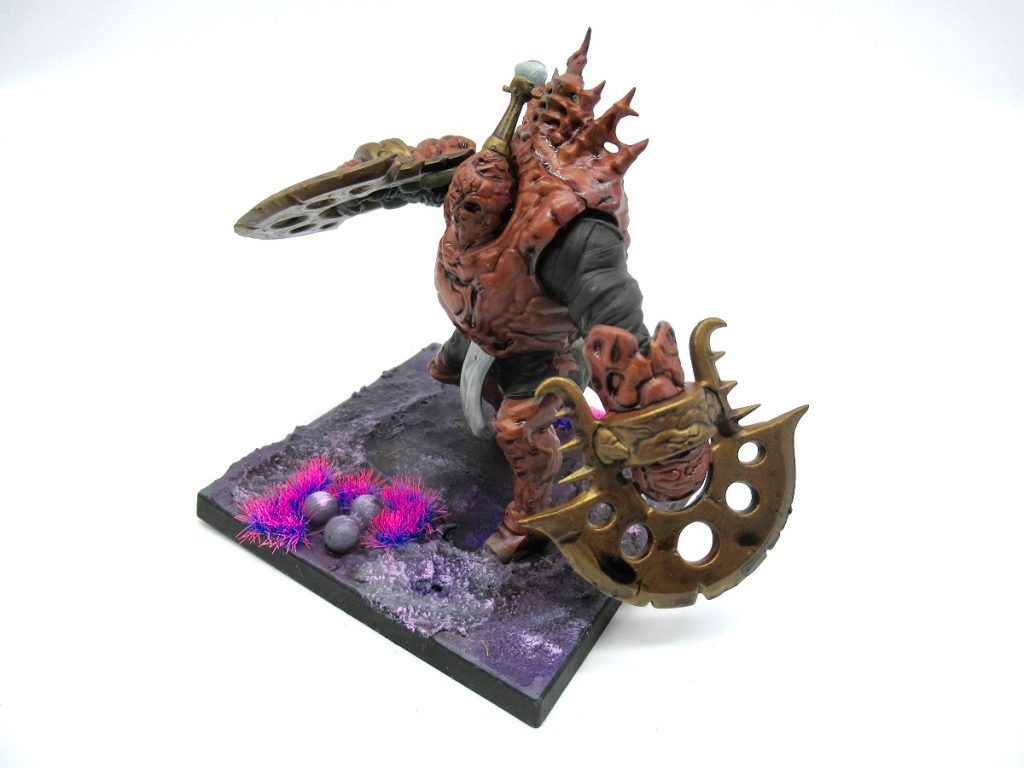
A regiment that’s notably quite pushed out the gate are Brute Drones, who honestly look like maybe someone forgot to remove a rule from them before hitting publish. This is a unit that would be good on its merits without linebreaker, for example, but hey, free linebreaker! While it’s important not to over-estimate how much damage a Clash 2 unit without Flurry can do, they have a good attack count, a good wound count, impact attacks, passable defences and are Mainstay in Pheromancer warbands. A straight up decent MSU, and they scale up well off the back of impacts and defensive buffs if escorting around a Pheromancer warlord.
Centaur Avatara
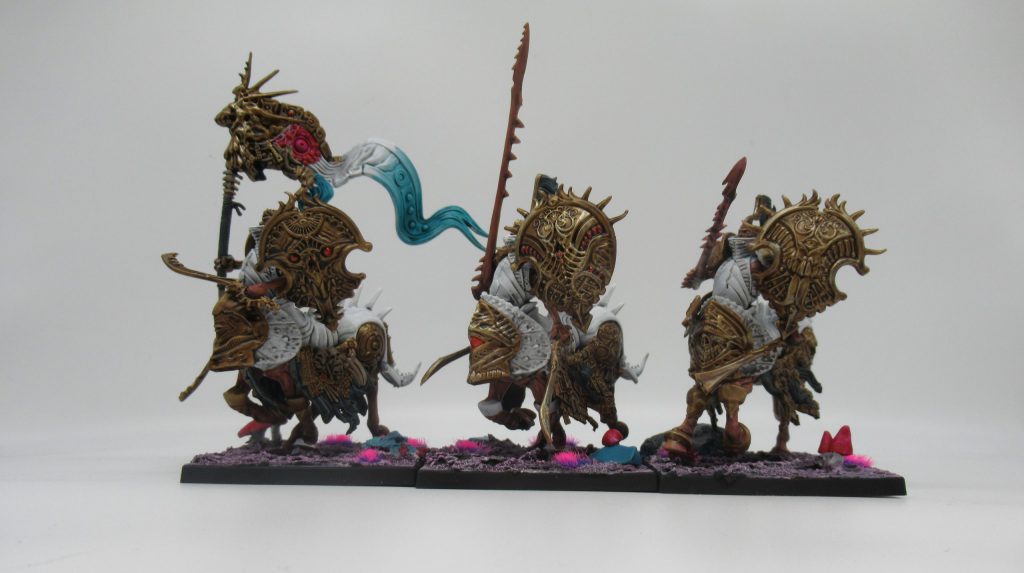
Previously these had a unique role in that they were a bundle of good numbers, pushed and pushed and pushed until finally people started taking them. Now they’re still that, but the average power level of the broader game around them has risen to the point that they’re back to being a middle shelf choice. By objective measures they are just fine, but now thirty points more gets you Incarnates and Incarnates are
juiced.
Leonine Avatara
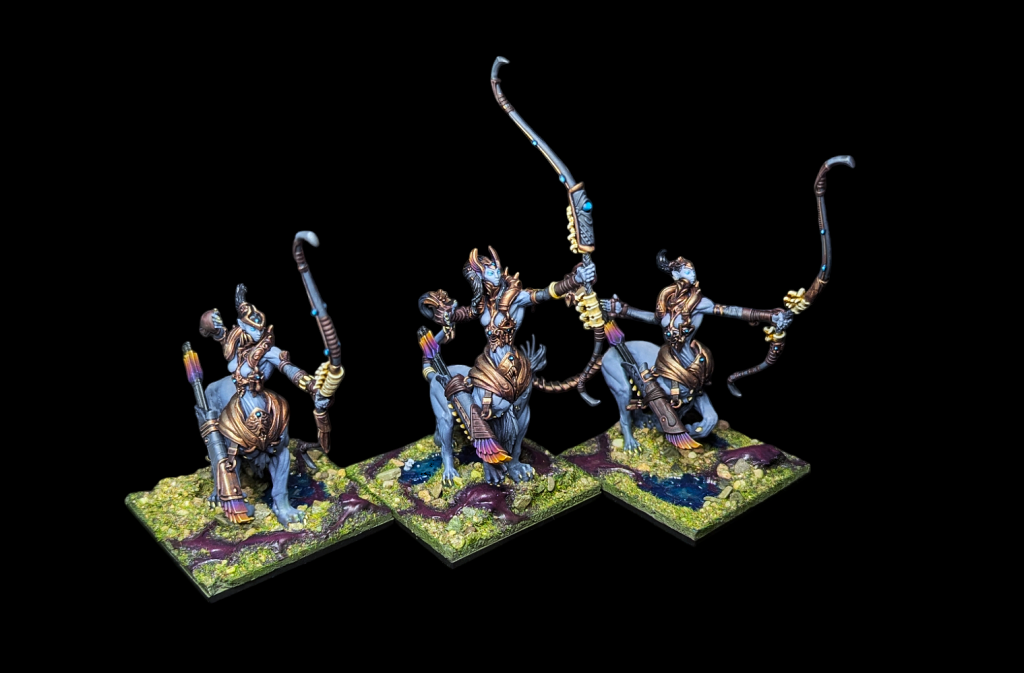
Losing Fluid Formation hurts a lot but these are still good, being able to put low-volume high-damage shots over the heads of engaged infantry blocks or pressure significant distances with their high (albeit non-flying) speed. They’re also a Mainstay choice in the relatively appealing Leonine Prideborne warband. However, if you are not running a Prideborne, and have the restricted slots available, you’re probably better off replacing them with a Pteraphon.
Monsters
The Desolation Beast
Possessing a unique splash damage mechanic, the Desolation Beast is the only thing in the game that can punish a closely locked formation of multiple units. I am hoping that this mechanic does not proliferate - maneuvering units to be perfectly spaced against template weapons has historically been a negative gaming experience for everyone involved, and fighting in close order is a skill we want new players to develop, not be punished for. This ability synergizes particularly well with the Merchant Prince warlord, as it’s one of the higher return-on-investment rules for any 1s you roll with your Fate Dice.
While the Desolation Beast wants to be shooting at range, and takes advantage of its huge size to fire over the heads of engaged brutes, it is reasonably effective in close quarters and gets a lot of mileage out of a volley-charge-impact-trample as a finishing move.
The Siegebreaker Behemoth
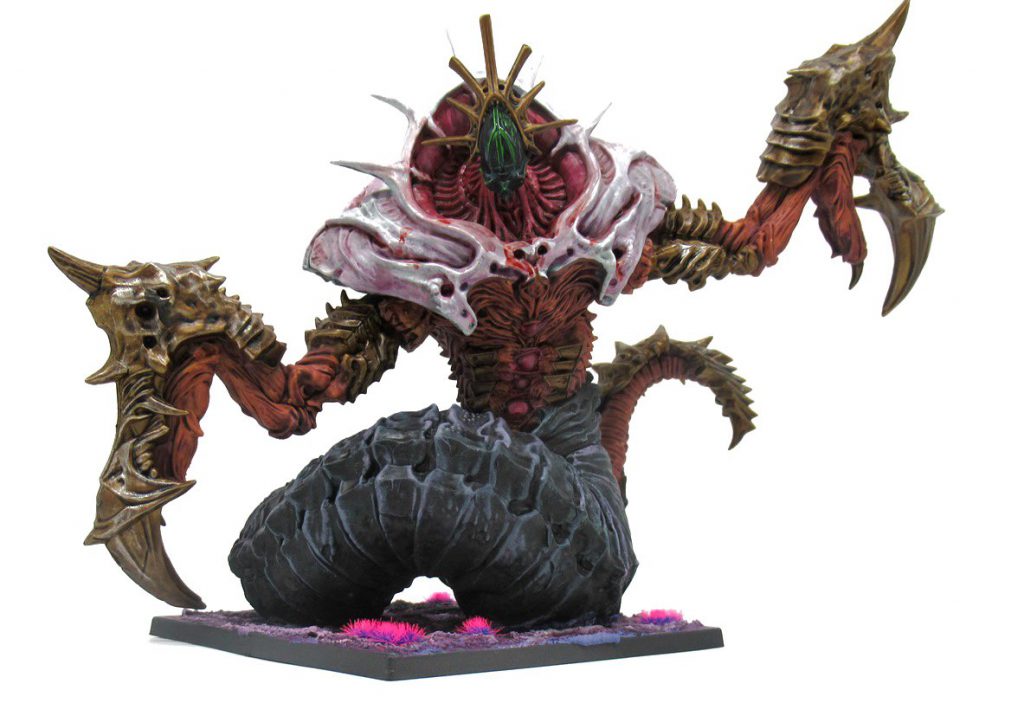
Previously this represented a unique asset for a Cleave-starved faction. Now it is merely a good big monster - an appealing set of stats and abilities, but usually the first thing that I cut when writing lists. Smite is not guaranteed to find appealing targets, and now that Spires doesn’t need to bring a dedicated answer to heavy armour it is something of a luxury piece. It isn’t bad, but at least some of the time you will regret taking it.
The Abomination
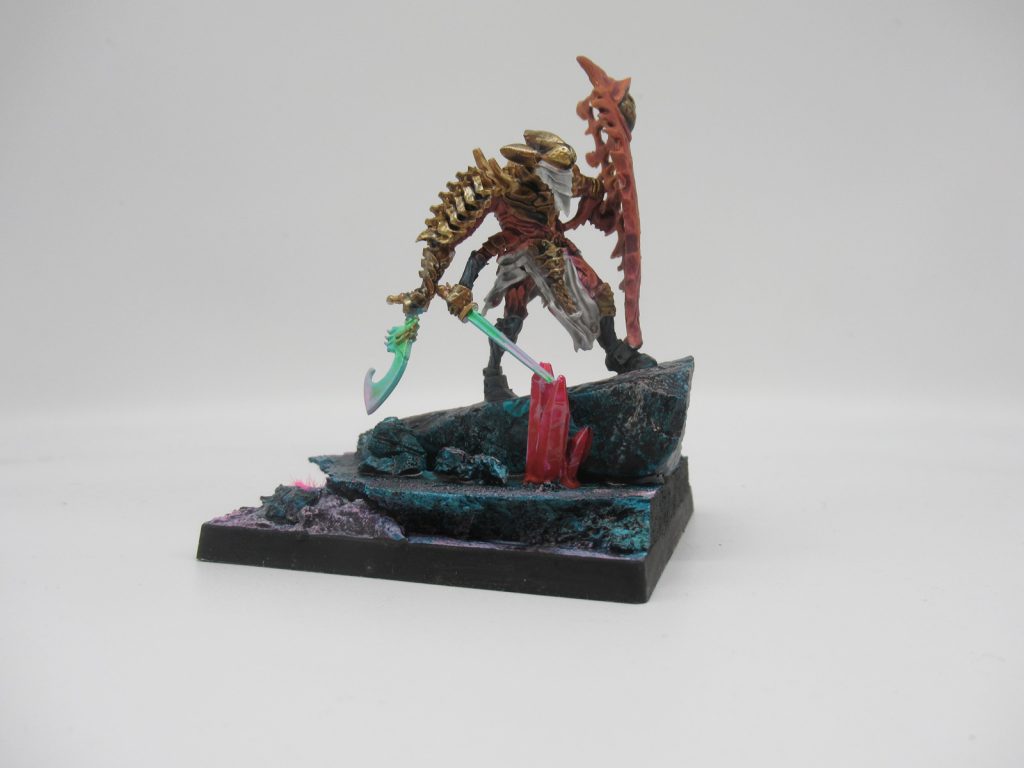
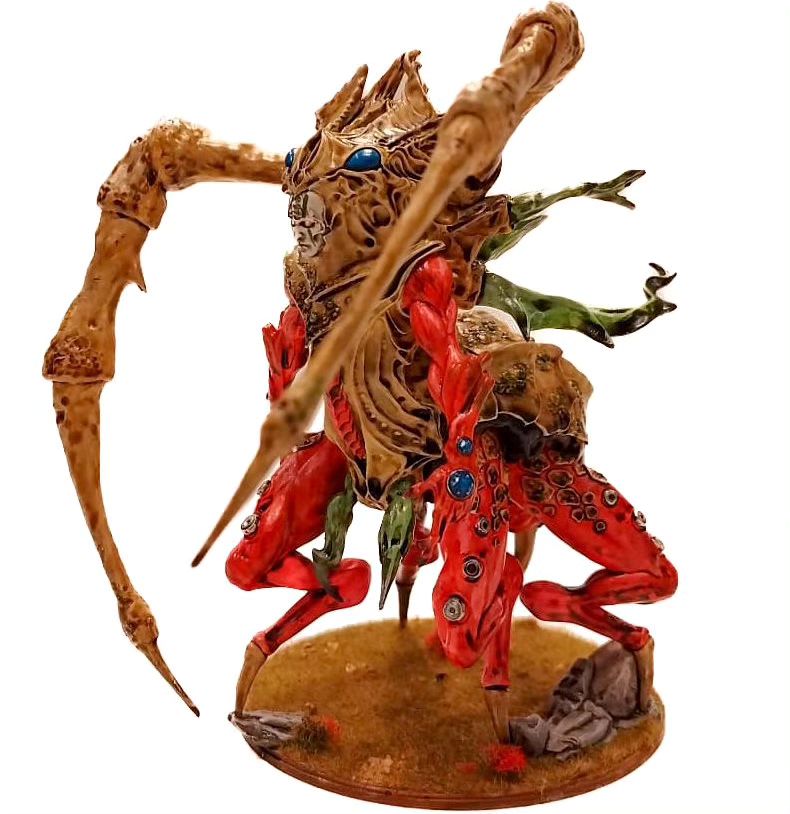 The Abomination, painted by Sam Isaacson
Unfortunately directly outcompeted at its own price point by the Pteraphon. There is just never a situation where the increased close combat output of the Abomination makes up for the ability to place an almost guaranteed move-move-shoot on the turn the Surveyor arrives. If you’re playing Underspires it
is the only monster that can heal through some of the damage caused by Strain Expression, which is nice? But it’s still fragile enough that spending three wounds in the hopes of recovering two on its next activation presupposes a next activation that it’s not guaranteed to get, given you just lopped a fifth of its health away in the face of the enemy.
The Pteraphon Surveyor
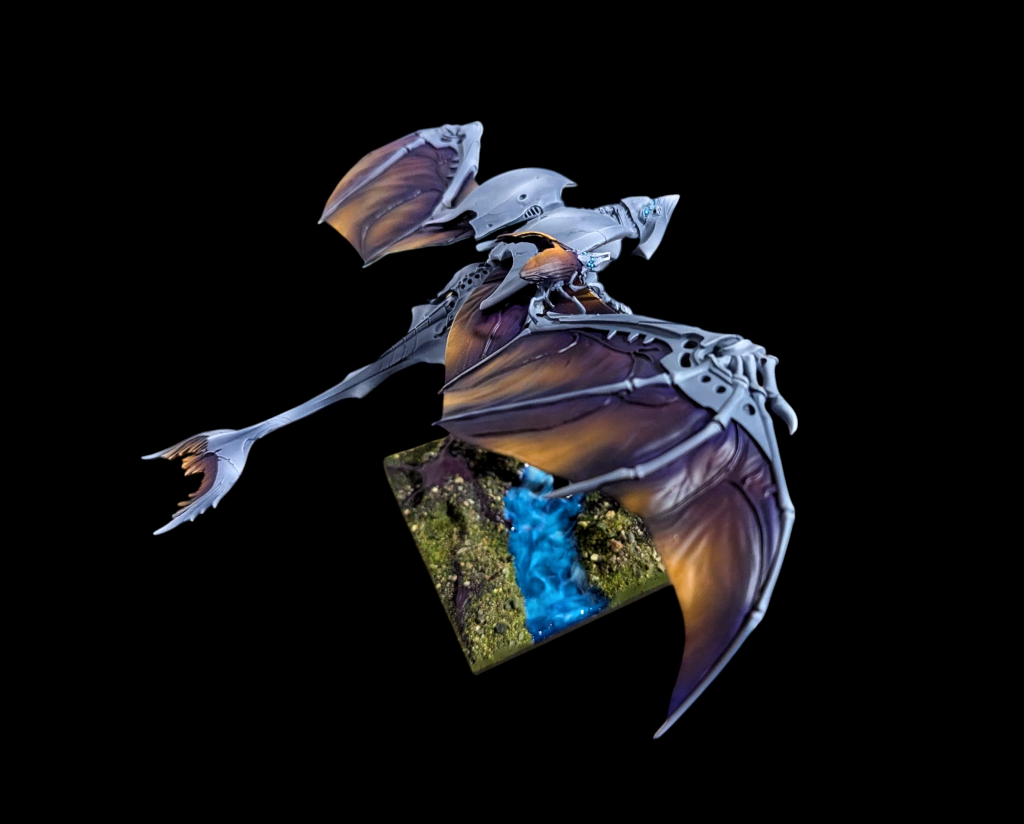
Trying not to think too hard about the beautiful little utility package that was lost: the Pteraphon is very good in the way that a guaranteed shot on arrival is always destined to be. Being able to march 16 inches onto the table and then shoot out another 12 inches means it projects an enormous threat in being, and following that, the ability to volley, charge, and clash over the heads of your frontline to land in the flank of an engaged enemy unit can be a backbreaking move that rolls 26 or 27 dice all on its ownsome.
The Strain ability on the Pteraphon is also a very rare example of an effect that isn’t just a numeric boost of some description, which is situation but
very worthwhile in those situations where it applies; blocking Rally in particular can
really put the boot in when it matters, making a bad situation entirely irrecoverable.
The Consumption Beast
This is my favourite kind of unit: a Quest Unit. Quest Units are units with weird little minigames that you have to do to unlock their full potential; they’re cool little puzzles to solve. In the case of the Consumption Beast you need to trigger 4 instances of Strain before it takes damage to get the full profile. By far the easiest way to do that is to pair it with a Pheromancer warlord - the Pheromancer’s unit is immune to Decay so they can Strain every turn just to feed the beast.
Still, though, if the Pheromancer comes in on a medium on turn 2, and the Beast comes in on turn 3, that’d be turn 7 before you got a ‘clean’ power-up. The second piece to support it should then be 1-2 units of Marksman Clones. They can come in on turn 2-3, strain once each for an AP volley and that’ll put the Beast at full power by turn 4 to 5 reliably, which is about when it’s expected to make contact. Very achievable - but the consequence to this is that you need to baby it until it’s ready to go, which in practice means it’s deploying and acting like a Heavy.
 As always if you want to get 10% off and support Goonhammer you can make your Conquest purchase by clicking here for US/Canada or here for EU/rest of world. You’ll also need to enter code “goonhammer” at checkout.
Have any questions or feedback? Drop us a note in the comments below or email us at contact@goonhammer.com. Want articles like this linked in your inbox every Monday morning? Sign up for our newsletter. And don’t forget that you can support us on Patreon for backer rewards like early video content, Administratum access, an ad-free experience on our website and more.
As always if you want to get 10% off and support Goonhammer you can make your Conquest purchase by clicking here for US/Canada or here for EU/rest of world. You’ll also need to enter code “goonhammer” at checkout.
Have any questions or feedback? Drop us a note in the comments below or email us at contact@goonhammer.com. Want articles like this linked in your inbox every Monday morning? Sign up for our newsletter. And don’t forget that you can support us on Patreon for backer rewards like early video content, Administratum access, an ad-free experience on our website and more.Thank you for being a friend.
 This website uses cookies. Learn more.


 Goonhammer App and Patron Updates: April, 2026
 Kill Team Tournament Report: Engage, Party, Repeat's March Madness 2026
 Goonhammer Reviews: Tribal Conquest