 This website uses cookies. Learn more.
This website uses cookies. Learn more.
This website uses cookies. Learn more.
Goonhammer Historicals is our series looking at the incredibly diverse world of historical wargaming – different scales, different eras, different rulesets. Today in Goonhammer Historicals Marc "Ilor" Renouf takes a look at getting started with World War 2 gaming in North Africa, from the commencement of hostilities in East Africa to the culmination of the events of Operation Torch.
For over a century prior to the beginning of World War 2, the various European powers had engaged in the mad "Scramble for Africa" in which they established colonies throughout the continent. As such, when hostilities started between the Axis and Allied forces, it was a foregone conclusion that the conflict in Europe would spread to the African continent. Indeed, between the Axis conquest of France in mid 1940 and the Allied invasion of Sicily in mid 1943, it was actually in Africa that the bulk of the fighting between the western European powers took place.
The fighting in Africa changed radically over the course of the war, usually as a result of new forces being drawn into the fray or new equipment being fielded by the various combatants. Generally speaking, the conflict breaks down into three smaller theaters.
An often overlooked theater of the war, the first conflicts in Africa took place predominantly in what is now Somalia, Sudan, Ethiopia, Eritrea, and Kenya between the British and the Italians. Both had colonial interests in the region, and the initial stages of the conflict saw invasions by Italian forces across multiple fronts. Early in the campaign the Italians held a significant numerical superiority, and early battles saw British forces fighting a series of desperate delaying actions and withdrawals. But in a pattern that would be repeated elsewhere in Africa throughout WW2, the Allied edge in logistics (and in particular their control of the Suez Canal) would eventually lead to the British reversing the Italians' early gains.
The fighting in East Africa took place in incredibly varied terrain, from rocky deserts to fertile floodplains to grassy uplands, making it easy to put together a decent wargaming table with whatever terrain you have handy. It is also very much an "early war" theater, so if you love troops on horseback, goofy tankettes, and hilarious armored cars, this is the conflict for you.
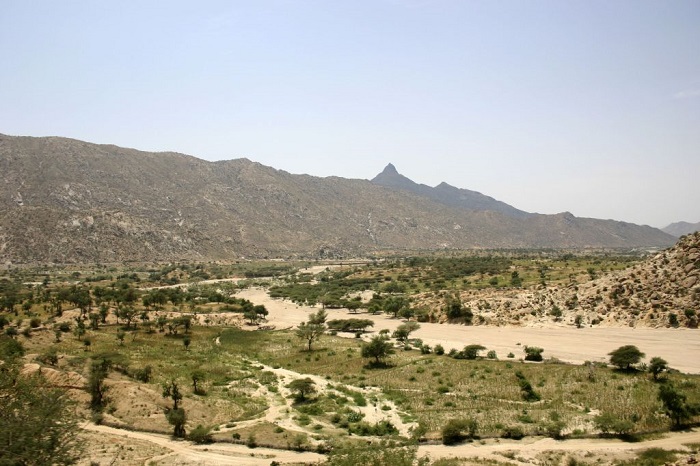 The battlefield of Keren in modern day Eritrea. Indian and Italian troops fought over this terrain in a battle that lasted a grueling 53 days (Credit: Marco Fera)
When most people think of fighting in North Africa, they envision massive forces of tanks sweeping back and forth across the open desert, and this is exactly the kind of warfare that took place in the eastern reaches of the Sahara (ironically referred to as the "western" desert because it's the western portion of Egypt). This campaign saw a series of rapid advances in turn by both the Axis and Allied forces, followed by swift reverses as they raced ahead of their logistical tails and literally ran out of gas. This theater also saw the German entry into North Africa, with the Deutsches Afrika Korps coming to the aid of the Italians in March of 1941. The fighting in the western desert took place in some of the harshest, most forbidding terrain on earth, and the toll on men and vehicles alike was intense. Numerous battles took place here, from the bold Operation Compass that nearly ejected the Italians from North Africa to the swirling, massively complicated Operation Crusader's attempt to relieve the siege of Tobruk, to the action that Churchill famously dubbed the "end of the beginning" - the second battle of El Alamein.
This era of the fighting in North Africa was characterized by armored clashes in the open desert and hard-fought infantry actions along a series of ridges and escarpments, each strategically important for the field of view they offered commanding the surrounding terrain.
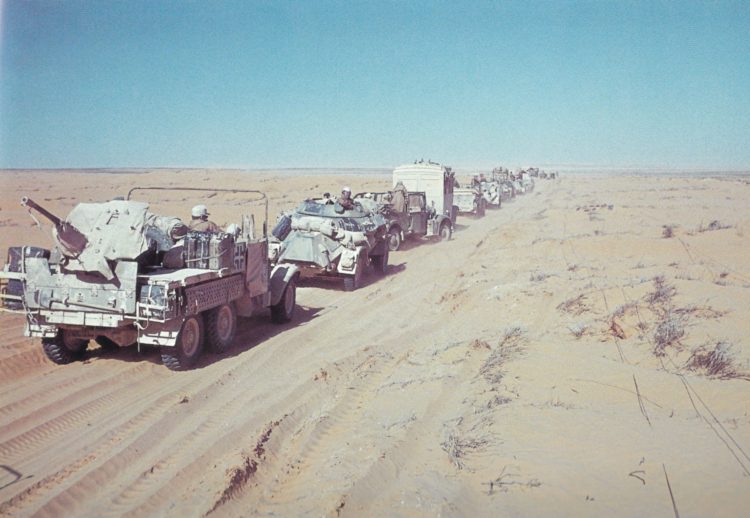 An Afrika Korps convoy moves across open stretches of the Libyan Desert (Credit: Berndt Pietz)
Following the Axis defeat at El Alamein and their retreat from Tripolitania (modern-day Libya), the sole remaining Axis bastion in North Africa was Tunisia. Operation Torch was the name given to the Allied offensive that sought to wrest control of Tunisia from the Axis forces once and for all. It saw the entry of American forces into the war, and served as the model for allied cooperation between American, British, and French forces in later theaters. This campaign involved amphibious landings, the surprise Axis counterattack at Kasserine Pass, the British 8th Army's punch through the Mareth Line, and the race between allied forces to see which would be the first to capture Tunis itself (a prelude to the race for Berlin two years later).
Operation Torch marks the beginning of what many World War 2 wargamers characterize as the "mid-war" period, and as such includes a dizzying diversity of tanks and equipment on both sides. This stage of the conflict is also interesting because of the wide variety of troops that took part; if you've always wanted an excuse to field French Senegalese Tirailleurs, this campaign is right up your alley.
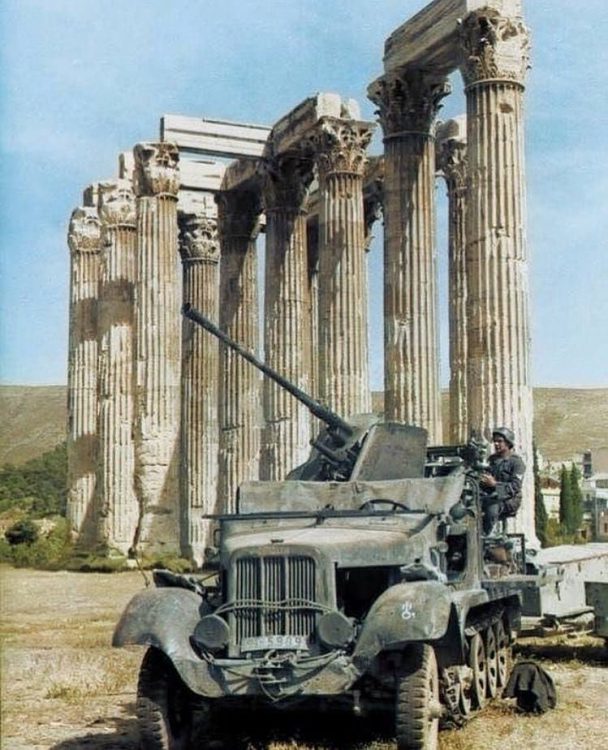 A German SdKfz 7/2 anti-aircraft half-track takes up a position near Roman ruins in Tunisia (credit: Berndt Pietz)
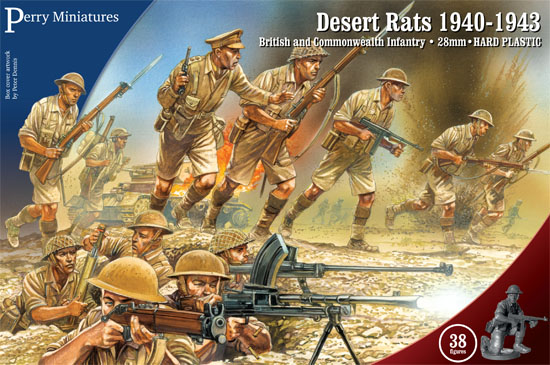 Perry Desert Rats (British 8th Army) Box. This kit contains a complete British Infantry platoon, perfect for use in Chain of Command or Bolt Action. (credit: Perry Miniatures)
Though the Perry brothers' WW2 offerings are relatively limited, the good news is that they've chosen to concentrate on North Africa. The even better news is that they offer a "platoon in a box" for both DAK and the British 8th Army, and recently released American GIs. It's worth noting that the Perry sculpts tend to be realistic in their proportions, and will look a little skinny compared to the offerings of other manufacturers. But for sheer value, the Perry boxes are hard to beat - you can field two complete opposing forces for as little as £40 combined (roughly $50). This was how I got my start in WW2 gaming, and I'd highly recommend it to anyone else who wants to try out the period without sinking in a lot of cash up-front.
For years, Warlord Games carried the aforementioned Perry DAK and 8th Army boxes, but in 2019 they released their own plastic ranges to cover these iconic forces. These new sculpts are of the same "heroic" proportions as most of Warlord's other offerings, and perfectly complement their already massive offerings of support troops - machine gun, mortar, and artillery guns and crews, force commanders, etc. Warlord also carries an extensive range of Italian sculpts, both in standard and desert uniforms. Further, all of their Italian troops use their "Figure Head" system (where each figure comes with multiple head options), which makes it easy to swap out standard helmets or pith helmets, with or without Bersaglieri ostrich plumes.
But by far the area where Warlord shines brightest for North Africa games lies in their vehicle offerings. While their range of resin vehicles is truly staggering, the plastic kits they co-produce with noted model-maker Italeri in particular are quite good, being simultaneously detailed, easy to assemble, and usually giving you options for different variants (that I always end up compulsively magnetizing to field in multiple configurations).
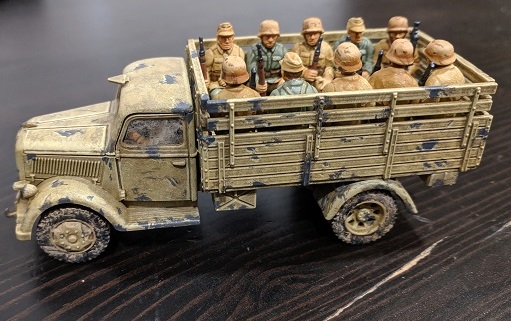 Warlord Games/Italeri Opel Blitz transport truck, painted in an Afrika Korps color scheme suitable for the Western Desert campaigns. (credit: Ilor)
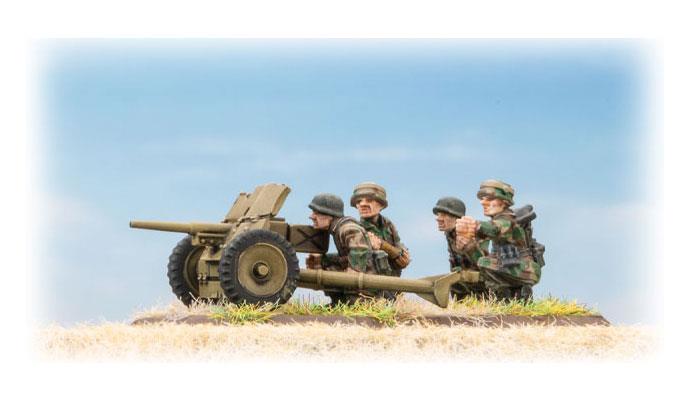 Fallschirmjäger 37mm AT gun crew in 15mm scale (credit: Battlefront Games)
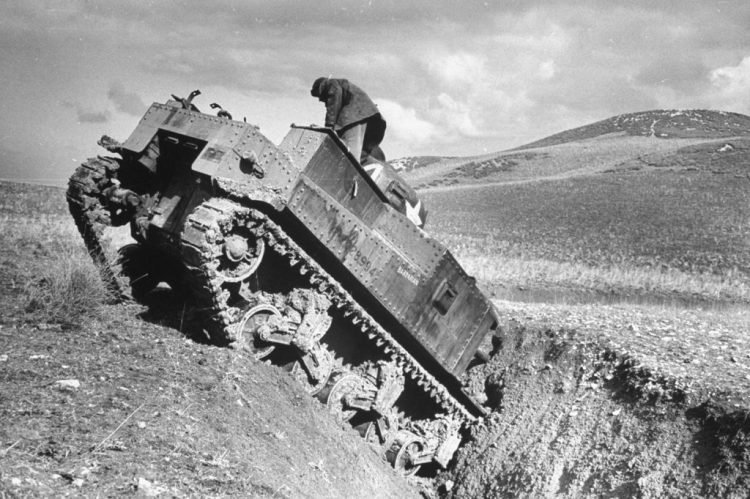 Don't let this be you! Break out of your current wargaming rut and start playing WW2 games today!
Tags:

Thank you for being a friend.
 Goonhammer App and Patron Updates: April, 2026
 Kill Team Tournament Report: Engage, Party, Repeat's March Madness 2026
 Goonhammer Reviews: Tribal Conquest
Support us on Patreon to get access to our Discord and exclusive App features.
Thank you for being a friend.
Already a Patron? Login with Patreon.
Visit our incredibly official store on RedBubble.
Support us on Patreon to get access to our Discord and exclusive App features.
Thank you for being a friend.