Hello folks! Welcome to the Goonhammer Guide to getting started with Kill Team Third Edition, also known as Kill Team 2024, or just KT24.
This article aims to do a few things, the most important of which is to convince you, the reader, that KT24 is a great game and worth your precious time. We will explain here just what KT24 is (and what it isn’t), some of the basic mechanics, and what you’ll need to get started with the game. If you’re a Kill Team veteran who already knows all of these things, great! I’m glad I don't need to convince you on why you should play this game, though I hope you still find this guide useful way to spread the good word of Kill Team. Maybe you’ll even learn something too!
For the KT curious, or anyone who’s just dipping their toes into the world of Kill Team, read on and join me on this journey of skirmish combat in the 41st millennium.
A quick note before we get started: This article is specifically about the current rules set for Kill Team, the aforementioned third edition of the game released in 2024. We will do our best to update this article as new releases in the edition shake things up, and when a new edition comes along we will make sure to provide a handy getting started primer for that too.
What Is Kill Team?
A Brief History
Kill Team is a skirmish scale wargame set in the universe of Warhammer 40,000, though it’s taken a while to reach its current form. The game existed in the wider history of the tabletop version of 40K for many years, but wasn’t really its own bespoke game. Rather, it was a special little sub-ruleset for folks who wanted to play very small games of 40K, usually one or two squads of models pitted against each other without any heavy armor vehicles or monsters to ruin a good time.
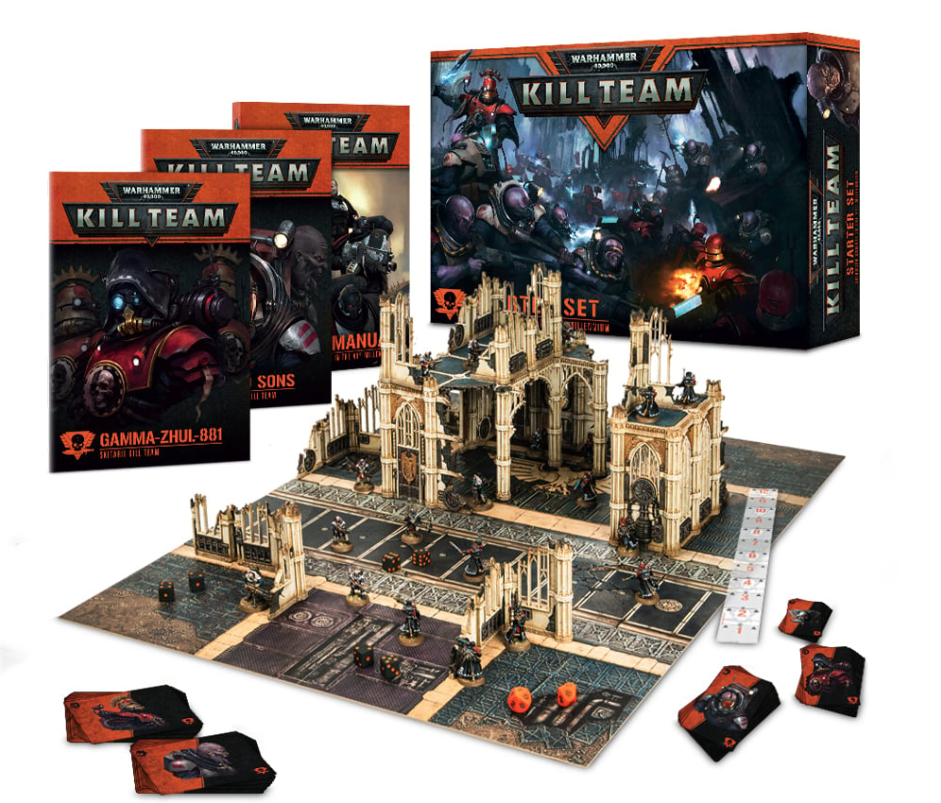
Kill Team's First Starter Set
That changed in 2018, when Kill Team spun off from its larger-scale sibling with its very own game. This first edition of Kill Team, KT18, played like a watered-down version of the larger game. There were some meaningful changes, such as focusing on individual models rather than whole squads, alternating activations, and increased emphasis on terrain and board special rules. In the end, it made KT18 a great entry point into getting into full-scale 40K, but it was very shallow as its own game. This wasn’t helped when future expansions of the game added heroes and more elite squads into the mix, which muddied the theming and threw any hope at balance to the wind.
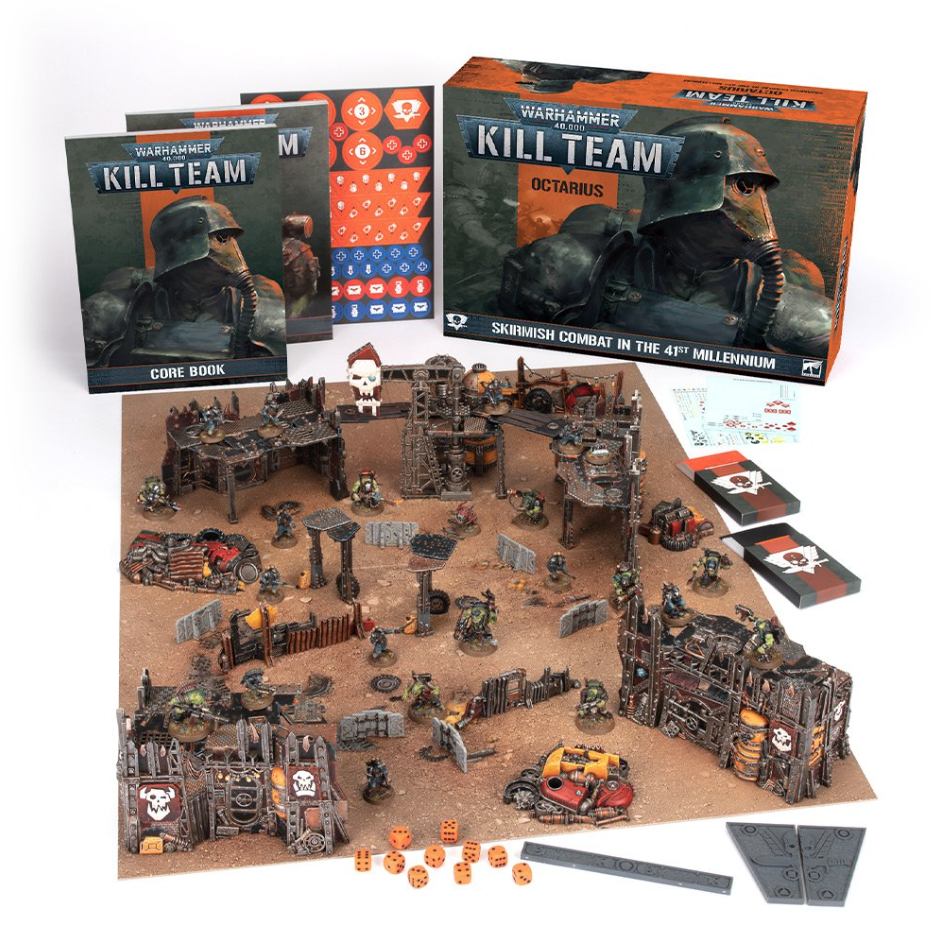
The Release Box for Kill Team's Second Edition
In 2021, Kill Team’s second edition was released, and it was a major change. KT was no longer 40k’s baby cousin game, as it’s ruleset vastly differed from 40k’s. In addition to unique rules, KT21 also marked the first time Kill Team had model releases specific for use in KT, rather than adapting 40K units into the skirmish game. KT21 still had some of these old index teams, as well as a few White Dwarf Teams using existing parts of the 40K range, but now new stuff was being designed and released with KT in mind. Lastly, while KT18 made some attempts at more unique boards, KT21 is where GW hit its stride, releasing the Octarius terrain for Orky-themed ruins, the excellent Gallowdark terrain to represent tight close quarters combat in a space hulk, and the gantry fighting on Bheta-Decima’s ocean map.
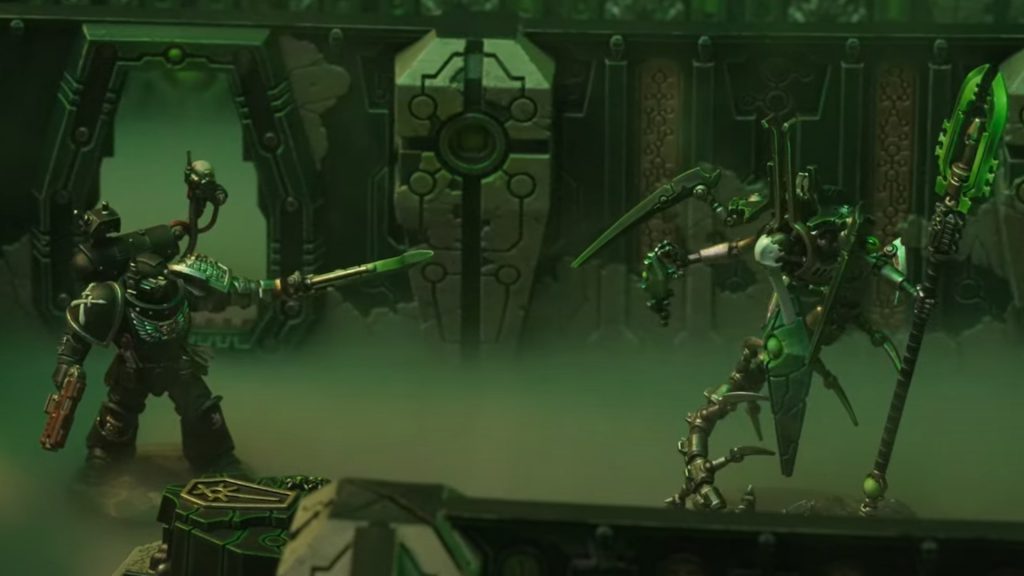
KT24 is much closer to the second edition of the game, rather than an entire rework of the game like KT21 was. There were a few changes to make the game a bit more accessible (like ditching the symbol-based measurements and sticking to using inches), improving and streamlining the ruleset, and leaving the index teams behind to fully focus on the unique teams released for KT. At time of writing, we’ve had two major seasons of KT24, each based around a unique map (which KT24 refers to as Killzones.) The first season was Volkus, which is a ruined cityscape meant to evoke urban combat in a war-ravaged hive. The current season is Tomb World, taking place in the dark hallways of a Necron crypt.
The Basics of Kill Team
Kill Team is a skirmish game between small squads of models, referred to as teams. These teams can range from anywhere between five models to over a dozen, each with a unique ruleset and playstyle. Games of Kill Team focus on using the models on your team, called Operatives, to score points by completing objectives, holding certain parts of the Killzone, and killing your opponent's Operatives.
Gameplay revolves around players alternating activating the individual models on their team over the course of four turns, called turning points. When each model activates, they can perform a number of actions equal to their action points level, or APL. These actions include moving, making a quick dash, shooting, charging into combat, close quarters fight, and falling back, as well as some mission or operative specific actions. Each of these actions has an associated APL cost, and once your APL for the activation is depleted, your activation ends.
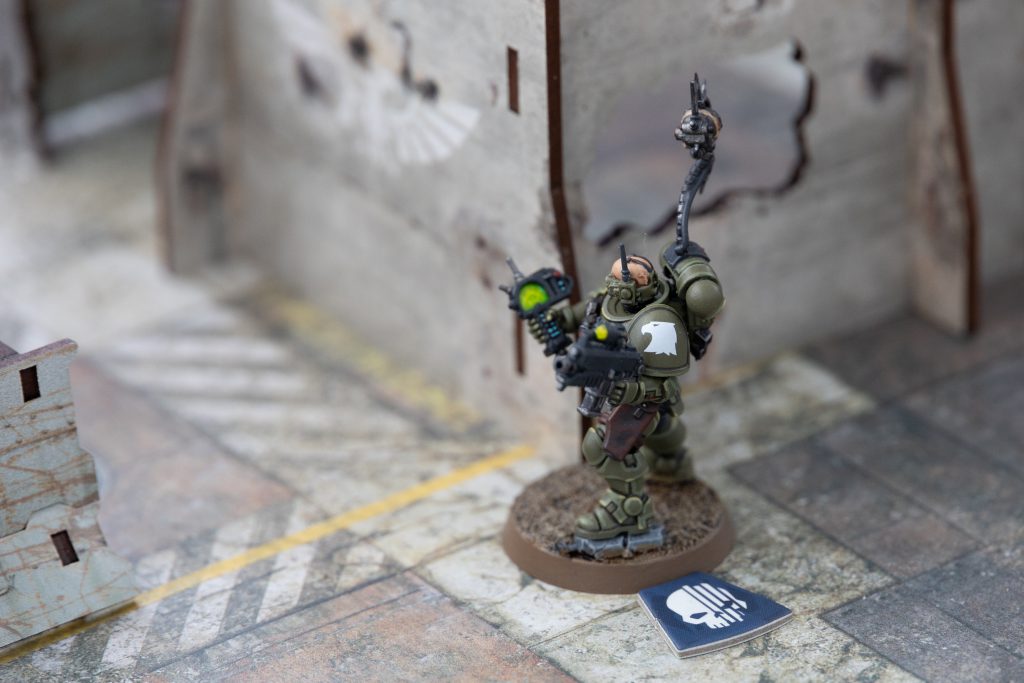
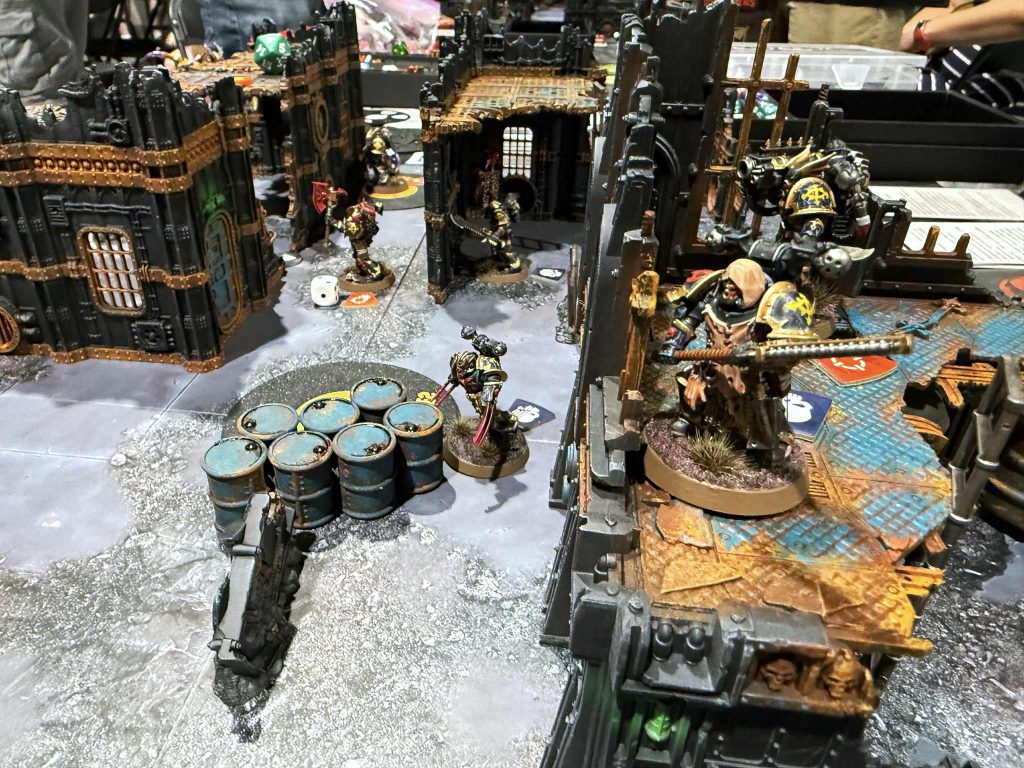
Kill Team at the May GHO 2025
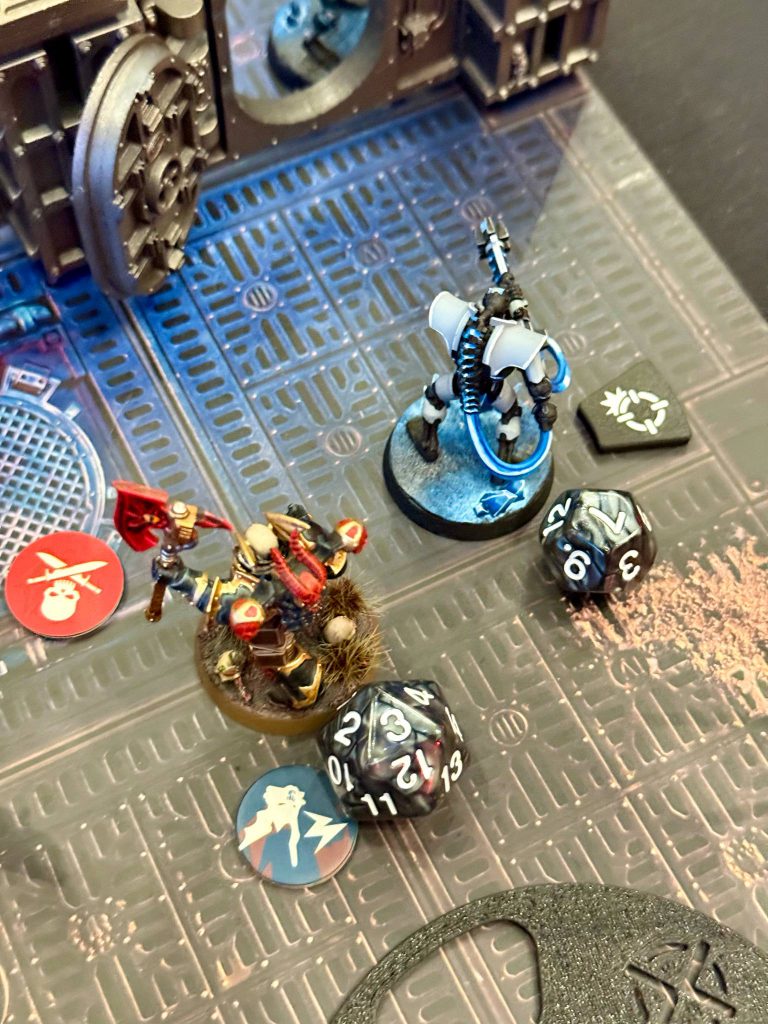
Every operative is given one of two orders when it activates, Conceal or Engage. Conceal represents the operative being sneaky and trying to move around undetected by the enemy. While an operative has a conceal order and is behind cover, they (usually) cannot be shot unless your opponent gets directly in your grill. However, you can’t shoot or charge while you have a conceal order, meaning the safety of stealth comes at the cost of your offensive options. When it’s time to go loud, a model can be given an engage order at the start of its activation. You can be shot at now, even behind cover, but now you can bring your own guns to bear or even rush forward into combat with a charge.
Why Kill Team Rocks
Now that I’ve gotten all of that out of the way, it’s time for the sales pitch.
Let’s use a video game comparison. They did just announce Total War: Warhammer 40,000, after all. With Total War: 40k and Dawn of War 4 both on the horizon, its clear that the setting lends itself to strategy game adaptations, where you take on the role of a commander leading a whole army into battle. These battles are intense, cinematic, but rarely intimate. Sure, your heroes stand out, you may have a pet squad of dorks, but from so far out the bond you can feel with “your dudes” isn’t as strong.
Enter Kill Team, stage right.
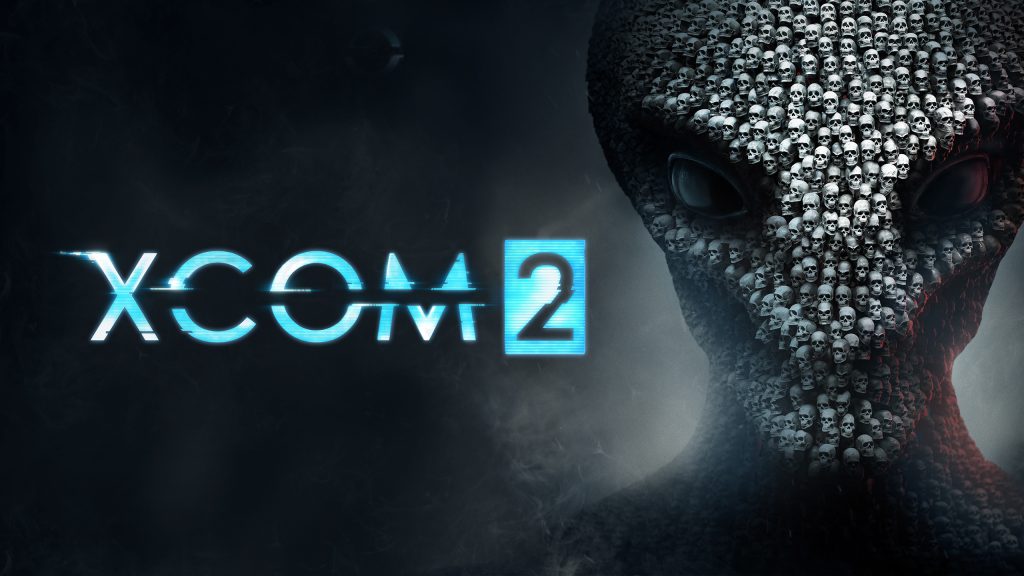
If 40k is a grand, sweeping strategy game, Kill Team is XCOM. A small squad of elite alien fighters against an impossible threat. You’ve built up your team, know each other's strengths, and their fate is on the razors edge every deployment. Making a bad choice or even a run of bad luck could spell the demise of one of your squad members. Every bit of positioning matters, each shot a nail biter, every victory hard fought. It’s a game light on story, but that rarely matters, as the real narrative is the one told through these missions and your squad. The kind you excitedly tell your friends about when you see them next. The stuff that sticks with you for years.
Kill Team thrives on that same feeling that you get from XCOM, where each of your operatives matter and set the game up for memorable, high-stakes plays. The rush from a big moment in Kill Team is hard to beat, whether its an operative single handedly holding down a flank, surviving with barely any wounds left, or triumphantly taking out multiple enemy operatives in one activation.
And every team feels different, which is a fun way to explore the world of Warhammer 40k through rules. Take Space Marines, for example. In the 40k tabletop game, the superhuman nature of Astartes is muted. A regular Intercessor isn’t really capable of doing much in a fight or with shooting, and it doesn’t feel much stronger than the average Guardsman does. Kill Team Space Marines, meanwhile, are murder machines and extremely dangerous, each one of them easily being worth several operatives on other teams. If you watched “Astartes” and wished your Space Marines could feel like that on the table, I’ve got great news for you: They absolutely do feel like that in Kill Team.
The game achieves a rare convergence between thematic gameplay and competitive, tight rulesets. I’ve had many games where a close game that could go either way suddenly devolves into slapstick comedy, like watching my Chaos Space Marine absolutely whiff a fight with a Necron and almost die, nearly costing me the game, only for the Necron to also miss completely his follow up fight, leaving both fighters stuck in the galaxies most tense game of grab-ass.
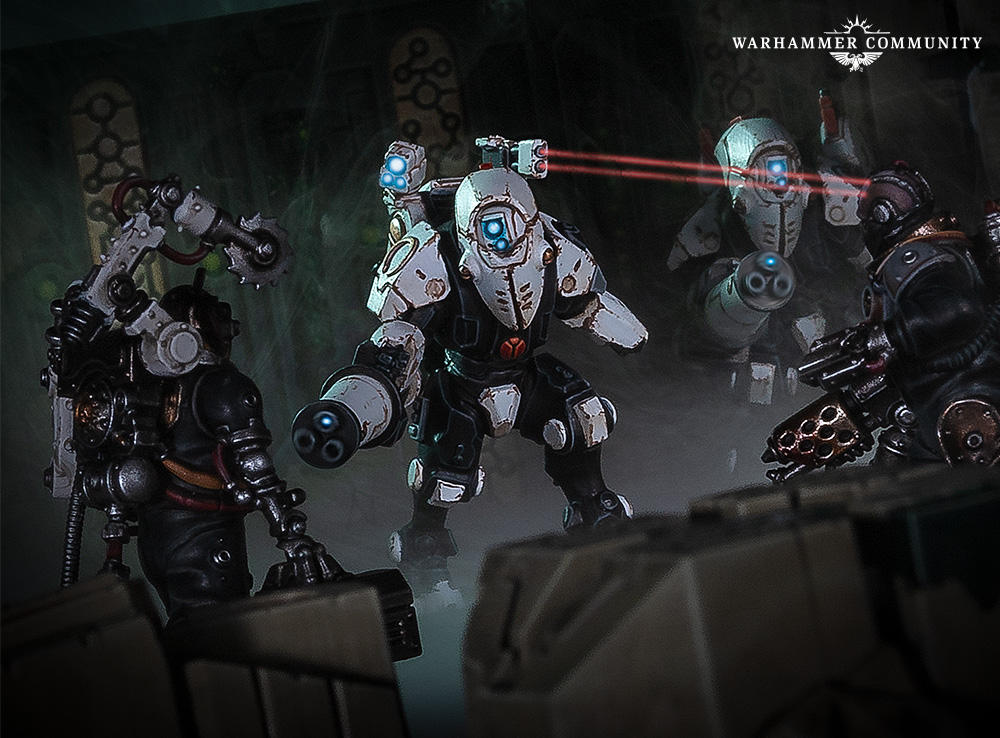
If you love the idea of “Your Dudes” in Warhammer, where every model is a special little guy, you’ll love Kill Team. If you like tight rulesets for competitive games while also telling thematic moment to moment stories, you’ll love Kill Team. If you want your Space Marines to feel like death incarnate, or for your Mandrakes to be terrifying stalkers in the shadows, or for every Necron to feel like an undying mechanical horror, you’ll love Kill Team. And of course, if you ever looked at a copy of Metal Gear Solid and thought that just the thing Warhammer needed was more tactical espionage action, then you’ll definitely love Kill Team.
Credit: Warhammer Community
A Note on What Kill Team Isn’t
Before I get too much further here, I feel an obligation to make an important distinction on what Kill Team isn’t, before I go into the basics of the game and why it rocks.
Because Kill Team has a smaller scale than Warhammer 40,000, I’ve met a few folks who have come into KT24 expecting the game to be a great way to on-ramp folks into the larger game by starting small. On some level, this is true. It's a much easier sell for those curious in Warhammer to buy one box of models to start playing games, rather than a whole lot of boxes. Additionally, the co-op missions that debuted in KT24 provide a great way to teach new players the game without the stress of competition. It helps that the game is fun too.
All of these things make Kill Team a great way to get someone into Warhammer, but there is a big distinction here: Kill Team is not a great entry point into Warhammer 40,000.
If your goal is to try and get into Kill Team, or show your buddy Kill Team, explicitly thinking that the game is just small-scale Warhammer 40k with simpler rules, you’ll run into a wall pretty quick. The rulesets between the two games have some overlap, but they are also very unique in a couple of ways that really matter, like how fighting works, action points, engage and conceal orders, or how cover interacts with models. I’ve seen folks try the game with the expectation that because they understand 40k, they’ll understand KT, and bounce off it quickly when they realize how different it is.
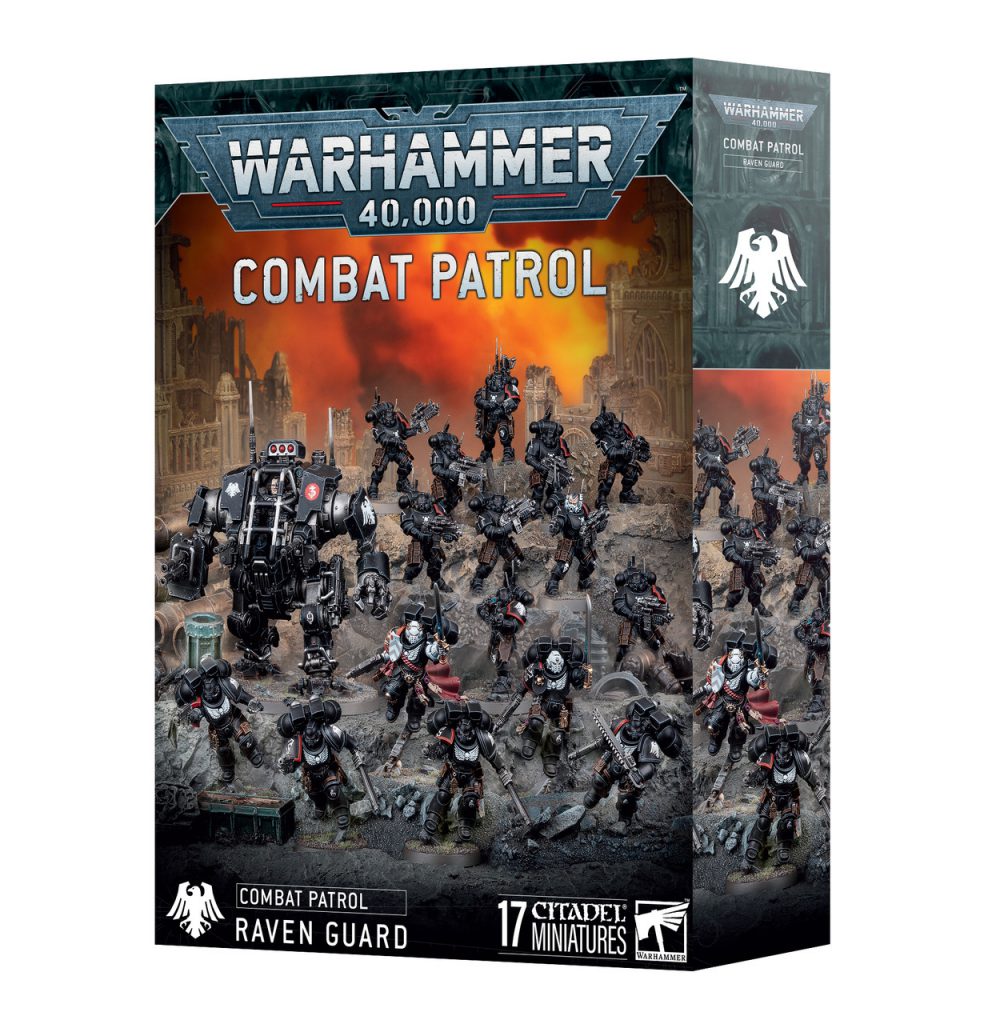
I don’t want to make it sound like you can’t play both games, or that you can’t use Kill Team as a way to get folks into Warhammer 40,000. It's more to say that you need to approach Kill Team as its own game to enjoy it, rather than just expecting it to be smallhammer forty thousand. If your goal is to specifically teach someone 40k at a small scale, you’d do much better with Combat Patrol.
Still with me after that? Fantastic, I love to hear it. Now that we’ve given the background on the game, let’s talk about what you’ll need to get started with Kill Team.
What You Need to Get Started
I’ll be dividing this bit into a few sections. The first will be a section for true beginners, who may be new to to tabletop wargames in general and may need to take getting into the game slowly. The next section will be for the basics, representing a good starting place for most folks who are familiar with tabletop games who want to hop right into the game. Finally, I’ll have an advanced section, for some extra stuff you can grab if you end up hooked on Kill Team and find yourself wondering where you should go next.
For Beginners
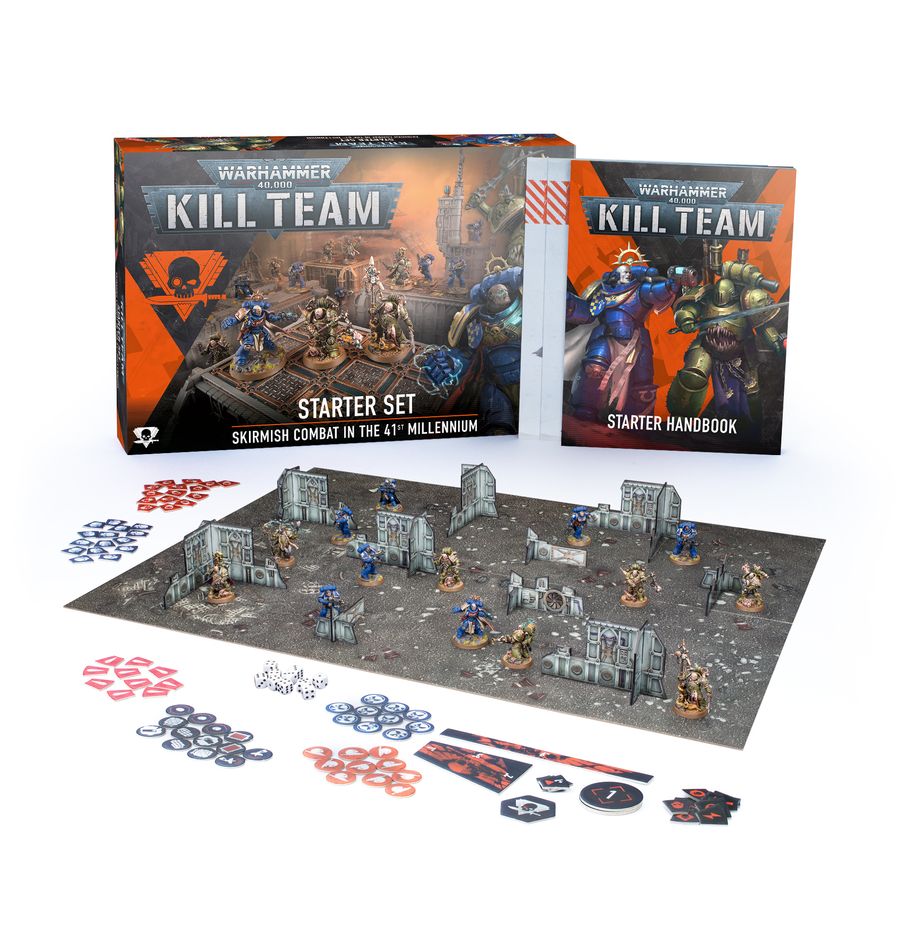
Kill Team Starter Set
It’s hard to find a better entry point to teach someone Kill Team than the Starter Set. This box is perfect for learning games, featuring two teams (Plague Marines and Angels of Death) with some beginner rules, a getting started rulebook, and a game board with MDF terrain. Both teams are push fit as well and come in colored plastic, making even putting the models together less intimidating. As an added bonus, both of these teams have very solid rules in the full game, making transitioning from starter games to full games a breeze. If you know someone who is KT curious, or you yourself want to give the game a shot at a very easy to learn level, its hard to go wrong with the starter set.
Basics
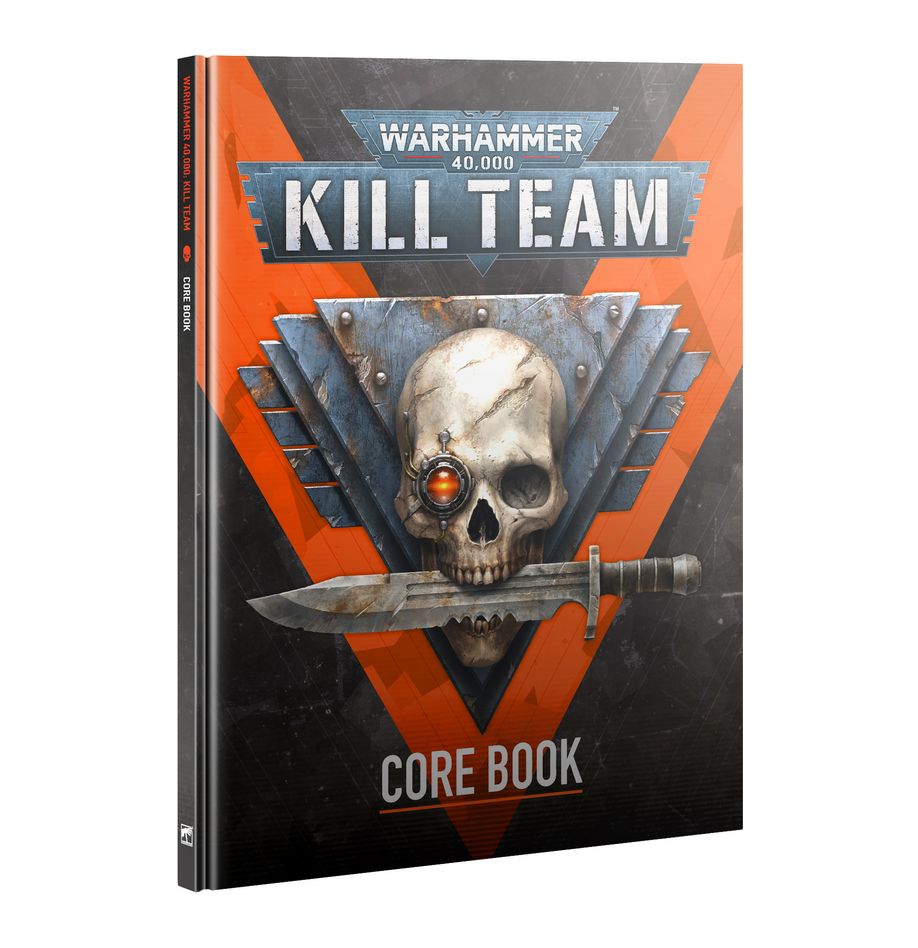
The Core Rulebook
The Core Rulebook features the full rules for Kill Team, which includes several very important rules that you won’t find in the lite version of the rules (or the KT App), such as rules behind obscuring and terrain keywords. Plus, the core rulebook also includes a punch sheet of the basic tokens for the game, including conceal/engage tokens that you’re guaranteed to use every game. Buying a rulebook is never the highlight of anyone’s purchase history, but its vital if you want to actually get into Kill Team.
A Team of Your Choice
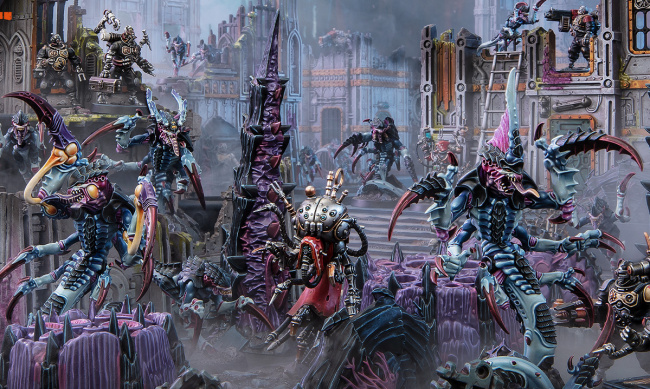
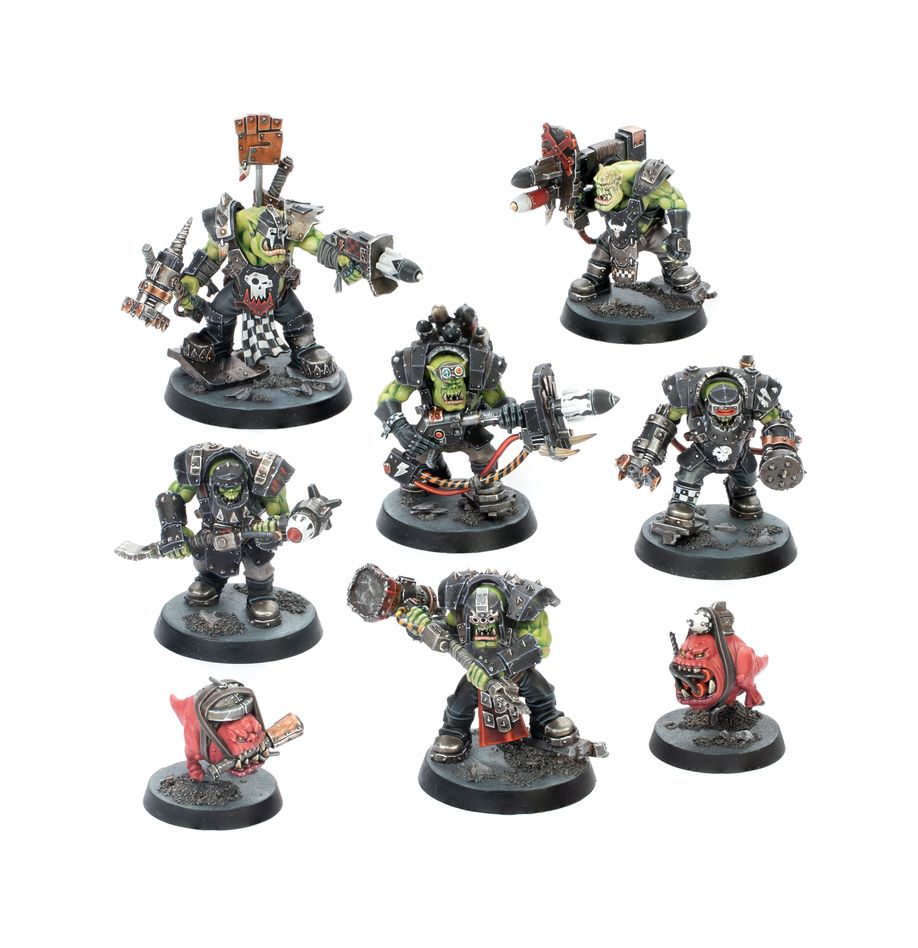
It could be this team right here, Wrecka Krew!
Now for a more fun purchase! Your very first Kill Team!
There's no wrong choice here, at the end of the day you should collect the models that capture your imagination and excite you. But, there are a few teams that are a bit more difficult to collect or play than others. If you want to avoid buying lots of different boxes to have a full team, I would recommend avoiding Chaos Cult, Blades of Khaine, Ratlings, Brood Brothers, or Inquisitorial Agents. If you want to avoid playing a team with very complicated rules, I’d avoid Mandrakes, Battleclade, Canoptek Circle, and maybe Ravenors.
For most of the other teams, you should be fine getting started with just one box of models and building out the special options. And honestly, if your heart is dead set on one of the teams I’ve mentioned, follow your heart, don’t let me stop you! Just be warned it might be a trickier place to start compared to other teams. Whichever you pick, KT boxes even have appropriate tokens for the team included, so you don’t need to worry about that.
The Kill Team App
Credit: Warhammer Community
The Kill Team app is about as basic as apps come, but that doesn’t diminish it’s usefulness. The app includes the rules for every single Kill Team, as well as the lite rules for the game and updates for any errata or Dataslate changes. When you’re looking at rules on the app, its always going to be the most current version of those rules. There’s not much going on under the hood of the app, its basically a glorified PDF reader, but it’s an extraordinarily useful PDF reader.
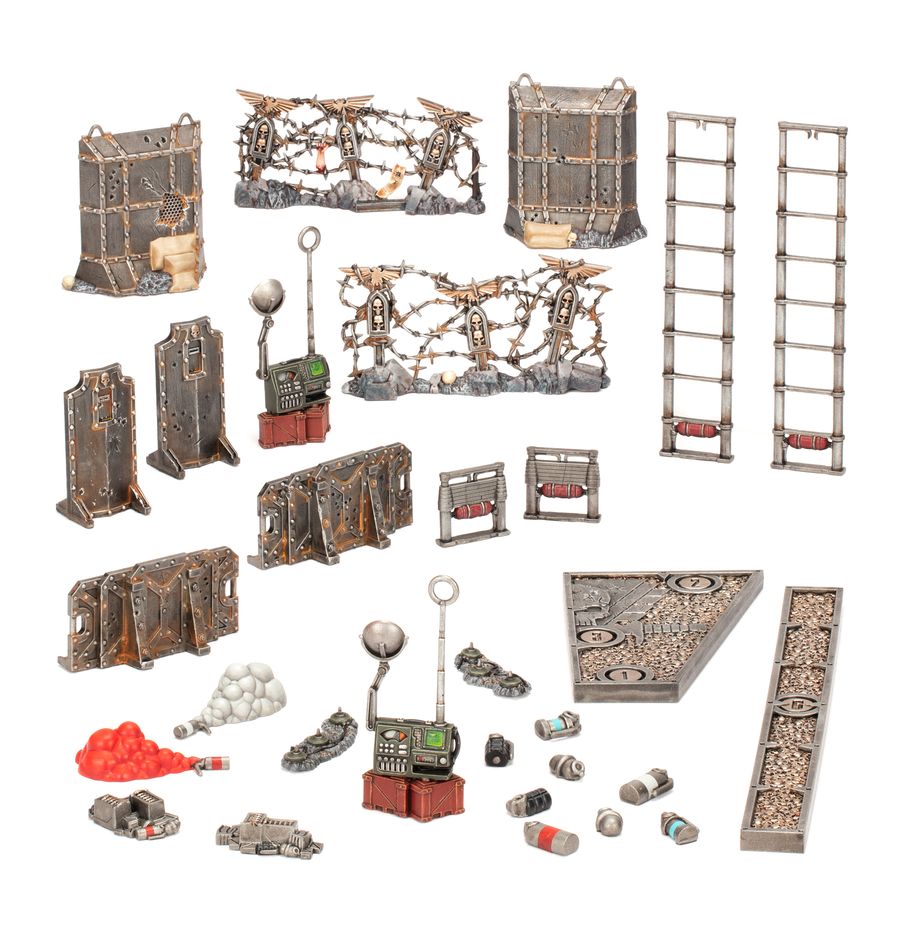
Kill Team Equipment Pack
In Kill Team, before the start of the game, you get to pick four selections of various upgrades, called equipment. Each team has four pieces of equipment that are unique to them, and then there is a larger catalogue of universal equipment choices, ranging from barricades you can take cover shine, ladders for climbing, and grenades to either blow up enemy armor or conceal your movements. Some of these choices, like the aforementioned barricades and ladders, have models you’ll need to set up on the Killzone. You’ll find those bits in the equipment pack, which includes models and tokens for all of the pieces of universal equipment you need for KT. You may be able to get away with bumming these off a friend for a little bit, but it will get really awkward if you both pick light barricades.
Next Steps
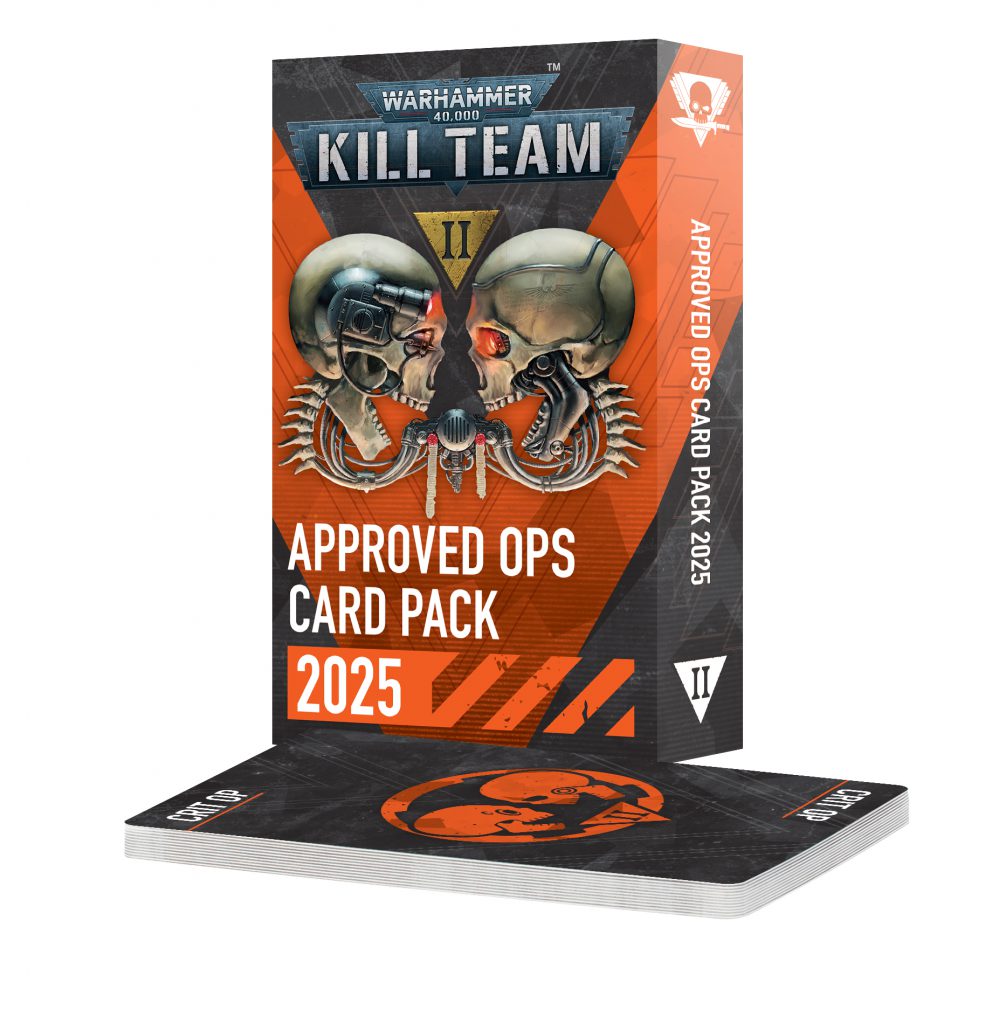
Current Season of Approved Ops Cards
Approved Ops are the de facto way to play Kill Team, with each deck of cards including things like maps, primary missions, and unique tac ops for you to choose from each game. Like the title implies, the approved ops deck gets parted with a new season annually so that the game stays fresh.
All of the new stuff introduced in Approved Ops can be intimidating if you’re just starting out, so you don’t need to get these right away if the basic missions from the rulebook are more your speed. Once you have a it of Kill Team under your belt and are looking for more than just those bare-bones missions however, the current Approved Ops deck is the perfect next step.
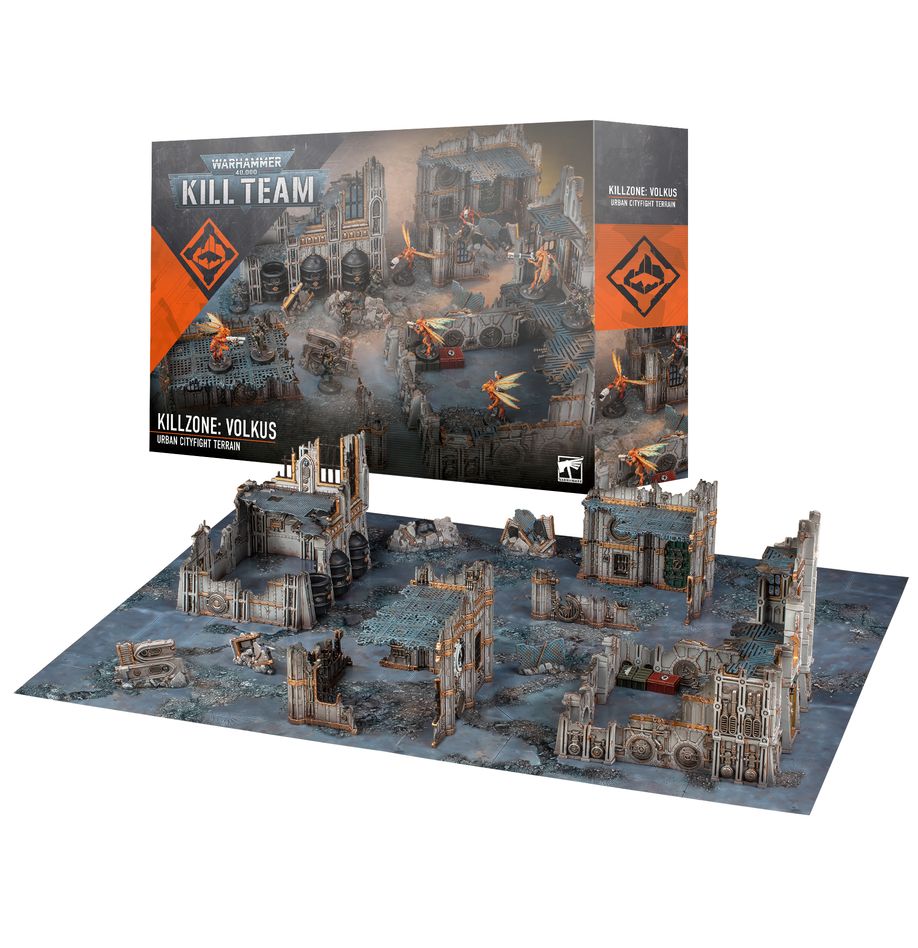
Killzone: Volkus
Kill Team is a game that is very terrain dependent. Without any terrain, you have no cover to conceal with, and the game would be remarkably unfun. Fortunately, Games Workshop has released various Killzone Terrain packs designed to give you all the terrain you need for a game of KT, as well as a board to use it with.
While there’s a few options to choose from, my recommendation for anyone is to go and buy Volkus first if they’re looking for a terrain set at home. It’s a ruined cityscape board with two major stronghold terrain pieces, and the core rulebook includes a few special rules that are easy to remember for playing on Volkus as well as the keywords for each piece of terrain. It’s one of the Killzones currently in the seasonal rotation as well, so its easy to get map layouts from Approved Ops, and as a cherry open top generally every team likes being on Volkus. If you were to get one Killzone, it really is hard to go wrong with good ol’ Volkus.
The Tabletop Battles App
Ay, I know Tabletop Battles App! I hear the folks who make it are really cool and not afraid of anything.
TTBA is the easiest way to keep track of things like your score and CP during games of Kill Team, and it gets regular updates when new releases come out. Plus, you can use it to see the stats of your games played, which is a great resource to have while you’re working to improve your Kill Team skills. And you get to support Goonhammer, what's not to love?
That's all for this one folks! I hope that you found this guide for getting started with Kill Team 2024 helpful, or know someone who’s curious about the game to send this to. Go get yourself a team, and I’ll see you all out there on the table!
Have any questions or feedback? Drop us a note in the comments below or email us at contact@goonhammer.com. Want articles like this linked in your inbox every Monday morning? Sign up for our newsletter. And don’t forget that you can support us on Patreon for backer rewards like early video content, Administratum access, an ad-free experience on our website and more.
 This website uses cookies. Learn more.

 Kill Team's First Starter Set
 The Release Box for Kill Team's Second Edition
 Kill Team at the May GHO 2025
 Credit: Warhammer Community
 It could be this team right here, Wrecka Krew!
 Credit: Warhammer Community

 Goonhammer App and Patron Updates: April, 2026
 Kill Team Tournament Report: Engage, Party, Repeat's March Madness 2026
 Goonhammer Reviews: Tribal Conquest