 This website uses cookies. Learn more.
This website uses cookies. Learn more.
This website uses cookies. Learn more.

I’ve spent the better part of this holiday season reconnecting to wargames after a rather long period of wanting nothing to do with them. Specifically, getting back to hex-and-counter, CRT, Avalon Hill or GMT style wargames- not the miniature kind. Wargaming is really one of the fundamental platforms upon which the entire structure of hobby gaming is built, going all the way back to chess and all the way up to Warhammer 40k. We could take it even further back than that- because conflict and fighting is one of the key things expressed abstractly through the way animals play – witness how my dogs went absolutely full throttle into each other over a Gizmo squeaky toy Santa brought them. So in this edition of Games from the Crypt I thought I’d look at one of the absolute greatest wargames ever made, and in fact a game that I would easily slate as one of my top 5 games of all time. Steve Jackson’s masterpiece Ogre, originally published as a "microgame" in 1977, is one of the monoliths of hobby game design.
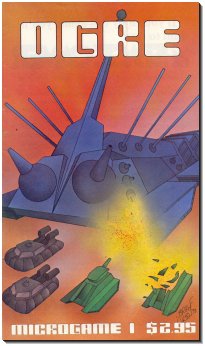
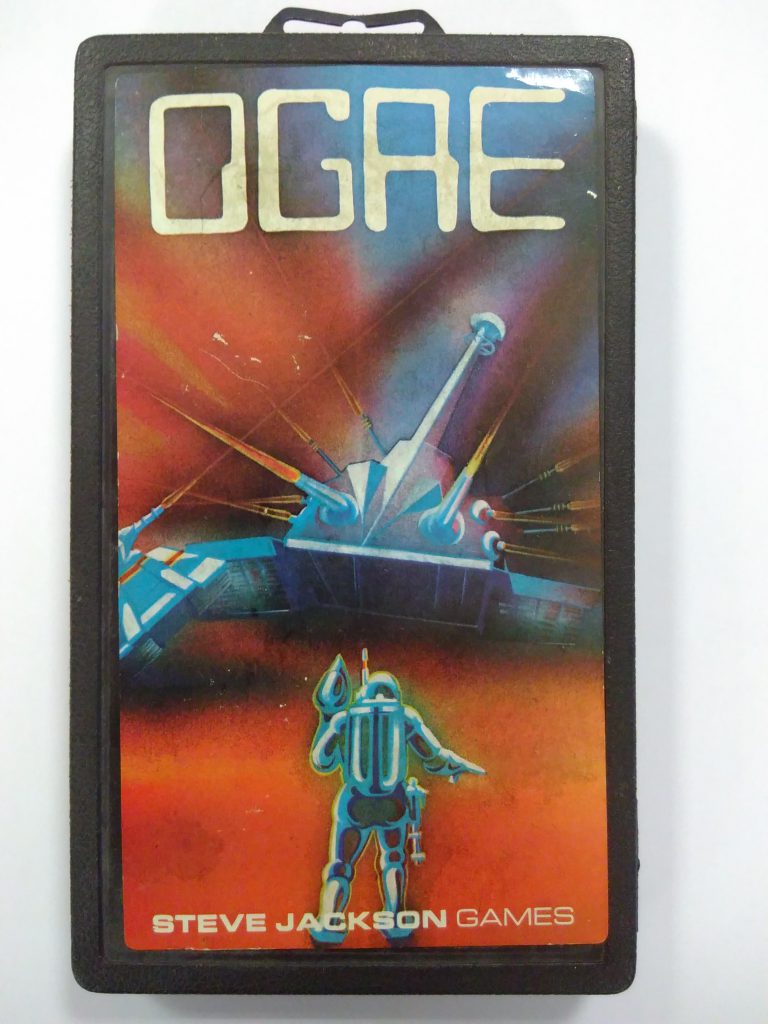
The concept remains singularly exciting among game design themes. If I ever meet James Cameron I’m going to ask him if he’s ever played it because the whole idea is almost like a post-Judgement Day scenario: Massive, cybernetic killing machines called, of course, Ogres trundle across future battlefields while the squishy human opposition does everything it can to at least slow one of these monstrosities down before it gets in range to destroy a Command Post stuck in an apocalyptic wasteland of apparently eternal warfare. In the original game, which retailed for about two bucks and wasn’t much more than a paper map and a counter sheet (that you had to cut up yourself), the only scenario was this Ogre versus human meatgrinder. It was stark, nihilistic, and it may even be the very origin of “grimdark” in the gaming world. The Ogre player didn’t always win- smart players knew that targeting the tank’s treads or weapon systems were the way to go and using skirmishing Ground Effect Vehicles (GEVs) to hit and run was a chief tactic.
Despite just a touch of chrome, like how the GEVs get to move twice, rules are as lean as a Cormac McCarthy novel. That is, if he wrote bleak sci-fi instead of revisionist variations on the American western. It’s all very basic wargame fare where the key strategy is to combine units to get a better X:Y strength ratios against the defender, resulting in better outcomes on a simple D6 powered combat resolution table. Humans and their fragile vehicles, which include numerous tanks and missile carriers, generally go splat in a single hit. But the Ogre player had to track system damage to each weapon and the treads, making this game something of a precursor to the damage mechanics in BattleTech and also an inheritor of more complex WWII tank simulations where things like the armor slope on the hull of a Sherman matter.
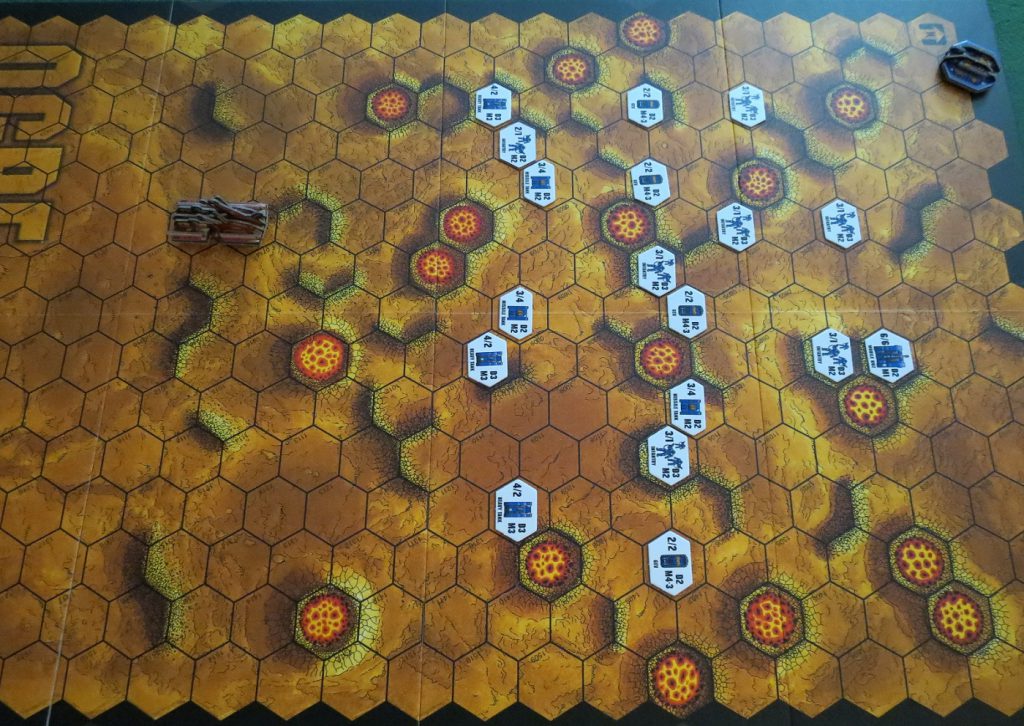
Fundamentally a tank versus infantry game, Ogre’s roots in historical gaming are still pretty apparent. In 1977, wargaming mostly meant digging in to refight the Bulge, Waterloo, or Antietam ad infinitum. These were the glory days of Avalon Hill, 3M, SPI, and other paper map purveyors. There was a stodgy, indeed grognardy atmosphere about the whole thing even then with play by mail opponents meticulously plotting moves against each other before Discord was even a dream. But Dungeons & Dragons, Cosmic Encounter, and other science fiction and fantasy games were emerging at the time, and along with them came Steve Jackson. His concept was loosely based on the Fred Saberhagen Berserker stories rather than East Front OOBs. I particularly like what Jackson himself wrote in The Ogre Book (a neat collection of essays and other materials about the game): he wasn’t concerned with realism or practical design, he was more concerned with expressing a science fiction idea. And Ogre does that spectacularly, especially when you figure in the incredible and iconic graphic work that Winchell Chung executed for the game, going all the way back to that first edition.
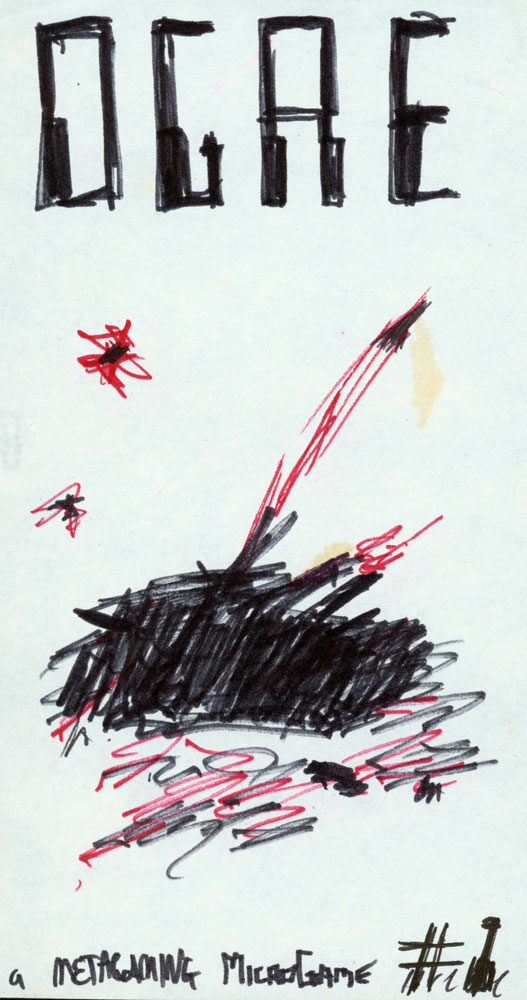
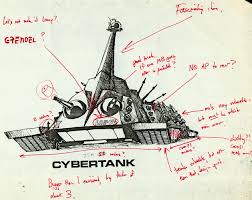
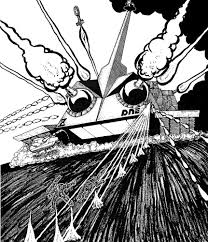
I recall when I first picked up Ogre I may have been 8 or 9 years old, and there was an assortment of Steve Jackson “pocket games” at a Kaybee Toys. It looked awesome in its tiny black plastic case- I loved tanks, I loved science fiction, and I loved games. And here was the perfect storm. But I had no one to play with except for my buddy David Green, so I wound up playing the game solo quite a lot. It works exceptionally well for that. That edition of the game is lost to time, but Ogre has never left me in over 40 years and I’ve always had some version of it including the absolutely massive Designer’s Edition that was Kickstarted years ago that included possibly too much Ogre. God’s sake I’ve even read Ogre fiction.
There have been quite a few expansions to the game that have added a lot to it and I do love it all. God’s sake I’ve even read Ogre fiction. GEV was the first add-on, and it transformed the game from its core scenario to a full-on wargame with terrain, multiple Ogres (!), combined arms, objective-based scenarios and more. It’s really great, and if you like the basic system it brings a lot of worthwhile complexity to it. I’ve picked up all the map packs, units, and so forth over the years but I avoided (perhaps wisely) the miniatures game that didn’t really find traction. There’s a kind of naff PC game out there on Steam that will give you a taste of it, but the best way to play this masterpiece is still on a tabletop. And to be quite honest, I think the original scenario remains the best expression of the science fiction concept Steve Jackson was going for.
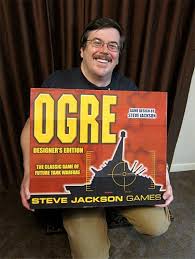
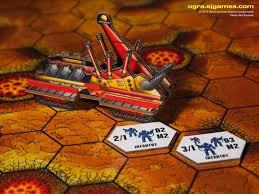
The genius of that one, wildly imbalanced scenario is that it truly rewards player creativity, responsiveness, planning, and risk-taking. All while feeling more thematic and narrative than many games that bend over backwards to tell a story with copious artwork, flavor text, and complicated rules. It’s also a game that feels so elemental, so ingrained to the very roots of all that came after that it almost feels biblical to play even today, almost 50 years on. There are really just a handful of games that I’d call perfect, but Ogre is one of them.
Have any questions or feedback? Drop us a note in the comments below or email us at contact@goonhammer.com. Want articles like this linked in your inbox every Monday morning? Sign up for our newsletter. And don't forget that you can support us on Patreon for backer rewards like early video content, Administratum access, an ad-free experience on our website and more.Tags: history | board games | wargames | games from the crypt

Thank you for being a friend.
 Goonhammer App and Patron Updates: April, 2026
 Kill Team Tournament Report: Engage, Party, Repeat's March Madness 2026
 Goonhammer Reviews: Tribal Conquest
Support us on Patreon to get access to our Discord and exclusive App features.
Thank you for being a friend.
Already a Patron? Login with Patreon.
Visit our incredibly official store on RedBubble.

Support us on Patreon to get access to our Discord and exclusive App features.
Thank you for being a friend.