I'm a sucker for Lego. I've been collecting and playing with the bricks since I was maybe six years old, and when we moved to Texas five years ago I went over to my parents' house and promptly dug out the 3-4 boxes of old bricks and kits I'd had in storage for the better part of 20+ years. Since then I've mostly bequeathed them to my son, who has gone on to break and lose more of them than I'm comfortable with (but I will tolerate through gritted teeth because well, he was four when we started this process).
The good news is that my son has also developed into a fan of Lego and so last year when it came time to build a Christmas list, he put the Lego board game on it. So we bought it for him, then it sat on our shelf for nine months before we got around to playing it. We play a lot of HeroQuest here, what can I say.
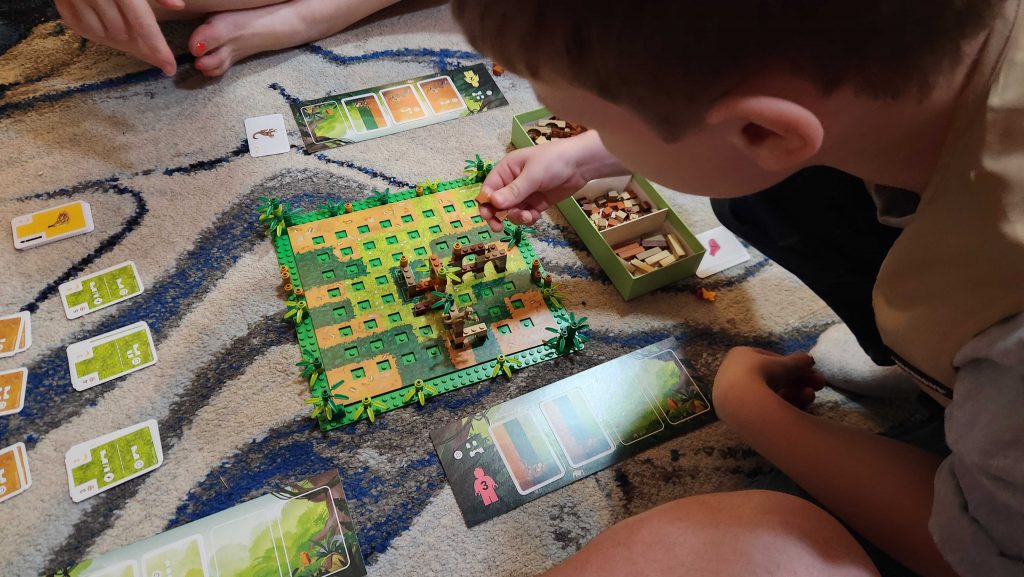 Early in our building process
The core conceit of Monkey Palace - a Dotted Games game designed by David Gordon and TAM - is that you are competing with other players to collect banana points. You score banana points by building the titular palace, adding to it each time and scoring points based on having the highest structure and using specific bricks. The board starts with a simple collection of empty spaces and some arches, and each time you add to the palace you have to start by building from the ground and adding to the existing structure in a staircase-like fashion. Check out the video below for an example of a turn played by my son.
[video width="1280" height="720" mp4="https://assets.goonhammer.com/wp-content/uploads/2025/11/1000059452.mp4"][/video]
Each player has a board they're playing with and as they build they can add Monkey Cards to it based on the color(s) of the spots they started building from on the base board. These cards determine what kinds of bricks you'll add to your collection. The cards you pick up can either give you big one-time rewards in terms of blocks, or better recurring rewards. Blocks come in three varieties - 1x4 arch bricks, plus 1x1 and 3x1 columns that can be used to elevate said columns and build higher.
There are plants in the mix and monkey pieces as well - these can be used to block other players from building - and they also help to give the board a bit of visual appeal when the whole thing is said and done.
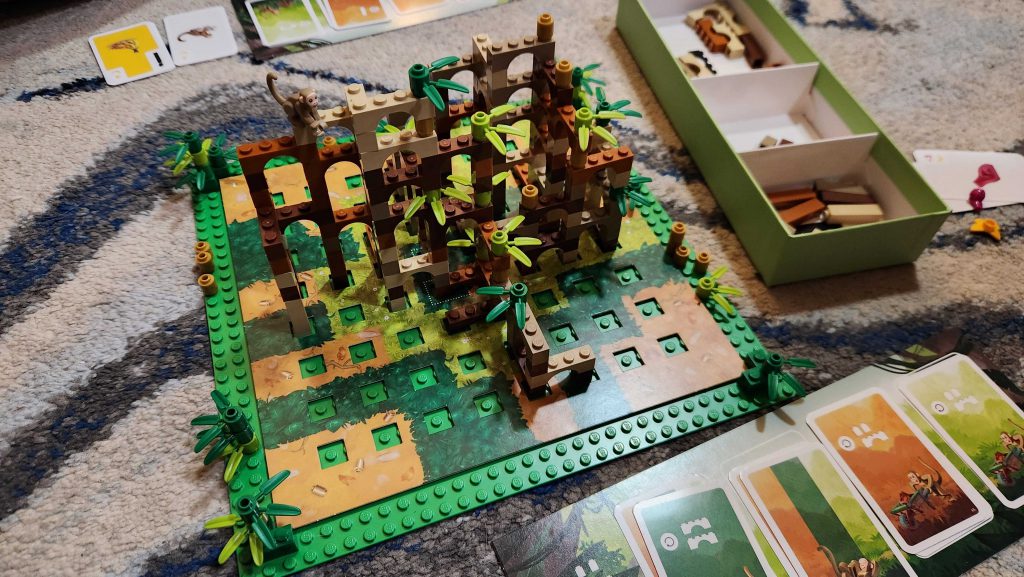
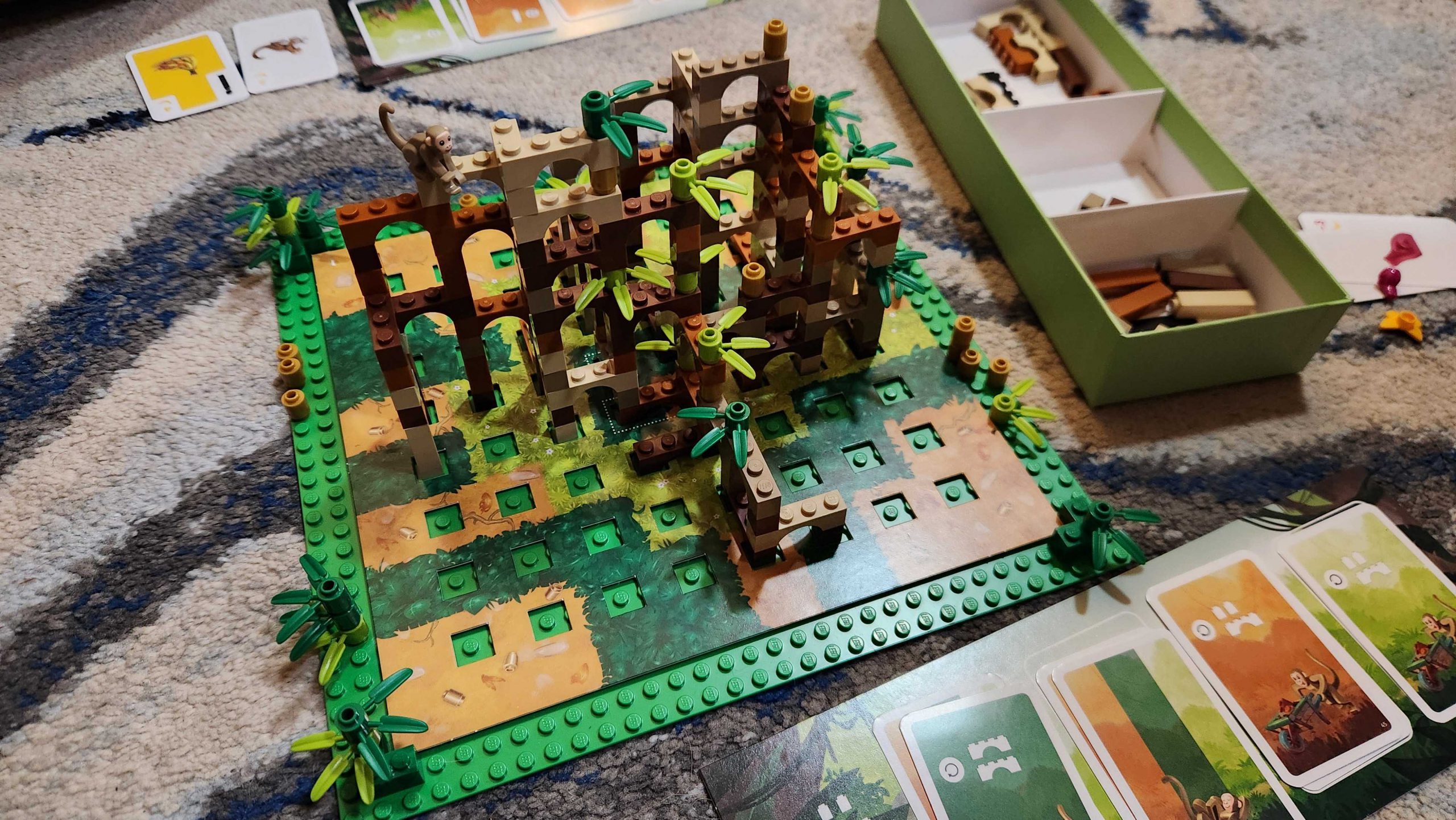
Being Lego there's very little risk of anything falling over and besides that's not the point of the game anyways, regardless of how much this may resemble Rhino Hero. Instead, the game ends when the bricks run out, at which banana points are tallied and the player with the most points is the winner. There are some Catan-like scoring bonuses you can snag, and planning your final turn around when the bricks will run out is key to finishing strong. There are different boards you can start with that change up the strategy and early builds a bit if you want some variety later on.
Overall, this is a pretty solid game. There's enough strategy in determining how you want to set up your brick economy and choosing points vs. bricks to keep the game plenty interesting for adults, while kids will appreciate the tactile feeling of building and using pieces like the Monkey or bird to ruin another player's plans. It's recommended for children ages 10+ but honestly I think you could go as low as 7-8 on this one. My son is 9 and he had a blast with it.
The hardest part was figuring out the initial build rules - we struggled a bit with the way the instructions were written and finally just went on YouTube and watched a video that cleared things up. The big thing is just that you always have to start from the ground level and work up from there, but there are some pretty strict rules about how you have to build that both keep the structure stable but also can stop you from building if you don't have enough pieces. The first few turns of every game of Monkey Palace will end up looking more or less the same but after that first round ends things will diverge pretty quick.
Final Verdict
It's a very solid game and for 30-35 bucks you get a solid value in terms of the raw number of Lego pieces included. The bricks are of the same high quality you'd expect of Lego and the game itself is fun for kids while feeling like a real game to adults. It's recommended for ages 10+ but once your kids are old enough to actually play with real Lego and reliably read and count you could probably introduce this one. It doesn't take long to play a game - maybe an hour for your first round and 30-45 minutes after - and we liked it enough to play it again after our first intro rounds.
Have any questions or feedback? Drop us a note in the comments below or email us at contact@goonhammer.com. Want articles like this linked in your inbox every Monday morning? Sign up for our newsletter. And don’t forget that you can support us on Patreon for backer rewards like early video content, Administratum access, an ad-free experience on our website and more.Thank you for being a friend.
 This website uses cookies. Learn more.

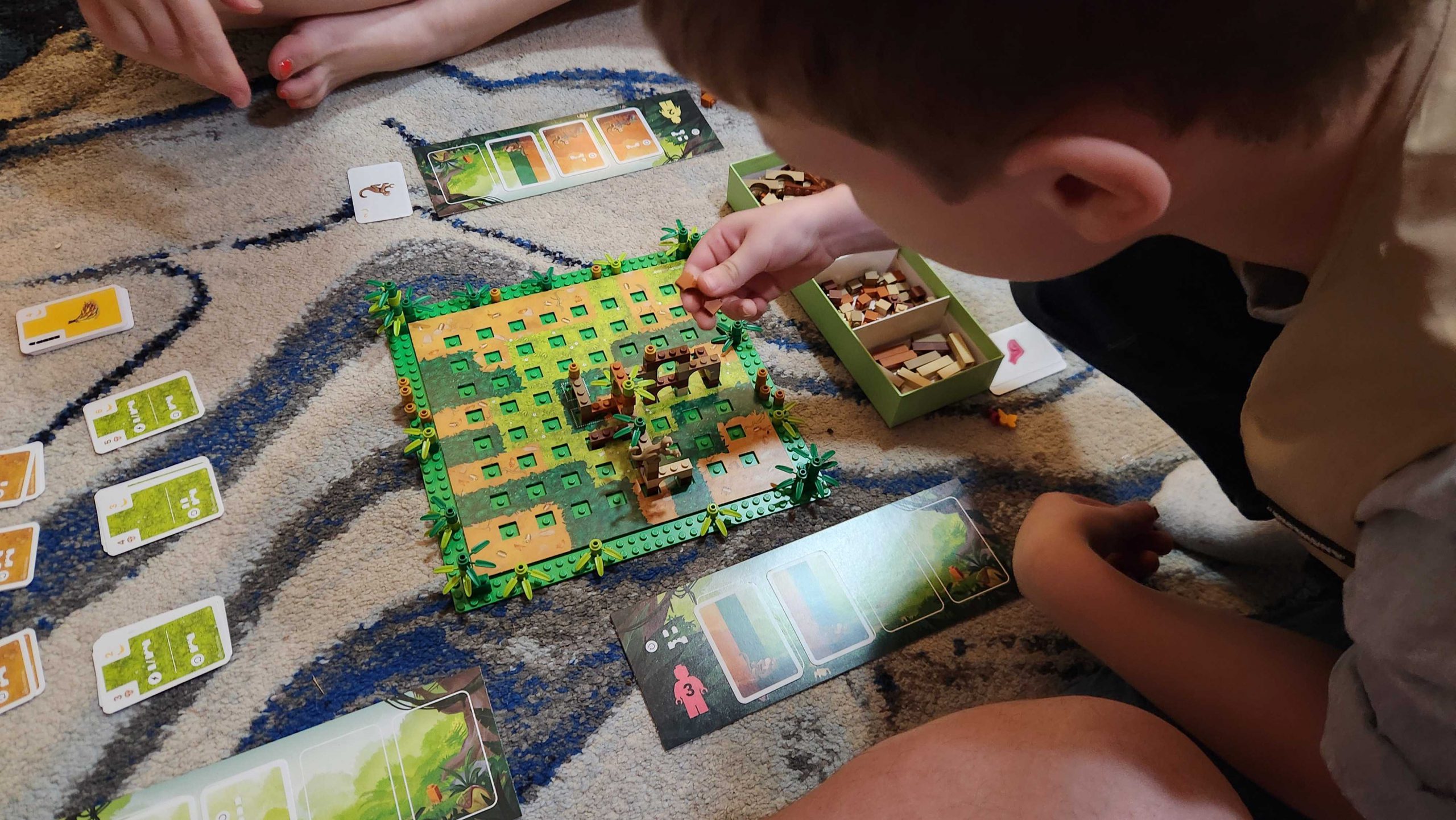 Early in our building process

 Goonhammer App and Patron Updates: April, 2026
 Kill Team Tournament Report: Engage, Party, Repeat's March Madness 2026
 Goonhammer Reviews: Tribal Conquest