Conquest’s Q2 2026 update has dropped and, happily, it’s a doozy. In this article we’ll talk about the update and try to cast our gaze a little into the future to think about what the next three to six months of Conquest will look like. As always, you can find the full updated game and army rules
here.
Pre-Update State of the Game
To set the scene for the update’s arrival, how were things pre-update? In a word: static. We discussed the direction of the game in our
Q4 2025 meta snapshot and, while many of the lists featured in that article were iterated on further throughout Q1 2026, very little new emerged to challenge the dominance of the lists that emerged in late 2025.
The Spires rework arrived in January in a quite playable state but not pitched at a power level to immediately challenge lists that had seen six months of refinement, and most meta lists began to reach a point of iteration where they were adapting chiefly to other event-winning lists. While it’s a credit to the game’s overall balance that there were perhaps half a dozen contenders for the title of best-list-in-game, the canopy they cast was
thick, with very little light reaching the metaphorical forest floor through which new ideas could emerge.
In short, a fairly major update was very much needed and, we’re very happy to say, this one delivers. This article will try to make some predictions as to where factions will be headed and otherwise read the tealeaves as best we can, but my overall takeaway is that
I cannot tell you, with any confidence, what the best armies heading into the next meta cycle will be.
And that is
exactly what I want from an update.
So, let’s jump in.
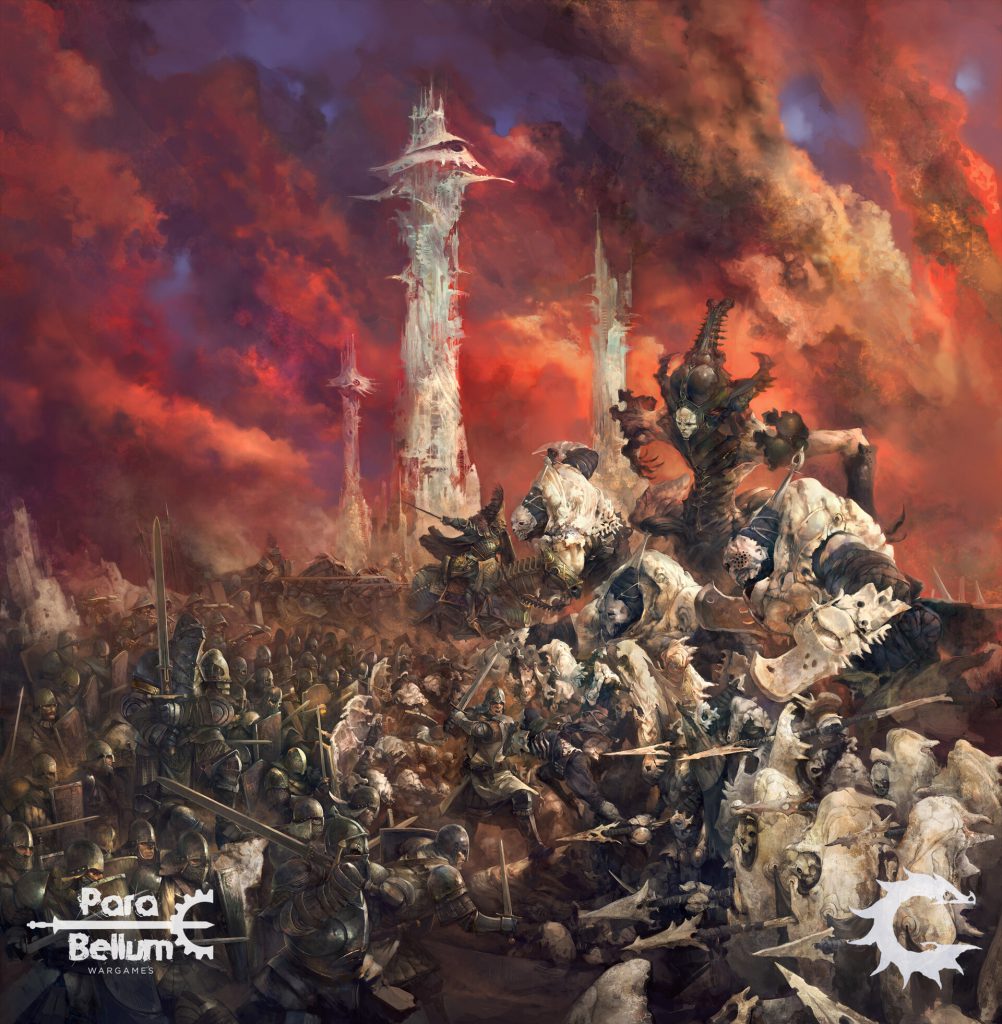 Conquest Core Box Set artwork. Credit: Othon Nikolaidis/Para Bellum Games
Core Rules Changes
There have been multiple core rules changes to the game, some of which affect only a small number of factions, some of which are wide-ranging. Many of these will take getting used to, but they’re all interesting. While this isn’t an exhaustive list, the highlights include:
- Charge and clash attacks against a model’s rear carry an even steeper penalty than attacks in the flank, forcing you to fail all resolve rolls against the attack. This is harsh, but it should be; as the developers note, before this change, it was actually often better to attack a flank than a rear attacking the flank generally also minimised your opponent’s ability to retaliate (as regiments are usually wider than they are deep, so you contact less of the enemy if engaging their flank). This will undoubtedly lead to some blowout moments here and there, but that’s as it should be: don’t get charged in the rear!
- Aura of Death has reverted to being calculated on a stand-by-stand basis. This puts it back in line with rules like lethal demise, trample, etc. This change needs to be read mostly in context with Dweghom and Old Dominion, both of whom are big beneficiaries of it.
- Brittle is a new rule introduced at the core rules level but exclusively applying (for now) to Old Dominion models. A regiment attacked in the flank or rear will convert successful saves to failures - a punishing rule, but so far only applied to regiments that don’t take normal penalties from flank or rear attacks (which are almost exclusively resolve-based).
- Single-stand regiments performing charges now have to behave more like any other regiment in terms of maximising their contact with the charge target. Very relevant to monsters, especially when charging other monsters.
Some other new special rules have been introduced or renamed, and ‘obscuring’ terrain is now ‘cover’, but we’ll discuss the new rules as they arise with the factions they apply to. Overall, if you knew how to play Conquest before, your understanding shouldn’t need radical updates to carry on into the post-patch era. Just… don’t get rear charged, ok?
From here, if you’re following along with the patch notes, we’re going to jump around a little. We’re going to cover the current-meta boogeymen first, but in order of factions that received adjustments, and then factions that received what basically amount to quite exciting reworks. Finally, we’ll cover everyone else.
Yoroni
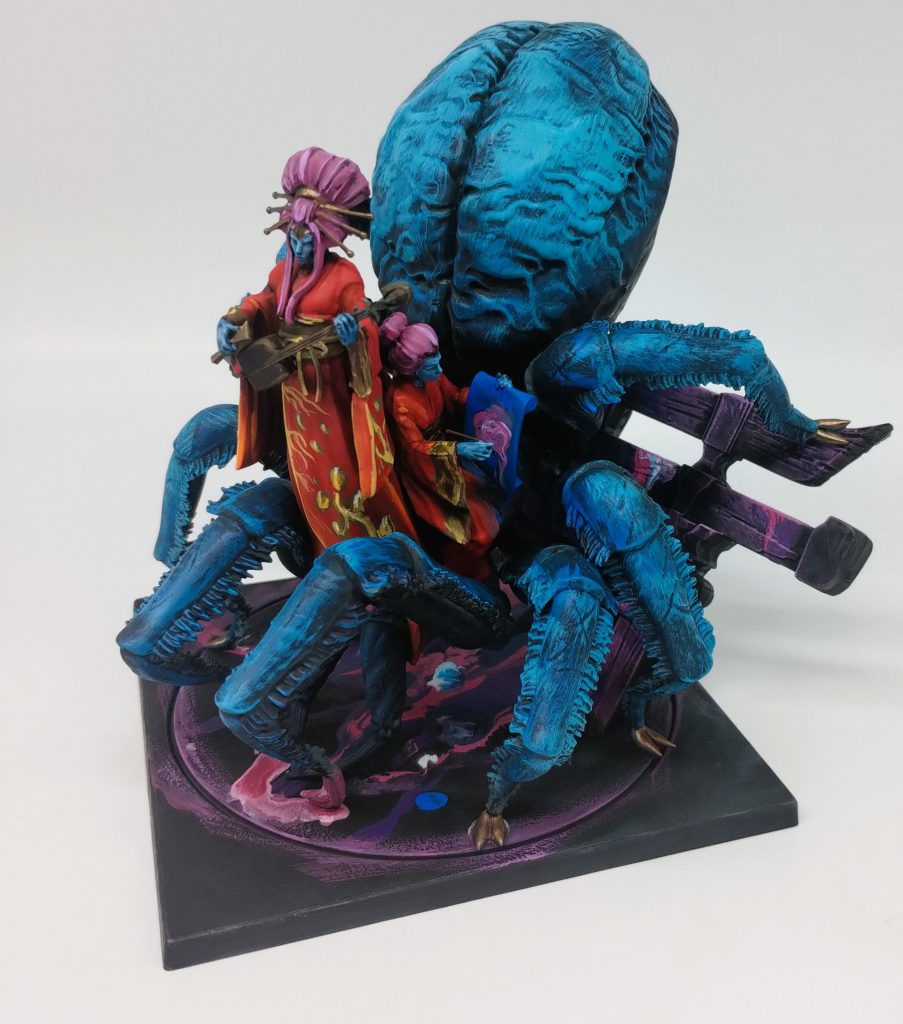
As an Australian, you may expect a comment from me here referencing a
certain national idiom, but instead let me just say that the adjustments to Jorogumo are something I’m mostly quite pleased about, because I had the misfortune of running in a 4x Jorogumo list at an event just once and that was one time too many. Pre-update, Jorogumo Geisha and Mahotsu shared a quality that I describe as ‘closed loop defences’, which is a way of describing a unit or regiment in a game that has no obvious mechanical weakness or counter. Pre-update, Jorogumo were a high evasion, tenacious, fearless monster regiment that could be healed; there was effectively no mechanical response to this (cleave doesn’t work, terror doesn’t work, sustained chip damage absolutely doesn’t work) outside of as large a number of regular hits in a single go as possible, and
that wasn’t viable either because if you run a list into Dweghom that doesn’t have cleave or armour piercing you might be in for a bad time.
As such, the changes to Jorogumo are
very welcome. And, it should be noted, they didn’t come out of the update with nothing but nerfs. Important changes to their durability were absolutely made; they lost fearless, they can’t be healed, their evasion always caps out lower than their defence so cleave and armour piercing work against them, and these are all
big changes. But, at the same time, Geisha picked up a very appealing choose-your-defensive-ability draw event, and Mahotsu got a
massive points reduction and a mostly quite tasty spell rework.
That spell rework - which has also applied to the Kitsuni Onmyoji character - is where I think we see what the future of Yoroni looks like. A lot of the new Yoroni spells are
very appealing, and with the Mahotsu’s significant points reduction and the improvements to the Onmyoji’s shooting, they’re also very accessible. One or two spellcasters in a Yoroni list, coupled with Yoroni activation flexibility, feels like something that could form part of a lot of Yoroni lists moving forward.
Otherwise, some small adjustments to a variety of regiments (Tengu Bushi units can no longer reach objective zones on the 24” line with no help; Tengu Ayakashi still can, plus some small points adjustments), and a new profile for Shikagami to accompany their release. They’re neat little goblins, and you might slot a unit or two into some lists as cheap, disruptive activations.
Dweghom
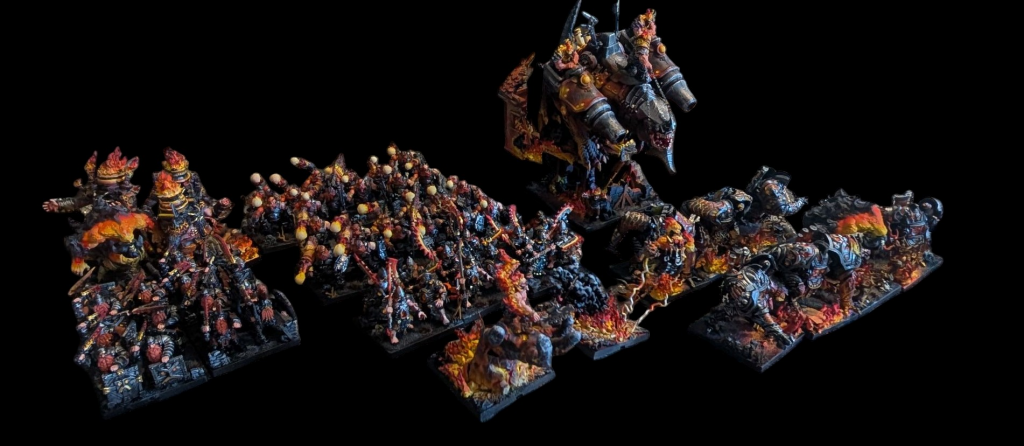 Ewan's Dweghom
Another one of the game’s top factions for much of the last half-year, Dweghom are the first of two factions that haven’t received widespread nerfs (and in fact are beneficiaries of the Aura of Death changes), but did receive targeted adjustments to remove near-infinite range offensive tools from the game at large. In the case of Dweghom, Magma spellcasting combined with a Tempered Sorcerer’s warlord ability could use regiment command stands (including extremely fast, mobile regiments like Inferno Automata) as the origin point for a spell that could
itself act as an origin point for every powerful offensive Magma spellcaster in the army. This created a ‘death laser’ that took a couple of activations to set up but could then drill damage into any unit anywhere on the board as early as round two.
The most major change made to Dweghom, therefore, is really just one adjustment to one spell; Magmatic Seep now has to target
existing terrain, which makes it predictable in its range (still very far!) which means that vulnerable regiments can be protected by keeping them away from buildings, forests, fields and hills that might at a moment’s notice become a hostile volcano. This is significantly different to the same hostile volcano emerging from
any part of the table, although it’s still a powerful capability. A few changes to spell range further smooth this out, increasing the threat of spellcasting from an erupting terrain piece a little, but requiring Dweghom units to move closer in the first place to start the eruption.
Overall, this is a change that represents a nerf to Dweghom’s most powerful list but a very healthy change for the game at large. Importantly, it also keeps Dweghom’s other primary mechanical strengths intact; this is still a faction with impressively high defences, resolve, and wound count almost across the board. You could take any list played at any event in the last six months and it would still trade well on these attributes, offensive spellcasting, firepower and melee and do just fine.
In terms of peering into the future of Dweghom, it’s likely that Tempered Creed lists will still lead the pack, making ample use of all those strengths, but with more of a mix across the metagame of spellcasting schools. There’s also
some chance that Ardent Creed lists might emerge, but we probably need to be realistic and say they’ll still be second fiddle. They’re more viable than before - they make the best use of Aura of Death, especially on regiments like Magmaforged with a Herald of Magma (to make them Ardent), and saw a suite of small unit buffs or points reductions, but there’s not really a substitute for Fireball and An Actual Gun (That Shoots Fireballs). There might be an interesting list that combined Ardent Creed with Tempered Steelshaper warbands (to buff friendly units and do things like reduce enemy defence before they take Aura of Death hits) but probably expect Tempered to remain the gold standard.
Sorcerer Kings
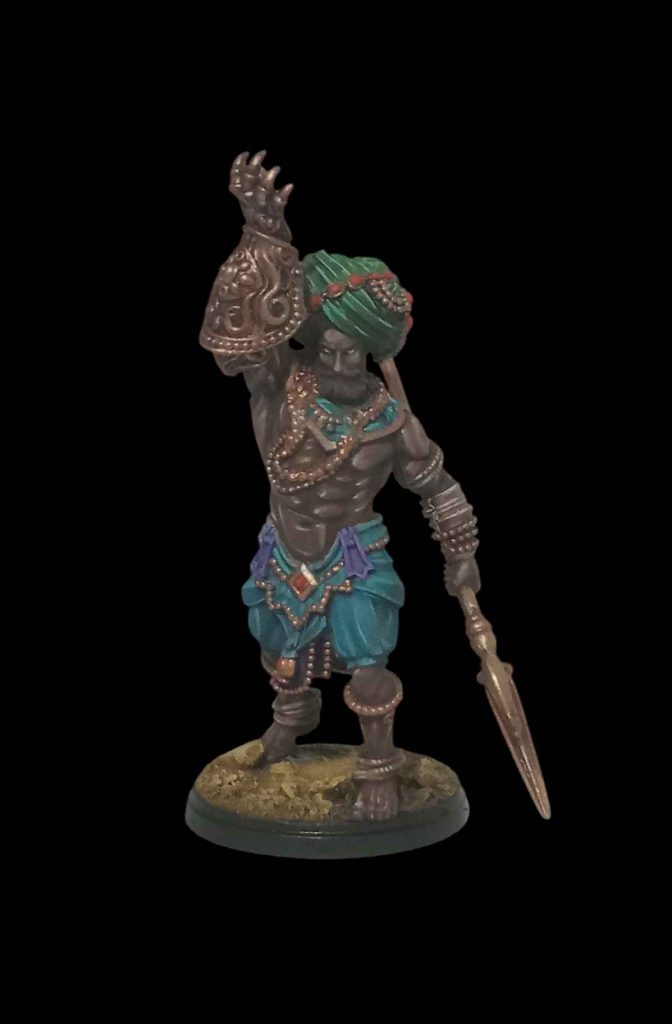
The other faction that saw changes to accommodate the removal of infinite-range offensive tools was Sorcerer Kings. The
Violent Geyser and
Spiteful Winds rituals are now both locked to specific preconditions; there’s no way to make water terrain out of whole cloth anywhere on the table any more (instead, the
Call Forth the Deep ritual turns existing terrain into water - the same change Dweghom Magma spellcasting saw), and
Spiteful Winds has to target regiments engaged with Air Court Elemental units.
On top of those, Sorcerer Kings have had adjustments to some of their spellcasting, with the main casualty being the Homing Winds spell, which now only lets a ranged unit reroll 6s, rather than all misses; this brings it in line with other equivalent spells in other factions, rather than being the best ranged buff spell in the entire game by an enormous margin. There have also been some small, targeted nerfs to Danhur Disciples (as part of general small reductions in unit range across the board) and Court of Air monsters - but in all cases, only small adjustments.
To make up for these changes, Sorcerer Kings have seen a suite of small (and one very large) buffs in other places. The already powerful Water Court had a weakness against Old Dominion shored up, some Fire and Earth court models and mechanics have seen improvements, and most notable, Mahabarati Initiates win this update cycle’s award for Most Pushed Unit, receiving a points reduction and some
enormous buffs in the form of tenacious and a suite of special rules based on their elemental court. Remember, the Maharaja warlord makes them count as two different courts, letting you potentially either double dip or at least take your pick of rules like Juggernaut, Regeneration or Opportunist (the 'Gifted Mortals' rule which grants the ability states that Mahabarti gain 'one of the following' special rules, but doesn't provide any mechanism for how or when you choose the bonus, and the syntax
could be read as meaning to grant both buffs for a multi-court unit - but probably best to err on the side of caution until it's clarified). While I wouldn’t personally recommend any Sorcerer Kings player buys five boxes of these (they
are still a regiment that doesn’t take a solid punch to the face terribly well), someone out there will and they won’t necessarily be wrong to do so.
In terms of the future of Sorcerer Kings, the easiest thing to put money on is that it will remain a Mono-Warlord faction, the same as it has been for its entire lifespan to date. You start a Sorcerer Kings army by adding a Maharaja, then you make your choice about what the army’s actually going to do. However, within that constraint, there’s a lot of flexibility, with every court now having different things that appeal about it (Earth Court has good rituals now!). Water Court
probably remains the overall strongest; it was slept on pre-patch mostly due to Marid not having been available for long, but they’re still one of the strongest units in faction even with the Mahabarati buff, so expect that to remain or become a thing depending on where your local community is up to figuring them out. But your other court choices are probably more flexible than ever, with Earth, Air and Fire all having things to recommend to them.
Meanwhile, the rest of the game can at least breathe a little easier knowing that their backfield support regiments won’t get two-tapped out of the game some time before the end of round three.
W'adrhŭn
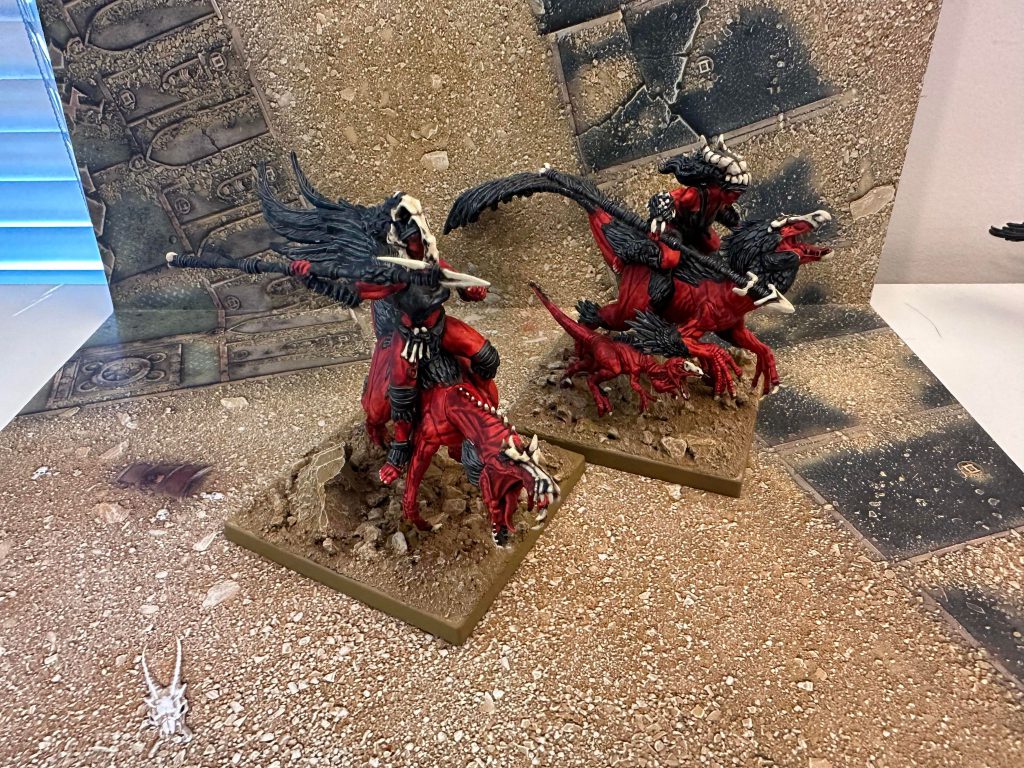 Wadrhun Raptor Riders Conquest Credit: Magos Sockbert
Pre-update, W'adrhŭn were consistently able to compete with top-of-the-meta lists without quite breaking entirely into that space themselves, although only in a very constrained way. W'adrhŭn had one list: Thunder Chieftain Speakers, and it’s received a
very gentle nerf, while at the same time some new ground has been broken with buffs elsewhere.
The Speakers nerf first: Virtually no changes, other than that Winglords and Quatl (the backbone of the medium presence of any speakers list and usually taken in large numbers, often 3-4 per list or more) now no longer get a free volley every action. Instead, they have to chant to get the free volley (which also gives them the chant bonus, and +1 Terror), which means no free attacks the turn they arrive on the battlefield, and a
little bit of congestion trying to make those ranged pokes in the early game while the battle is developing.
This isn’t insignificant; one of the strengths of a Speakers list is that it could still exert surprisingly deadly ranged pressure while the thunder riders were getting into position, and now that pressure is a little trickier to exert. However, on turns when the Winglords and Quatl chant, their offensive output remains unchanged, and Quatl even got a little more dangerous as they didn’t have the same terror bonus that Winglords did before.
Elsewhere, however, we see significant changes to Cults units and characters, aimed to bring them up to a level where they compete with Speakers. Scion of War lists in particular were always trying but never quite made it to the status of strongly competition viable, and with a number of buffs to these units might now be able to cross that threshold. Most notable is the addition of an active component to the Scion of War supremacy, which grants Hardened (1) to the entire army for a round. Nobody who’s played against Hundred Kingdoms Orders lists will discount this, especially when combined with plentiful D3 and D4 regiments who can also access Tenacious. Combine this with increased access to Interference in the army, and this is a big suite of changes to Cults W'adrhŭn.
While it’s too early to tell whether this displaces or even really competes with the Thunder Chieftain, we’re certain to at least see people experimenting with War Cults lists, which means being prepared for D4 R4 Tenacious Fearless Hardened regiments as part of the W'adrhŭn threat mix, which (for a round at least), is tougher even than some of the high watermark durability Dweghom regiments.
Old Dominion
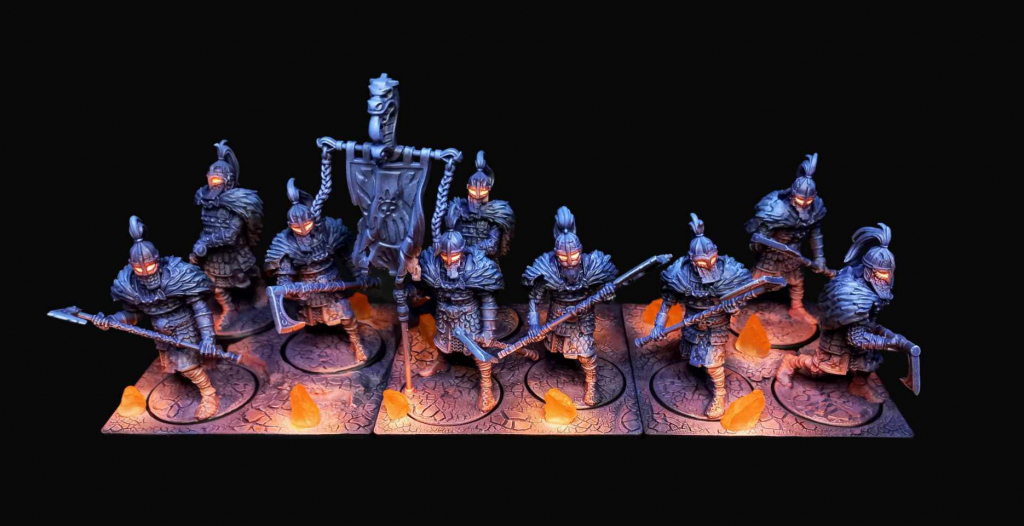
Unlike the general suite of buffs and nerfs seen in most other armies, two factions this update got treatment very close to full rework. The first and most significant of these is Old Dominion, which is… wow. There’s a lot going on here!
There isn’t space in this article to break down everything that changed, but the short version is that all regiments and characters have battlefield roles (a mechanic that’s been introduced slowly to every faction over time), and while several core Old Dominion mechanics have been changed in ways that negatively impact the faction (the addition of Brittle to Animate Vessels, the removal of the ability to use Memories of Old twice), major reworks especially to warlords have opened the faction up in a major way:
- The Fallen Divinity operates in broadly the same way, but is now a little less powerful in her apex form but a lot less punishing of misplays by her player in the early game. She also no longer nukes your own army in the lategame, provides more buffs to units around her as she levels up, and has an active component for her supremacy as a panic button that allows her to kill some of her own units to harvest power in the supremacy phase. This isn’t something you’ll ever use if you can avoid it, but if you need the emergency heal right now and you’ve lost the supremacy roll and it’s the only way to surge her up a tier, well, ‘better to have and not need than need and not have’. Overall, she’ll still work broadly the same way where she changes how your army uses Dark Power, but the learning curve for will be more manageable for new players.
- The Hierodeacon is now available as a warlord! This is an entirely new option for the faction, and lets you run all your [Fallen Pantheon] units but without needing a Fallen Divinity and therefore using the normal Dark Power Pool. The Hierodeacon warlord gets free extra spellcasting, which is always nice, and gets an army-wide activated component giving Blessed to all [Fallen Pantheon] units. Hundred Kingdoms Theist players can tell you how powerful this is! Oh, and every regiment in a Hierodeacon Warlord’s army loses the Brittle rule.
- The Archimandrite Warlord is now all about two things: spending dark power for special effects, and aura of death. Let’s start with the former: all friendly regiments in his army gain Aura of Death (+1). That’s not an enormous amount by itself, but it’s the kind of rule that creates a lot of incremental value over the course of the game, and there are a lot of ways to increase this number on a unit by unit basis. If you want to inflict a lot of Aura of Death hits, start with an Archimandrite. From there, you can spend dark power on a lot of effects, including free spellcasting for the Archimandrite, and a variety of unit buffs (including more Aura of Death). Playing with Dark Power as an economy rather than just an accumulating permanent resource is transformative, which is exactly what makes a good and interesting warlord.
- The Xhiliarch, Strategos and Mounted Strategos are all a little different but share the same core mechanical framework: each allows you to reach Dark Power Tier IV (which is very powerful now), and otherwise give you a selection of buffs that you choose when and how to activate each round. There’s a lot to unpack here, but some of the particularly transformative abilities include the Foot Strategos’ ability to have a unit activate its memories of old in the supremacy phase (very relevant for units like Athanatoi and Praetorians), the Mounted Strategos’ ability to let regiments convert misses into hits when the clash or charge (big for Kataphraktoi), and the Xhiliarch letting his entire army aggressively take space and extend threat ranges with a combination of vanguard moves and big bonuses to charge distance.
- The Theokrator now ramps up the effect of Terror from an army; all animate vessels gain Terror (+1) at Dark Power Tier III, and he hands out (to individual units usually, and the whole army on one turn) the new Trial of Will special rule, which lets them force enemy units to make defence rolls against their Resolve characteristic. This isn’t normally a huge deal (resolve is often higher than defence), but terror affects this rule, and combined with the extra terror at tier III, this potentially gives a big surge turn for the Theokrator late in the game.
There are plenty of changes to units, equipment, and masteries as well, but the above is the big stuff. Old Dominion now has seven distinct warlords, all of whom are mechanically compelling and transformative to how the army plays. This is probably the most exciting its ever been to be an Old Dominion player.
It’s difficult to tell how powerful they’ll be in the coming months, but my guess is that Old Dominion players will very quickly learn how to manage and mitigate the Brittle rule (everyone else has been protecting their flanks for as long as the game has existed), and so Old Dominion are one of our top picks for armies to watch and be prepared for in upcoming events.
Nords
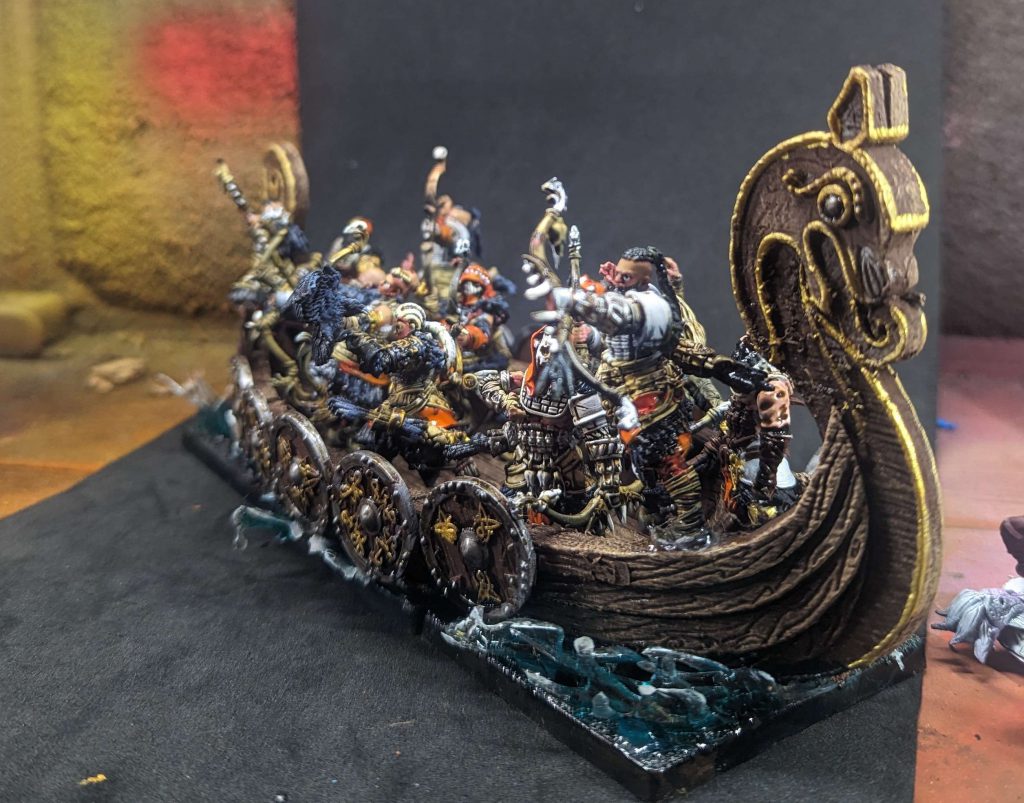
The other faction that’s seen sweeping changes at the army-wide and warlord level especially are Nords. While less transformative than Old Dominion, there’s still a lot going on here that has the potential to significantly broaden the army’s list construction options.
At the army-wide option, all Nord armies now have the Tribal Tactics special rule which is, effectively, a whole second activated supremacy independent of your warlord. Once per game, all your [Mortal] and [Exalted] regiments get to activate one of three buffs, with the ones you’ll most regularly use being Relentless Blows (do not sleep on how powerful this is with Nords units with Flurry!) or Tenacious.
This would be a big deal by itself (although it should be noted that at present, Mortal and Exalted units are a bit out of favour compared to Half-Bloods), but there’s also a similar spate of warlord reworks to the Old Dominion update:
- The Konungyr is now the tribal tactics guy. He can keep picking new tactics round after round (effectively cycling between tenacious and relentless blows most of the time), and once per game can make all your regiments (not just Mortals and Exalted) benefit from your tactics’ effects. Tenacious and Relentless Blows are both potentially very powerful effects on some of the Half-Blood and Jotnar units, but the bulk of a Konungyr list should probably still be built around a core of units that benefit from Tribal Tactics all game.
- The Blooded now grants healing to Half-Blood regiments at a rate of one wound healed per enemy stand destroyed, and can activate the supremacy once per game to double the healing. Realistically, this is probably a difficult supremacy to maximise the use of; Nord units tend to trade explosively, and while a lot of them have enough resilience to be kinda alive after dishing out and receiving a clash, chip healing isn’t a mechanic Nords are perfectly positioned to make use of.
- The Jarl is now the, uh, other tribal tactics guy? A Jarl list wants to be almost exclusively comprised of Mortals and Exalted unit, first because he only really supports them and secondly because he grants a bonus to reinforcement rolls for those regiments and when you split your reinforcement pools you tend to have some very awkward reinforcement phase decisions when the dice get weird. So the simplest thing to do is to limit yourself to at most one regiment in each weight category of non-Mortal/Exalted troops, so you can auto those on and enjoy full reinforcement pools with a bonus to the rolls and no awkwardness. Oh, and army-wide juggernaut for a round is pretty neat.
- The Vargyr Lord is another Half-Blood enabler like the Blooded, but does it in a much more focused manner. Goltr especially enjoy being able to perform impact attacks through hindering terrain, and Shock and Fury (Shock especially!) are strong rules to hand out as an activated once-per-game component. The likely list here is a mix of Half-Bloods but a particular focus on Goltr, which would probably be a bit one-dimensional if it was all you played, but as a single warlord offering a build archetype in a broader field of interesting warlords, that’s a nice option to have.
- The Volva warlord is mostly unchanged and as a result still very good. She was previously the go-to option as +1 evasion on everything everywhere all at once was a fantastic rule on an army like Nords, and she still does that. The question is whether she remains the default warlord, but particularly options like the Konungyr and Shaman might outpace her now. Speaking of;
- The Shaman is one of my new favourite warlords in the game. Not necessarily in terms of power but in terms of being a troll to your opponent. In addition to a small passive bonus letting him ignore negative terrain, he has three options for active supremacy choices and gets to pick two of them each game. The first halves all regiments’ barrage rands for a round, the second reduces all enemy march characteristics by 1 for a round and prevents enemies rerolling charge distance, and the third just does five wounds directly to the dome of any enemy regiment anywhere on the field. Five wounds is five wounds but it’s actually the first two that are probably the most impactful and likely to cause significant agony for your opponent. Big fan! Probably not going to be as big a fan when my Trebuchet is reduced to 15” range, but still! Big fan!
As with Old Dominion, there are plenty of other changes to the army as well, the most notable of which is that Forward Force is gone across the board, but changes to Bearsarks and Ulfhendar and various attachments (especially the Shield Biter which is priced to move at 5pts across all regiments now) will also have significant potential impact. But it’s the warlords that are the big changes, and while I don’t think there’s going to be quite the variety that Old Dominion now has, the Shaman, Konungyr, Vargyr and Volva all leap out as potentially very interesting choices, with the Jarl and Blooded being at least worth exploring. The main challenge for Nords players will be balancing all the support for Mortal and Exalted regiments with varied list construction, but all the most interesting warlords support that to some extent.
Hundred Kingdoms
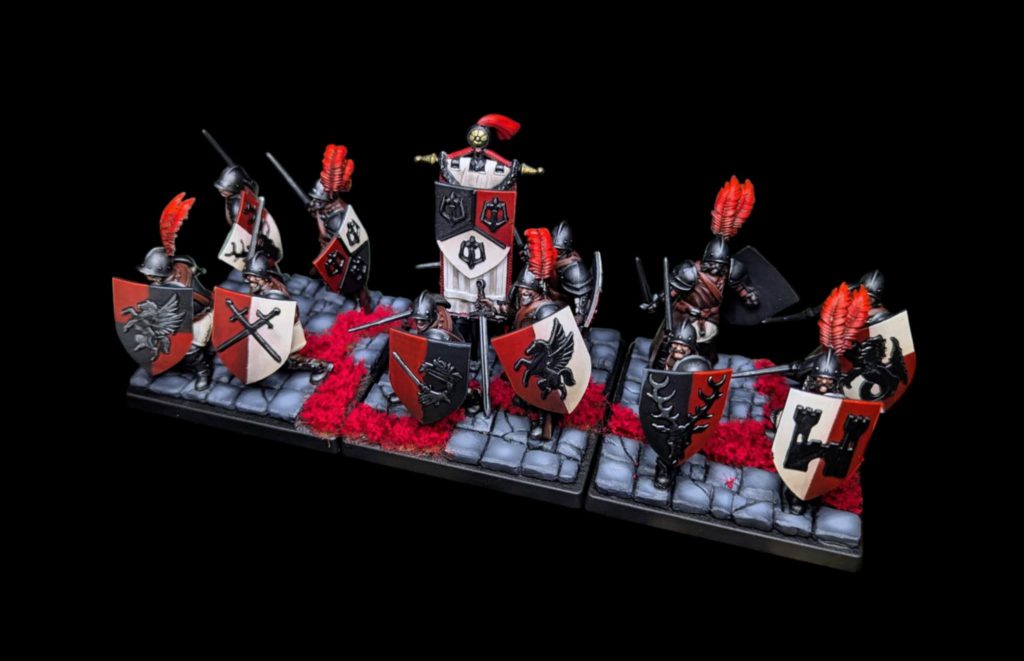
We’re down to the shallow end of the pool now, with mostly only modest changes from here on out. Hundred Kingdoms received a few small adjustments, the most significant of which is a points increase to Armour of Dominion (a popular artefact with players who didn’t notice you can get Hardened on many of your regiments for cheaper), and a small increase on the cost of additional stands in Men-at-Arms regiments. This one hurts me personally but is very reasonable; Men-at-Arms regiments could scale up
very efficiently and were able to present enough sheer bulk at a low enough cost to let some Hundred Kingdoms bull through even certain meta top dogs with enough bloody-mindedness when it came to casualties amongst the men.
There’s also been a relatively major adjustment to the Imperial special rules to bring them in line with other game rules, which is reasonable but a big nerf in absolute terms. Now rather than granting a free additional reform (very good for increasing charge threat ranges on wide regiments!) it instead gives Fluid Formation, which is
much more constrained and generally a relatively weak rule these days. This effectively ends Imperial as an archetype you took to maximise your threat ranges; it does still help with that a little, but only a little. Bwomp bwomp.
To make up for those (mostly quite reasonable) nerfs, there are some small buffs to several characters and units. The Mounted Noble Lord is now much more reasonably costed at 105pts, Crimson Tower picked up the Fury rule which
really cements them as a regiment able to take names if they charge + clash, and Militia Bowmen lost 2” of range, increased in cost to 90pts, but… went up an entire volley. Which is a huge improvement, proportionally speaking, and fundamentally transitions them from the status of ‘trash mob you take because you need a mainstay and they’re the cheapest one in the game’, to ‘might… maybe… actually do something’. As someone who loves seeing useless goblin underdog units do something, that appeals to me.
Overall, the future for Hundred Kingdoms is set less by the changes to them directly than by the changes to everyone else. With most of the top-end meta lists seeing some adjustment, there’s a lot more air no for a faction like Hundred Kingdoms to breathe. And while I personally am of the opinion that changes to the game structure over time have been
generally good but
specifically a bit erosive of Hundred Kingdoms strengths and identity, they remain ultimately a faction with a reasonable width of play and a good ability to adapt to at least one major threat if any of the other armies emerges as a singular dominant meta-force.
City States
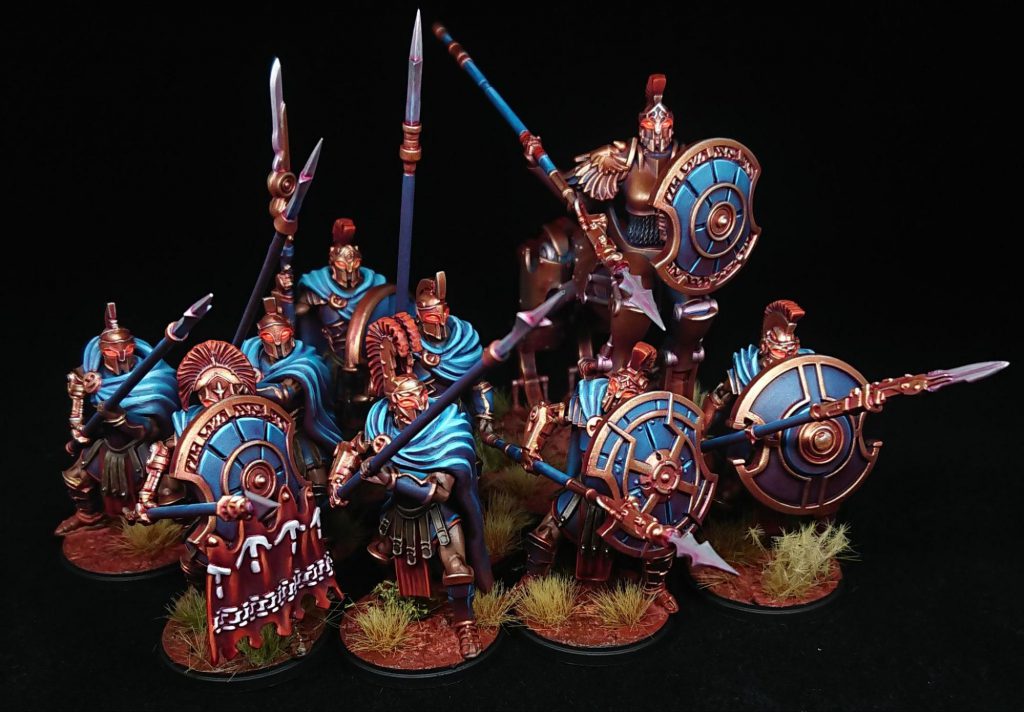 Conquest City States Credit: Tom
Like Hundred Kingdoms, City States have seen only small adjustments across the range and are mostly impacted by this update in context of how it affects all their natural predators. Unlike Hundred Kingdoms, the changes to City States that did occur have them
eating well. The general theme here seems to be “10pts cheaper”, and when you apply that to enough regiments and artefacts across an army and you end up in a situation where it’s not too hard to fit entire additional regiments in a list with a bit of tweaking.
There are some other notable buffs as well; the Mechanist is now Priest (6) (and there was much, much,
much rejoicing), and the Ipparchos warlord has received a new and much more consistent and easy to use set supremacy ability, granting Shock to Infantry or Cavalry regiments activating from the strategic stack (which, as a reminder, also includes regiments activating with an Entourage Activation). The new Ipparchos probably doesn’t out-compete options like the Polemarch, but is still pretty interesting, and might see some play.
There have been some small nerfs to accompany this; Chariots are 5pts more expensive and Clockwork Hoplites are 10tps more expensive, but that’s it. Overall, a lot more small buffs than small nerfs here, positioning City States list to continue well into a future with a lot more space to explore in the absence of the same aggressive predators.
The Spires
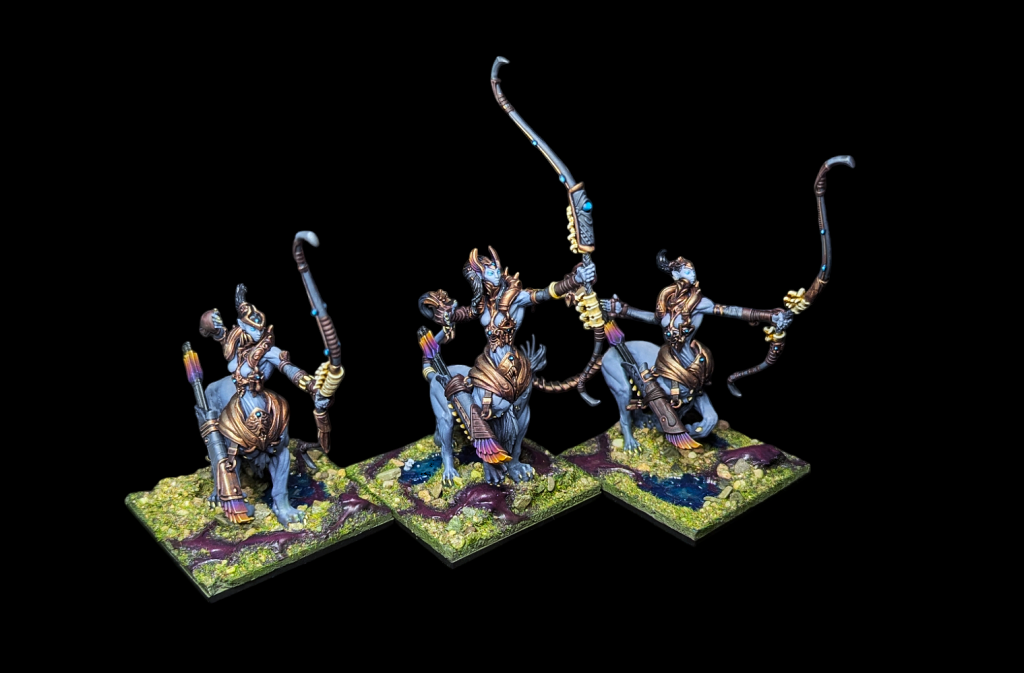
Having only seen their rework drop in January, the Spires understandably have also seen little in the way of changes, but adjustments to Dweghom especially giving a little breathing room to Spires players. And that breathing room plays double duty, here; all Spires players are still in the process of figuring out what even works well in the army. The injection of novelty in the metagame means that
everyone is doing the same time, which taps the brakes a little on having to adapt-or-die quite as fast.
That said, there have been changes here – entirely buffs to underperforming units. The Mimetic Assassin gained Inspired as a baseline rule (necessary as it’s not present in the unit it appears in when they inspire normally), Biomancer warlords can hold a deeper token bank, and several units, characters and attachments saw small points decreases. The most notable is the Catabolic Node, which is back down to 20pts, which is a cost you can probably actually pay in some lists; at 30pts it was much too expensive, but at 20pts you might go back to considering it in a unit of force-grown drones.
These aren’t major changes, but being effectively only two months old makes that entirely expected. This isn’t to say I don’t have hopes for changes to certain Spires units in future (surely a day will come when the Pteraphon reclaims a modicum of its former glory) but for now, breathing room is what they needed and breathing room is what they got. Probably the most appealing new option for the faction that will move the needle on my lists is that Leonine Avatara with a Prideborn
might not be prohibitively expensive relative to their durability in particular any more, and it would be nice to return to giant lionesses with bows looming behind my Drone blobs.
Weavers
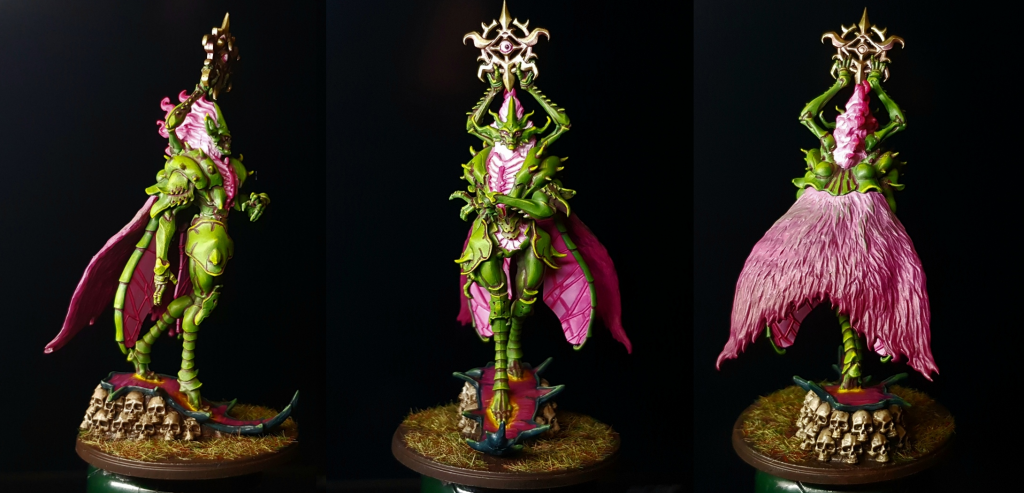 Oberon, finished! Credit: Rachel
There’s no real way to sugar coat this one. Weavers players were hoping for significant adjustments to their faction, and instead they received a note from the developers saying that yes,
they know, and they’re working on it, but give them a bit more time to cook. Which is pretty reasonable, honestly; you want to overtune an army and have to nerf it in future even less than you want to let them carry on in a rough state for a couple more months.
The one silver lining here is an adjustment to the Taosidh’s warband composition, letting the Taosidh take one otherwise restricted regiment that matches their court as a mainstay (for example, one unit of Gemred Knights may be taken as Mainstay in a Winter Taosidh’s warband). This is an
extremely warranted change, opening up more investment in appealing court-bounded units that would otherwise have been restricted even for a Taosidh of the corresponding court. We hope to see more changes like this to Weavers in future updates.
And that wraps up our coverage of the update! Not ideal if you're a Weavers player (but even they greatly appreciate a little shakeup in the most powerful opposition armies), but generally a good, exciting place for the game to be in for the coming meta cycle.
As always if you want to get 10% off and support Goonhammer you can make your Conquest purchase by clicking here. You’ll also need to enter code “goonhammer” at checkout.
Have any questions or feedback? Drop us a note in the comments below or email us at contact@goonhammer.com. Want articles like this linked in your inbox every Monday morning? Sign up for our newsletter. And don’t forget that you can support us on Patreon for backer rewards like early video content, Administratum access, an ad-free experience on our website and more.Thank you for being a friend.
 This website uses cookies. Learn more.


 Goonhammer App and Patron Updates: April, 2026
 Kill Team Tournament Report: Engage, Party, Repeat's March Madness 2026
 Goonhammer Reviews: Tribal Conquest