Editor's note: This article was updated 3/24 to reflect the updated FB scenarios posted by Para Bellum and some rules interpretation that we got wrong. Here in Goonhammer even we're not immune to the 'reading the rules explain the rules'.
First Blood third edition was announced in the middle of last year, promising a new way of playing the game with more focus on individual pieces and the idea that every dice roll matters. Half a year later, First Blood third edition has been fully released, except Para Bellum Games has taken the Blizzard school of naming things and instead named it just First Blood (FB). The skirmish system advertised under the motto 'one game, two systems' has long been a gateway drug to the bigger mass battle wargame system, The Last Argument of Kings; it's perfect for those looking for a nibble at the world of Eä without overcommitting, and this new edition promises a lot of new things. Or does it? Let's briefly go over the good, the bad, and the ugly.
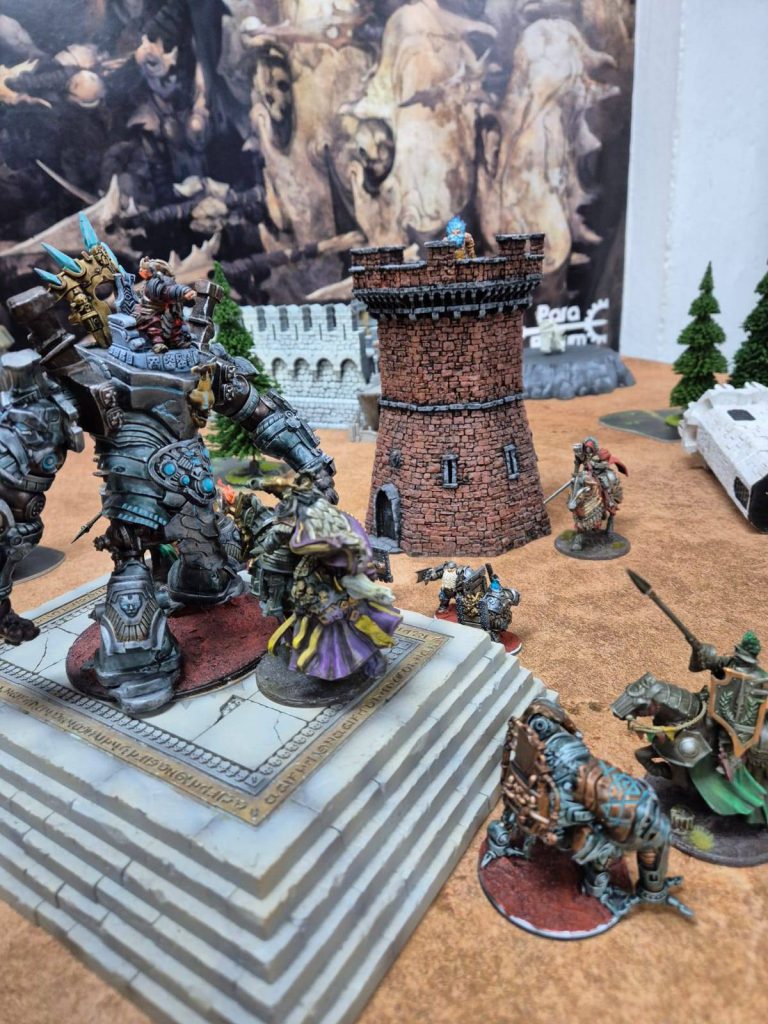 Stoneforged facing against the Nords. Photo credit: Joel Go
The Good
Compact Game Size
The ‘default’ game recommends playing at 1,000 points, with each infantry unit costing around 100-150 points, each brute costing around the same, and monsters costing around 250-300. No matter how you slice that total up, there are not that many figures on the battlefield.
I tried to make an ‘infantry spam’ list and only got up to 38 models. Aside from it not being a very good list to begin with, FB is perfect for a gaming group that just simply wants to start a small-sized skirmish game. You expect each game to hover around the 15-20 models size.
Failing Resolve Tests No Longer ‘Double Damage’ You
One of the 'gripes' players have with The Last Argument of Kings (LAOK) as a game system is that you can potentially take double damage from failing your resolve test. Meaning that the damage spike can be potential, compounded by the many modifiers that the game has. But FB decides to take a little bit of an interesting spin on how the wound and resolve system works.
For each damage that reduces the warrior’s wound count to 0, they need to take a resolve test. If they succeed, they become broken. Since a Broken warrior will always fail their resolve test, they will die on the next failed defense roll.
Coupled with the way that now activation works, where each model can assign an attack to a different model, there’s this interesting math when declaring an attack where you ask a question every single time: Do I want to ‘confirm-kill’ one or two warriors, or do I want to be greedy and assign attacks to four of them?
This will also create good dice-rolling moments where the player receives multiple wounds, but due to the resolve test, they keep going. Remember, the dice gods are fickle!
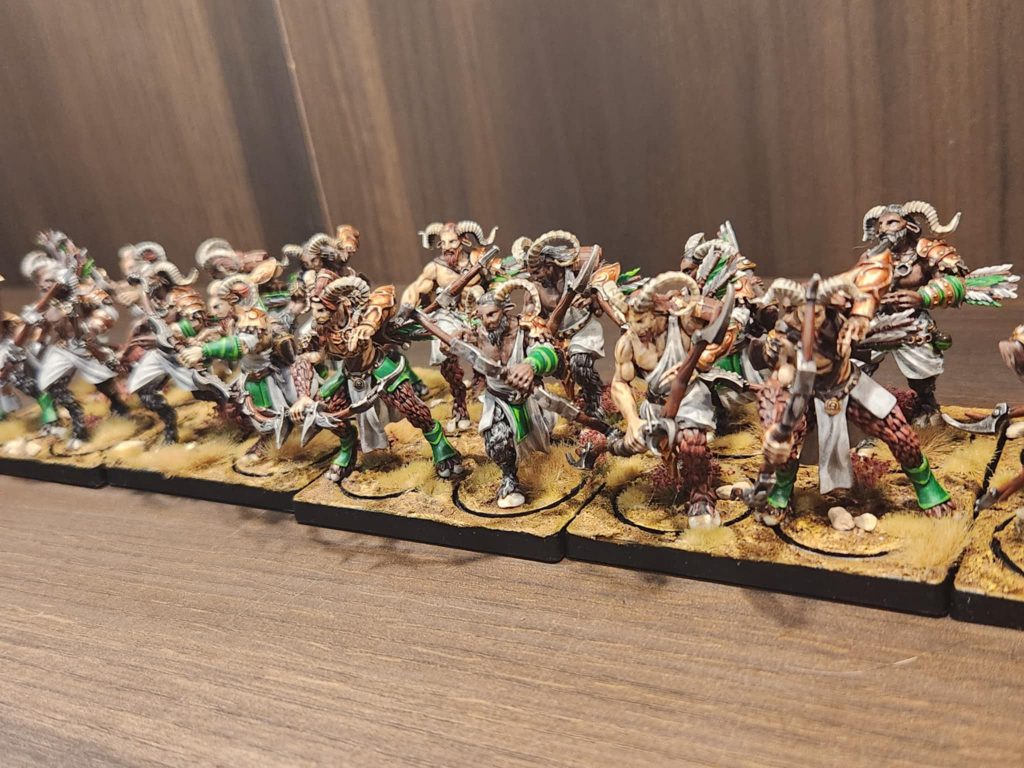 @mikes_hobbies91
No More 'Spam'
With each option only able to be taken once, it incentivizes players to expand their collection and to take different warriors to serve different roles instead of doubling down and to create a ‘cheese’ list based on a powerful warrior. This was a huge defining factor in the previous edition, where powerful units were basically taken in multiples to the exclusion of other builds, creating a negative play experience. (Looking at you, Crimson Tower spam.)
Verticality Matters
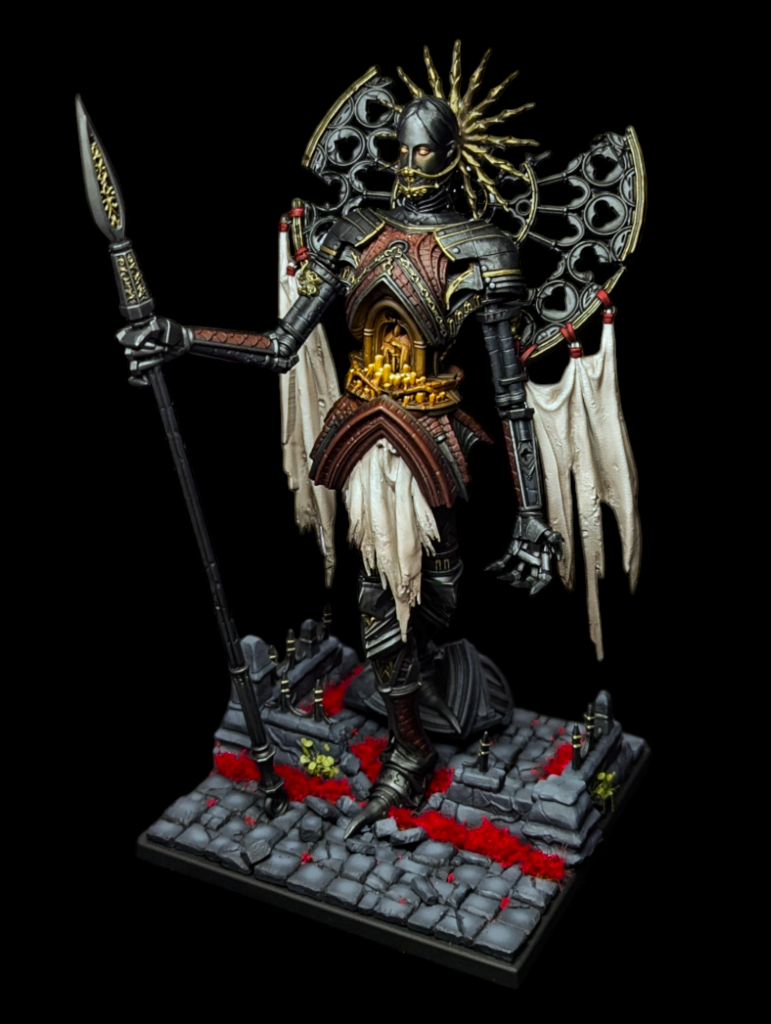
There are now incentives to create table terrain based on height. Warriors can now be ‘driven back’ along a ledge, so creative table-makers can make thematic looking towers and ledges and recreate those brutal fantasy urban battles!
You Don't Have to Buy New Things
This is mostly for older players who have already dabbled in Conquest, but the new edition’s starters do not really offer that many new options other than giving your collection a kickstart. But if you are a new player? This new starter is a good deal for you.
PB also releases all the rules for free in PDF form as well as in the Conquest Companion App, you get to see all the shiny new abilities of everyone!
Dynamic Scenarios!
Now this is very exciting. Rather than having a pre-determined scenario each game based on a random roll of the dice, now the players can essentially build their own scenario based on several elements:
- Mission: The actual objective and how the game is scored.
- Territory: Deployment.
- Encounter: Some modifier on the scenario.
- Tactic: Each of the elements above comes with a tactic. A unique ability that each player can only select one. They could help with the objective or to hinder the enemy against the objective they are trying to achieve.
This is cool for multiple reasons: You cannot bring a warband that will be able to deal with every single scenario, so you have to bring a generalist army. There is also an element of prediction and counter-play against each type of enemy. If the enemy is playing massed cavalry or monster that can threaten you in the early turns? Pick battleline as your scenario. Or vice versa - if you win the die roll, you can instead play crossroads or surrounded! to capitalize on that.
While dynamic scenario is nothing new in terms of wargame in general, but the addition to this (especially in the competitive scene) gives endless replayability to the game. The same warbands can have varying results depending on the combination of those 4 elements above!
Completely New Dice System
Now this is something that FB2 and LAOK players will need a little bit of time to wrap their heads around them. Those familiar sounding stats-line? They are a smidge different from what they are.
Clash / Volley no longer is a value that you need to roll above/below in, instead its the amount of Hits you are able to assign to the enemy. Attack / Barrage is still the amount of dice you pick up and 6 is an auto-miss, but everything else is a Hit.
Defense works similarly to the previous edition where it cancels the Hit. You use a dice system where you will line up each of those Hits compared to the defense and then you use a 'cancel if its lower than your hit' kind of system. Keeping in mind that a Defense roll of 6 is always fail as well.
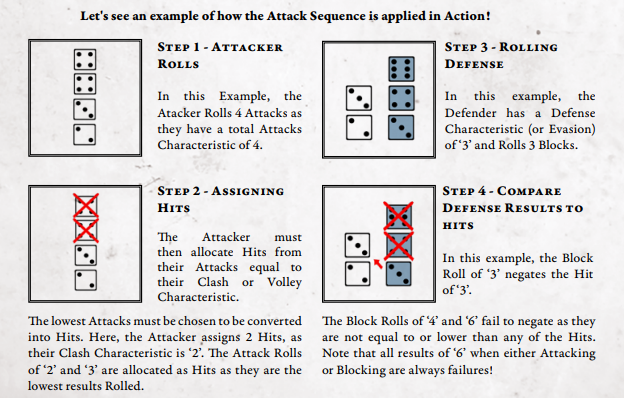
Unsaved defense goes straight to wound and then to the new resolve system we discussed earlier.
Monsters Are Now Balanced
One of the biggest complaints from the previous edition of FB was that monsters tended to either be the most overpowered unit in the table or the absolute worst, with little in between. There were also plenty of ways to reduce the efficiency of monsters, namely by giving them the injured state or by reducing the amount of their contesting power.
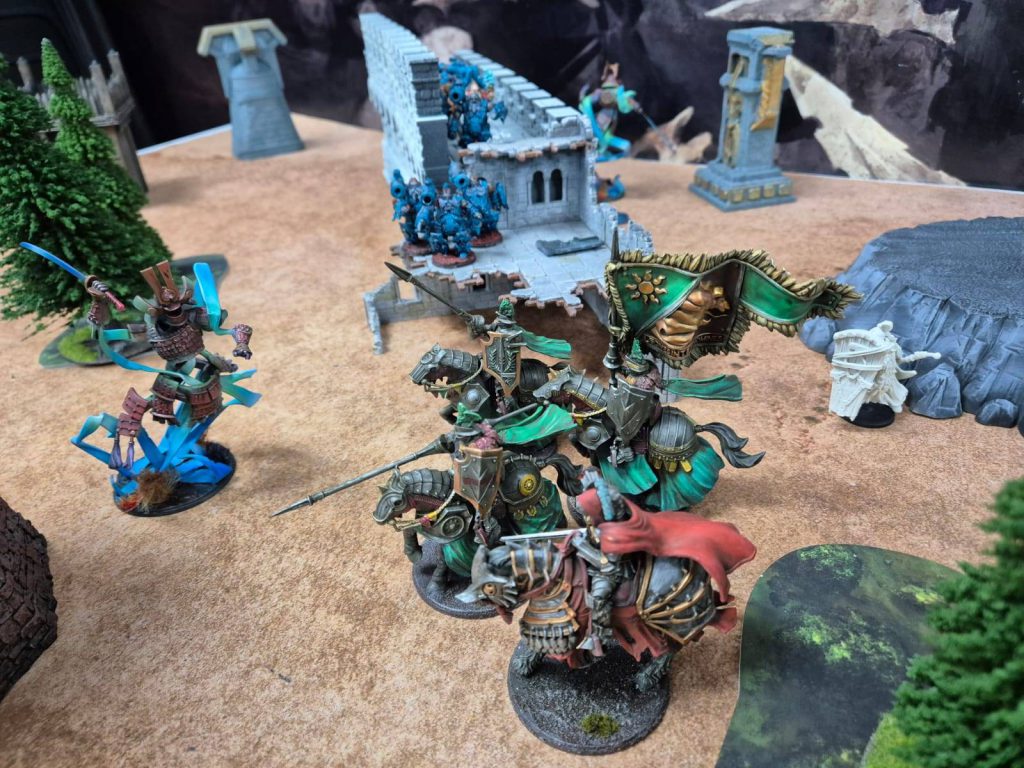
This edition of FB still borrows the healthy/injured state from the previous edition, but now the monster just provides a concentrated amount of wounds and attacks that need to be chipped down (and they can be killed!). Monsters also have a nice little effect of ‘moving away’ smaller models when they march; this means that monsters can no longer be ignored, and they always provide some sort of value even when they don’t kill anything. Any wargamer knows the value of disposition in their army!
The Bad
List-Building Restrictions
Following the style of LAOK, selections in FB now adhere to the list-building rules of its big brother: With one mainstay option, they can unlock one restricted. However, the good news is that there are no individual options for each of the warlords, and instead we get a generic roster of restricted and mainstays. They removed the freedom of list-building from the previous edition and instead added a roster of mainstays that will be the core of your list.
Game Length
This hovers between ‘good’ and ‘bad’ depending on what type of player you are. The games of FB that I have played in the new edition are mostly decided by turn three, which means in gameplay language around 45-60 minutes.
Bookkeeping
Each broken warrior model needs to be tracked separately, leaving a large potential of clutter on the battlefield where you have a bunch of clumped-up infantry and each of them is in a various state of broken and/or not broken. Worst of all, there are warriors with multiple wounds /and/ with some certain state of brokenness.
This is both a visual nightmare and bookkeeping nightmare where there will be plenty of status tokens on the battlefield denoting broken and HP, especially if you are using dice to track wounds and you are rolling multiple dice. Yikes. And on that note…
Per Model Activations
Fulfilling the promise that they claimed earlier of every individual activation matters, the game now no longer ‘works’ on a regular regiment basis; let me explain.
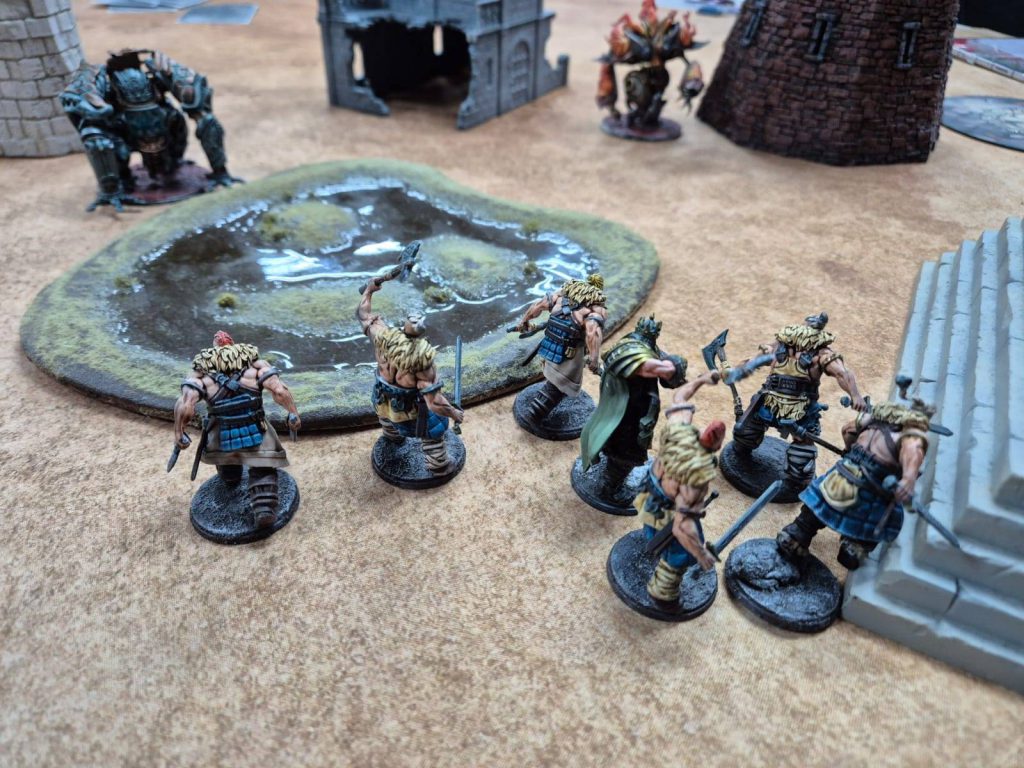
A regiment (now called Warrior) is activated as a regiment, but each of those warrior models has their own two actions. They can move within a certain amount of coherency from each other, but they can each attack a different warrior. There are more nuances in each activation instead of just move blob and attack. Which does a lot for the game!
However, this creates a very slow turn cycle where each individual model has to be moved up. Each of them has to roll their attack hit and then each of them takes a defense and or resolve. It’s perfectly fine if you play with a bunch of brute models. But operating a blob of 12 infantry warrior? The information overload could be stunning.
The Ugly
Same Name, Different Rules
Back during FB 2, the majority of the names for a unit's special abilities were similar to those of their LAOK counterparts. For example, Shield gives +1 defense with a slight difference in exact language in FB2 and LAOK -- in FB 2, because there are no 'flanks,' the shield rule is just straight up +1 defense; while in LAOK, you only get the shield bonus if they are attacked from the front. This smooths out the learning curve when you are playing one game and transitioning to the other. Leading into a sense of familiarity between the two systems. Similar but not the same.
The new edition keeps the familiar-sounding name, but now has completely different rules text attached to it. Let’s look at what Shield looks like now:
 This is bad news for a few reasons. New players who are starting out in FB will learn the rule with this name works this way and internalize it, and then a shock when they transition to LAOK further down in their gaming journey. Meanwhile, senior players of LAOK will need to keep referring to the app every single time they play because the rules are just that much different from the versions they're familiar with.
I understand there need to be changes to the majority of the rules because the game is that much different, but having to refer to the app every single time if players are playing both versions of the game can quickly lead to rules fatigue, especially with the amount of rules stapled to every single model in the game and the way the rules are written. ("This ability gives such and such rules to this model."). Which makes you click on the app and then another click to explain what the rules that is granted.
This is bad news for a few reasons. New players who are starting out in FB will learn the rule with this name works this way and internalize it, and then a shock when they transition to LAOK further down in their gaming journey. Meanwhile, senior players of LAOK will need to keep referring to the app every single time they play because the rules are just that much different from the versions they're familiar with.
I understand there need to be changes to the majority of the rules because the game is that much different, but having to refer to the app every single time if players are playing both versions of the game can quickly lead to rules fatigue, especially with the amount of rules stapled to every single model in the game and the way the rules are written. ("This ability gives such and such rules to this model."). Which makes you click on the app and then another click to explain what the rules that is granted.
It Feels More Swingy
Let's take an example of a rules / special ability that has been completely reworked from FB2 and even LAOK and it's quite ever-present in plenty of unit that it deserves mention:
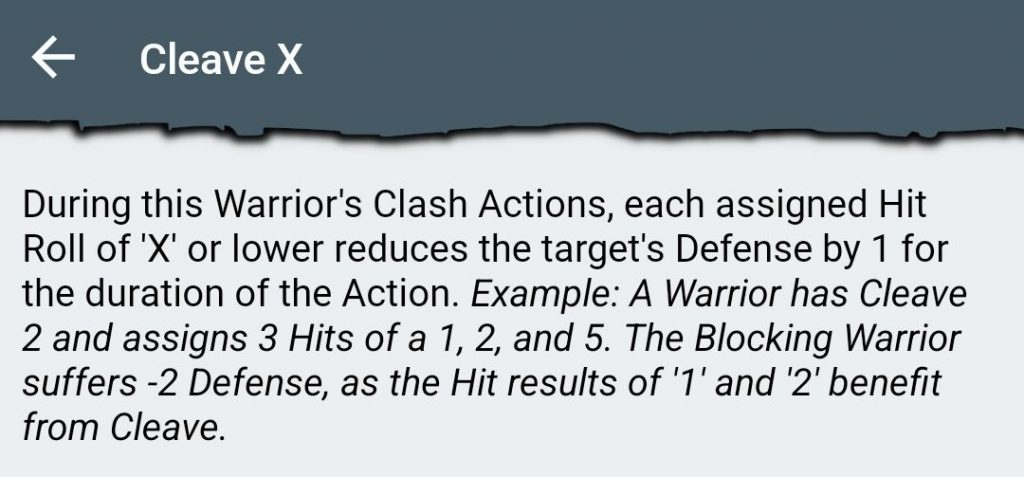
Yes, the Armor Piercing (x) is the same rules, just written for Volley instead of Clash. And yes, we got it wrong the first time. Because not reading the rules does not explain the rules.
Ahem. So Cleave and Armor Piercing is tied to dice rolls instead of it being a modifier that is automatically applied to the defense roll when it is relevant. So there are circumstances where you Hit, but because your Attack Roll is not 'low' enough to trigger the Cleave or Armor Piercing, it does not apply to the roll.
A situation that can be applied for example to the following model as an example:
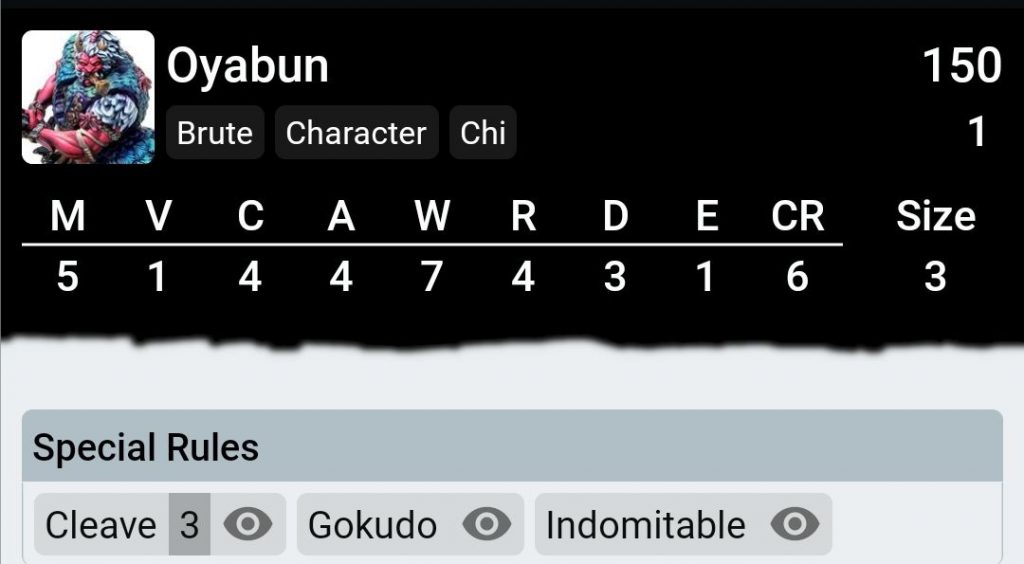
Where you can roll 4 - 4s for your attack and none of your attack will benefit from the Cleave.
Of course, this is an extreme example of your dice simply not going your way. But you can always give an example to the dices who does not please you.
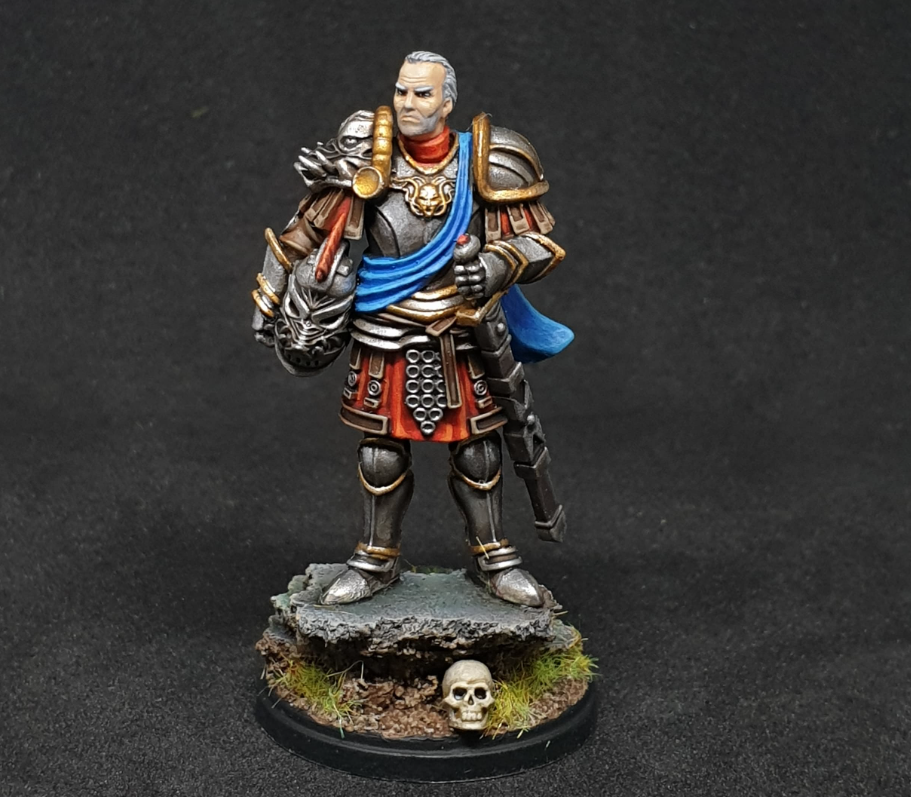 Imperial Officer painted by Steven
Final Thoughts
The game is different now, and this could be a good thing or a bad thing (or both). The game has modernized a lot from the previous edition from basically being LAOK lite, into something that is new and fresh. The rules combine mechanics from a lot of other games into a delightful amalgamation; just to name a few, the attack and defense dice system is based on Kill Team and Warmachine (where each ‘unit’ activates together, but each ‘model’ can do different things and attack different targets); the deployment system is borrowing from Chain of Command (where you put down a card and that denotes your ‘starting-point’ ); and both the Resolve system and ‘driven-back’ mechanics are inspired by Saga.
From the few games that I’ve played in this new edition, there's definitely much more decision making involved when a ‘regiment’ (block of warrior) moves and attacks: Do I focus fire my attack on one or two models so that they can be removed, or do I spread them out in order to potentially do a lot more damage? While a few might approve of this peculiar way of maximizing each of your model's activation, I find the constant dice rolling and tracking of individual states often gets too much.
But the appeal for First Blood still has not change from its previous edition: a gateway game for people to play in the world of Eä without digging too deep in their pockets. And to those who already did? It could give a new lease on life for the models that maybe are not seeing play.
So try them out and let us know how you think! We will be covering more FB within the next few months including primers for the factions!
As always, if you want to get 10% off and support Goonhammer you can make your Conquest purchase by clicking here and enter code “goonhammer” at checkout.
Have any questions or feedback? Drop us a note in the comments below or email us at contact@goonhammer.com. Want articles like this linked in your inbox every Monday morning? Sign up for our newsletter. And don’t forget that you can support us on Patreon for backer rewards like early video content, Administratum access, an ad-free experience on our website, and subscriber-only content covering competitive Warhammer 40K!
Thank you for being a friend.
 This website uses cookies. Learn more.


 Goonhammer App and Patron Updates: April, 2026
 Kill Team Tournament Report: Engage, Party, Repeat's March Madness 2026
 Goonhammer Reviews: Tribal Conquest