Welcome to the Century of the Vampire, an ongoing weekly feature where Goonhammer managing editor Jonathan Bernhardt watches some piece of vampire media, probably a movie but maybe eventually television will get a spot in here too, and talks about it at some length in the context of both its own value as a piece of art and as a representation of the weird undead guys that dominate western pop culture who aren’t (usually) zombies.
Last time, Bernhardt reviewed the 2014 Gary Shore movie, Dracula Untold. Today, he looks at the Taika Waititi and Jemaine Clement franchise, What We Do in the Shadows. This article will contain spoilers.
2014 was a big year for vampire movies -- our last entry was from that year, this week’s entry is as well, and next week we’ll be doing A Girl Walks Home Alone at Night, which is, you guessed it, a 2014 vampire film -- and What We Do in the Shadows is probably the most influential of the bunch, both for the New Zealand comedy scene (there are a number of Flight of the Conchords alumni in here, and this is a longer form project built out of some comedy shorts made before that show spun up) and for vampire comedy in general. It got a full six season television series out of the success of this film, and there might eventually be a spinoff about the werewolves that feud with the hapless vampires of Wellington and/or Staten Island somewhere down the line (“We’re Wolves” is still in pre-production as far as some light Googling informs). To get the flavor of the television show, I’ve watched the pilot episode as well as S2E6, “On the Run,” more memorable perhaps as “the one with Jackie Daytona.”
Both the movie and the show have the same conceit, which is also painfully early-2010s: The day-in-the-life comedy mockumentary. Specifically this is an Office-style affair; American TV workplace comedy lives in the shadow of that show even to this day -- NBC’s St. Denis Medical is the most recent example of note, and I’m told it even has the dignity to be halfway-decent -- but in the immediate wake of the show that made Steve Carrell a national star and convinced Office Jim he could be an special operations action hero if he got on enough gear, everyone was under the mockumentary’s spell. Mockumentaries were hardly new technology; This Is Spinal Tap was 1984, Woody Allen did a bunch in the seventies and eighties that technically count, Best in Show is 2000, Werner Herzog has one about the Loch Ness Monster in 2004 -- fake bands, fake productions, fake adventures. While the most influential (especially in its original UK form), The Office was far from the first TV show mockumentary; Trailer Park Boys started airing in 1998 and Reno 9-1-1 in 2003. Apparently Modern Family was a mockumentary? They’re not always comedies, either; “following around a serial killer as he kills a bunch of people” has been a staple of the genre since at least Man Bites Dog (1992).
The Office and its successors leaned into two wrinkles on the formula. First, the subjects depicted were usually performing mundanity -- the point of the documentary in the world of the fiction was to depict a “day in the life” of an office worker or a medical worker or a vampire, and observe what naturally occurs in the performance of their job and their interaction with their peers, bosses, and so on. Second, the actual production has a tenuous relationship at best with the “documentary” aspect of its conceit, with long stretches of time passing without the presence of a camera and documentary crew being acknowledged at all, only remembered and recalled when it’s time to use them for a joke. The crew never, ever appears or speaks outside of these moments; conversations will be shot with match cuts between speakers as they play out the scene, meaning that in the fiction of the documentary there have to be at least two cameras in the room filming simultaneously, but you never catch sight of the other crew (or sometimes crews) that should be edging into frame. When it comes time for jokes, however, the guy with the camera becomes extremely real -- and in a mockumentary about vampires and werewolves, the jokes that camera people get involved with can turn out pretty lethal.
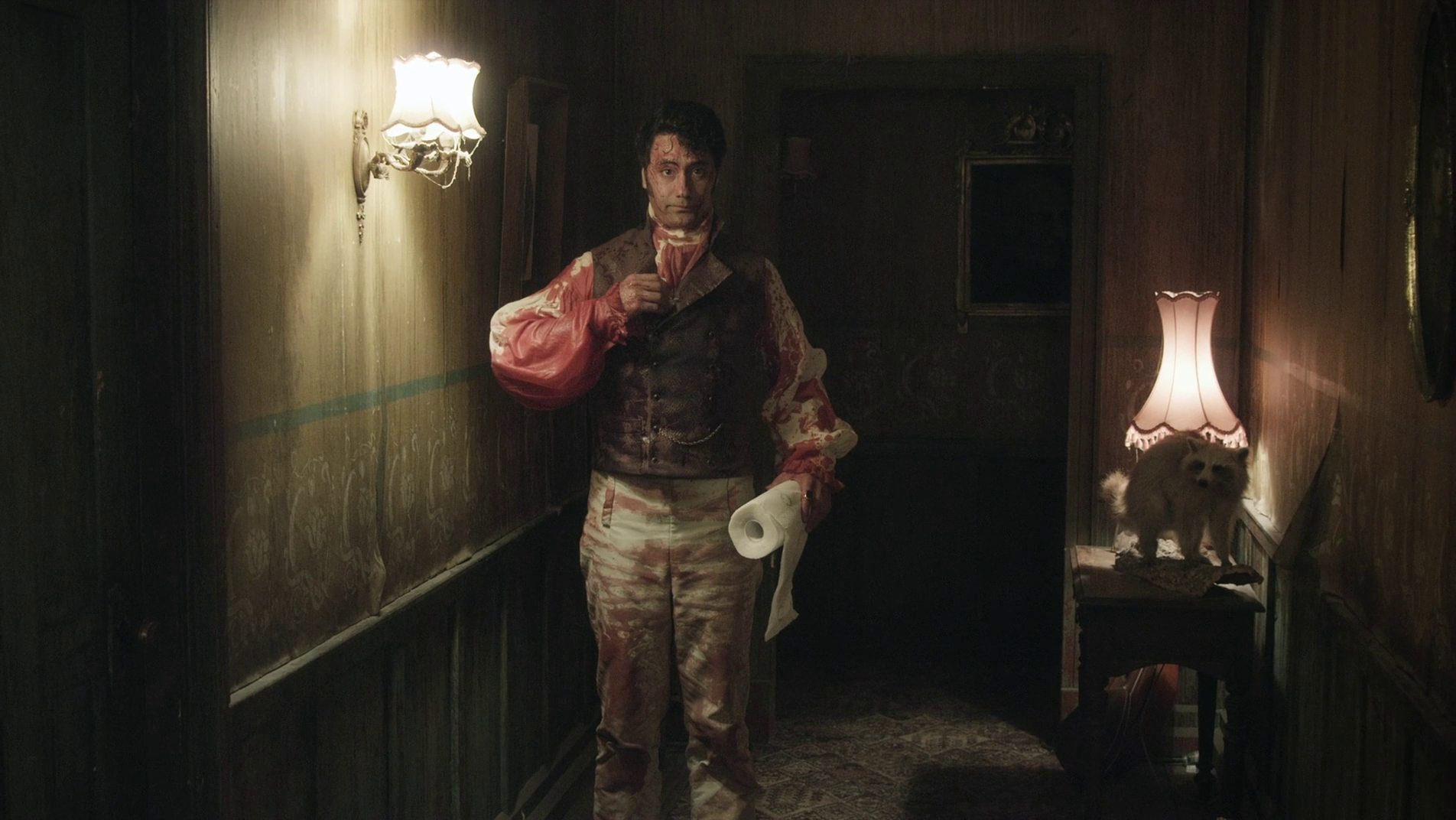
This actually gets to the crux of the only real problem I have with both incarnations of What We Do in the Shadows, and is present more in the original film than it is in the two episodes of the television show I’ve watched: The attitude towards killing people is both tonally all over the place and creates weird suspension of disbelief/magical realism issues. It’s not that vampires killing people isn’t funny in the specific; every instance of it is quite funny. The murders at the dinner party that functions as the inciting incident for the film’s plot are great as a demonstration of what absolute dorks our protagonists are, and they have so much extremely fake blood everywhere that it’s hard to have a visceral reaction to the deaths of the saps that these morons’ put-upon Renfield rounded up.
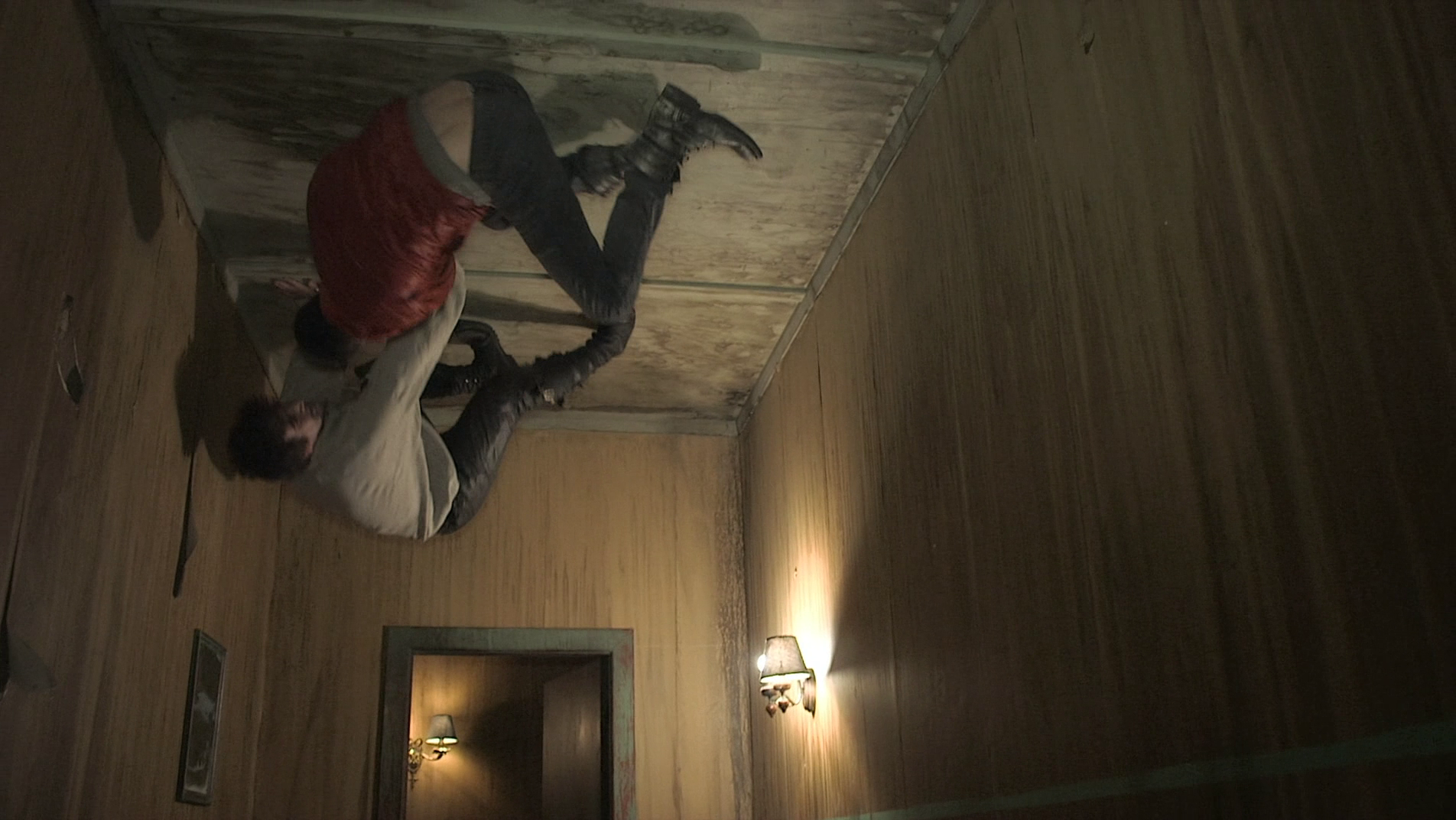
But there is just absolutely no horror at all in this horror-comedy; you never get a moment of monstrousness where the vampires reveal the dark beast at the center of their being that drives them to kill every night, and frankly, you don’t really want one -- it would ruin the vibes. These are chill dorkass losers who mostly have mundane, petty interpersonal problems that stem from their own foibles. Any pathos you get out of them should come from one of their number admitting to the camera in a sit-down interview that they're sad they yelled at their vampire roommate earlier and it escalated to them fighting on the ceiling (vampire flight in What We Do in the Shadows is also played for laughs and is maybe the funniest recurring gag in the film next to them constantly flying into things in bat form; I suspect they took the inspiration directly from how the vampires fly in Thirst and then made it even goofier).
The problem is they’re just also mulching though a school bus full of people every fortnight, and so the Wellington police have to be wildly incompetent to the point where they themselves are a running joke -- on a noise disturbance check, for instance, they happen upon the burned-up corpse of a vampire in the basement next to the still-fresh corpse of a vampire hunter, and the punchline is them tut-tutting and giving a lecture on fire safety -- and the documentary crew have to be so judgmental and unwilling to interfere with their subjects' "natural state" that it crosses the line to active complicity (this is actually The Point in mockumentaries like Man Bites Dog, but isn’t really how What We Do in the Shadows chooses to play it). It’s possible that the television show changes this dynamic up over the course of its six seasons -- the pilot has the hapless saps recruited by the familiar as food “survive” after a fashion -- but given that the Jackie Daytona episode in season two opens with them identifying sinkholes in their front yard caused by all the mass graves they’ve been digging there, I have my doubts. This is all broadly "fine" -- I don't need or even particularly want competent local cops in my vampire comedy -- but it does lead to me feeling a bit nettled any time a human shows up that I broadly like (such as the waitress character in the Jackie Daytona episode) because of the "so is this character gonna die as part of a funny joke by our goofy guys?" sword constantly hanging over their heads.
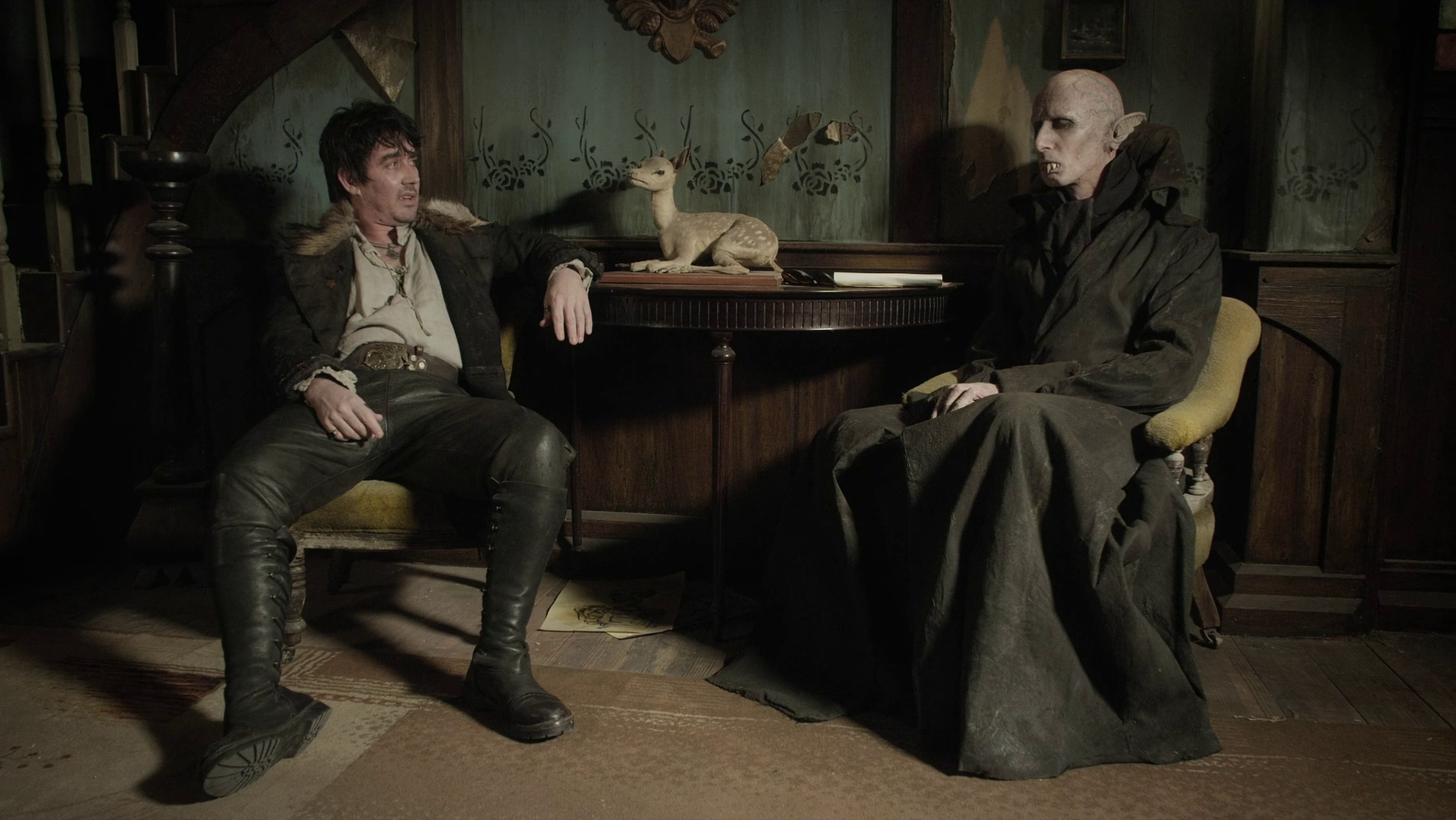
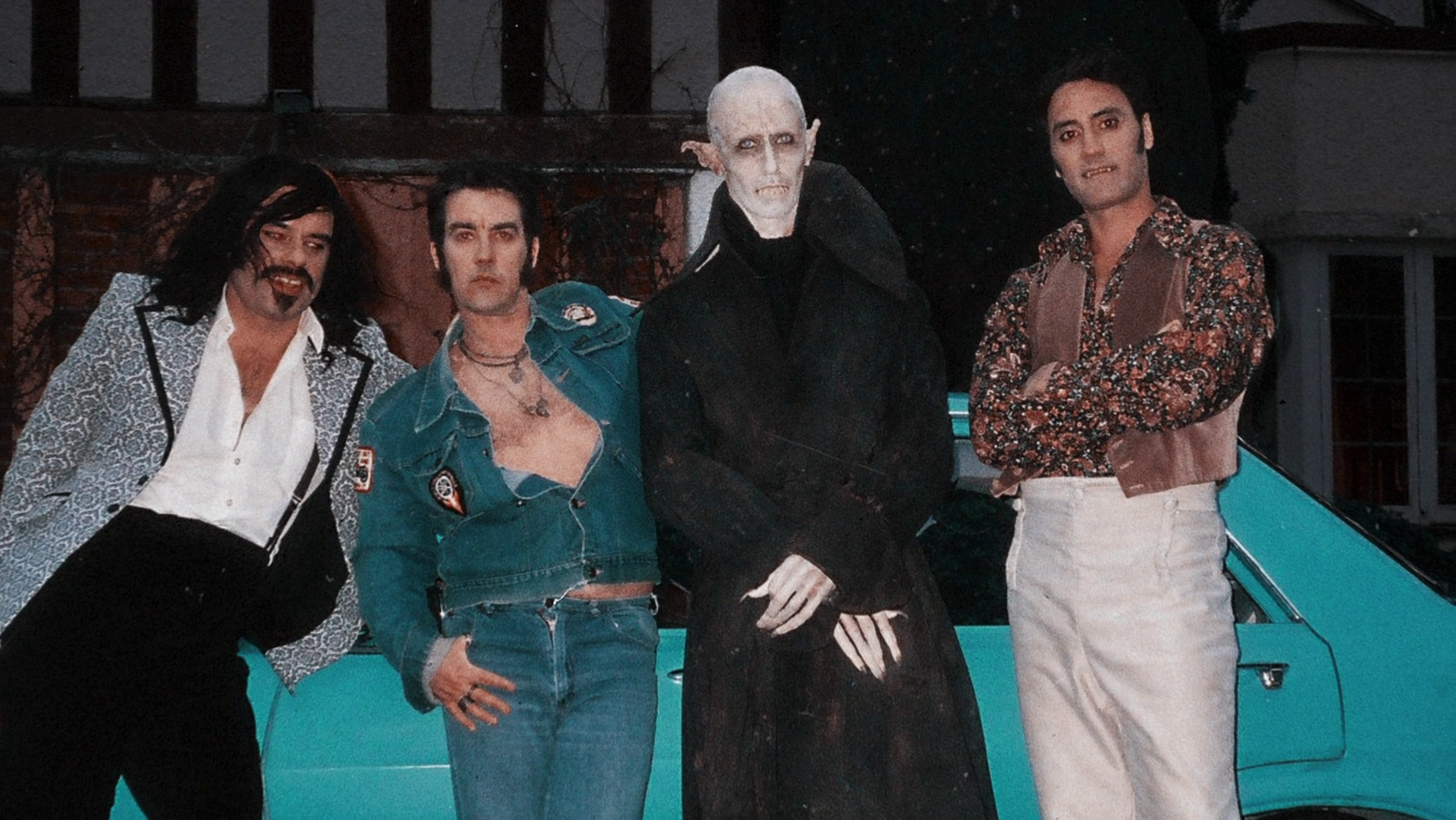
The conceits of both the film and the show are broadly the same -- four vampire roommates live in a house together with a variable number of human familiars, and we follow them about their un-lives. Each vampire is broadly some sort of fictional archetype of the sort; the film has a pair of Draculas, a Nosferatu, and a more modern “scoundrel” vampire in Deacon (Johnny Brugh). Taika Waititi’s Viago plays off the posh dandy versions of Dracula from American film adaptations of the tale, while Jemaine Clement’s Vladislav leans into the old ‘Vlad the Impaler, scourge of the Turks who impaled all his foes on stakes’ version of the guy. Petyr (Ben Frashem), the Nosferatu in the basement done up in Orlok prosthetics and makeup that still give him enough facial range to do some great expression work, is also the vampire that ends up tragically burned to death. The majority of the film’s plot hinges around Nick (Cori Gonzalez-Macuer), one of the intended victims of the dinner party mentioned above, escaping the house onto the lawn and getting jumped by Petyr, who instead of just killing him also turns him into a vampire.
Nick is the weakest part of the feature, mostly by design; Gonzalez-Macuer is intentionally playing him as Just Some Regular Dude who happened to get the immortal curse of blood thrust upon him, and predictably thinks it’s really cool for about a week before discovering that if you’re not already a weirdo freak who likes the aesthetics and the murder, this whole deal actually kind of sucks. The turning point for him is when he discovers he can no longer eat chips, his favorite food (here we get a cut from the takeaway where he thoughtlessly eats one to him projectile vomiting blood out in the alley, and it is again just a fantastic amount of blood, a full-on firehose of the stuff that he couldn’t possibly have room for in his stomach or even all the veins in his body). There’s a fun bit of plot building through the movie both with the vampires’ rivalry with the local werewolves, who are led by Flight of the Conchords veteran Rhys Darby, and with a local social function for all of Wellington’s undead that leads to a dramatic fight between Vlad and his ex’s new vampire boyfriend on the dance floor, but the real point is to just have all these guys hanging out together and doing bits, and while Nick and his human buddy Stu (who everyone likes better than Nick and refuses to eat) are very important to the plot, they’re mostly just posts to hang jokes off of.
From what I’ve seen of the television show, in the five years between the release of the feature and the debut of the series, Clement, Waititi and company were able to identify and refine the rough edges of the concept. The show opens with the same basic setup of a documentary following the nights of four vampire roommates, but instead of having the major Renfield characters living off-site and being incidental as they are in the feature, we have Guillermo (Harvey Guillén) introduced front and center straight away as our viewpoint character. Guillermo is the familiar for Nandor (Kayvan Novak) who starts out as a pretty straightforward transposition of Waititi’s Viago -- an effete, preening, narcissistic passive-aggressive fop who nevertheless has assumed leadership of the house due to the even greater self-obsessions and anti-social dysfunctionalities of his roommates. Laszlo (Matt Berry) is the Vladislav analogue, though it is very obvious even in the pilot that Berry is going to grab this character and gloriously drive him off a cliff, which eventually gets us to Jackie Daytona in the second season. Nadja (Natasia Demetriou) is a much-needed female vampire in the rotation, and repeatedly vacillates between being the only adult in the room and being completely unhinged over the course of the pilot -- she and Laszlo play off each other excellently.
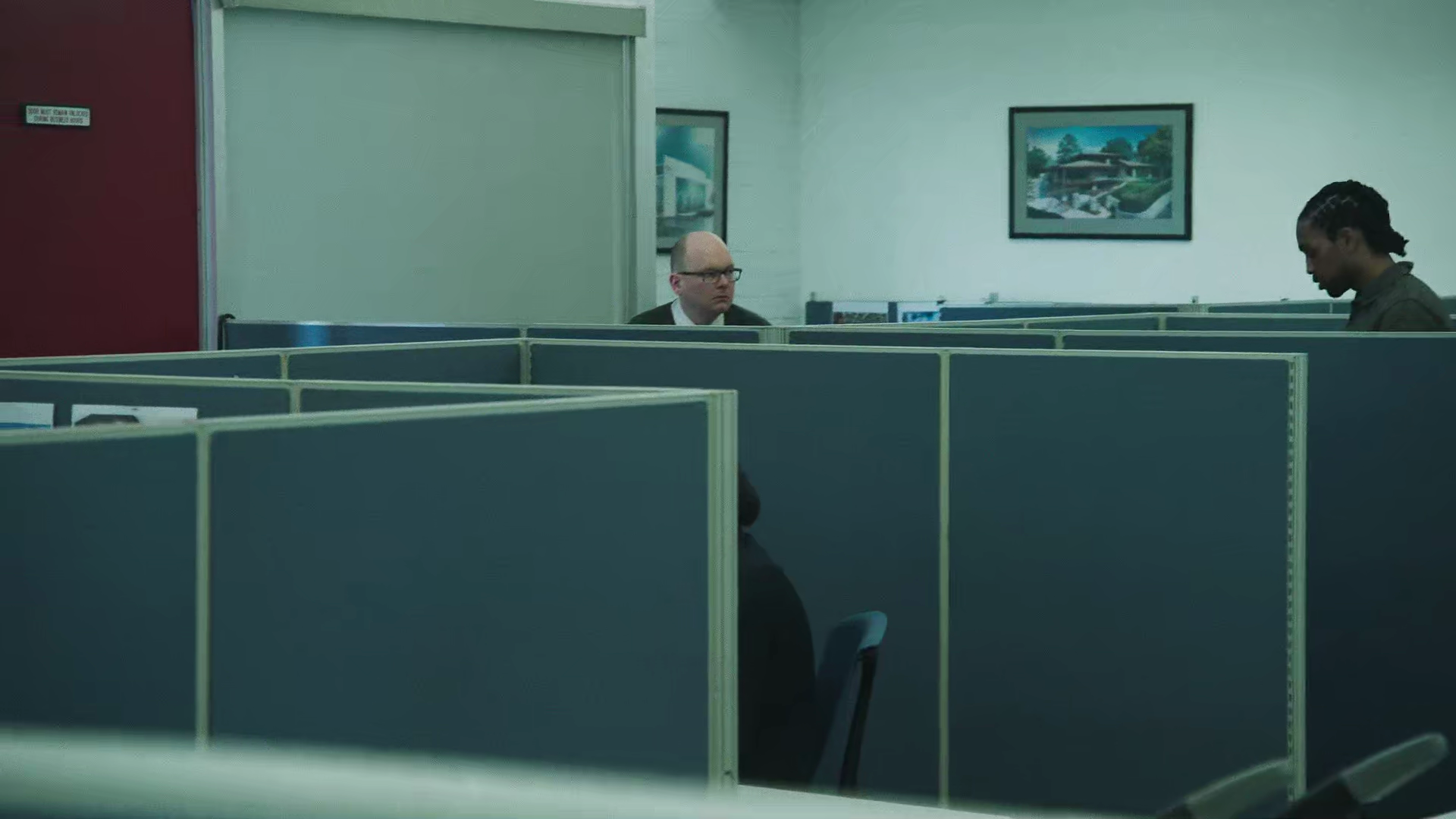
And the Petyr analogue for the television show is probably the character and concept I’ve seen break containment the most outside of fans of the series, and is also the most interesting figure on offer to us as students of The Vampire in Film: Colin Robinson (Mark Proksch), the energy vampire. He is to all appearances a boring, middle-aged bald man who can walk about in the day time and holds down an office job. He too lives in the basement, in a boring, normally-appointed room. He is to all appearances -- save his eyes flashing blue in the camera light for a brief instant after he “feeds” -- a normal man. The other three vampires both hate and are terrified of him. He steals the lifeforce from his victims simply by talking to them, boring them into a state of near-death (he has not actually managed to kill any of his victims in this fashion that I’ve seen yet, but it certainly seems possible). The blood of a human upon which Colin Robinson has fed becomes nutritionally useless to a regular vampire until the human recovers, and he can even feed on regular vampires himself, which this one mainly seems to do as a means of discipline whenever the others in the house get rowdy towards him. He’s an excellent take on the “oh we keep the REAL monster in the basement” premise of Petyr from the film and while he’s not the performer I look forward to the most when watching more of this show (that’s Matt Berry), the character and his implications for the wider setting and the stories that can be told in it seems the most interesting of the bunch.
The plot that the pilot sets up for season one of the show is that an old and powerful vampire lord from the old country is coming over to America to plot the takeover of the new world, and he arrives to find these losers have barely managed to eke out an existence in Staten Island. I have my suspicions on how this takeover of America is gonna go for the old man based on the general competence level of his new crew, but I look forward to finding out specifically how it fails when I watch more. I do worry the mockumentary conceit, which barely held itself together throughout the 90 minute feature film, has a possibility of coming apart under its own contradictions across six seasons of television, even if they are only 30 minute episodes (the perfect length for an episode of comedy television).
So we’ll get back to What We Do in the Shadows in some form at a later date; next week, we’ll be looking at A Girl Walks Home Alone at Night.
Have any questions or feedback? Drop us a note in the comments below or email us at contact@goonhammer.com. Want articles like this linked in your inbox every Monday morning? Sign up for our newsletter. And don't forget that you can support us on Patreon for backer rewards like early video content, Administratum access, an ad-free experience on our website and more.
 This website uses cookies. Learn more.


 Goonhammer App and Patron Updates: April, 2026
 Kill Team Tournament Report: Engage, Party, Repeat's March Madness 2026
 Goonhammer Reviews: Tribal Conquest