Welcome to the Century of the Vampire, an ongoing weekly feature where Goonhammer managing editor Jonathan Bernhardt watches some piece of vampire media, probably a movie but maybe eventually television will get a spot in here too, and talks about it at some length in the context of both its own value as a piece of art and as a representation of the weird undead guys that dominate western pop culture who aren’t (usually) zombies.
Last time, Bernhardt reviewed the 2010 David Slade movie, The Twilight Saga: Eclipse. Today, he looks at the 2025 video game developed by The Chinese Room, Vampire: The Masquerade Bloodlines 2. This article will contain spoilers. Repeating in bold: While this review will not discuss specific plot details after the first hour or two of the game, it will contain images, names, and character descriptions which are spoilers.
Vampire: The Masquerade Bloodlines 2 is a very good Vampire game. It is not an open-world game (neither was the first; go back and play some of it if you haven’t in awhile, those city maps are a lot smaller than your teenage mind remembers). It is not a role-playing game, at least not in any recognizable sense outside of “there is a screen where you can spend experience points to level up,” and that’s something just about every game has now. It is a bad Bloodlines game, and it is a terrible sequel to a Bloodlines game. But it is a very good game set in the world of Vampire: The Masquerade, and it tells a fantastic Vampire story.
It’s also a really good vampire story in general, but to get the most out of Bloodlines 2 you need to both know and care a decent amount about the specific world of Vampire: The Masquerade and the kinds of creatures that populate it. Sure, the game will tell you what the Camarilla is -- the ancient world-spanning feudal society of vampires that has been content to feed upon and loosely guide humanity from the shadows, maintaining the titular “Masquerade” that hides their existence from mortal-kind, mostly attending to internecine social squabbles and esoteric beef while the living drive the world forward around them -- and it will tell you what the Sabbat is -- a similarly world-spanning cult of deranged transhumanists, devil-worshippers, and violent nihilists dedicated to shattering that Masquerade, destroying all mortal society and ruling over the apocalyptic ashes -- and the Anarchs who opt out of both groups kind of just make intuitive sense. But it’s really better if you come into it with a pretty decent idea of what a “normal” city’s night life looks like in the world of Vampire: The Masquerade, if only so you can appreciate what an absolute mess you step into when The Nomad wakes up in Seattle.
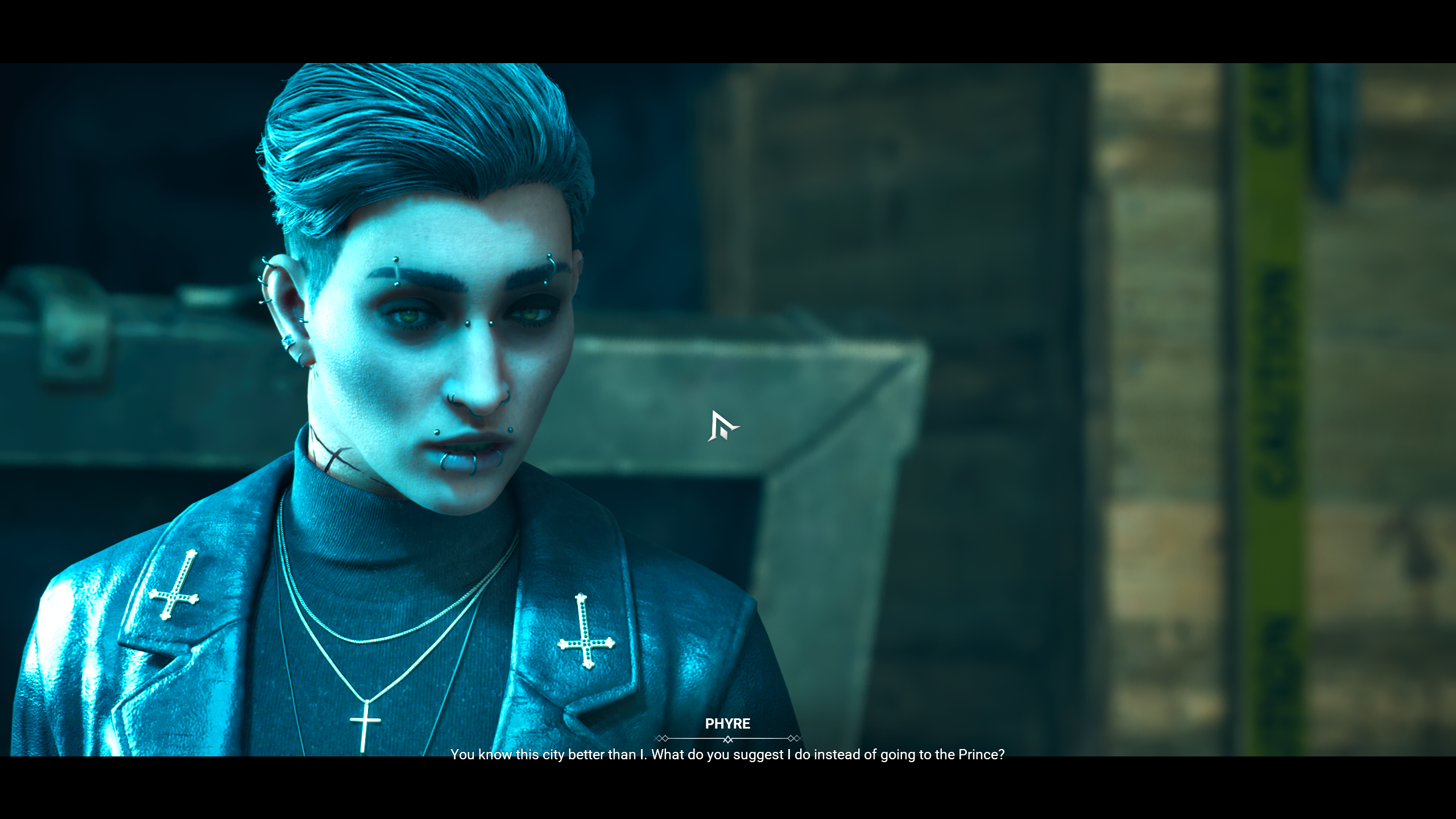
Right out of the gate, here’s one of the limitations everyone who loved Bloodlines is gonna hate, because it’s completely against what Bloodlines was about: You don’t get to choose your character. You are The Nomad, capital T capital N, a vampire elder first recorded in Constantinople in the middle ages who has earned their infamous epithet by wandering the world, something the vampires of the Camarilla very much are not inclined to do (again, very feudal, very petty, very homebody). You are white, you appear to be in your mid-thirties, and you speak English with an accent of Eurasian extraction. You can choose your gender, your hair, your eye color, and that’s about it. Even your given name is locked; shortly after the game begins, a character says they can't just call you The Nomad and asks for a given name -- this is usually where titles like these let you type something in that appears on the character sheet but the voice actors never have to say, like Commander Shepard's first name in the Mass Effect trilogy. But The Nomad looks at a poster on the wall for a local punk act calling itself Phyre and responds, "Phyre," and that's what you're going with.
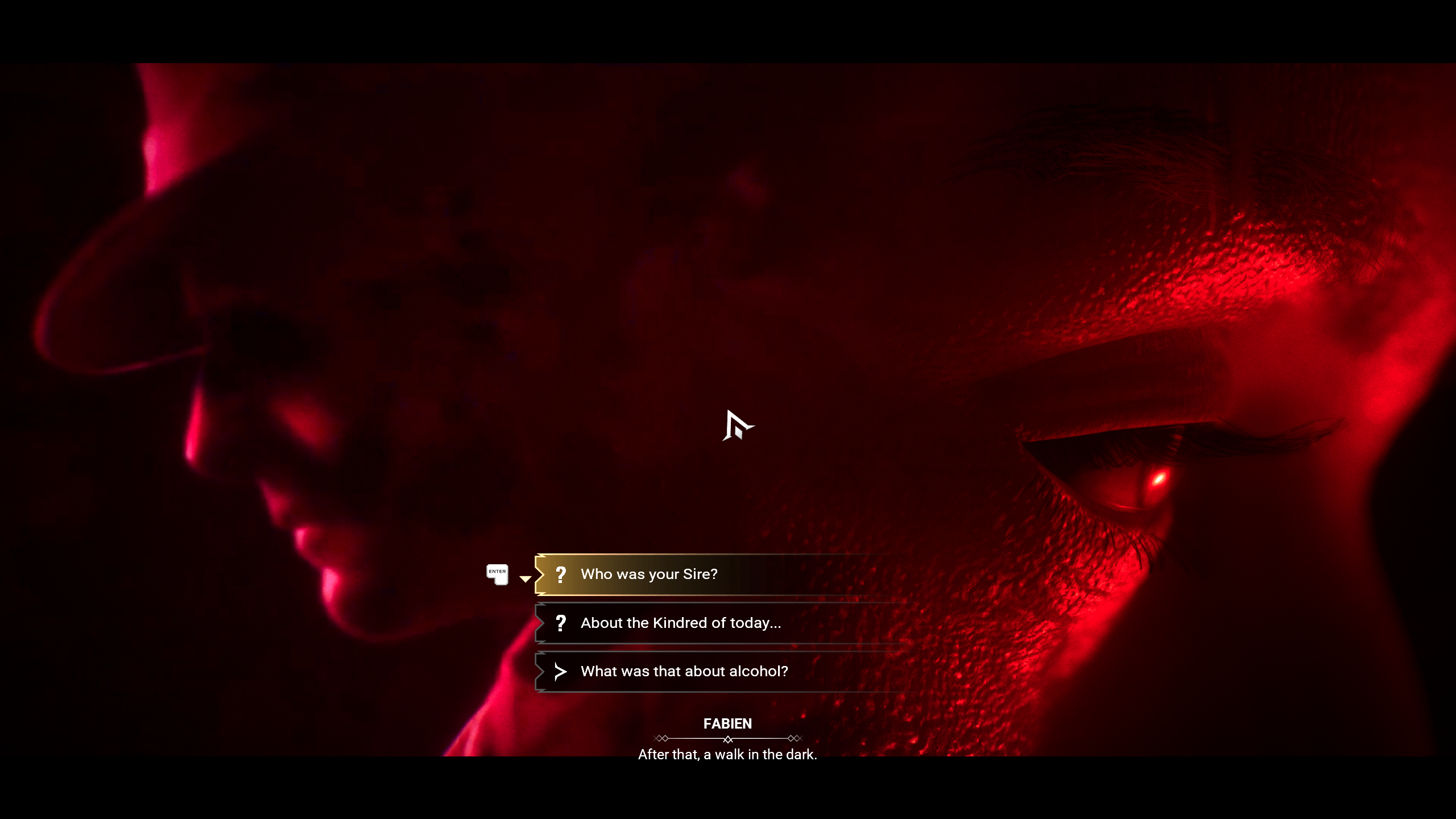
Instead of stepping into the shoes of a newly-turned neonate vampire learning the secrets of the night for the first time, you will be playing a character with a long, established (if forgotten) previous history, with a lot of deep-seated opinions on vampires and the world they live in -- for instance, there’s not going to be a Sabbat run in this game; The Nomad hates ‘em, even if you choose a former Sabbat bloodline like I did (Lasombra) as her base clan. You’re not gonna be playing an Anarch, either; as a player your range of choices with regards to the faction that makes up the trash mobs of the first half of the game goes from disdainful hostility to conciliatory co-existence -- but you can’t join them. You will spend the majority of the game in and around the Court of Seattle, which is where The Nomad’s interest lies; she’s got a voice in her head, the Malkavian private eye and Camarilla courtier Fabien, and a strange mark on her hand, and neither will let her leave the city until she finds out why. (I played The Nomad using the female character choice, so those are the pronouns I’ll be using for this review.)
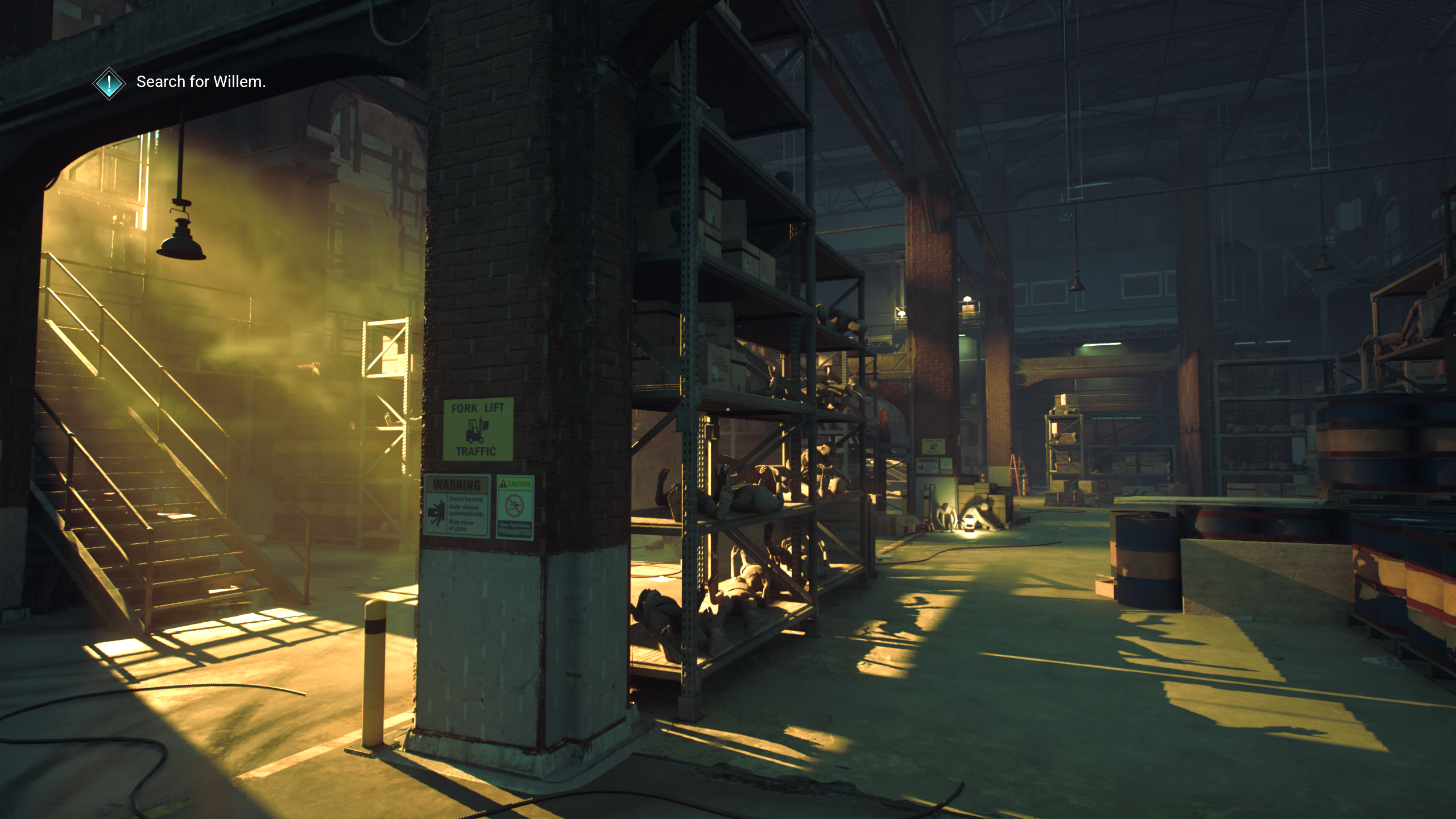
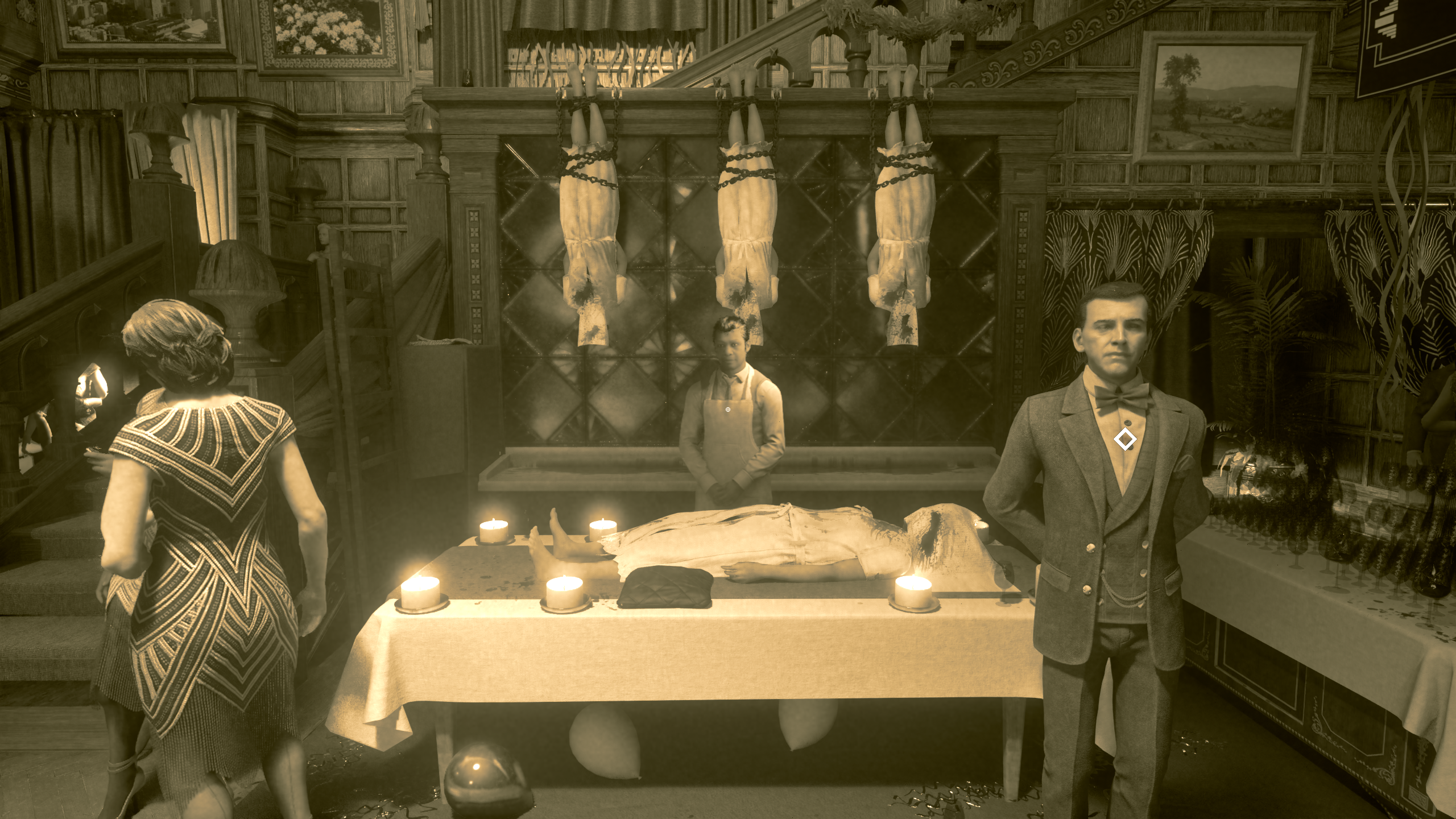
The Seattle of Bloodlines 2 is a city in deep crisis, in the middle of a blizzard of the century that will cover it for the entire game (and, in one of the more obvious signs of the game’s troubled production history, in all the flashback dream-visions you play as Fabien as well; there was no time or spend for prioritizing an entire second version of the Seattle map). The Prince is dead, his head torn off and his body left for all to see in a breach of the Masquerade that threatens a chain reaction that would break it entirely. The vampire Sheriff has gone rogue, getting into fights in public across the city and making things worse, and The Nomad is an interloper who finds herself in the wrong place at the right time to be blamed for some or all of it. This is how the game makes its completely on-rails structure work in its favor: There’s never a moment in the plot to stop and breathe and dick around for awhile in a nightclub or sneak into a blood bank or something. There’s an emergency happening right now and the city is on fire right now. You’re already an elder and you already know there’s nothing wrong with any of these people you can’t fix with your hands -- but you’re not as strong as you used to be.
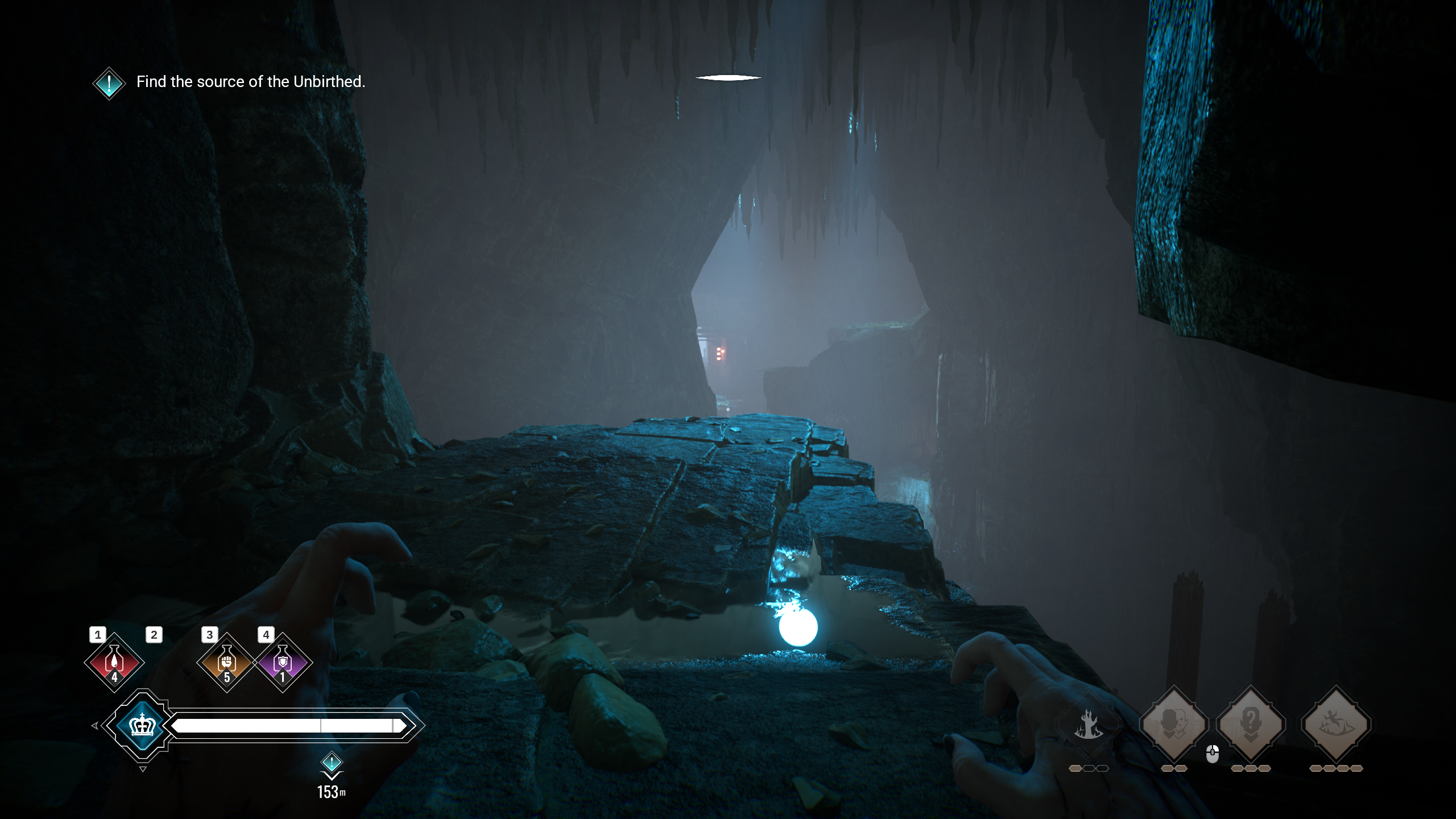
Movement feels fantastic in Bloodlines 2; you start out with a vampire-powered sprint and glide that lets you traverse the rooftops of the few city blocks of Seattle you get to roam with speed and ease (at least until enemies start showing up on them). In combat, that sprint button becomes a dash that lets you step forward, backward, or to either side of an enemy. The mark on The Nomad’s hand gives her access to, uh, telekinesis? Every sort of wizard power is represented somewhere in a Vampire bloodline, but being able to pick up bricks, bottles, gas tanks, and later on firearms and unload them on enemies is an excellent if unexpected combat trick in The Nomad’s repertoire. Then there are the blood powers, which for the most part feel great; I chose Lasombra because the powers reminded me of Emily’s kit from Dishonored 2, and I wasn’t disappointed by the comparison. When this game is at its finest in combat, you more or less feel like you're playing the best High Chaos moments of the Dishonored franchise, a whirlwind of obliteration carving through heavily-armed and highly motivated foes that still just don’t have the power to stand against you. A great elder vampire experience, basically.
But I did say “when this game is at its finest in combat.” It is not always at its finest. Frankly, it doesn’t end up at its finest until the game’s final act, when you’ve had a chance to unlock enough powers to customize The Nomad to your tastes and the game takes off the kid gloves. Bloodlines 2 spends a lot of time, especially early on, with kind of unmotivated encounter design -- Anarchs in particular are easy to steamroll for any player who isn’t just running up to them and hitting RB for the basic melee combo over and over (and honestly even that works probably a bit longer than it should). Then, when the game does decide to increase the difficulty level of combat, instead of going straight to high-level squads of enemies that operate together as a team…it takes a detour in the second act with zombie-like enemies whose encounters are essentially combat puzzles: You can’t combat feed on them to restore your blood (and thus power your abilities), and if they see you, they swarm you and murder you real quick. However, they’re extremely susceptible to being insta-killed from behind with stealth attacks or any kind of stun. For my Nomad and her tricked out Lasombra skill set, these encounters required patience (and the Toreador passive perk that recharged my Shadow Step teleport over time instead of requiring blood) but weren’t too much of a hassle, and there was a fun tension to them. I imagine a fully combat-optimized Brujah would be able to face-tank them. Other builds, especially ones that have just been unlocking powers randomly instead of with purpose…they’re probably going to run into trouble, and unfortunately the only real fix the devs seemed to have time to implement for this issue is having both an Easy mode and a Story mode even below that, which you can change to at any time. Additionally, having played through to the very cusp of the endgame, boss fights in Bloodlines 2 so far have been pretty samey: The boss gets three or four health bars which you have to deplete in combat across a given arena, and when you deplete a health bar you feed on them to restore health and blood power for the next stage of the fight. There will be adds you can eat for blood and health as well; usually there’s a mild environmental gimmick. It’s not bad, but it is somewhat pro forma. The best “boss fight” in the game so far has just been a wave-based siege by vampire hunters against a room you’re trapped in, stocked with firearms and explosives for you to throw all over the place.
The optional content in Bloodlines 2 is quite sparse, and centers entirely around unlocking all those powers from other bloodlines that The Nomad used to have but has lost access to over the years. To accomplish that, you play a feeding minigame while you’re out and about in Seattle, moving between various parts of the small map. You’re going to be spending a lot of time running across this city, as the game loop is essentially, “Wake up, check in with various members of the Court, do their bidding, do a big setpiece dungeon or two, go to sleep, and have a flashback dream where you play as Fabien, the detective in your head, doing something related to the events of the day in the past.” Somewhere in that nightly loop -- the game seems to take place about over the course of a week, maybe ten days -- you have bloodline trainers you can visit to teach you their bloodline’s powers, sidequests you can take to perform a basic, repetitive task for a bunch of experience, and people out and about in the city, waiting to be fed on. In order to unlock the powers, you need to give the trainers specific amounts of three different kinds of blood points. Getting that blood isn’t that tough; you turn on vampire vision and see people around town glowing one of the three distinct colors. Then you go up to that person, interact with them in various ways (the three different blood point types are Anger, Fear, and Lust, essentially), and depending on how you’re dressed and presenting yourself, you’ll open them up to feeding. There are also “Blood Resonance Events” that appear on the map for each of these kinds of blood which let you skip the whole “figuring out what choices you have to make and what clothes you have to wear for each type of target” minigame and just provoke a flight or flight response in a target. Either way, you get the target alone in an alley and feed on them for your blood points; The Nomad doesn’t kill when she feeds out of combat, but if you do it where people can see you, you’ll breach the Masquerade.
That will cause…not really all that many problems, actually. The Masquerade breach system is mostly cosmetic. Cops will swarm and try to kill you, and gunfire can knock you out of the feeding animation (unless you have the Lasombra passive perk), but I haven’t seen narrative consequences for breaking it yet and there doesn’t seem to be a counter incrementing anywhere tracking my behavior. My Nomad has kept the Masquerade more or less as a character beat; I actually kind of liked getting into a zone of playing these little minigames over and over again for an hour or so before going off to advance the plot or do a sidequest, which is why I ended up with Toreador passive perk at the right time to maximally benefit from it. But I am also a sicko who saw credits on Ghostwire: Tokyo, and I would say that the minigames here are a lot like the minigames in that title in terms of repetition; perhaps even with less variation. It’s not something that’s to the game’s credit, and I would not be shocked to see people using mods to just gift themselves the requisite blood points on future playthroughs.
I will probably play through this game again, however. There are multiple endings; there are choices that “matter,” if not many of them. The reason I’ll eventually play it again has little to do with seeing those alternatives, though; the story is so well done that I want to see the meat of it a second time and watch it unfold, knowing what I know about how it ends. Fabien in particular is incredibly well done; originally I thought he was a bad Johnny Silverhand knockoff and a boring Malkavian (he is deceptively normal at first blush), but by the game’s second act I’d done a complete about-face on him and he’s one of my favorite characters in the title. The game’s writing team does an especially fantastic job with the Malkavian and Nosferatu cast members, which anyone familiar with VtM knows can be some of the hardest character voices to get right -- Malkavians in particular get a reputation for being portrayed aggressively random and Invader Zim-coded, for lack of a better term (“monkey cheese” was also a 2000s term of art for this kind of humor; the derogatory in-group term is Fishmalks). None of that shows up here; both bloodlines get their due as dangerous, noble, intelligent, and maybe more than their fair share of times, tragic.
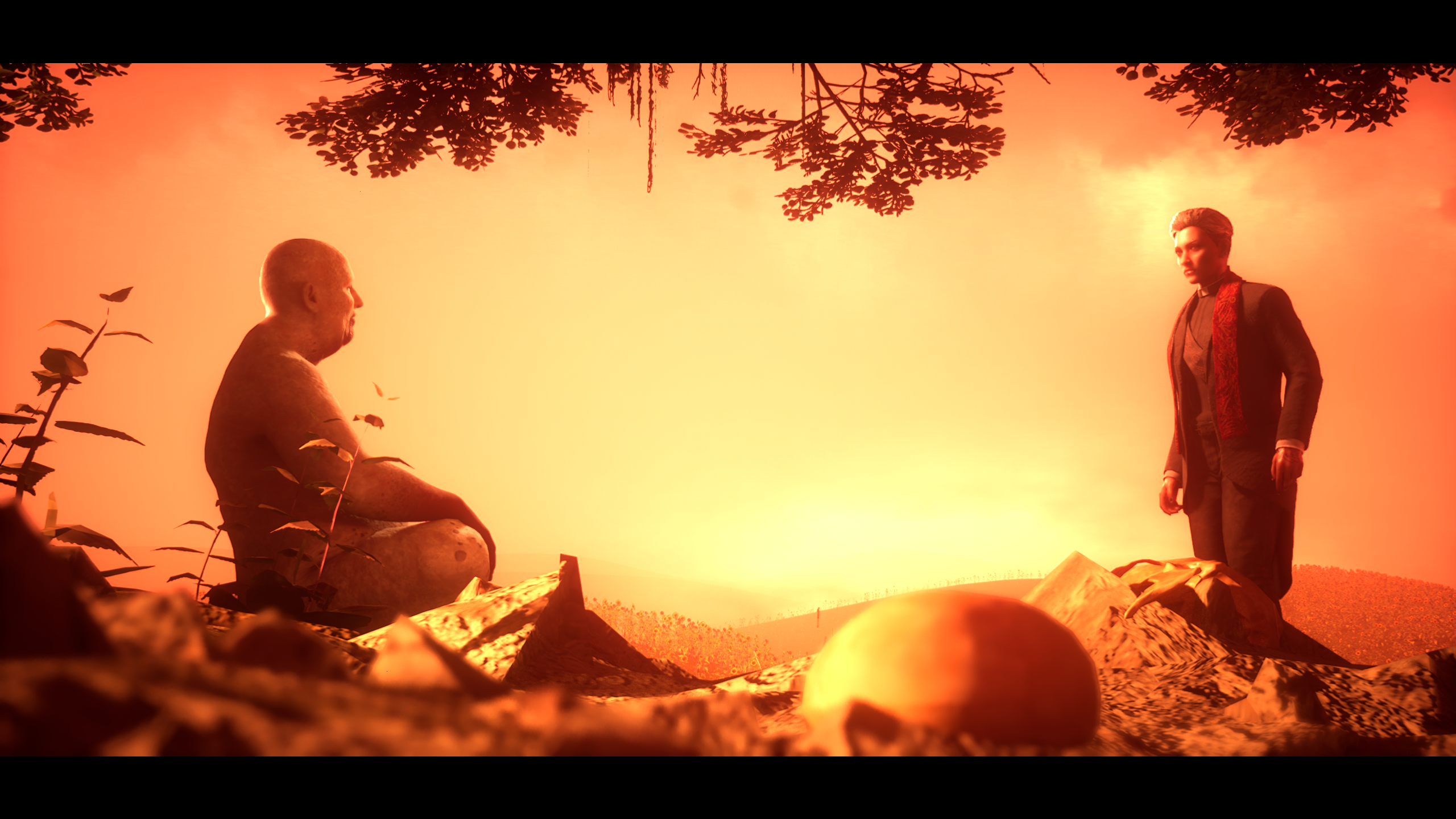
The production hell this game went through and the repeated weird administrative fumbles from publisher Paradox Interactive -- up to and including a frankly bizarre Day 1 DLC content plan based on how they milk their strategy gamers for more or less passive income but which absolutely didn’t fly on a title everyone was already mad about and had zero expectations for -- more or less speak for themselves and don’t need additional print inches here; this game is not a Bloodlines game and it will not give you anything remotely like the same experience Bloodlines gave you. While it looks great and has fantastic art design, you’re pretty constantly aware that this game was hacked together from the ruins of a much more ambitious project the entire time you’re playing it. As long as you’re fine with that, there’s a lot to like here if you just want an excellently-written, well-plotted and straight-forwardly told 15 to 20 hour Vampire the Masquerade story (I currently have around 35 hours in the game and have a friend who finished his first playthrough around 70 hours because we’re both sickos for unlocking powers). I imagine you’ll even be able to get it at some sort of discount this holiday. I personally have purchased the season pass, because they’ve got two sidestory DLCs announced and The Chinese Room has enough of my trust that I want to see what they’ve got cooked up there, but I wouldn’t advise getting the Santa Monica DLC separately because it’s literally just some goofy easter eggs in your haven for like 12 bucks. Much like with Dragon Age: The Veilguard, I’d love to see a follow-up game by this team that wasn’t burdened with all the failures that led to it only being a deeply-flawed success instead of a game of the year contender; also much like with Veilguard, I don’t expect to get it.
A tertiary reason I might have enjoyed this game’s writing so much is that I’ve been watching so much Twilight recently, and it benefits greatly from the comparison. Next time, we return to The Twilight Saga: Breaking Dawn Part 1.
Have any questions or feedback? Drop us a note in the comments below or email us at contact@goonhammer.com. Want articles like this linked in your inbox every Monday morning? Sign up for our newsletter. And don't forget that you can support us on Patreon for backer rewards like early video content, Administratum access, an ad-free experience on our website and more.
 This website uses cookies. Learn more.


 Goonhammer App and Patron Updates: April, 2026
 Kill Team Tournament Report: Engage, Party, Repeat's March Madness 2026
 Goonhammer Reviews: Tribal Conquest