Welcome to the Century of the Vampire, an ongoing weekly feature where Goonhammer managing editor Jonathan Bernhardt watches some piece of vampire media, probably a movie but maybe eventually television will get a spot in here too, and talks about it at some length in the context of both its own value as a piece of art and as a representation of the weird undead guys that dominate western pop culture who aren’t (usually) zombies.
Last time, Bernhardt reviewed the 2012 Neil Jordan movie Byzantium. Today, he looks at the 2013 Jim Jarmusch film, Only Lovers Left Alive. This article will contain spoilers.
This was a refreshing one. Easily the best vibes movie I’ve watched in a long time for Century of the Vampire, and a better one doesn’t come to mind -- A Girl Walks Home Alone at Night is in second place, but it’s a respectably-healthy second place. As with any question of vibes, part of this is to do with my headspace going in; I watched Amirpour’s film for the fourth time on a Wednesday afternoon across a couple different viewings, while I saw this one for the first time late on a Friday night after an evening of drinks and good times with friends. This is, somehow, incredibly a “post-drinks and good times with friends” type of movie for a vampire flick. There’s also a veterancy to Jarmusch’s filmmaking in 2013, however, that’s simply not going to be found in a first time director’s work. That’s not to say he’s a universal great; Jim Jarmusch is maybe one of the most hit or miss directors alive, even inside his own oeuvre. Take that zombie movie he put out in 2019, somehow convincing Adam Driver and Bill Murray to do a Night of the Living Dead…buddy comedy…? The reviews were poor enough that I haven’t sat down to see it yet, because I’ve already got experience with what it’s like when he misses. I’m mixed at best on Ghost Dog: Way of the Samurai, or at least I was as a much younger man. But this? This is one of his hits.
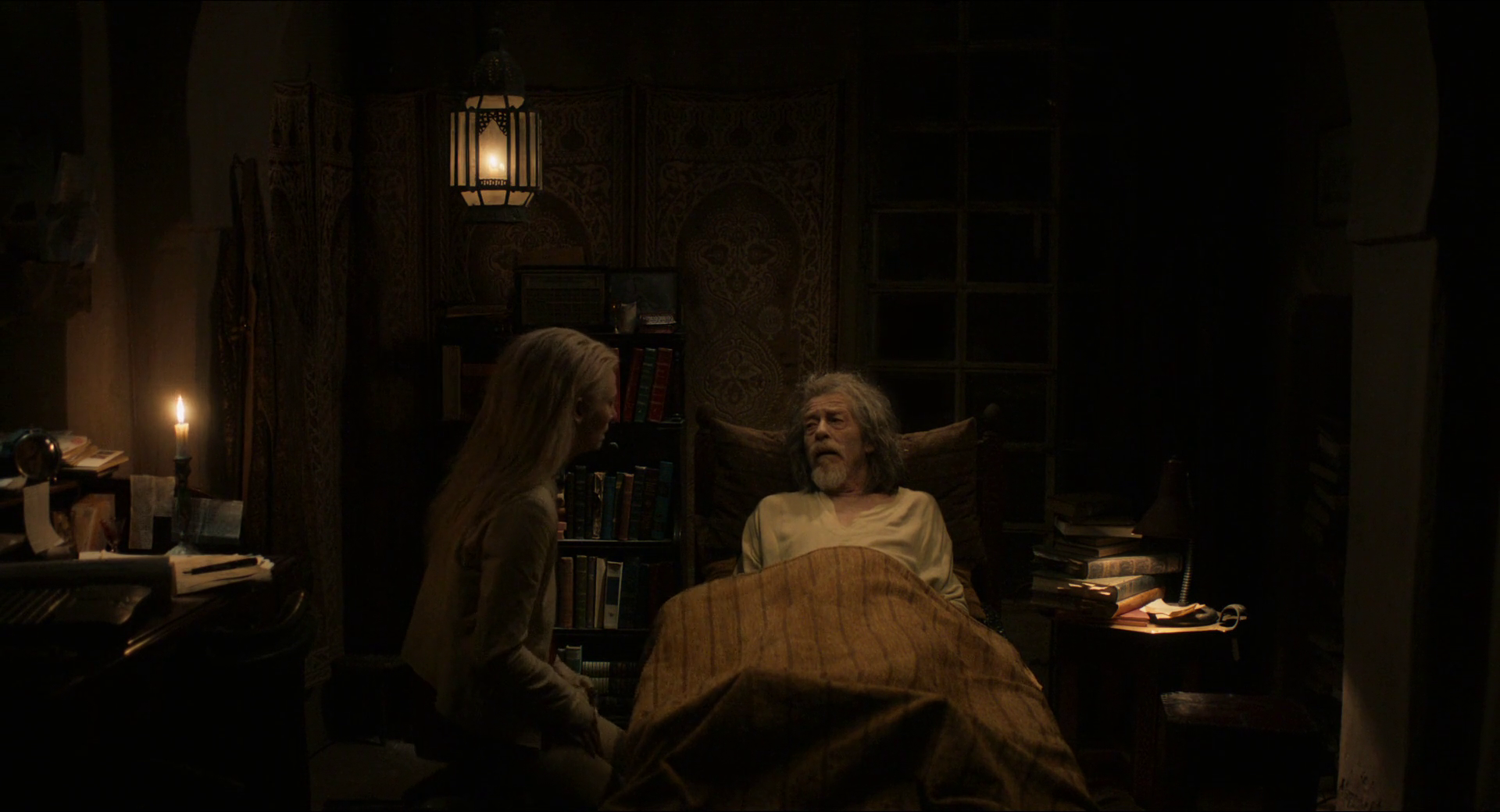
Refreshingly, like most Jarmusch films, the plot is very simple; this has more than most, and it can still fit into a few short paragraphs. Vampires Adam (Tom Hiddleston) and Eve (Tilda Swinton) live apart after centuries together, with Adam in Detroit living out his sputtering rock music fame best as he can being a vampire and Eve living her nights in Tangier, friends with vampire Christopher Marlowe (John Hurt), who she relentlessly teases for perpetrating that whole Shakespeare hoax. Both have extended their lives so long with trusted pipelines to “the good stuff,” Type O Negative blood that keeps them from having to hunt humans for sustenance.
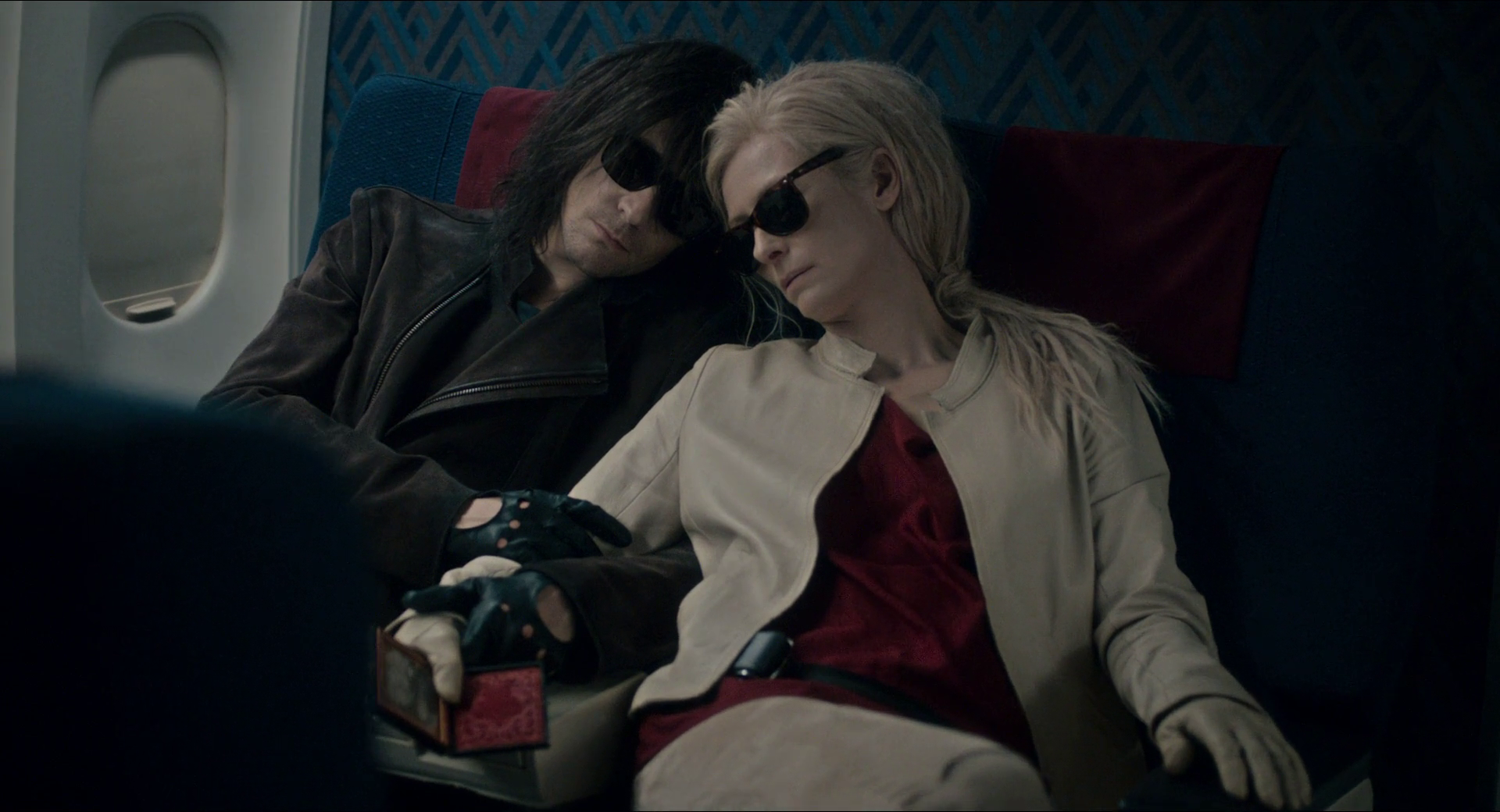
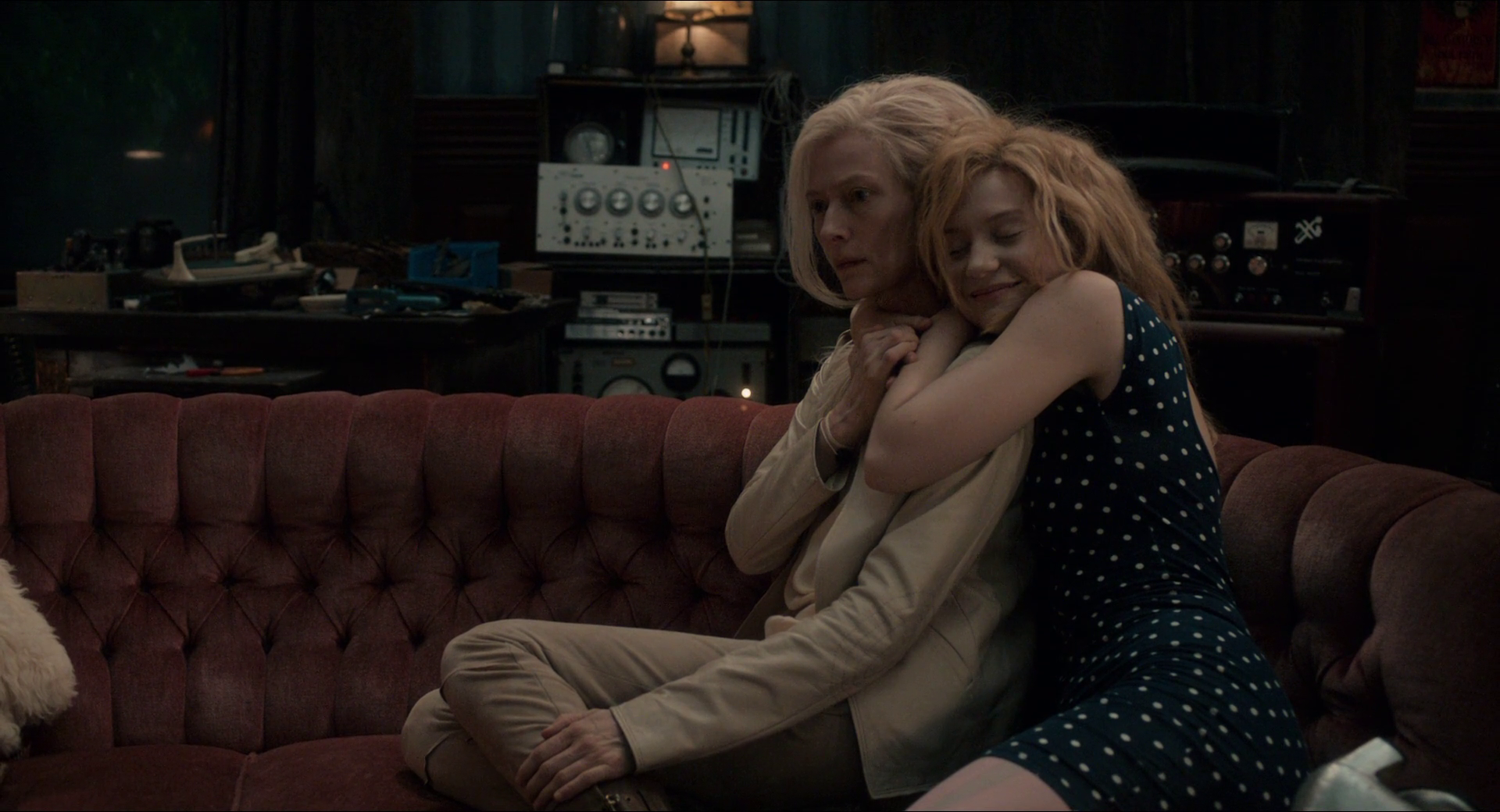
When Eve calls Adam she realizes he sounds despondent and travels to Detroit to see what is wrong; under his mattress she discovers a revolver with a single wooden bullet loaded. The two lovers stay together in Detroit for a time, hanging out with Ian (Anton Melchin), a fan of Adam’s work who acts as his gopher and bodyman; then Eve’s younger sister Ava (Mia Wasikowska) crashes the party, killing both the vibes and, unfortunately, Ian, who she carelessly feeds off of too much. They throw her out of the house, dispose of Ian’s body, and flee for Tangier with only their carry-on luggage as more of Adam’s fans show up at the house.
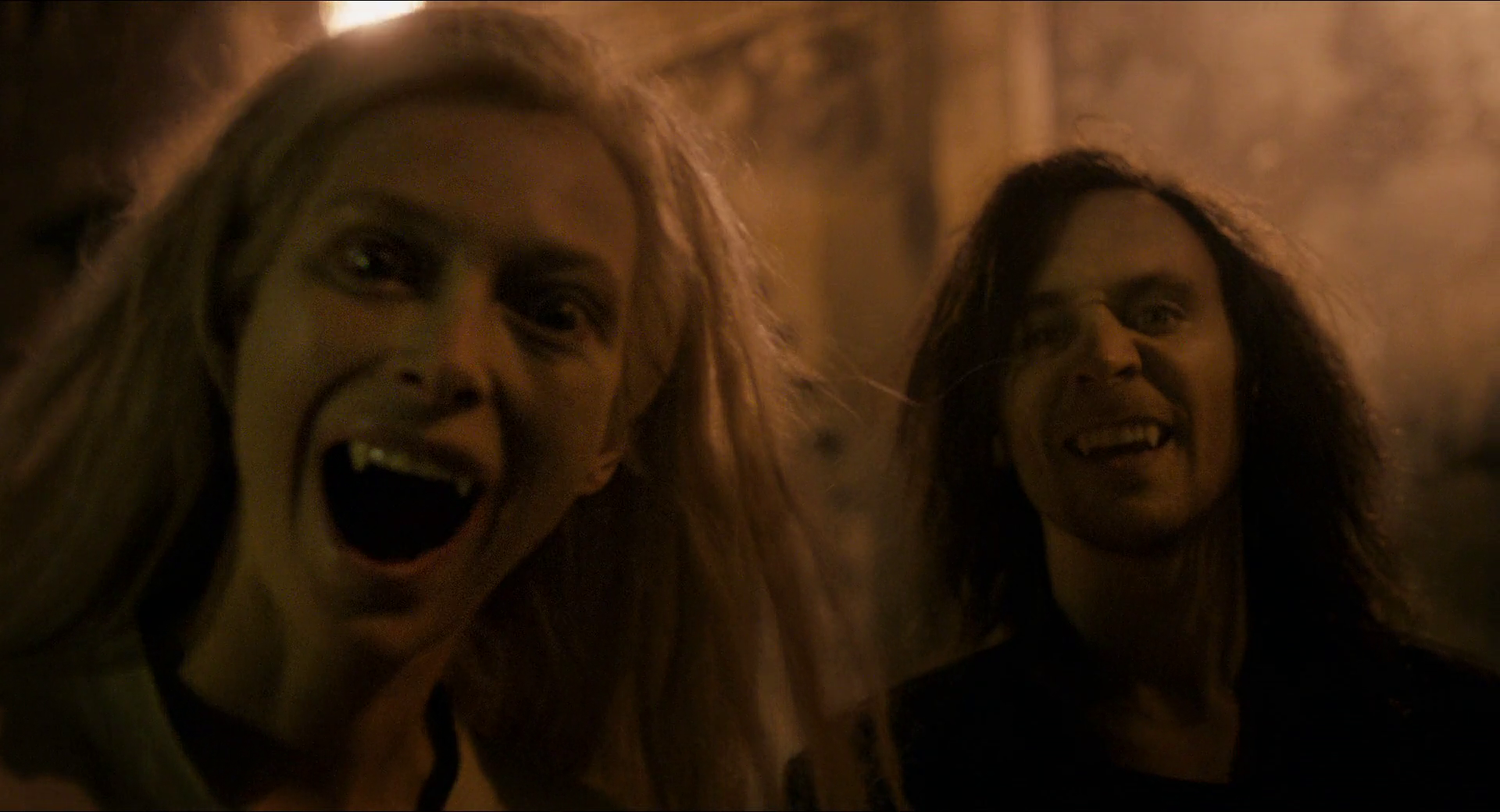
The good blood is running out; the lifestyle to which they’ve become accustomed is ending. Marlowe dies from drinking tainted blood that he’s had to resort to, and they stay with him until the end, then head out into the night. They enjoy good music and good company, and then they see a pair of young lovers embracing on a bench. In the last shot of the movie, they descend upon the two of them with fangs out, returning to the monsters they fundamentally always have been.
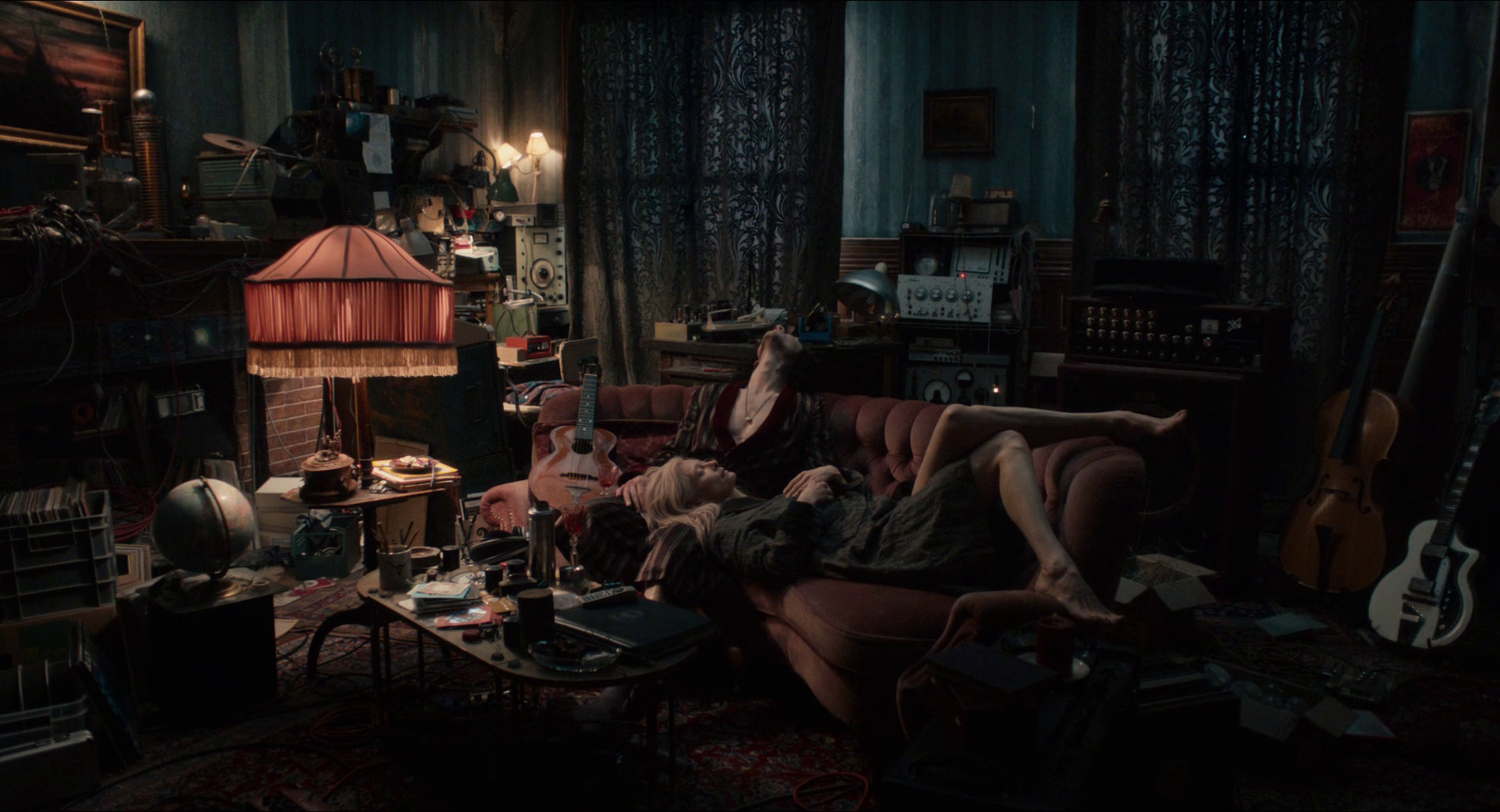
It doesn’t sound like much happens, does it? You’re right! It rules! Pretty much the entire movie is mood and character work, with gorgeous visuals of fantastic sets (Adam’s apartment in particular is incredible; even burned out 2010s Detroit’s urban decay is shot in a way that makes its ugliness haunting). The vampires themselves are obnoxious aesthetes, or would be if they weren’t played by two of the most charismatic and attractive actors working in 2013 who have fantastic chemistry with each other. A bunch of normal mortals constantly showing you they know who Schubert and Shakespeare and all the famous engineers of history are is merely tedious in a normal way; with vampires, they’re also intimating that they knew some of these people and influenced their work. Adam in particular appears to have been a cellist after the lute fell into disfavor but before the advent of the electric guitar, and is so credited for the Adagio in String Quartet in C Major, the last major work that Schubert wrote before he died. This can also be obnoxious, and isn’t anything new to people who are familiar with modern urban fantasy -- vampires are always taking credit for this or that cultural or historical event, either as here with Marlowe/Shakespeare being a vampire or with Adam secretly working through a mortal, vampirically (and, it’s implied, killing the mortal at the end of it).
It works here because, again, the cast is fantastic and the director is an actor’s director who knows how to get the best work out of great performers. It’s also a very tight cast -- Jeffrey Wright is in here for a minute as well as “Dr. Faust,” the guy who is getting them all the great blood, but outside of him and a couple of incidental speaking roles in Tangiers, Bilal (Slimane Dazi) foremost among them, the cast really is tight around basically five people, and Adam and Eve get the vast majority of that screentime.
Only Lovers Left Alive also has dancing scenes with its vampires, and music is a major throughline of the piece much like it is in A Girl Walks Home Alone at Night, but I prefer Jarmusch’s handling of his needle drops to Amirpour’s -- this is possibly, maybe even likely, a personal preference rather than saying one is more skilled than the others. It’s certainly not novel for your depressed main character to be a sexy rock and roll guy, and that being how you get your rock and roll buddies from real life in the picture as a cover band playing his music along with being your excuse to highlight a whole bunch of fancy, beautiful guitars, but that’s not the only music in the feature. I also think it’s an important difference that these characters are musicians themselves rather than being people who listen to music, whether it be on vinyl, at the club or on the radio. The last extended sequence of the movie, at night in Tangier, is an extended vocal performance by Lebanese singer Yasmine Hamdan -- that’s a much better way, at least for me, to get Hamdan’s music into the film than licensing a musical track (and of course there would be any number of reasons why Amirpour couldn’t get those specific bands in live).
There is also a great visual focus on technology in the film; when showing the physical artifacts of making music, we’re not just shown all the various stringed instruments in the film, but Adam’s recording studio with the blocky equipment and the sliders and the dials. Technology in general is a huge part of the picture; the vampires are ancient and their preferences outdated from time to time, but aesthetic progress is the purview of the luxurious elite, and that requires staying up to date on technology. They feed by subverting high-technology blood banks and storing blood bags in refrigerators, techniques unavailable to them until recently in their lifespan; when Eve calls Adam in Detroit from Tangier, they video chat between an iPhone and a computer hooked up to take an antique cathode ray tube television from the seventies as a monitor. Progress, for them, is how they maintain their humanity and lie to themselves that they are not monsters.
Adam doesn’t have to plainly state that his depression is the product of his self-revulsion at his and Eve’s condition; his contempt and loathing for Ava, the modern liberated vampire who fucks, eats, and kills his manservant as a bit of fun within nights of starting to crash on his couch makes that clear enough. It’s complicated, of course; these monsters do find life worth living and experiencing, and would prefer to do it without murdering people -- all else being equal, they like people. As the ending shows for the two poor lovers on the bench, however, as much as you may like people, this or that person can quickly become expendable. Ian, who is Adam’s Renfield in every respect except that he and Adam actually have a human (if dramatically power-imbalanced) relationship, found that out the hard way; much like the Girl in A Girl Walks Home Alone at Night, Adam has a special place picked out where he dumps all the bodies of people he ends up killing. He seems to use it less often than she does, but that’s cold comfort for the dead man. Both of them, really.
Have any questions or feedback? Drop us a note in the comments below or email us at contact@goonhammer.com. Want articles like this linked in your inbox every Monday morning? Sign up for our newsletter. And don't forget that you can support us on Patreon for backer rewards like early video content, Administratum access, an ad-free experience on our website, and subscriber-only content covering competitive Warhammer 40K!
 This website uses cookies. Learn more.


 Goonhammer App and Patron Updates: April, 2026
 Kill Team Tournament Report: Engage, Party, Repeat's March Madness 2026
 Goonhammer Reviews: Tribal Conquest