Welcome to the Century of the Vampire, an ongoing weekly feature where Goonhammer managing editor Jonathan Bernhardt watches some piece of vampire media, probably a movie but maybe eventually television will get a spot in here too, and talks about it at some length in the context of both its own value as a piece of art and as a representation of the weird undead guys that dominate western pop culture who aren’t (usually) zombies.
Last time, Bernhardt reviewed the 2009 Park Chan-wook movie, Thirst. Today, he looks at the 2008 Tomas Alfredson movie Let the Right One In. This article will contain spoilers.
Throughout the run of this feature we’ve taken a look at a lot of Dracula movies and a lot of Nosferatu movies, and they have different distinguishing characteristics even if they’re the same base story; we’ve also had a lot of Van Helsing/vampire hunter focused movies, where the main characters are mortal humans struggling against variously inhuman instantiations of the vampiric tropes. Let the Right One In (2008) is, I believe, our first Renfield movie. It will not be our last, both because next week I’ll be looking at the American remake Let Me In (2010) by current Batman franchise director Matt Reeves and because there’s a movie actually named Renfield from 2023 starring Nicholases Cage and Hoult which will eventually be inflicted on me -- this subgenre of vampire movie does exist, tracking the weird, usually pathetic and co-dependent enablers of a Dracula or a Nosferatu, and this is a particularly good one.
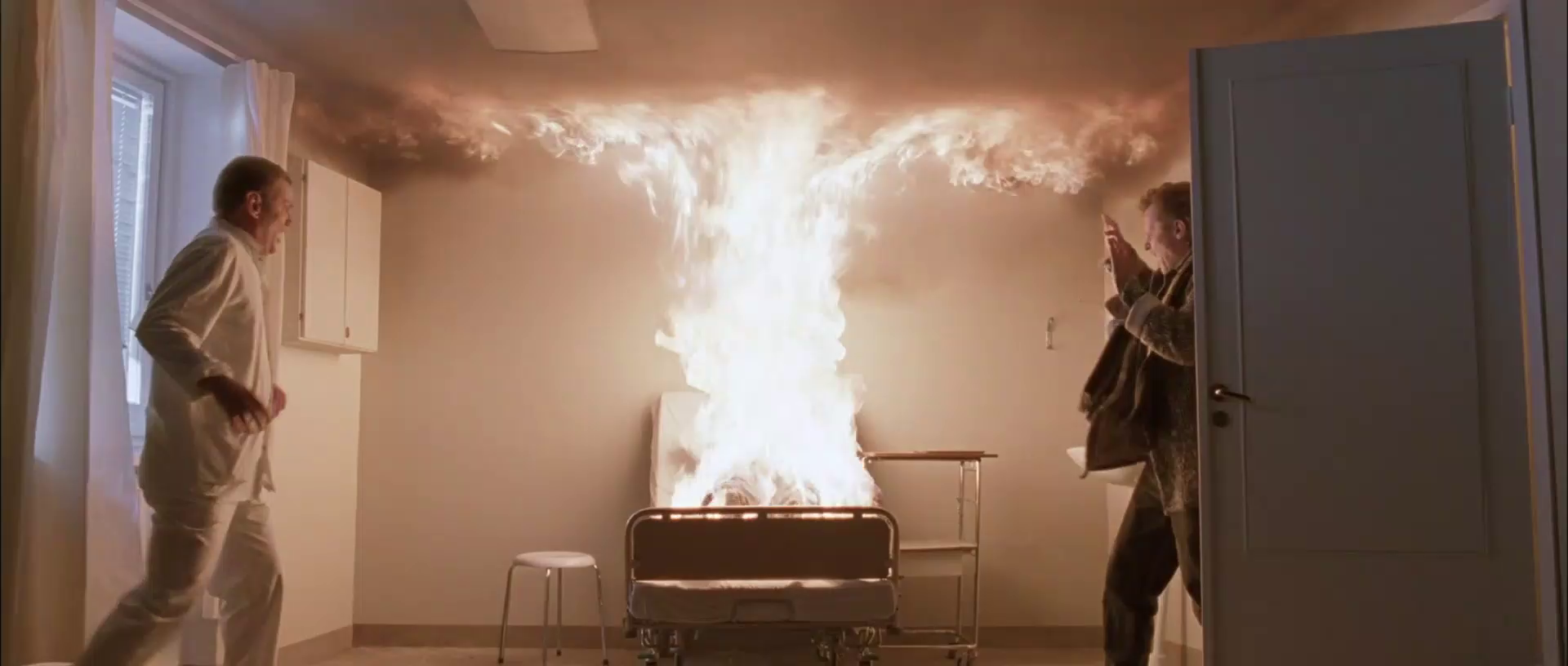
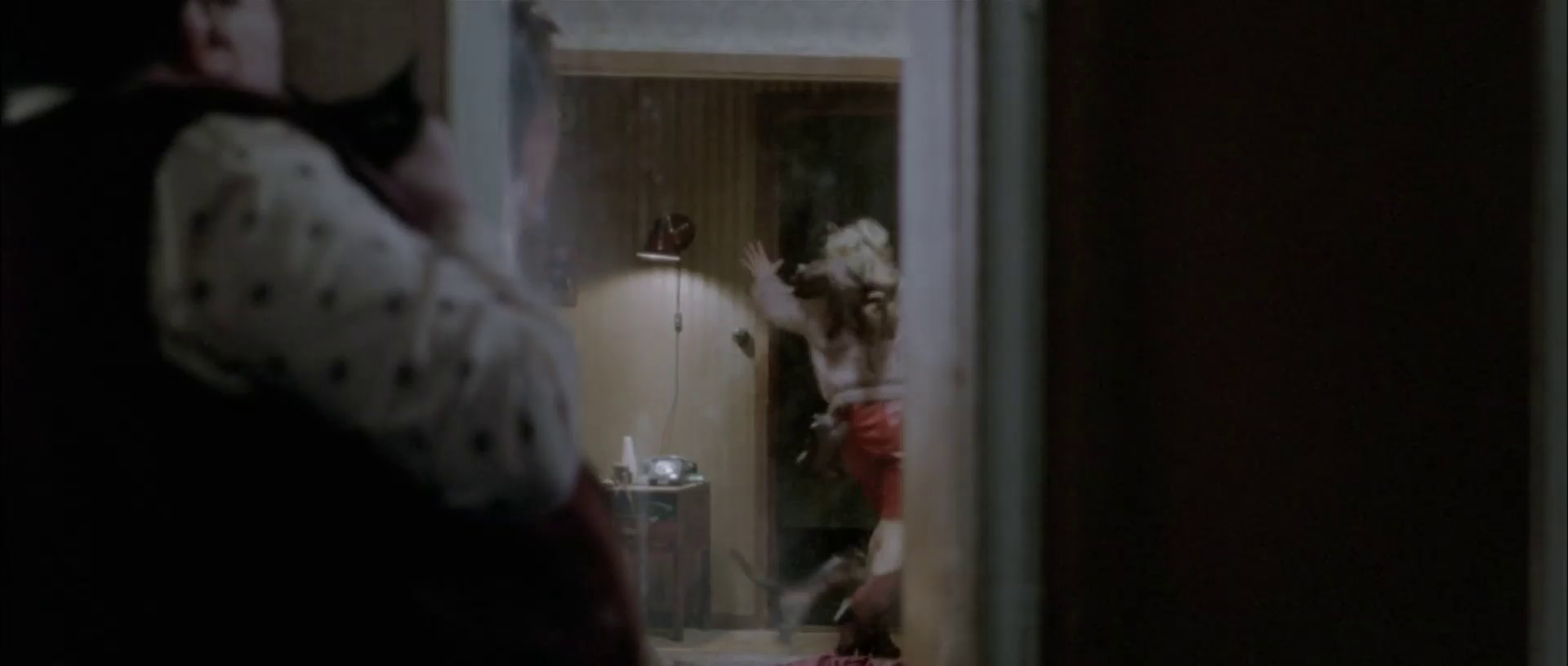
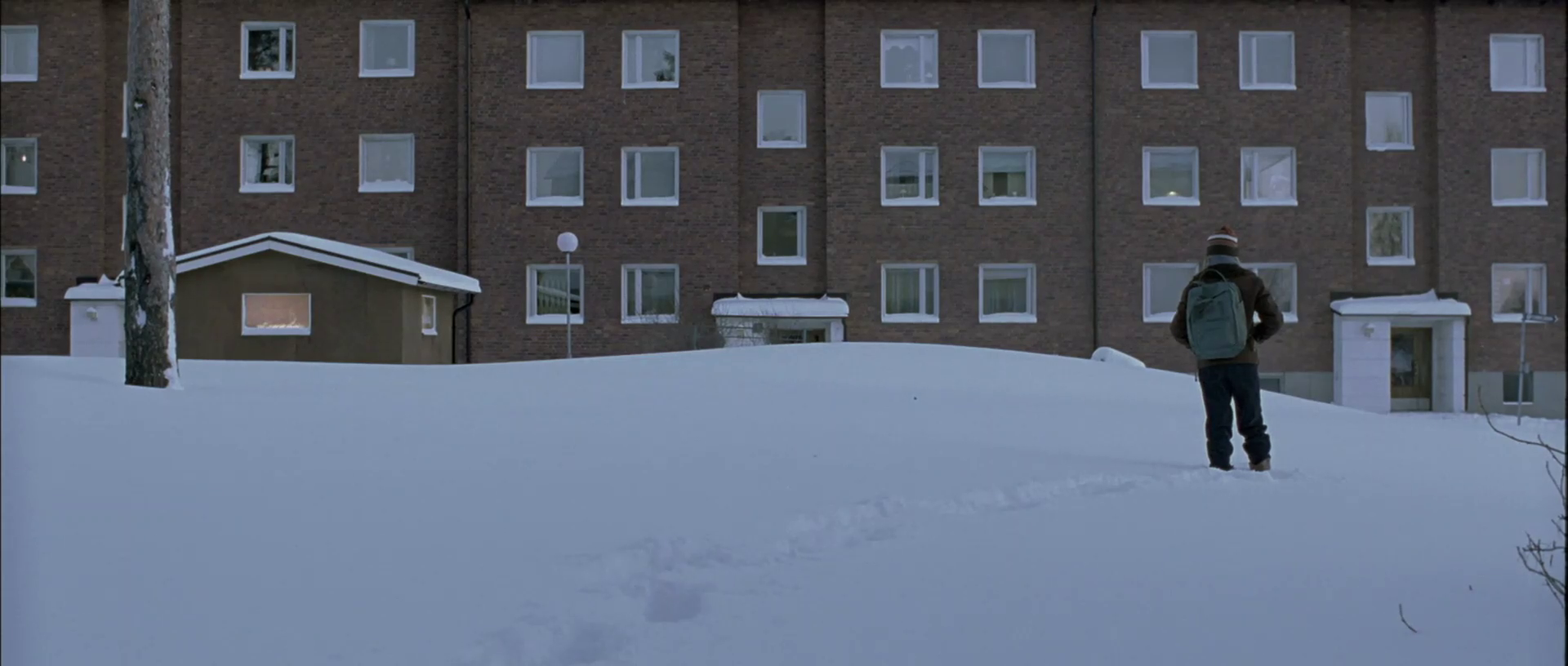
Our Renfield in this film is not named Renfield; he is Oskar (Kaare Hedebrant), and he is twelve. He lives alone with his mother in an apartment in the suburbs outside Stockholm in the early 1980s. An older man accompanied by seemingly a girl his age move in next door; he sees them arrive in the night. In school he is relentlessly bullied; at home he is alternatively fussed over and lectured by his overworked mother. Meanwhile, the older man, Haakan (Per Ragnar), goes out at night with a funnel contraption and a knife. He ambushes an older boy from Oskar’s school in the park on his way home, strings him up like an animal, and cuts his throat, attempting to drain his blood through the funnel into a plastic can. A poodle slips its owner’s leash and walks up, interrupting the whole affair, and Haakan flees. As Oskar begins a friendship with Eli (Lina Leandersson), who appears from nowhere in the courtyard one night behind him, Haakon tries and fails again to kill a boy and harvest his blood, this time in the school itself. He is caught and burns his face with acid to prevent identification. Due to this older Renfield’s failures, Eli has had to hunt for themself; they’ve killed an amiable old drunk about town already, and been witnessed by the local recluse. Eli is hungry again when they visit Haakan in the hospital, and he offers himself to them there; they drains him from outside the hospital window and let the body fall to the pavement. Things begin to predictably spiral out of control, both for the blossoming relationship between the two tweens and the repercussions of Eli’s unmitigated feeding -- we watch the little group of older townsfolk who have been presented as sympathetically going about their lives with each other get decimated as Eli jumps another one but fails to finish her off, leaving her to turn into a vampire on the rest and eventually go up dramatically during sunrise in the hospital.
Understandably, her husband wants revenge. He manages to track down Eli -- he’s no grand vampire hunter, but they’ve been extremely obvious this entire time -- and tries to kill them while they’re sleeping in the bathtub during the day. Oskar confronts him with a knife, which causes him to turn away from the vampire tween…and they awaken, jumping him from behind. As the man struggles, Oskar quietly pushes the door to the bathroom (almost) closed and walks away. His first assist. When they’re finished, the vampire comes out, covered in blood, and Eli, who has been doing this a long time, knows that now is the moment to seal the deal with a kiss. He’s theirs now. Eli acts like they’re leaving, but there’s one more thing to tie off of course -- the bullies. And when they corner Oskar in the school pool and try to drown them, Eli returns to kill them out of hand. He leaves home that night. The next and last scene of the film is them on a continental train, Oskar in the open on a seat, Eli in a great traveling trunk, tapping sign language to each other: KISS. Eli has their Renfield.
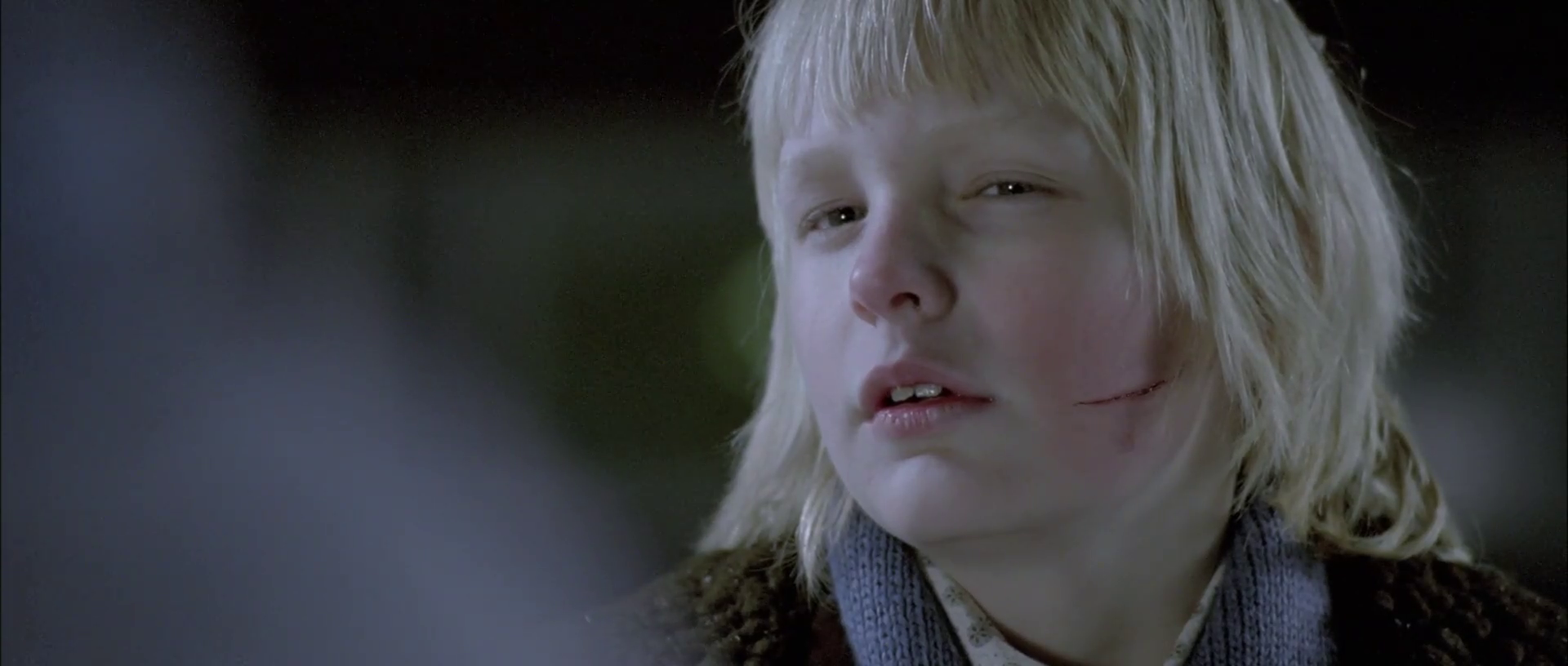
The movie is very sympathetic to its murderous child couple; while the old townsfolk are simply in the wrong place at the wrong time, the bullies do in fact push things a bit too far, though summarily executing a pair of tweens over that is a bit much (the older boy with the knife who actually did the attempted drowning had it coming). It’s unclear how much of Eli’s protestation that they’re “twelve, but they’ve been twelve for a long time” is genuine in terms of communicating that they’re still mentally and emotionally a twelve-year-old -- when they are dealing with Haakan earlier in the film, their imperious snitty tone could come equally from an adult or a spoiled child. Eli is very clearly tired of their male companion being an old man, however. Eli and Haakan, thankfully, do not appear to have anything like a romantic relationship (this is, ah, a change from the novel the film is based on); we leave our two main characters long before the uncomfortable topic of Oskar aging but Eli not interferes with their own relationship. (Speaking of the novel: In the book, the Eli character is a boy who presents as a girl for various unpleasant reasons that have little to do with voluntary transition; the movie acknowledges this obliquely, showing but not remarking on an obvious indicative scar and including at one point having Eli say they’re “not a girl,” but the film lets the viewer assume that remark is about their age -- or vampiric monstrosity -- and not their gender if they wish. Given the film’s intentional vagueness on the subject and Eli’s statement that they’re not a girl, this piece presents Eli as non-binary.)
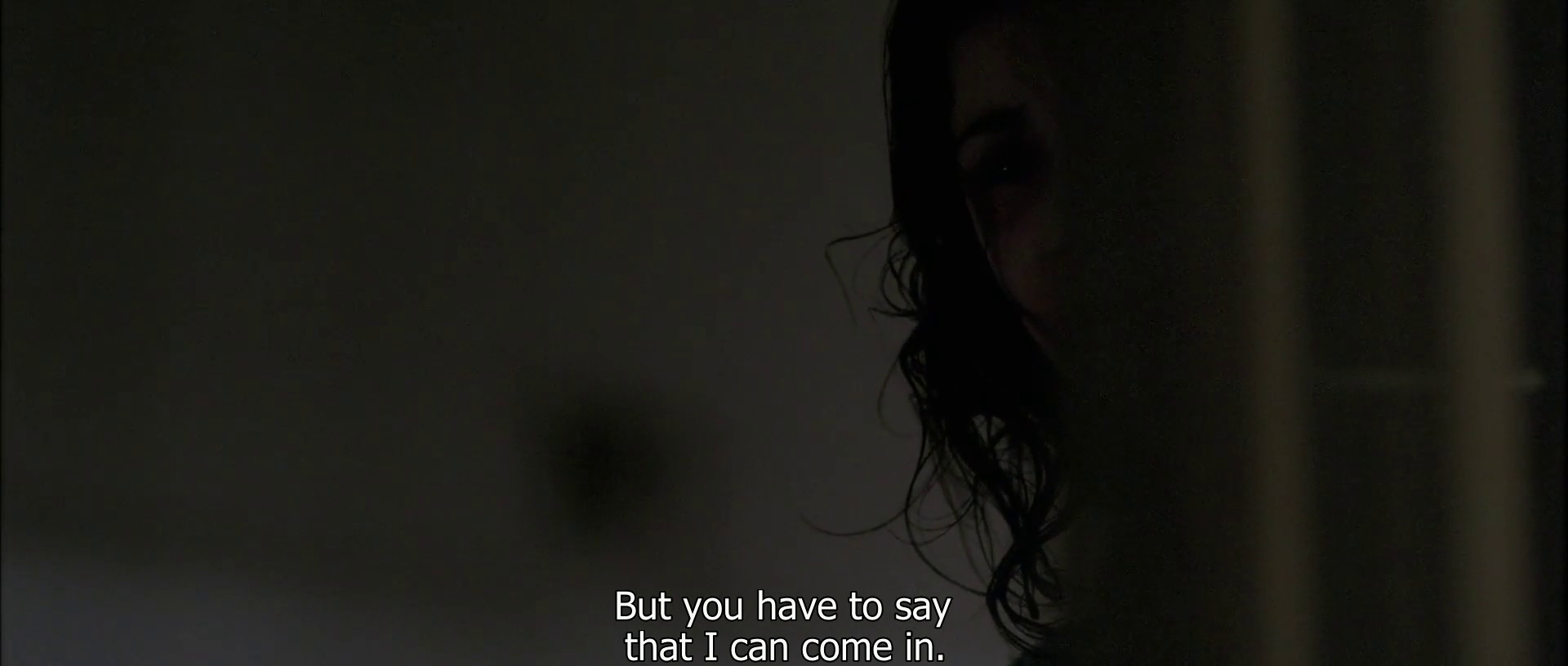
Oskar is, from the jump, a little weirdo. In that first scene where Eli and Haakan arrive, he is playing with a knife, fantasizing about stabbing and killing his bullies. Well, fair enough. When he and Eli meet for the first time, he’s outside, again with the knife, stabbing a tree, repeating “Squeal, piggy” like a mantra. Again, that’s what the bullies say to him, not unsympathetic behavior. But he always has that knife. But when a cop comes to class to impress the kids with tales of how they solve murders, he’s the one who knows how to disguise a murder as arson and not get caught -- you have to let the victim get some smoke in their lungs before you kill ‘em. And he keeps a little hidden scrapbook of all the bloody murders that get printed in the newspaper; he lovingly cuts out both Haakan’s first kill, and then Eli’s, when the townsfolk man’s body is discovered in the ice. Eli recognizes this: Near the end of the film, when they have him on their hook, Oskar tells Eli that (unlike them, implicitly) he doesn’t kill people. Eli responds, with their face covered in blood, “But you’d like to, if you could.” There is the fundamental nature of their relationship, summed up. And why was Eli's face covered in blood? Because they gave Oskar control over them for a moment, control over whether they could come into his apartment, and he indulged in that control; instead of formally inviting Eli in the front door, he snapped at them and beckoned to them like they were a dog. Eli tried to step in to the apartment uninvited and suffered the consequences, to show their Renfield the control he could have over them -- to flatter him. It worked.
Read sympathetically, this movie is a cautionary tale of why Draculas need their Renfields -- an incompetent, aging, clueless, bumbling or otherwise incapacitated Renfield leads to a Dracula who is a lot more chaotically murderous than they need to be. Haakan’s time had long since come; the movie takes place in the 1980s, and he was using rural hunting and butchering practices that simply took too long to drain the victim, and doing all of this way too much in public. With Oskar properly motivated and on point, in their next port of call they can convert some of these kills into actual food for Eli. But this isn’t sustainable farming here; they’re still killing people. Even if everything had gone according to plan, Eli still needs a body every couple of nights. The film ends at precisely the final moment these two can be sympathetic at all, because the pact is sealed here -- they’re gonna be creepy, too-mature, lying-about-being-brother-and-sister maniac slashers for the next ten years unless and until someone manages to put them down. They are, in fact, monsters.
Director Tomas Alfredson does a fantastic job blunting that fundamental truth throughout the runtime; it’s a fantastically shot film, quiet and calm, with very little rushed action. The one moment that would intuitively be a big action setpiece -- the brutal murder of the bullies at the swimming pool in the film’s closing minutes -- is filmed entirely in static frame, looking Oskar in the face as he tries to hold his breath underwater. The action proceeds entirely through the muted, warped sounds of Eli killing the bullies above, the feet of one of the bullies kicking through the water in the background as he’s dragged down the pool’s length, a head falling into the water behind Oskar, and eventually the hand holding his head underwater being torn from its arm at the elbow. Incredibly effective, very brutal, leaves most of the actual violence to the suggestion (and budgetary constraints) of the viewer’s mind. The actual big action sequence in the film is when the woman bitten by Eli, who is turning into a vampire, visits her husband at a friend’s house with a lot of cats -- and they all attack her as she flips out in her bloodlust. This scene is less successful, mainly because it has to employ 2008 CGI housecats as primary actors, but it is fairly amusing.
Coming in at a smidge under two hours, it both takes its time and earns its time. There are no easy cuts here; the kneejerk decision is to cut out the bits where the townsfolk try to figure out why their friends are dying and who is responsible, but that human element is absolutely necessary to counterpoint the coming-of-age romance that Oskar and Eli are going through -- there are victims here, and consequences, and these are the people they will now hurt. Perhaps you don’t even feel all that bad for them. Oskar certainly won’t, not after the first couple towns.
One of the better movies this feature has covered, for sure; I had also seen this one on its release, so I was returning to an old friend. I have not seen the American remake, which is on the docket for next time -- in a few weeks from now, after the holidays.
Have any questions or feedback? Drop us a note in the comments below or email us at contact@goonhammer.com. Want articles like this linked in your inbox every Monday morning? Sign up for our newsletter. And don't forget that you can support us on Patreon for backer rewards like early video content, Administratum access, an ad-free experience on our website and more.
 This website uses cookies. Learn more.


 Goonhammer App and Patron Updates: April, 2026
 Kill Team Tournament Report: Engage, Party, Repeat's March Madness 2026
 Goonhammer Reviews: Tribal Conquest