Welcome to the Century of the Vampire, an ongoing weekly feature where Goonhammer managing editor Jonathan Bernhardt watches some piece of vampire media, probably a movie but maybe eventually television will get a spot in here too, and talks about it at some length in the context of both its own value as a piece of art and as a representation of the weird undead guys that dominate western pop culture who aren’t (usually) zombies.
Last time, Bernhardt reviewed the 2014 Ana Lily Amirpour film A Girl Walks Home Alone at Night. Today, he looks at the 1995 Mel Brooks film, Dracula: Dead and Loving It. This article will contain spoilers.
We went a bit long last week, and I think this week we’ll be considerably shorter; Dracula, Dead and Loving It is not in most peoples’ top five when it comes to the Mel Brooks catalogue, and it takes one of his standout features to really get me into a Brooks comedy in the first place. Young Frankenstein, this is not.
I will say Leslie Nielson is a good comedy Dracula, though. He and Peter MacNicol as Renfield are the two standout performers in the piece, even if every time MacNicol really tries to let loose you’re invited to compare him to either a Renfield from a better adaptation of the material or Marty Feldman’s Igor from a better Mel Brooks film, and neither comparison really flatters MacNicol all that much. Brooks himself is all over this film as Van Helsing, and I think that’s part of the problem with it -- we’ve covered Dracula films going all the way back to the original 1931 effort where the Van Helsing character ended up on near-equal footing in the narrative with the monster, and it’s worked to varying effects, but here it’s a lot of Brooks, for a lack of better term, getting his shit in. We’re introduced to his Van Helsing with an extended comedy bit where the doctor performs an autopsy so grotesquely that it causes all his medical students to faint from shock and horror, with the comedy suffering from the extension -- it goes on one or two gags past the sell-by date but never quite wraps back around to going so long it becomes funny again -- and there’s a lot of that going on in the film.
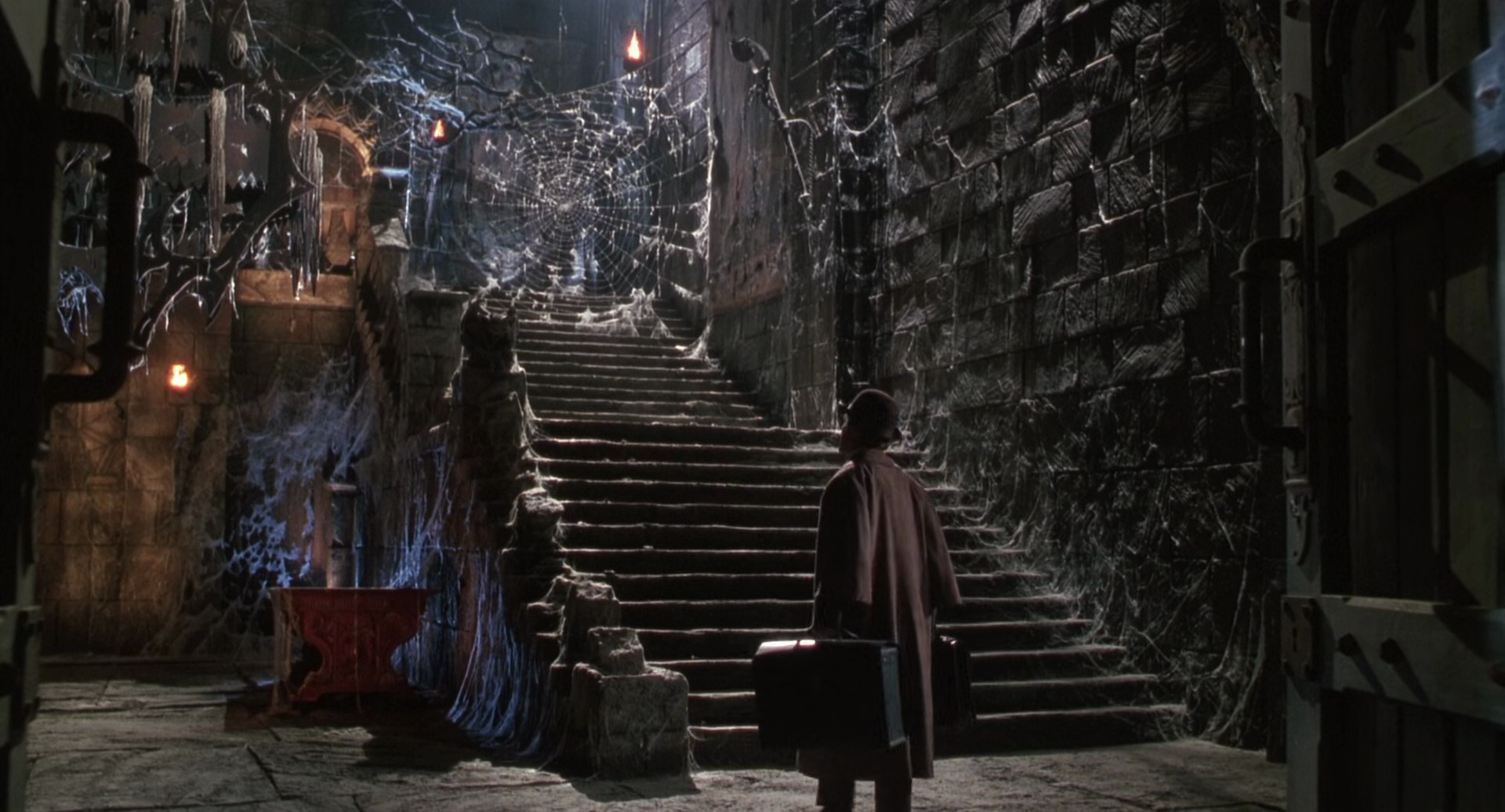
It is a fairly straightforward adaptation of the 1931 picture, truth be told: first act in Transylvania, where Dracula enslaves Renfield; second act in England, as Dracula moves in to Carfax Abbey, Van Helsing takes center stage, and Dracula kills Lucy; third act as Dracula moves on to Mina and our heroes band together to put him to final rest in an abandoned chapel instead of Carfax Abbey. As discussed in the column about that film, it’s a rather uncompelling plot structure, and frankly Dead and Loving It adheres to Dracula 1931 so closely that it is the obvious inspiration, no matter how many times they do wig gags about the Count’s silly hair in the Coppola adaptation (three, though the first two at the castle are so close together you might count them as the same one). In that sense we are blessed, because having that much Renfield is more tolerable with MacNicol -- 1931 is not one of the better Dracula films mentioned above. That said, it is not so much better that it’s worth writing home about, and there’s little call for a beat for beat remake of such material sixty years later, just with some middling humor thrown in for seasoning.
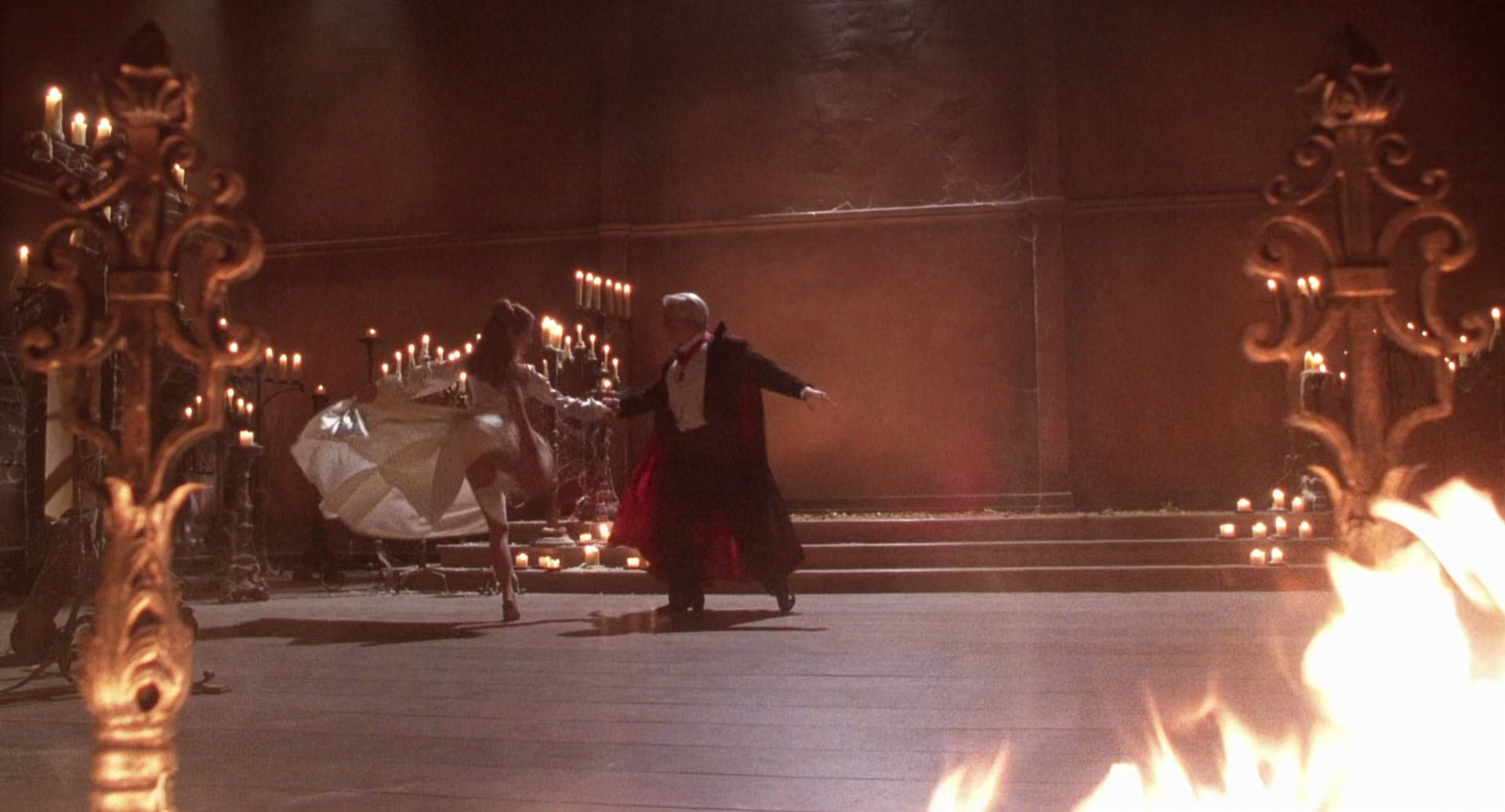
There is one thing that Dead and Loving It has that the Lugosi Dracula does not, besides the comedy: Extended ballroom dancing sequences. These are actually quite fun! They’re not what moviegoers were expecting and looking forward to from a Mel Brooks picture in the mid-nineties, I’m certain, but they were the one section of the movie I thought earned Brooks’s refusal to cut a scene until he’d gotten everything out of it that he could and then some (this feels like a script and a concept struggling to make it to precisely 90 minutes). Now, is it actually really concerning for a comedy when the joke is supposed to be all this anachronistic ballroom dancing and I don’t laugh? Perhaps. Would I like to see a better, more serious movie’s take on Dracula and Mina’s shadows dancing on the abbey wall because Brooks immediately turned it into a clumsy sex joke? Yes, I think so. But they added some liveliness and action to an otherwise very static and staid experience and, frankly, I’m coming around to thinking we should have musicals in other segments of the movie industry besides the Kid Cartoon Industrial Complex. (It is very obvious that professionals are doing the heavy lifting on the dance moves for Nielson and Mina’s actress Amy Yasbeck, as the camera cuts from far away shots of the whole room to tight inserts of the two leads to remind your mind’s eye what they’re supposed to look like up close, but it was done correctly and with craftsmanship such that I did have to at least do a cursory check of the tape to make sure that yes, that wasn’t Leslie Nielson suddenly busting out moves that smooth.)
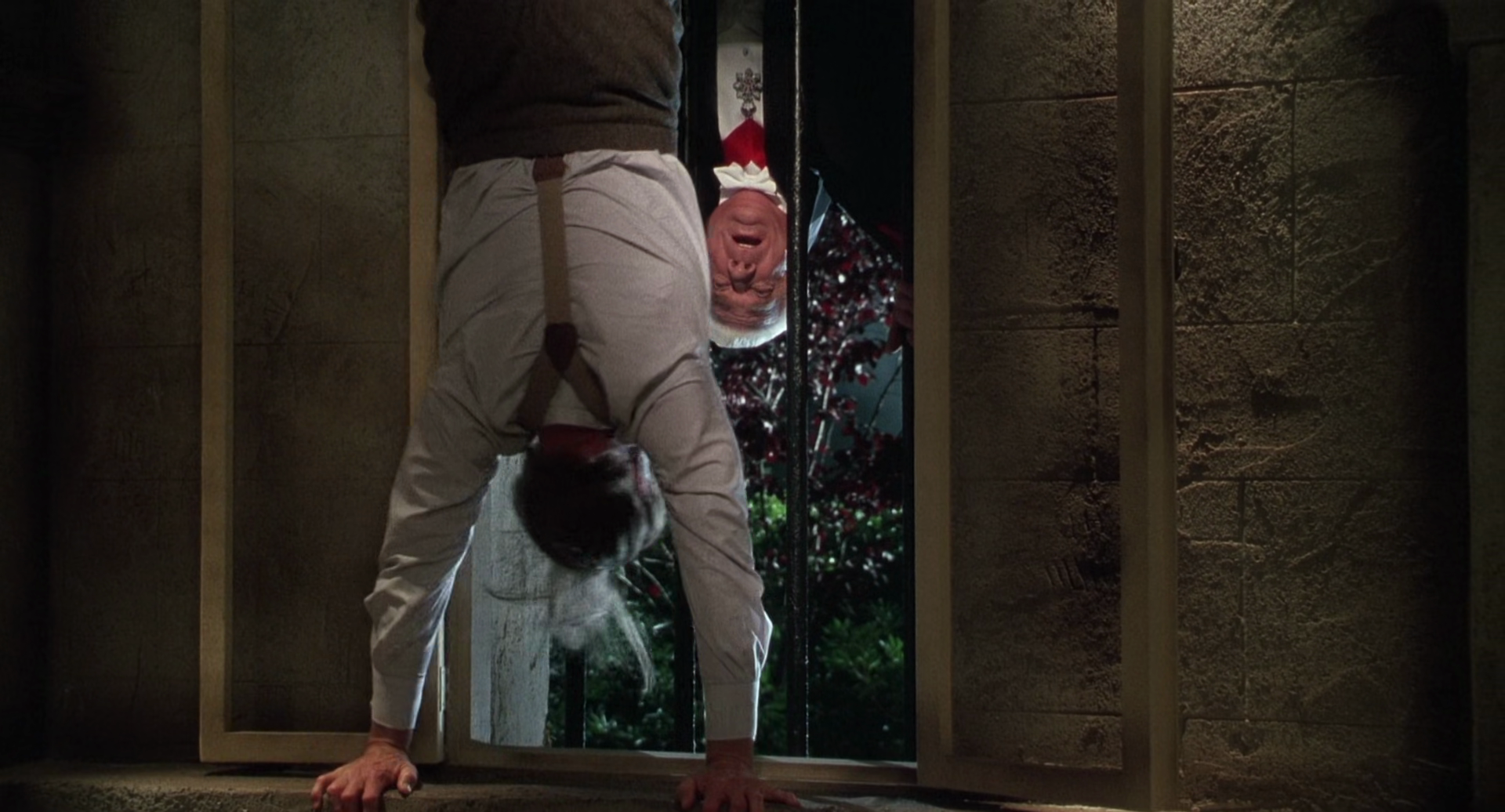
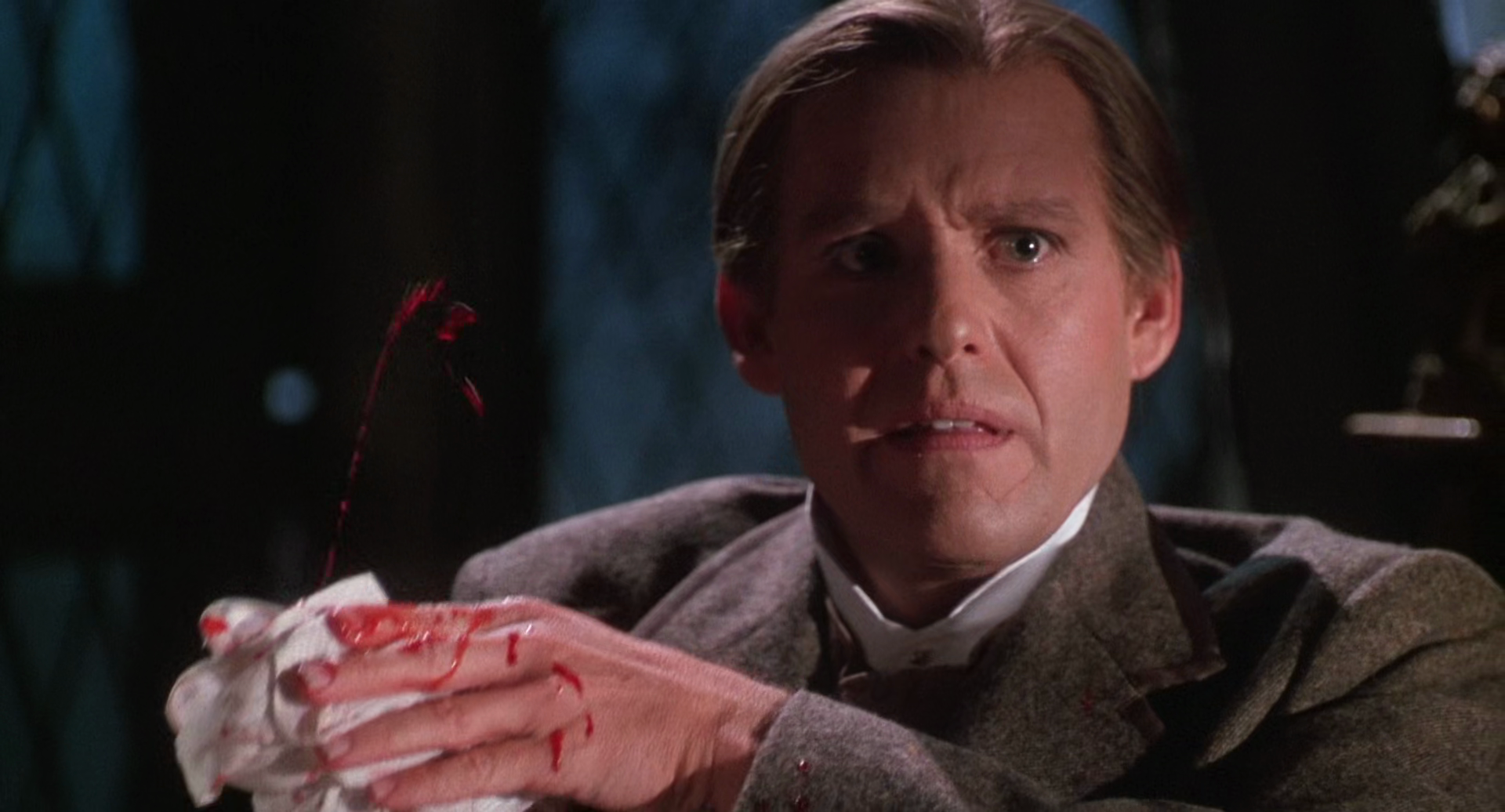
And it’s not like the comedy fell completely flat all the time. There were a couple good bits. Renfield spraying blood all over himself after “nicking an artery” in his finger was amusing. Tiny vampire bat Dracula with Leslie Nielson’s face was a good gag for the four seconds of it we got (the rare case with a joke in this film I might have liked to see more done with). The best part of the film, both funny and genuinely something we could have done with more of, was Nielson and Brooks sparring in their characters’ first meeting in Dr. Seward’s parlor room, each man not quite knowing who the other is but immediately apprehending that they don’t like him, and the conversation quickly turning into sparring in “ancient Moldavian,” with each man obsessed with getting the last word, such that Dracula leaves and returns to deliver a line through the garden window before running away and Van Helsing keeps a calm exterior as he replies before running to the window to shout after him. At the end of the film, with Dracula slain and his ashes placed back in his coffin, with all the other players having excited the abbey, only Van Helsing remains -- and he opens the coffin and says one last word in Moldavian into the coffin, smirking triumphantly, as the movie ends.
The “ancient Moldavian” is just gibberish, of course; the point is that Van Helsing finally got the last word over his nemesis. Would that we had gotten more of that rivalry in the runtime of the film itself, and would that the film have landed its first successful genuinely good joke at some point before the final second of the picture.
Next week, there’s some more vampire comedy to be had; I’ll see which is the most convenient one to get before deciding.
Have any questions or feedback? Drop us a note in the comments below or email us at contact@goonhammer.com. Want articles like this linked in your inbox every Monday morning? Sign up for our newsletter. And don't forget that you can support us on Patreon for backer rewards like early video content, Administratum access, an ad-free experience on our website, and subscriber-only content covering competitive Warhammer 40K!
 This website uses cookies. Learn more.


 Goonhammer App and Patron Updates: April, 2026
 Kill Team Tournament Report: Engage, Party, Repeat's March Madness 2026
 Goonhammer Reviews: Tribal Conquest