Welcome to the Century of the Vampire, an ongoing weekly feature where Goonhammer managing editor Jonathan Bernhardt watches some piece of vampire media, probably a movie but maybe eventually television will get a spot in here too, and talks about it at some length in the context of both its own value as a piece of art and as a representation of the weird undead guys that dominate western pop culture who aren’t (usually) zombies.
Last time, Bernhardt reviewed the 2023 Chris McKay film Renfield. Today, he looks at the 2012 Neil Jordan film, Byzantium. This article will contain spoilers.
I’m ambivalent about this one. Originally this piece opened with just this sentence: Unpleasant film. Well-shot, well-made, and very well-acted -- the work of Saoirse Ronan, who did this between Hanna and The Host in consecutive years as part of her first run of breakout roles leading up to Lady Bird, is the main reason to affirmatively seek this film out at this late date -- but deeply unpleasant in the first half in ways that the second half doesn’t quite stick the landing on. But it gets very close, if you’re just in the market to see some gothic vampire nonsense.
A content warning, briefly: The film depicts and therefore we’ll be discussing sexual violence of most every sort against women. The heroines of the picture suffer some four rapes in the film between them, all of which are shown in the “we’re going to go right up to the moment where we’d start showing the act and then cut” style that’s common in pictures at this tier. A number of acts of adjacent violence against women feature as well; beatings and such. To the extent it has much to say, Byzantium presents a fundamental misanthropy: Its men are accorded power through brute strength, money, or status, then use it mercilessly to reveal their true emptiness; the only men who have learned empathy have learned it from necessity due to their weakness, whether from age (Robert), disease (Frank), or frailty of spirit (Noel); and all the women in Byzantium are weak because they are women in a misogynist world, regardless of their monstrous powers. Byzantium is not shy or complicated in this regard. One of the few lines given to the film's great and powerful elder vampire Savella (played by Uri Gavriel, who has the perfect look for an elder vampire attempting to adapt to the modern day, in any period) is the lament that, “I hate these crying women,” after violently kidnapping one, hitting a second with his car, and casually snapping the neck of a third.
There are many great films that work in misanthropic or deeply socially pessimistic headspaces similar to this; the work of Michael Haneke and Todd Haynes immediately jump to mind as sort of emblematic extremes, but they’re hardly alone. The world can be a very bad place and great art can depict it as such, with intentionality. But needless to say, this is not a Haneke or Haynes picture; this is a vampire movie by Neil Jordan, previously of Interview with the Vampire, and while he’s a respected hand with a long track record, he is the sort of director who does vampire movies. One gets the impression that perhaps the reason Clara is so wedded to the idea of using sex work to provide for herself and her daughter Eleanor (Ronan) has less to do with Saying Something Very Important About Society and more to do with having Gemma Arteron play sexy dress up across a variety of times and places. Foundationally, it is genre work, and it understands gothic horror well enough: The women are beautiful, the men are disgusting, and everyone’s doomed; much of the time, that doom manifests as some kind of wasting disease.
There are actually two different kinds of wasting disease deployed, because the film is split between Napoleonic England and the modern day; it is of course tuberculosis that makes Darvell and Clara seek the immortality of vampirism back in the 1800s, but in the 21st century, Frank’s leukemia is what spurs Eleanor to action. The plot, such as it is: Clara is a beautiful peasant targeted by British naval captain Ruthven (Jonny Lee Miller), a violent dissolute rapist who assaults her and then forces her into a life of prostitution. She has a daughter in this time, whom she consigns to a nunnery. Both contract various diseases of sin as the years go on, when one day a midshipman from Ruthven’s old command, Darvell (Sam Riley), reappears. He reveals that many years ago, when he was also dying of disease, he and Ruthven went out to a mysterious island searching for a cure. This is The Island That Makes You a Vampire; more on that later. Darvell disappeared into a stone hut temple; Ruthven demurred and stayed outside. Suddenly, the water coming out from the great waterfall at the volcanic island’s peak turned into blood. Ruthven rushed into the hut to find Darvell’s corpse atop an ancient altar; satisfied of his death, he headed back to England to steal all his money and land.
Darvell is now here to recruit Ruthven into the same dark fraternity that gave him the map to the island. Clara shoots Ruthven in the leg, steals the map, and claims the prize of immortality for herself; she goes to find her daughter Eleanor in the nunnery, Ruthven follows and attacks the girl, and Clara murders him there. Then Clara takes her to the island as well, and turns Eleanor into a vampire. This sets all the male vampires on them, to destroy them for the crime of stealing their sacred prerogative of creation -- women aren't allowed to create vampires (a lot of gender going on there, though the film isn't particularly interested in getting into it). You can imagine the present day plot from there; the vampire brotherhood tries to track the two female vampires down to kill them, while they have personal subplots with two local men in a seaside British resort town -- Noel, the pushover whose dusty old resort “Byzantium” Clara turns into a brothel after murdering the local pimp; and Frank, local schoolboy/part time waiter. Noel falls down an elevator shaft and dies in a tonally bizarre bit of business mainly to get him out of the way because Darvell is about to sweep back into the third act's modern plot; Frank gets leukemia, and at the film’s close, Eleanor takes him to the island.
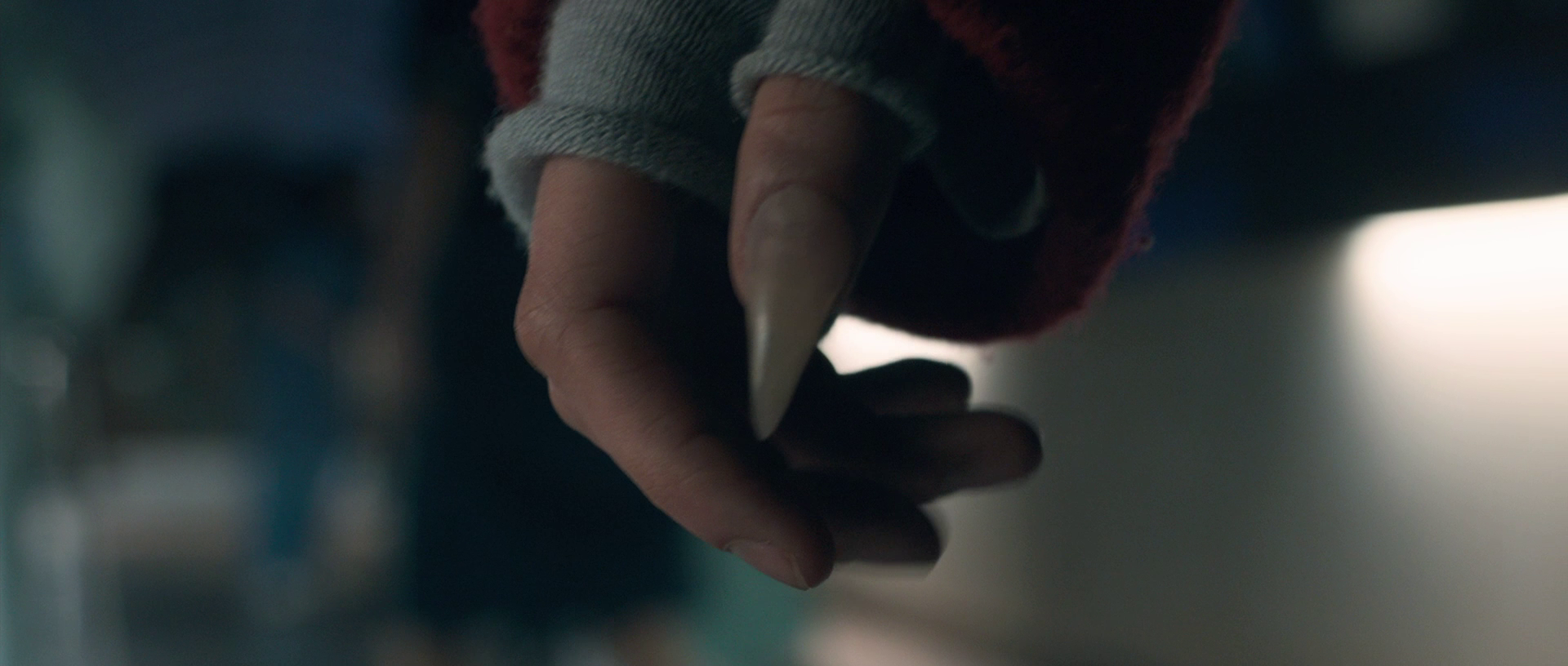
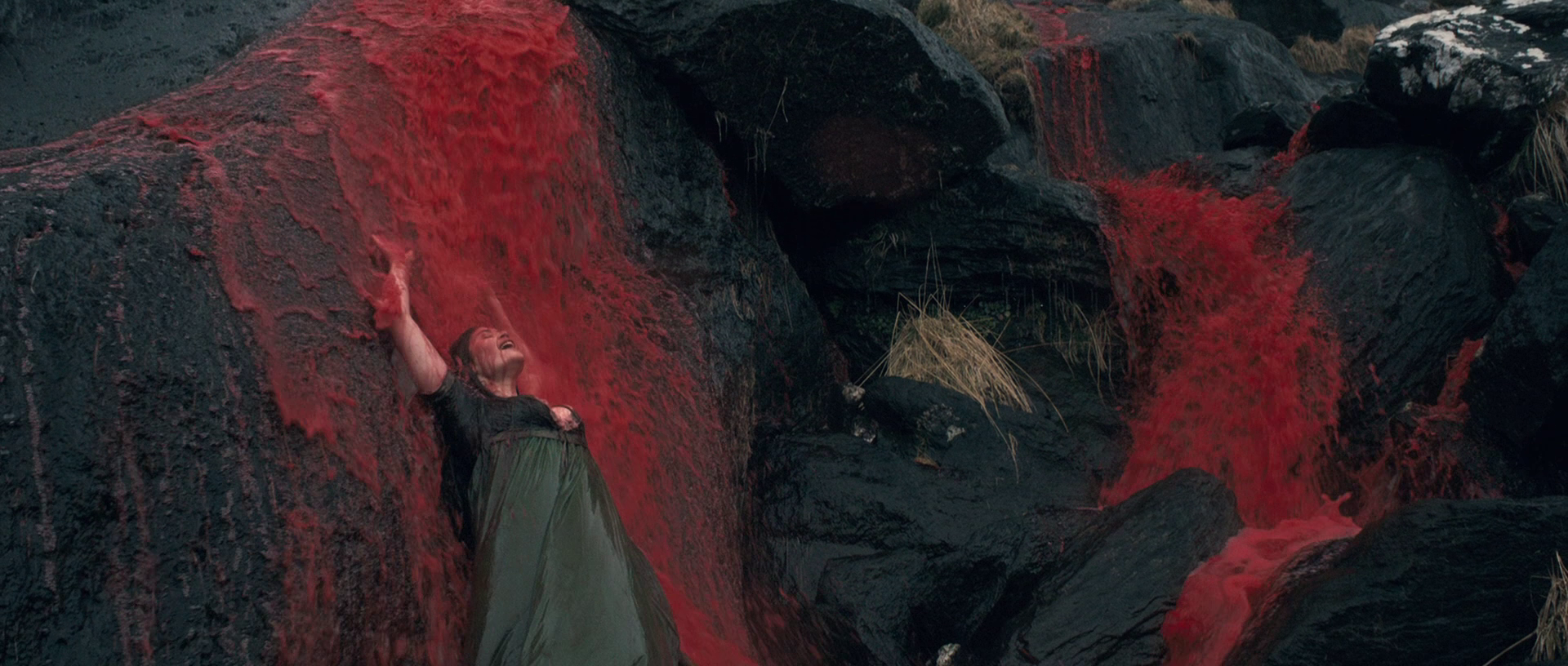
The Island That Makes You a Vampire. This is a neat bit of work. Vampirism in Byzantium isn’t communicated by bite or blood; it may be a curse, but it is not a disease. It is a dark gift from dark gods, and their nameless saint resides in a small hut on a small island off the coast, stricken from every map but one. The hut is a facade, the entrance to a temple in the heart of the island, and when you go inside, you find your corpse. It kills you, and you wake up dead -- a vampire, now -- as blood pours down the waterfalls of the island. These particular vampires are fine in sunlight and seem to have beheading as their major bane; a fine trade, given that getting your head cut off as a mortal human kills you as well. It’s easier to hide as a secret fraternity of ancient misogynists when every stray bite doesn’t turn into a new member of the gang, and they jealously guard entrance. One novel trick that vampires have in Byzantium: They can extend their fingernails into lethal claws at will, and instead of creating a bunch of animalistically be-clawed vampires, our more urbane Brit monsters use it as the most lethal coke-nail you’ve ever seen, only extending the pinkie nail or thumbnail into a tiny wicked curved blade to open a throat.
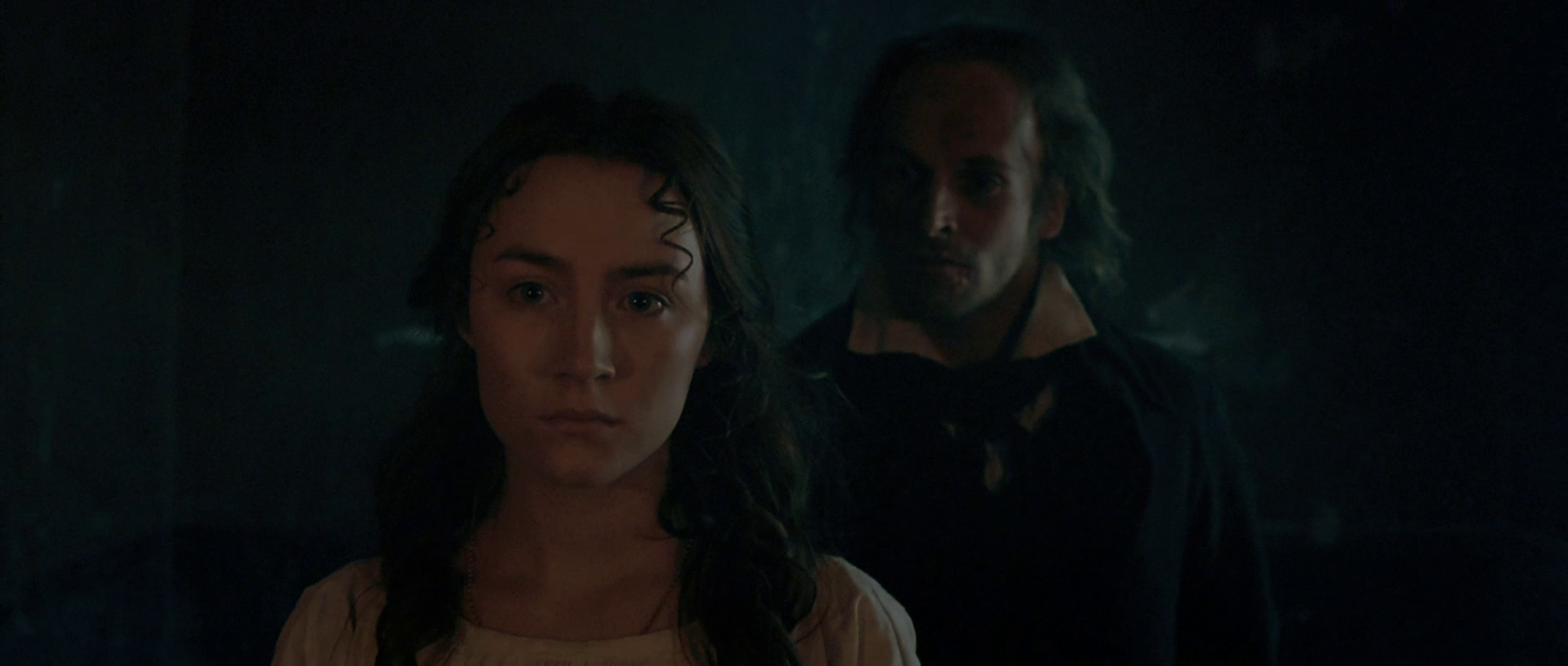
These creatures are more human in their predations than some we’ve seen -- on the Kinsey-type sliding scale of Dracula to Nosferatu, we are all the way at the Dracula end of the scale here. This makes sense, given it’s a Neil Jordan joint; back in Interview his vampires were fully Draculas as well. They are, however, fully predators. The heavy lifting here is done by Saoirse Ronan, which is not a surprise at all in 2026 but likely was back in 2012. The role she’s playing here, Eleanor, is the narrator teen girl vampire who’s constantly writing her life story down and trying to show it to people as an act of eternal teen rebellion against her eternal mom. The character even has a gimmick where she only feeds on the elderly at the very end of their lives, styled as an angel of death come to give closure and take away the pain. No disrespect to Dakota Fanning, but it’s easy to imagine Fanning given this role were the movie to be made a year or two earlier, and she would have delivered a straightforward and forgettable performance. Ronan does not.
It’s entirely a matter of presence and instinct (and likely direction; Jordan deserves some credit). It’s certainly not the script. Ronan delivers a focused, almost straining intensity when she’s on the hunt; she isn’t actually literally unblinking but there are long stretches where she is silent and staring at something just off to one side of the camera -- sometimes literally prey, sometimes not. When near the climax of the film, the school guidance counselor (the woman who gets her neck snapped unceremoniously by Savella, as per above) confronts her about her story of being a vampire, Eleanor gives her a little speech about how one day, when the guidance counselor is old and ready for death, she’ll look up from the garden or the cafe table or the bedside and see her standing there, looking the same, and then, only then, would the guidance counselor understand the truth of the matter. The scriptwriting is fine here -- the script is at its best when Napoleonic vampires are making dramatic, sinister imprecations, and at its worst when it has to imagine two people in 2010s England having a regular conversation -- but it’s the performance that sells it. No petulance, no anger, just calm certainty, but even then no smugness or arrogance. Like the narrator of a documentary describing the circle of life for the umpteenth time; just a trace of being tired of it.
She still has to deal with some rough patches; that speech is probably the last great moment Eleanor has in the film, because very soon after she’ll become a screaming sobbing hostage for the remainder of the runtime, as Darvell returns and sweeps into dashing action. Arteron has similar moments, though her final vampire speech (to Eleanor’s teacher, who has smugly deduced the truth and doesn’t realize Clara’s about to kill him) is a lot more straightforwardly sexy-malevolent. Basically the only role that doesn’t see some wild variance on the quality of their writing is the violent rapist captain Ruthven; Jonny Lee Miller clocks in to play the worst sort of man the British empire ever managed to produce, and he’s able to hit all the required notes even in power-saving mode. (As previously discussed in the Dracula 2000 review, Jonny Lee Miller is quite good at doing the sorts of things he does; if you want him to be doing it in something worth watching, however, you have to track down period piece romances made for British TV or the CBS network Sherlock Holmes procedural adaptation, Elementary.)
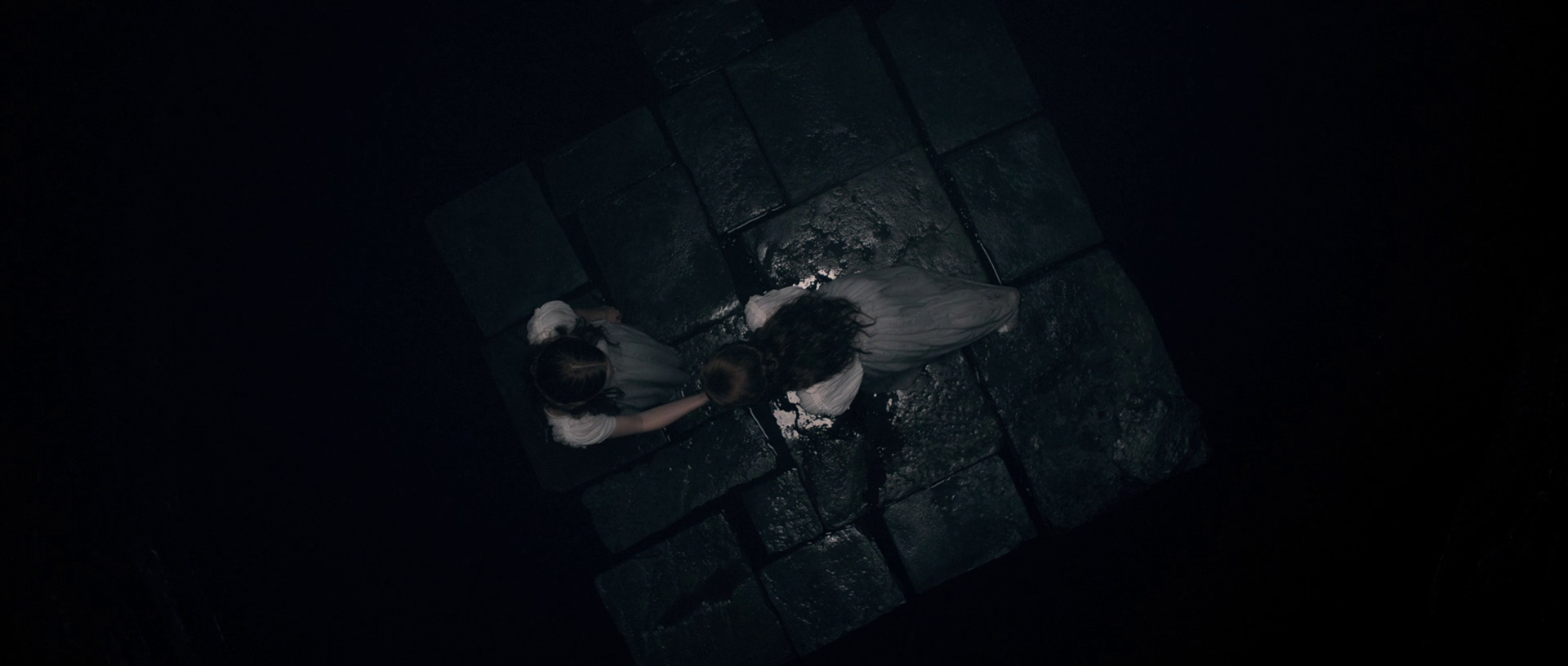
This is also a complaint of personal preference, but I do think it’s valid: This movie begins in the present day with narration, and then constantly jumps back and forth and back and forth from the present to the past back to the present with Eleanor’s narration guiding us so we don’t get lost (obviously, the costuming also helps). This enables an interesting visual choice precisely once that I can recall; early on, as they happen upon the seaside town, Eleanor sees a line of nuns walking on the beach and disassociates for a moment, seeing herself as a nun walking in the line with the nuns, and seeing herself standing on the beach from the perspective of “herself” as a nun. This is showing us that she is remembering that she’s been in this town before; it’s where the nunnery was located. Clara, eager to forget the past and live for the present -- a recurring mantra with the vampires in this film, and perhaps a bit at odds with them being a secret evil eternal fraternity -- brushes it off, but Eleanor, obsessed with remembering everything, cannot forget. Jordan pulls this same trick a second time with the same nun about twenty minutes later, but it's a bit stale by then. That first time on the beach is the only time the timelines bleeding into each other in Eleanor's head is used good effect by the film itself instead of as an editor’s crutch to keep things moving; I think I would have preferred if, like in Interview with a Vampire, there was a very firm Act I and Act II bisecting the movie, here being the portion of the film in the Napoleonic era and then the portion of the film in the modern day. Especially because that would enable throwing out like 40% of the modern day stuff from the first half of the film, which I think would be to the film’s benefit.
I didn’t have anywhere else to put this, but in the last five minutes of the film the elder vampire leader calls for Darvell to fetch his sword from the Crusades and I burst out laughing when this absolute unit of a Hercules: The Legendary Journeys stage prop came into view. They actually seem a bit ashamed of it and it’s hard to get a shot of it all in frame at the same time, but I assure you, it is a World of Warcraft-ass falchion.
Have any questions or feedback? Drop us a note in the comments below or email us at contact@goonhammer.com. Want articles like this linked in your inbox every Monday morning? Sign up for our newsletter. And don't forget that you can support us on Patreon for backer rewards like early video content, Administratum access, an ad-free experience on our website, and subscriber-only content covering competitive Warhammer 40K!
 This website uses cookies. Learn more.



 Goonhammer App and Patron Updates: April, 2026
 Kill Team Tournament Report: Engage, Party, Repeat's March Madness 2026
 Goonhammer Reviews: Tribal Conquest