Welcome to the Century of the Vampire, an ongoing weekly feature where Goonhammer managing editor Jonathan Bernhardt watches some piece of vampire media, probably a movie but maybe eventually television will get a spot in here too, and talks about it at some length in the context of both its own value as a piece of art and as a representation of the weird undead guys that dominate western pop culture who aren’t (usually) zombies.
Last time, Bernhardt reviewed the Taika Waititi and Jemaine Clement franchise What We Do in the Shadows. Today, he looks at the 2014 Ana Lily Amirpour film, A Girl Walks Home Alone at Night. This article will contain spoilers.
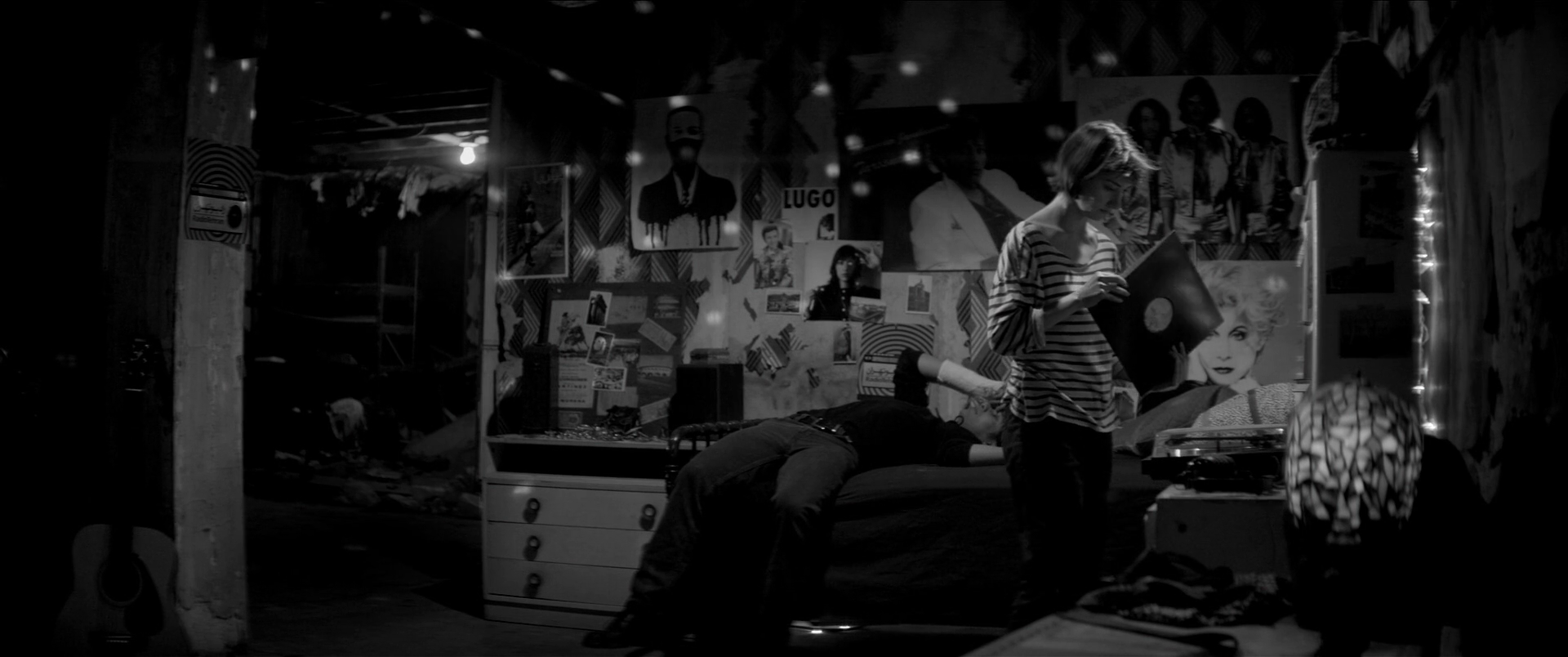
As has been previously mentioned, 2014 was a really good year for vampire movies. We’ve already covered Dracula Untold and What We Do in the Shadows, which do us for schlocky blockbusters and cinema verité ensemble comedy respectively; with A Girl Walks Home Alone at Night, we’re covering both 2010s indie sensibilities and neo-western horror. (Like with What We Do in the Shadows, “horror” is more of a vibe here than a descriptor of some level of gore or violence; while it will depict both, the film is far more interested in dancing to vinyl under a disco ball in the basement than tearing victims’ throats out in the dark.)
The most startling thing about the film upfront is that it is both black-and-white and it takes that seriously -- many modern films do not. Any film that was shot primarily in color and then backported to black-and-white using computer color grading fundamentally is not taking being in black-and-white seriously. The upcoming Spider-Noir, for instance -- the Amazon show starring Nic Cage that seems to be trying its best to hide that it’s a fully licensed Spider-man adaptation of his character from the Spider-verse movies -- was shot in color and then brought back into black-and-white for the advertising push, and will be available to watch in both versions when it releases. The black-and-white for Spider-Noir looks pretty bad, in my opinion! That’s because when you’re intentionally shooting for black-and-white, you make not only different lighting decisions than you make when you shoot in color, but different set design decisions, wardrobe decisions, and so on. One of the true strengths of this film is that Amirpour is solid on the technical stuff and composes some beautifully framed and lit shots when shooting in both the day and night in the fictional Iranian town of Bad City (actually inland central California, with Farsi signage and appropriate props).
The lazy thing to do would be to double feature this thing with previously-appearing film Nadja; they do have a bunch of superficial similarities -- female vampire protagonists, black-and-white filming, low budget indie sensibilities. That’s about the extent to which the two films are anything like each other. Nadja is honestly much weirder than A Girl Walks Home Alone at Night, to its detriment in terms of plotting and pacing; its dedication to being a half-baked Dracula adaptation has it go about half an hour too long. But also there are no characters in A Girl Walks Home Alone at Night which are as effective or interesting as the louche, smoldering, resentful Renfield of that film, and the titular Girl (Shiela Vand) is given less to work with than the Nadja character. The Pixelvision stuff, while ultimately a filmic dead end and on the balance little more than a gimmick, was still a fun gimmick, and had value in itself. A Girl Walks Home Alone at Night, on the other hand, is an extremely mainstream-ready film by comparison -- which may sound crazy to say about a black-and-white neo-western horror movie entirely in Farsi and starring unknowns, but story, pacing, and craft are all saying: Here is a bold new voice who can do all these things for bigger projects, in English, on a grander stage. So far it’s been a bit of a rocky road on that front for Amirpour; her second project, The Bad Batch, was a bit of a dud, and her third, Mona Lisa and the Blood Moon, reviewed a bit better but I was honestly unaware that it, specifically, existed until looking her up just now -- she fell off my radar after The Bad Batch. Then the pandemic happened and she’s been in various project hells since.
All of this is to say: This movie goes very far on vibes, craft, mood, and style, and if this were either one of my first watches of this feature or my first time seeing the picture instead of, I believe, my third or fourth, this column would likely be entirely praise instead of mostly praise. Even now, I think my main complaints aren’t that anything is wrong with it, necessarily; it’s just not very daring. There are maybe one too many scenes where a female character dances on a long-held steady shot over a song from the soundtrack -- in fact, I think there is precisely one too many scenes of that type, and Atti’s dance for Hossein before his murder was what tipped me over that limit. And if I was to double feature this film, I would probably do it with Let the Right One In, because I think that is the film we’ve looked at in this feature that it has the most in common with -- and it is a film that very much would have been fresh in the vampire idea-space when this one was made.
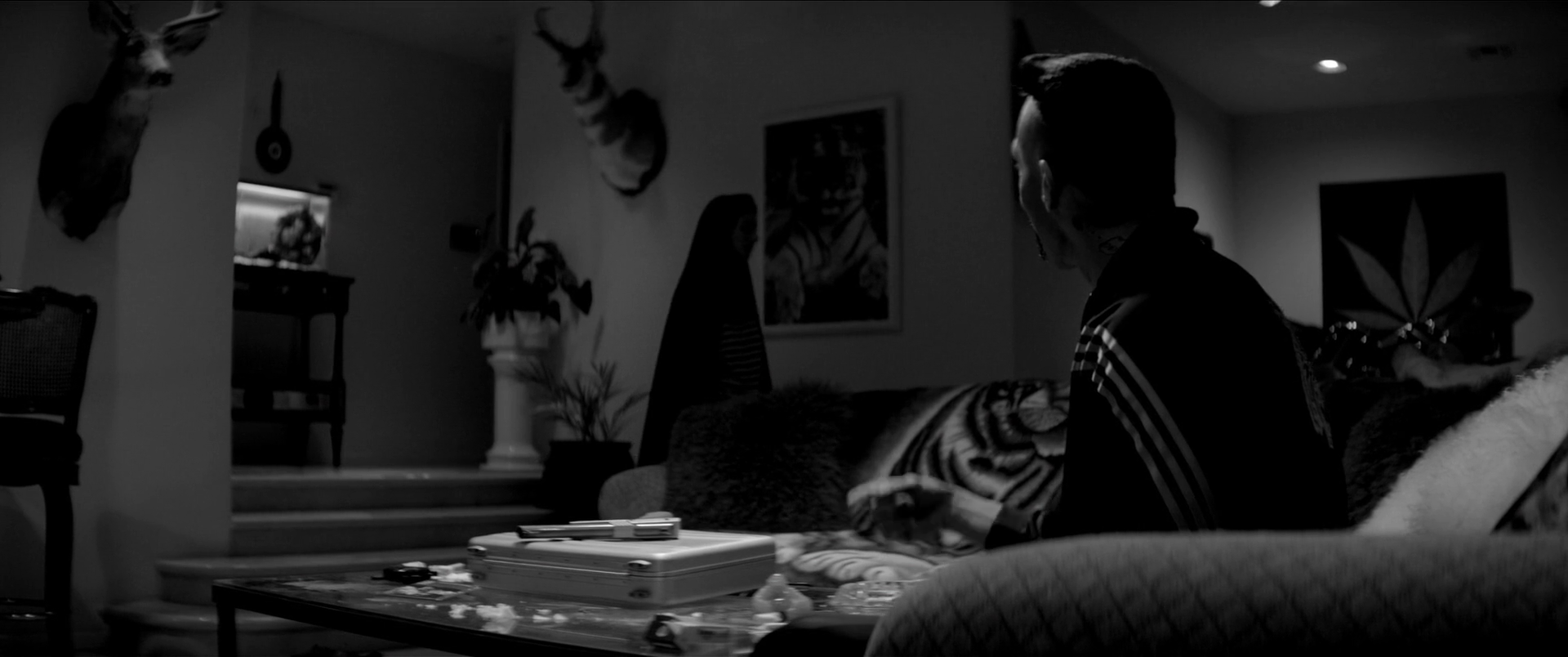
The story: Arash (Arash Marandi) works as a general servant and gardener for a rich family in town, and is being pursued casually by Shaydah (Rome Shadanloo), the rich daughter of the house. His mother is dead; his father Hossein (Marshall Manesh) has become a junkie. As we join him, he has just stolen a cat and taken it home. The pimp and drug dealer Saeed (Dominic Rains) arrives there soon after he does. Saeed steals his car, insults his father, and drives off; Arash breaks his hand punching an alley wall in frustration. After Saeed abuses Atti (Mozhan Marnò), a prostitute who pays up to him, he is approached by the Girl. Believing himself in charge of the encounter, Saeed brings the Girl back to his condo, attempting to impress her with jewelry and cocaine. She kills and eats him. Arash passes her at the front gate on her way out, as he’s on his way in to confront Saeed and get his car back; he finds the dead pimp’s body, takes his car key, and then also his drugs and money.
The two separate for a time; Arash, in his attempts to impress the rich daughter for whom he works, goes out dancing with her and sells her ecstasy, which she then cajoles him into taking. He has a bad trip and stumbles out of the party into the streets. Meanwhile, the Girl has been stalking the night: Here, she’s frightening a small boy and making him promise to be good or she’ll eat him up; there, she’s glowering at Hossein as he bothers Atti as she walks the street. (Through this part of the film we’ve gotten extended dance sequences from both the Girl and Shaydah.) Eventually the Girl and Arash, dressed like Dracula for the dance party he was at with Shaydah and still tripping, run into each other under some street lights. He is unaware that at many points in their first meeting, she is considering opening him up and drinking him like a water fountain; nevertheless, she brings him home and they, again, dance to some more vinyl.
Their relationship evolves; the Girl’s relationship with Atti evolves. Eventually things come to a head when Hossein’s addiction becomes untenable and Arash throws him out of the house with his drugs. Hossein goes to Atti and forces her to do heroin with him; furious, the Girl slaughters the man in front of her. They dispose of his body, then Atti tells her to take the cat and leave; Arash finds his father’s body the next day, and goes to the Girl, saying they should leave town with the rest of the money. Then he sees the cat with her, and he knows. But he still wants to go.
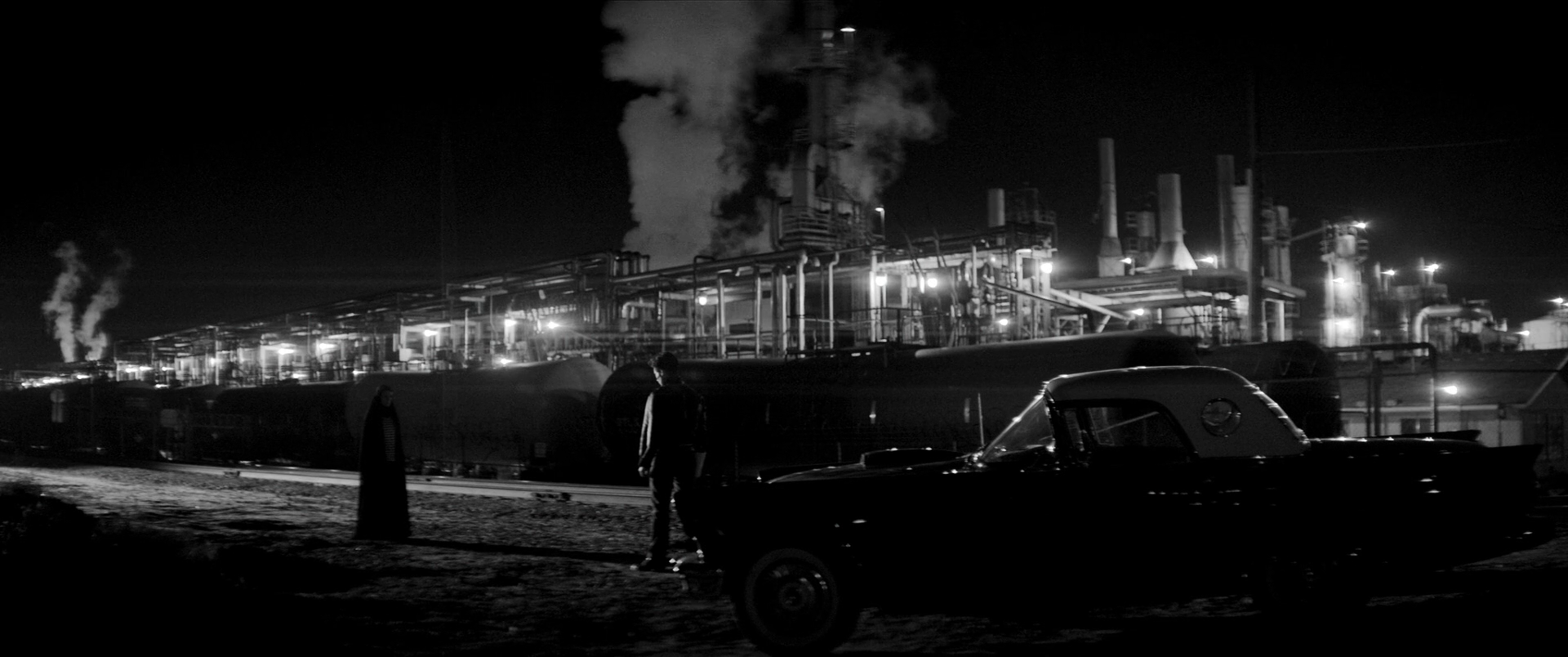
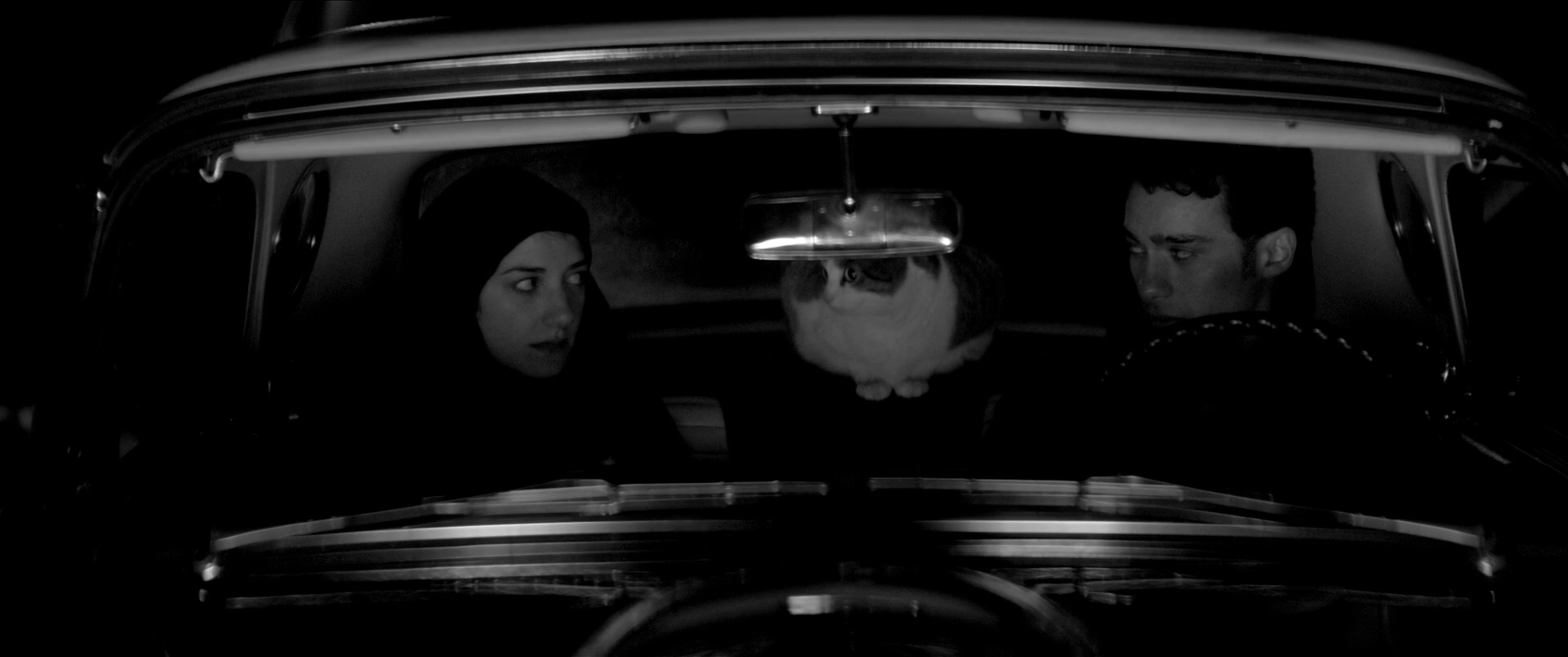
The mood is tense as they reach Bad City limits. Arash gets out of the car. What is he going to do? Try to take revenge on the Girl? Leave her? In the end he gets back in the car. The second to last shot of the film is them staring at each other across the center console as a song plays on the tape deck. The last shot of the film is the lights on the back of the car coming to life as Arash puts it in gear and drives onto the highway, and towards their new life, however long that lasts and however violently that ends.
The main question I have, and I think it’s a very important one, is this: Is Arash a Renfield?
I think he’s not, and I find how firmly the movie makes sure you don’t get the impression he’s a Renfield to be unsatisfying. At no point in the movie does he intentionally help the Girl feed or kill, nor does he make the intentional decision not to stop her from feeding or killing; indeed, by the end of the film it’s not clear he actually even fully knows what the deal is here, or what he’s signed up for. That could be fine -- if the Girl was more of a monster.
The idea of a vampire that only feeds by killing bad men, on top of being a bit childish and a bit boring, is an idea that puts the vampire squarely outside the bounds of the horror genre. Morbius is that kind of vampire, and that’s instructive; a vampire who believes they can use their curse to murder evildoers for the good of the people can be tragically delusional, but if they are proven to be straightforwardly correct in that delusion, they’re a superhero. A Girl Walks Home Alone at Night does not fully commit that category error -- we do get an extremely brief scene, never commented on or followed up on to my recollection, where the Girl kills and eats a homeless man in a back alley after leaving Atti’s. He is not a righteous kill, like Saeed or Hossein. But the film has a very light touch with the Girl, far removed from the visceral and monstrously unfair murders of the townsfolk committed by the vampire child in Let the Right One In.
In the end, the deal that a Renfield makes is the surrender of the self to a lover (sometimes simply a master, but in modern adaptations, usually a lover) in return for the chance to bear witness to unearthly death. Arash just…never gets there during A Girl Walks Home Alone at Night. It’s almost certainly something that’s going to happen one way or another with the character in the next couple days, maybe the next couple hours starting from the moment he gets back in the car -- but we never see it. And while there can be valid artistic reasons for leaving that hanging in the air and unresolved, there honestly really isn’t that much going on in the rest of the film to justify it.
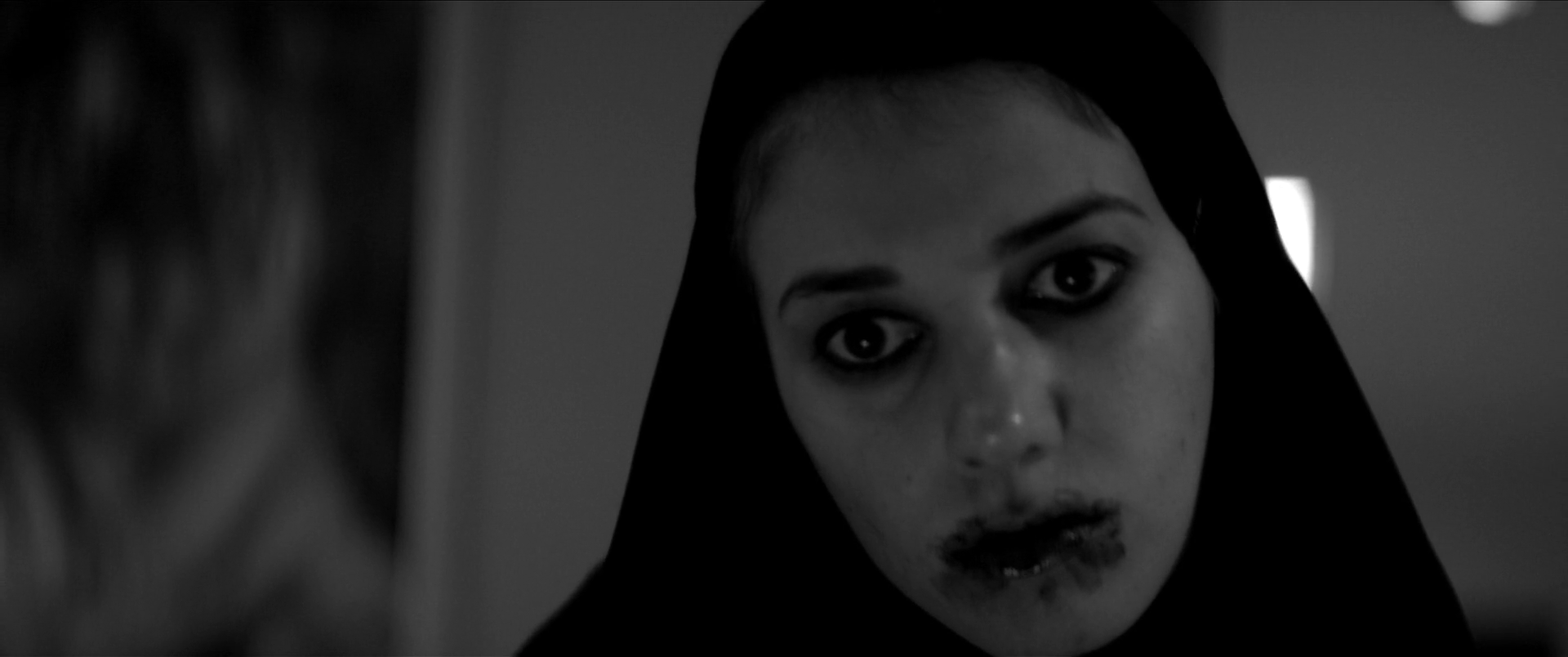
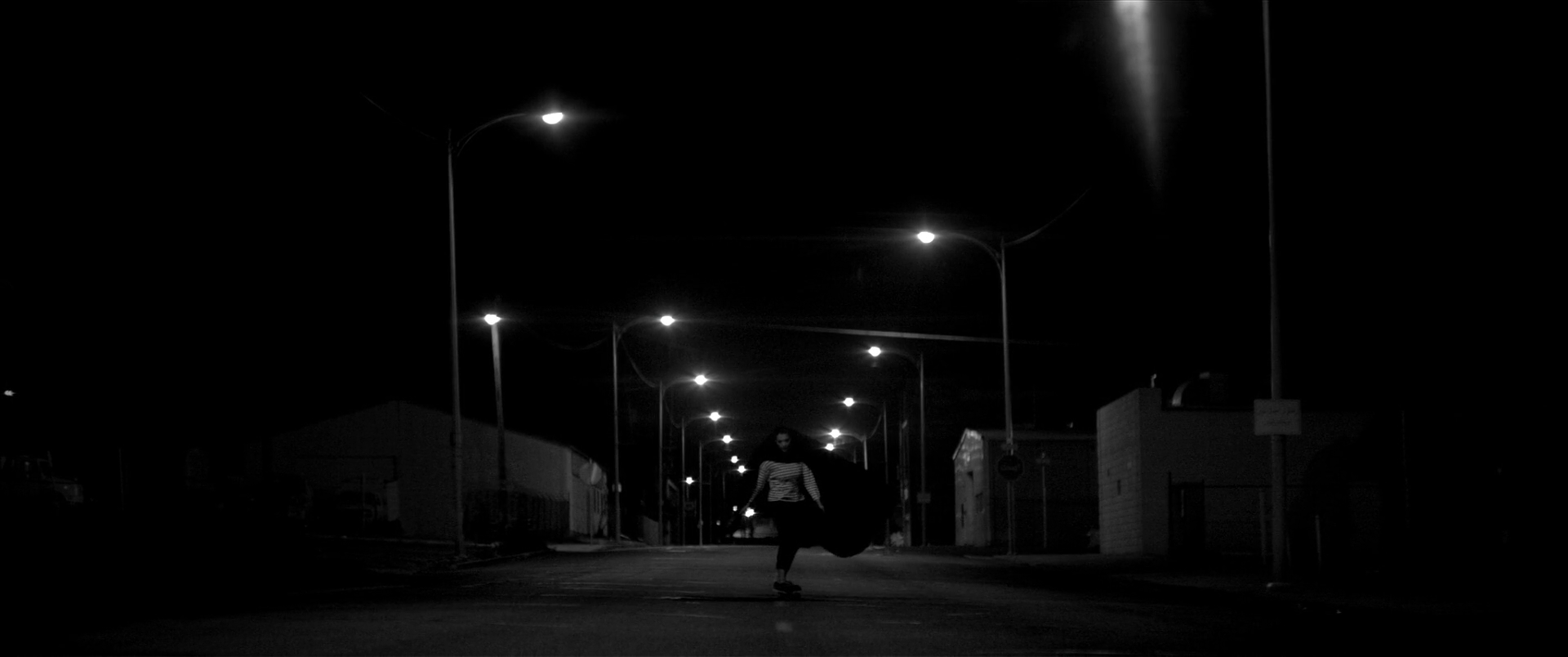
But it’s such a beautiful looking film. That’s one thing that hasn’t worn off at all on multiple watches. The content might get a bit self-indulgent or scattershot, but the sets are perfect, the shots are perfect, the lighting is perfect except that it’s the 2010s so there has to be pronounced lens flare everywhere even in black-and-white; I enjoyed my time with A Girl Walks Home Alone at Night, and it’s a film I will watch again. Problems with structure in the third act and proper Renfield-ing are problems of the moment; the image of the Girl skateboarding down the street, her chabor billowing behind her like Dracula’s cloak, is what you come to the movies for.
(On a personal note: I was introduced to this film about a decade ago now by my close friend Dani, who passed in 2024. The main reason she loved it was a lot of the stuff I critiqued above: It was about a cool lady with great vibes who murdered a bunch of shitty men. And that’s more than fair, but doesn’t make for great column material. But she also liked Rockabilly, a trans character who wanders through this film not getting murdered or attacked or doing much of anything besides being trans. And dancing, of course, because everyone but the shitty men do. I thought that was worth mentioning in the film’s favor, and I’m glad to be able to write about one of her favorites.)
Have any questions or feedback? Drop us a note in the comments below or email us at contact@goonhammer.com. Want articles like this linked in your inbox every Monday morning? Sign up for our newsletter. And don't forget that you can support us on Patreon for backer rewards like early video content, Administratum access, an ad-free experience on our website, and subscriber-only content covering competitive Warhammer 40K!
 This website uses cookies. Learn more.



 Goonhammer App and Patron Updates: April, 2026
 Kill Team Tournament Report: Engage, Party, Repeat's March Madness 2026
 Goonhammer Reviews: Tribal Conquest