Better strap in for this one, pilots! While we haven’t seen the fourth packet of playtest rules for BattleTech’s new core rulebook yet, the extended testing period for the fifth and most complex of the playtest packets, Battlefield Support: Aerospace, has already begun, and it’s a doozy. This packet aims to provide a third tier of rules complexity for aerospace assets supporting ground combat, simpler than the fully-detailed rules for aerospace units (whose upcoming rework is a separate project) but more complex than the flat dice rolls of the Battlefield Support: Strikes system.
Packet 1:
Survivability Rules ran from September 9th until October 13th. We talked about our final thoughts on it
here.
Packet 2:
Mobility Rules, will go from September 29th to November 10th.
Packet 3:
Gear, will go from October 28th to December 8th.
Packet 4: Missions runs from November 24th to January 5th.
Packet 5: Rules for BSP Aerospace, will run from October 28th to Jan 5th. You are here!
So What’s Here?
This is a sub-system meant to allow aerospace units to contribute to and influence Classic BattleTech battles without overshadowing the ‘Mechs which are meant to be the stars of the show. In that regard, this system parallels the ground combat Battlefield Support (BFS) Assets found in the Mercenaries box, and the asset cards for aerospace share a lot of DNA with the ground asset cards, but this system is far more expansive and ambitious. All told, BFS Assets took up seven pages in the Mercenaries rulebook, with the stats for assets of 35 different types provided in the box. The equivalent rules section of this playtest packet needs twelve pages, and the tables at the back provide
over 100 different statlines for aerospace assets from the Age of War through to the proliferation of OmniFighters across the Inner Sphere in the 3060s!
This packet’s goals are comprehensive. While aircraft movement is only tracked in the vaguest of senses, in terms of fuel reserves burned and in brief on-map appearances during ground attack runs, aircraft still do almost all the things you’d expect aircraft to do: dogfighting each other, escorting or intercepting attack runs, air strikes and bombing… there’s even provision for tracking external stores (i.e. externally-carried bombs and fuel tanks) and rules for aerospace insertion of infantry! It’s all rather elaborate, and only time and playtesting will tell whether this system achieves its lofty aims.
What isn’t here are any kind of dropship rules; those remain outside the scope of the Battlefield Support system(s). Strafing fire across multiple target hexes is also absent.
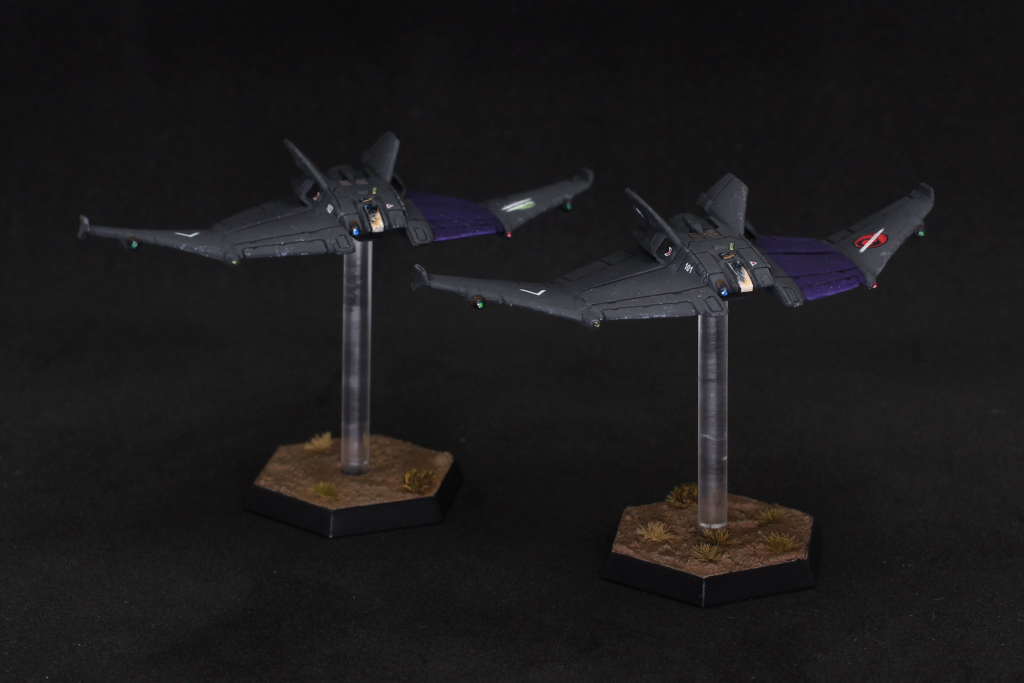 SL-17 Shilone Aerospace Fighters. Credit: Valk
How Does It Work?
Due to the complexity of this system, I’m going to break this overview into five sections: A quick overview of the information on the Aerospace Asset cards, followed by sections on aerospace asset deployment, the process for declaring air actions, resolution of intercept attempts, and resolution of air-to-surface and surface-to-air fire.
The Asset Card
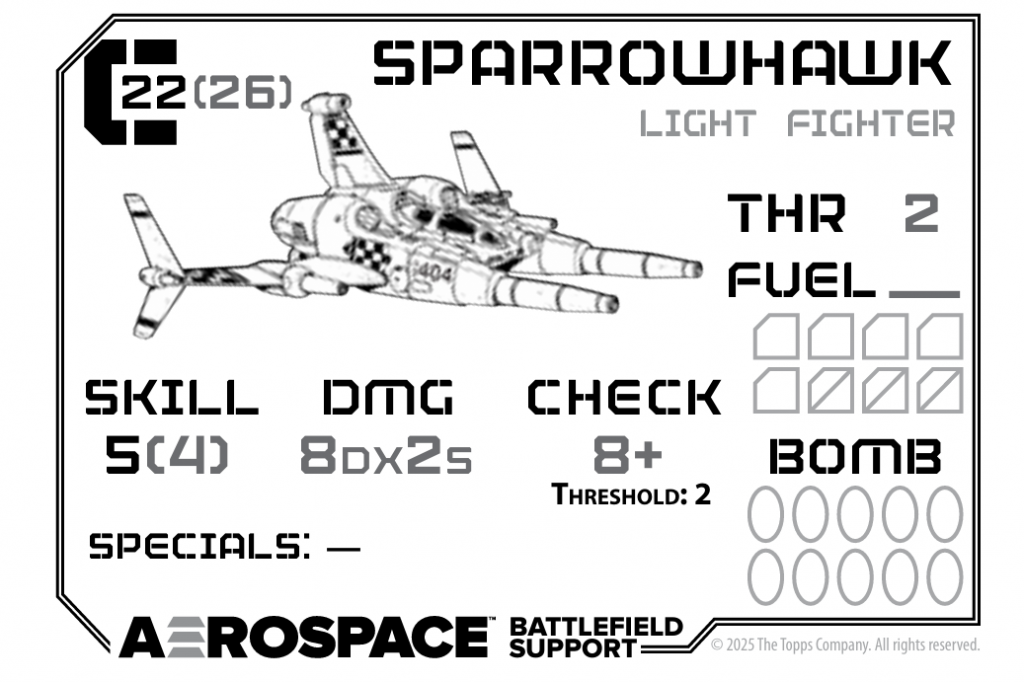
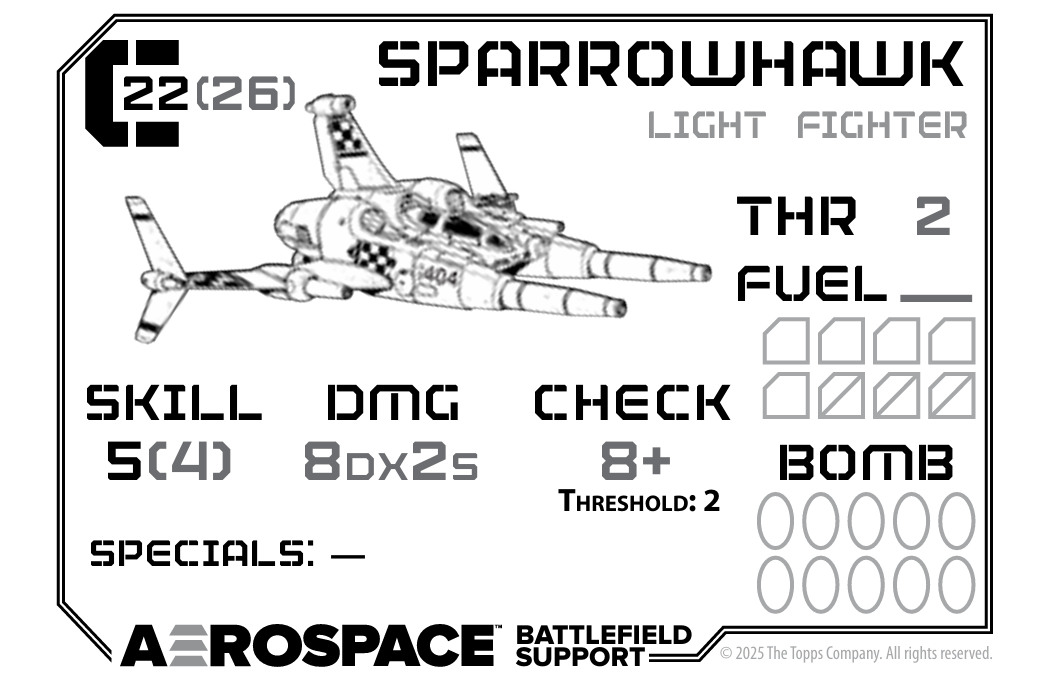
Aerospace Asset cards will look familiar if you’ve seen any ground Asset cards, but there are some key differences.
BSP cost and Skill function the same, though every aerospace asset we have stats for currently, whether Clan or Spheroid, is sitting on the 5 (4) statline, or 4 (3) with a Targeting Computer.
Damage is listed mostly the same way as for ground assets, as aD x b, where a is the size of the damage clusters the asset inflicts and b is how many clusters of that size it deals, but rather than the range bands featured on ground assets, the aerospace assets merely note the longest range they can deal their damage at. Aerospace assets' range bands are mostly impactful for air-to-surface attacks, and are normalized at 1-5 hexes for Short, 6-10 hexes for Medium, and 11-15 hexes for Long.
“Thrust” replaces TMM (and, in spirit, MP, though all fighters are fast enough that their actual movement speed is irrelevant for this system). Notably, while Thrust functions entirely like TMM in to-hit calculations, it is explicitly not the same thing, so Precision Autocannon shells have no special benefits when used for anti-air attacks.
Threshold and the Destroy Check are back, but, crucially, if an aerospace asset survives a Destroy Check it does not suffer degradation; an aerospace asset that survives a full round of incoming fire can return the next round (fuel permitting) absolutely no worse for wear. Unlike ground assets, Threshold values are all pegged to the weight class of the aerospace fighter: 2 for lights, 5 for mediums, and 8 for heavies (aerospace weight classes differ from mechs; there aren’t any “assault” fighters).
Fuel is a vital attribute, giving a hard cap on the number of turns the aerospace fighter can operate in the vicinity of the fighting on the ground. Aerospace assets do not have to be deployed at the start of the game, however; aerospace assets with limited Fuel can wait for a window of opportunity before committing to the field. Fighters can’t come and go to nurse their fuel - once they’ve deployed they’ll stay deployed - but underwing fuel tanks are one of the options for external stores, and external tanks are always expended first (so that they can be dropped). External fuel tanks do have a BSP cost, however, scaling relative to the cost of the asset itself; this can reach costs as high as 8 BSP per tank for the most expensive Clan fighters.
Bombs are the other option for external stores, offering a different ground attack option with different guidelines and some serious damage potential. The 2 BSP base cost per bomb (or 4-BSP-per if you've upskilled the asset) isn’t bad, but externally carried bombs (and fuel tanks, as well) have a serious downside, reducing the fighter’s Destroy Check value by one per carried external store, to a minimum check of 3+. As of the current revision of the playtest packet there are also semi-hard caps on external stores based on the weight class of the aerospace asset; you
can choose to exceed them, but if you do you lose your Thrust bonus entirely, and on a bombing run flak will be capable of shooting you down before you get a chance to drop your bombs, so that's unlikely to be worth it. There’s technically rules provision for internal bomb bays which avoid the Destroy Check penalty, but 1.) the BOMBX special ability is rare, found only on the Wasp LAM in this packet, and 2.) bombs’ base BSP cost goes up to 4 when you’re filling an internal bay.
Like ground assets, there’s a list of special abilities here to model the impacts of an aerospace asset’s non-weapon gear, though there’s precious little overlap between the two lists; the Crit-Seeker ability is the only one that explicitly functions the same, and then only when the aerospace asset is targeting ground units.
Deploying Aerospace Assets
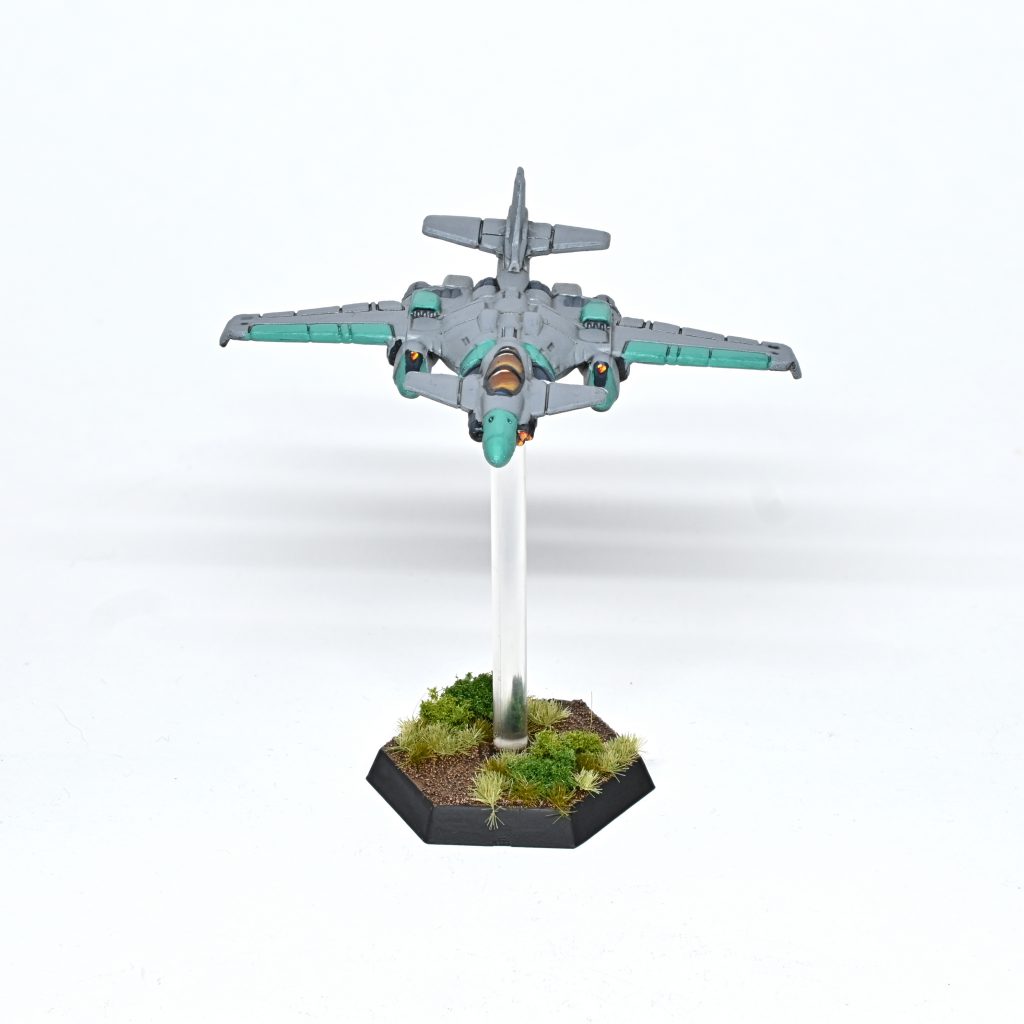 Visigoth. Credit: Rockfish
Aerospace asset deployment is its own little dance, taking place after each turn’s initiative roll, but before any ground units have been moved, until such time as both players have committed all their aerospace assets to the fight. Starting with the player who lost initiative, the players go back and forth deciding whether to deploy one of their aircraft or pass with it; this decision is made for a specific aircraft (e.g. “I pass on deploying my Shilone,” not “I pass on deploying one of my fighters.”). If the number of undeployed air assets on either player’s side is uneven, however, the first time the player with more planes is asked to deploy or withhold aircraft, they must declare their choices for [the difference between their forces + 1] planes right away. In other words, if I have five aircraft and you have two, the first time I deploy I’m going to be deploying (or withholding) four of them!
After aircraft deployment, play moves on to the ground movement phase, played normally.
Declaring Air Actions
At the start of the Weapon Attack Phase, before any target declarations have been made for ground units, air asset actions must be declared. Unlike deployment, this process follows normal initiative rules.
An aircraft can take one of four actions, which I’ll list in slightly different order than the playtest packet:
- Remain on Station, burning Fuel for the turn but staying out of combat.
- Provide Ground Support, declaring either a strike against a specific target or a bombing run on a specific hex and placing the air asset’s miniature in any empty hex within the desired range band relative to the ground target.
- Provide Escort, accompanying a previously-declared friendly aircraft making a ground support run to help protect it from interceptors. Escorts can be assigned whether or not enemy interceptors have already been assigned to that ground support mission.
- Move to Intercept, attempting to interdict enemy aircraft. This one’s a bit strange in that an interceptor must target an enemy if one is available; there’s at least a couple paragraphs of text around the situation of interceptor-vs-interceptor combat without a ground support mission involved that will literally only ever be relevant if the first player to declare a non-Remain-on-Station action declares a targetless interception mission (a “floating interceptor”) and then their opponent sends one of their own interceptors against the unengaged interceptor. Go figure.
While you can’t trigger a pure interceptor vs. interceptor dogfight against an enemy interceptor that’s already committed to attacking a ground support aircraft (you can only send an escort to accompany that ground support plane), there’s no other real limits on the numbers of interceptors engaged in any given furball. If players so choose, they can stack every plane they have against a single enemy target.
After air actions have been declared for all aircraft, play proceeds to the standard Attack Declaration step for ground units. Ground units declare any flak attacks they may be making against planes making ground support runs as part of this step, but they aren’t resolved until after air-to-air combat has been resolved.
Air-to-Air Combat
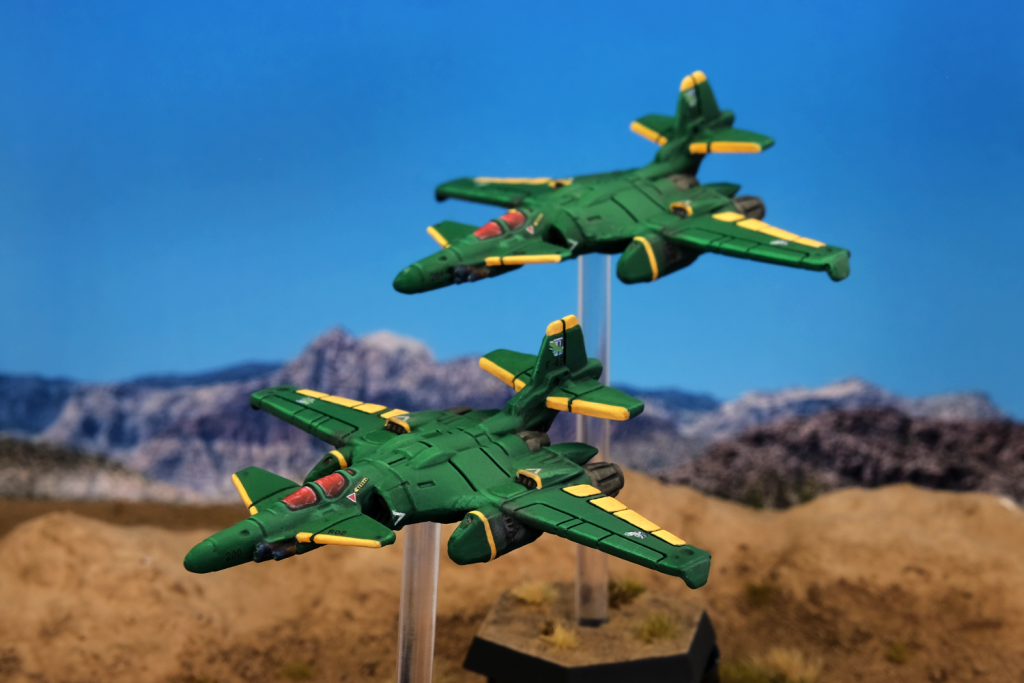 Visigoth OmniFighters. Credit: Valk
Air combat offers a chance for something fairly rarely seen in BattleTech: The ability to destroy your opponent before they get a chance to do the thing they want to do in the same turn. While pure air-to-air engagements between interceptors with no ground attack aircraft involved can technically be resolved at any time, all the rolls concerning a ground attack run have to be made in a very specific order.
First, Interceptors and Escorts fire at each other, both eating a penalty to their TNs to represent the difficulty of fighting while (angling towards your real target, the ground-attack aircraft / trying to keep close to your charge, the ground-attack aircraft, delete as appropriate). Destroy Checks for these fighters are resolved at this time, and if the Interceptor aircraft is destroyed, it does not get a chance to attack the escorted ground attack aircraft.
If an Interceptor survives any fire it takes from Escorts, or if its target is unescorted, it then gets to make an attack against the ground attack plane it’s intercepting. The aircraft committed to the ground attack cannot fire back, as it’s focused on its attack run, though it does penalize the interceptor’s roll against it if it has rear-mounted weapons. If the Interceptor(s) attack(s) provoke(s) a Destroy Check against the ground-attacker, that check is resolved at the end of this step, and if the ground-attacking aircraft is destroyed it does not get to make its air-to-ground attack.
The modifiers for air-to-air combat are pretty abstracted. The attacker’s range is only relevant if it’s in a dogfight with an escort or another interceptor (and then the only relevant question is “Which one of us has longer range?”), and only Thrust and a small handful of specials apply as modifiers. If their weapons have sufficient range, ground-attack fighters can make their attack run more safely by attacking their ground target from longer range (and bombs can always be dropped from Long, presumably representing releasing them from a higher altitude?), but that comes at the cost of significantly penalizing their own attack’s TN (a tradeoff similar to jumping in mech-vs-mech combat).
Any aircraft targeted by an Interceptor can immediately jettison any or all of its external stores (with no bombing attacks or anything being made in the process) in order to improve its Destroy Check odds, but obviously throwing away limited resources you intentionally paid extra BSP to bring without getting any use out of them isn't something you really
want to do if you can help it.
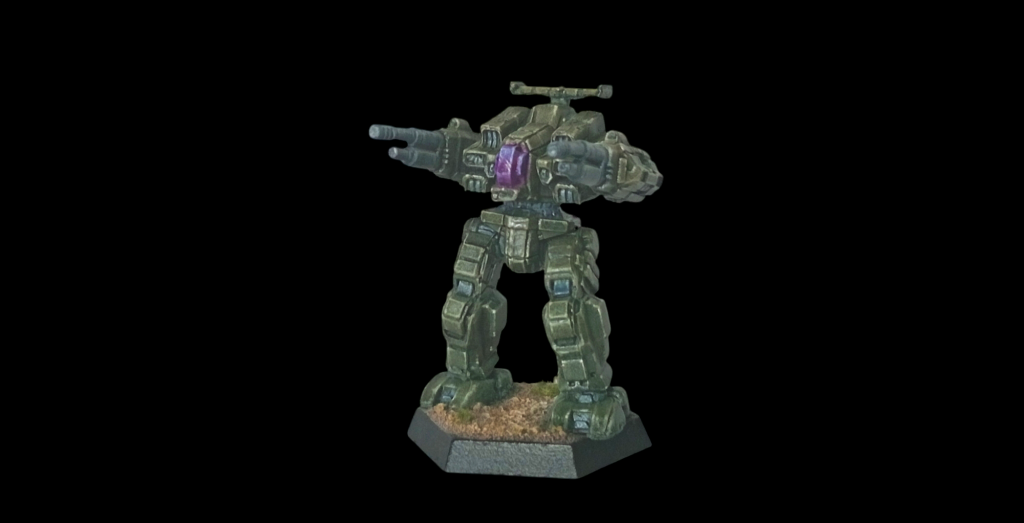 Rifleman (photo courtesy of Musterkrux)
Air-to-Ground and Ground-to-Air Combat
Oh, yay, some of these planes are finally directly interacting with the battle map and our ground forces! About time! Resolution for air-to-ground and ground-to-air attacks is applied simultaneously, in the same manner as normal ground-unit-vs-ground-unit shooting, so resolution order doesn’t matter so much at this step. If you’re sick of dealing with planes by this point you and the other player can go shoot some robots at each other about it for a bit and come back.
When you come back, we’re looking at a process much closer to normal GATOR math, with more of the familiar modifiers involved, though with a few new modifiers thrown in as well. Further, get ready for the Classic version of Alpha Strike's Single-Attack-Roll vs Multiple-Attack-Rolls debate: Unlike normal ground asset attacks, or even air-to-air attacks in this system, where a single attack roll is made regardless of how many clusters of damage are dealt by the attack, air assets attacking ground targets make individual attack rolls for each individual cluster of damage (if making a strike) or bomb (if dropping bombs) they attack with.
There’s a lot of new factors to note here if you’re used to air strikes under the BMM / Mercenaries rules for air strikes, so I’m going to slow down and unpack this part a bit more than other aspects of the playtest rules.
In this system, air
strikes do
not ignore TMM, or even terrain if the target is in woods, and I believe I read correctly that water would still provide its partial cover benefits. Range is also a factor, albeit simplified into three standardized range bands as I mentioned before. The only normal GATOR mods that an air strike ignores are AMM and the modifiers around prone targets, and the only new modifier is a +1 TN penalty for each individual ground unit/asset making a flak attack against the attacking aircraft, regardless of whether or not that ground attacker hits the plane.
In this system, while bombs still attack a hex rather than an individual target, range still applies, the penalty from being under flak fire still applies, and rather than the normal bonus to hit an immobile target, a bombing run actually eats an inherent +2 TN penalty to represent the relative inaccuracy of bombs vs. guns and missiles. Bombs still scatter if they miss, but only scatter to an adjacent hex; scatter distance is not increased by margin of failure as in the BFS: Strikes system. Also notable: While high explosive bombs only hit a single hex (dealing 10 damage per bomb that hits the hex, in 5-damage clusters), an air asset can instead be equipped with cluster munitions that deal five damage to everything in the hex they hit and every adjacent hex. Combined with the scatter distance being capped at one hex, a load of cluster bombs will all deal 5 damage per bomb to their intended target hex, whether or not they actually succeed on their attack rolls. Dropping cluster bombs is probably the best time for an air asset to make a Long Range attack.
Up to four under-wing bombs can be dropped in a single attack. This is alongside up to six bombs from an internal bomb bay for a theoretical maximum of ten bombs dropped on a single hex in a single turn, which sounds utterly terrifying except for the fact that there’s no BOMB6 plane in the playtest, and the bomb-bay-equipped Wasp LAM has a Destroy Check of 4+ so it can only carry one external bomb (and a disappointing Thrust of 1 so it would be easy to hit), so 6 bombs is actually the practical cap in this playtest and the LAM dropping them would be extremely vulnerable on the way in.
In a major change from the BFS: Strikes cards, air attacks in this playtest system only strike their target’s rear armor with a natural 12 on the plane’s hit roll, so proportionately less damage from above will end up hitting mechs in the unmentionables.
Mechs and other ground-pounders also get to shoot back at the buzzards circling overhead in this system! There are some caveats on that, though, along with some potential bonuses.
Range from ground units to planes is measured as if the plane was in whatever hex their mini was placed in, but ignores intervening terrain and, in a concession to the abstraction of the whole situation (and aircraft’s ability to be wherever they want to be), explicitly ignores normal firing arcs as well. Also, no weapons with maximum ranges of six or less can be fired at aircraft no matter how close their mini is placed, so a Locust IIC can never down a plane with its battery of ER Smalls, alas (though the MPL is fair game). No Conventional Infantry Assets can make anti-air attacks, and Conventional Infantry Units (in other words, conventional infantry using the full infantry rules, rather than the simplified battlefield support system) can only do so if they have the Anti-Aircraft special feature or are equipped with LB-X field guns.
In a headache waiting to happen, all ground-to-air fire is referred to as “flak” despite the fact that flak is also both a specific autocannon munition type and a type of anti-air attack that can be made by LB-X cluster rounds, SB gauss, and HAGs; flak-type weapons gain a bonus to their flak check vs aircraft but it’s a different bonus than the bonus they get against VTOLs. Oy.
The flak check maintains the GAR modifiers from GATOR, but as I mentioned before, Thrust replaces TMM and isn’t technically the same thing as TMM, so Precision AC ammo doesn’t apply here. Aside from that…
- The Anti-Aircraft Targeting quirk gives a -2 bonus to the flak check; use of this playtest packet explicitly turns this quirk on without inherently activating the still-optional effects of other quirks.
- For Assets, the Flak special ability gives a -2; there’s a subtlety of phrasing here in that the Quirk benefit is specifically applied to Units, not Assets, so I’m pretty sure this is just providing an equivalent benefit to Assets who would have the Quirk if full rules were being used for them, like the Partisan tanks.
- Weapons with a flak effect, like the aforementioned LB-X cluster and whatnot, just give a flat -1 here.
- Ground assets can be upgraded with “AA upgrades” for an added BSP cost, granting them a -1 on their flak check; this cannot be applied to assets which already have the Flak special ability.
- If a unit is splitting fire between ground targets and air targets, the anti-air attack is automatically slapped with the full +2 secondary target penalty.
- If a unit is splitting fire between multiple air targets, all of their anti-air attacks eat a +1 penalty for each target they’re firing on past the first (e.g. +1 to both of two attacks, +2 to each of three attacks, etc.).
There is also an optional rule within a set of optional rules here! In the name of “realism,” the “Limited Flak” optional rule prevents non-VTOL Assets with the No Turret special from making flak attacks. The phrasing of the introduction of Limited Flak also makes it sound like mechs would also only be able to fire arm weapons in flak attacks and ground units (as distinct from assets) would only be able to fire their turret weapons, but with how it’s phrased I’m unclear if that’s actually binding rules text. We may see a clarity update for this playtest packet as we’ve seen with some of the others.
The Destroy Check provoked by whatever damage an aerospace asset takes from flak doesn’t only account for damage taken from flak fire itself; final destruction odds also take into account any damage the ground-attack aircraft may have taken from interceptors earlier in the same turn, making flak a fairly reliable way to guarantee that tougher aircraft go down (as long as you can get fire on target). Also, while the fact that air-to-ground and ground-to-air attacks are resolved simultaneously means that flak can never completely stop a ground-attack aircraft from making its attack, by the same token a bomber’s under-wing bombs aren’t technically expended yet when a flak-provoked Destroy Check is rolled against it, so it eats the destruction penalty from all the external ordinance it was carrying at the start of its attack run.
And that’s it, that’s the system. Thankfully we are in a No Tyra Miraborgs zone here and aircraft don’t have anything to do in the Physical Attack Phase, so past the Weapon Attack Phase the turn plays out as normal, and you don’t have to think about planes again until Initiative is rolled again and you move into the next round’s Aerospace Deployment phase.
I will note that, thankfully, this packet does also contain clarification on how aerospace assets interact with scenarios, so it will be fully compatible with Playtest Packet #4 when that drops.
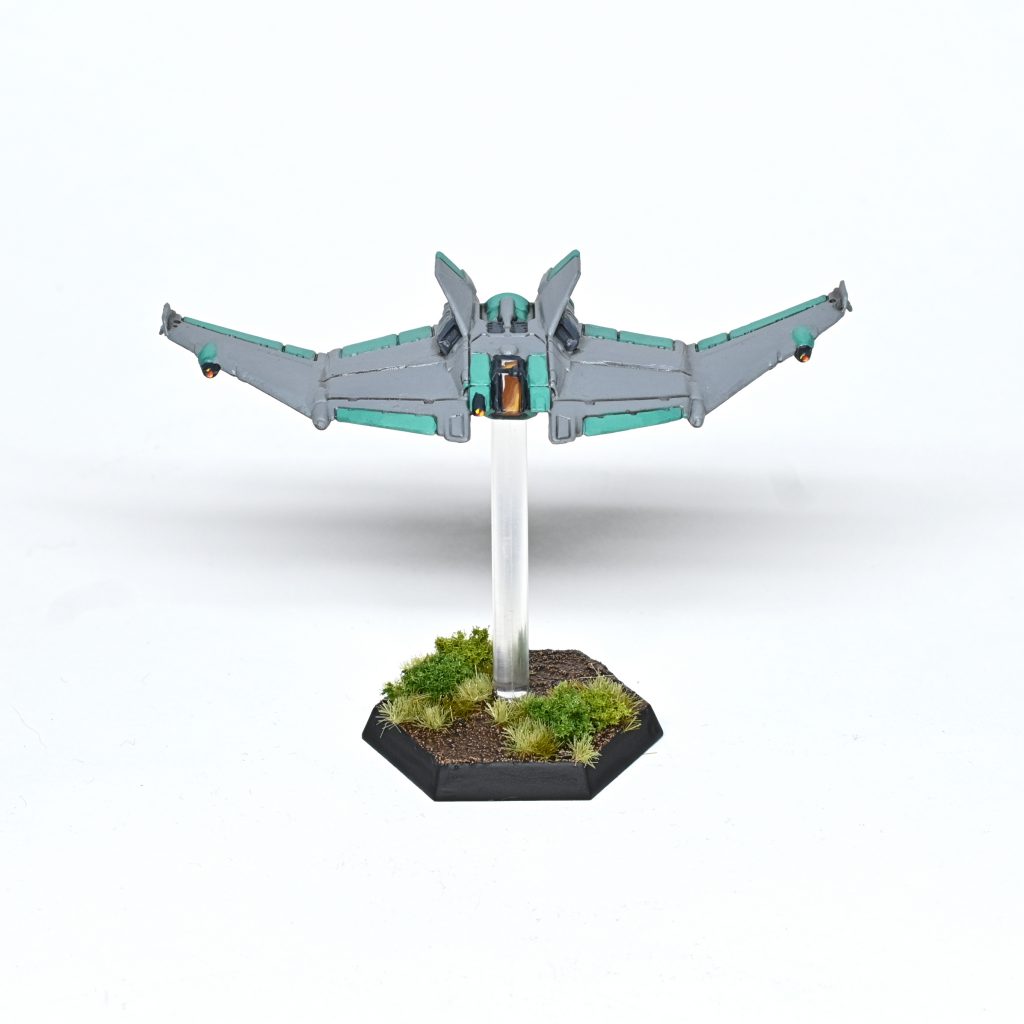 Shilone. Credit: Rockfish
Final Thoughts
Lynn: There is… an awful lot here. Maybe too much here. Despite the stated design goals, I’d say this is not something to bolt onto your game if you want just a little bit of extra seasoning on top of your mech-vs-mech combat. While this flavor of air combat is more easily digestible than Total Warfare Aerospace and less swingy and arbitrary-feeling than the BFS: Strikes system, it is enough of an investment in game time and cognitive space that I’d only recommend it if you and your opponent are both Plane Enjoyers hoping to Enjoy Planes. Certainly, it is a more game-changing presence than ground Battlefield Support Assets.
I do think there’s some very positive adjustments in plane vs ground balance here. I’m very glad to see that aerospace assets aren’t just Machines That Make Fire Moths Cease Existing in this system, and when bombers are either eating a hefty Destroy Check penalty from carrying under-wing ordinance or are a dinky Wasp LAM, a couple of friendly interceptors running air cover can turn an attempt to Make Battle Armor Cease Existing into a one-way trip fairly easily. From my read it seems like planes can offer significant power, especially some of the heavy Clan monsters like the Hydaspes (though it’s also paying 65+ BSP for the privilege), but there’s a lot of room for counter-play, and a few limits, like fuel, apply even if your opponent lets you operate aircraft with impunity for whatever reason.
I do have a Snow Raven fanatic in my local BattleTech community, and I am interested in kicking the tires on this playtest, but it’s daunting to approach. It does help to keep in mind that we’ve been asked to focus our feedback on how planes and mechs feel when pitted against each other through this system, rather than aerospace assets’ BSP costs, on the rationale that points are a lot easier to jiggle than the basic mechanical assumptions of the subsystem.
I hope enough people get in games with this to provide cogent feedback… I might even speculate, though this is purely a guess on my part, that response to this playtest could to some degree be used to gauge overall interest in aerospace ahead of the planned rework of the full aerospace rules. We shall see.
As a final note from me, I want to briefly acknowledge the elephant in the room: While I’d seen chatter before this playtest document dropped, I believe this packet is the first time CGL has stated officially, on the record, and with no ambiguity that the upcoming core rulebook that these playtests are building towards will only include full rules for mechs, with all conventional forces and aerospace represented through refined and updated versions of the various Battlefield Support subsystems. Full Classic rules for other types of units are still going to be supported, and books for them will be coming further down the line, but we have no clues on the timeline for that yet. I would assume that in the interim the new corebook will probably work reasonably well in conjunction with Total Warfare conventional forces.
The sky is not falling, detailed vehicle/infantry/plane rules aren’t going away, and everyone’s not going to be forced into playing Alpha Strike now or next decade. Speaking personally, I’m a bit disappointed that we’ll be waiting a while for updated infantry rules, since Battle Armor are, in my opinion, a pretty iconic part of the game (especially for the Clans), and are very poorly served by the way BFS Assets interact with Initiative, but it’s going to be okay. We’re going to go through a little awkward phase as this wave of rules updates catches up with non-mechs, but I genuinely think that when the dust settles the game will be better for it. At the very least… search your feelings. Rulebooks can be laid out far better than they are in Total Warfare, you know that to be true.
Have any questions or feedback? Drop us a note in the comments below or email us at contact@goonhammer.com. Want articles like this linked in your inbox every Monday morning? Sign up for our newsletter. And don’t forget that you can support us on Patreon for backer rewards like early video content, Administratum access, an ad-free experience on our website and more.Thank you for being a friend.
 This website uses cookies. Learn more.

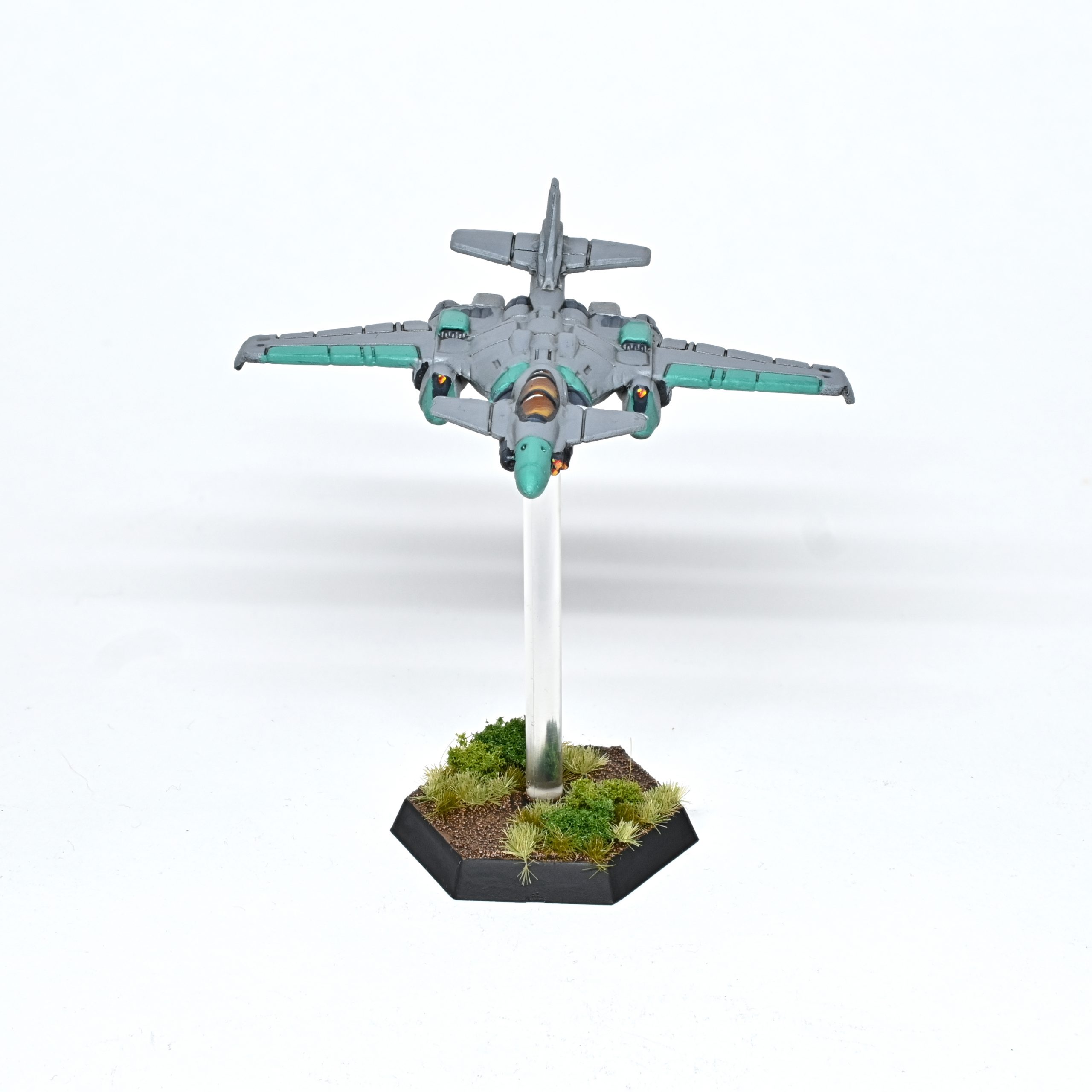 Visigoth. Credit: Rockfish
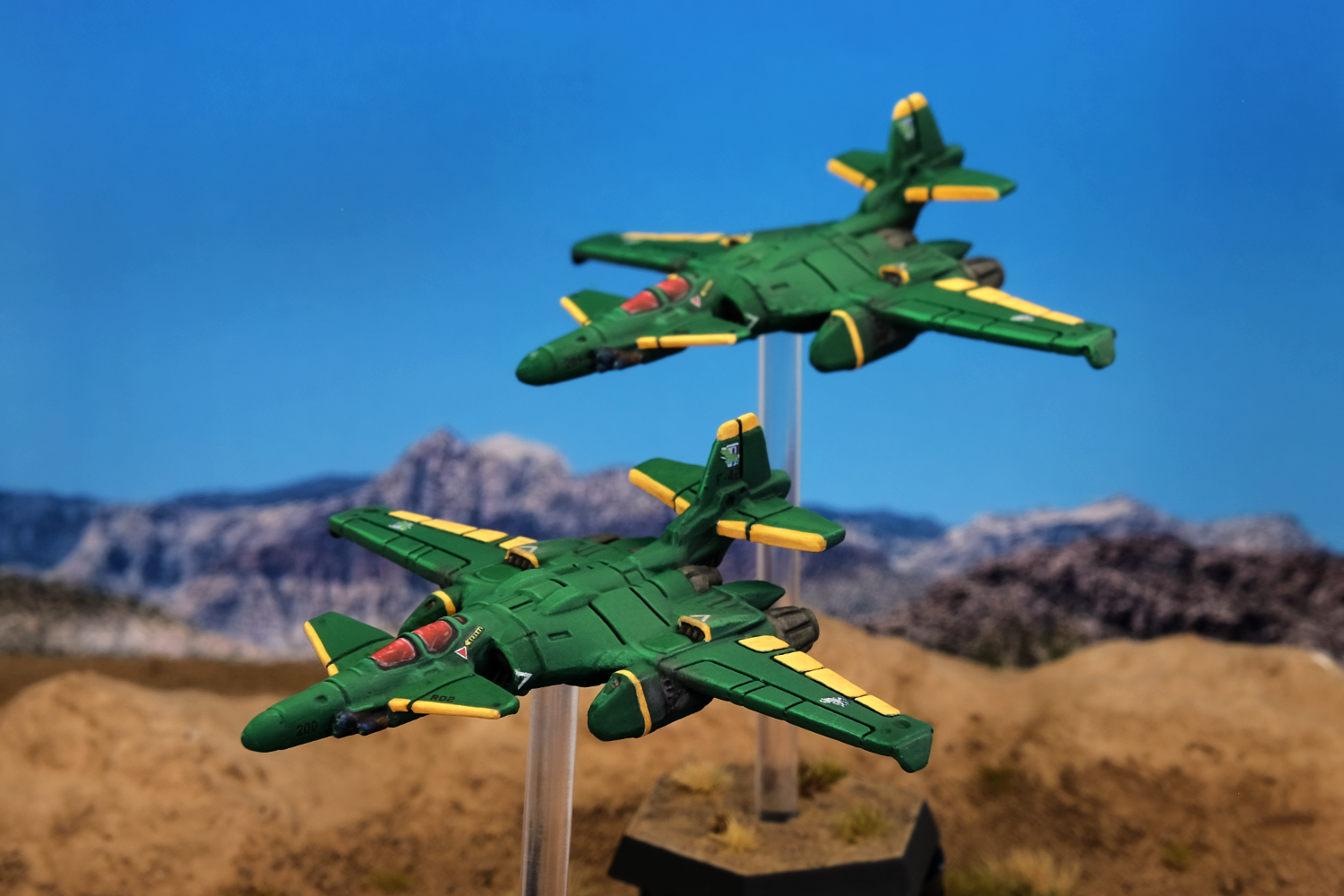 Visigoth OmniFighters. Credit: Valk
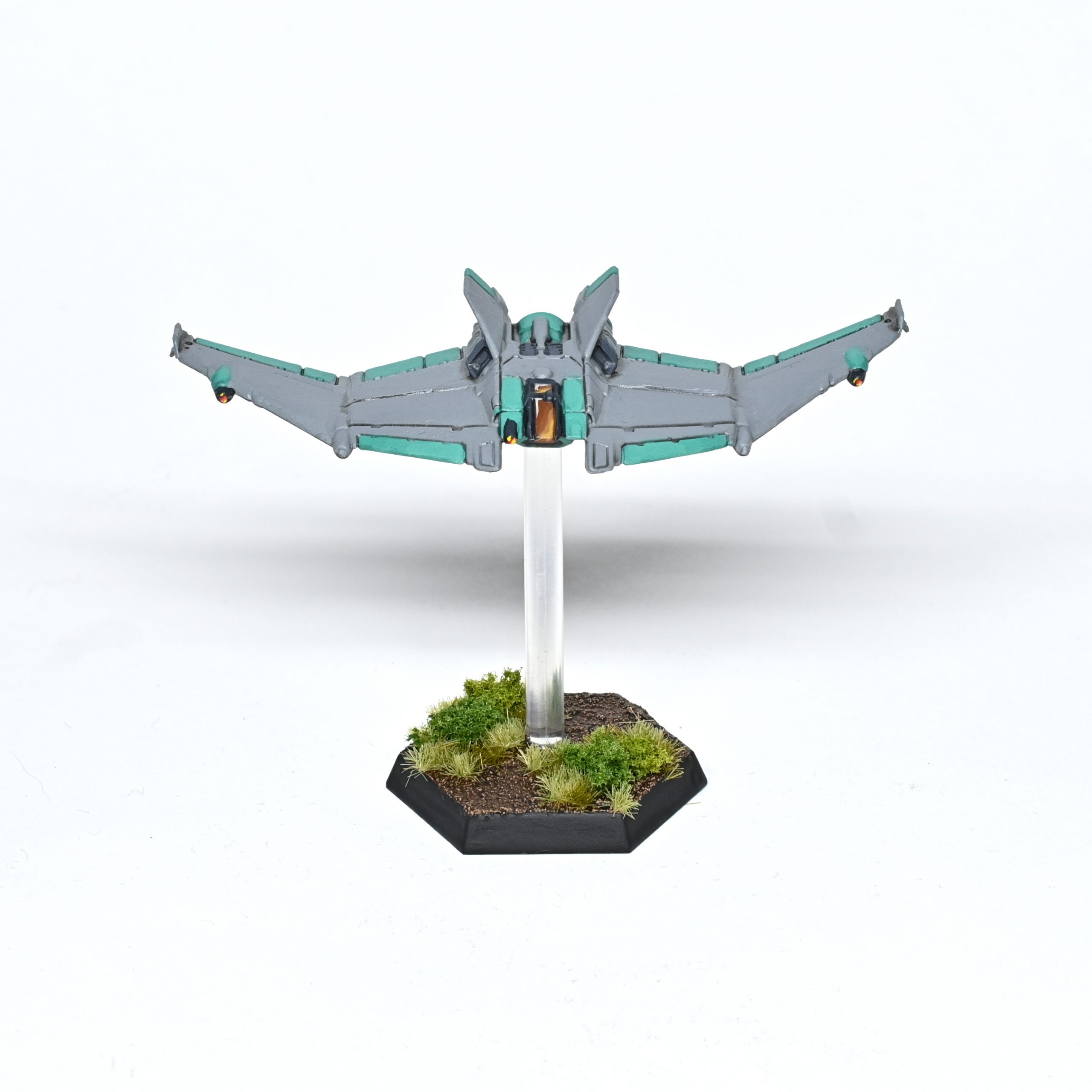 Shilone. Credit: Rockfish

 Goonhammer App and Patron Updates: April, 2026
 Kill Team Tournament Report: Engage, Party, Repeat's March Madness 2026
 Goonhammer Reviews: Tribal Conquest