Over Thanksgiving weekend, I found myself in New York City spending time with a old regular from my BattleTech Austin player group: author Russell Zimmerman, who helped write the narrative portions of the recently-released BattleTech Aces: Shifting Sands.
Since I had been working through the scenario pack back home, I had a number of questions about the narrative design process for Aces, and he was kind enough to answer them over turkey and pie at his apartment.
Valk: Thanks for carving some time out between dinner and our collective tryptophan coma to talk about Aces. I’m about halfway through my own campaign and enjoying the emergent narrative it’s weaving for my company, the Broken Arrows, so I’ll start out with a bit of a softball: Are there any plans for continuity past this scenario pack? Will Snowblind be written with any rewards - narrative or otherwise - for players who already completed Scouring Sands?
Russell Zimmerman: The Lynnvander guys have been pretty coy about the links that may or may not exist from campaign to campaign. I believe Tommy listed it firmly in his “rumor has it” category, so I’m afraid I’m gonna just stick with that.
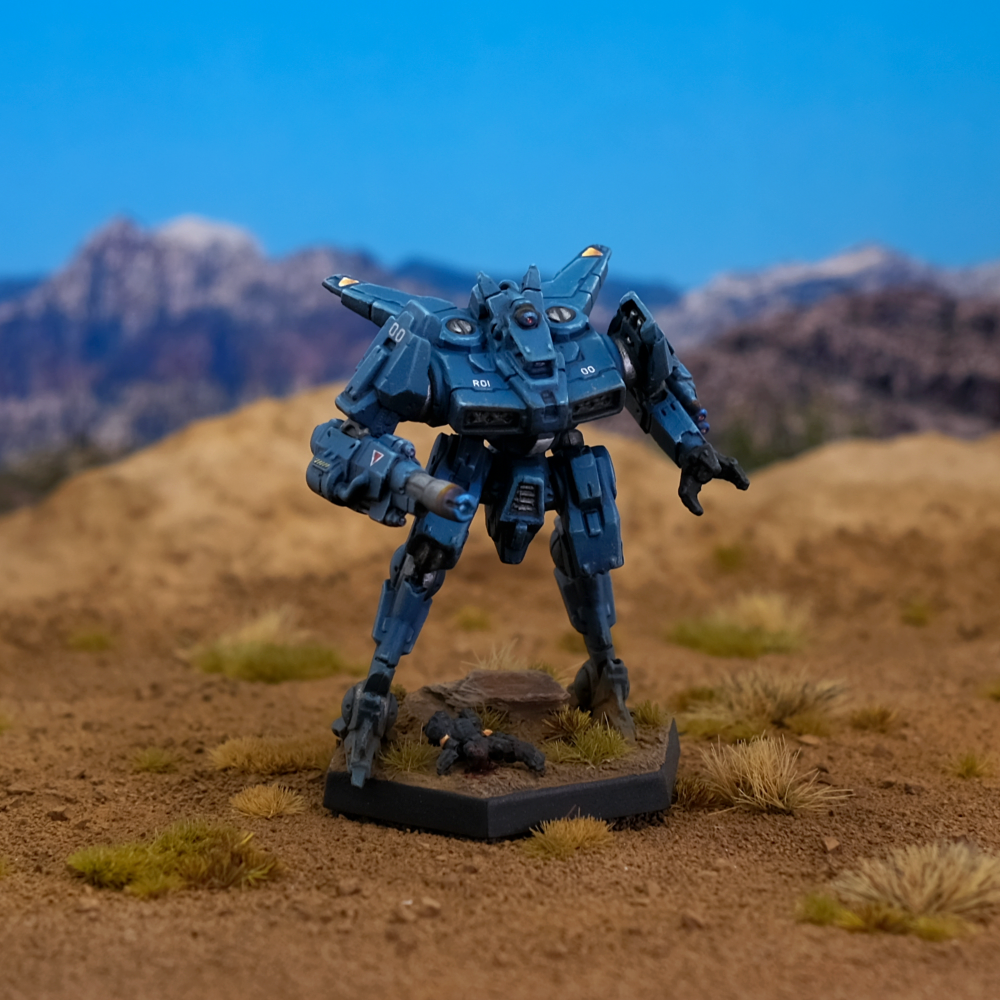 Broken Arrows Eris ERS-2N. Credit: Valk
Valk: Fair enough; it’s a long road from the Hinterlands to the middle of the Dominion. That said, why pick on the Jade Falcon remnants? They're a mostly dead-end faction compared to the AML, Jiyi's Falcons, Tamar Pact, etc.
RZ: Because they’re mostly dead-end. Certain allowances need to be made for a 20+ mission campaign to feature the same six or eight enemy ‘Mechs over and over, for instance, and for a world’s worth of campaign to be beatable by the good old fashioned “Lance or so of plucky MechWarriors” in the first place. So we wanted to keep things very contained and localized, and frankly the haphazard nature of the main Jade Falcons’ departure meant we could take a few liberties and it would still more make sense than not. Like, “oh, these dudes just have multiple of the same secondline ‘Mech you fight over and over?” becomes a bit more feasible if you remember that everyone in management just took off with literally the rest of the touman. And running against an, as you put it, mostly dead-end faction, fighting against cast-offs and leftovers like this? Meant we could have a bit more freedom to do what we wanted without stepping on toes or messing up anyone else’s storylines. We didn’t want to start name-dropping folks from Jiyi’s stories, or interfering with worlds and factions that have fiction planned/coming up/in production.
Valk: That makes plenty of sense; when I write a story, I usually have far more than what ends up in a single piece of fiction planned for them. I’d probably pop my top if I pitched a novella only to find out some other author put a bullet in my protagonist without asking me. With that in mind, how is it different to write a multiple choice story like this rather than a single narrative? How much back and forth is there in the production process?
RZ: It’s very different, especially for me, when my stories tend to be very character-focused, slow burn, stories more concerned with emotional weight than nonstop action…and then suddenly the gig is “nah, nonstop action, but also you don’t really write the action parts.” So yeah, working on just all these little vignettes, trying to sort of humanize the Jade Falcons, trying to give them a little bit of depth, trying to show the perspective of the civilians on world, trying to show multiple sides of a conflict and showing multiple stages of a conflict and multiple versions of that conflict (as the story branches)? It was very different. As far as collaboration and back-and-forth goes, the Lynnvander guys, especially Dylan Birtolo, did the heavy lifting. I’ve been describing it as “they baked the cake, I just put the icing on.” The crunch, the general flow of each branching storyline, the before-and-after for each mission, all of the framework came from them, I was just punching it all up, adding names and faces, writing the narrative like a narrative, instead of the scribbled, mad-genius, notes that Dylan had put in the campaign flowchart.
Broken Arrows Eris ERS-2N. Credit: Valk
Valk: Fair enough; it’s a long road from the Hinterlands to the middle of the Dominion. That said, why pick on the Jade Falcon remnants? They're a mostly dead-end faction compared to the AML, Jiyi's Falcons, Tamar Pact, etc.
RZ: Because they’re mostly dead-end. Certain allowances need to be made for a 20+ mission campaign to feature the same six or eight enemy ‘Mechs over and over, for instance, and for a world’s worth of campaign to be beatable by the good old fashioned “Lance or so of plucky MechWarriors” in the first place. So we wanted to keep things very contained and localized, and frankly the haphazard nature of the main Jade Falcons’ departure meant we could take a few liberties and it would still more make sense than not. Like, “oh, these dudes just have multiple of the same secondline ‘Mech you fight over and over?” becomes a bit more feasible if you remember that everyone in management just took off with literally the rest of the touman. And running against an, as you put it, mostly dead-end faction, fighting against cast-offs and leftovers like this? Meant we could have a bit more freedom to do what we wanted without stepping on toes or messing up anyone else’s storylines. We didn’t want to start name-dropping folks from Jiyi’s stories, or interfering with worlds and factions that have fiction planned/coming up/in production.
Valk: That makes plenty of sense; when I write a story, I usually have far more than what ends up in a single piece of fiction planned for them. I’d probably pop my top if I pitched a novella only to find out some other author put a bullet in my protagonist without asking me. With that in mind, how is it different to write a multiple choice story like this rather than a single narrative? How much back and forth is there in the production process?
RZ: It’s very different, especially for me, when my stories tend to be very character-focused, slow burn, stories more concerned with emotional weight than nonstop action…and then suddenly the gig is “nah, nonstop action, but also you don’t really write the action parts.” So yeah, working on just all these little vignettes, trying to sort of humanize the Jade Falcons, trying to give them a little bit of depth, trying to show the perspective of the civilians on world, trying to show multiple sides of a conflict and showing multiple stages of a conflict and multiple versions of that conflict (as the story branches)? It was very different. As far as collaboration and back-and-forth goes, the Lynnvander guys, especially Dylan Birtolo, did the heavy lifting. I’ve been describing it as “they baked the cake, I just put the icing on.” The crunch, the general flow of each branching storyline, the before-and-after for each mission, all of the framework came from them, I was just punching it all up, adding names and faces, writing the narrative like a narrative, instead of the scribbled, mad-genius, notes that Dylan had put in the campaign flowchart.
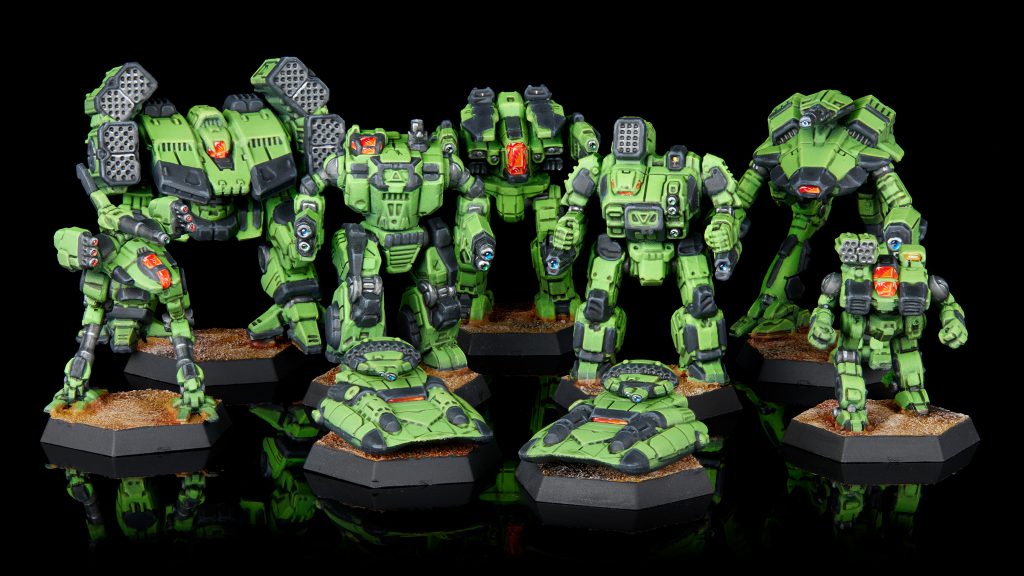 The Jade Falcon Epsilon Galaxy forces from Battletech Aces: Scouring Sands. Credit: Jack Hunter
Valk: The narrative design of the campaign reminds me a lot of RPG campaign books; I had one as a kid for The Lost World: Jurassic Park that reminds me a lot of how Aces is a sort of choose-your-own-adventure book. Was your previous experience on Shadowrun relevant to helping assemble this?
RZ: Yes and no. The adventures I wrote for Shadowrun (about a million years ago, feels like), you try to make things feel really open ended, when they’re not. It’s tough to write an adventure built so that six to eight total strangers can show up at a convention, start it, their random characters can overcome the challenges needed, and they can finish it, all in like a standard four-hour GenCon or Origins block. You really, really, need to work on the illusion of choice, there, so it’s not just players getting told what to do, but you also need to keep the action contained, and, well, keep it moving, so the players can get done. One tool I used to use for those adventures was to list all the stuff that needed to get done, but leave it to players what order to do them in, and how to tackle each problem when they got there. That’s…not super different than these? Here, the players are making choices about what sorties to take, what objectives to go after, that sort of thing. We just provided a little more of a narrative flow, a cleaner progression from A to B to C, right, whereas my old Shadowrun stuff would be A, pick three or four of BCDEF or G, and then go to H. But either way, the big thing is to make those player choices meaningful. In my old adventures, the order you tackled objectives in, and which ones you finished and didn’t, would come back to matter towards each mission’s grand finale. Here, it’s the same thing. It matters if you capture so-and-so, it matters if you destroy such-and-such, it matters if you don’t do blah-blah-blah… everything gets accounted for, and contributes to what ending you get, or offers real mechanical differences in later fights, or both.
The Jade Falcon Epsilon Galaxy forces from Battletech Aces: Scouring Sands. Credit: Jack Hunter
Valk: The narrative design of the campaign reminds me a lot of RPG campaign books; I had one as a kid for The Lost World: Jurassic Park that reminds me a lot of how Aces is a sort of choose-your-own-adventure book. Was your previous experience on Shadowrun relevant to helping assemble this?
RZ: Yes and no. The adventures I wrote for Shadowrun (about a million years ago, feels like), you try to make things feel really open ended, when they’re not. It’s tough to write an adventure built so that six to eight total strangers can show up at a convention, start it, their random characters can overcome the challenges needed, and they can finish it, all in like a standard four-hour GenCon or Origins block. You really, really, need to work on the illusion of choice, there, so it’s not just players getting told what to do, but you also need to keep the action contained, and, well, keep it moving, so the players can get done. One tool I used to use for those adventures was to list all the stuff that needed to get done, but leave it to players what order to do them in, and how to tackle each problem when they got there. That’s…not super different than these? Here, the players are making choices about what sorties to take, what objectives to go after, that sort of thing. We just provided a little more of a narrative flow, a cleaner progression from A to B to C, right, whereas my old Shadowrun stuff would be A, pick three or four of BCDEF or G, and then go to H. But either way, the big thing is to make those player choices meaningful. In my old adventures, the order you tackled objectives in, and which ones you finished and didn’t, would come back to matter towards each mission’s grand finale. Here, it’s the same thing. It matters if you capture so-and-so, it matters if you destroy such-and-such, it matters if you don’t do blah-blah-blah… everything gets accounted for, and contributes to what ending you get, or offers real mechanical differences in later fights, or both.
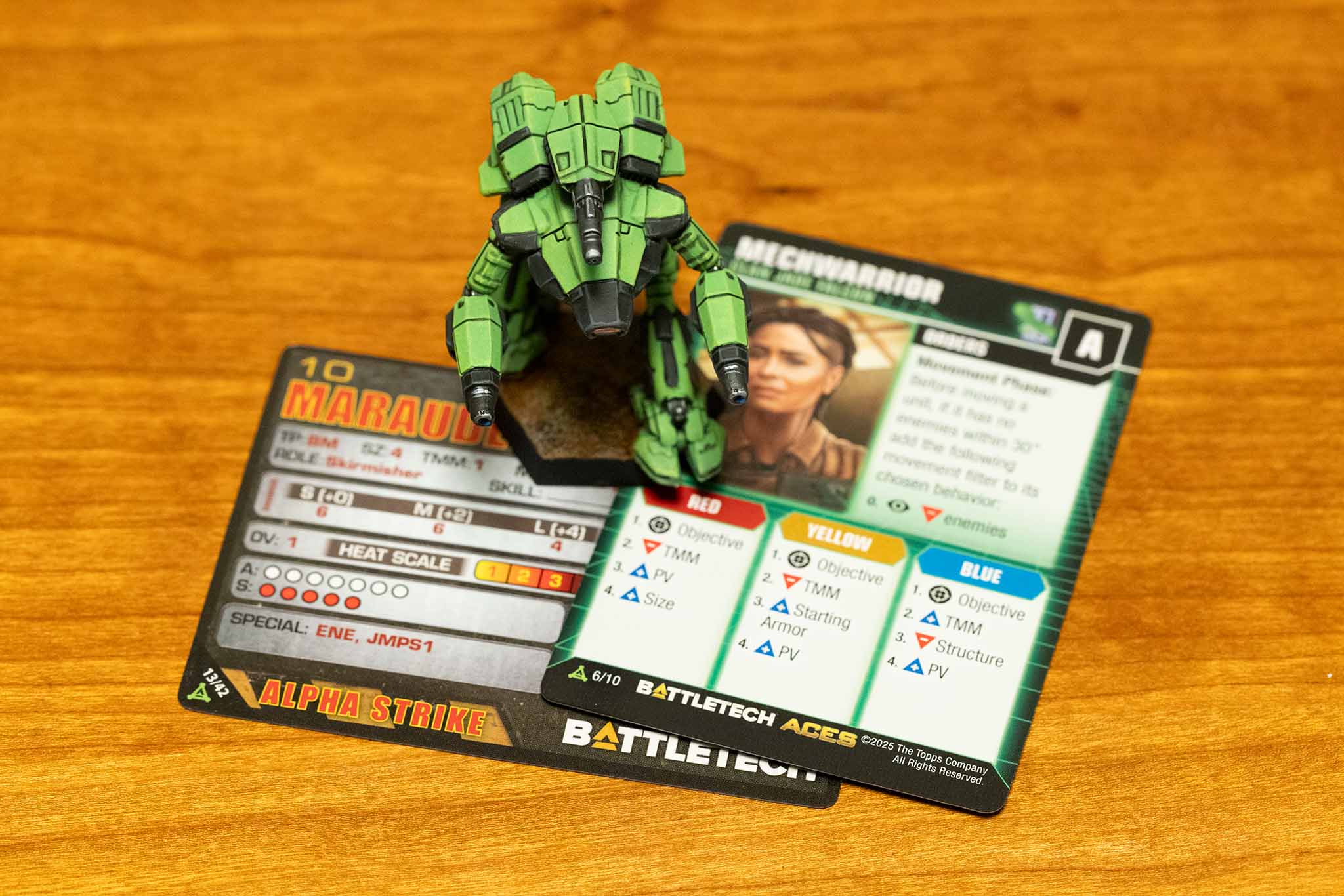
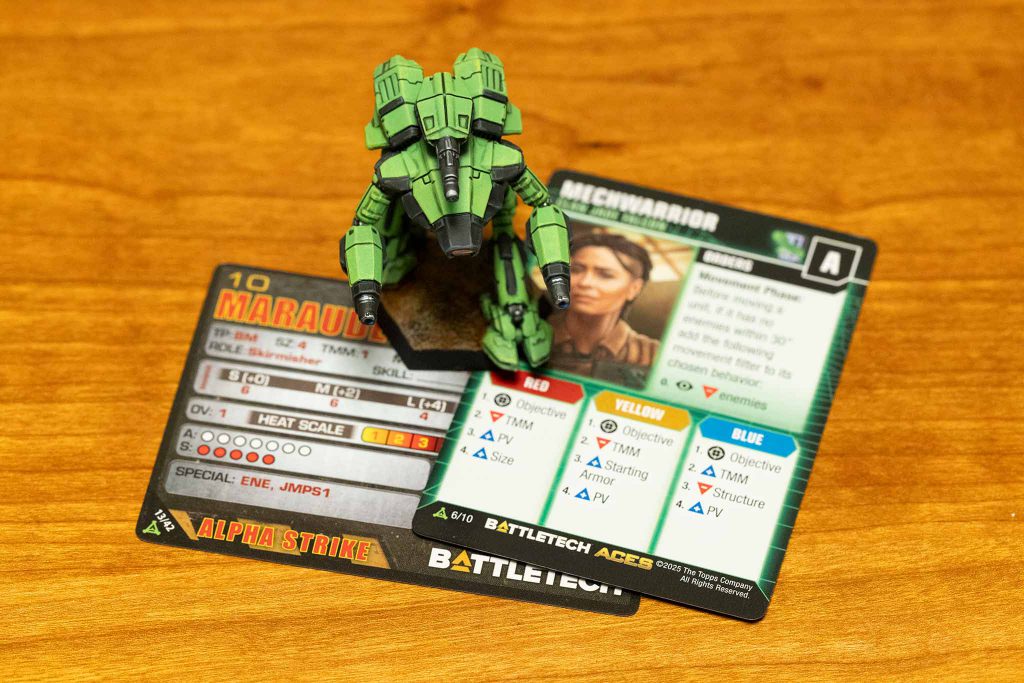 Valk: So, a bit of a selfish question given that I found out a week ago that one of the Star Commanders in this product is named after my roommate. There's a few recurring characters in the campaign, two of which we see "in the field" as command decks. Did the personalities of these characters influence how the command decks were designed at all or maybe vice versa?
RZ:
Valk: So, a bit of a selfish question given that I found out a week ago that one of the Star Commanders in this product is named after my roommate. There's a few recurring characters in the campaign, two of which we see "in the field" as command decks. Did the personalities of these characters influence how the command decks were designed at all or maybe vice versa?
RZ: (
Hi Maya!) Not really, honestly, the command decks, all that mechanical stuff, was out of my hands and above my pay grade. I got a rough idea from the Lynnvander guys, but most of the direction was, frankly, “they’re Jade Falcons, and kind of dicks” (but I repeat myself). So, yeah, for the most part I could just kind of lean into the Jade Falcon tropes a little, show their personalities as pretty aggressive, and call it a day. The nitty gritty details of that aggression and how it showed up in their command decks, that was all the Lynnvander dudes.
Valk: You sort of answered this one earlier when you mentioned that Lynnvander baked the cake and you just put the icing on, but was their plan to write the missions first, then fill in the story, vice versa, or some blend in between?
RZ: Totally missions then story. I already mentioned it, but Dylan Birtolo did all the heavy lifting here, laying out the framework, designing the flow of the narrative, the mission-to-mission stuff. I just took his notes and question marks and margin-scribbles and turned it into readable prose, in terms of mission briefings and waypoints and that sort of thing, and then I had a pretty free hand when it came to the separate little fiction pieces themselves. I was just inspired by the mission, or what I felt the vibe of that mission was – like with the stories where I’m describing the Clanners between fights, and showing the breakdown of their chain of command, showing their society fraying around the edges, showing their own disappointment and frustration growing – and kind of ran with it on my own, with those stories.
Valk: What about the ‘Mechs? Were the 'Mechs picked for the box separately from the narrative and scenario design, or was there a list of soon-to-be-produced 'Mechs that had to be pulled from for inclusion in the campaign and then written about? We’ve all seen the planned release schedule from KerenskyCon a couple of years ago, but obviously, no plan survives first contact with international shipping.
RZ: That’s between the Lynnvander guys and [Loren Coleman]; I really couldn’t tell ya who made that call, or exactly when. I know it was settled on and done by the time I came along to spread my frosting, though. Those decisions had already been made, and I just ran with what was already there. I’m sure Loren, Ray, Randall, all those guys, played a part in deciding what ‘Mechs went into which box, but I’m afraid I don’t know exactly who or exactly when.
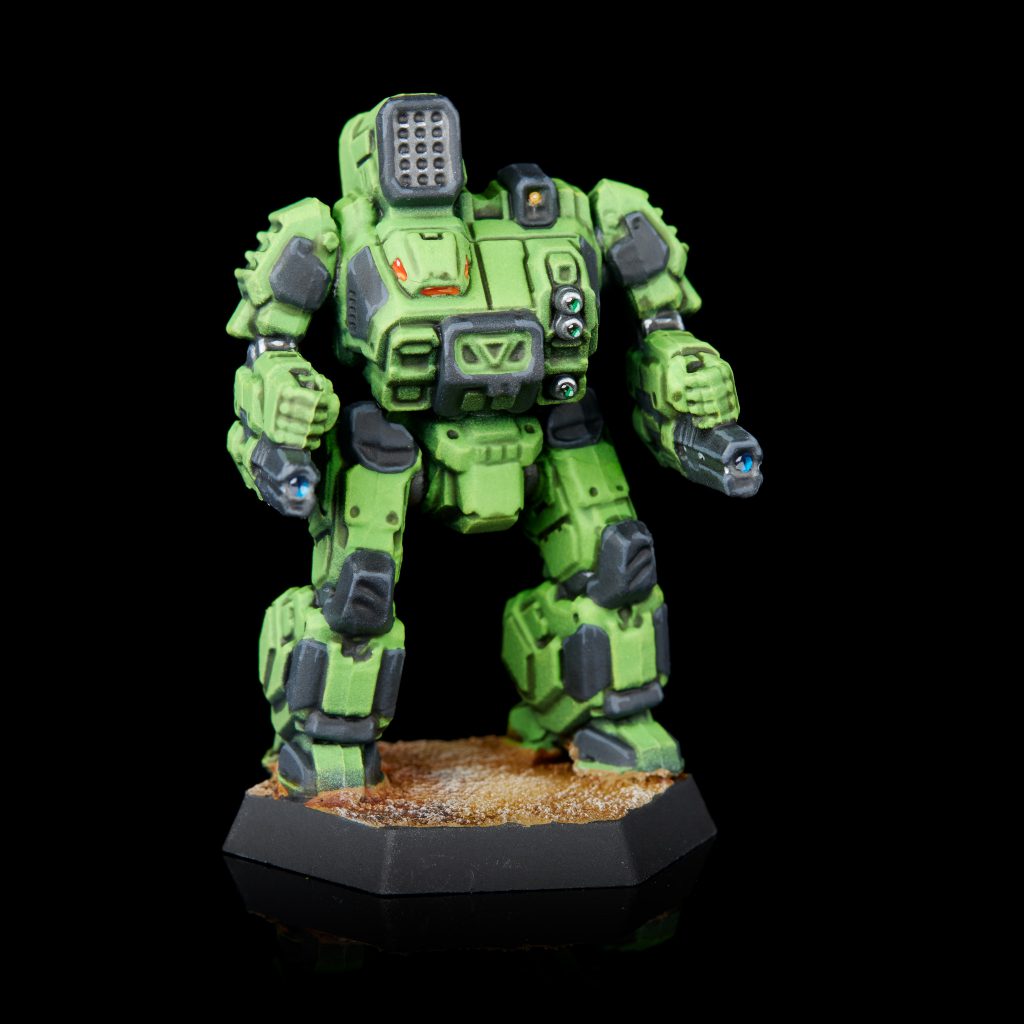 Jade Falcon Epsilon Galaxy Thunderbolt IIC. Credit: Jack Hunter
Valk: Okay, one last question before we go pass out watching the Cowboys choke, as is tradition. [Post-interview note: They did not, in fact, choke. It's a Thanksgiving miracle!] What lessons did you learn from working on Scouring Sands that you think may influence your approach to future Aces products?
RZ: Oh, a bunch, and they already influenced how we worked on Snowblind, for instance. Any time you do something the second time, you’re a little better at it, and working on an Aces box was no exception. Cooking a new recipe for the first time, you’re kind of fumbling around, relying on fundamentals and really vague idea of how the food should look, right? But cooking that recipe a second time, knowing how good it tasted and how it got there and what the end goal is, it goes more smoothly. Same thing, here. Even just having a finished – or mostly finished, there were edits or whatever – pdf to look at, just having a better idea of what the campaign book was meant to look like, how it read, how it was presented to players, all of that really changed the mindset going into Snowblind. Now, the narratives are very different between the two campaigns, there’s a more [redacted] going on over in the Dominion, and of course you have to [redacted] the [redacted] before you can choose the [redacted], but, yeah, all of us just had a better idea of what the goal line felt like after Scouring Sands was marked ‘done’ on our end, and that really helped us coordinate, communicate, and get things done a lot quicker and more smoothly, moving into the follow-up Aces boxes.
Valk:
Jade Falcon Epsilon Galaxy Thunderbolt IIC. Credit: Jack Hunter
Valk: Okay, one last question before we go pass out watching the Cowboys choke, as is tradition. [Post-interview note: They did not, in fact, choke. It's a Thanksgiving miracle!] What lessons did you learn from working on Scouring Sands that you think may influence your approach to future Aces products?
RZ: Oh, a bunch, and they already influenced how we worked on Snowblind, for instance. Any time you do something the second time, you’re a little better at it, and working on an Aces box was no exception. Cooking a new recipe for the first time, you’re kind of fumbling around, relying on fundamentals and really vague idea of how the food should look, right? But cooking that recipe a second time, knowing how good it tasted and how it got there and what the end goal is, it goes more smoothly. Same thing, here. Even just having a finished – or mostly finished, there were edits or whatever – pdf to look at, just having a better idea of what the campaign book was meant to look like, how it read, how it was presented to players, all of that really changed the mindset going into Snowblind. Now, the narratives are very different between the two campaigns, there’s a more [redacted] going on over in the Dominion, and of course you have to [redacted] the [redacted] before you can choose the [redacted], but, yeah, all of us just had a better idea of what the goal line felt like after Scouring Sands was marked ‘done’ on our end, and that really helped us coordinate, communicate, and get things done a lot quicker and more smoothly, moving into the follow-up Aces boxes.
Valk: Thanks again for taking the time out of your holiday festivities to answer my burning questions on
Aces. It's been a blast to play, and I can't wait to see where my mercs end up going next. I look forward to seeing what
Snowblind has in store!
Have any questions or feedback? Drop us a note in the comments below or email us at contact@goonhammer.com. Want articles like this linked in your inbox every Monday morning? Sign up for our newsletter. And don’t forget that you can support us on Patreon for backer rewards like early video content, Administratum access, an ad-free experience on our website and more.
Thank you for being a friend.
 This website uses cookies. Learn more.


 Infinity N5 First Principles: Understanding the Outcomes of Face to Face Rolls
 Tactical Feedback: Timing the Go-Turn
 SRM's Roundabout to Adepticon 2026: Curd Is the Word