 This website uses cookies. Learn more.
This website uses cookies. Learn more.
This website uses cookies. Learn more.
Warhammer 40k | Ruleshammer | Columns | Core Games
 I might have a bit of a reputation now for taking on the more ambiguous bits of Warhammer 40k rules but today I'm aiming for something different - I'm going to answer lots of little questions for which there are actual answers (at least I'm pretty sure these have concrete answers).
IGNORING WOUNDS Some models have rules that give them a chance to ignore wounds. If a model has more than one such rule, you can only use one of those rules each time the model loses a wound (including wounds lost due to mortal wounds).
IGNORING WOUNDS VS RULES THAT PREVENT MODELS FROM IGNORING WOUNDS Some models have a rule that says that they cannot lose more than a specified number of wounds in the same phase/turn/battle round, and that any wounds that would be lost after that point are not lost. When such a model is attacked by a weapon or model with a rule that says that enemy models cannot use rules to ignore the wounds it loses, that rule takes precedence over the previous rule, and if that attack inflicts any damage on that model, it loses a number of wounds equal to the Damage characteristic of that attack, even if it has already lost the specified number of wounds already this phase/turn/battle round.
...then subtract 1 from the hit roll when resolving an attack with a ranged weapon unless...
...then each time an attack is made with that weapon against that target this phase, worsen the Ballistic Skill characteristic of that attack by 1 and add 1 to any armour saving throws made against that attack.
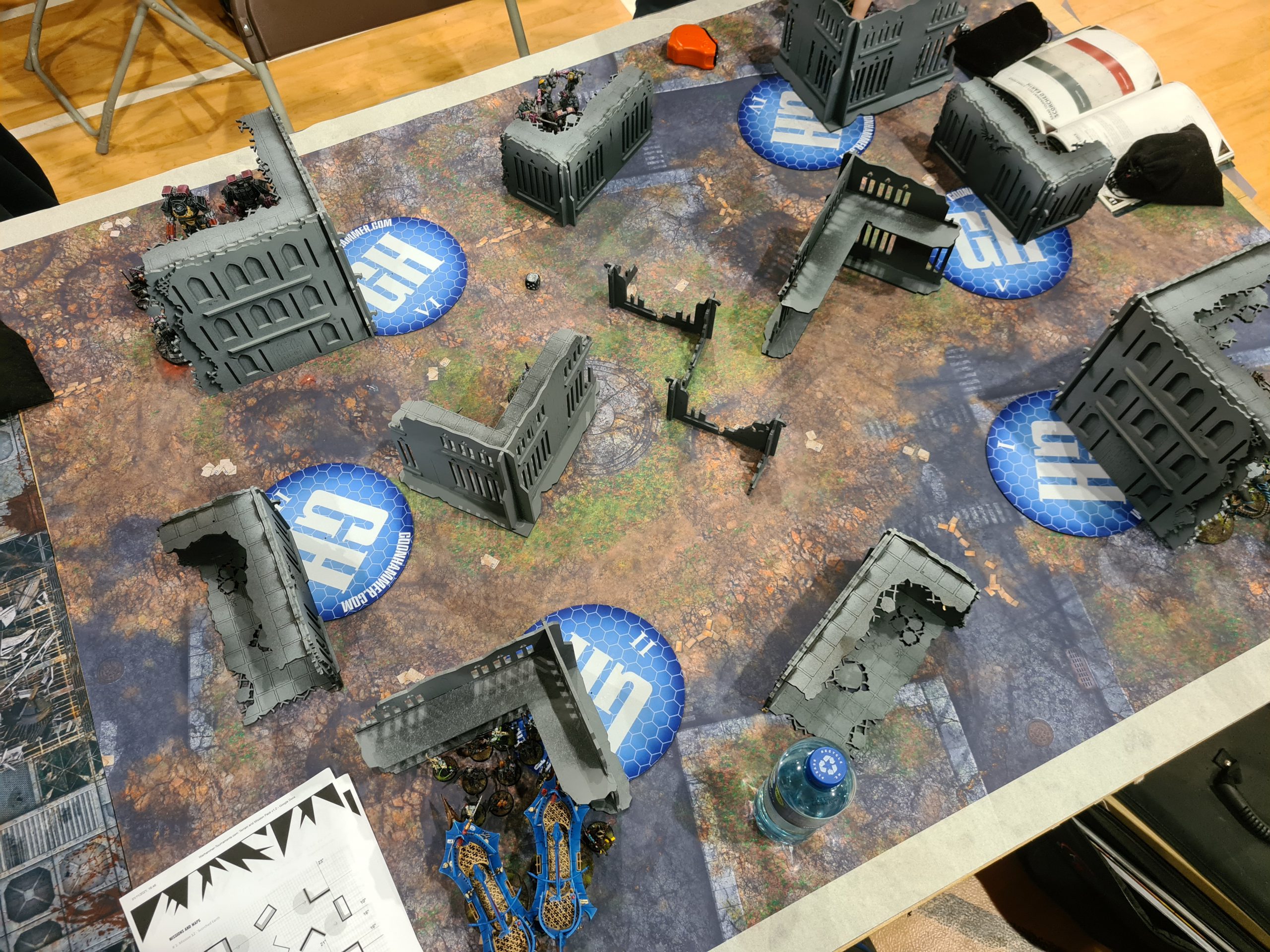
Unless otherwise noted, a player controls an objective marker while they have more models within range of it than their opponent does. A model can only be counted towards controlling one objective marker per turn – if one of your models could be counted towards controlling more than one objective marker, you must select which one they are counted towards that turn. AIRCRAFT units and units with the Fortifications Battlefield Role can never control objective markers – exclude these units when determining which player controls an objective marker.
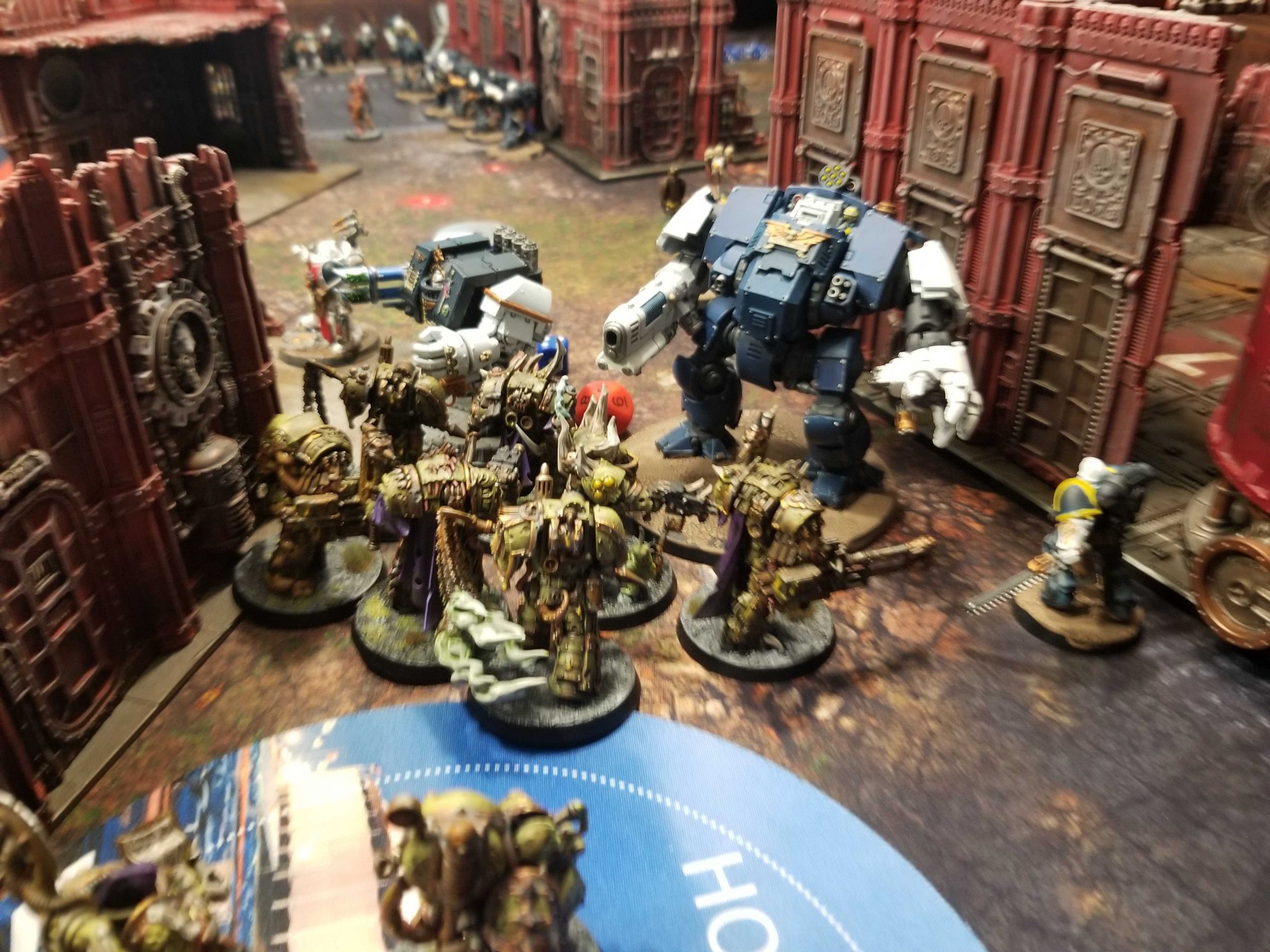
INDOMITABLE GUARDIANS Use this Stratagem in the Fight phase, after an enemy unit has fought. Select one ADEPTUS CUSTODES unit from your army that is in range of an objective marker and is eligible to fight: that unit fights next.
COUNTER-OFFENSIVE Use this Stratagem after an enemy unit has fought in this turn. Select one of your own eligible units and fight with it next.
COMMAND RE-ROLL Use this Stratagem after you have made a hit roll, a wound roll, a damage roll, a saving throw, an Advance roll, a charge roll, a Psychic test, a Deny the Witch test or you have rolled the dice to determine the number of attacks made by a weapon. Re-roll that roll, test or saving throw.
Damage roll: When determining a random Damage characteristic, the dice roll is called a damage roll.
Witch-warrior: Each time this model manifests Smite or a Witchfire psychic power that inflicts mortal wounds on a dice roll (e.g. D3, or rolling one D6 for each model in the unit). you can re-roll one of the dice to determine the number of mortal wounds inflicted.
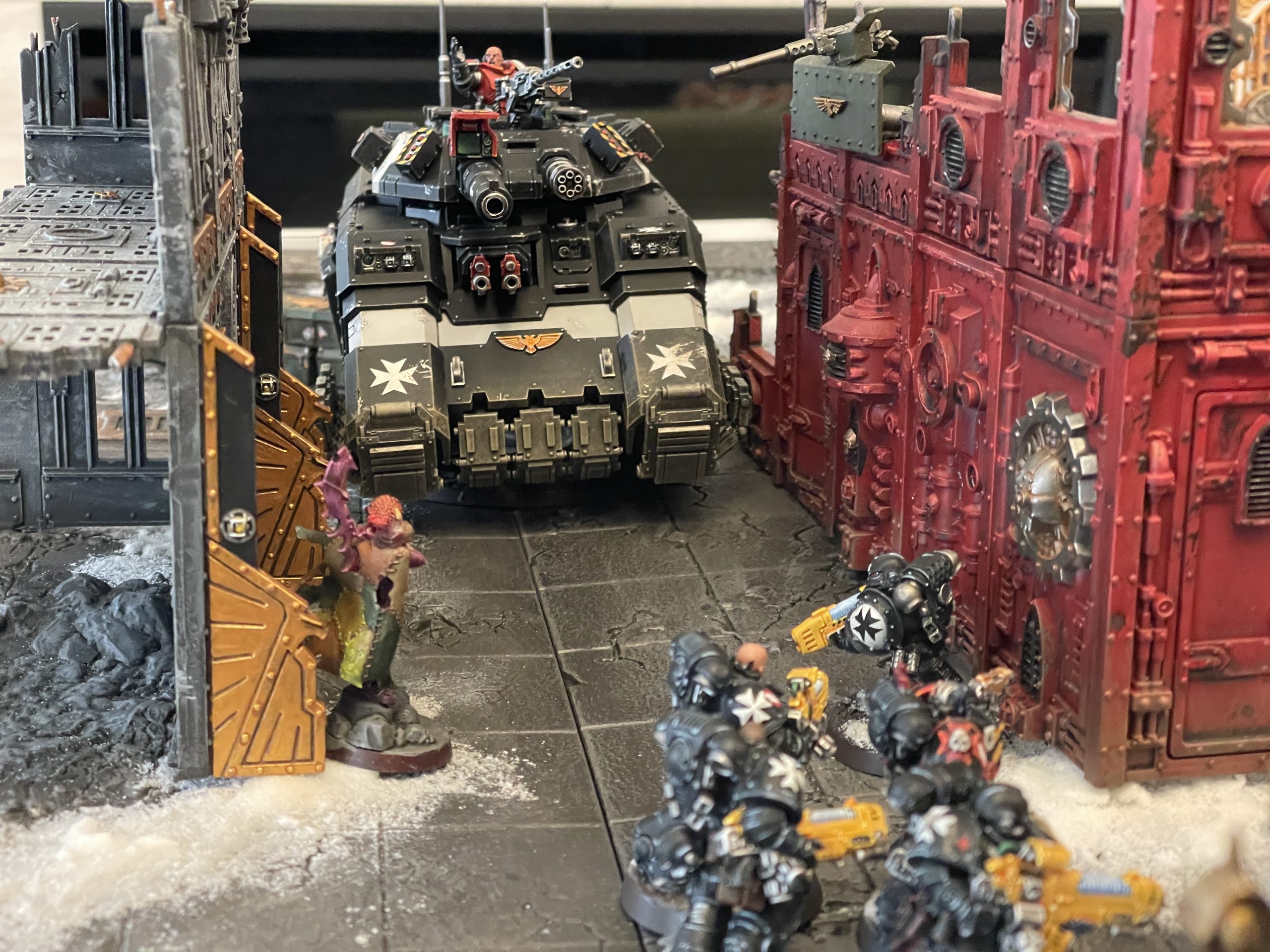 Black Templars Heavy Support. Credit: SRM
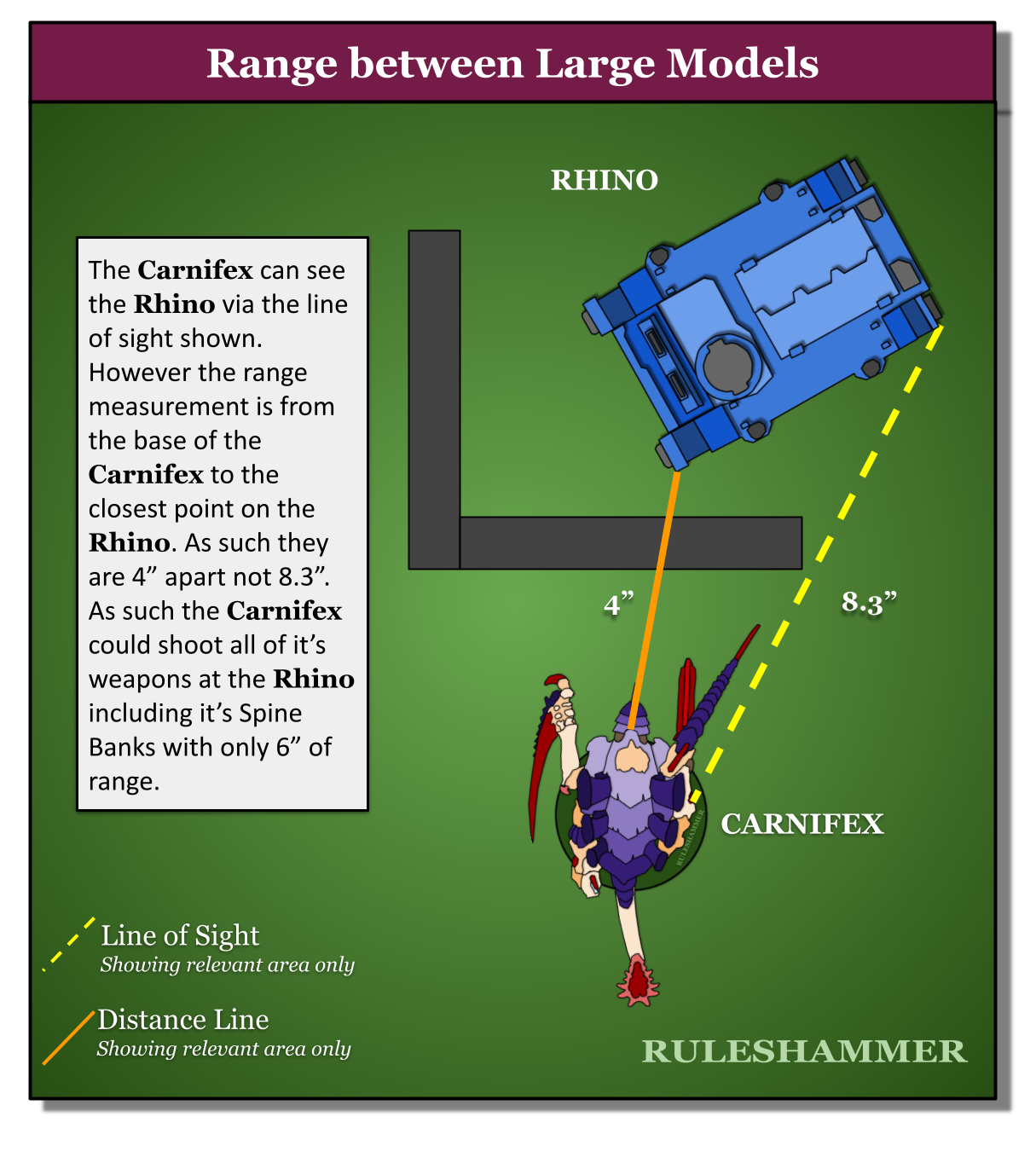
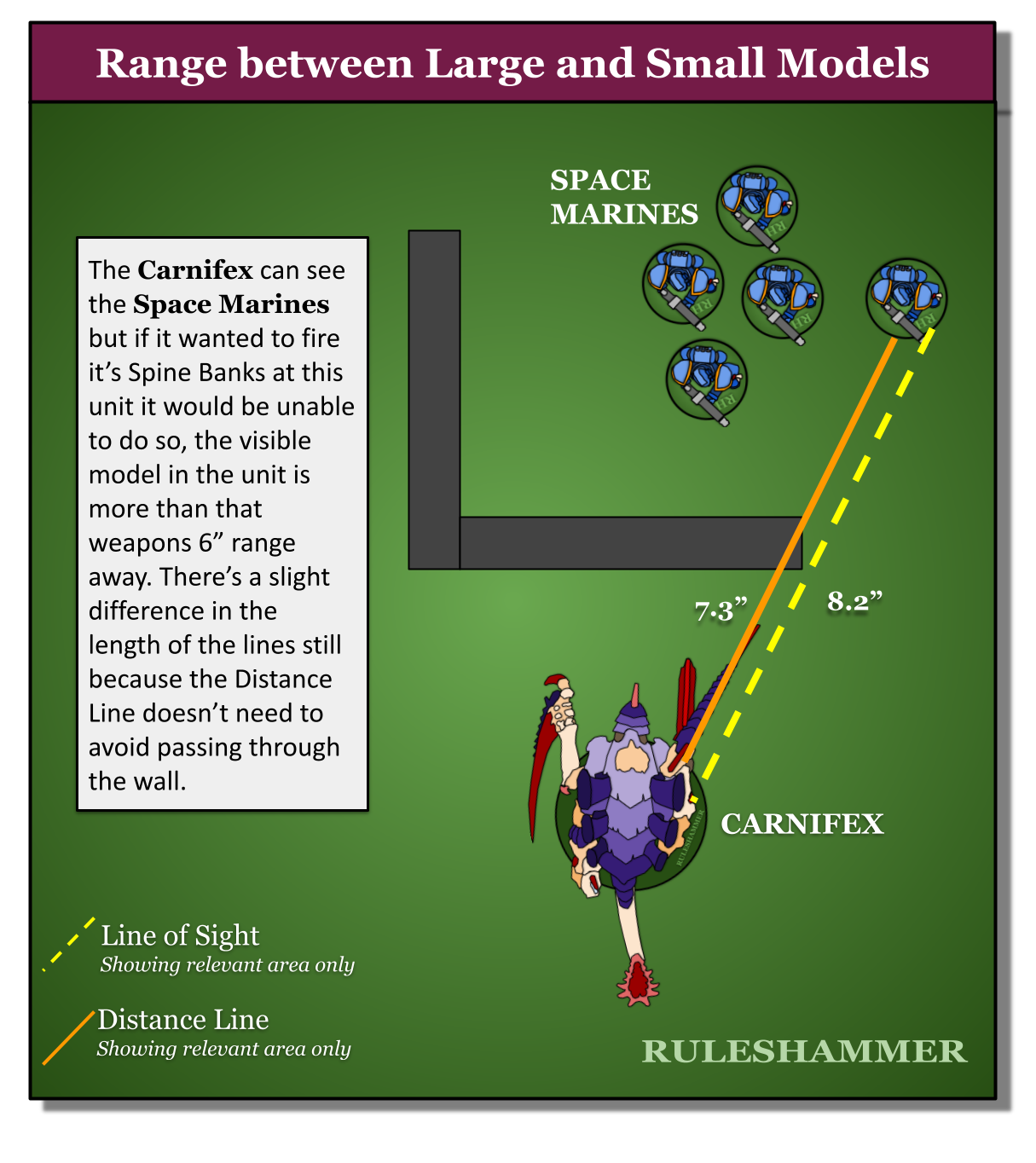
MEASURING DISTANCES Distances are measured in inches (") between the closest points of the bases of the models you’re measuring to and from. If a model does not have a base, such as is the case with many vehicles, measure to the closest point of any part of that model; this is called measuring to the model’s hull. You can measure distances whenever you wish.
Only enemy units can be chosen as the target for an attack. In order to target an enemy unit, at least one model in that unit must be within range (i.e. within the distance of the Range characteristic) of the weapon being used and be visible to the shooting model.
REPOSITIONED AND REPLACEMENT UNITS Some rules enable units to teleport or else be repositioned and set back up on the battlefield. Other rules enable units to removed from the battlefield and be replaced by a new, full-strength unit, which is then set up on the battlefield. If a rule causes a unit to be removed from the battlefield and subsequently set back up, the following rules apply to it:
1) Rules that are triggered by or apply to units that are ‘set up on the battlefield as Reinforcements’ are also triggered by and apply to that unit when it is set up on the battlefield. 2) Models in units that arrived as Reinforcements count as having moved a distance in inches equal to their Move characteristic this Movement phase. If the unit has a minimum Move characteristic, it counts as having moved its maximum Move characteristic. 3) The unit cannot make a Normal Move, Advance, Fall Back or Remain Stationary that turn for any reason. 4) If that unit was within Engagement Range of an enemy unit when it was removed from the battlefield, it does not count as having Fallen Back when it is set back up on the battlefield. 5) If that unit Advanced this battle round, it still counts as having Advanced after it has been set back up on the battlefield. 6) Any destroyed models in that unit when it is removed are still destroyed when their unit is set back up on the battlefield. If they were destroyed this turn, they still count towards any Morale tests taken this turn. 7) Any models in that unit that have lost any wounds do not regain those wounds when they are removed, and will still have lost them when their unit is set back up on the battlefield. 8) Any rules that unit was being affected by when it was removed, and which would continue to affect it for a specific duration (from abilities, Stratagems, psychic powers, etc.) continue to affect that unit until such a point as they would normally have no longer applied. For example, a unit that was within range of an aura ability when it was removed would no longer be affected by that ability if it was set up outside of that aura’s range, whereas a unit that was being affected by a psychic power that lasted until the end of that turn would still be affected by it until the end of that turn. 9) If that unit was performing an action, that action immediately fails. 10) Such rules can, if they occur in the Movement phase, be used on units that arrived as Reinforcements this phase and/or on units that have already been selected to move this phase.
Note that points 5-8 do not apply to any unit that has been set up because it is replacing a destroyed unit (including units set up via a rule that instructs you to remove a unit then set it back up at its full starting strength). These rules represent new units joining the fight, rather than the existing units being repositioned on the battlefield.
Tags: 40k | Warhammer 40k | FAQ | featured | Ruleshammer | 9th edition

Thank you for being a friend.
 Infinity N5 First Principles: Understanding the Outcomes of Face to Face Rolls
 Tactical Feedback: Timing the Go-Turn
 SRM's Roundabout to Adepticon 2026: Curd Is the Word
Support us on Patreon to get access to our Discord and exclusive App features.
Thank you for being a friend.
Already a Patron? Login with Patreon.
Visit our incredibly official store on RedBubble.

Support us on Patreon to get access to our Discord and exclusive App features.
Thank you for being a friend.