"Good evening!
"For the past couple of months I've been working to build some casual content over on Bluesky for fans of the Black Library (mainly the 40K side) under the TheBlackLibrarian.bsky.social, primarily short book reviews.
"I've had an idea for a longform series I'm interested in developing and thought I'd see if Goonhammer might be interested in it. I love what the site offers, but I'd also love to see more Black Library-focused content there as well."
So began my cold pitch to Goonhammer, sent on 17 December, 2024. Spoiler! Turns out they were
definitely interested in it, and on 31 January my first piece for the site debuted.
In the Beginning: The Origins of the Black Library was the kickoff article to the series that would eventually come to be known as the
40K History of the Black Library, and with my foot in the door it was onwards and upwards from there.
By the end of the year, I had surpassed 100 articles for the site- a milestone I am tremendously proud of.
Today I hope you'll join me on a fun retrospective of the year's accomplishments as I reflect on what we've achieved together in the past twelve months- and what we're looking forward to in Black Library coverage for the year ahead.
Oh, and I'll also be announcing my personal Books of the Year for 40K and Age of Sigmar! Let's go!
Accomplishment: 13 Installments of the 40K History of the Black Library
This was the feature that got my foot in the door, the one I pitched to the Goon Top Brass (GTB) to get them to bring me aboard. I’ve been an amateur historian all my life- indeed, that was my major in college all those decades ago- so the idea of writing a chronicle of the evolution of the Black Library from origin to ending was a compelling vision.
What I didn’t
quite realize is just how much research goes into each one, which helps explain why their release schedule is so sporadic. Still, getting a baker's dozen of these in the past year has been a tremendous accomplishment, and by our readership metrics they remain one of my most successful series.
We're working on getting a landing page and index together to really make this a researcher's paradise. Until then, here's the current run:
- Part One: The Beginning. 1990. Inquisitor and Deathwing.
- Part Two: A short pause. 1993. Space Marine.
- Part Three: 1994-95. Harlequin and Chaos Child.
- Part Four: 1997. Dawn of the Black Library and Inferno!
- Part Five: 1997. The first year of Inferno!
- Part Six: 1998. Gaunt’s Ghosts and Last Chancers debut.
- Part Seven: 1998. Warhammer Monthly’s first ten issues.
- Part Eight: 1999. The books are back!
- Part Nine: The books of the year 2000.
- Part Ten: The short stories and comics of 2000.
- Part Eleven: Winter and Spring 2001. Eisenhorn appears.
- Part Twelve: Summer and Autumn 2001. Ongoing series continue apace.
- Part Thirteen: Winter and Spring 2002. The Black Library begins a period of growth.
2026 Goal: Release one per month- and tie it in a little more closely with the
Black Library Readers' Hall of Fame regular feature.
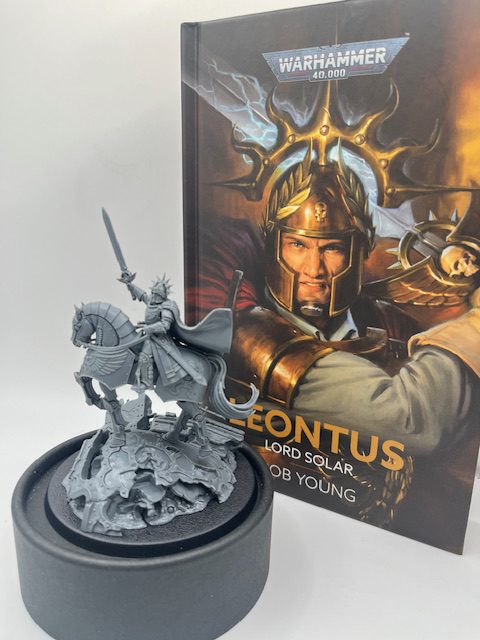 Image credit: Jay Kirkman
Reflection: From Collection to Library to Museum
What a difference a year makes! My collection at the start of the year was a single shelf of books, and now it comprises every bookshelf and glass-fronted display cabinet in my office.
The first evolution came when I started to 'pair' Warhammer miniatures with their books. Never skilled enough with building or painting to be able to craft the dioramas I'd yearned to assemble in my mind's eye
1, I found the next-best thing was celebrating their appearances in the Black Library. It was an easy jump from that into displaying the models in the bookcases themselves, though even that soon started to get a bit overcrowded as I settled into a #HobbyStreak that lasted the better part of the year.
Read, read, read, build, build, build. It was a lot of fun, but the aesthetics still didn't quite capture what I was looking for. That's when it occurred to me, rather than make the Library the display focus, why not go all in on a Museum? Make the books a part of the display, rather than the other way around!
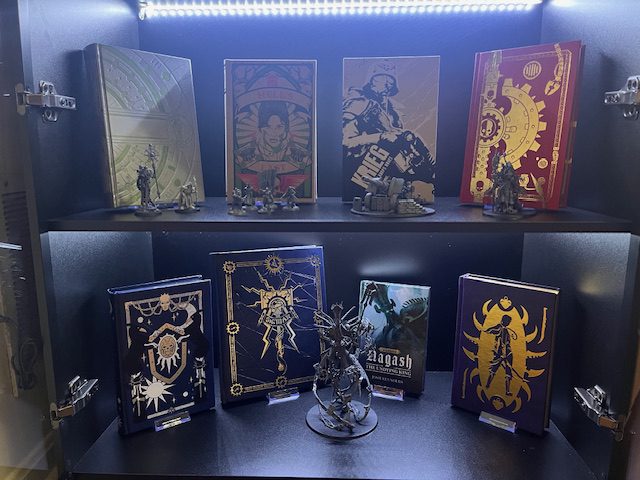 Image credit: Jay Kirkman
I bought a light-up display cabinet, with the above being a very early "proof of concept." This made the book-miniature pairings
pop. Orikan and Trazyn bickering in front of
Rob Rath's The Infinite and the Divine (Special Edition). Minka Lesk and the gang standing guard, while Belisarius Cawl dazzles in front of the stunning red his own recent deluxe treatment.
I've never looked back. Indeed, finding out there were others who put as much into their book displays laid the foundation for my
Black Library Bibliophiles series, where I highlight part of my library as well as some of those of our readers, and talk about the hobby of collecting and displaying higher-end Black Library books. It's a niche audience, but it's
my niche audience, my tribe. I love writing them, and hope to do plenty more in the year ahead!
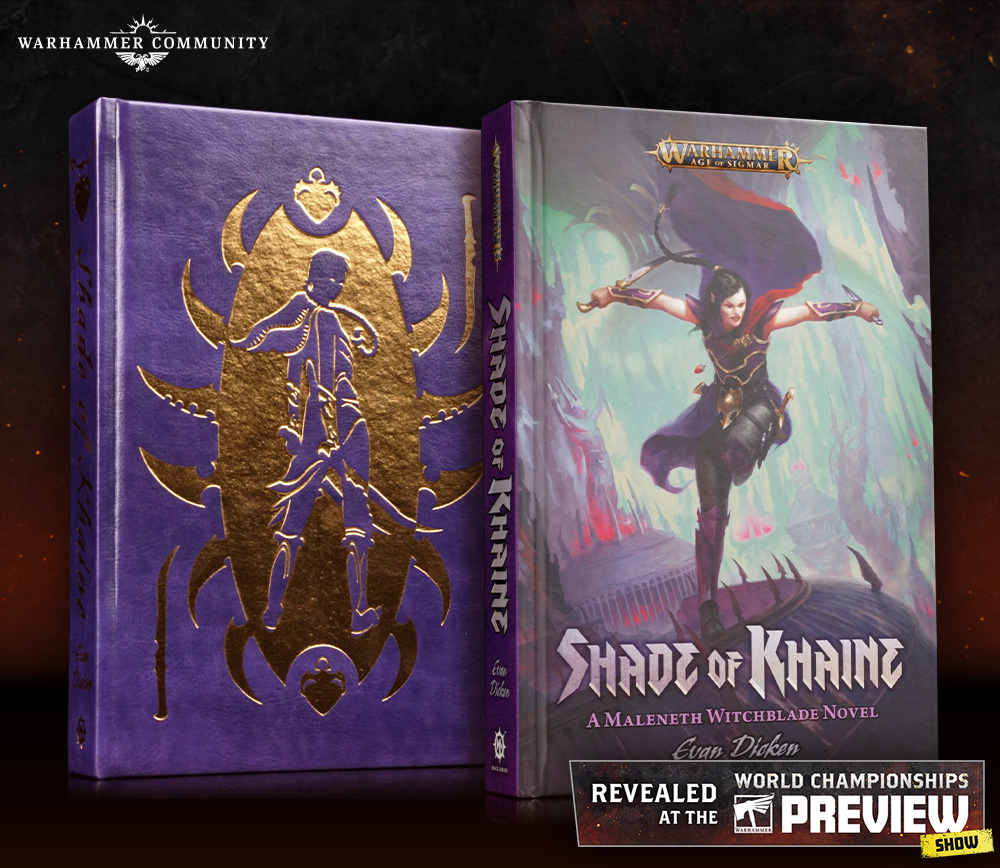 Image credit: Games Workshop
My Age of Sigmar Book of the Year (Honorable Mention)
I take no pride in noting that while Age of Sigmar launched in 2015, my first-ever AoS read was 2024's
Skaventide by
Gary Kloster. It was a very difficult read, entirely because I was clueless about the setting. I wasn't even a Warhammer Fantasy Battles fan, just a lifelong D&D guy who figured he could jump into fantasy and "figure shit out." It definitely didn't work that way
2.
As a result, stories that did a great job explaining themselves charted higher in my book, while ones that rewarded a deeper understanding (that I didn't possess) suffered a bit, such as
Chris Thursten's Abraxia: Spear of the Everchosen.
Fair? Certainly not, but I doubt the average punter grabbing a book off the shelf at their Warhammer store is spending a lot of time on that consideration either. Either they enjoy a book (for any number of reasons), or they don't (for any other number of reasons), and they move on to the next.
Dicken's Shade of Khaine wasn't the first AoS book I reviewed for Goonhammer- that honor goes to
Ushoran, Mortarch of Delusion by
Dale Lucas- but it
was the first book where I started to focus on accessibility as a consideration. I'd come to realize that no one reviewer can perfectly review a book; after all, a reviewer who knows little about a setting may have a very different experience than a veteran. I didn't need to appeal to every reader- I just needed to know what lane I was in and convey that effectively.
That was a game-changer.
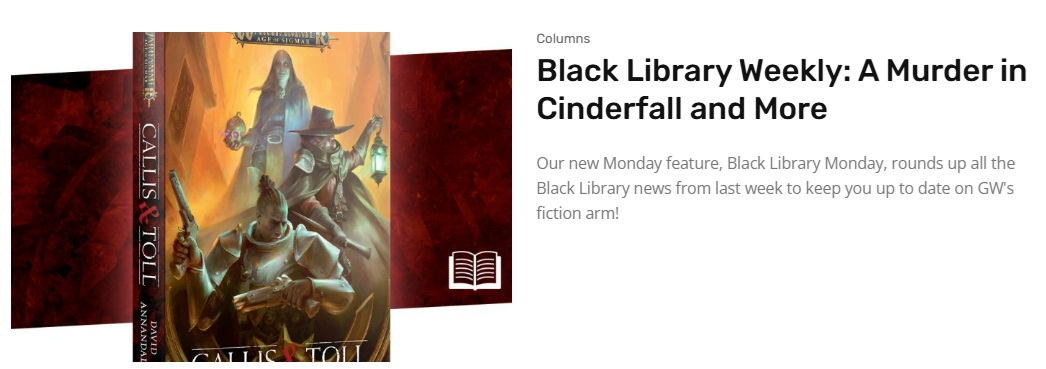 The series debut, 03 March
Accomplishment: 44 Installments of Black Library Weekly
I didn’t have a ton of material published by the time March rolled around, but clearly the Goon Top Brass and I had a similar vision for how we wanted things to grow on the site. When I pitched starting up a weekly column for all things Black Library, the green light was immediate.
The first edition of Black Library Weekly was fairly basic when compared to what it’s grown into.
David Annandale’s Callis & Toll was the cover star, arriving in paperback around a year after its initial release. A “New Content” section would become ICYMI, a roundup of Black Library content around the web. “New & Newsworthy” was the predecessor to “Quick Hits,” which focuses on recent developments with the Black Library writers past and present.
From there it was off to the races, never missing a week and finishing the year with 44 columns. It’s now become one of my favorite things to write, because it helps me keep my fingers on the pulse of both writer and reader communities, and I never know what I’ll have to cover until the Sunday Preview drops.
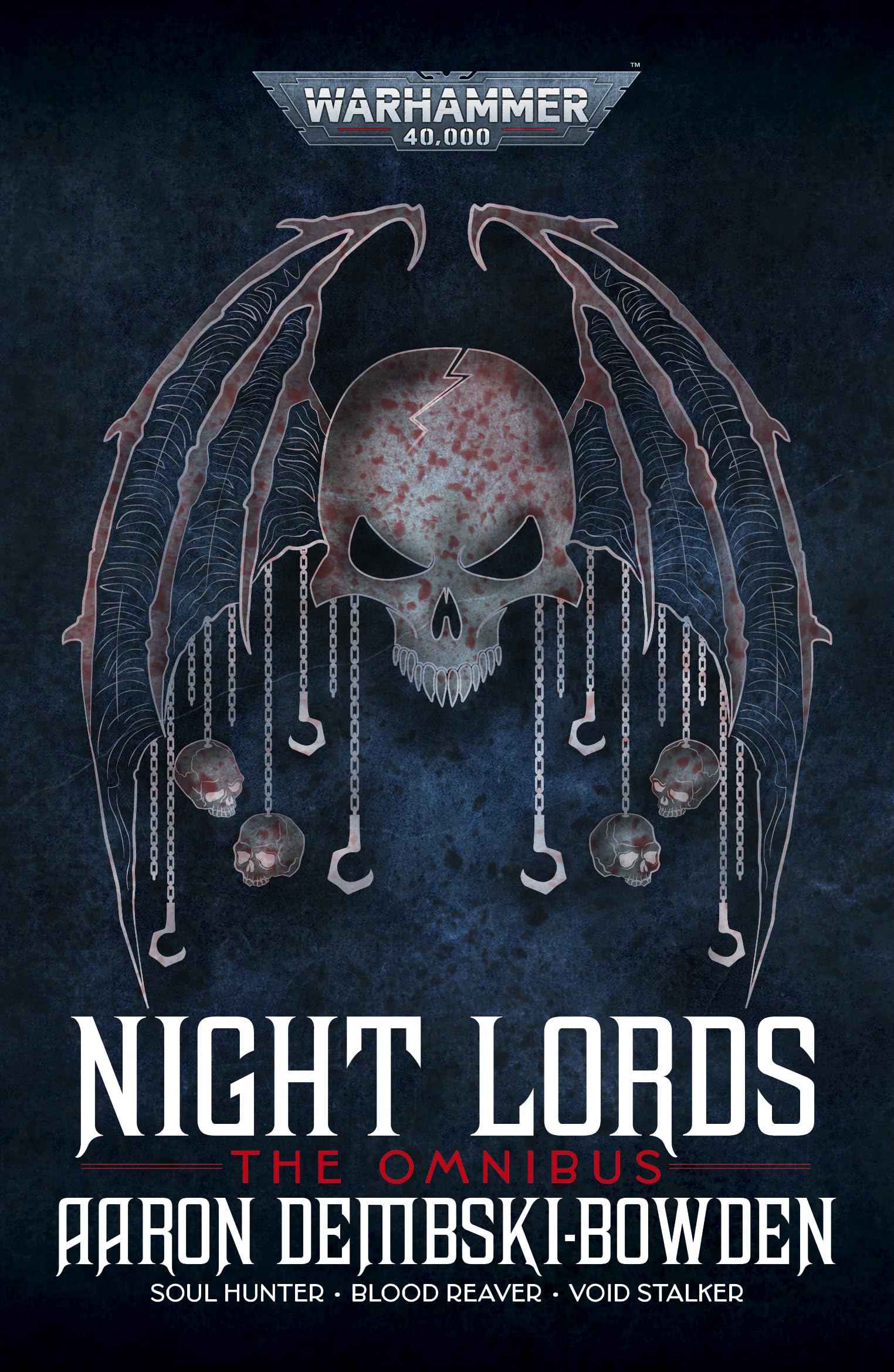 Image credit: Games Workshop
Reflection: It All Started with the Night Lords (Mostly)
First, a trigger warning: cancer. If you'd like to keep things light, you won't hurt my feelings if you skip to the next section. I mean, it's not like I'll ever know, right?
But everything I've written here, all of it comes down to our family's cancer struggle, and it's been one hell of a ride. Still is.
So, we'll start with a fun fact. The first ever Aussie Rules football team in America got its start right here in Louisville. The founding was before my time, but around fifteen years ago I came out for a few seasons and learned the kinds of things a man approaching middle age does when he puts himself to the test.
One of my teammates, learning I enjoyed reading science fiction and fantasy, said, "oh, wait 'til you read some Warhammer." He let me borrow three omnibus books, and so my gateway drug to this incredible universe was a combination of Eisenhorn, Ciaphas Cain, and Gaunt's Ghosts. Here and there I read the occasional book (I distinctly remember
Graham McNeill's Storm of Iron leaving quite an impression), but I didn't consider myself a hardcore fan. They were just books I occasionally enjoyed reading, mixed in with all the other books I enjoyed reading.
Everything changed in 2024. We'd moved an hour up the road to Louisville only that May, to a house (almost) finally big enough for our five young kids after my wife landed her dream job at a Louisville hospital. Three miles away was a Warhammer store, a lucky happenstance as I enjoyed the occasional read and one of my sons had just started getting into the miniatures.
On the day we closed on the house, we learned my wife's job was going away. Talk about a roller coaster of emotion! It was a tough break, but a survivable one.
Then that August she received the cancer diagnosis. It came out of nowhere. Because my wife never does anything halfway,
of course it had to be a rare and aggressive one. Inflammatory Breast Cancer.
I don't remember the first Black Library book I picked up at the neighborhood store (it was either
Chris Wraight's Bloodlines, or
Krieg by
Steve Lyons). What I do remember is, as the reality of our new battle continued to reveal itself in terrifying conversation after conversation with her oncologist and support staff, as we began the first round of her (many) chemotherapy sessions, those days spent with her hooked up to the IV became a quiet place together for us to read, talk, laugh, and console.
 Image credit: Jimi Kirkman
And then one day I brought the
Night Lords Omnibus, by
Aaron Dembski-Bowden. The Night Lords, gaggle of edgelords all, were easily my least favorite legion, but I'd heard amazing things and always enjoyed Chaos. And while I'll never know quite what it was, something about the sorrow of our real-life situation and the extraordinary characters Dembski-Bowden had brought to life made the book something I couldn't wait to pick up every chance I had.
Including... especially... my wife's chemo appointments.
There have been three books that in my five decades have changed my life from their reading.
Siddhartha, by
Herman Hesse.
Frank Herbert's Dune. And
The Illuminatus! Trilogy by
R. A. Wilson. The Night Lords trilogy may not have altered my thinking the way these three did, but in terms of impact on my life's trajectory it's more than earned its place.
Those 944 pages sparked a hyperfixation that saw me read nothing but Warhammer for the next year... saw me actually overcome my lifelong antipathy towards modeling and start actually building plastic army men... writing
my first piece of Warhammer fiction and earning Editor's Choice at Cold Open Stories... and ended up with me writing a "2025 Year in Review" piece for an amazing place like Goonhammer.
It has been my refuge, a rock of stability amidst the rollercoaster ride of good news and bad, from getting accepted for a clinical trial at the renowned Mayo Clinic to seeing it metastasize into her lungs and become Stage IV. In these pages I get to unplug from it all and lose myself in the 41st Millennium or wherever they may take me.
For a little while, anyway. Because cancer is a relentless enemy. It never stops, never takes a day off. It keeps coming unless you can fight it off. That makes every day a blessing.
God has given each of us one life here in these occasionally grim and dark, but always very mortal realms of ours. You don't get to choose how it ends, you only get to choose how you spend it.
Spend it well.
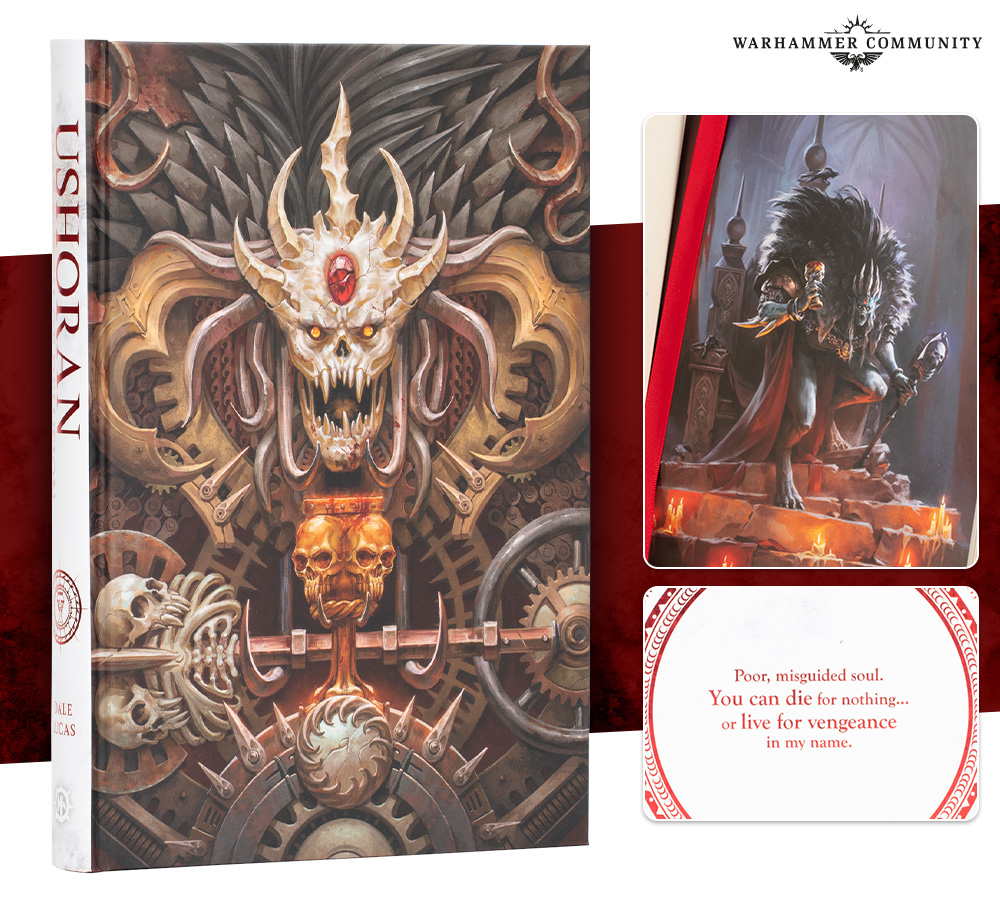 Image credit: Games Workshop
My Age of Sigmar Book of the Year (Runner-Up)
Ushoran, Mortarch of Delusion by Dale Lucas was not a book I expected to enjoy anywhere near as much as I did (my review is
here). As I mentioned before I'd only recently begun sticking my toe in the AoS setting- I wasn't even sure what a 'Mortarch' was, let alone the Flesh-Eater Courts (I have much love for
my friend Diana of Syracuse for her thorough onboarding here, it really helped bring this book alive).
But in addition to being a hell of a story, the thing that really stood out to me here was the author's Afterword. I hadn't entirely linked being an effective reviewer to getting the additional author's insight we frequently see in Limited and Special Editions, but this was the book that locked that connection in.
Lucas didn't just talk about how much he liked the character or that he was excited at the opportunity. Rather, he popped the hood on the narrative construction he'd crafted and invited the reader in to see how it all worked:
"Human beings are empathetic creatures. We're wired to identify with and emotionall invest in people- real or imagined- when we see them struggle, strive, or contend with forces beyond their control. How, then, could I encourage emotional investment in a being like Ushoran, who has unimaginable power...
"I realized the answer lay in not making Ushaoran the direct subject of the story. Like the sun itself, he is simply too massive, too unweildly; unfathomable. Instead, I reasoned, the reader and I might best examine the Mortarch of Delusion indirectly by contrasting his world view, his desires, his motives and his methods with a more human- and more relatable- figure.
"That game plan - to examine one character by contrasting them with another- seemed ideal. Little did I know how difficult threading that needle would prove."
This not only allowed me to assess the book on its merits as a story, but to also examine in my review the degree to which I felt he'd succeeded at his own ambition. After this, getting a deluxe edition with an author's introduction or afterword wasn't just a nice-to-have, it was a need-to-have.
Accomplishment: 32 Book Reviews
Before I joined the Goonhammer team in January, for a few months I’d been starting to write mini-reviews on social media (first Twitter/X, then Bluesky). Given the microblogging format these were just a few quick hits about what I liked and didn’t, and by that time the bulk of my reading material was already Warhammer.
Thus when I came aboard, reviews were also something I was keen to offer. My first one was at the end of February for
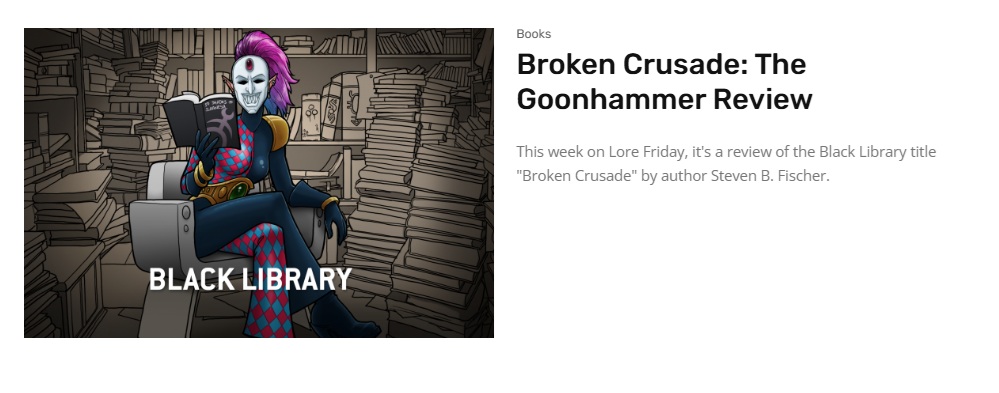
Steven B. Fischer’s Broken Crusade. ("Sometimes things happen for a reason," it began. "Other times, they just happen, and often it can be hard to tell which one it is.")
Here again I got pretty free reign from the Top Brass. Historically we’d offered some book reviews, but they were as keen to expand that kind of content as I was to provide it. I read thirty books for the Black Library, and two for the “Beyond the Black Library” occasional series (where I look at non-BL books from BL authors).
Having become the Coordinator for the segment at the end of this year, my target for 2026 is 50 reviews. Reviews are awfully subjective things, but well-written ones can help readers make sense of the rapidly-moving landscape of new releases. Over the course of this year we’ve pushed the focus into contemporary reading, with the lofty ambition of giving every new release its own review. We haven’t missed many (
Phil Kelly, I’m so sorry
3), but next year we’ll miss even less.
 Image credit: Games Workshop
Reflection: Learning to Love Age of Sigmar
While we're still in the AoS half of today's feature, I'd be remiss if I didn't talk about my evolving love not only of Age of Sigmar, but Warhammer's fantasy properties in general.
Age of Sigmar is confusing as hell to the outsider. There, I said it. The second-most-useful thing I ever did to begin to understand it was to grab an old Core Rulebook from
Half-Price Books for twenty bucks. That definitely helped. But the number one had nothing to do with anything Games Workshop did. Rather, it was a fella on
Reddit who remarked, quite simply, "the way to understand Age of Sigmar is that the Mortal Realms are basically Warhammer's Planescape
4."
Back to Evan Dicken again,
Blade of Khaine was the story that made me become curious about Gotrek Gurnisson. Dicken did a masterful job of letting just enough of the legendary slayer into the story without allowing him to overshadow Malaneth, and that led directly to me jumping into
Trollslayer.
The more I read of Warhammer's fantasy properties, the more I enjoy them. 40K might still be my bread and butter, but I think the sword-and-sorcery side is criminally underrated.
Case in point...
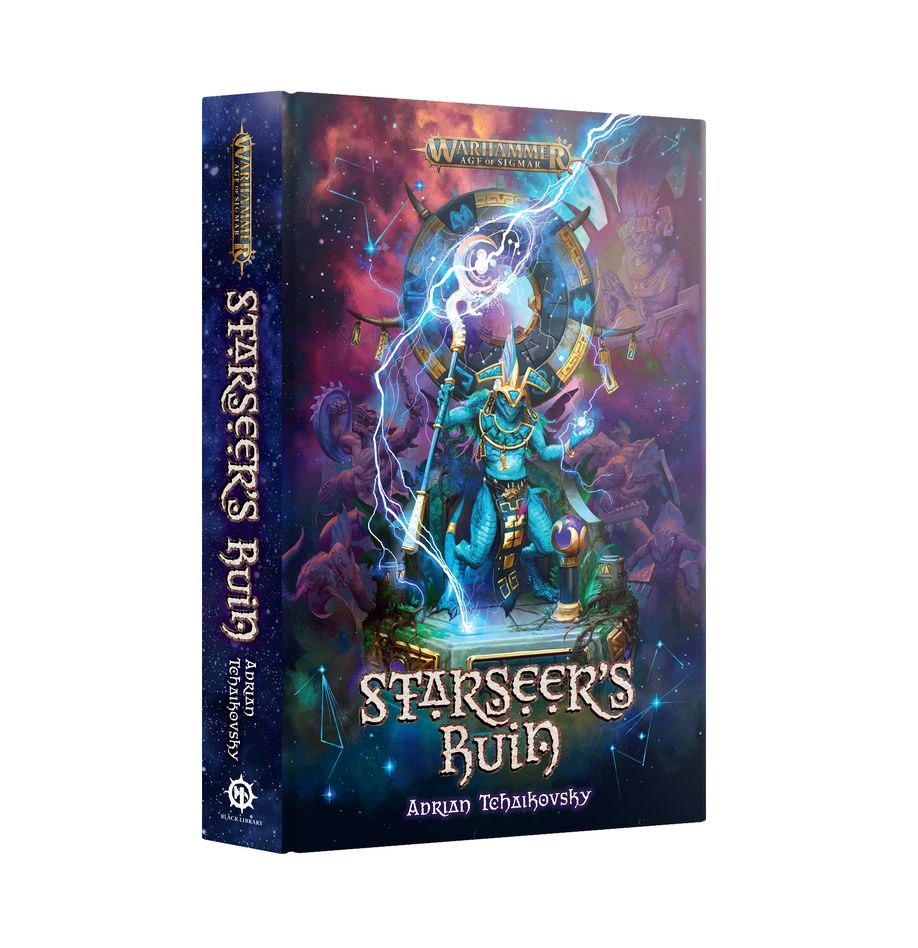
Image credit: Games Workshop
My Age of Sigmar Book of the Year
The Age of Sigmar setting gets short shrift in the Black Library Book of the Year voting, but that's not entirely surprising. It only gets about half the attention as 40K in terms of content and releases, and thus if it's strictly a numbers game it will always be the suffering sister. Not one book made the top 10
this year, nor did any
last year. One (
Soulslayer, by
Darius Hinks) did
place 8th in 2022, so... result?
Adrian Tchaikovsky is an incredible talent, and it's no slight on any other writer to say I feel we're blessed to have him in the hobby and writing for the Black Library. I still remember coping with a bout of the flu years ago by reading
Children of Time, and the pages just flew by. His knack for presenting the inhuman mind as something both similar and alien is unparalleled, and he brings his powers to bear here in a tale that blends Freeguilders, Seraphon, Stormcast Eternals... and Skaven.
I can't sum it up any better than I did here,
in my review:
"Starseer’s Ruin stands on its own and is a terrific gateway book to the amazing property. Combine that with Tchaikovsky’s incredible character work and the delight of seeing unlikely pairs come together to tackle adversity, then throw in a terrific villain in the darkly comedic mold of classic Skaven antagonists, and you’ve got an absolute gem of a book."
"Top ten" nothing, this was a top-
three Black Library book for 2025. Best of all, if you don't know anything about Age of Sigmar, this very accessible tale is a great way to learn.
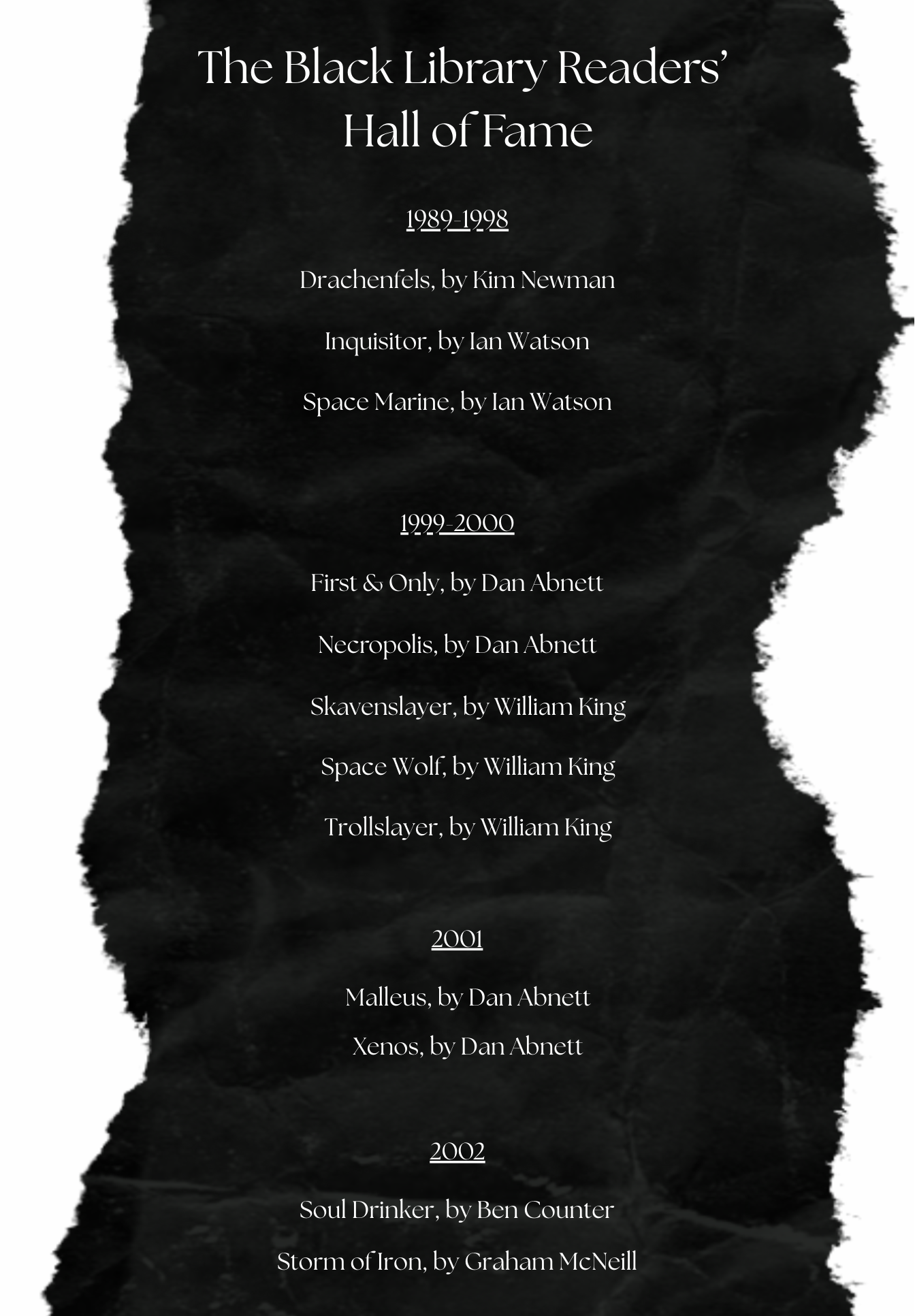
Accomplishment: Black Library Readers' Hall of Fame
This is the kind of thing that genuinely surprised me that it had never been done. Oh sure, a decade ago or so the Black Library gave it a putative push, but with a very different format (asking writers to reveal their choices for a book) and didn’t last all that long before the cord was quietly pulled. But as something for, by, and of the readers?
I’ve long been a believer in the idea that if you believe something should exist in the world and it doesn’t, then it’s on you to make it happen rather than bemoan its absence.
We’re X installments in and the response has been amazing. Lots of readers voting when a new slate of candidates goes up every other Saturday, great conversations in the usual gathering places, and lots of fun seeing what books are able to claw their way in to being the ‘best of the best.’
Here’s something else that genuinely surprised me- at our current rate of release, this article series will run for about two years before we catch up to the present day. I dunno about you, but two years’ worth of amazing dialogue around every novel or novella ever released in the Black Library sounds like a feature and not a bug!
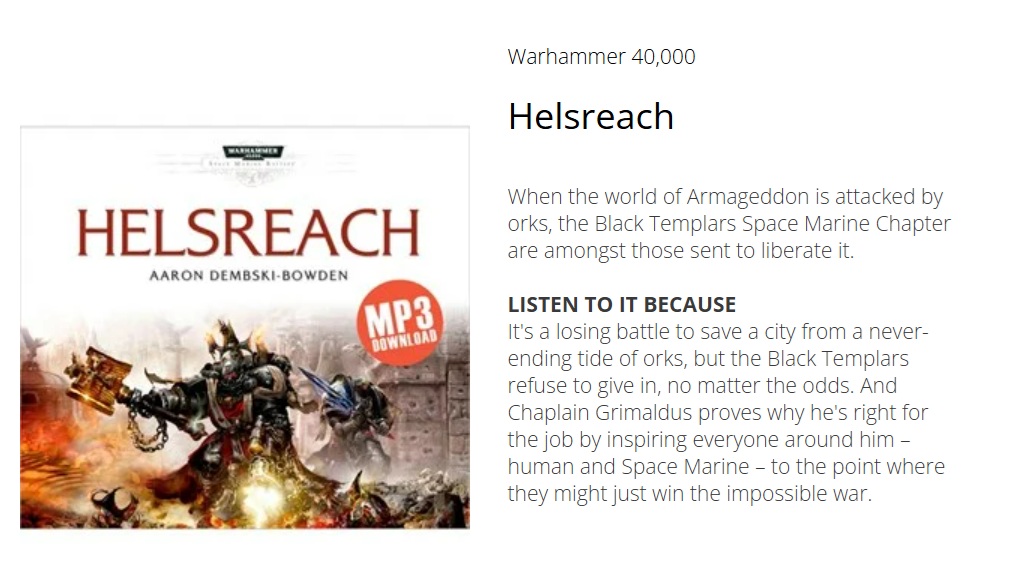 Image credit: Games Workshop
Reflection: Embracing the Aural
One of the internet's sillier arguments- at least as it pertains to Warhammer- is whether or not listening to an audiobook is the same as "reading" it. I'm certainly not going to wade into that here, but suffice it to say that while I leaned towards "Team Paper" I didn't see how it could possibly matter. If folks preferred to get their stories through their ears rather than their eyes, weren't they in the end the same stories? It seemed a distinction without much of a difference, even if I felt that the two experiences weren't entirely comparable.
At some point this past year, my disregard for audiobooks began to crumble. It wasn't that I hated the format- I love podcasts, after all (or at least I did back before the pandemic sent many of us into the home office, when they were terrific companions for the morning commute). My skepticism came from an uncertainty around how much I could follow a story I wasn't consuming regularly in a visual format.
The breakthrough come when I decided to give ADB's acclaimed
Helsreach a listen. It's a book that has long commanded a premium in the secondary market (though is going to be reprinted in the upcoming
Legends of the Waaagh! anthology), so I took a punt on the audiobook just to see what the fuss was about.
That's when I discovered that- with the right voice actor- there was an experience you could get from an audiobook that you
couldn't from just reading the story. Jonathan Keeble's personification of Andrej in the story was an utter delight, elevating the character into one of the book's real highlights.
Conversations about one format being better than the other, I realized, missed the point entirely. Sure there was plenty I preferred in the paper format, and it's still my primary choice. But I've also had an audiobook ever at the ready for whenever I need to hop in the car. Look for some audiobook coverage in my work for Goonhammer this year.
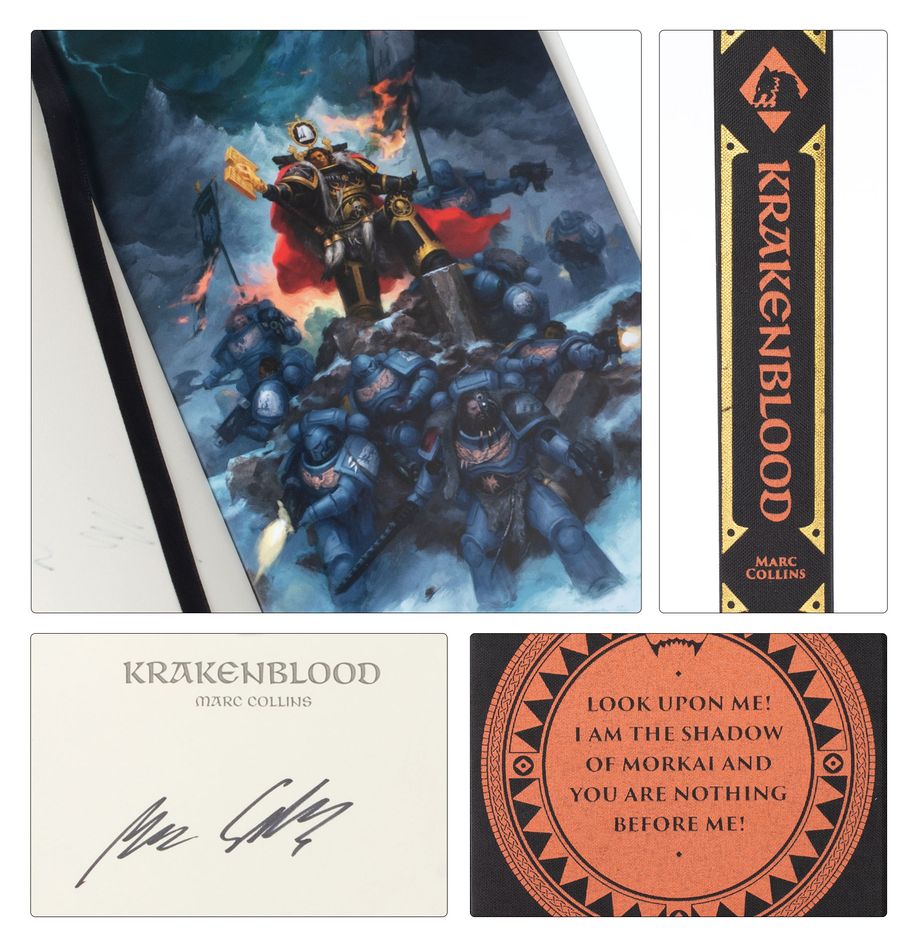 Image credit: Games Workshop
My 30/40K Book of the Year (Honorable Mention)
"Krakenblood is a standout book," I wrote
in my review, "one whose tale is outshined only by its telling." Indeed,
Marc Collins' prose throughout this story of the Space Wolves was lush and magnificent. I don't specifically read the Black Library for its literary qualities, but they're always a delight when an author infuses their work with them. In
Krakenblood, we had as close to real poetry as we're going to get in this setting.
As I noted,
"I had two great impressions in reading this book, with the first one (the quality of the writing) being covered above. I’ll share the other here: I have read few books that so respire with the soul of their Legion or Chapter than this one. I’ve read loads of so-called ‘bolter porn’ in Warhammer where you could easily substitute one Chapter for another and not miss a beat.
"Not here. This book could only be the Space Wolves. The Fenrisian pride, arrogance, and swagger. The boasting and the bravado. The ferocious independence and, underneath all of it, the grudging respect, Collins infused every page with it.
“More than anything else,” he wrote in the Introduction to the Special Edition, “I wanted to ground this novel in the heart and the soul of the World of Winter and War… This is a novel written as a love letter to all those who have gone before, carrying the torch for the Space Wolves. I have only got here by reading and enjoying what has been written by countless other authors.”
Well done indeed, Marc. You made something not just entertaining, but beautiful.
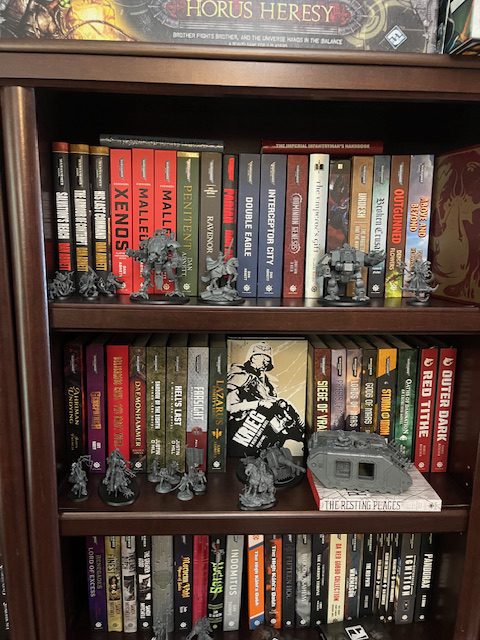 Image credit: Jay Kirkman
Accomplishment: Learning to Build
"When I was a kid one Christmas," I wrote in
one of my Black Library Bibliophile pieces, "I accidentally snapped the wheel of my freshly-unwrapped COBRA Rattler as I was assembling it, doing for model-building what reading
Peter Benchley’s Jaws did for my love of salt-water swimming."
I mentioned earlier that my son had started to enjoy building Warhammer figures, but it was something I had no expectation of enjoying. But after finishing the
Night Lords Omnibus, I was tempted to at least give it a shot and picked up one of the 40K introductory packs. That was the break in the ice I needed.
My progress as a builder was cautious. I was attached to push-fit at first, because that's what I learned on. Things like glue and hobby knives seemed like a vast, frightening frontier. But one by one, I ranked up my toolbox. From the introductory nippers to the deluxe Citadel Fine Detail Clippers to my beloved Godhand Nippers. From Citadel glue to Tamiyo Extra-Thin. And- finally- from a Citadel mold line remover to an OLFA AK-4.
I can't begin to explain the exhilaration that came with learning to be good at something after decades of believing you'd be shit at it.
Perhaps someday I'll get around to learning how to paint.
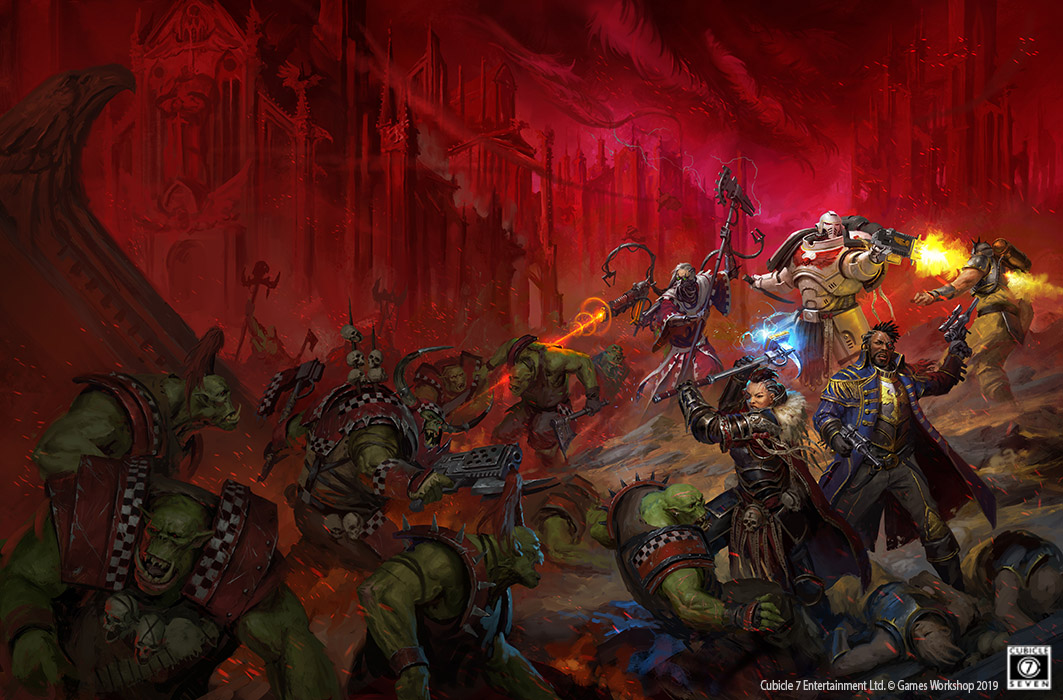 Credit: Cubicle 7
Reflection: Lore & More and the RPG
As week after week saw me turn in more and more content for Goonhammer, I started to expand my portfolio to go beyond the Black Library and into the Warhammer RPG's (whose current licenseholder was- and is-
Cubicle 7 Games). A lifelong DM, I ran my first table at 9 years old so RPG's have always held a special place in my heart. While I wasn't particularly familiar with the current crop of Warhammer RPG's, there didn't seem to be a ton of content out there, either.
I started including RPG updates in the Black Library Weekly, and then in April came the big jump as
my first Lore & More article went live, covering the Nachmund Gauntlet. I was excited at the concept I'd pitched for this occasional series: explore Warhammer narrative or Crusade releases to spotlight not only the lore content within them, but also to see how that could be adapted into a kind of campaign sourcebook for Warhammer RPG GM's out there.
I broke down the
Crusade: Nachmund Gauntlet book down into its main chapters, offering an adventure hook for GM's for each. I'd
revisit the concept later to do the same with a Black Library novella,
Josh Reynolds' Deathstorm, turning it into a sort of adventure module for a few Wrath & Glory or Imperium Maledictum sessions. Locations, NPC's, adventure synopses- all inspired by the old TSR Dragonlance novels based on the novels of
Margaret Weis and
Tracy Hickman.
I love this idea, existing at the intersection of Black Library readers, Warhammer lore nutters, and RPG players. I'm not as convinced there's much of an audience out there for it- yet. I'm not ready to give up, though, so we'll see what 2026 brings.
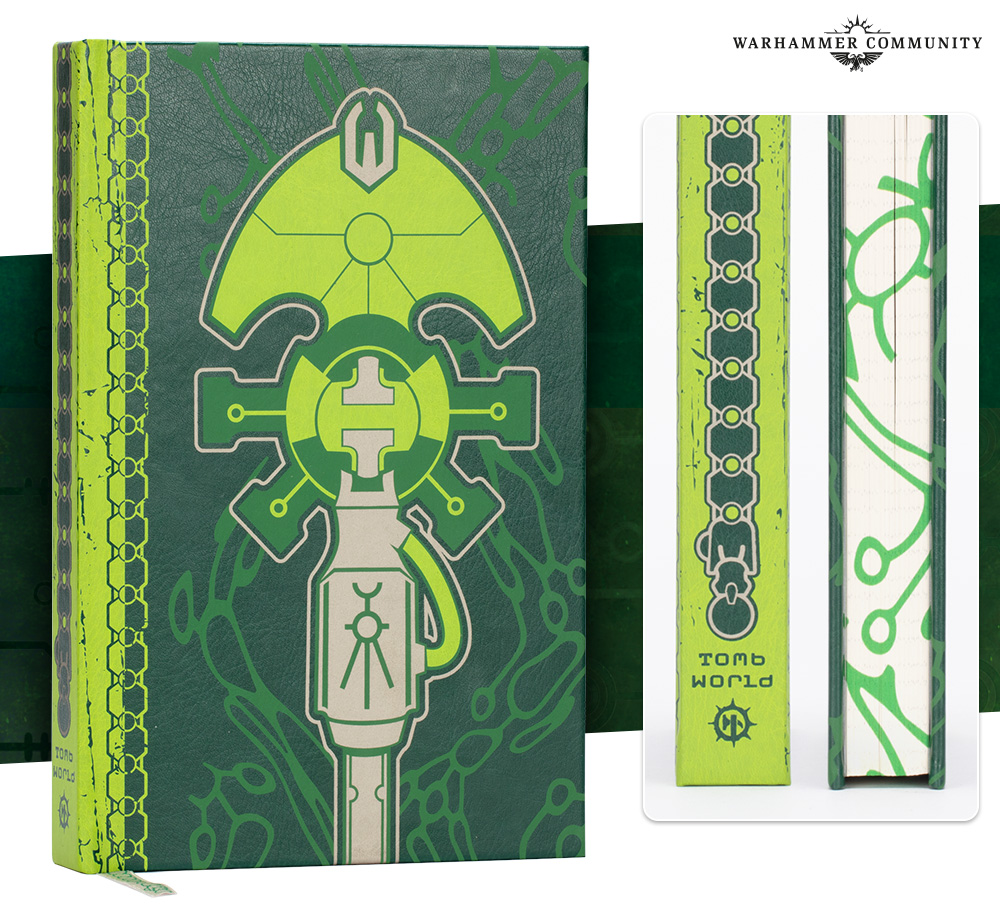 Image credit: Games Workshop
My 30/40K Book of the Year (Runner-Up)
I was a big fan of what Jonathan Beer did with 2024's Dominion Genesis (
review), and appreciated him sitting down with me to candidly dive into the novel
in an interview later in the year. I was particularly keen to see how the experience of writing that book (like any book, flaws and all) led to his approach of the next one, and I had my answer in
Tomb World. Here's from my review:
There’s a lot that works in Tomb World, particularly as everything starts to come together in the second act. Having used the first to set up the Necrons, he now brings all of the ingredients to the table. You’ve got the ‘enemy,2‘ a Necron army slumbering beneath the surface. A strong, no-nonsense protagonist in Marshal Sinos. And best of all, a fantastic setting.
As mentioned above, Orymous is a staging world, a transitory station where Astra Militarum soldiers are temporarily stationed awaiting deployments. As you’d imagine, such a place consists at any given time of a million moving parts, and Beer leans into the logistical element of his setting brilliantly. You’re never far from feeling just how intricate such a relationship by necessity must be- and therefore just how vulnerable it is to disruption.
Neither, it seems, are the Necrons.
A snip here, a cut there, and the whole thing starts to unravel. It’s telling that the main threats to the Astra Militarum that Beer presents aren’t gauss rifles and annihilator beams, but rather panic and hunger. As Alfred Henry Lewis famously observed over a century ago, “there are only nine meals between mankind and anarchy.” While these are tactics we usually associate with the Genestealer Cults (and given the employment of mindshackle scarabs there’s more than a little overlap here), they work just as brilliantly under a layer of necrodermis.
Beer crafted a fantastic setting, one with realistic vulnerabilities and weaknesses that were fairly uncommon subjects for a Warhammer book. Logistics may win wars, but it doesn't always make for sexy reading. It also let me put on my editor's cap for a moment, exploring in the review some alternative structures for the book.
But overall from end to end, this was a terrific ride and a delightful tale I'll not soon forget.
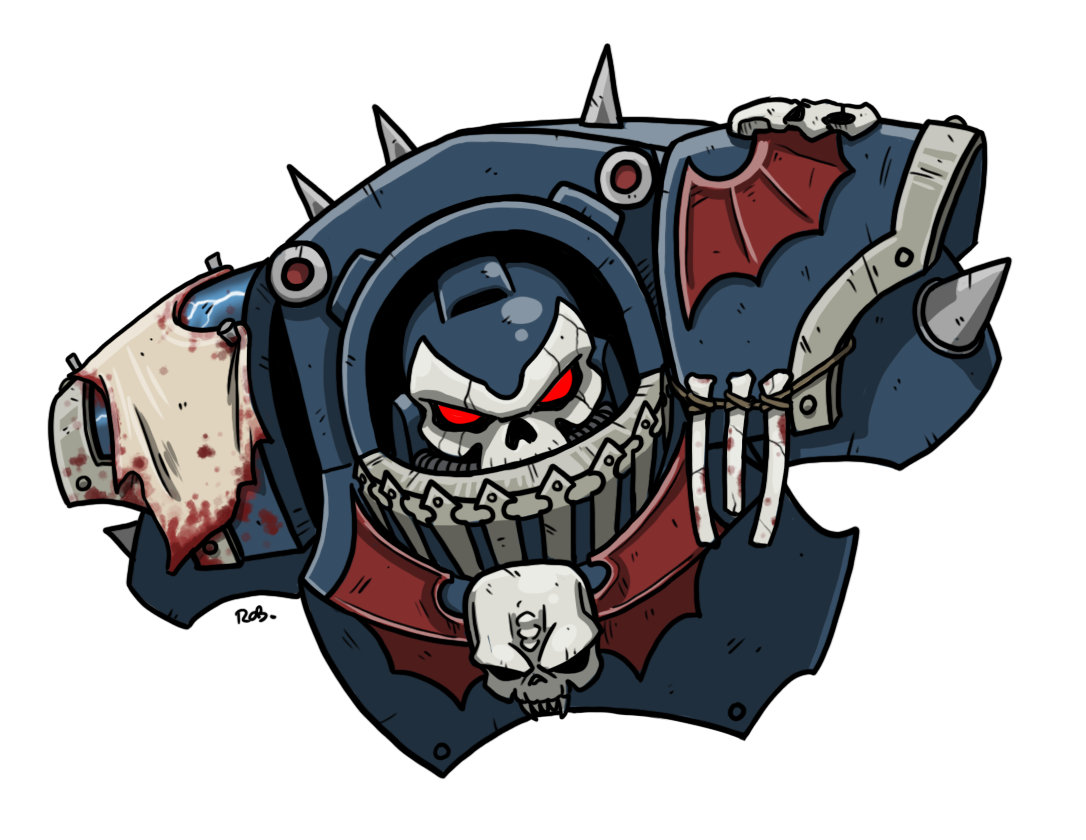 Credit: Robert "TheChirurgeon" Jones
Accomplishment: Best at What We Do
If it sounds like I'm tooting my own horn throughout this retrospective, rest assured I'm very grateful to be part of the incredible orchestra that is Goonhammer. It's been great fun helping build what we've accomplished in 2025, which is- in my estimation- making this site the top destination now for written Black Library content. When it comes to the intersection of quality content delivered at frequent and regular intervals, I'd put us up against anyone.
Note that I'm being careful with my words here- we've got a number of terrific video channels and podcasters out there who also are covering this space. I should know, because I try and highlight them every week in
Black Library Weekly!
And while I've certainly helped kick up the numbers this year for content, the site wouldn't be what it is without pieces like:
- This amazing analysis of the Gothic literature influences in Dan Abnett's Inquisitor tales by Lenoon and Togepi
- A cracking review of Archmagos by Saffgor that made me race to want to read the while series
- This retrospective of Gotrek Gurnisson's books in Age of Sigmar by Saelfe
- Kickass lore primers like this one about the Damocles Gulf by the Chirurgeon (as well as his fantastic illustrations that give so much personality to the site)
- And finally, expansions of what we cover, like this review of a recent Battletech novel by lynnding-library
In short, if you've enjoyed what we've done in 2025... wait till you see what we're gonna deliver in the year ahead!
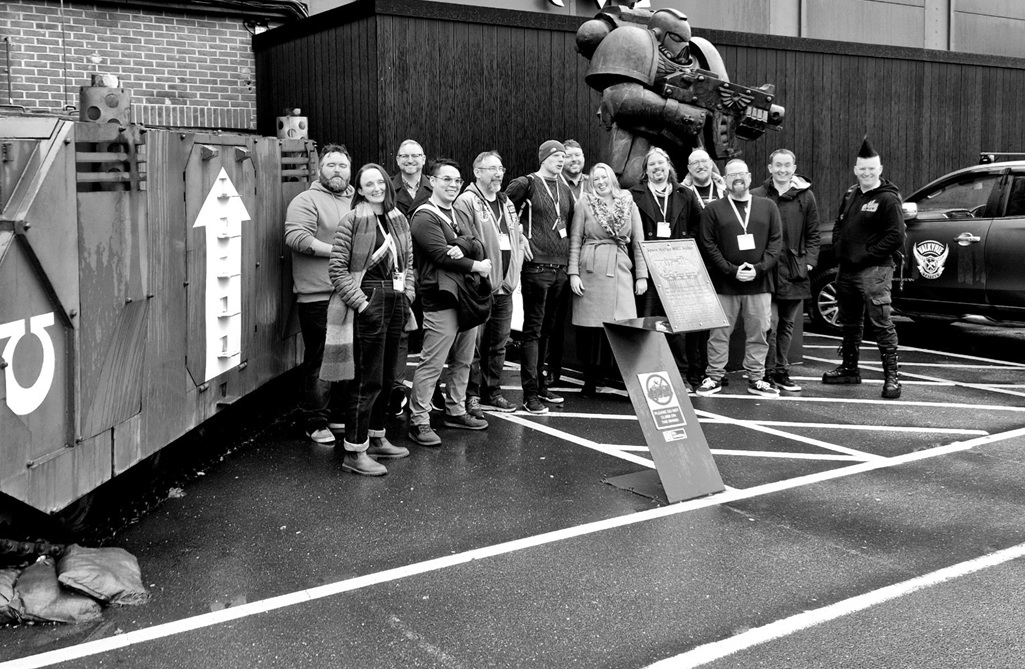 Image credit: Victoria Hayward
Reflection: Reader, Meet Author
As we come to a close on this 2025 retrospective, I've shared my gratitude for our readers as well as my peers. I'd be remiss not to expend a warm thank-you to the amazing collection of human beings who populate these rich and beloved worlds with the fruits of their imaginations and the labor of their fingers.
One of my favorite features in Black Library Weekly is the "Writers are Fans, Too!" segment, where I highlight how so many of our authors aren't just mercenary wordsmiths, but people with a genuine love for Warhammer often stemming from childhood or developed over many years. Writing these books is far more than a paycheck, it's a labor of love too.
You can see that also in the
Sharing a Six-Pack featurette we've introduced this past Autumn to the Black Library Weekly, where over a dozen authors have shared their book recommendations with us so that we may share them with you.
And finally, for the (frankly incredible) number of you writers who have reached out to make sure that I and the loved ones in my world are okay throughout our
annus horribilis, a profoundly heartfelt
thank you. You know who you are- and so do we.
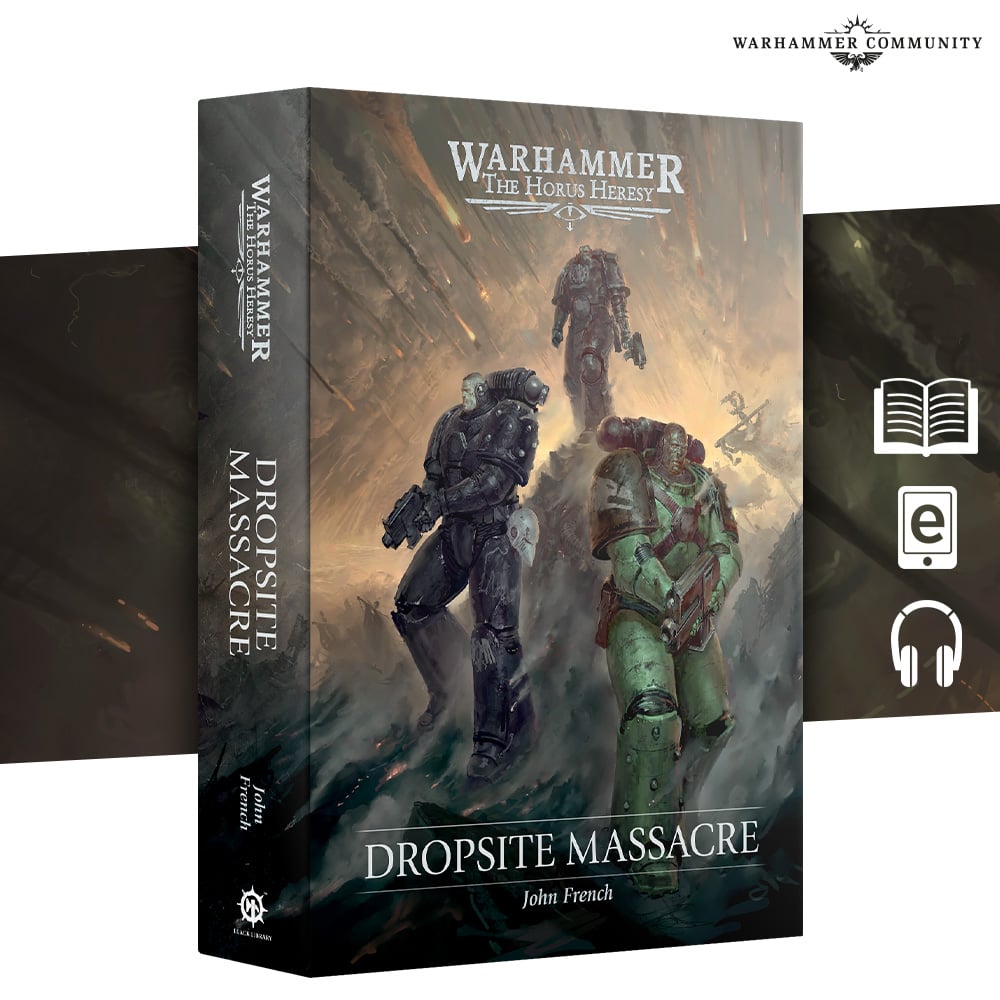 Image credit: Games Workshop
My 30/40K Book of the Year
At last, we've come to the end, so that must surely mean that my 30/40K Book of the Year is ready to be crowned. It should come as little surprise that it's John French's
Dropsite Massacre.
There were two impacts the book had on me last year. First was the triumph of a tale that French put together. Here's another excerpt
from my review:
"For what it is- an action story- Dropsite Massacre is a masterpiece.
"I don’t use that word lightly, but it’s clear that French understood the magnitude of the assignment that had been handed him and harnessed the peak of his powers.
"The book is extraordinary on both a macro and micro level. In the smaller scale of the latter, French packs in loads of terrific details that breathe life into the story. As a Night Lords fan, for example, remarks about how the Night Lords are the least-disciplined pilots of all the traitor legions and brief sequences like what happens when a Night Lords boarding party goes after a hospital ship let them stand out in a crowded narrative- and he does much the same for most of the others (Alpha Legion devotees will especially find a lot to like here, Word Bearers perhaps not so much). Like an impressionist painting it’s full of little brushstrokes that come together into the whole when you step back and take in its entirely."
But more than that, just as
Ushoran taught me the importance of seeing the writer's thoughts in the deluxe editions... just as
Shade of Khaine showed me the role accessibility plays in IP tie-in fiction... just as
Tomb World taught me not to be afraid to go past the writer and question the editorial choices behind them...
Dropsite Massacre showed me the value of recognizing the relationship of a reviewer to their review.
Once upon a time I'd have thought a review is a review is a review, and that while certainly different reviewers had different opinions of a book, they all more or less approached it from the same starting point.
The early dismissal of
Dropsite Massacre by Horus Heresy veterans, however, was certainly revealing. I suppose that if you'd devoured every bit of the Heresy then maybe you weren't all that excited about another telling of one of the setting's most tragic days, but then... you didn't
need to be. Perhaps you just weren't part of the intended audience, and not all books are necessarily for all people.
It's a bit like Magic the Gathering Lead Designer Mark Rosewater's famous axiom, "if you don't like a card, it probably wasn't meant for you."
It was heartening to see how many who at first were lukewarm on the book raved about it after actually reading it, and that's a testament to French's incredible craftwork here. But beyond simply having enjoyed an amazing book- my Book of the Year (joining 2024's
Deathworlder by
Victoria Hayward), learning to recognize my position relative to each book was a lesson I'll be taking to all of my reviews in the year ahead.
Thanks for reading, everyone. May your 2026 bring you every blessing you had in the year behind us- and double them.
Footnotes
- Such as the two-headed Heldrake from Jude Reid's Morvenn Vahl: Spear of Faith that I talked about recently after my wife- not coincidentally- gifted me with a pair of them for Christmas.
- Ultimately it worked out for the best. I muddled through the book with the help of Google, and the moment I saw an AoS Core Rulebook at Half Price Books I snapped it right up. That ended up being a fairly effective crash-course on the Mortal Realms, though it also helped me realize the role that accessibility plays in IP fiction- a theme I've returned to time and again in my book reviews.
- We've come a long way over the course of 2025 in terms of being a site you can count on for reviewing every new book the Black Library puts out, but we're not quite there yet. Phil Kelly's Farsight: Blade of Truth has been a staff-room hot potato not because we hate the T'au or don't want to read Phil's work, but because it's just one of the small number of gaps in our experience. As a later book in a long series, there's a natural disinclination to want to start at the end of a series. When I've discussed this here I've often contrasted it with the comic book industry, which are experts at "on-ramping" new readers for their serials.
- This only really works if you're familiar with Dungeons & Dragons, but it unlocked my ability to understand it immediately. I wish I remembered who said it.
- This isn't said to discount other sites offhand. Consider, for example, Track of Words. Michael Dodd has done tremendous work for the speculative fiction community, and has loads of interviews with Black Library authors. But at the same time, Warhammer isn't his focus, while we're doing 2-3 articles per week about the Black Library now. Sadly, most content I see out there on other mainstream Warhammer content sites tends to be regurgitated content rather than insightful, thoughtful work that expands our understanding and appreciation of the oeuvre.
Have any questions or feedback? Drop us a note in the comments below or email us at contact@goonhammer.com. Want articles like this linked in your inbox every Monday morning? Sign up for our newsletter. And don't forget that you can support us on Patreon for backer rewards like early video content, Administratum access, an ad-free experience on our website and more.
Thank you for being a friend.
 This website uses cookies. Learn more.


 Goonhammer Hobby Round-Up: March 2026
 Goonhammer Reviews: Tribal Conquest
 Conquest: Weaver Courts Gemred Knights and Scaile Dancers Model Review