In The Lore Explainer, we take a deep look at the lore behind our favorite games, movies, and books, and talk about the story behind them and sum up what you need to know and how you can find out more.
Lore is coming. In all its glory, and all its horror.
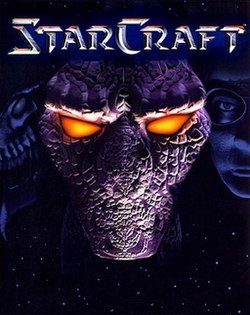
Welcome, reader, to the first part of our lore explainer series on StarCraft!
 Credit: Blizzard Entertainment
If you’re anything like me, the universe of StarCraft holds a special place in your heart. The units, art style, and story had a steel grip on my imagination in my middle school years, and I can pretty much draw a direct line from pointing at a Hydralisk on my friend’s computer and saying “that looks cool” to becoming a Warhammer fan and eventually even writing for this website. Even if you have only a passing familiarity with the game, or never even played it, it’s hard to argue the fact that StarCraft’s legacy casts a long shadow on the video game industry, and is one of the most influential series of all time.
With the release of the StarCraft miniatures game on the near horizon, there’s no better time to brush up on the wide worlds of StarCraft that were first explored back in the year of our Lord 1998. In this series, we will be covering the background and story of StarCraft and its sequel, StarCraft 2, alongside the history of the real world competitive scene that emerged from it. For this article, part one, we’re going to take it from the top, and focus on the most basic question first: what, exactly, is StarCraft?
Credit: Blizzard Entertainment
If you’re anything like me, the universe of StarCraft holds a special place in your heart. The units, art style, and story had a steel grip on my imagination in my middle school years, and I can pretty much draw a direct line from pointing at a Hydralisk on my friend’s computer and saying “that looks cool” to becoming a Warhammer fan and eventually even writing for this website. Even if you have only a passing familiarity with the game, or never even played it, it’s hard to argue the fact that StarCraft’s legacy casts a long shadow on the video game industry, and is one of the most influential series of all time.
With the release of the StarCraft miniatures game on the near horizon, there’s no better time to brush up on the wide worlds of StarCraft that were first explored back in the year of our Lord 1998. In this series, we will be covering the background and story of StarCraft and its sequel, StarCraft 2, alongside the history of the real world competitive scene that emerged from it. For this article, part one, we’re going to take it from the top, and focus on the most basic question first: what, exactly, is StarCraft?
What Is StarCraft?
 Credit: Blizzard Entertainment
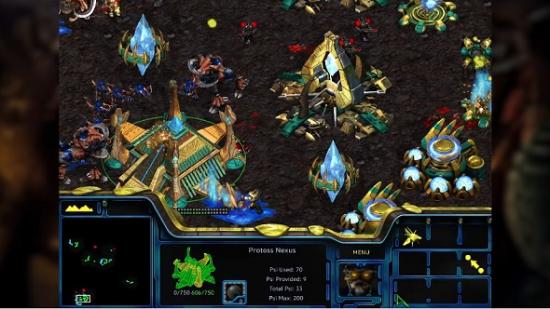
StarCraft is a real time strategy game series, first released in 1998 by Blizzard Entertainment. It's important that you don't confuse it with Starcraft, a manufacturing company that makes boats and RVs. The capital “C” in StarCraft, for branding and copyright purposes, is load bearing.
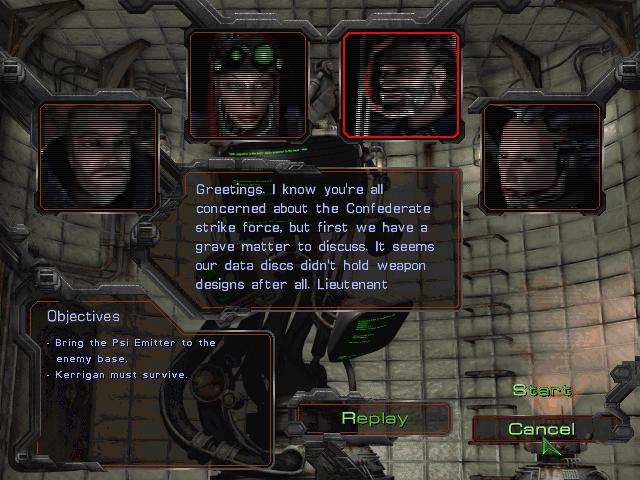
StarCraft sets you up as the commander of one of three distinct science fiction factions, each vying for supremacy in the distant Korpulu sector of space at the very end of the 25th century. The three playable races are the Terrans, humans with a knack for tenacity, adaptability, and big guns, the Zerg, a horrific biological swarm capable of rapidly evolving and overwhelming their prey, and the Protoss, an enigmatic psychic alien race whose technological prowess makes every unit elite and dangerous. In the game, players collect resources to build bases and armies, utilizing the unique asymmetrical playstyles of each faction to destroy their opponent and claim victory. While at basic levels, this can be accomplished by building a big ball of dangerous units and sending them at the enemy, overwhelming and crushing them, taking advantage of the unique strengths and weaknesses of faction and unit can allow for a skilled player to counter forces much larger than their own through careful positioning and unit management.
StarCraft came with a fairly extensive single player campaign, as well as a multiplayer mode that let you battle it out over a local area network (LAN) or online with players around the world. Said multiplayer mode would become such a phenomenon that it became basically a national sport in South Korea, but that’s a story for later in this series, and the single player campaign in StarCraft told a story with twists, turns, and character drama that was unheard of in strategy games at the time that set up not just its sequel, StarCraft 2, but multiple other pieces of media including books, comics, and droves of fan creations.
Credit: Blizzard Entertainment
StarCraft is a real time strategy game series, first released in 1998 by Blizzard Entertainment. It's important that you don't confuse it with Starcraft, a manufacturing company that makes boats and RVs. The capital “C” in StarCraft, for branding and copyright purposes, is load bearing.
StarCraft sets you up as the commander of one of three distinct science fiction factions, each vying for supremacy in the distant Korpulu sector of space at the very end of the 25th century. The three playable races are the Terrans, humans with a knack for tenacity, adaptability, and big guns, the Zerg, a horrific biological swarm capable of rapidly evolving and overwhelming their prey, and the Protoss, an enigmatic psychic alien race whose technological prowess makes every unit elite and dangerous. In the game, players collect resources to build bases and armies, utilizing the unique asymmetrical playstyles of each faction to destroy their opponent and claim victory. While at basic levels, this can be accomplished by building a big ball of dangerous units and sending them at the enemy, overwhelming and crushing them, taking advantage of the unique strengths and weaknesses of faction and unit can allow for a skilled player to counter forces much larger than their own through careful positioning and unit management.
StarCraft came with a fairly extensive single player campaign, as well as a multiplayer mode that let you battle it out over a local area network (LAN) or online with players around the world. Said multiplayer mode would become such a phenomenon that it became basically a national sport in South Korea, but that’s a story for later in this series, and the single player campaign in StarCraft told a story with twists, turns, and character drama that was unheard of in strategy games at the time that set up not just its sequel, StarCraft 2, but multiple other pieces of media including books, comics, and droves of fan creations.
 Credit: Blizzard Entertainment
Before hopping into any of that though, we’re going to take some time with this article to set the stage. Who are the three major playable factions in the game, what is their backstory, and how do each of them stay unique gameplay wise? Whether you’re looking for a fond trip down memory lane or curious to know what all the StarCraft hullabaloo is all about, let's examine each of these three races, starting with the Terrans.
Credit: Blizzard Entertainment
Before hopping into any of that though, we’re going to take some time with this article to set the stage. Who are the three major playable factions in the game, what is their backstory, and how do each of them stay unique gameplay wise? Whether you’re looking for a fond trip down memory lane or curious to know what all the StarCraft hullabaloo is all about, let's examine each of these three races, starting with the Terrans.
The Terrans
 Credit: Blizzard Entertainment
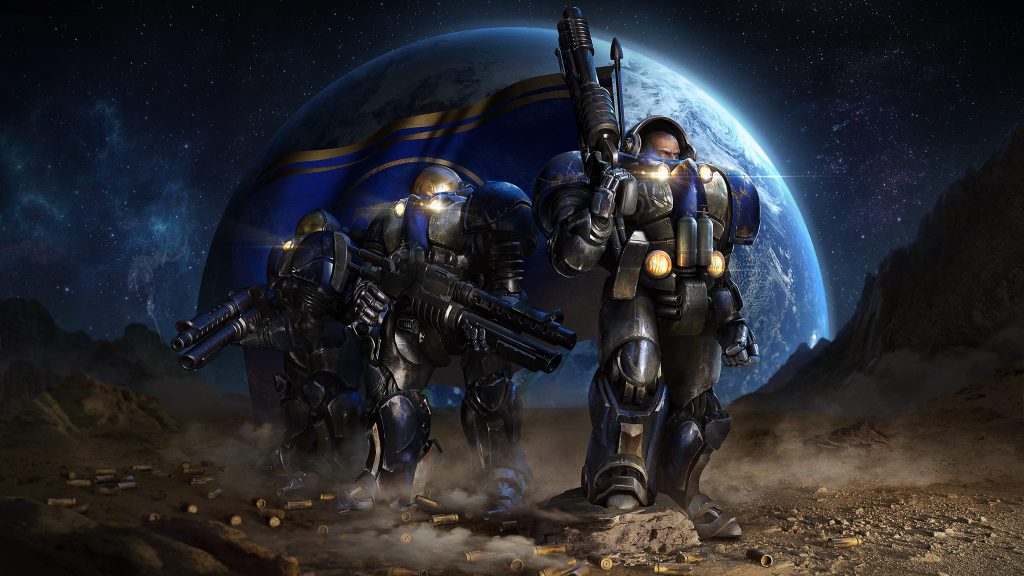
The Terrans are the human faction in StarCraft, and in many ways are the most conventional of the three races, but with a few twists on the formula for both their backstory and gameplay.
The Terrans we meet in StarCraft are descendants of prisoners who were sent out to colonize the stars around two hundred and fifty years prior to the start of the first game. These colonists were sent out on supercarriers, each holding thousands of prisoners selected for the task of colonizing new worlds outside the milky way galaxy. Through a technological mishap, these ships strayed far from their destination and ended up in a region of space called the Korpulu sector, with no way to return to or even contact Earth. The Terran thus became rugged frontiersmen, developing their technologies to survive on distant and dangerous worlds and creating a fierce, independent streak in many of its peoples. Some humans even begin to develop psychic powers, able to use the powers of their mind to enhance their abilities and kill their enemies. By the time of the first game, the Terran are mostly united under the banner of a corrupt government called the Terran Confederacy, though severe cracks are starting to appear in their grip on the sector.
Bernhardt:
Credit: Blizzard Entertainment
The Terrans are the human faction in StarCraft, and in many ways are the most conventional of the three races, but with a few twists on the formula for both their backstory and gameplay.
The Terrans we meet in StarCraft are descendants of prisoners who were sent out to colonize the stars around two hundred and fifty years prior to the start of the first game. These colonists were sent out on supercarriers, each holding thousands of prisoners selected for the task of colonizing new worlds outside the milky way galaxy. Through a technological mishap, these ships strayed far from their destination and ended up in a region of space called the Korpulu sector, with no way to return to or even contact Earth. The Terran thus became rugged frontiersmen, developing their technologies to survive on distant and dangerous worlds and creating a fierce, independent streak in many of its peoples. Some humans even begin to develop psychic powers, able to use the powers of their mind to enhance their abilities and kill their enemies. By the time of the first game, the Terran are mostly united under the banner of a corrupt government called the Terran Confederacy, though severe cracks are starting to appear in their grip on the sector.
Bernhardt: The Terran Confederacy is a useful sort of snapshot of where pop culture stood with that particular bit of American history in the 90s; while the government in question also gets called "the Terran Confederation" from time to time and indeed I believe that's the preferred nomenclature for it now, make no mistake: The demonym for citizens of the government was "Confederates" and the Confederate Battle Flag does show up as a decal various times on their ships and vehicles in cutscenes. It was meant as shorthand for the demonstrated fact that the Terran Confederacy were a bunch of stupid and violent hicks who still had a low cunning and rugged independence that let them Get Things Done on the frontier, even if it wasn't pretty; but that said, the Terran character and unit portraits in that first game sure were all white, with a single exception that makes things worse instead of better. The Terran Confederacy is done for by the end of the original StarCraft's Terran campaign in favor of the Terran Dominion (which represents a more governmentally-competent evil, but something of sidegrade morally), and I doubt there will be much future appetite for ever reopening that chapter of the franchise lore.
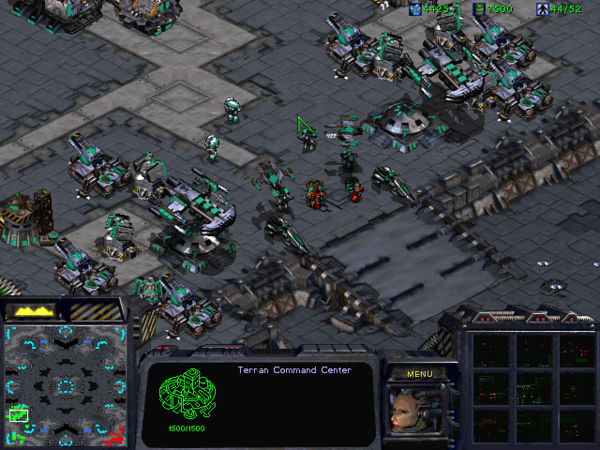
Gameplay wise, the Terrans' resource and building collection are the most traditional for those familiar with real time strategy games (RTS). Their basic builder units collect resources and build structures, needing to be dedicated to the task of each, and different buildings like a bunker or armory produce different units. Their units are often fairly straightforward as well, at least at first glance. The basic military unit, the Marine, has a gun to shoot stuff with, the Goliath is a walking mech that can shoot bigger things, and the Wraith is a flying jet that can shoot stuff from the sky.
 Credit: Blizzard Entertainment
The Terrans needed to be able to adapt to any situation while they colonized the Korpulu sector, though, and their units often reflect this. Siege Tanks, for example, can operate as both a standard tank or can transform into an artillery piece able to shoot targets at long distance. The aforementioned Wraiths can cloak, making themselves invisible without some form of special detection, as well as Ghosts, a powerful psychic assassin unit capable of both sniping opponents or even dropping a nuke down on their heads. Even Terran buildings can react quickly to a changing battlefield, as many of them have the ability to lift off from the ground and move to a new location.
Bernhardt:
Credit: Blizzard Entertainment
The Terrans needed to be able to adapt to any situation while they colonized the Korpulu sector, though, and their units often reflect this. Siege Tanks, for example, can operate as both a standard tank or can transform into an artillery piece able to shoot targets at long distance. The aforementioned Wraiths can cloak, making themselves invisible without some form of special detection, as well as Ghosts, a powerful psychic assassin unit capable of both sniping opponents or even dropping a nuke down on their heads. Even Terran buildings can react quickly to a changing battlefield, as many of them have the ability to lift off from the ground and move to a new location.
Bernhardt: Before you head on down to the comments, "quickly" is a relative term. Most buildings can't fly at all!
The Terran are a faction whose ranged superiority and deep toolbox for many situations gives these plucky peoples a fighting chance against the two alien races of the StarCraft universe: The Zerg and the Protoss.
The Zerg
 Credit: Blizzard Entertainment
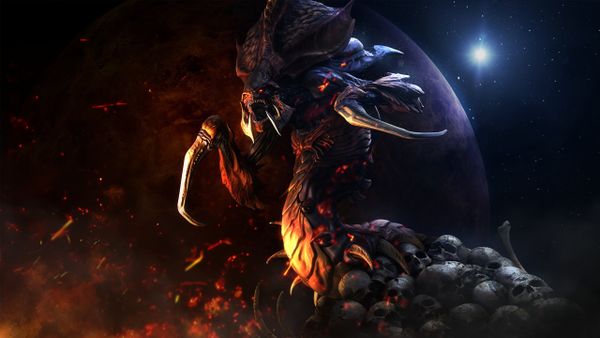
If the Terran are your stand-ins for Colonial Marines, then the Zerg are your Xenomorphs.
Bernhardt:
Credit: Blizzard Entertainment
If the Terran are your stand-ins for Colonial Marines, then the Zerg are your Xenomorphs.
Bernhardt: Generally speaking we're not gonna spend too much time here trying to unravel who lifted what from where or "took inspiration" from who, but if you were gonna have that discourse, the majority of it centers around the Terran Marine and, of course, the Zerg.
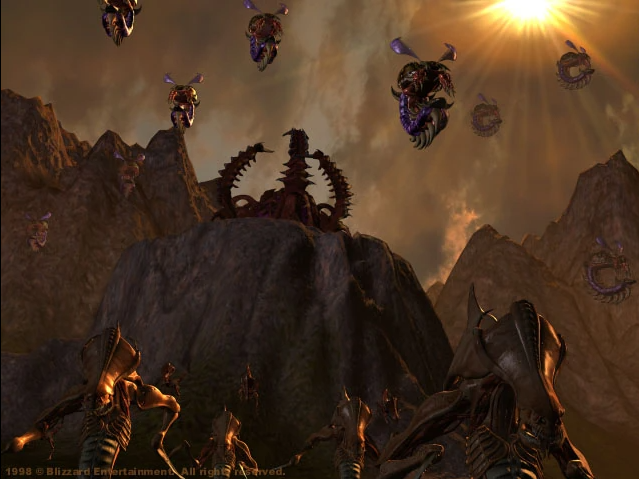
The Zerg are an entirely biological hivemind of hyper-evolved predators, controlled by the Overmind. The Zerg are fast and attack in overwhelming numbers, and capable of creating life forms that can either destroy anything in their path with brute force or sinister cunning, all for the goal of assimilating them into the swarm.
The Zerg were a creation of the progenitor race in the StarCraft universe, the Xel’naga. Initially, they were just a particularly tenacious race of aliens on the volcanic world of Zerus, until a rogue faction of the Xel’naga gave the Zerg a powerful blessing, called the Purity of Essence, that rapidly accelerated the Zerg’s evolution. Soon, the Zerg were able to assimilate the other species on Zerus into their hive mind, taking them to their spawning pools and evolving their form into even more dangerous forms to serve the swarm. Fearing the Zerg may become too powerful to control, the Xel’naga created the Overmind, a singular consciousness that psychically controlled the Zerg swarm. This would backfire on the Xel’naga, however, when the Overmind became powerful enough to break free of its shackles and turn the Zerg on its creators, wiping out the Xel’naga. Free of their containment, the Zerg expanded out from Zerus to planets across the Korpulu sector, with a single goal in mind: assimilate the galaxy and all life within into the Zerg Swarm.
In the game, the Zerg playstyle reflects their biological terror and rapid evolution. Unlike the Terran, who construct units from different buildings dedicated to different unit types, all production for Zerg units happen within a single building type, the hive. Each hive produces up to three larvae at a time, which can be mutated into whatever unit you desire, and each other building type unlocks different units that your larvae can morph into. Hives also produce creep, a purple substance that spreads on the ground that all Zerg buildings must be built on. This encourages Zerg players to build multiple hives in their bases to rapidly produce entire armies at once, allowing them to either overwhelm their enemies with sheer numbers or quickly adapt to what their opponents may be doing.
 Credit: Blizzard Entertainment
It’s not all upside for the Zerg, though. Zerg units, individually, tend to be weaker than their more advanced Protoss or Terran counterparts, requiring players to leverage their speed and numbers, utilize unique abilities like burrowing to set up ambushes, as well as making sure you’re morphing the right units for the right problems. Zerg worker units also don’t build buildings like the Terran. Rather, each worker unit is sacrificed to morph into a new building, meaning you need to constantly remember to be producing new workers to replace those lost to expanding.
The Zerg are a threat to all life in the galaxy, and capable of rapidly mutating to overwhelm anything in their way. No race in the galaxy understands this threat more than the final faction, the Protoss.
Credit: Blizzard Entertainment
It’s not all upside for the Zerg, though. Zerg units, individually, tend to be weaker than their more advanced Protoss or Terran counterparts, requiring players to leverage their speed and numbers, utilize unique abilities like burrowing to set up ambushes, as well as making sure you’re morphing the right units for the right problems. Zerg worker units also don’t build buildings like the Terran. Rather, each worker unit is sacrificed to morph into a new building, meaning you need to constantly remember to be producing new workers to replace those lost to expanding.
The Zerg are a threat to all life in the galaxy, and capable of rapidly mutating to overwhelm anything in their way. No race in the galaxy understands this threat more than the final faction, the Protoss.
The Protoss
 Credit: Blizzard Entertainment
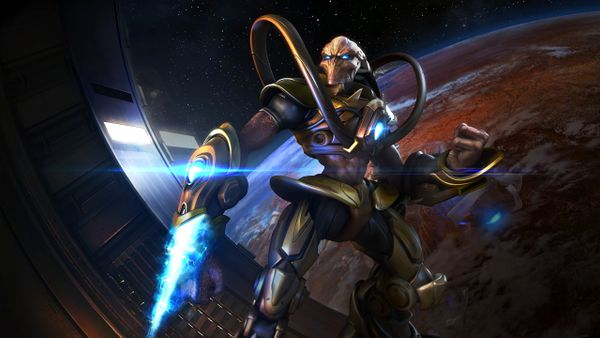
While the Zerg are a swarm of screaming horrors ripped right out of an Aliens movie, the Protoss are more like the traditional Gray aliens made famous by Roswell: a mysterious race in command of strange psychic powers and technology that borderlines on magic. Except unlike Grays, who are small little guys, Protoss are big and strong, and also have energy blades.
The Protoss are the first race touched by the Xel’naga, given the Purity of Life at an early stage in their history that greatly strengthened the psychic prowess of the Protoss race. The Xel’naga departed shortly after giving this blessing to the developing Protoss, which launched the various tribes on the Protoss homeworld of Aiur into a cataclysmic civil war for a millennia. Eventually, the tribes of Aiur were able to unite when the Khala, a shared psychic link between all Protoss, was created. While most of the Protoss were overjoyed by the Khala, some tribes were wary of the danger that a shared psychic connection could impose on their traditional way of life, and these tribes left Aiur in exile to form their own societies. Now mostly united under a government known as the Conclave, the Protoss created a highly advanced society based around a strict caste system, and expanded from Aiur. The Protoss protect other races from threats from the shadows, and despite their military strength, adopted a policy on non-intervention unless strictly necessary. The Zerg Swarm’s encroachment on the Korpulu sector, however, has forced the Protoss out of hiding, as they confront this threat head-on.
Bernhardt:
Credit: Blizzard Entertainment
While the Zerg are a swarm of screaming horrors ripped right out of an Aliens movie, the Protoss are more like the traditional Gray aliens made famous by Roswell: a mysterious race in command of strange psychic powers and technology that borderlines on magic. Except unlike Grays, who are small little guys, Protoss are big and strong, and also have energy blades.
The Protoss are the first race touched by the Xel’naga, given the Purity of Life at an early stage in their history that greatly strengthened the psychic prowess of the Protoss race. The Xel’naga departed shortly after giving this blessing to the developing Protoss, which launched the various tribes on the Protoss homeworld of Aiur into a cataclysmic civil war for a millennia. Eventually, the tribes of Aiur were able to unite when the Khala, a shared psychic link between all Protoss, was created. While most of the Protoss were overjoyed by the Khala, some tribes were wary of the danger that a shared psychic connection could impose on their traditional way of life, and these tribes left Aiur in exile to form their own societies. Now mostly united under a government known as the Conclave, the Protoss created a highly advanced society based around a strict caste system, and expanded from Aiur. The Protoss protect other races from threats from the shadows, and despite their military strength, adopted a policy on non-intervention unless strictly necessary. The Zerg Swarm’s encroachment on the Korpulu sector, however, has forced the Protoss out of hiding, as they confront this threat head-on.
Bernhardt: The Protoss are by far the most original of the three playable factions in StarCraft, which is another way of saying they hide their influences the best; you've definitely got some Eldar in there, some Klingon, some Vulcan, but much of the Protoss's big horse-legged shining-armored plasma-blade-and-bolt warrior aesthetic is doing its own thing. The spiritual space communism of the Khala and its attendant caste system might make you think of the T'au, but the Greater Good postdates StarCraft by about half a decade, amusingly. The exchange of ideas flows both ways.
In the game, the Protoss are the most elite playable faction, whose smaller numbers are balanced by how dangerous each unit is thanks to their psychic powers and powerful technology. The most common example of this tech are the shields that each Protoss unit has. While Protoss units have smaller health values, each unit has a shield value as well that gets depleted by damage before losing HP. Unlike health, which is very slow to recover, Shields regenerate very quickly, meaning a unit can take substantial damage in a fight and lose all of their shields before being quickly back at full strength for the next conflict. Protoss also have the most convenient building method in the game, as all Protoss buildings are teleported into the battlefield from elsewhere. All Protoss worker units need to do is open up the portal, meaning one worker unit can potentially build multiple units at a time without needing to wholly commit to any single one of them.
 Credit: Blizzard Entertainment
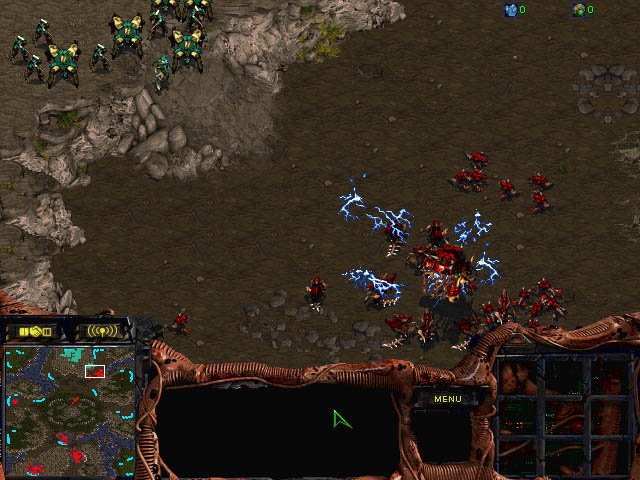
Protoss also possess units with powerful psychic abilities that allow them to punch up hard if a player can precisely control them. The best example of this is the High Templar, who possess no weapons for regular fighting but can summon psionic lightning storms from afar using their energy meter, quickly shredding hordes of weaker units and potentially seriously damaging slower ones who can’t get out of the way quickly enough.
The obvious drawback to the Protoss is that they are the most elite army in the game, and sacrificing quantity for quality means each unit you produce is a bigger commitment than it is for other factions. Protoss players need to be careful when they commit their forces, because every unit lost puts them farther back than the other two races in the game. When a player makes sure to play Protoss wisely, even small numbers of units can be devastating.
Credit: Blizzard Entertainment
Protoss also possess units with powerful psychic abilities that allow them to punch up hard if a player can precisely control them. The best example of this is the High Templar, who possess no weapons for regular fighting but can summon psionic lightning storms from afar using their energy meter, quickly shredding hordes of weaker units and potentially seriously damaging slower ones who can’t get out of the way quickly enough.
The obvious drawback to the Protoss is that they are the most elite army in the game, and sacrificing quantity for quality means each unit you produce is a bigger commitment than it is for other factions. Protoss players need to be careful when they commit their forces, because every unit lost puts them farther back than the other two races in the game. When a player makes sure to play Protoss wisely, even small numbers of units can be devastating.
Next Time: The Story of StarCraft and Brood War
That’s all for this article, folks! In the next StarCraft Lore Explainer, we will jump right in to the story of StarCraft and its expansion, Brood War, and the conflicts, betrayals, and victories that would change the Korpulu Sector forever.
Have any questions or feedback? Drop us a note in the comments below or email us at contact@goonhammer.com. Want articles like this linked in your inbox every Monday morning? Sign up for our newsletter. And don't forget that you can support us on Patreon for backer rewards like early video content, Administratum access, an ad-free experience on our website, and subscriber-only content covering competitive Warhammer 40K!
Thank you for being a friend.
 This website uses cookies. Learn more.


 Goonhammer App and Patron Updates: April, 2026
 Contemptor Kevin's Combat Patrol Issue 46 Review
 Kill Team Tournament Report: Engage, Party, Repeat's March Madness 2026