This article is part of a larger series on How to Paint Tyranids. To return to that series, click here.

Hive Fleet Hydra were kind of stealthily introduced in the release of 3rd edition Warhammer 40k when they revealed a new, more unified paint scheme for the Tyranid army that wasn't the same red-with-bone-plates-but-also-tons-of-bright-colors-in-every-hue scheme they'd been working with in second edition. It's understated by also quite menacing. Like Gorgon, it's an easy scheme to paint, owing to it really only having two colors.
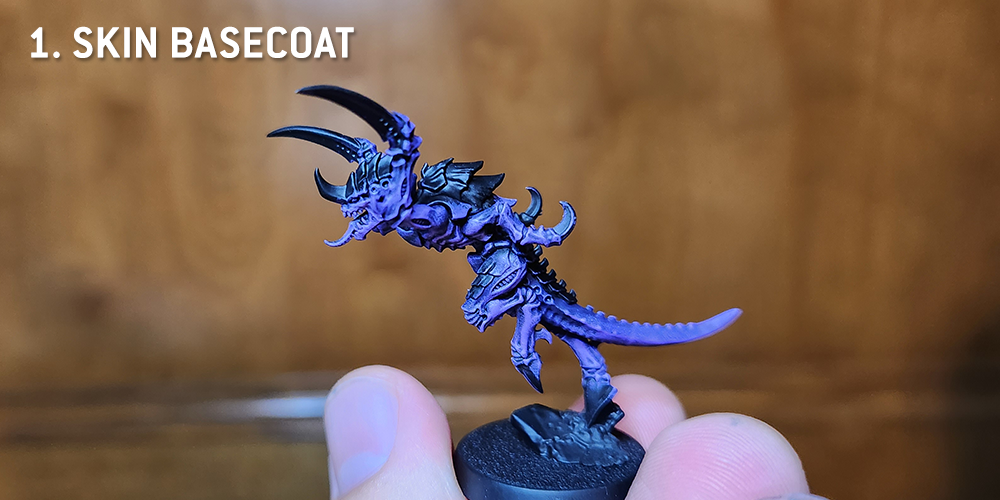
Step 1. Skin Basecoat
I started by priming the model here black, then basecoating the skin with
Naggaroth Night. After that I did a highlight of
Xereus Purple, washed it with
Druchii Violet, then highlighted again with Xereus.
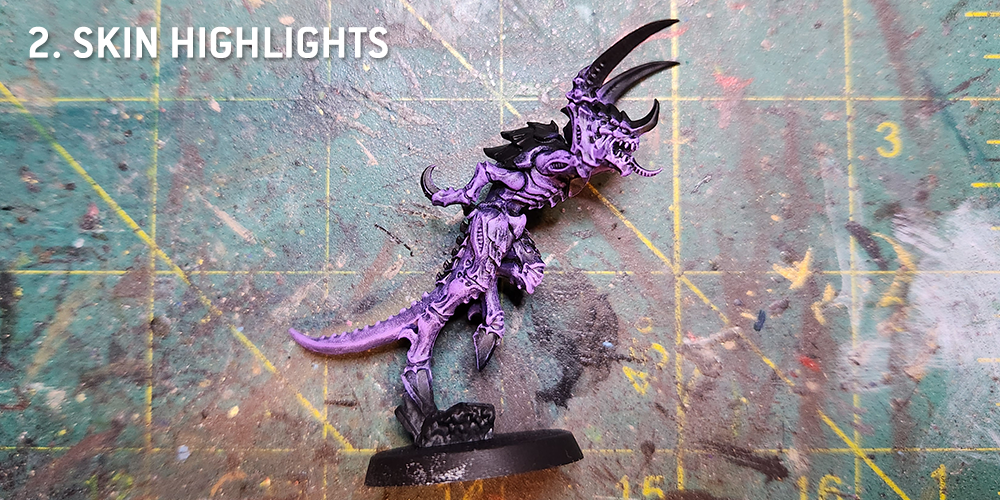
Step 2. Skin Highlights
Next up it was doing a second, brighter set of highlights. I did this by mixing some Xereus Purple and
Reaper Pure White but you can get easier results using
Dechala Lilac or
Daemonette Hide. Either way, this was drybrushed on lightly.
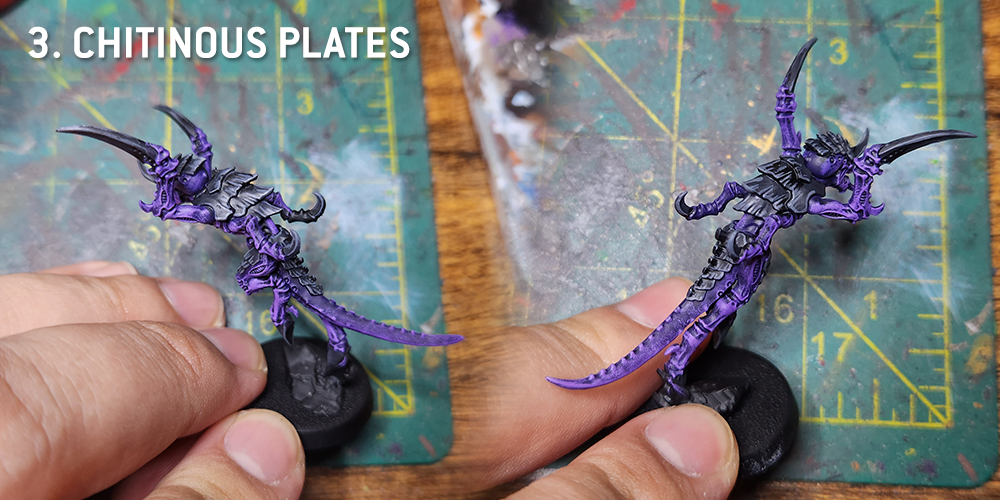
Step 3. The Chitin
I painted these using the standard "striping" method we outline in our larger How to Paint Tyranids article. I started by painting the plates with
Abaddon Black, then highlighted them with
Corvus Black. Next I did an edge outline of
Mechanicus Standard Grey, and painted a series of striples on the armor going inward.
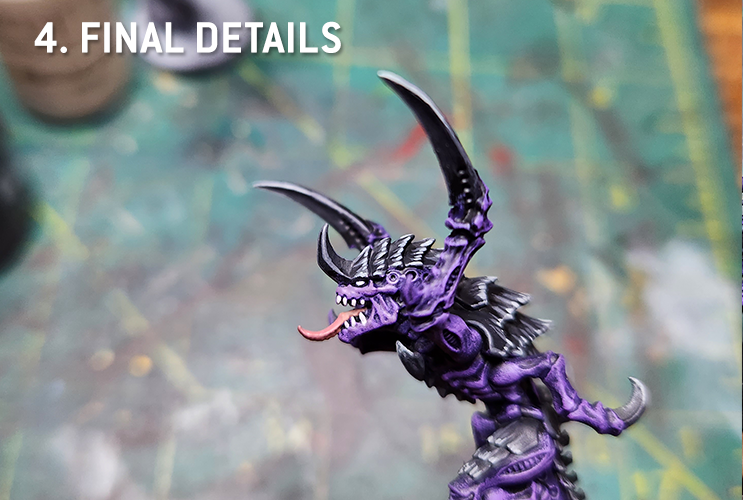
Step 4. Final Details
I do a second edge highlight of
Celestra Grey along the talons and claws and a second set of stripes going inward on the armor plates, making these smaller. I also hit the plate corners with Celestra Grey as well at this point. The eyes are just a dot of white, the teeth are
Rakarth Flesh and
Reaper Polished Bone, and the tongue is
Bugman's Glow highlighted up to
Emperor's Children, though if you do this with yellow I think that'd look great as well (try
Averland Sunset and
Yriel Yellow).
Hydra is a cool looking scheme that is very easy to paint and purple is an underused color in Warhammer armies. Your biggest challenge is going to be making the models pop and that's where I think the occasional blast of yellow-orange or orange-red can really make a difference there.
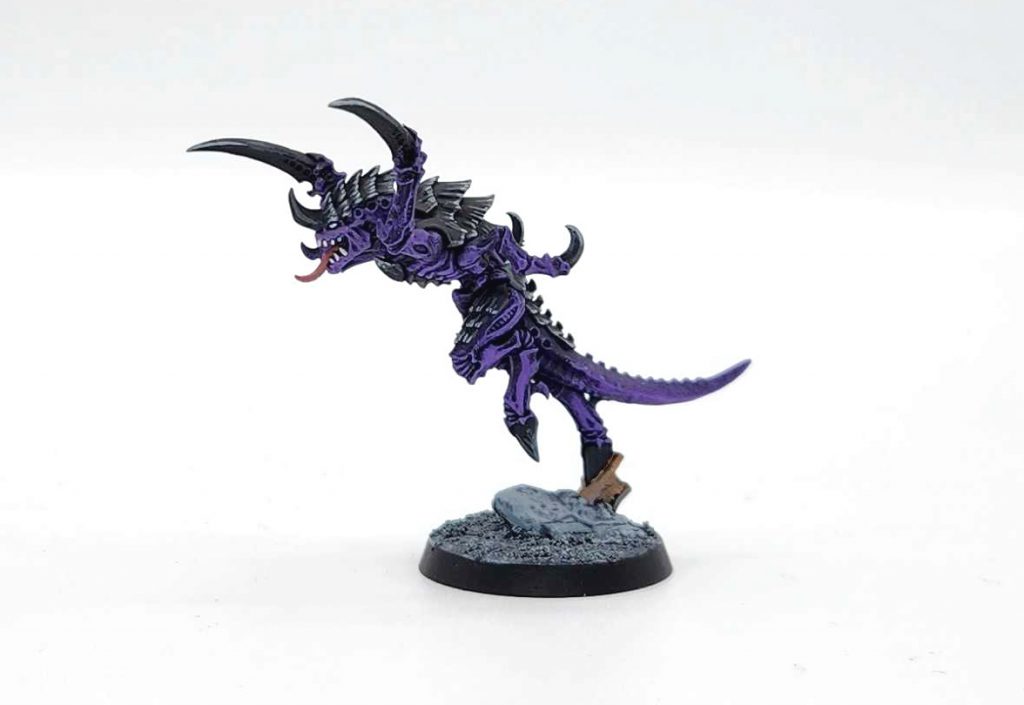 Credit: Robert "TheChirurgeon" Jones
This article is part of a larger series on How to Paint Tyranids. To return to that series, click here.
Credit: Robert "TheChirurgeon" Jones
This article is part of a larger series on How to Paint Tyranids. To return to that series, click here.
Thank you for being a friend.
 This website uses cookies. Learn more.
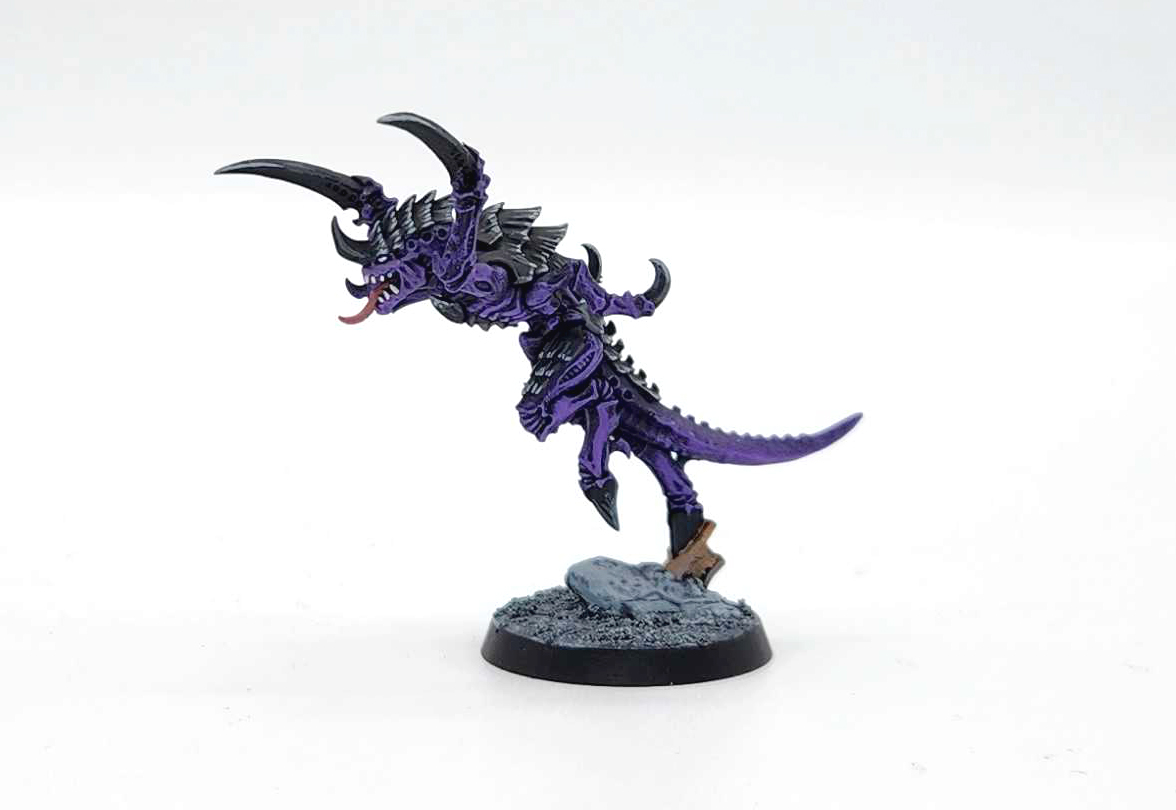 Credit: Robert "TheChirurgeon" Jones

 Goonhammer Hobby Round-Up: March 2026
 Goonhammer Reviews: Tribal Conquest
 Conquest: Weaver Courts Gemred Knights and Scaile Dancers Model Review