In our How to Paint Everything series we look at how to paint well, everything. We look at different techniques and approaches to achieving results and the lore behind some of the models we're painting. As GOONHAMMER '96 comes to a close, we're looking at how to paint Chaos Space Marines with the bright schemes and styles of the 2nd edition 'Eavy Metal schemes in Codex: Chaos.
We already reviewed
Codex: Chaos earlier this week and talked about how great the books full color insert pages are. And we talked about Dylan Gould's wonderful Chaos Space Marines army already. But if you've been wondering how to replicate the bright, clean color schemes from those books on your own models worry no more! In today's How to Paint Everything we're going to talk about painting these 2nd edition schemes and what you can do to replicate them with modern paints and techniques.
Some of these step-by-step images are small - you can see them in larger sizes by clicking on them.
Alpha Legion
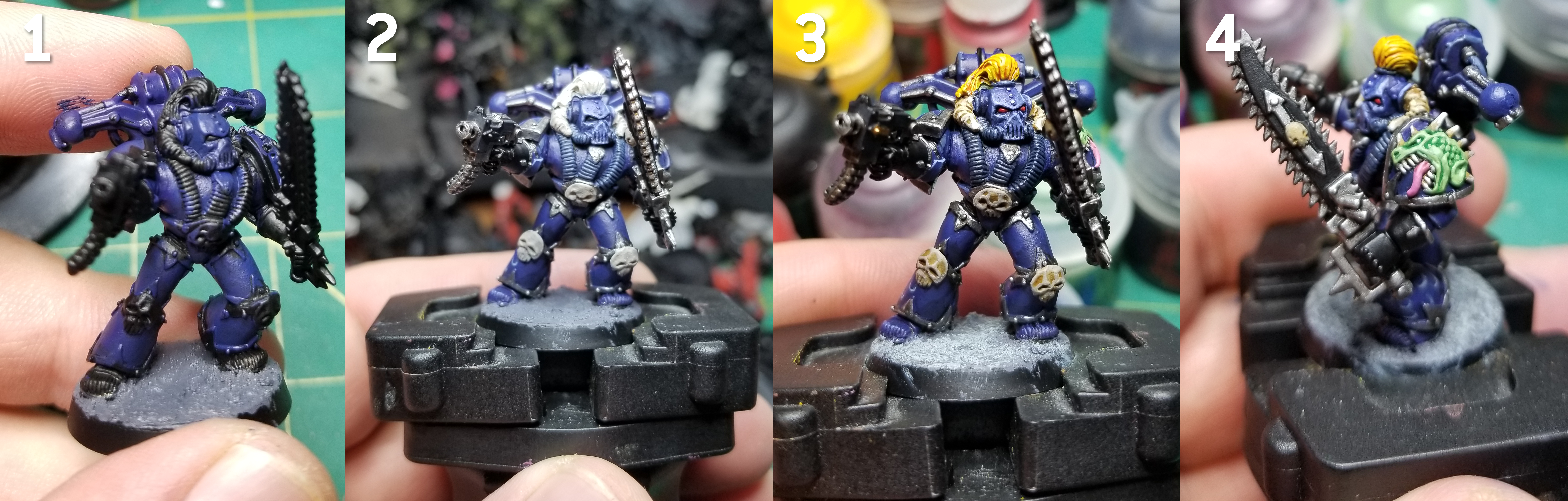
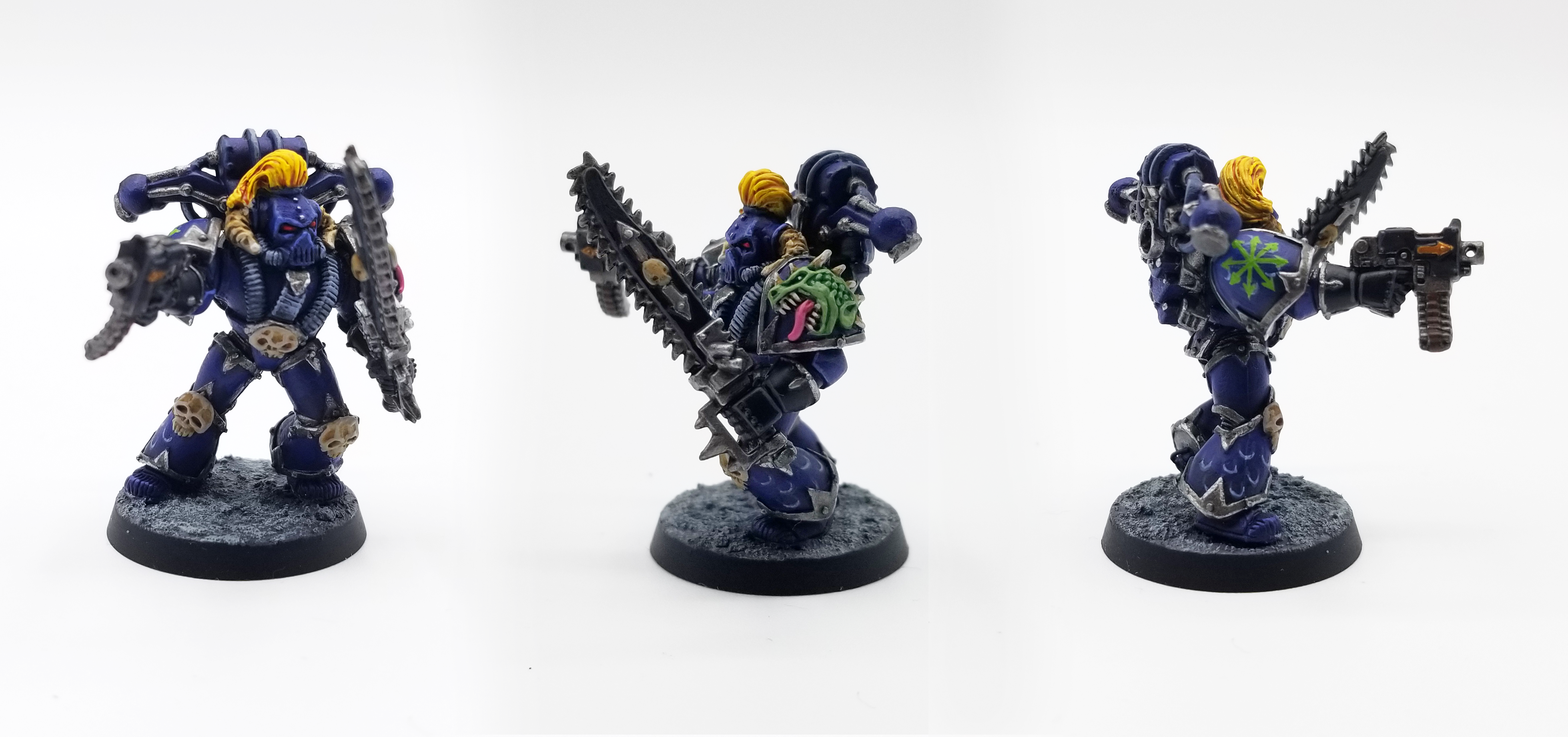
First introduced proper in the 2nd edition Codex: Chaos, the Alpha Legion have become a bit of a fan favorite since, thanks to some cool backstory elements and fluff establishing them as the sneakiest chaos marines, and some very good rules in the 8th edition Codex: Chaos Space Marines. Although newer schemes for them give them blue - green armor with a fade and green highlights, and the Horus Heresy variant uses metallic blue-green shades, the original paint scheme for the Alpha Legion was a much deeper blue - almost indigo. I've tried to replicate that here.
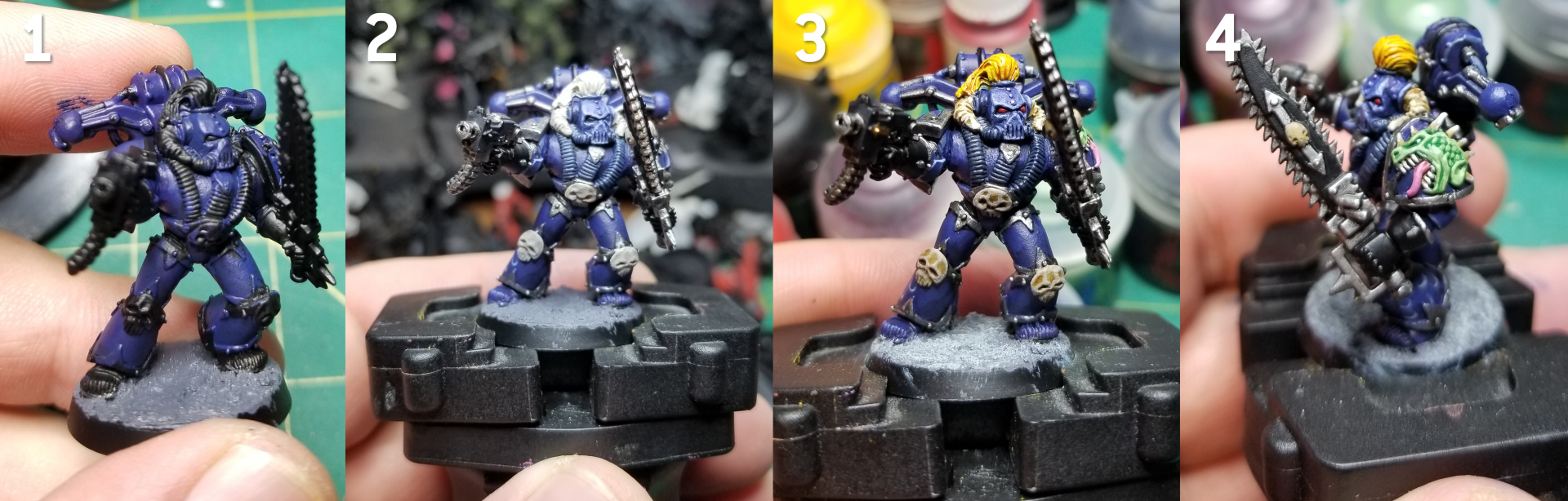
The model starts with a basecoat that's mostly
Kantor Blue with a healthy drop of
Naggaroth Night in it. This gives it the more purplish tint I'm looking for and there isn't really a GW paint that captures this color well. I shade this up a little bit with a speck or two of white and a second coat. Then it's time to paint the metal trim -
Leadbelcher, which gets shaded with
Nuln Oil, and then the cabling -
The Fang, washed with
Drakenhof Nightshade and highlighted with the Fang and
Reaper Snow Shadow.
In this step I also do the base colors for the bone and tufts. The bone is
Rakarth Flesh washed with
Seraphim Sepia while the tufts are
Wraithbone that I'll hit with
Iyanden Yellow contrast paint for a quick and easy solution. I also edge highlight parts of the armor with The Fang and a mix of the Fang and Reaper Snow Shadow. The eyes are
Mephiston Red with spots of
Evil Sunz Scarlet.
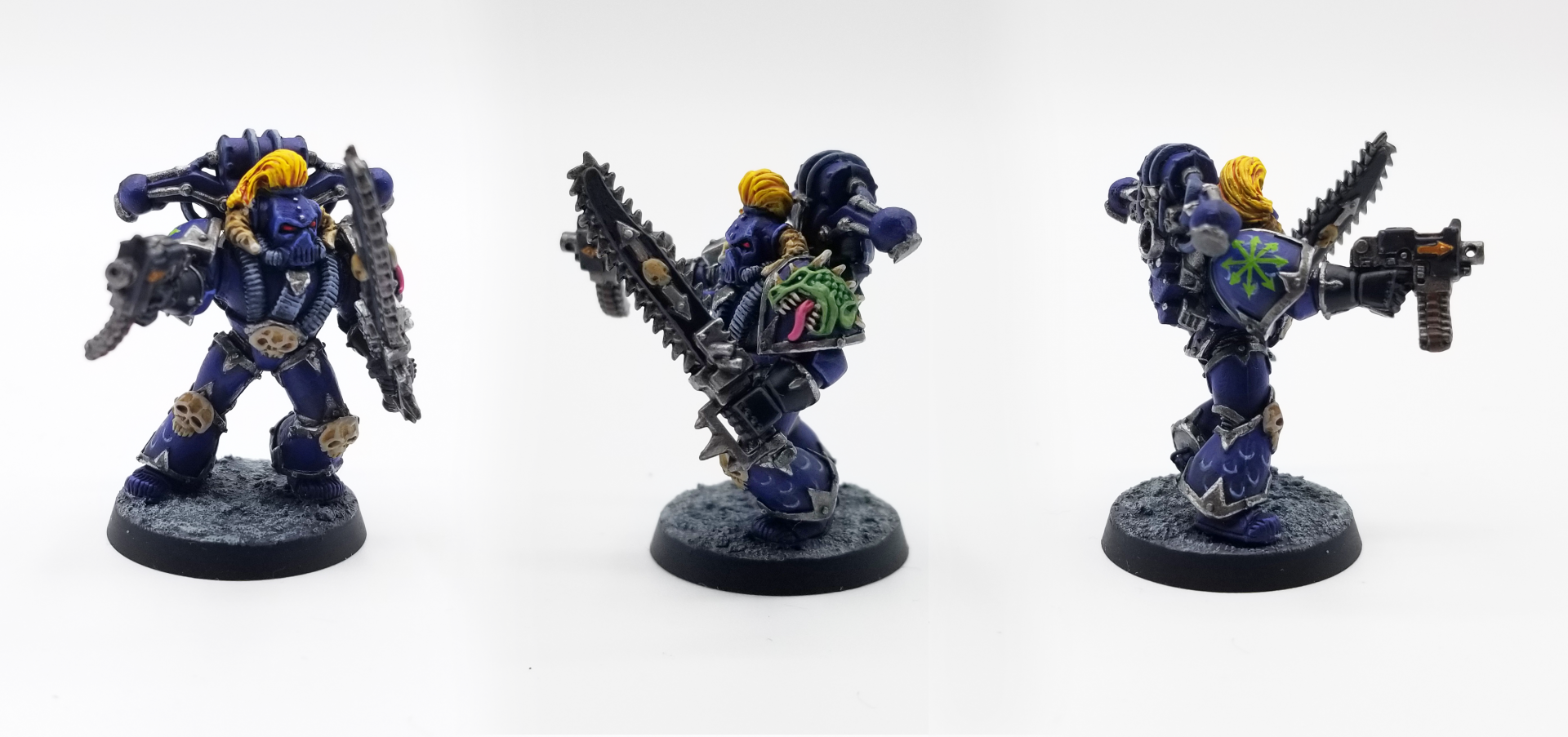
The shoulder pad uses almost as many colors as the rest of the model - the Green is
Warboss Green washed with
Biel-Tan and then highlighted with Warboss Green and
Skarsnik Green. The tongue is
Pink Horror highlighted with
Emperor's Children. The horns are
Rakarth Flesh washed with
Agrax Earthshade and then highlighted with
Reaper Polished Bone. And the eye is just a dot of
Reaper Pure White. I miss those old metal shoulder pads - they had so much detail and they looked great.
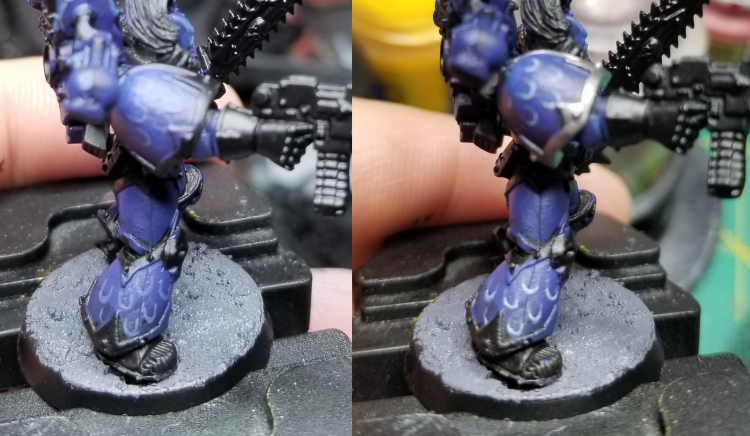
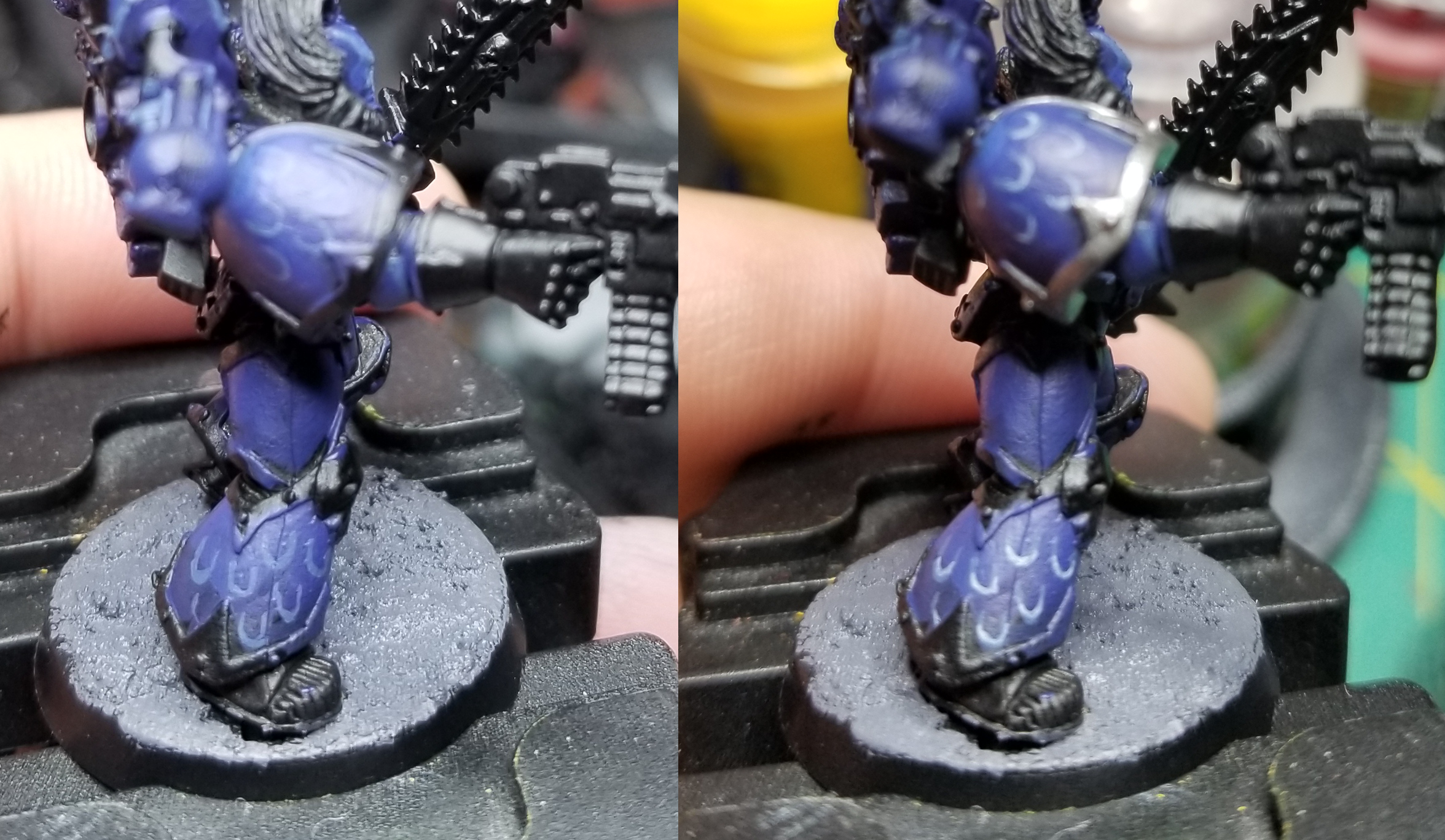
The scales are one of the defining features of 2nd edition Alpha Legion army. I painted these by freehanding thin "U" shapes on the model's greaves and shoulder pad with
The Fang, then I highlight them a bit at the bottom of the U with
Reaper Snow Shadow.
 Credit: Robert "TheChirurgeon" Jones
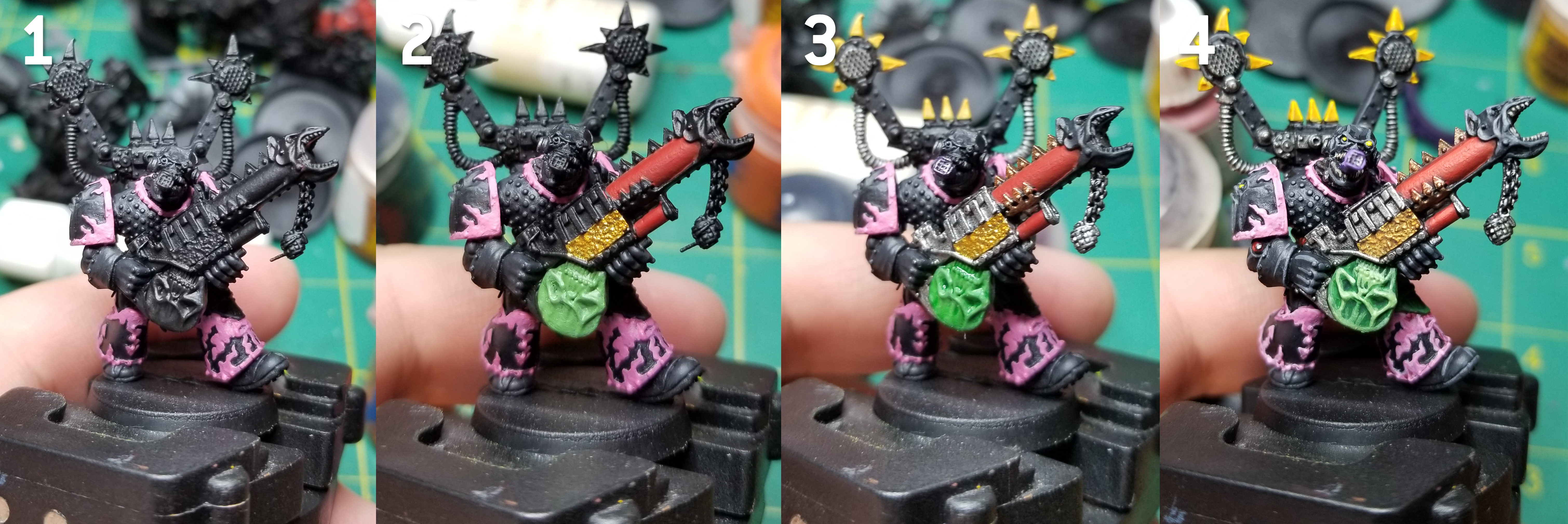
The Black Legion
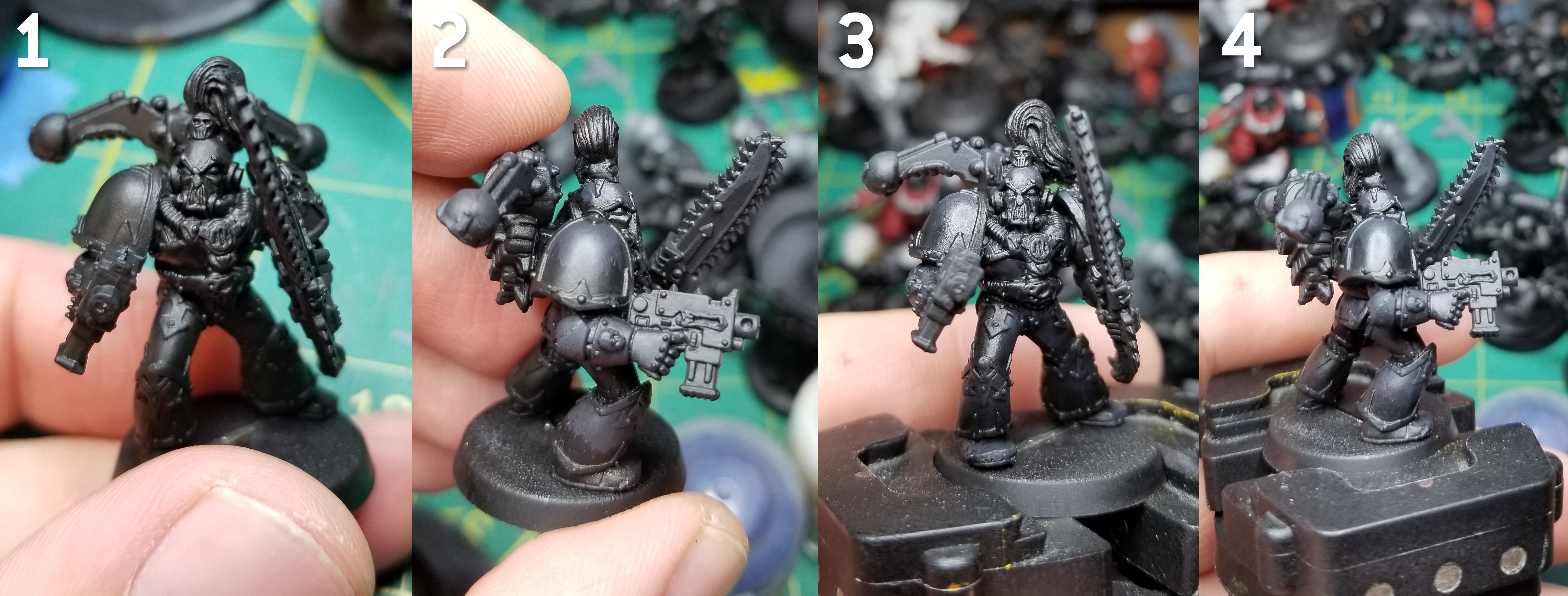
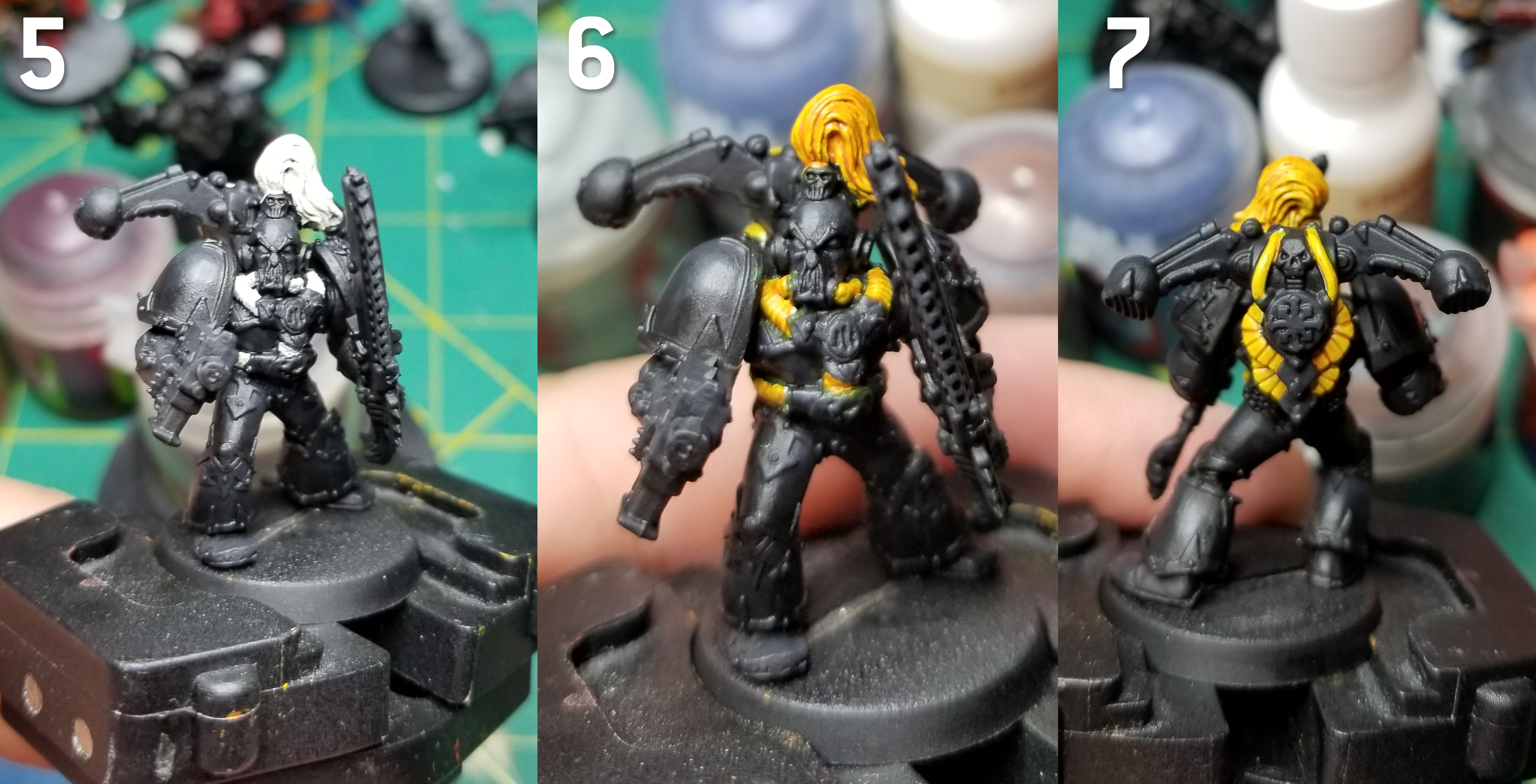
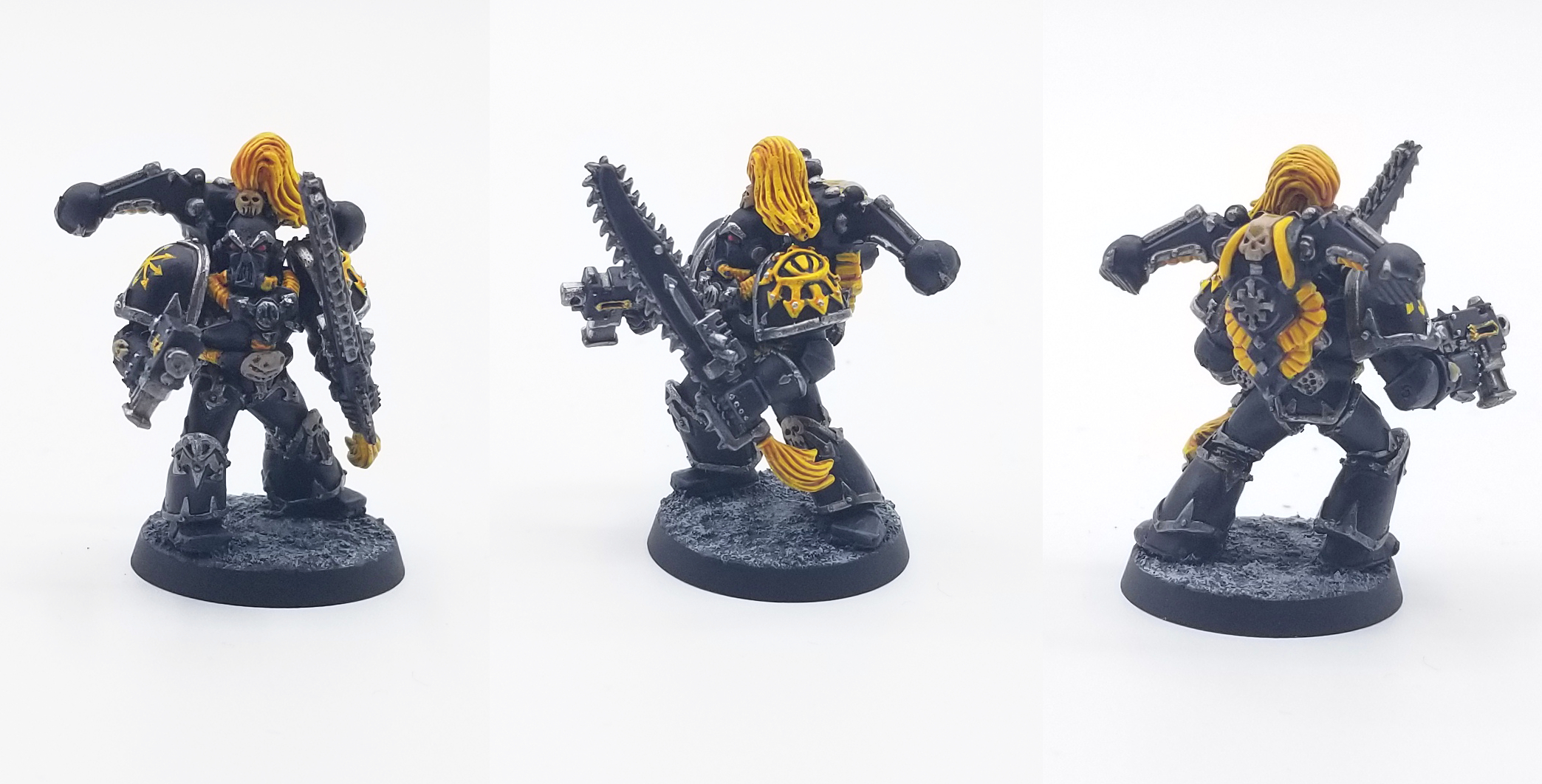
Clad in black armor, the 2nd edition black legion scheme gives the faction steel colored trim over gold, giving them a grungier, darker look compared to today's black-and-gold styling. They've also got bright orange power cables that stand out against their armor. Traditionally, the 'Eavy Metal team paints black by mixing a 50/50 mix of Chaos Black and Regal Blue, the closest analogs of which today are
Abaddon Black and
Kantor Blue. This gives you a dark color that you can use to shade your blacks and give them a bit more depth. What I've found however is that you can get a very similar effect by just using
Corvus Black to get a lighter shade of black on your legion.
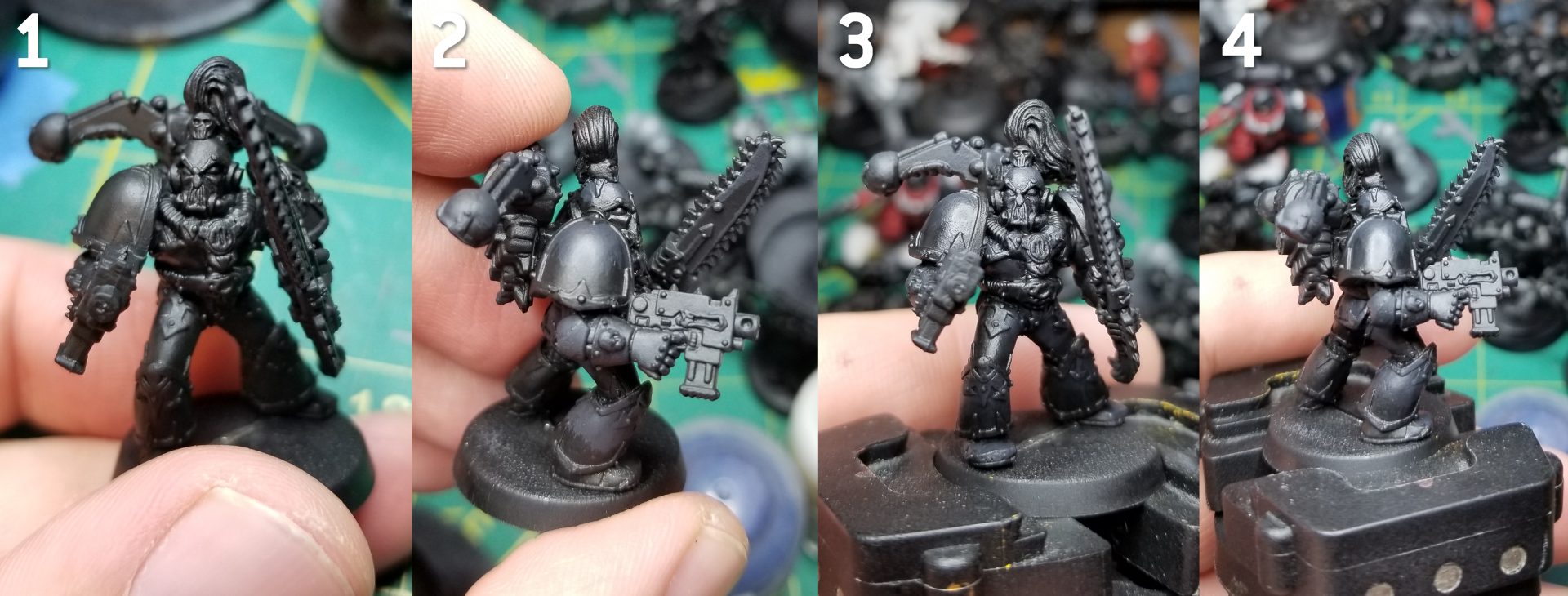
Painting these guys starts with getting the blacks right. I started by priming black and then coating them with a coat of Abaddon Black and then highlighted that with Corvus Black. Then I used
Nuln Oil to blend the two, which is pretty quick and worked very nicely. This gives it a nice, blended bluish black look that matches the models in the codex well.
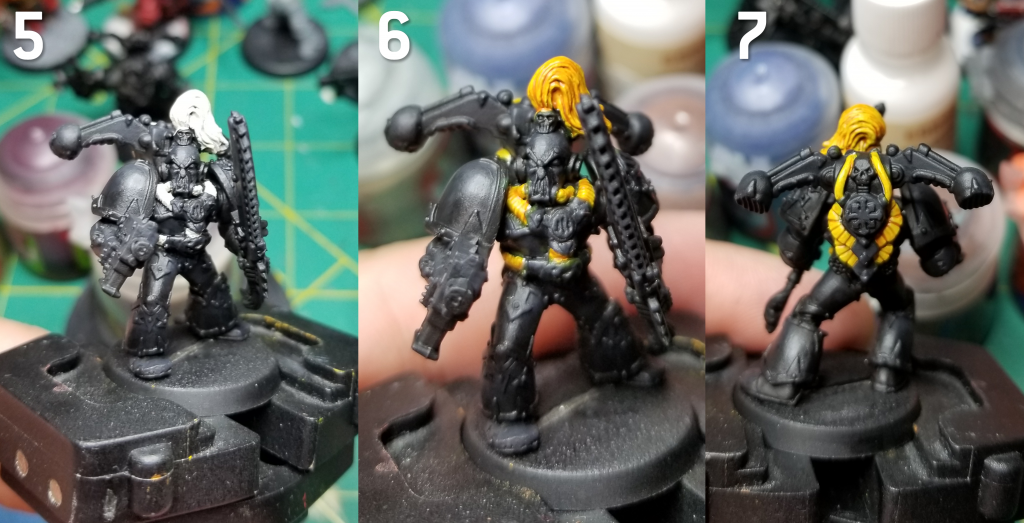
Next up are those distinctive orange/yellow tufts and cables. There's a more involved way to do this where you start with orange and shade up but what I've found is that you can solve this same problem much easier and more quickly now using contrast paints. I painted the cables and tufts with
Wraithbone and then slathered them in a few coats of
Iyanden Yellow to get the bright yellow/orange coloring.
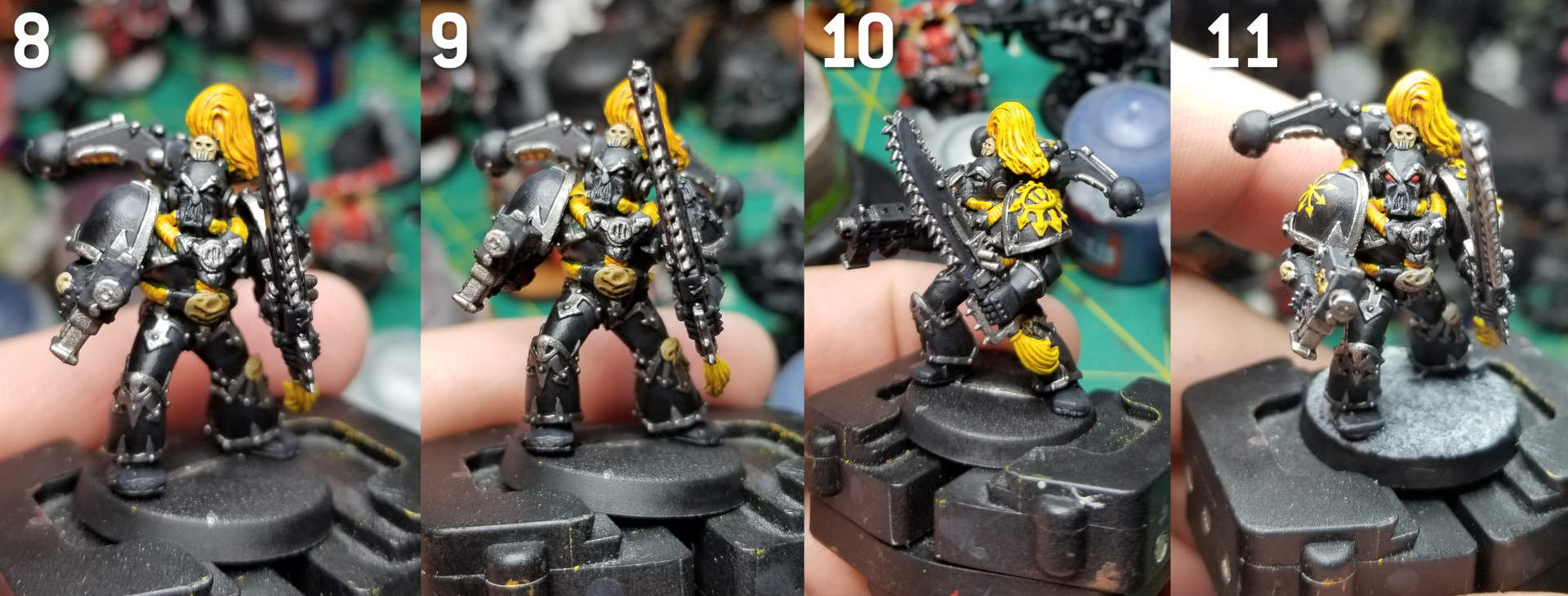
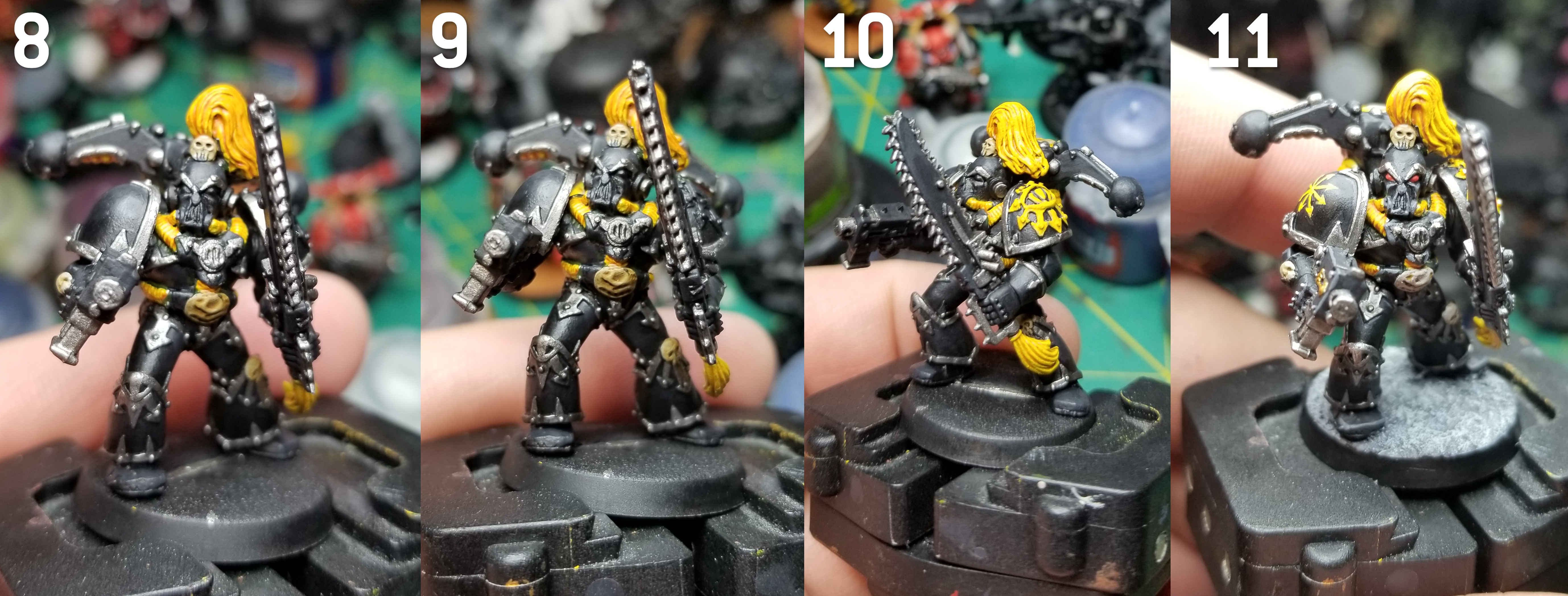
Time to finish this bad boy off. The codex Black Legionnaires have black weapons so I went with that but these days I paint red weapons on my marines because it gives them a spot of color. The metal trim is done with
Leadbelcher and shaded with Nuln Oil while the skulls are done with
Rakarth Flesh and shaded with
Seraphim Sepia (normally I use Agrax but 2nd ed has much warmer skull colors). Then I went through and edge highlighted the black parts with
Mechanicus Standard Grey and the Metal parts with
Runefang Steel. The eyes are
Mephiston Red and
Evil Sunz Scarlet, while the shoulder insignia are done with
Averland Sunset and
Yriel Yellow.
The final model is one I'm very happy with, and that I think very effectively matches up with the 2nd edition codex style.
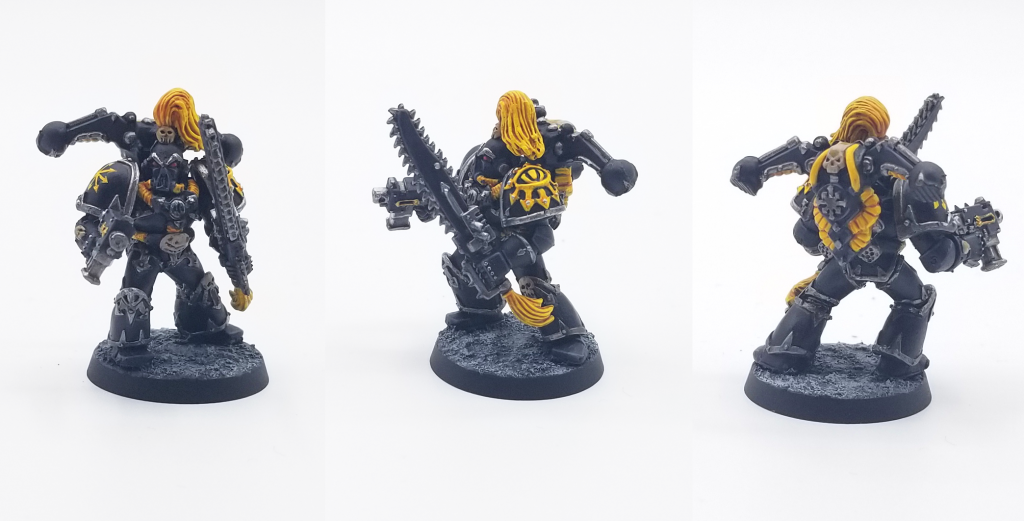 Credit: Robert "TheChirurgeon" Jones
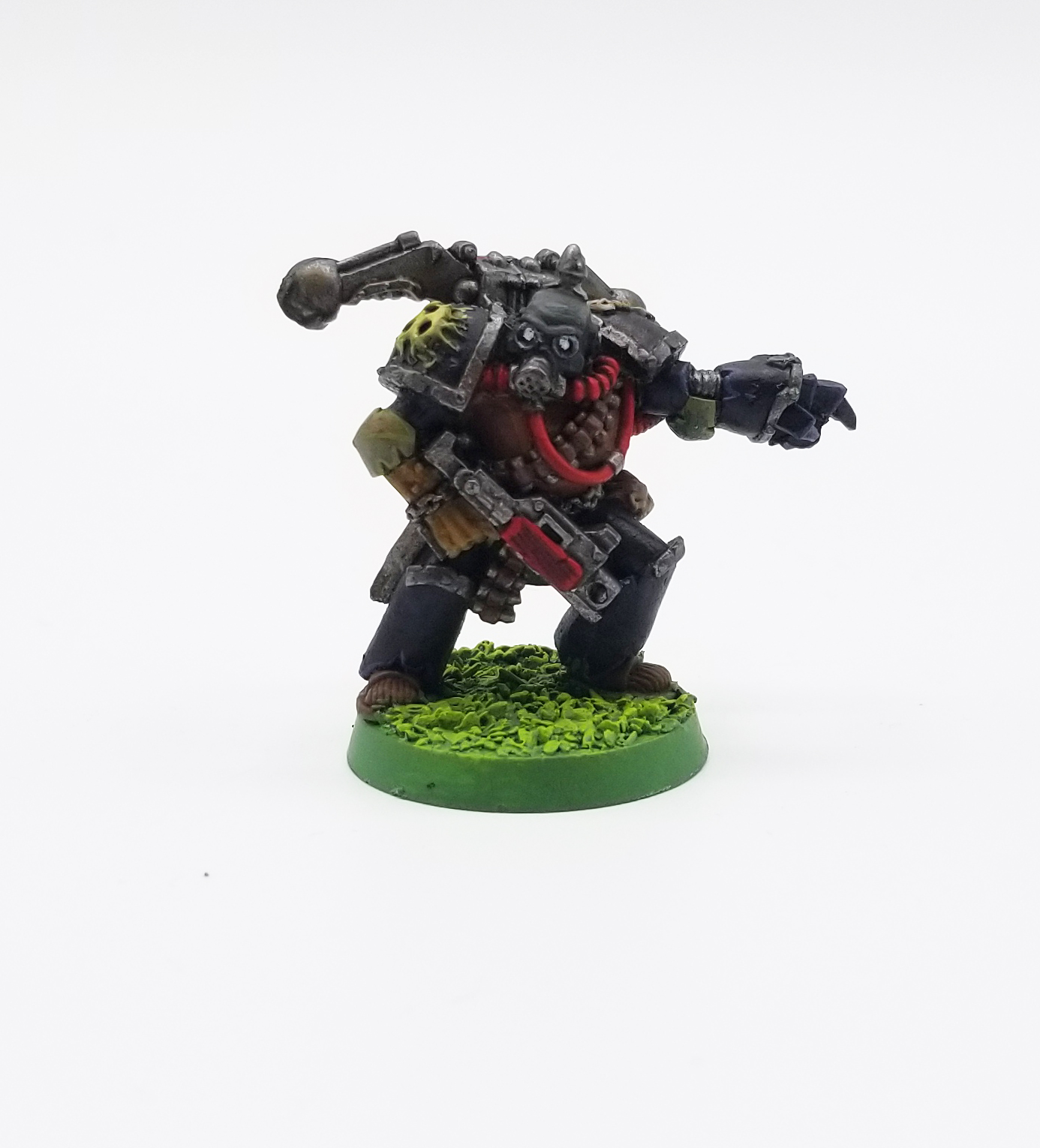
The Death Guard
2nd edition Death Guard were a far cry from the modern schemes - sure, they had plenty of dedicated models, but they had a bit of an odd hodgepodge scheme combining browns, blacks, and greens in Codex: Chaos. There was also a distinction between Death Guard and Plague Marines - one of the few such distinctions they'd make.
Robert "TheChirurgeon" Jones' Method
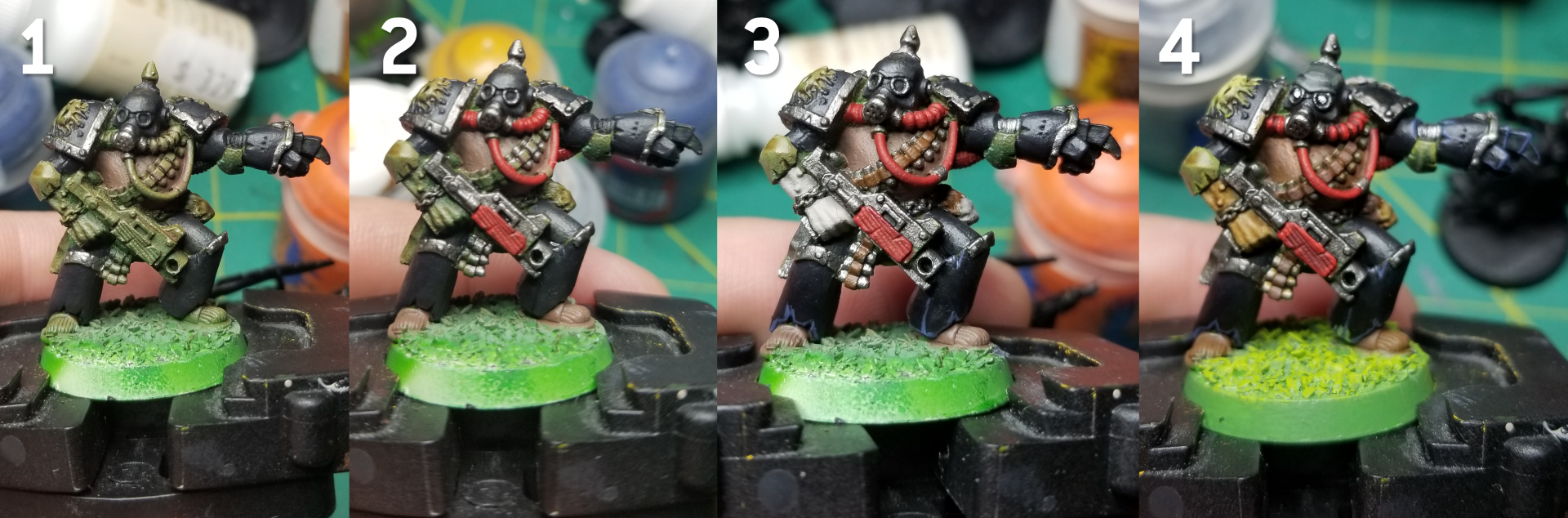
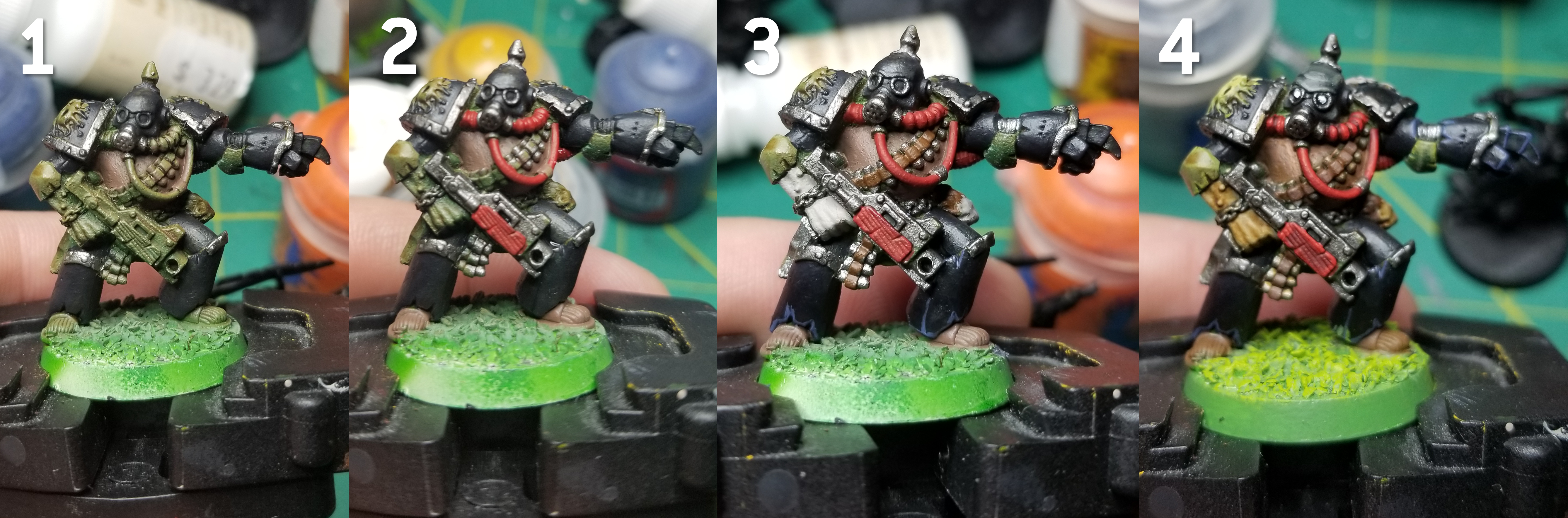
This one's a rescue I already had sitting around. He'd been primed white and washed/painted with various greens and browns but the key thing here is that only the elbow pads and a few armor plates are actually going to end up green on the final model. I start by painting the midsection
Gorthor Brown - that'll be washed later with
Agrax Earthshade and highlighted with a mix of Gorthor and
Deathclaw Brown. The metal parts are
Leadbealcher washed with
Nuln Oil. The black on Death Guard is presented as even bluer in the 'Eavy Metal section of Codex: Chaos so I work to replicate that by doing
Abaddon Black and a highlight of
Corvus black, then I wash/shade that with
Drakenhof Nightshade instead of Nuln Oil. The effect is subtle, but it works. The edge highlights also work toward this - I used
The Fang for them instead of Mechanicus Standard Grey.
The cabling on 2nd ed Death Guard is bright red, and I do that here by painting the cables
Mephiston Red, then washing that with
Carroburg Crimson and highlighting with Mephiston and
Evil Sunz Scarlet. The exposed arm is just
Rakarth Flesh with a few washes of
Seraphim Sepia. I highlighted the mask with mixes of Corvus Black,
Death Guard Green, and Mechanicus Standard Grey. The eyes are dots of
Reaper Ghost White. Finally, the base followed SRM's
Goblin Green bases tutorial.
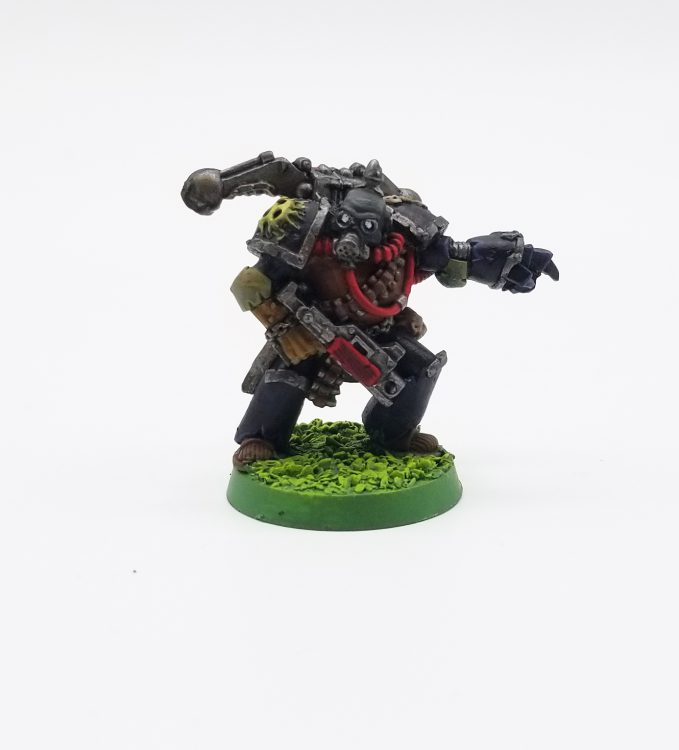
The final result pretty faithfully captures the codex look for this model, and the semi-slapdash scheme of 2nd edition Death Guard.
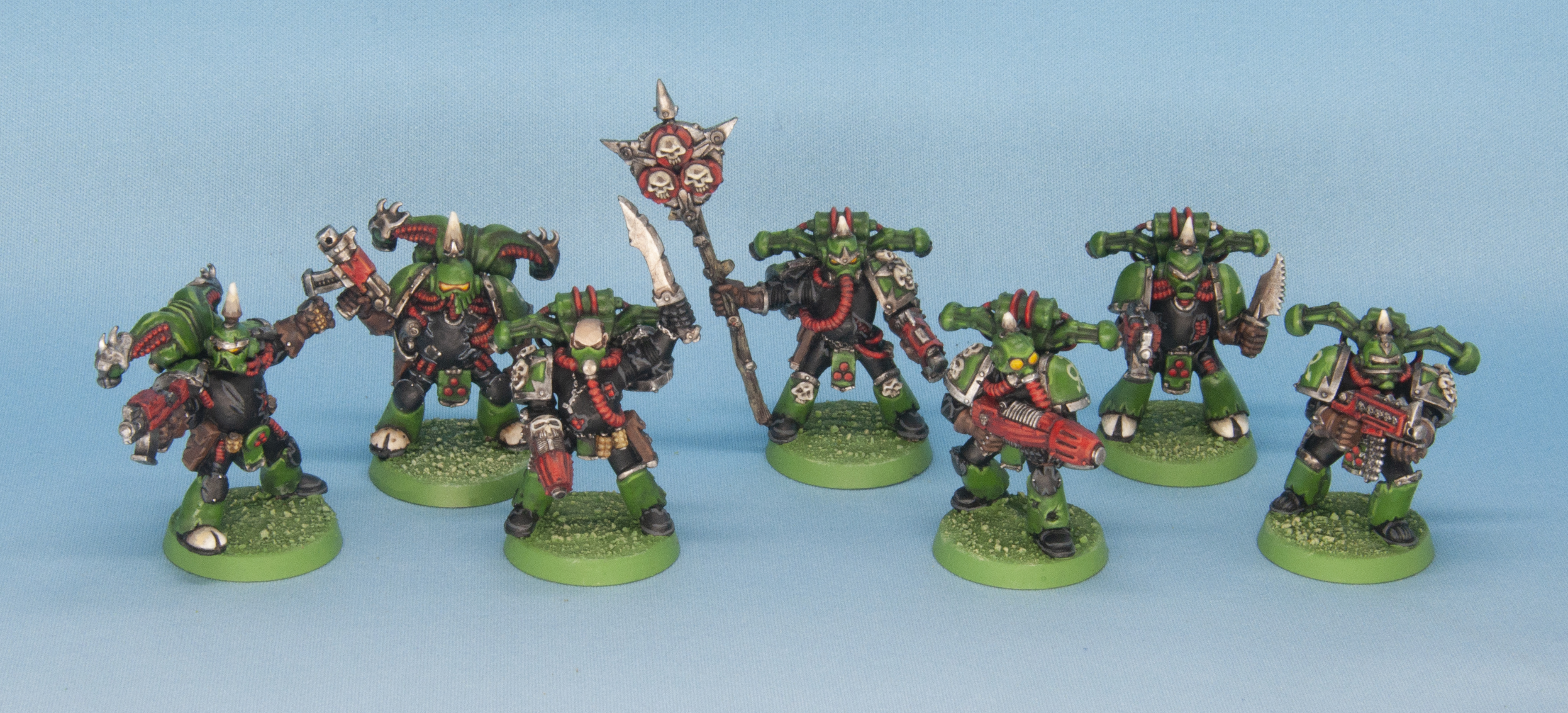
Dylan Gould's Method
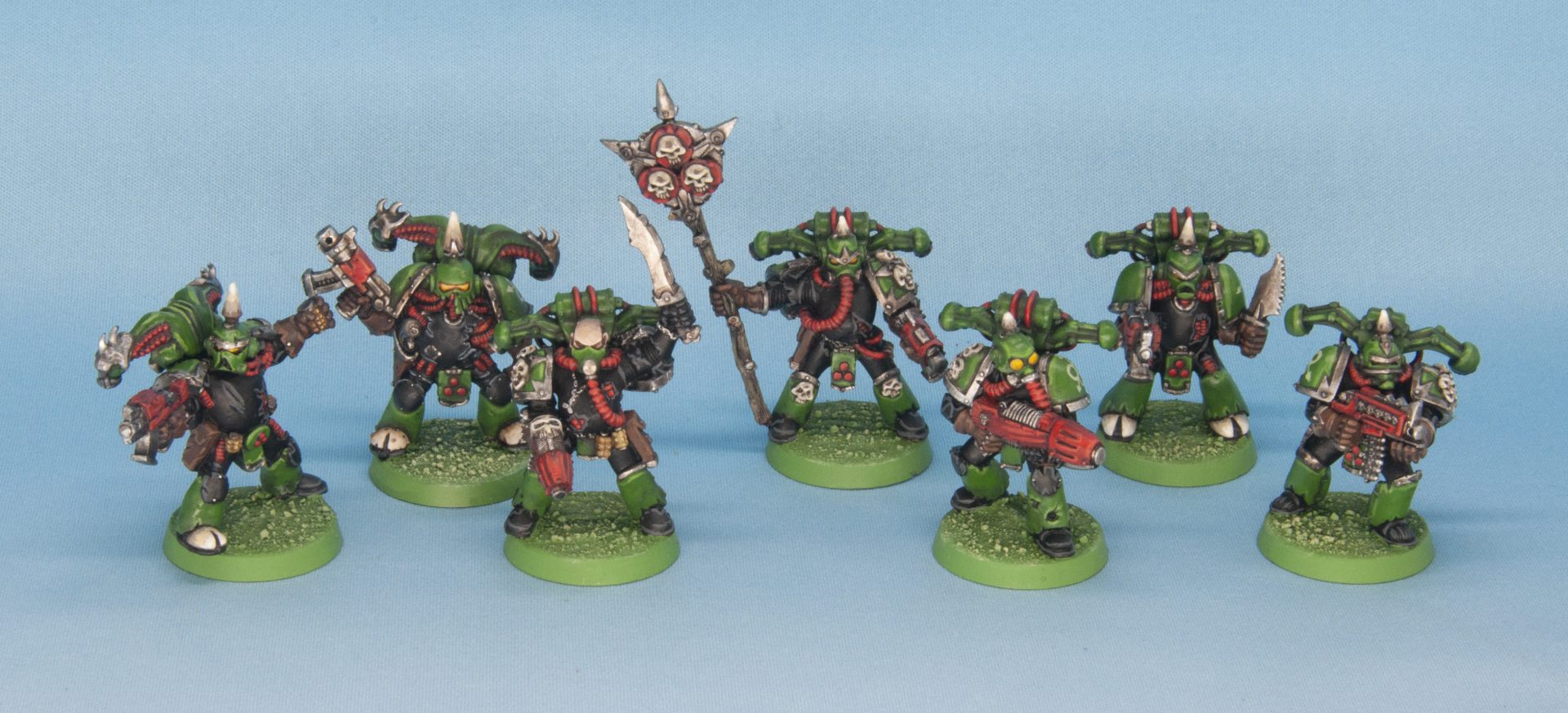 Credit: Dylan Gould
For these and the Thousand Sons I matched the paint schemes in the
How to Paint Citadel Miniatures book. Famed for the 4 step paint process, these were fun.
- Prime Black
- Basecoat Green with Snot Green
- Wash Green with Brown Wash (AP Strong Tone)
- Highlight with Snot Green, then 1:1 Snot Green and Rotting Flesh, then pure Rotting Flesh
- Basecoat Red with Mephiston Red
- Highlight with Blood Red, then Wild Rider Red
- Highlight Black with Codex Grey and a little white for a final highlight
- Basecoat Silver with Mithril Silver
- Wash metals with Armor wash (AP Dark Tone)
- Paint yellow with Sunburst Yellow, then wash with Orange Wash
- Highlight with Sunburst and Bad Moon yellow
- Grenades are painted with Tausept Ochre and washed with Brown wash
- Leather is painted with Scorched Brown, then highlighted with Bleached Bone blended with the base color
- Base bone with Khemri Brown.
- Highlight with Khemri-Bleached Bine and add some White for the final highlight.
- The skin on the sergeant was done with Elf flesh mixed with a little Codex grey, highlight up with some bleached bone. Shaded with flesh wash.
- Freehand was done in Rotting Flesh.
- Paint bases Goblin Green
- Drybrush bases with Underhive Ash
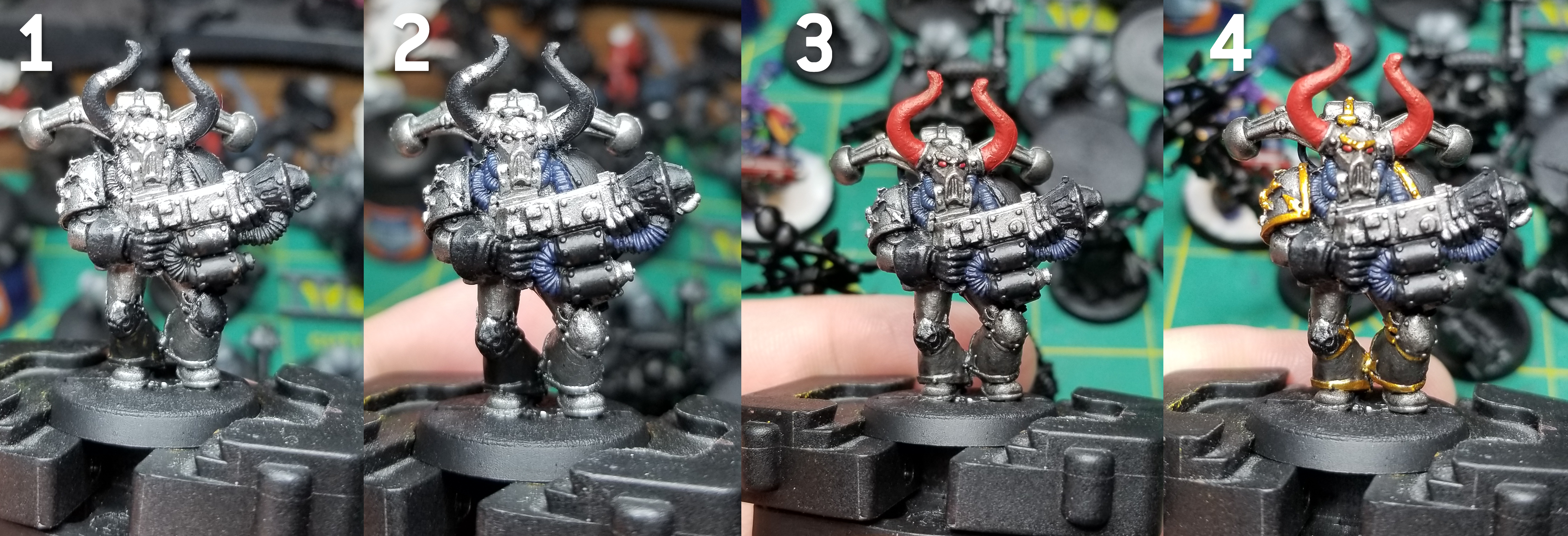
Iron Warriors
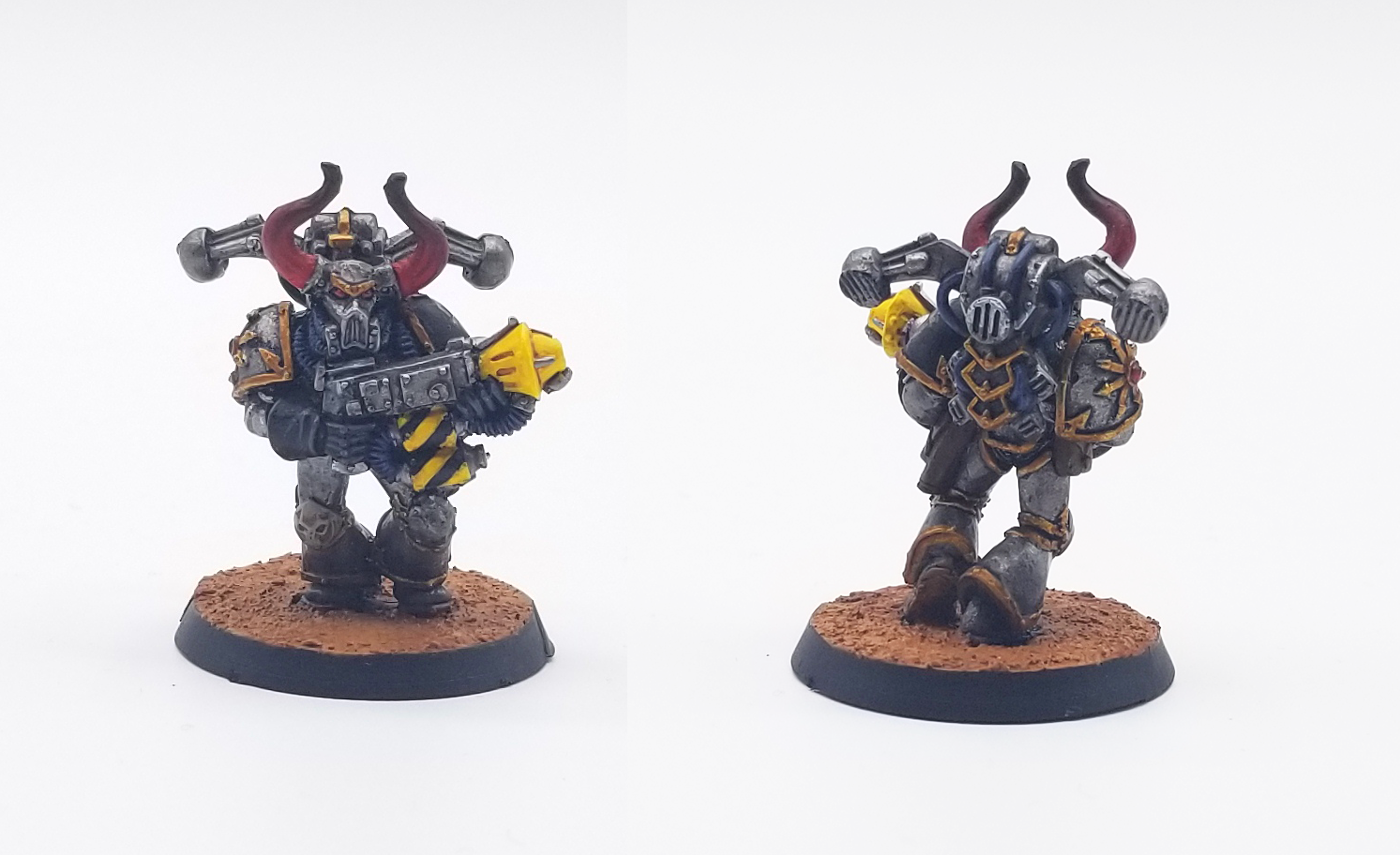
Blessed with the easiest of the legion paint schemes to replicate, the Iron Warriors are probably the quickest to paint.
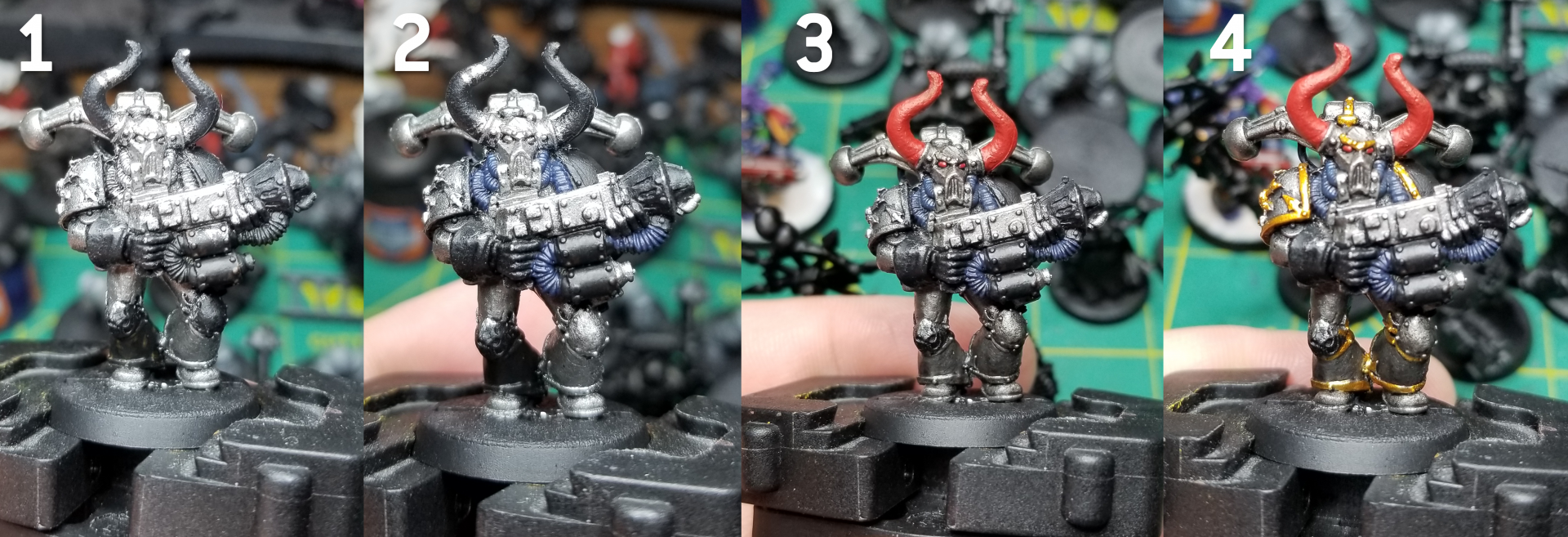
This one starts with a coat of
Leadbelcher on the body, plus a coat of
Kantor Blue on the cables. I've left one shoulder pad black, and you can leave black any parts you want to paint hazard stripes on at this time. I'm gonna put them on the flamer so I don't need them elsewhere. Once the metal and blue are down, I wash the model in
Nuln Oil. 2nd edition Iron Warriors have red horns (it's a great look with the steel), so I start by painting the horns
Mephiston Red along with the eyes. Then it's time to lay down the gold, which here is
Retributor Armour.
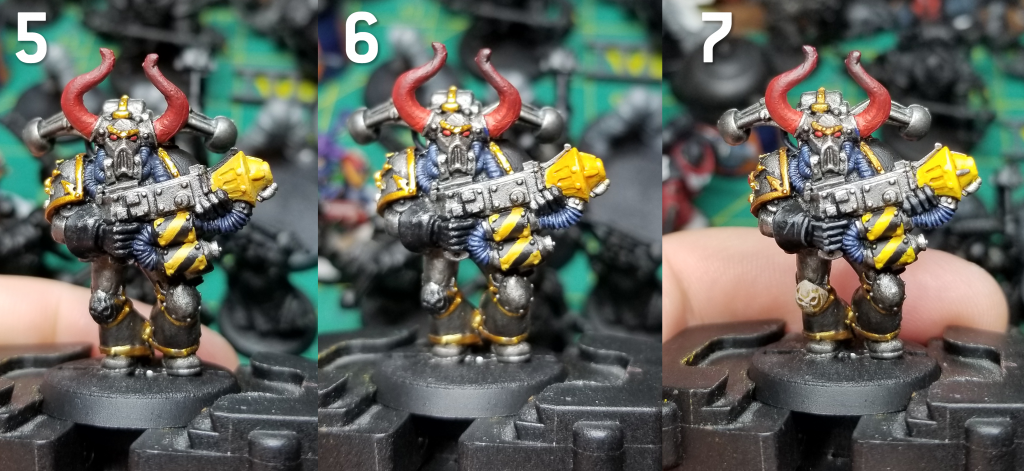
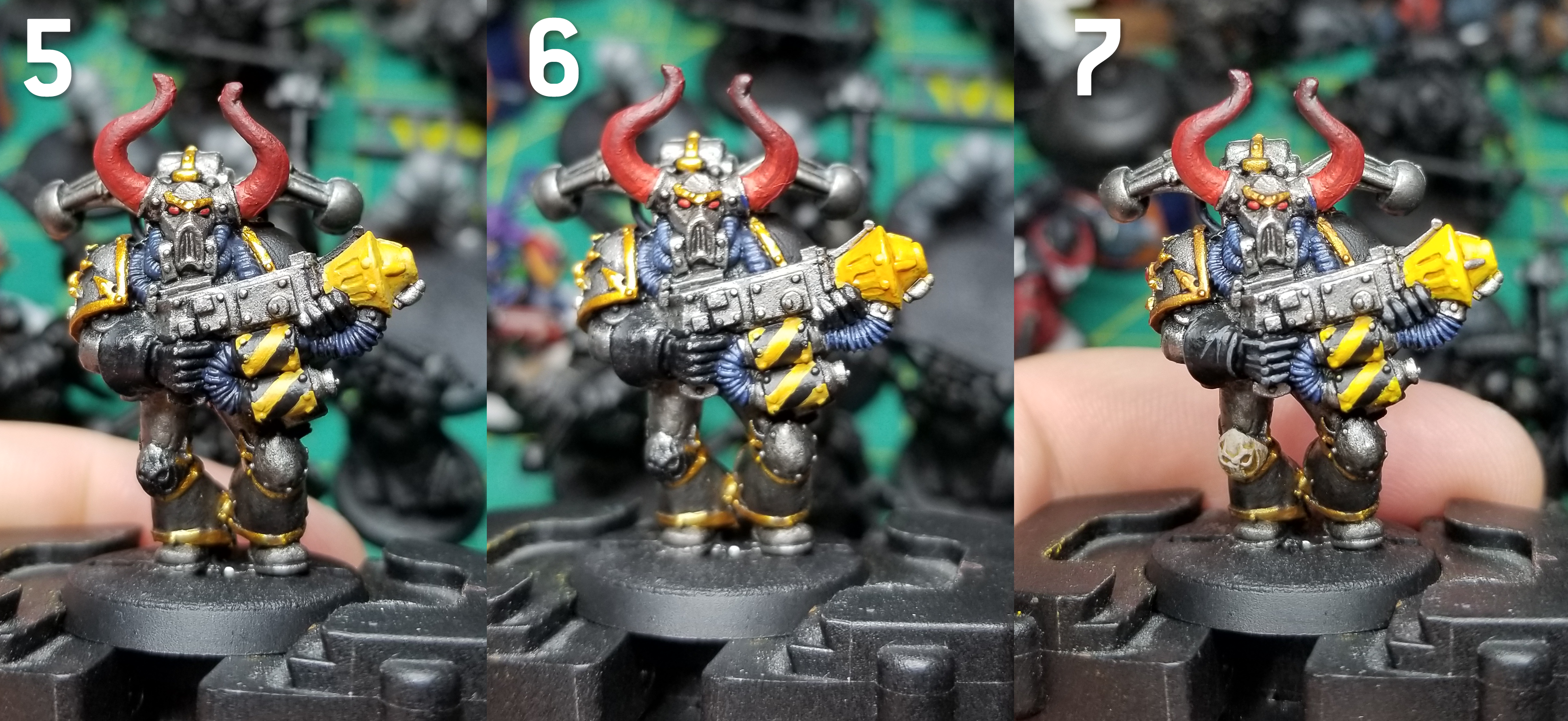
2nd edition flame weapons were frequently brightly colored and yellow or orange, so I go for that look here. The nozzle is
Averland Sunset highlighted with
Yriel Yellow and shaded with
Fuegan Orange before being highlighted again with Yriel Yellow and
Flash Gitz Yellow. The Hazard Stripes are freehand Averland Sunset with a highlight of Yriel. I shaded the horns with several layers of
Carroburg Crimson before giving them a final tip of Nuln Oil. The gloves are edge highlighted with
Mechanicus Standard Grey and the skulls are
Rakarth Flesh washed with
Seraphim Sepia. Finally the cables are highlighted with
The Fang.
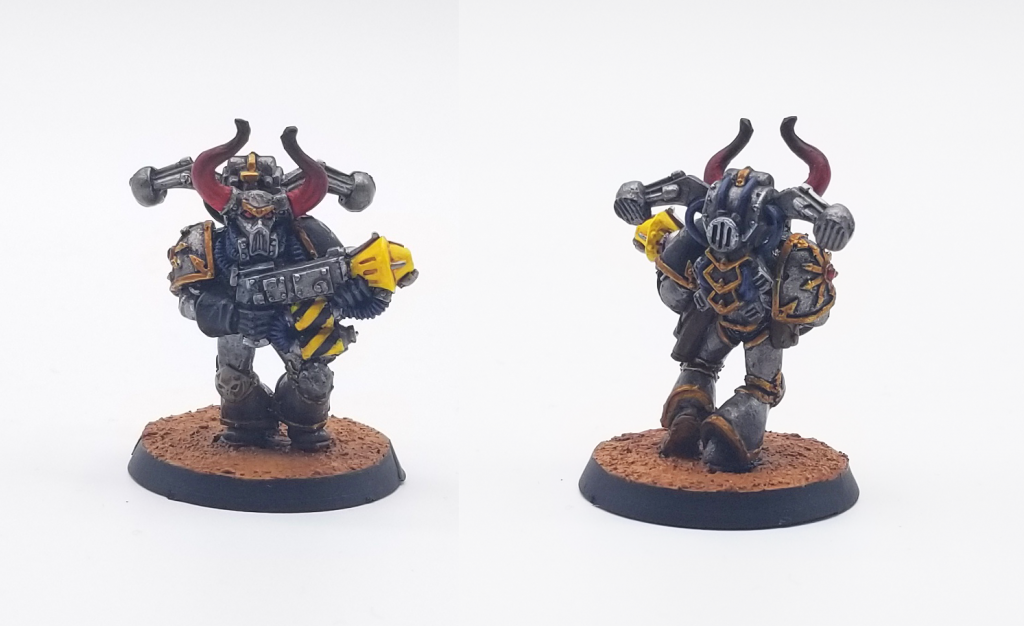 Credit: Robert "TheChirurgeon" Jones
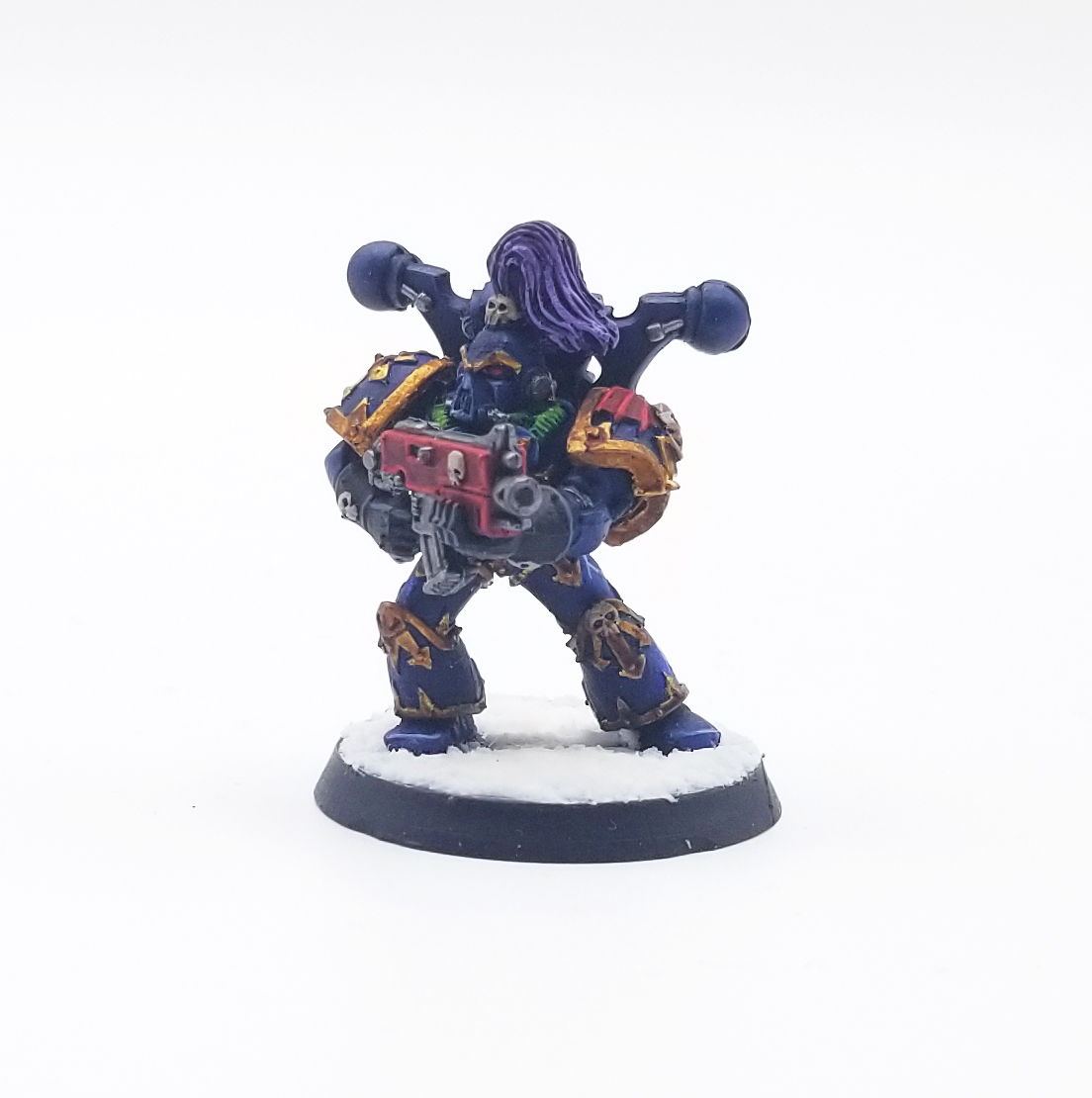
Night Lords
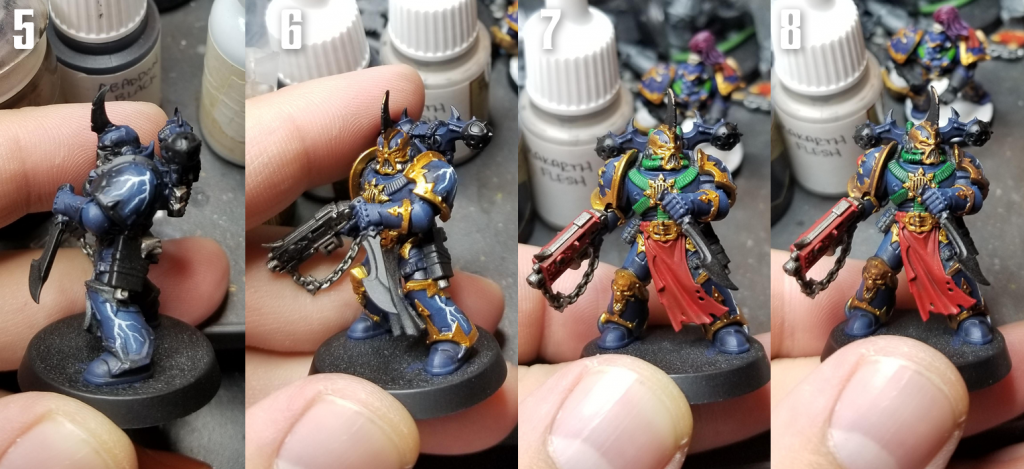
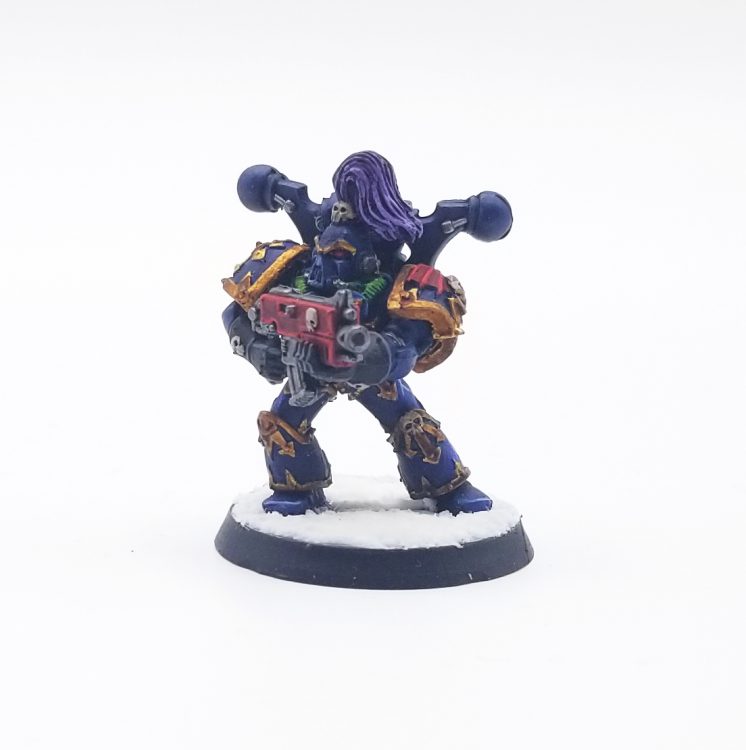
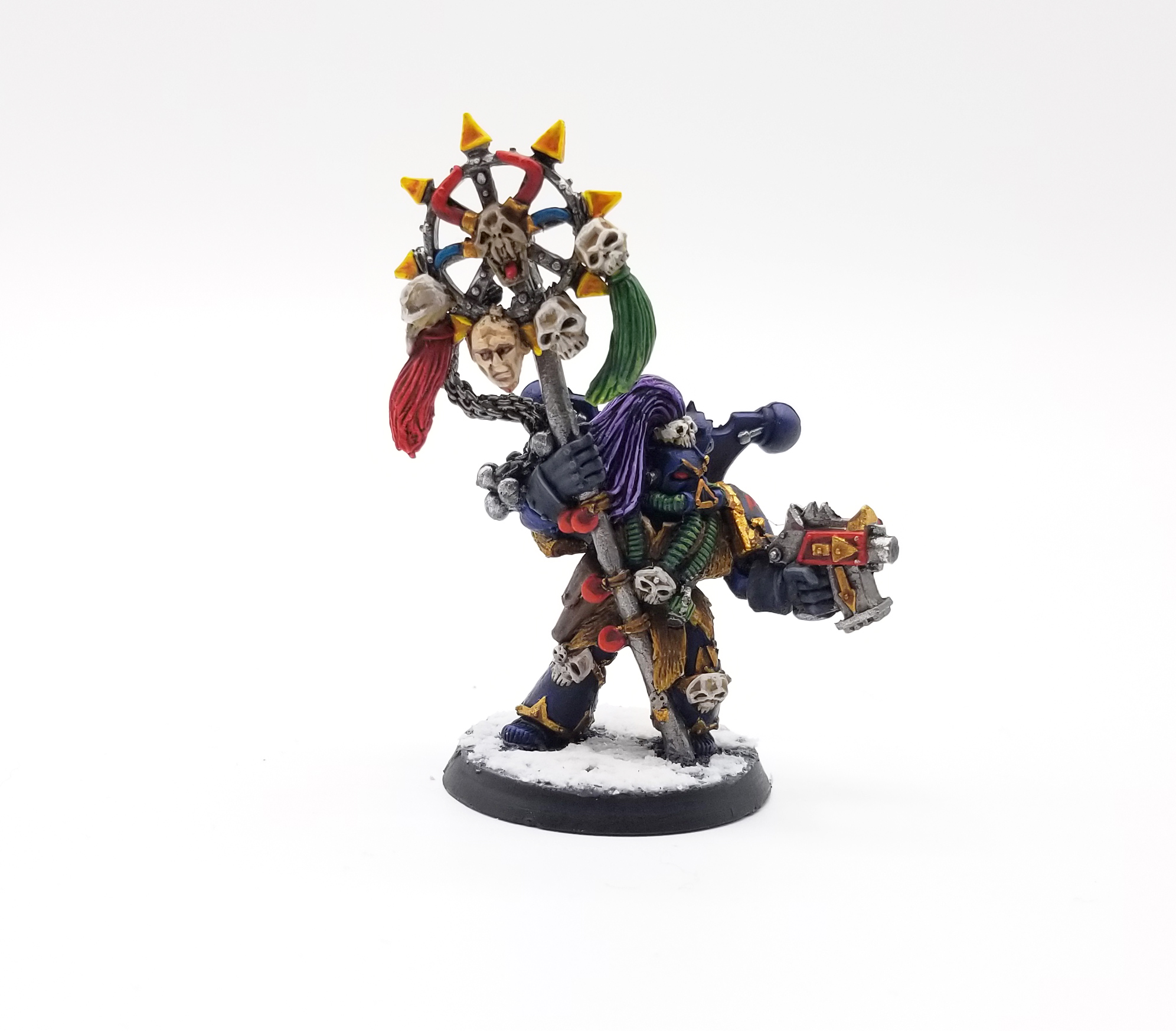
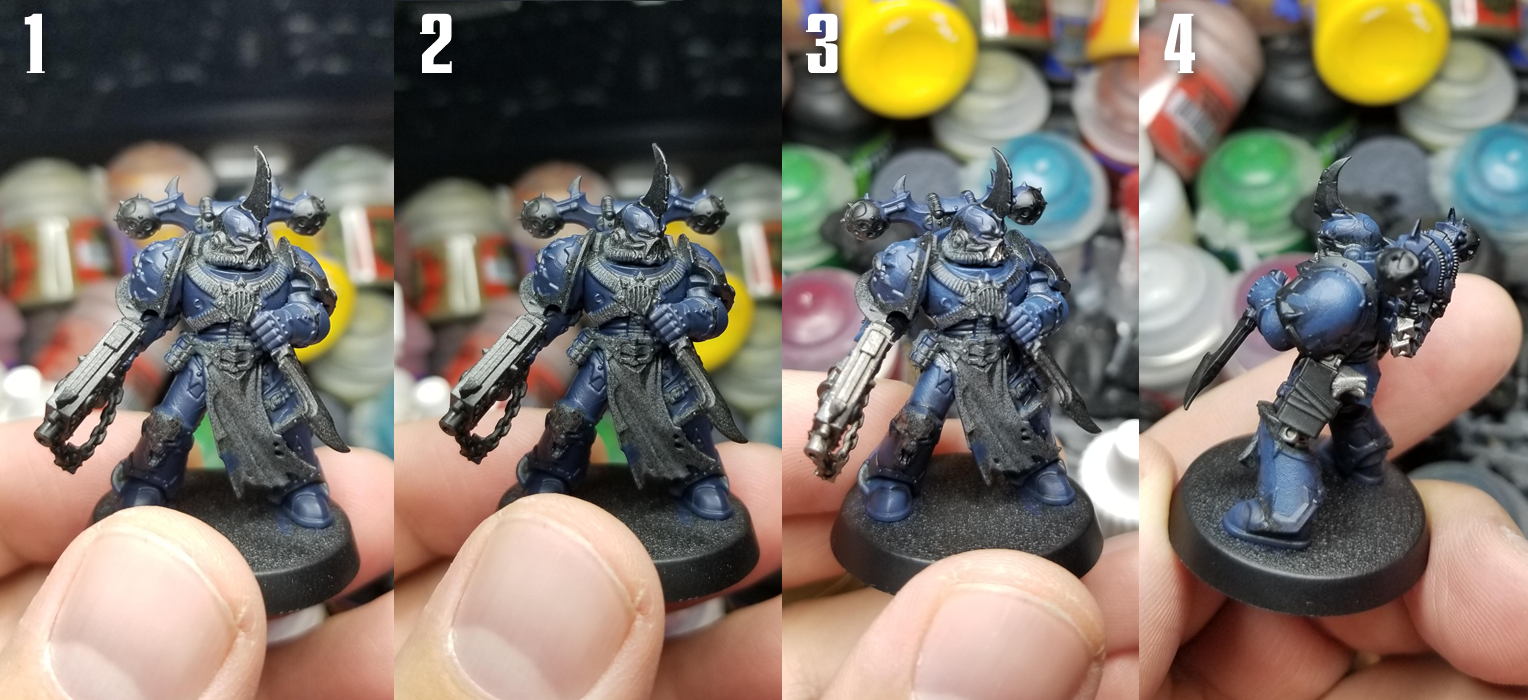
The Night Lords scheme has probably changed the least from the originals, since the "dark blue with lightning bolts" motif is an instant classic.
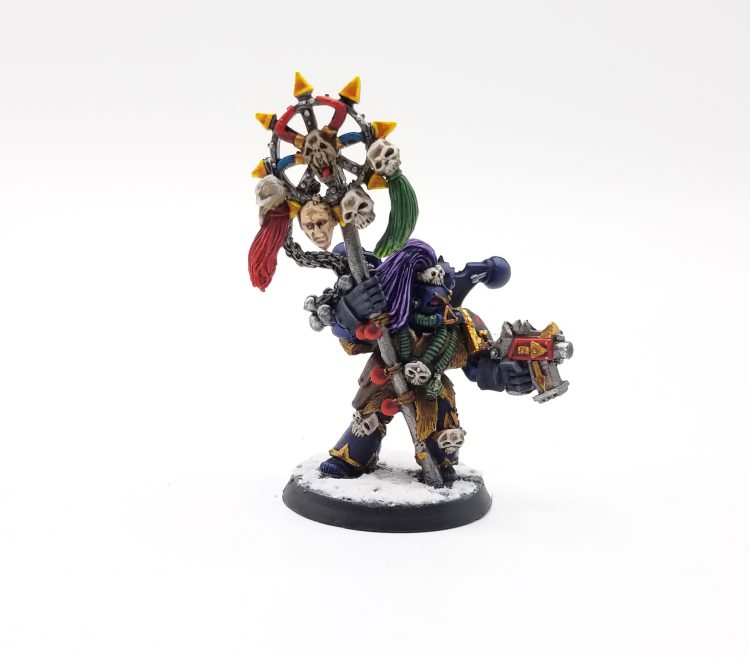 Credit: Robert "TheChirurgeon" Jones
Start by priming the model black, then shading up to blue. For a more 2nd edition look, shade from
Abaddon Black up to
Kantor Blue - we're not going much brighter than that. The process is very similar to the last time I talked about Night Lords, only without the base color of
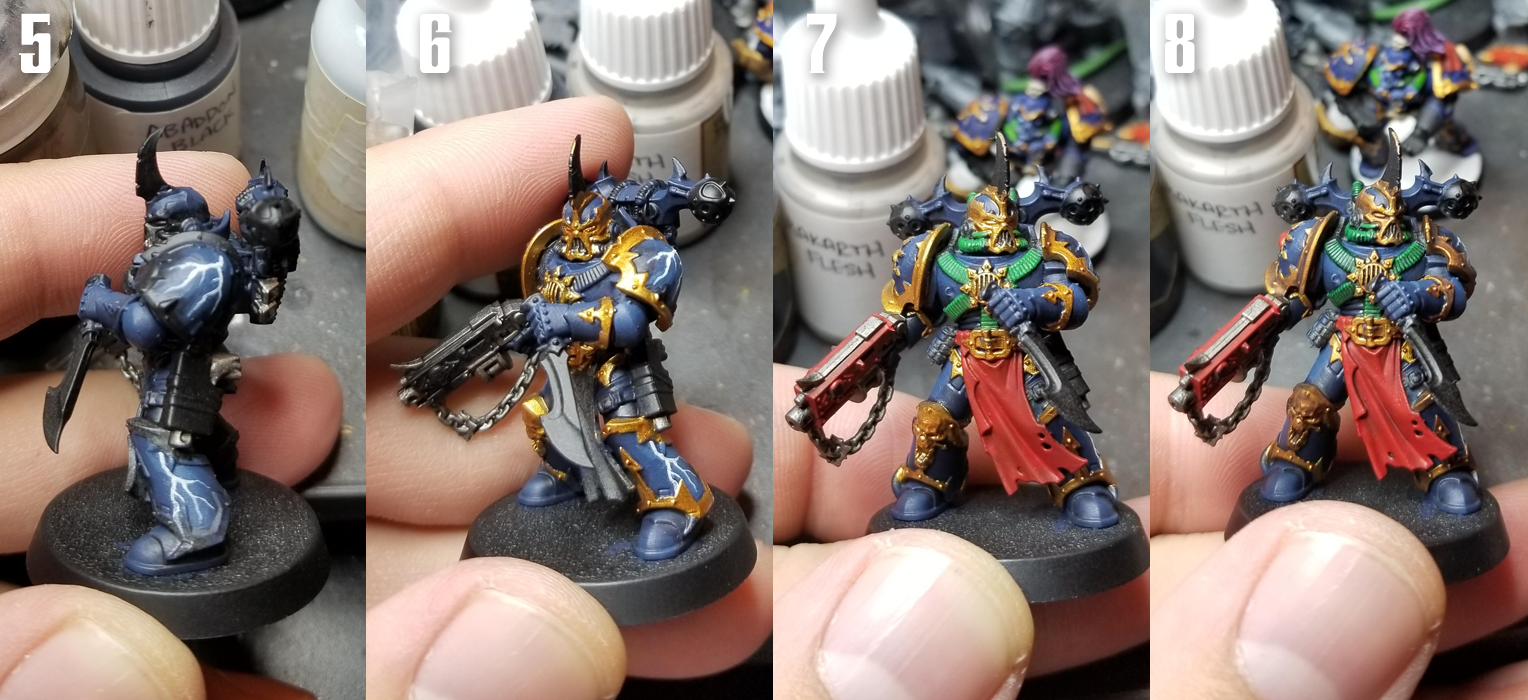
Night Lords Blue and going a bit darker. Work your way up to Kantor Blue and use it to create blue hazes around where your lightning bolts will go. Then block those in with a light blue like
Reaper Snow Shadow and then hit them again with a pure white - I use
Reaper Ghost White.
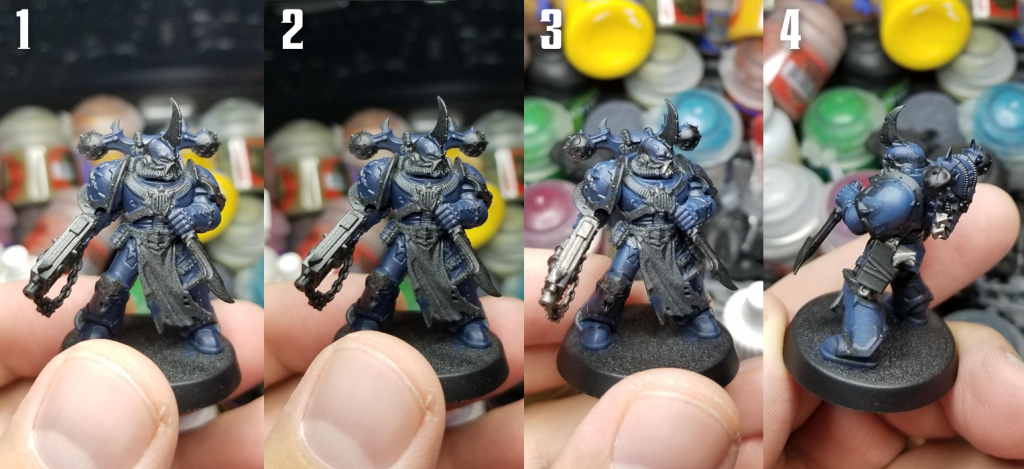
In similar fashion, I'm doing the gold here with
Retributor Armour and shading it with
Agrax Earthshade, while the piping is done by first painting
Caliban Green then highlighting that with
Waaagh Flesh. You could also start with Waaagh and shade with
Coelia Greenshade if you were feeling so inclined. The final highlights are done with either
Death Guard Green or
Moot Green, depending on how bright I want to go.
I do my Night Lords' guns red and so that means they're painted
Mephiston Red with a wash of
Carroburg Crimson and edge highlighted with
Evil Sunz Scarlet. The purple tuft is
Naggaroth Night shaded with
Druchii Violet and
Nuln Oil then highlighted with Naggaroth and mixes of white to get lighter shades. The steel bits are
Leadbelcher washed with
Nuln Oil and the bone bits are
Rakarth Flesh washed with
Agrax Earthshade, though for something more era-appropriate you can use
Seraphim Sepia instead.
 Credit: Robert "TheChirurgeon" Jones
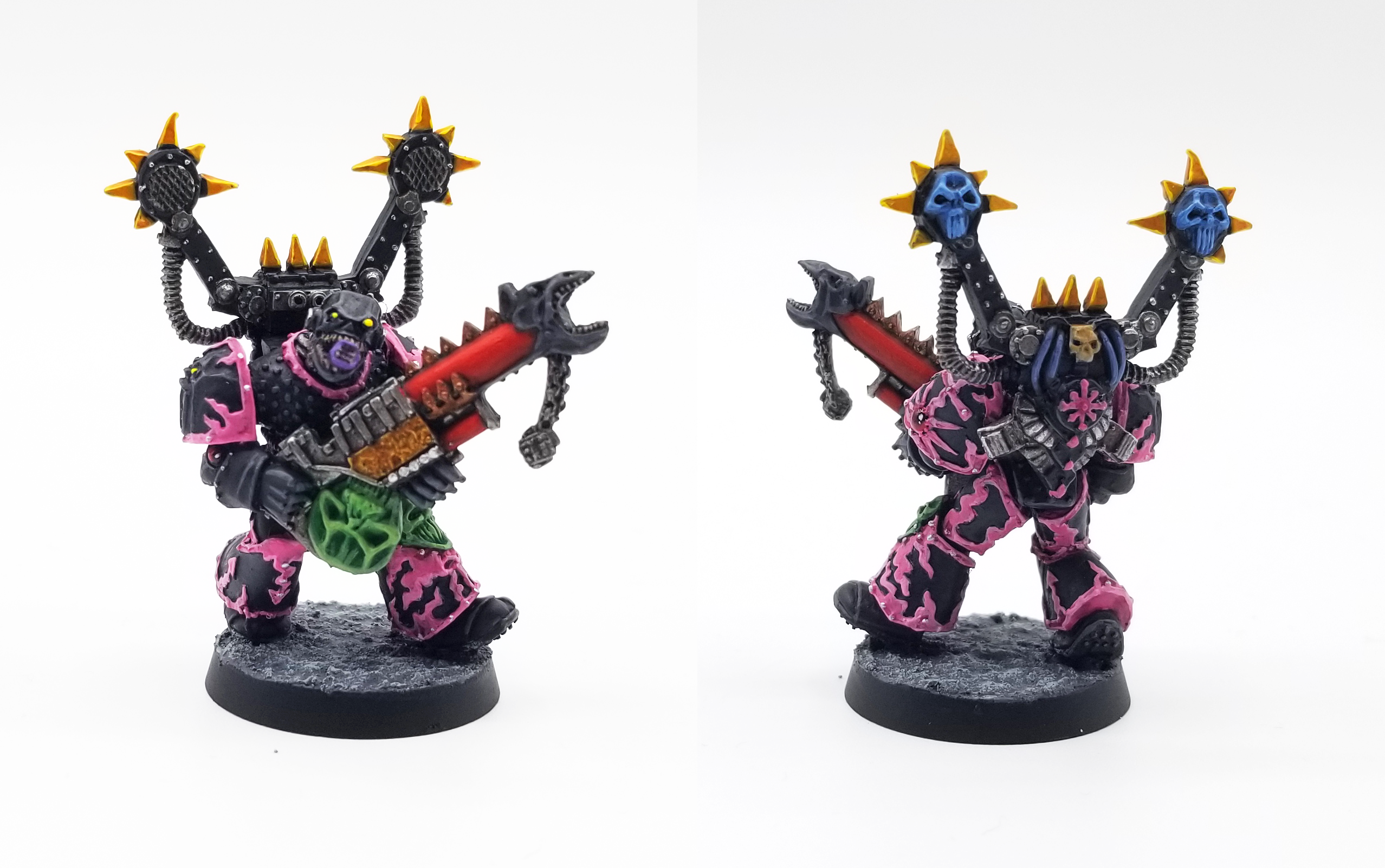
Noise Marines
2nd Edition Noise Marines were a lot less uniform in color, using mostly dark armor with lots of bright pink, blue, and yellow trim to go with the metal models that came out about 6 months after Codex: Chaos released. They're pretty wild models on the whole, and unlike nearly anything else in the Chaos range.
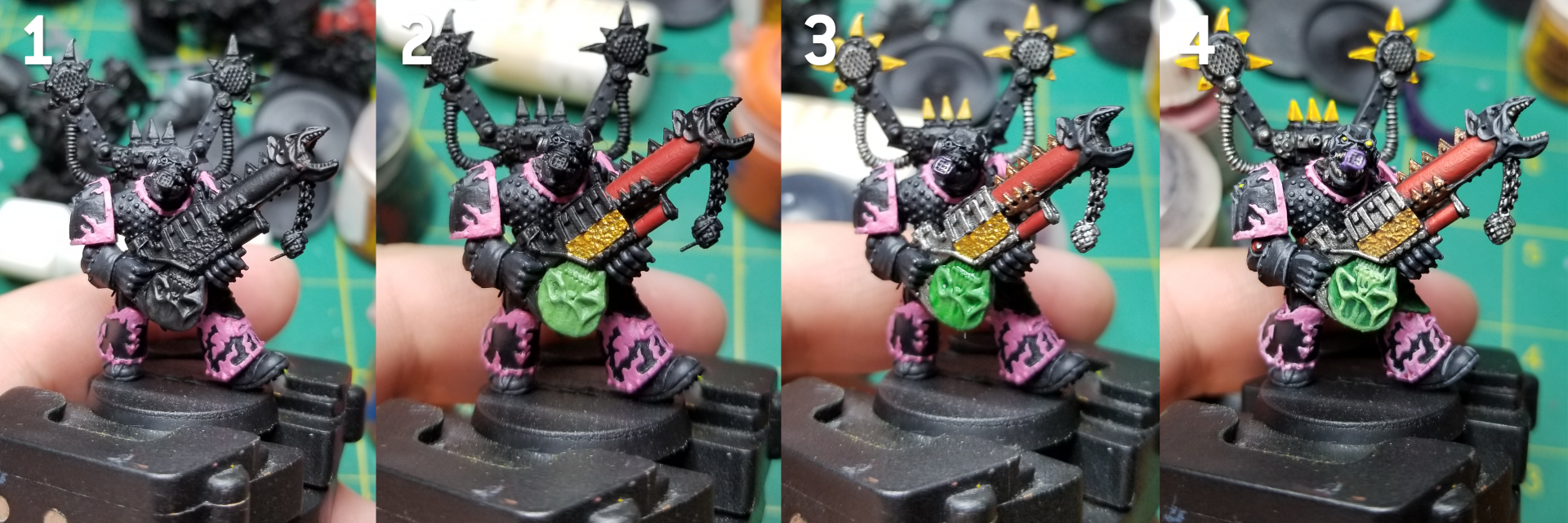
I started by priming the model black, then highlighting the black areas with
Corvus Black and later a 50/50 mix of Corvus Black and
Mechanicus Standard Grey, which I'd edge highlight with Mechanicus Grey. The pink trim is EMperor's Children and Fulgrim Pink for edge highlights. The skulls on the knee and the sonic blaster are
Warboss Green shaded with
Biel-Tan Green and then edge highlighted with
Skarsnik Green. The red parts on the gun are
Mephistoon Red with some highlights of
Evil Sunz Scarlet and
Wild Rider Red. The mouth tube is
Naggaroth Night highlighted with
Xereus Purple.
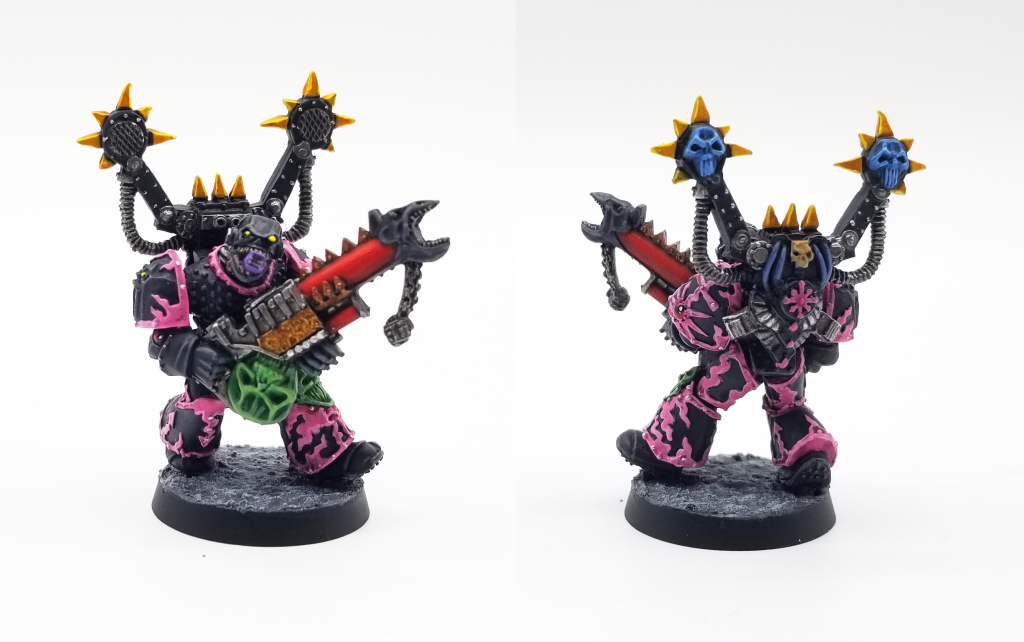 Credit: Robert "TheChirurgeon" Jones
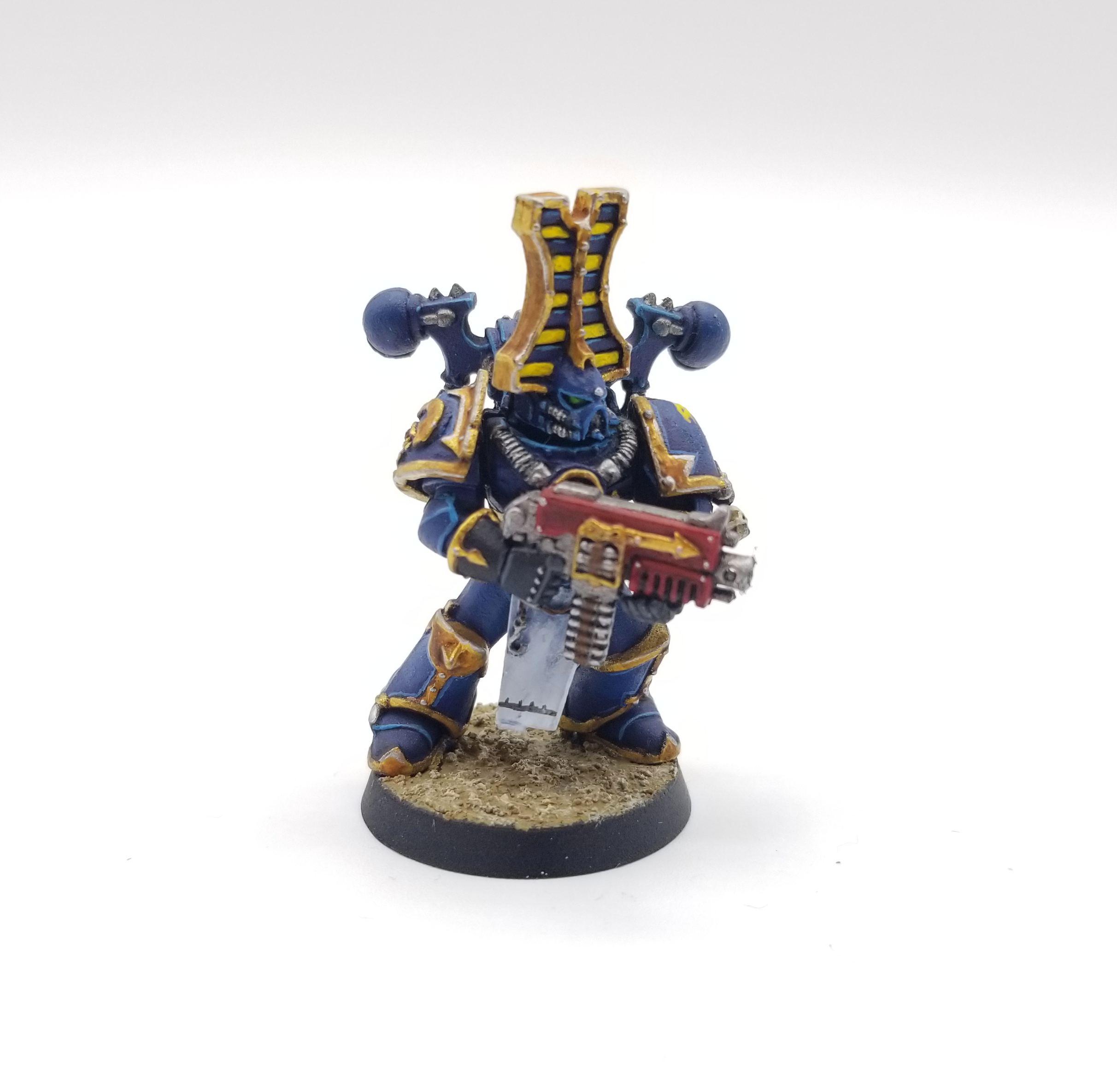
The Thousand Sons
The Thousand Sons of yesteryear were heavy on blue but otherwise very different from their modern teal counterparts.
Robert "TheChirurgeon" Jones' Method
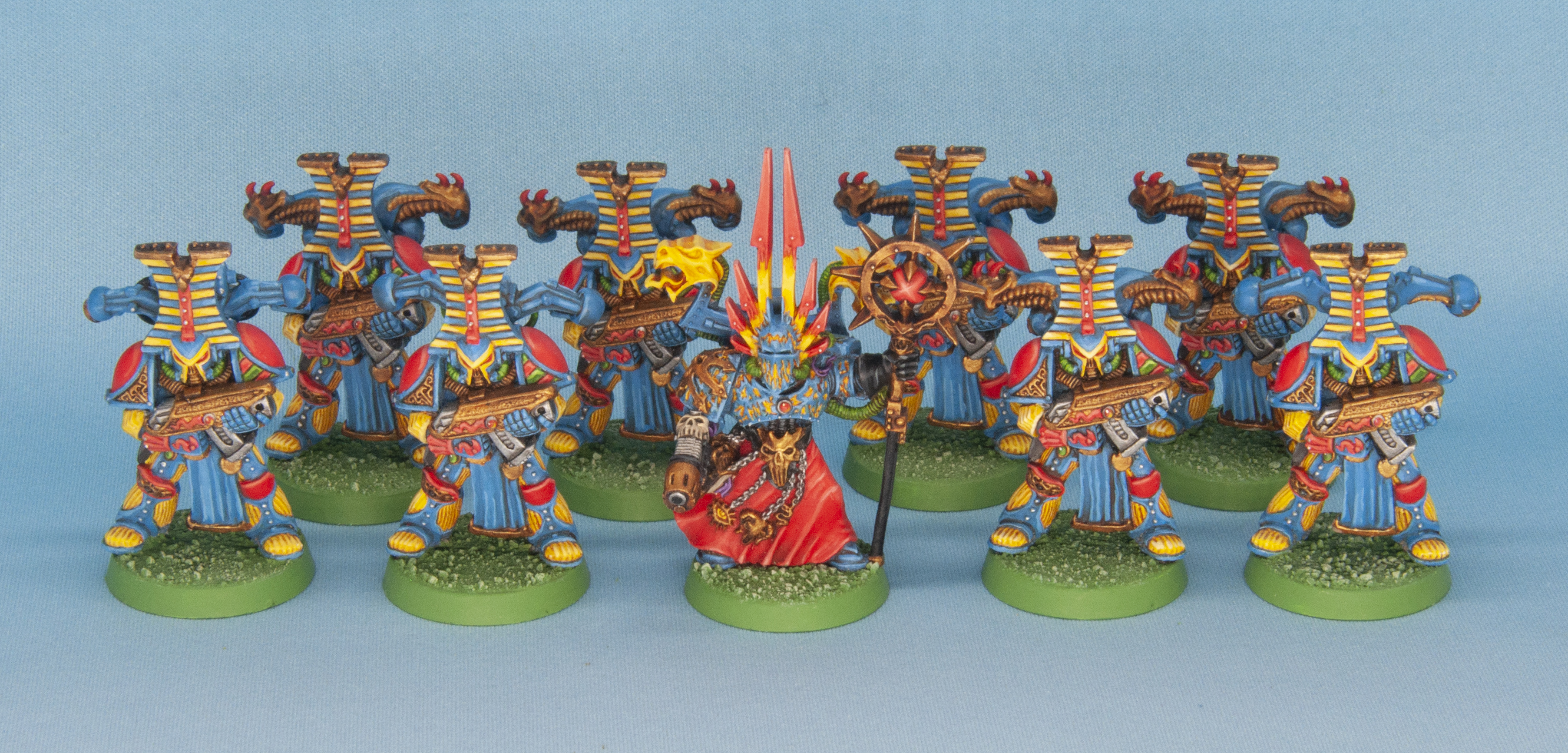
Although this is not a 2nd edition Thousand Sons model (it's a third edition model using the metal upgrade kit), I've painted it in 2nd edition colors, using a deep blue scheme and gold trim.
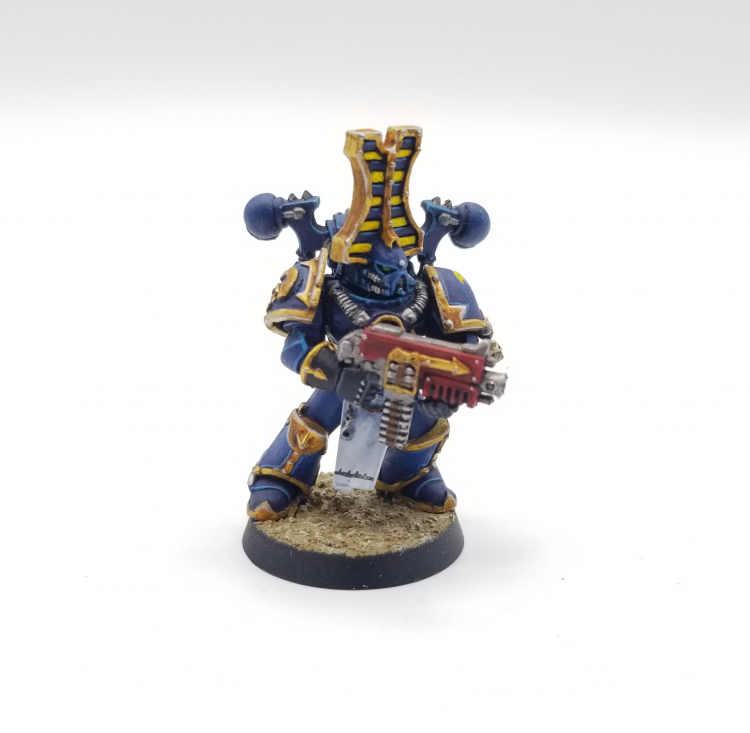 Credit: Robert "TheChirurgeon" Jones
The blue is done with a basecoat of
Kantor Blue shaded up with progressive mixes of
Hoeth Blue to get a fade to a lighter shade. I start by laying this down across the model to get good fades before I do the gold trim and yellow stripes. The edge highlight is done with pure
Hoeth Blue. The yellow stripes are
Averland Sunset highlighted with
Flash Gitz Yellow. The Gold parts are
Retributor Armour shaded with
Agrax Earthshade and edged with
Runefang Steel. The piping is
Leadbelcher washed with
Nuln Oil and highlighted with Runefang. The white tabard is
Celestra Grey highlighted with
Reaper Pure White.
Dylan Gould's Method
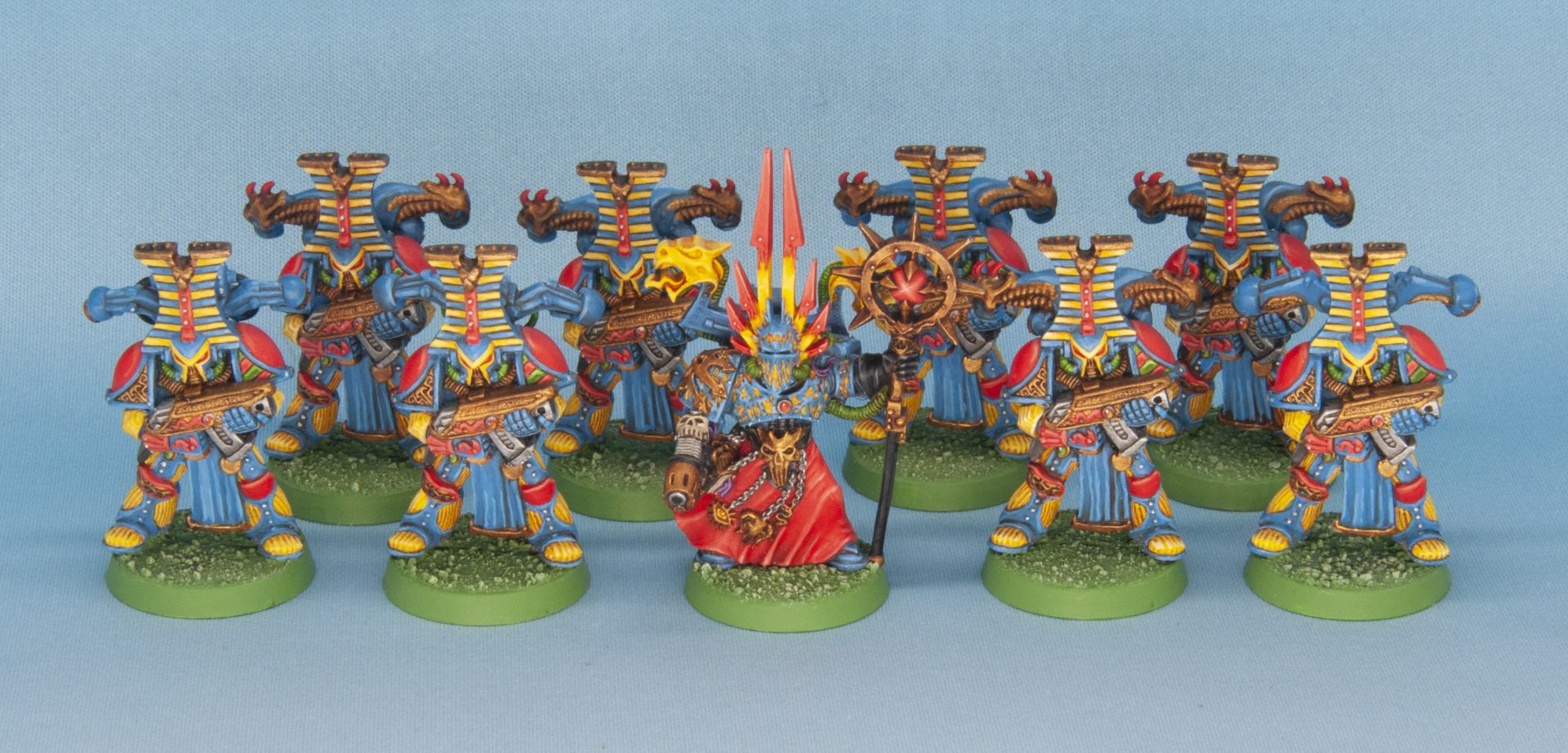 Credit: Dylan Gould
Like the Death Guard, these were also based off the four-step method in the How to Paint Citadel Miniatures guide. They were a much bigger challenge however - with so many colors next to each other, they took several hours each to paint up.
- Spray white.
- Basecoat all areas with the following colors: Enchanted Blue, Blood Red, Sunburst Yellow, Snot Green
- Wash the entire mini with the following wash: 1 part Sepia wash, 4 parts Orange wash, 1 part flow improver, some water
- Highlight blue with enchanted blue and a 1:1 mix of Enchanted and white
- Highlight Red with blood red, then Wild Rider rRed, the 1:1 Wild Rider and white
- Highlight yellow with Sunburst then Bad Moon Yellow
- Highlight Green with Snot Green, then Scorpion Green
- Paint metallics with Mithril Silver and Retributor Armor
- Wash metals with Armor wash (AP Dark Tone)
- Paint bases Goblin Green
- Drybrush bases with Underhive Ash
Word Bearers
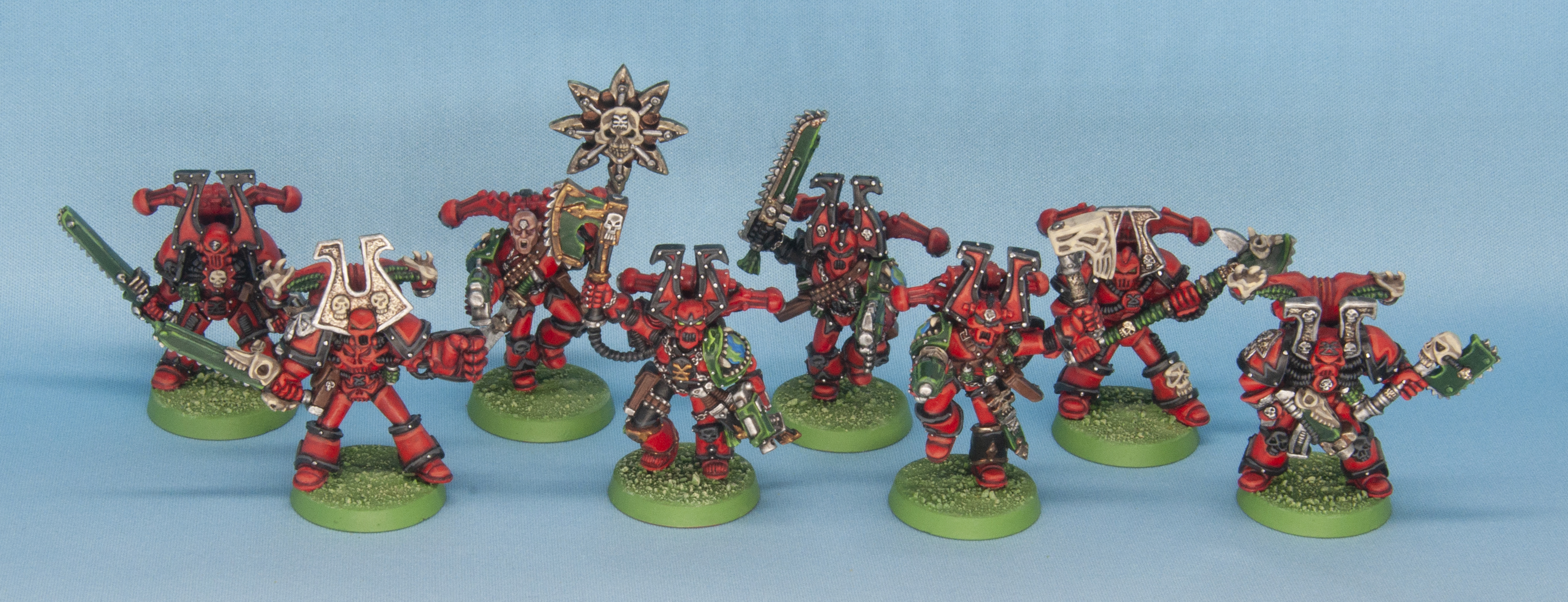
Forget the maroon scheme of modern Word Bearers or the "Gal Vorbak Red" shade you can get from Forge World - the Word Bearers of 2nd edition were a much brighter shade of red.
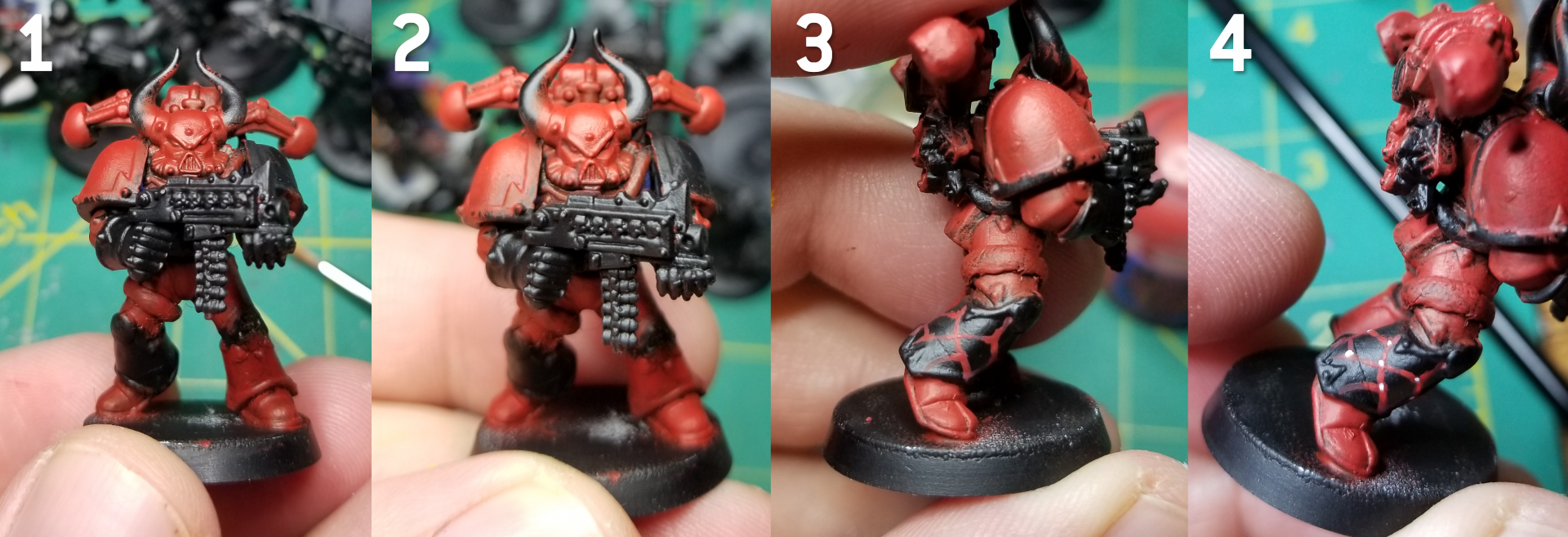
I'm not wasting a metal model on a Word Bearer; for this we're rescuing an old 2nd edition plastic Chaos Space Marine. These models are
awful by the way - they're stunty, have bad details, and only have two poses. Also, they were the only plastic chaos marines you could buy from like, 1995 until the Plastic Berserkers came out in 1998 and everyone started converting those for use as regular CSMs. The greenstuff bands on the model are 14 year-old Rob's attempts to make the model stand out a bit. They're not great.
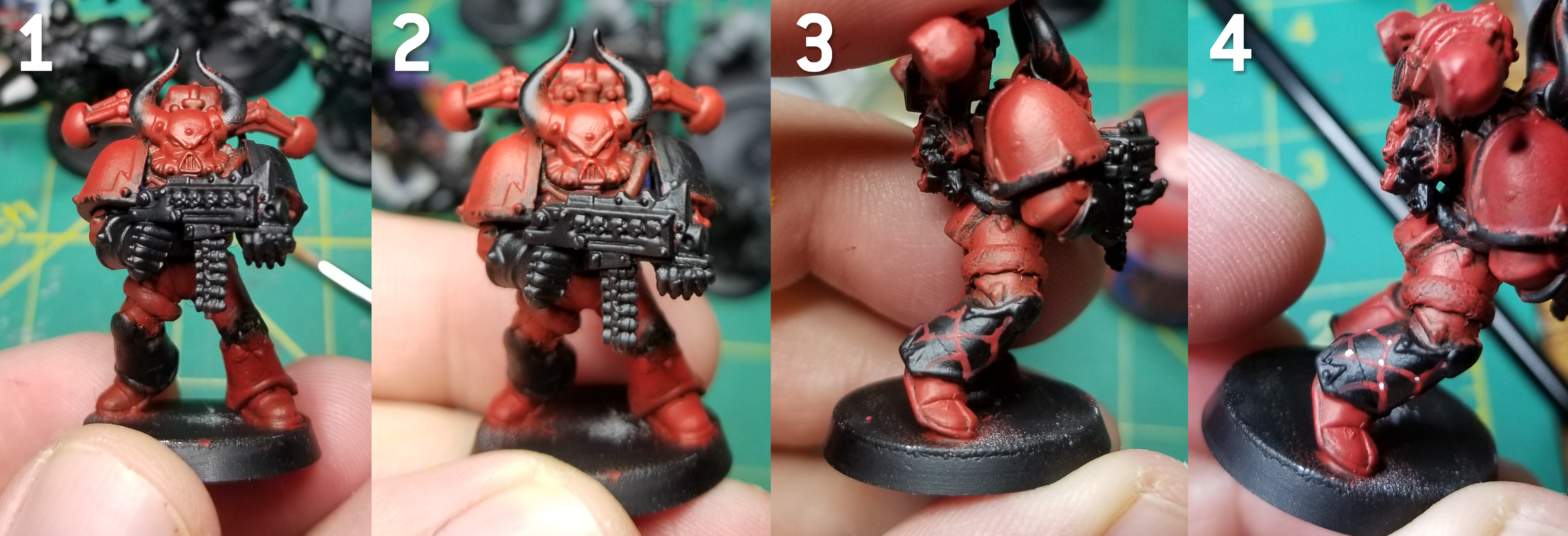
Anyways, at this point we start with
Mephiston Red and then highlight that with a 50/50 mix of Mephiston Red and
Evil Sunz Scarlet. I leave one greave and one shoulder pad black. On the greave we're going to do something that you can see a lot of in the 2nd edition codex images for Word Bearers, which is this kind of cracking lava/coals effect. You can replicate it by drawing some lines with
Khorne Red, then highlight the intersection points with Mephiston Red and dot them with white. I use
Reaper Pure White for my white.
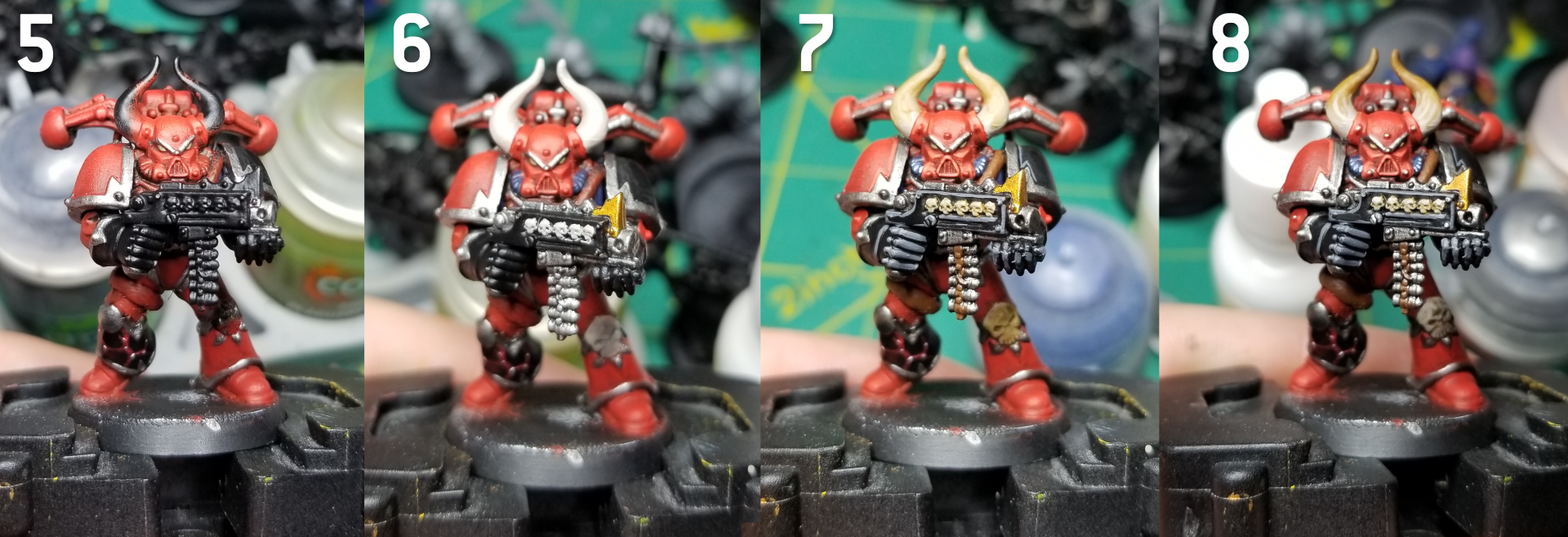
Next up is the trim. This gets painted
Leadbelcher along with all the other metal parts of the model, then washed in
Nuln Oil and edge highlighted with
Runefang Steel. The Skulls and horns are
Rakarth Flesh shaded with
Seraphim Sepia. The eyes are
Death Guard Green and
Ogryn Camo. The Word Bearers had blue cables in the 2nd edition 'Eavy Metal scheme, so those are painted
Kantor Blue, shaded with
Drakenhof Nightshade, then highlihgted with Kantor,
the Fang, and
Reaper Snow Shadow. The black parts get a highlight of
Corvus Black and an edge highlight of
Mechanicus Standard Grey while the Red parts get an edge highlight of
Wild Rider Red.
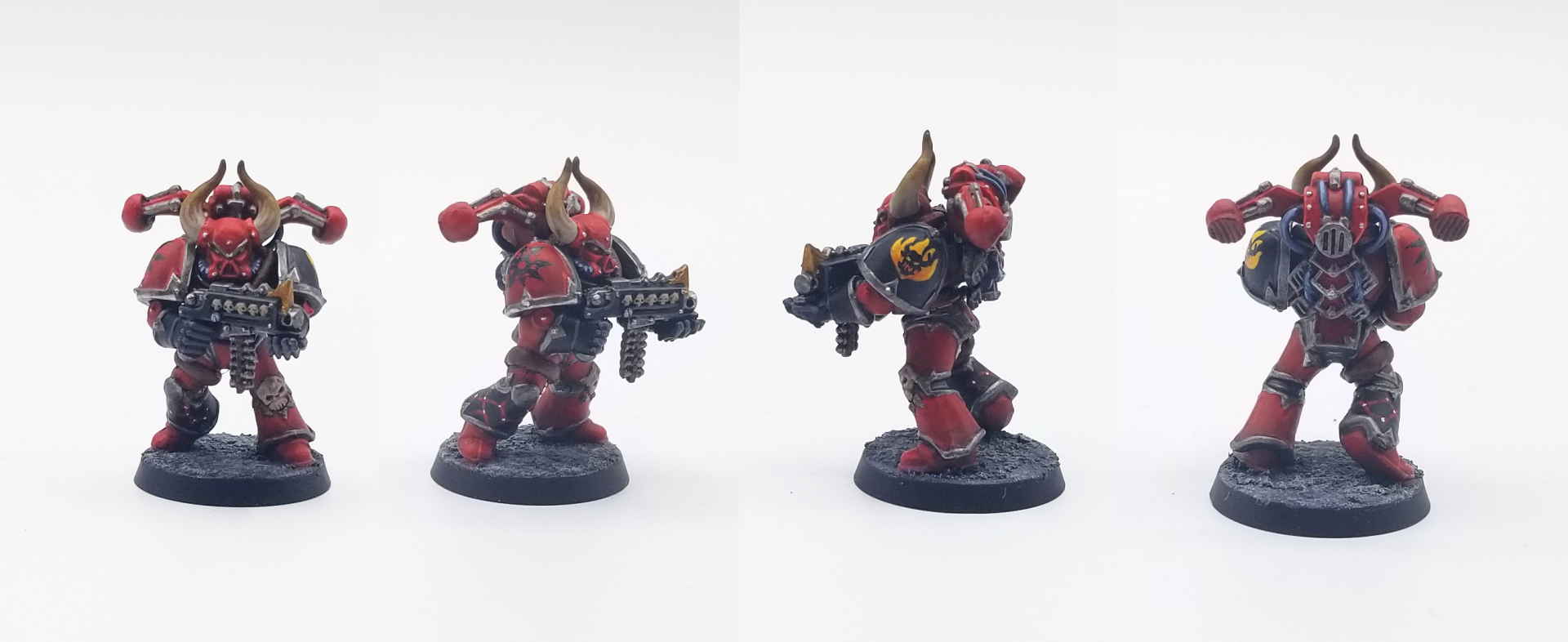
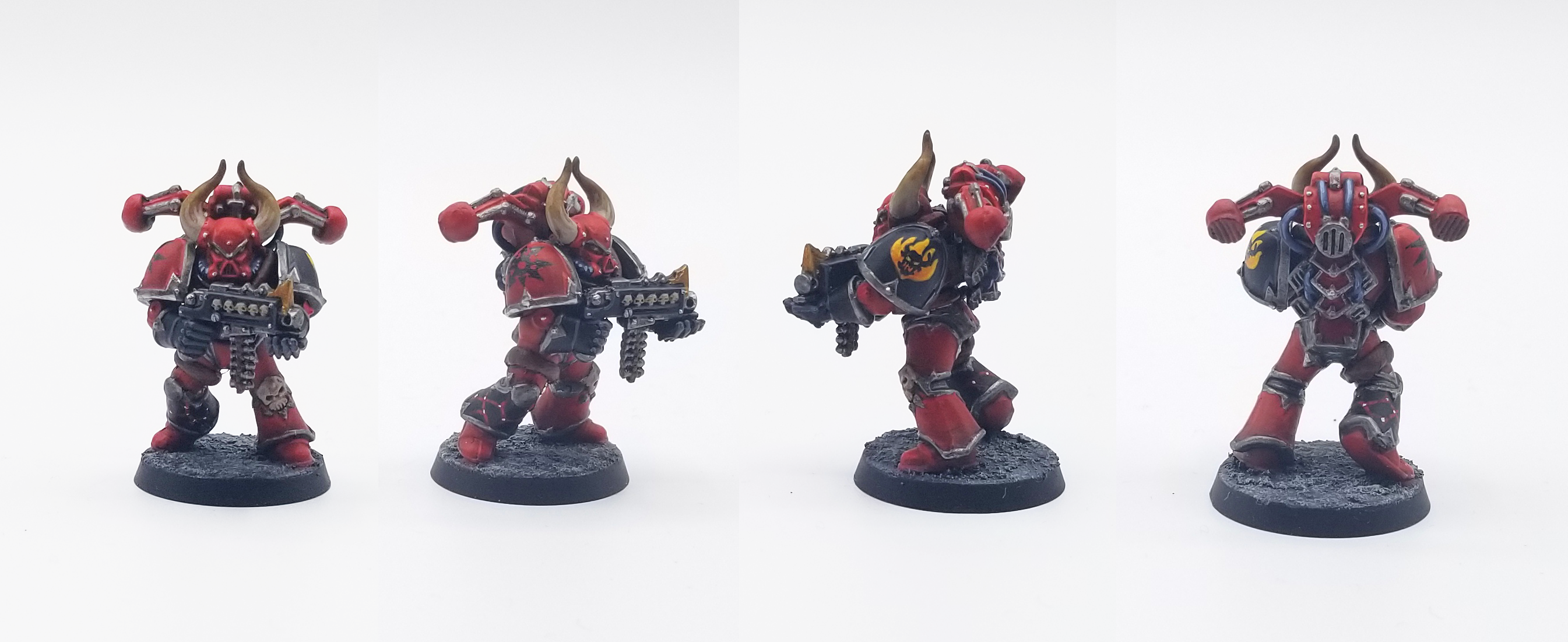
Despite it being a crummy model I'm pretty happy with the overall result. it's not too bad a paint scheme to do a full army of.
Worldeaters
The berserkers and World Eaters of 2nd edition had a much different scheme, emphasizing red and black over red and gold, and almost having a bit of a harlequin-like motif on models that checker in red and black armor parts.
Dylan Gould's Method
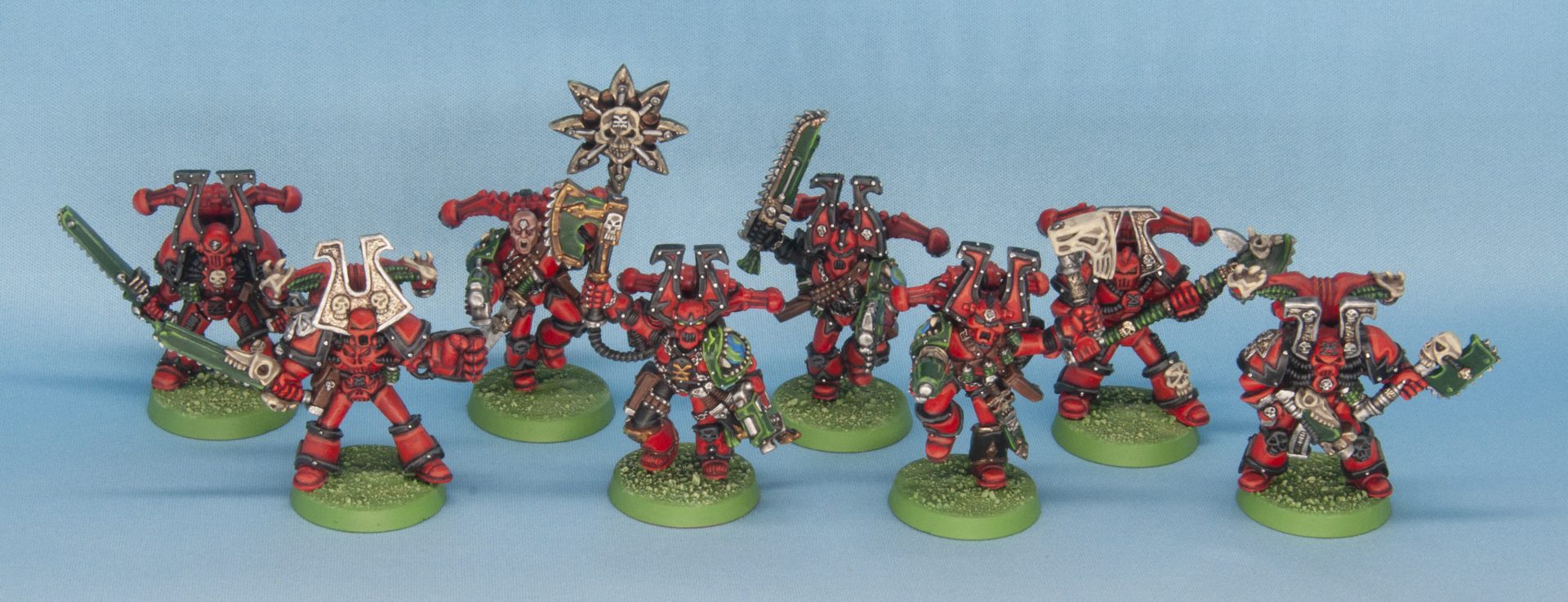 Credit: Dylan Gould
- Prime White
- Spray Red (I used AP Daemonic Red spray)
- Wash entire model with Agrax Wash (I use AP Strong Tone)
- Highlight red armor with Blood Red
- Highlight with Wild Rider Red
- Paint all Black and Metallic areas with Black
- Highlight Black with Codex Grey and a 1:1 Mix of Codex and White
- Paint Green with Dark Angels Green
- Highlight Green with Snot Green and then Scorpion Green.
- Base bone with Khemri Brown.
- Highlight with Khemri-Bleached Bine and add some White for the final highlight.
- Paint metallics with Chainmail (AP Plate Metal) and Retributor Armor
- Wash metals with Armor wash (AP Dark Tone)
- Paint bases Goblin Green
- Drybrush bases with Underhive Ash
Bonus: Chaos Cultists
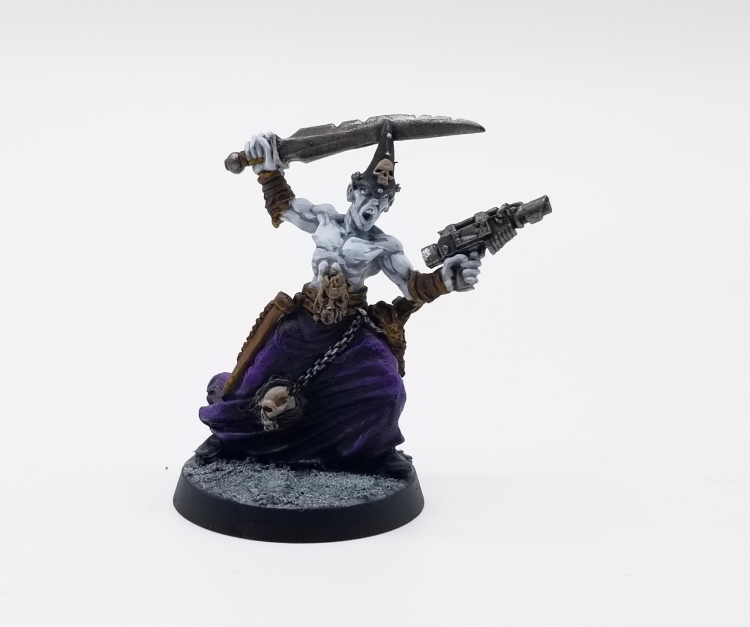
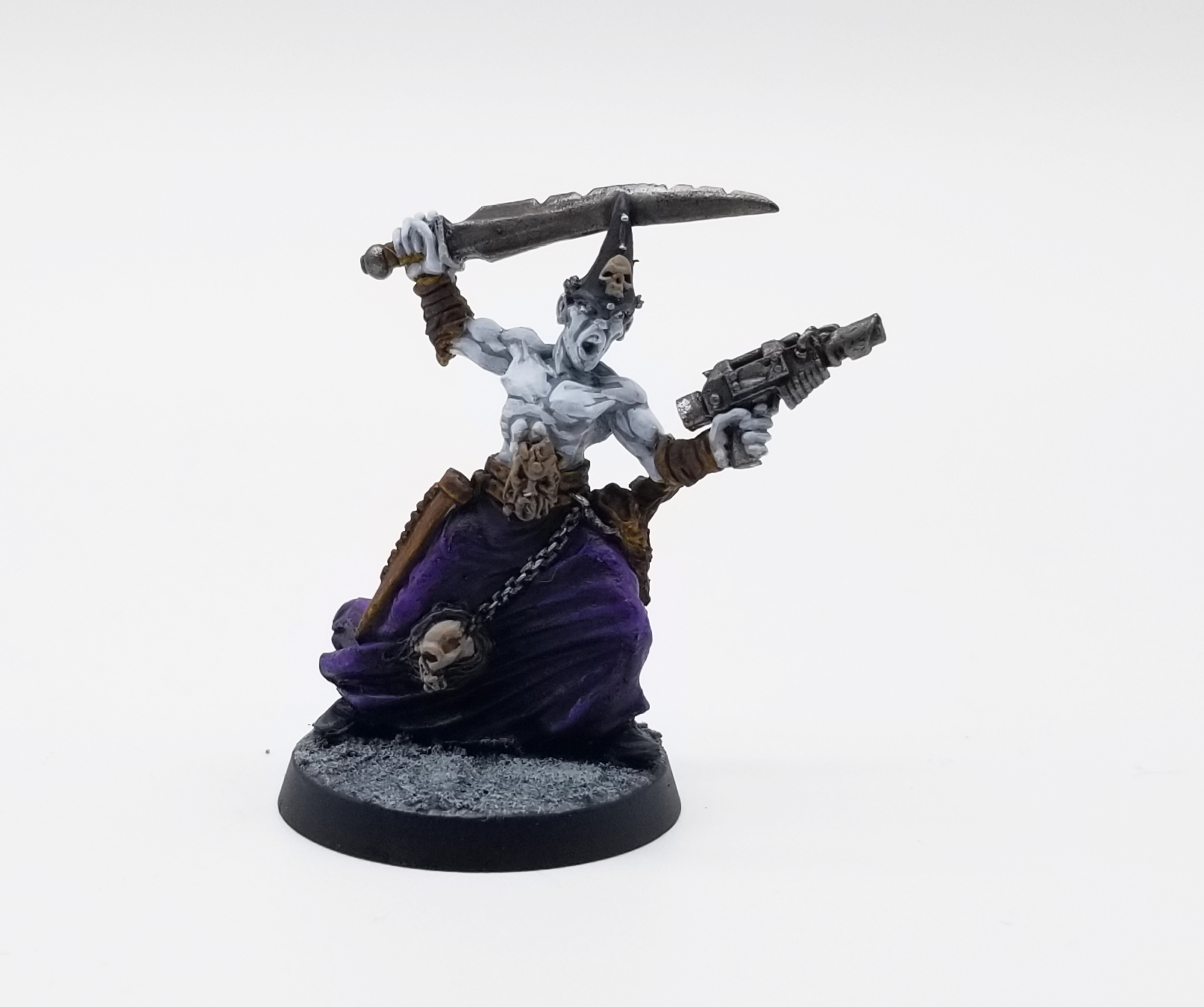
Released in late 1998 shortly before 3rd edition launched, the metal Chaos Cultists are a bit of a rarity among GW metal models. In their older paint schemes their flesh had a darker, grey and slightly purple tone. I've tried to replicate this by basecoating with
Grey Seer and then painting the skin with
Apothecary White and then highlight with
Reaper Ghost White. The robes are painted with
Naggaroth Night and highlighted with a mix of
Xereus Purple and
Reaper Pure White.
 Credit: Robert "TheChirurgeon" Jones
That wraps up our look at painting 2nd edition Chaos Space Marines and with it, our week of glorious retro content for Goonhammer. We hope you enjoyed reading it as much as we enjoyed making it. And as always, if you have any questions, drop us a note in the comments below or email us at
contact@goonhammer.com.
Thank you for being a friend.
 This website uses cookies. Learn more.
 Credit: Robert "TheChirurgeon" Jones
 Credit: Robert "TheChirurgeon" Jones
 Credit: Dylan Gould
 This one starts with a coat of Leadbelcher on the body, plus a coat of Kantor Blue on the cables. I've left one shoulder pad black, and you can leave black any parts you want to paint hazard stripes on at this time. I'm gonna put them on the flamer so I don't need them elsewhere. Once the metal and blue are down, I wash the model in Nuln Oil. 2nd edition Iron Warriors have red horns (it's a great look with the steel), so I start by painting the horns Mephiston Red along with the eyes. Then it's time to lay down the gold, which here is Retributor Armour.
 Credit: Robert "TheChirurgeon" Jones
 Credit: Robert "TheChirurgeon" Jones
 Credit: Robert "TheChirurgeon" Jones
 Credit: Robert "TheChirurgeon" Jones
 Credit: Robert "TheChirurgeon" Jones
 Credit: Dylan Gould
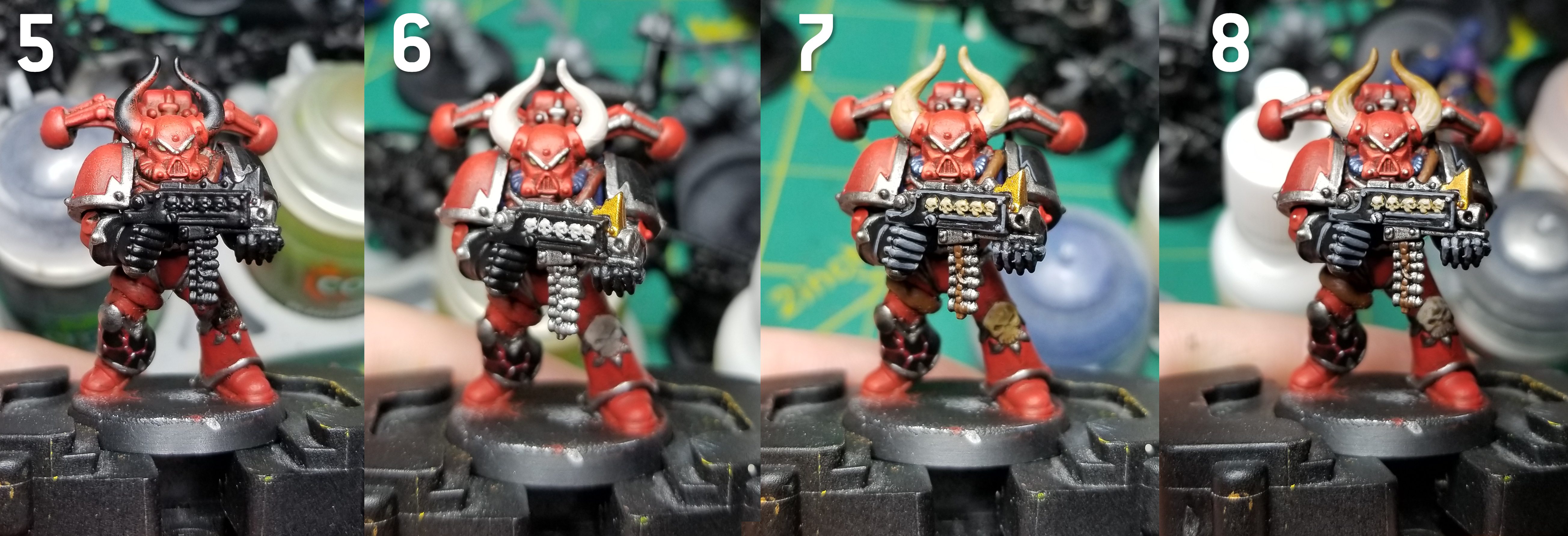 Next up is the trim. This gets painted Leadbelcher along with all the other metal parts of the model, then washed in Nuln Oil and edge highlighted with Runefang Steel. The Skulls and horns are Rakarth Flesh shaded with Seraphim Sepia. The eyes are Death Guard Green and Ogryn Camo. The Word Bearers had blue cables in the 2nd edition 'Eavy Metal scheme, so those are painted Kantor Blue, shaded with Drakenhof Nightshade, then highlihgted with Kantor, the Fang, and Reaper Snow Shadow. The black parts get a highlight of Corvus Black and an edge highlight of Mechanicus Standard Grey while the Red parts get an edge highlight of Wild Rider Red.
 Credit: Dylan Gould
 Credit: Robert "TheChirurgeon" Jones

 Goonhammer Hobby Round-Up: March 2026
 Goonhammer Reviews: Tribal Conquest
 Conquest: Weaver Courts Gemred Knights and Scaile Dancers Model Review