Today's Hobby 102 is less of a how-to and more of a
why-to, exploring the positive impact that artificial constraints and challenges can have on your creative work. That's right, we're doing a bit of art theory!
Do you sometimes find that you look at your paint racks/drawers and feel overwhelmed? Do you look at your pile of unpainted miniatures and have a moment of existential dread as you realise that you've no idea what it is that you want to paint? Do you want to push yourself, but you don't know where to start? Maybe you're just in a rut; you feel like you're spinning your wheels and not getting better as a painter, no matter what you do.
All these feelings are common among artists and people who feel compelled to create both for work and for fun - the path, cracked and overgrown as it may seem in the moment, is actually well-trodden by those who came before.
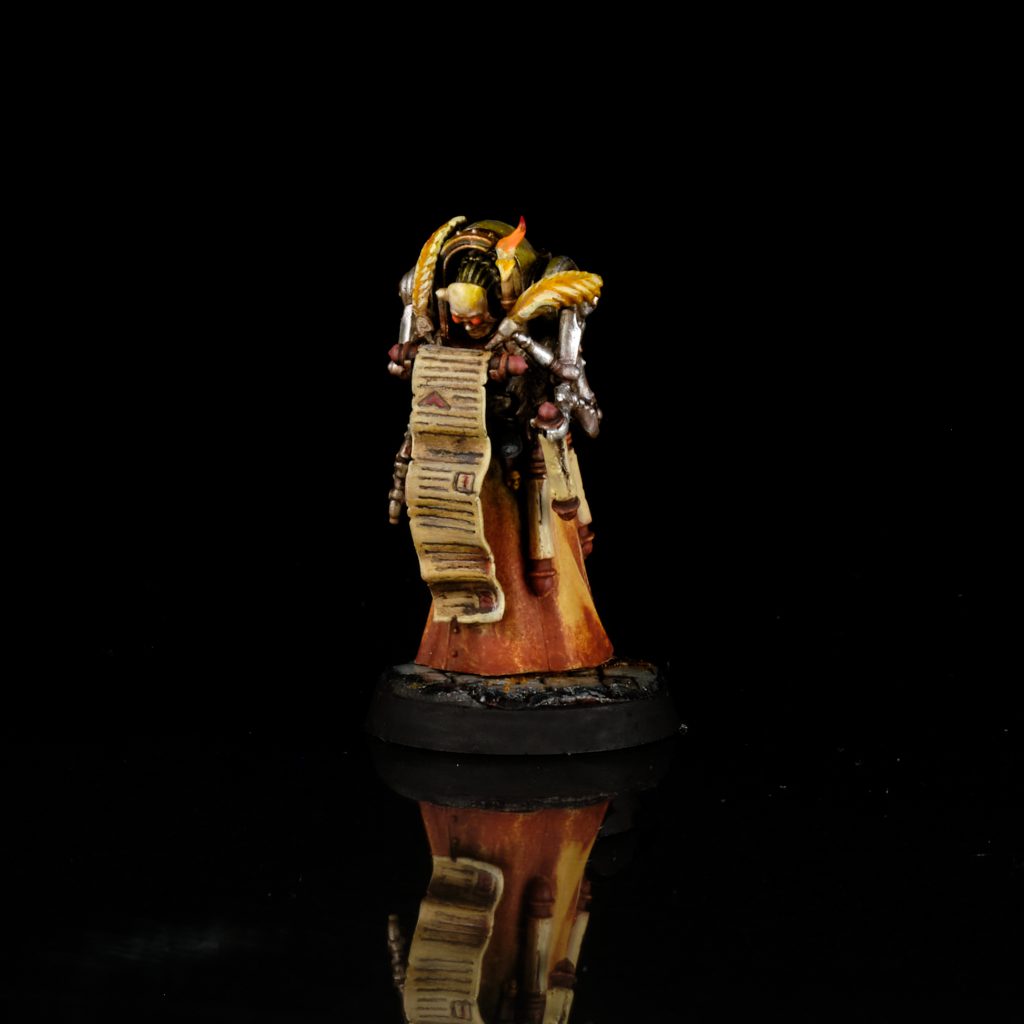 Credit: Keewa
Decision paralysis is a fairly common problem that arises when progressing with something requires a choice to be made, the mind sort of locks up and refuses to let you make the decision. There are several possible sources for decision paralysis (including medical diagnoses like ADHD), but by and large, they stem from one seed: Fear.
As problem-solving mammals, we generally attempt to find the "best" choice when presented with a dilemma (or trilemma, and so on), and every choice we make involves choosing one path to the exclusion of all others (economists call this "opportunity cost"). Therefore, the possibility of taking the other option disappears the moment a choice is made. Anxiety creeps in when considering the potential consequences of making the "wrong" choice, which influences both our behaviour and how we feel about it.
"Should I use this paint, or that paint? What if I regret it later? What if there's a different, more optimal choice that I haven't even considered? Should I go back and look through my paints again to see if there's a better one? If I make the wrong choice, I can't simply "undo" it without stripping the model back to plastic and starting again (note: this isn't true, but it's not an irrational thought), and if I do that then I'll have lost all the time I already spent on this model" and then, before you know it, an hour's gone by, and you've not painted
anything, you're too busy trying to decide which colour you
would use
if you were actually painting something, which you're not! You're just agonising over the endless options available to you.
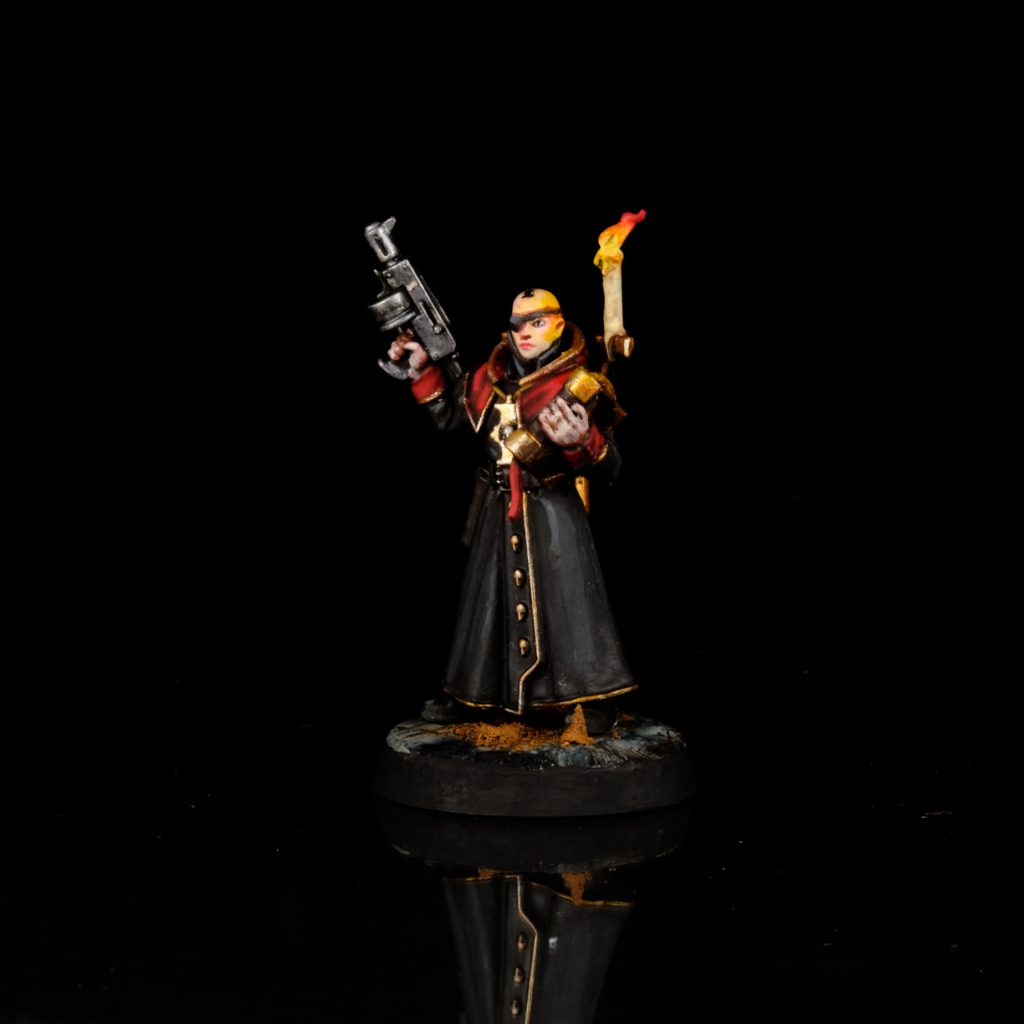 Credit: Keewa
This is all very common among everyone; it's a sort of flaw in what it means to be a human, but how do we escape the trap and overthrow our decision paralysis? One method is by setting
and abiding by completely arbitrary, self-devised restrictions. By reducing the number of possible choices, we attempt a sort of circumvention of this paralysing instinct.
In a miniature painting context, this might look like a limited/reduced palette exercise. What's a limited/reduced palette exercise? I'm glad you asked! As the name suggests, you restrict yourself to using only a handful of paints, mixing whatever else you need from the paints in that original pool. Let's say, for example, you choose to use the storied and popular Zorn palette (Ivory Black, Titanium White, Yellow Ochre, and Vermillion Red) as detailed
in our article on Mixing - the restriction will force you to think differently about the colours you use and how you use them, as well as creative workarounds and ways to circumvent the barriers without cheating - how can you create a colour that is missing from the original? Since Ivory Black actually has a blue-ish tint, by mixing it with white, you get a cold, almost blue, grey.
That's a classic example of a limited palette exercise, but there are plenty of ways to create your own. Close your eyes and choose 5 paints at random from your paint drawer, add a black and a white, and try painting using
only what you've picked. Trying to come up with something coherent when you've randomly selected hot pink, yellow, brown, olive green, and purple will really force you to think creatively and mix like never before. You could also try painting only with one colour, black, and white - painting in monochrome will help hone your ability to paint light and shade to accentuate forms and volumes. You've definitely heard the phrase "necessity is the mother of invention" before; well, that's what this is!
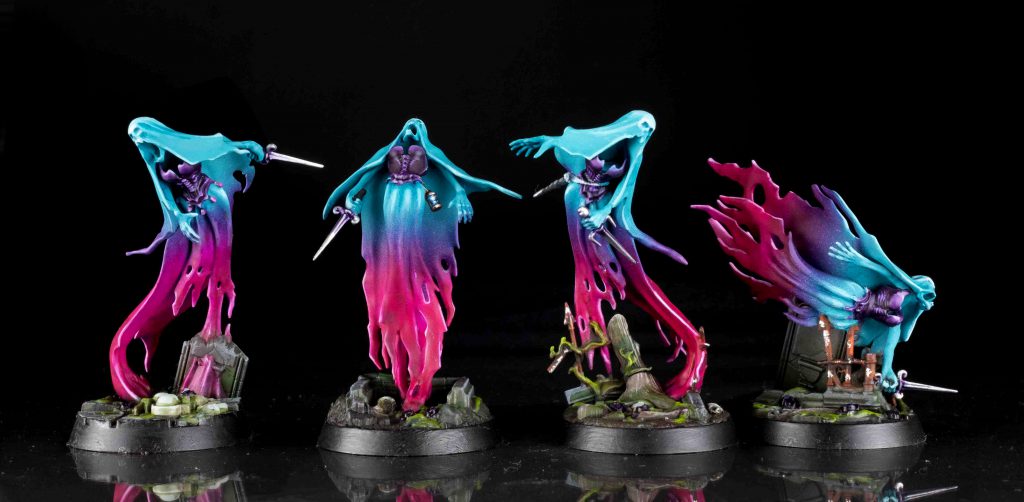 Lady Harrow's Mournflight. Credit: Keewa
Speed painting is a popular exercise that hones your ability to make quick decisions, try picking one model and giving yourself a time limit in which to take it from bare plastic to finished. Even if you don't succeed right away, it's always good to get some focused practise.
Challenges and themes are also a good way to force some focus and creativity into your painting. That doesn't necessarily mean entering painting competitions (although that certainly is a good way to test yourself); other, less grand methods are available. If you're part of a painting community, you might try something as simple as weekly challenges to keep yourselves sharp. One week, you might challenge one another to paint something freehand, the next to paint a face. By focusing on something like this -
and sticking to it, your friends can support each other to greater heights. The most important thing is that you actually do what you set out to do, no excuses. The key is having self-discipline - which certainly isn't easy; it's something that you'll need to practise and refine as you go.
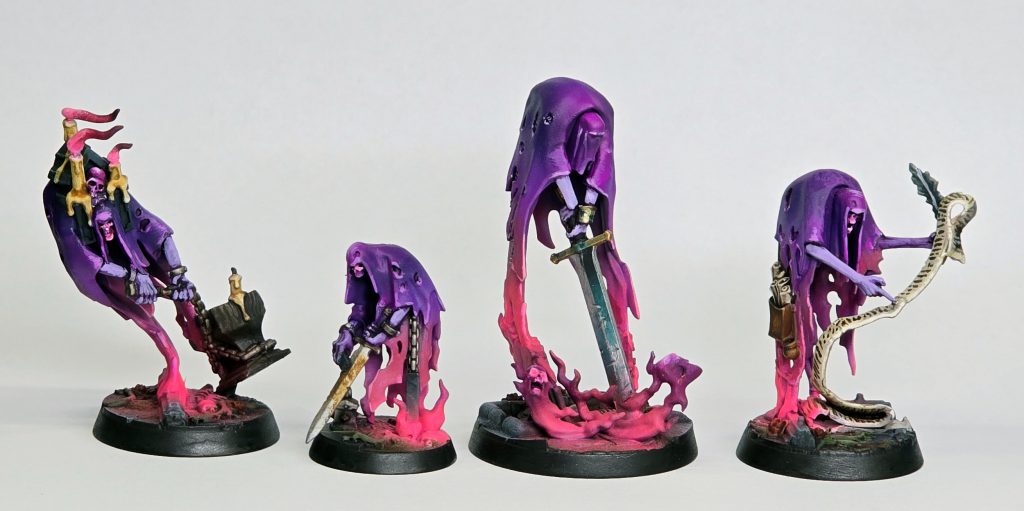 The Headsmen's Curse warband. Credit: keewa
That isn't to say you should beat yourself up about it, being kind to yourself is as important as being disciplined. If you feel despondent and find that you're saying things like "I suck, I should just give up now", ask yourself - "Would I say this to a friend, or a stranger?" and if you wouldn't say it to them, why would you say it to yourself?
These exercises and challenges train you to think differently when it comes to solving artistic problems, and thinking differently is the essence of creativity. Give it a try!
Lenoon
I use small projects with defined creative restraints to break out of a hobby rut and, in reflecting upon the success (or failure!) of the project, improve my painting. I think I’ve developed a certain style, which, while I enjoy, I find that I can stagnate in it. Imposing a small artificial restraint on a limited project can be extremely helpful for refreshing the brain and getting the creative impulses going.
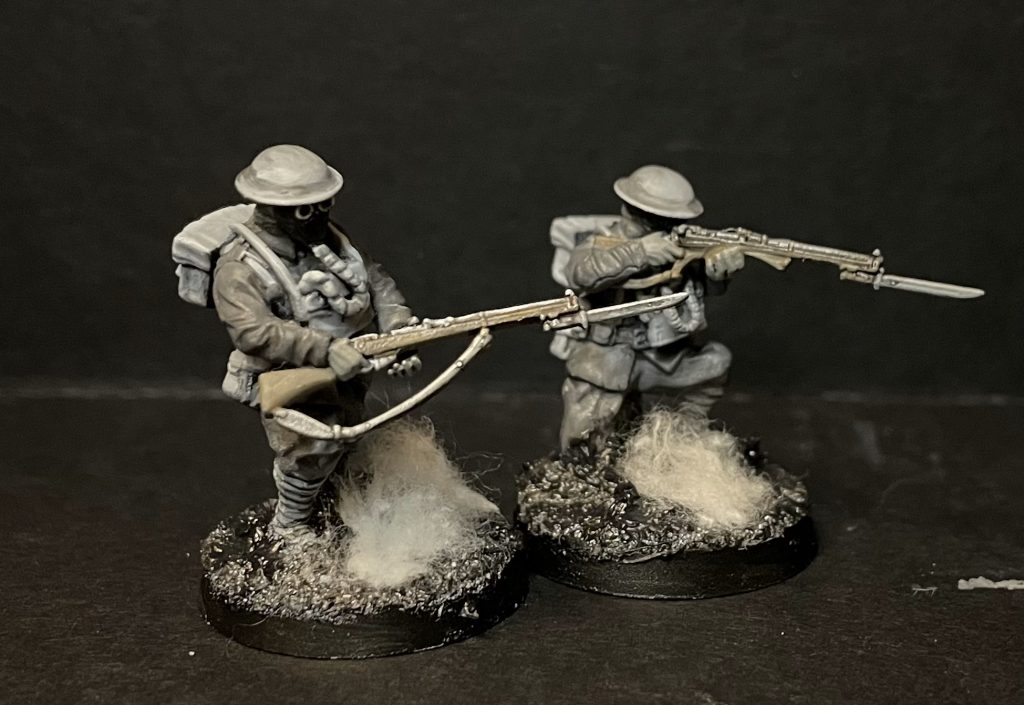
There are restraints that I use to better understand the how of painting - my greyscale WW1 British and Empire troops allowed me to strip what I knew about highlights and tones down to basics and rebuild them. I learnt a lot in the process, becoming more comfortable with harsh changes in contrast, as well as learning that you really can paint with several different greys, mix different off-whites to produce different results, and that it’s ok - even desirable - to use something other than flat black for deep shadow.
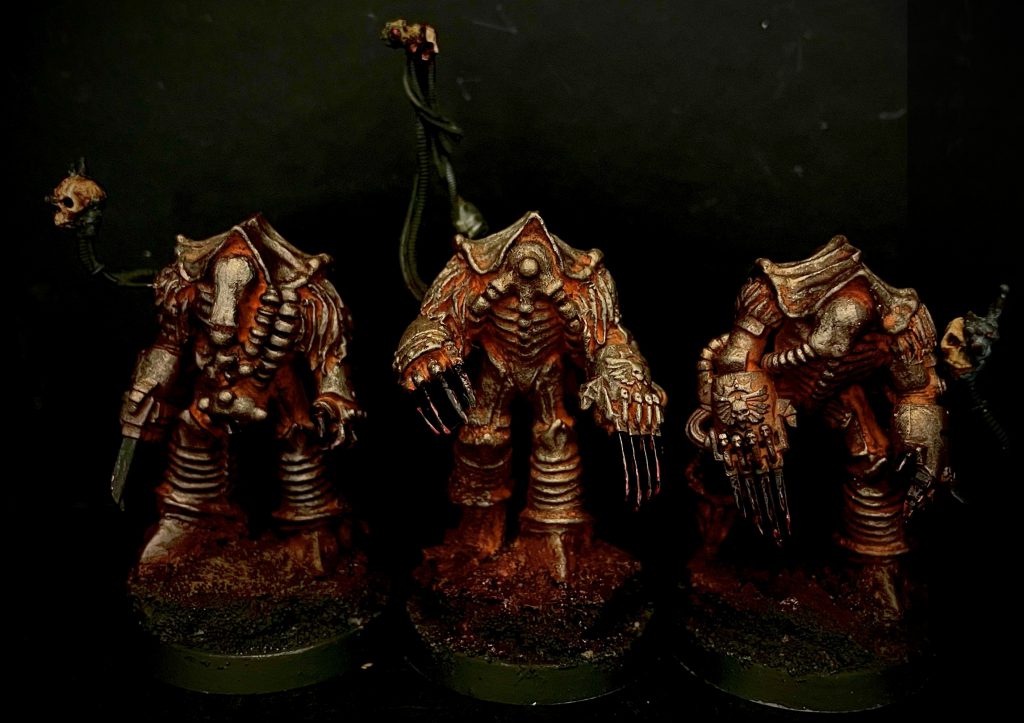 Horrifying abominations, or just straight up Ultramarines?
I use other restraints to reset my brain. In between large projects, I tend to struggle for something to do - painting can become mechanical, especially with a large amount of stuff for review on the painting queue. To break that cycle of endless base-highlight-shade, I pick something arbitrarily and apply it to 5-10 models. I settled on mixing paint pots up in a hat, drew one out and based a scheme around it - drawing a nice bronze, I decided on an all-metallics scheme for a weird space marine project. All metallics led to other choices - what metallics did I have (turns out I had 6-7 brass/bronze/coppers), what non-metallic colours would be complementary (orange), and what would provide the simplest framing with the largest impact (matt black). I put all the necessary paints in a takeaway tray, picked two brushes out, and that was my limit.
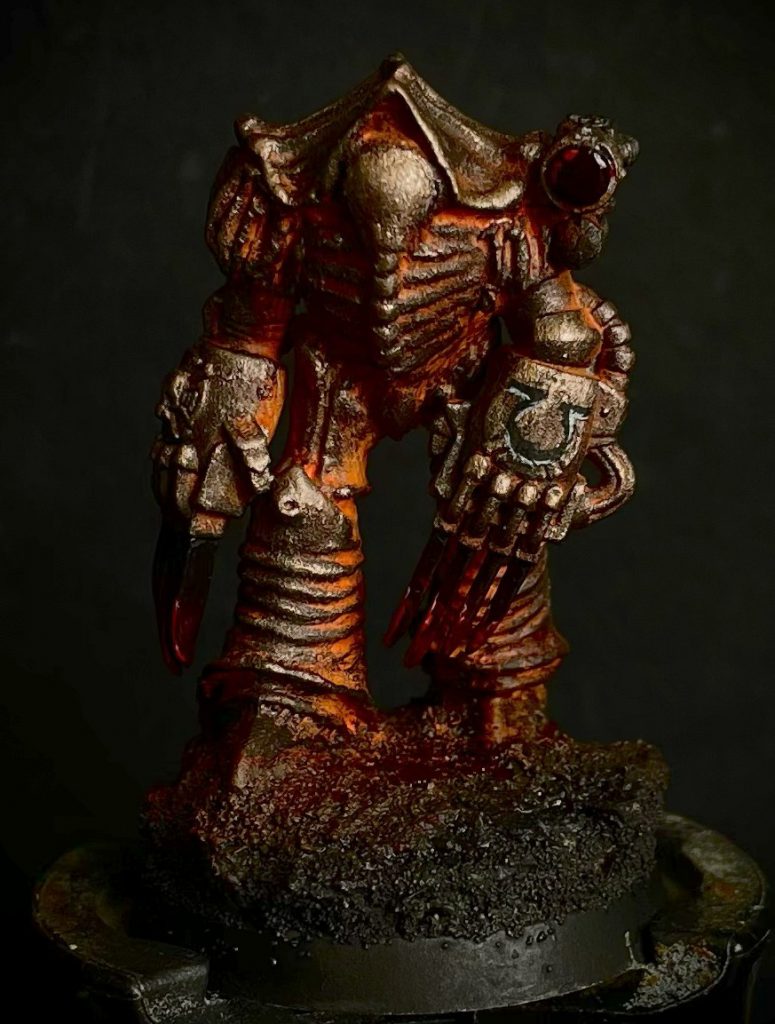
With ten paints and two brushes, I had to paint in an entirely different way, using thick rust paints for an undercoat, silver as the base for limited OSL and, as I’d drawn out my big tank brush to paint with, an entirely drybrush suitable scheme. The models came out well, but most importantly, they were a six-model cognitive reset - it was a fun challenge that resulted in something very different for me. The models were put back on the shelf, and there’s no follow-up planned, but the process was a very helpful one, supporting a refreshed and rejuvenated approach to my standard painting.
Have any questions or feedback? Drop us a note in the comments below or email us at contact@goonhammer.com. Want articles like this linked in your inbox every Monday morning? Sign up for our newsletter. And don’t forget that you can support us on Patreon for backer rewards like early video content, Administratum access, an ad-free experience on our website and more.Thank you for being a friend.
 This website uses cookies. Learn more.


 Goonhammer Hobby Round-Up: March 2026
 Goonhammer Reviews: Tribal Conquest
 Conquest: Weaver Courts Gemred Knights and Scaile Dancers Model Review