A long, long time before the Age of Sigmar, there were novels about monsters and sorcerers and history. You could call it a time of legends, perhaps, a time when novelists committed great fantasy epics to paper in multi-book series that plumbed the depths of the World-that-Was. Of these, the greatest was the story of Nagash - Sorcerer, Unbroken, Immortal - and, of course, a complete dickhead.
Mike Lee’s Nagash Trilogy spanned 2008-2011 and has been variably in print since in several editions. Now reissued as the Rise of Nagash, the trilogy of Nagash the Sorcerer, Nagash the Unbroken and Nagash Immortal (alongside the extra short story Picking the Bones) is once more readily available, and marketed as of interest to Age of Sigmar players who want to dive into the history of the big man himself.
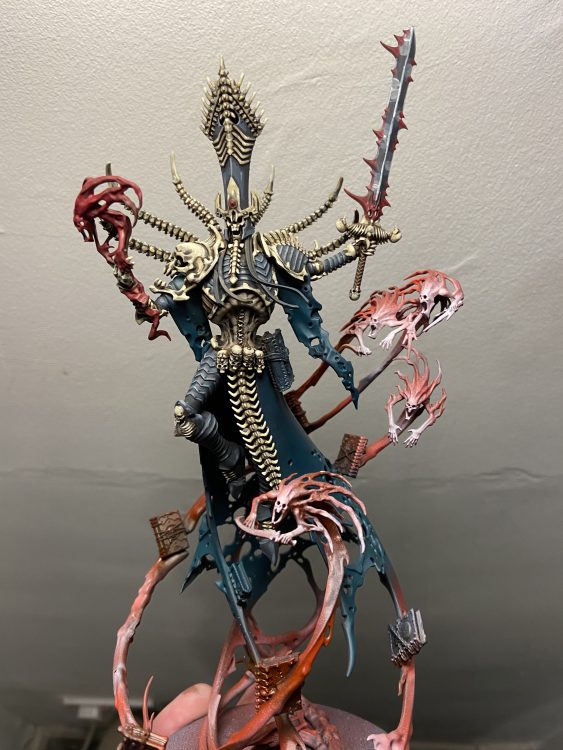
Not even joking, I love this model. Credit: Brin
As a trilogy, this is a solid reissue of two good (Sorcerer, Immortal) and one short and pretty good (Unbroken) fantasy novels that provide what they’re supposed to, a not particularly condensed history of the rise and several of many falls of Nagash, prime mover of the Warhammer world, and, surprisingly, a lot of fun prose, interesting and unique worldbuilding and generally a lot of fun.
Nagash, the Total Prat
At the heart of the series is, of course, Nagash. He’s not always the point of view character, and each book is more or less half Nagash and half other characters - a cast of Nehekarans and Arkhan the Black in book one, Neferata in book two, and the well balanced double act of Alcadizzar and Skaven in book three, but he’s never far away. Either directly or indirectly, Nagash hangs like a pall over every other character, and his influence drenches every page. That’s all to the good because Mike Lee does a great job with Nagash and his descent from Priest to Necromancer to weird, glowing, semitransparent Liche-thing. It’s not easy to write good scheming megalomania that sticks just on the right side of Saturday morning cartoon villainy, and it’s absolutely one of my favourite things in the Black Library when someone gets that right. Nagash schemes, acts, triumphs, despairs, does despicable things and gets undone by hubris, and it’s all jolly good fun. There’s moments where he is a monstrous, horrifying threat - particularly when we see him through someone else' s eyes - and others where he’s shaking his fist and metaphorically shouting “I’ll get you next time Captain Planet!” Lee threads the needle perfectly between a villain who needs to be a little bit dumb to be interesting and Nagash the godlike schemer, particularly in the first book.
It’s hard to overstate how much of a total and absolute shit Nagash is in these books. He consistently does absolutely gratuitously terrible things, with no hint of making him a redeemable antihero who has struck out against tragic circumstances. His motivation is fairly simply “I have real bad vibes”, and everything spools out from that more or less inevitably. At this point, I think humanising monsters has had its place in the sun of our fantasy and scifi libraries, and Nagash as an irredeemable bastard was a refreshing and very fun bit of characterisation. Mike Lee is good at this - cowriting Malus Darkblade with Dan Abnett in quite a similar way - and it shows.
Nagash, the Antagonist
Running into this very simple total arsehole is a set of much more complex, more deeply realised characters and settings that he inhabits and crushes. When Nagash is doing Nagash things, everyone around him and opposed to him has motivations, thoughts, feelings, schemes and plans that go awry or come to fruition. The world of Nehekara and, in books two and three, Nagashizzar, is well-realised and lavished with a loving description that brings it very much to life, or unlife as the case may be. There’s depth to it, Nehekaran history and politics deftly woven into a Frankenstein narrative and then into a Vampire story, and finally into Lawrence of Arabia meets the Ratmen, all done enough to make the two settings of not-Ancient Egypt and not-Yucca Mountain suitable places for a grand, time-hopping narrative to take place.
Credit: Joe
Neferata, Alcadizzar and Skaven Warlord Eekrit form a diverse set of perspectives on the legacy, influence and machinations of Nagash - though the first two aren’t aware of him until right at the end - providing a (startlingly so, in the case of Eekrit) competent set of adversaries with their own satisfying arcs and plotlines. Neferata’s slow transformation into a Vampire is covered in the weakest book of the trilogy, but her ascension to Queen of Blood comes good through Alcadizzar in book three. Alcadizzar himself gets to be Paul Atredies and Lawrence of Arabia before transmuting into Steve McQueen playing Papillon, and he’s always fun to be around. Slotting a noble hero into a tale of absolute villainy towards the end of the saga lets us see the long tail of a thousand years of evil decisions, wrapping up the descent of Nehekara from paradise to land of the dead.
Skaven Clanrats. Credit: Pendulin
The Skaven end up being Nagash’s most competent and ruthless opponents, and far from being the musk-squirting comedic horror of William King’s work, Mike Lee emphasises the brutality and threat of a subterranean race of ratmen in a fairly unique way. With the story set so far in the past, the Skaven world is familiar but different, with the primacy of the four clans that happen to get unique models some way in the future, and the story here sows the seeds for the Skaven to become even more weird, degenerate and pathetic. It’s an interesting take on the Skaven, emphasising what they’re good at through their own perspective and the various slightly incompetent flailings of Nagash to counter them, and I like it - I’d read more of the Skaven-as-threat shorn of some of their Nazi analogues.
Nagash, the Collection
It had been so long that I’d read these - getting on for twenty years since Nagash the Sorcerer (2008) - that I’d forgotten a pretty key part of the experience: these are pretty damn good. They’re good in different ways, with Nagash the Sorcerer the clear standout, a Wilbur Smith-esque quasi-Egyptian adventure mixed with magic and military that has a lot of leeway to explore the elements of the Nagash story that had received the least prior background. Mike Lee gets to invent a lot of characters, their relationships and their motivations, and put an entire bronze age style civilisation together in order to set it to a terrible war. The structure does a lot of work as we see Nagash’ rise and the accompanying dissolution of Nehekaran society hand in hand with the final, apocalyptic, attempts to overwhelm him. It’s well written enough that you forget that you know how and where the story ends - or at least you do if you’ve read a lot of the old, old, old lore around Nagash. Unbroken and Immortal don’t quite match the heights that Sorcerer achieves, shackled - as a lot of Time of Legends books were - to a plot and timeline that needs to be played out with recognisable steps. We end Nagash the Sorcerer on what perhaps forms the second real beat of the Nagash story (He gets powers, he gets overthrown), and then the books accelerate through his wilderness years, the building of Nagashizzar, the founding of the Lahmian Cult and the birth of the Vampire Counts, the war with the Skaven and then end with one of Nagash’s many, many downfalls. I think it’s a good point of contrast with the Horus Heresy series. The Time of Legends was definitely part of GW realising it could monetise the long timelines of their main games - by 2008, the Heresy was selling well, and poised to take first steps into unprecedented levels of success (Legion comes out in 2008). Only two years after Horus Rising, the first two time of legends books - Heldenhammer by Graham McNeil and Nagash the Sorcerer - were aiming at that same line, the people interested enough in the historical events of the setting to pick up a couple of novels. While the Heresy exploded in success, the Time of Legends never really did, for all that the Sundering got a massive chunk of novels.
Credit: Bair
A lot of that is going to be down to Space Marines being more popular than a fairly generic old fashioned fantasy setting, but some of it seems more structural than that. The Heresy provided a structure that could be relentlessly mined for more books - 2008 would see Battle of the Abyss and Mechanicum released as well as Legion, none of which advanced the main story a single moment. There was a beginning and an end but the galaxy is a large enough place to cram ten billion words of barely constrained homoerotic militarism between Horus Rising and the End and the Death Part 3. In contrast, the Fantasy stories that became part of Time of Legends were either better mapped out, with a lot more incidental fluff written over the years, or self contained. Nagash the Sorcerer shows the potential of the Time of Legends series, digging into different parts of the Warhammer world in different ways, and allowing an author freedom to mess around in the sandbox of a culture that ends up destroyed. It shows in the thick description and loving effort put into every word - this was clearly a fun world to build and populate. In contrast, while neither book is poor (quite the opposite) Immortal and Unbroken show some of the limitations. The Skaven/Undead war could become a ten book mini arc in the Heresy Series, with an endless cavalcade of short stories to accompany - here it gets broad strokes with a lot of “25 years had passed since the last chapter….”. There are plot developments that have to happen to tell the story and end it when Nagash gets got for the second time, which means they have to happen in order, within the confines of one - or generously one and a half - books. It helps that the lives of the various players are unnaturally lengthened, but there’s an awkwardness to the pacing that is hard to avoid, where we are faced with multi-decade timeskips that rarely change the status quo.
There are, of course, advantages to both ways of doing things. The Heresy should have been tighter, the Time of Legends allowed to breathe a little more. One became massively popular and the other didn’t, and - at least with the Nagash series - for reasons other than the quality of the writing. I liked reading these a lot, giving me both a nostalgic feel for the Old World as was and enjoying them for their own sakes, but the limitations of the series means it’s a downhill slope from the walls of Mahrak.
Nagash, the Audience
If I’ve settled into a beat here - perhaps becoming as much of a construct of myself as Nagash is by the end - it’s that I review the books and then go on some kind of contemplative journey/rant to sum up. This collection had everything I want from a fantasy novel; heroes, villains, nonsense, schemes, megalomania, hubris and a giant heaping of quasi-historical adventure, but on putting the very hefty (well, not really - kindle reader here) book down, I wondered who this release is really for.
Credit: Silks
This is a good release and it’s nice to have these pretty good stories in paperback, there’s no doubt about that, but it’s an odd one. I would absolutely recommend these to any of you reading, they’re a fun and occasionally grisly fantasy, but is the audience there these days to release them? The Time of Legends rewarded people who were immensely into Warhammer Fantasy and it’s 30-odd (at that point) years of accumulated lore cruft, the kind of people who already knew Alcadizzar was and looked forward to having the expansion on the stories from the 4th edition Undead Army book. Where are those people now? Some of them will be playing Old World, for sure, but where’s the audience that is really looking to read the history of a destroyed setting 4,000 years before the end times? Perhaps there’s an Age of Sigmar audience that wants to know how Nagash got to be Nagash, but there this book ends long, long, long before one of his many resurrections and has little to no connection to the one that ended up mattering. More likely, this is aimed squarely at everyone about to pick up Nagash as a DLC for Warhammer 3, and there it probably is essential reading if you really want to learn the incredibly long and convoluted backstory, but is that all that likely? I feel like leveling up the spells and maybe chucking a couple of points into movement distance and replenishment is a more realistic level of engagement from that audience.
Perhaps I hope there is a reading audience, a tranche of Age of Sigmar players who want to learn about the history of the world-that-was, but I can’t say that without acknowledging that the Old World mattered to me more than it deserved. It was a fun, slightly generic, consistently pretty racist setting for a game that was my first introduction to miniatures gaming. Putting aside the nostalgia of a carefree time when I really gave a shit about what happened to Nagash, the Old World was an occasionally charming pastiche of pretty middling quality 80s-90s high fantasy. It felt like Moorcock and Vance to sell miniatures and never really found its voice outside of that. Regardless, the depth of its history mattered to me, for some reason. Reading it here, I found a rich, detailed voice speaking respectfully to that history, and this was strangely comforting. Without that context, I still think it’s worth picking these up, but the experience would, must, be vastly different. This is a window into a different time - before Sigmar in every possible sense - it may well be interesting for you to take a look through.
Have any questions or feedback? Drop us a note in the comments below or email us at contact@goonhammer.com. Want articles like this linked in your inbox every Monday morning? Sign up for our newsletter. And don’t forget that you can support us on Patreon for backer rewards like early video content, Administratum access, an ad-free experience on our website and more.
 This website uses cookies. Learn more.

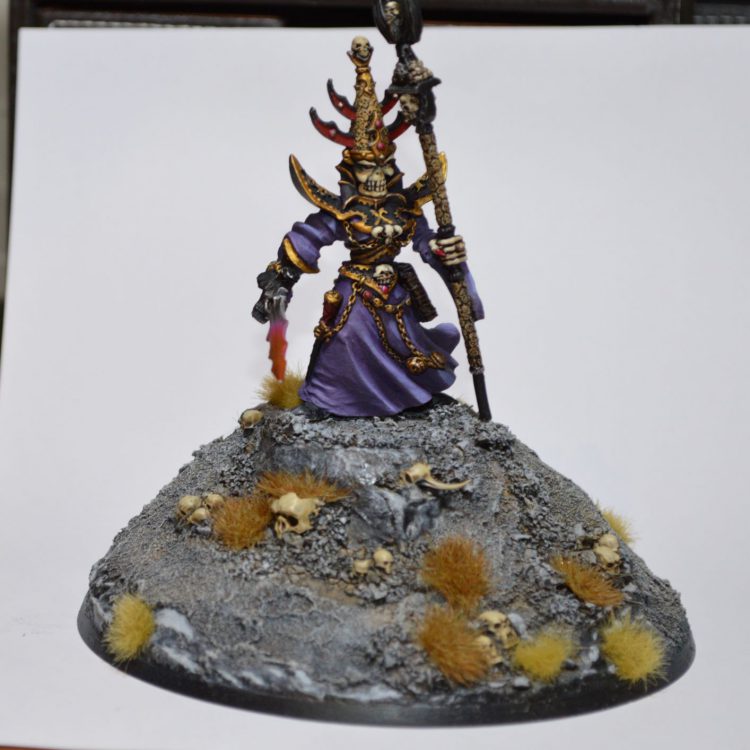 Not even joking, I love this model. Credit: Brin
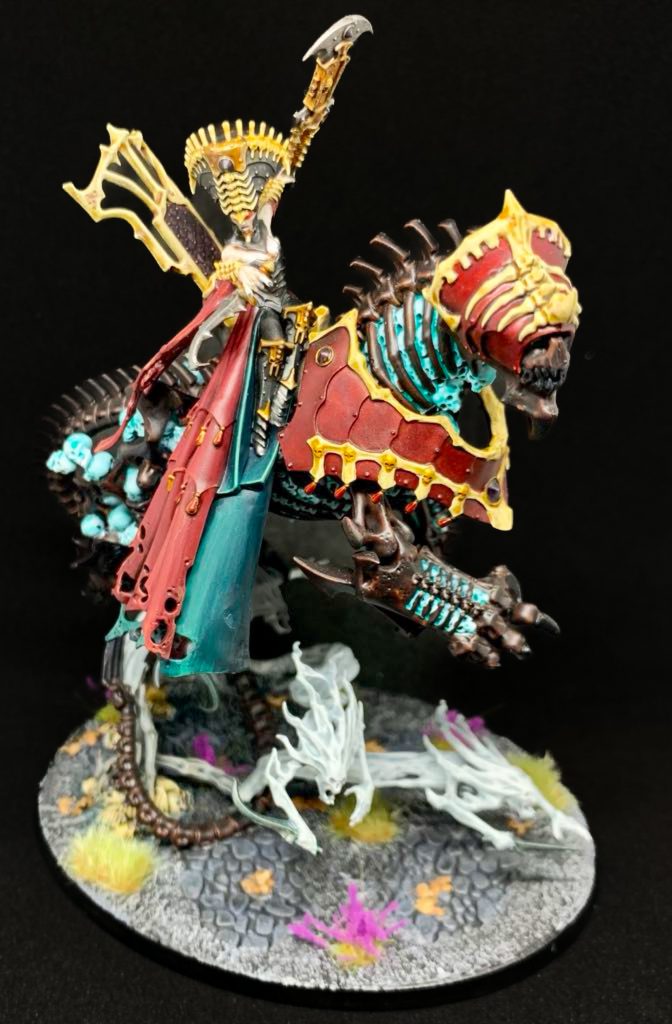 Credit: Joe
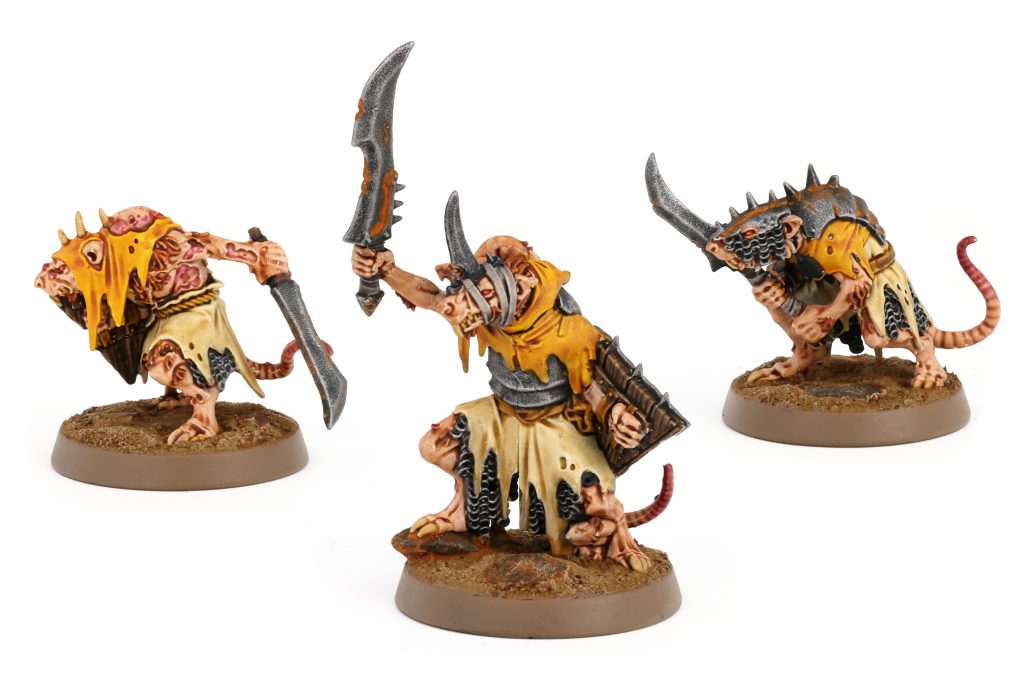 Skaven Clanrats. Credit: Pendulin
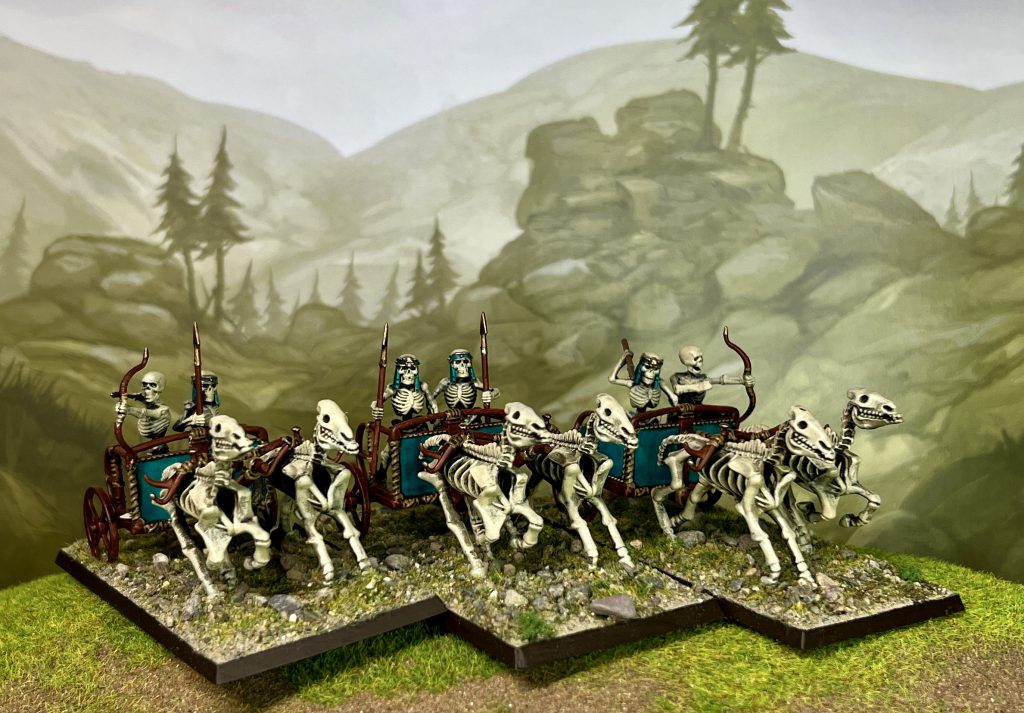 Credit: Bair
 Credit: Silks

 Infinity N5 First Principles: Understanding the Outcomes of Face to Face Rolls
 Tactical Feedback: Timing the Go-Turn
 SRM's Roundabout to Adepticon 2026: Curd Is the Word