 This website uses cookies. Learn more.
This website uses cookies. Learn more.
This website uses cookies. Learn more.
Books | Goonhammer | Black Library

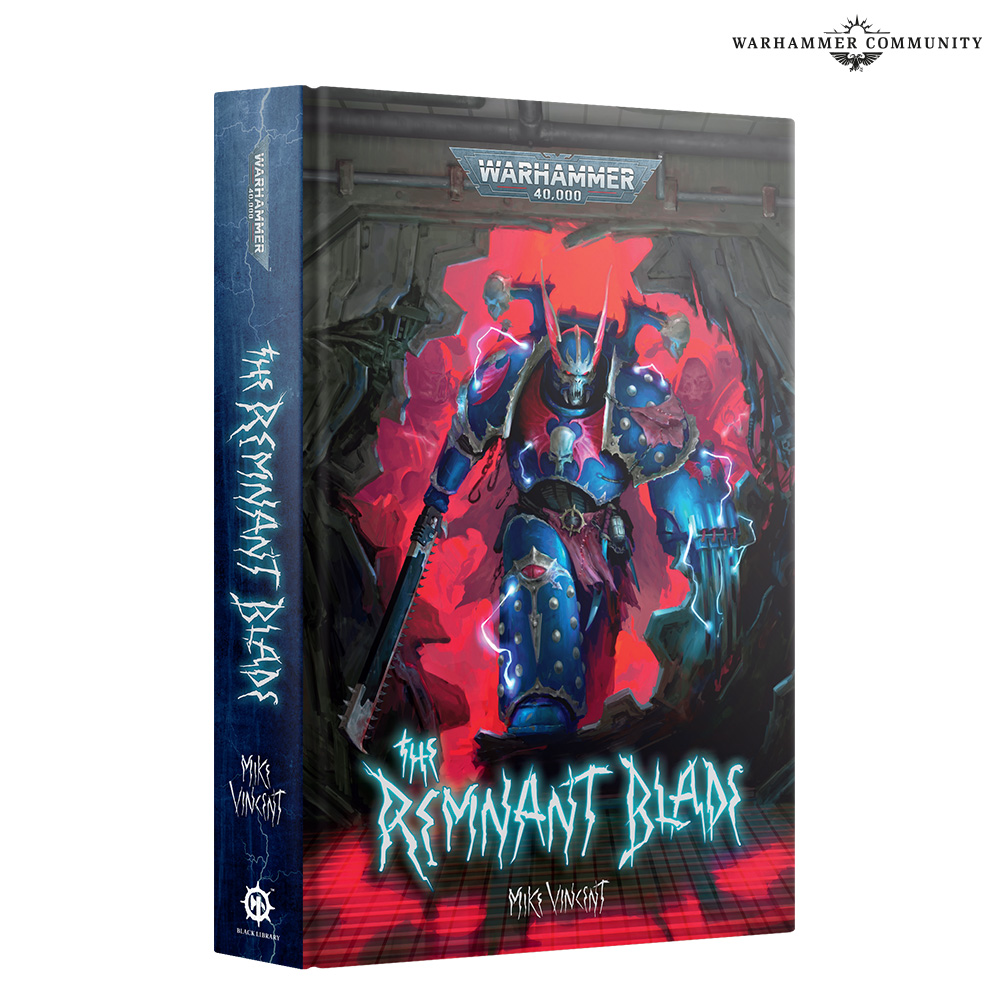 Credit: Games Workshop
Okay, let's go ahead and just address the elephant in the room- The Remnant Blade had big shoes to fill.
It’s not just that Aaron Dembski-Bowden’s Night Lords trilogy is widely acclaimed as one of the best bodies of work the Black Library has ever produced- though that’s certainly a large part of it. Dembski-Bowden's trio of titles (Soul Hunter, Blood Reaver, and Void Stalker) in 2010-12 set a very high bar for the portrayal of heretic Astartes in a thoughtful and almost sympathetic way, blending gripping action with poignant and rich character development. While Night Lords have certainly played their part as a story’s antagonists very well (q.v. Carcharodons: Red Tithe, Morvenn Vahl: Spear of Faith), it's much less often that they’ve gotten a chance to take center stage.
It’s also the fact that the Night Lords are having a bit of a moment right now. Sure there are probably meta and manufacturing reasons which helped account for the recent Nemesis Claw run of scarcity, but they were also one of the most badass sets in Kill Team1. There's been no small measure of buzz over Owlcat Games' centering the Legion as the villains of their upcoming CRPG Dark Heresy. And while I'd like a word with whatever marketing genius decided to include a Kroot statue instead of a Night Lord in the Collector's Edition of the game, it does include Dark Heresy: The Night Lords Story2, a new novella (from Dembski-Bowden, no less!)
So I have to image that there might have been a little bit more pressure than usual for Mike Vincent to deliver a book worthy of the Legion. Indeed, one Black Library author mentioned to me in passing recently that following ADB with the Night Lords was “intimidating… a tall order.” Not hard to see why!
The first taste we had of Dalchian Rassaq the Skin-Taker, lord of the Blades of Atrocity warband, was in the eponymous short story released earlier this year as part of the Heretic Astartes eShorts Week (reviewed here). It took place before the events of the novel and provided a preview of what the Blades might be about. In my review I was pleased that Vincent "played to the Legion’s character with stealth tactics and sabotage rather than just slapping a midnight blue coat of paint on a generic Space Marine story."
Was their debut debut novel a worthy successor? Well, mostly yes.
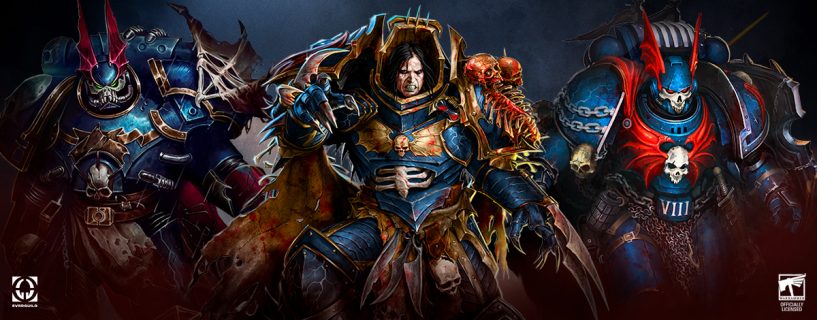 Image credit: Games Workshop
One of the smart things Vincent did here was to make something entirely his own. There wasn’t any attempt to replicate the ‘beautifully damned’ creatures of the earlier trilogy, no efforts to craft 'heretics with hearts of gold.' Dalchian Rassaq, the Skin-Taker, is every bit the villain his name suggests. There are no portentous visions here, no recollections (fond or otherwise) of Nostramo or the Primarch of the 8th, Konrad Curze and the romantic tragedy of his death. No ties to the Long War at all, really.
That means Rassaq's hatred for the Emperor is less familial and personal, based more in the present than any shared past. There's no mistaking his depth of feeling, however, with frequent use of some terrific slurs like Golden Liar for the Emperor, the Throne of Terra the liar's chair, and my personal favorite, referring to Imperials as thronescum.
While Curze in his last moments declared that "death is nothing compared to vindication," the only vindication Rassaq is after is simple, cold, murderous revenge. As The Remnant Blade begins we find Rassaq as a man much reduced. His band of killers and murderers were never the mightiest in the assembled horde of Thelissicus the Gorelord, leader of the Khorne-worshippers of the Crimson Slaughter and supreme commander of their fractious alliance, but they were stronger and more numerous- until they were sacrificed as a pawn in the conquest of the forge world Uzurmandius, leaving them a remnant shell of their former might.
Now just an echo of what they once were, Rassaq dreams of restoring their former glory and avenging himself and his brethren.
Rassaq is almost obsessive with this driving hunger, and all of his scheming and maneuvering are in service to that aim. With the splinter factions of the World Eaters and Thousand Sons in ascendance in the Gorelord's service, Rassaq must use every bit of his cunning and guile to carve out a place for himself and get his revenge on the Thelissicus- even as he faces perfidy from within.
That opportunity comes during an engagement with the Imperial Navy, when Rassaq notices one of the enemy stealthily dropping from sight. Finding that ship- and taking it- could be just the ticket to reverse his ill-fortune. The only problem is, he won't be able to do it alone.
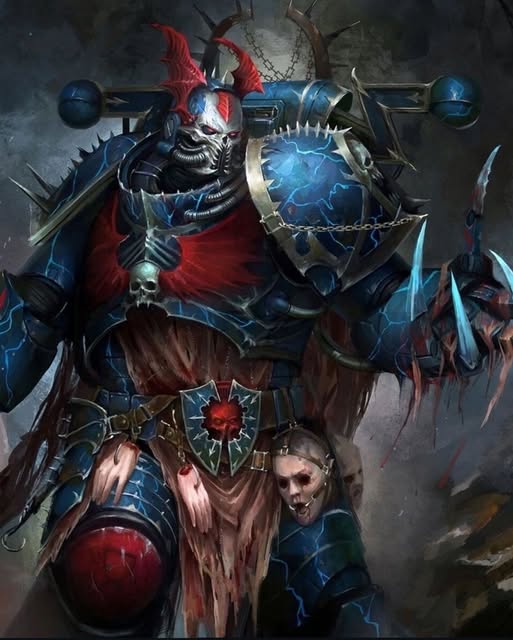 Image credit: Games Workshop
The book's other highlight is in its combat sequences. Vincent leans heavily into voidship battles and boarding actions here, with terrific pacing and momentum to keep the pages turning. Vincent deftly weaves these high-octane sequences together with the intrigue and character scenes, giving The Remnant Blade an easy readability I really enjoyed.
It’s always possible to have too much of a good thing, though, and the final third of the book is almost one protracted combat action. All of the other elements that made the book click are relegated to the backseat, and as a result it starts to flirt with bolter porn territory. That's a shame, because the setting for the ending act was a very novel one. Minor spoiler alert: the ship they've been hunting is one of the Black Ships, so Vincent leans into the odd, unsettling, and unusual in order to convey the strange techno-wizardry afforded these most esoteric servants of the Emperor.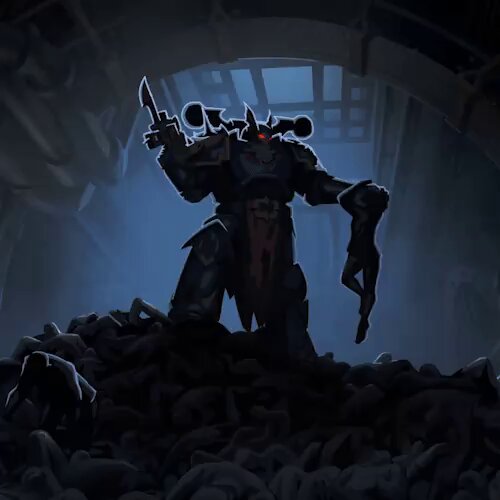 Image credit: Owlcat Games
Of course it's probably fair to say that it was always destined to suffer in the shadow of the Dembski-Bowden's trilogy, but that would likely have held true for just about anything that centered on the Night Lords.
I think one thing that gets overlooked in the recollections of ADB’s work is that it was, indeed, a trilogy. Even as the story beats changed from book to book, he still had three novels across which to develop the characters we’ve come to regard so fondly. When we think of the ‘reveal’ about Uzas, for instance, it lands so well because it had so much time and space to build up to it.
The fairer comparison might be The Remnant Blade versus just Soul Hunter, but I’d argue that unless you’ve only ever read Soul Hunter (and not the subsequent two) then that’s not really possible- your affinities for the characters have already been shaped by the continuing stories, and that’s not toothpaste you can put back in the tube.
But doesn’t this all just obscure a larger point? What’s to be gained by these comparisons to begin with? While it’s fair to be critically-minded when we consume any media content, we’re only diminishing our own potential enjoyment by keeping one eye firmly on the rearview instead of the page in front of us.
So while ultimately The Remnant Blade isn’t the Night Lords trilogy, it doesn't matter. Vincent has showed promise with the Blades of Atrocity warband- and I’d love to see him continue their story.
Tags: night lords | 40k | black library | mike vincent | the remnant blade

Thank you for being a friend.
 Goonhammer Hobby Round-Up: March 2026
 Goonhammer Reviews: Tribal Conquest
 Conquest: Weaver Courts Gemred Knights and Scaile Dancers Model Review
Support us on Patreon to get access to our Discord and exclusive App features.
Thank you for being a friend.
Already a Patron? Login with Patreon.
Visit our incredibly official store on RedBubble.

Support us on Patreon to get access to our Discord and exclusive App features.
Thank you for being a friend.