 Image credit: Games Workshop
Author
Steve Lyons had a problem.
2024 had been a breakout year for his beloved Krieg. Following Special Edition reissues of
Dead Men Walking (2010) and
Krieg (2022), his latest offering,
The Siege of Vraks followed suit.
Vraks would be a huge hit, going on to win the Black Library Book of the Year by popular acclaim. That wasn't the only good news 2025 heralded in as the Death Korps received a full miniatures line, including gracing the cover of a limited edition
Astra Militarum Codex and the release a Krieg-themed
Imperial Infantryman's Handbook. And his 2023 Krieg short story,
Less than Human, was reprinted in
Death and Duty: An Astra Militarum Anthology.
But along the way, he'd sort of painted himself into bit of a corner.
Better Dead than Ned
The term 'flanderization' was coined by TVTropes, indicating the gradual reduction of a character into its most oversimplified and exaggerated traits (the name comes from Ned Flanders of the Simpsons, who over the course of the series' run had devolved from a good-neighbor foil for Homer into a Christian caricature). Warhammer internet culture had already put the task of turning the Death Korps into a meme well in hand, typically focusing on one of three things emblematic of the faction: shovels, gas masks (and the resultant "happy gas mask noises"), and their relentless fatalism.
None of these were the fault of Lyons, of course- indeed, when he had set out to write
Dead Men Walking he'd intended to write a book featuring Necrons and simply needed to find a Guard regiment to have them fight
1. But he didn't shy away from embracing the tropes, either. "In all my previous Death Korps novels and stories," he notes in the Special Edition afterword, "I don't think I actually created a major named Krieg character
2. Even the phrase 'Krieg character' seems almost a contradiction in terms. Often, I've leaned into the popular conception of them: a faceless collective, eschewing such subversive notions as individuality."
But after three novels of the Krieg as trench warfare and siege specialists, Lyons wanted to try something new. Therein lie the challenge- how do you mix things up while retaining the essential elements of what makes the Krieg the Krieg?
He found his answer on the tabletop.
Back in 2004, Warhammer 40,000's 4th Edition rulebook introduced rules for a play variant called Kill-team, which pitted an elite warrior strike force squad against a mob of
Brutes. Over time this gradually evolved from being a scenario supplement into a full-fledged tabletop game of its own, with Kill Team debuting in its standalone form in 2013.
"So," Lyons noted, "how do you drag siege specialists out of their earthworks and into a new environment? We know that Krieg kill teams exist- there are miniatures and everything- so it was probably past time that we told the story of one. A small unit formed for lightning-precision strikes; it's a very different paradigm for a faction renowned for winning wars of attrition through obduracy and weight of numbers."
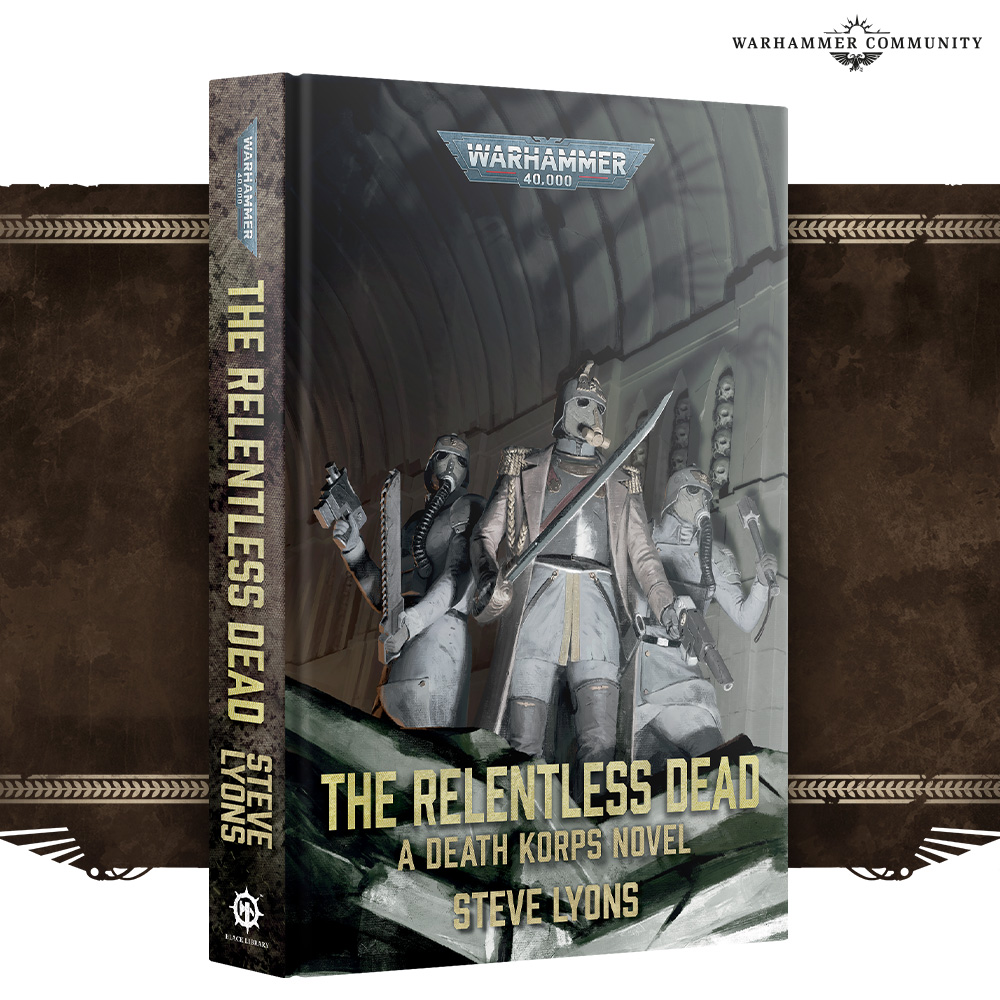
It's this novel unit structure that Lyons thrusts into the tumult of a hallowed world infested with Chaos.
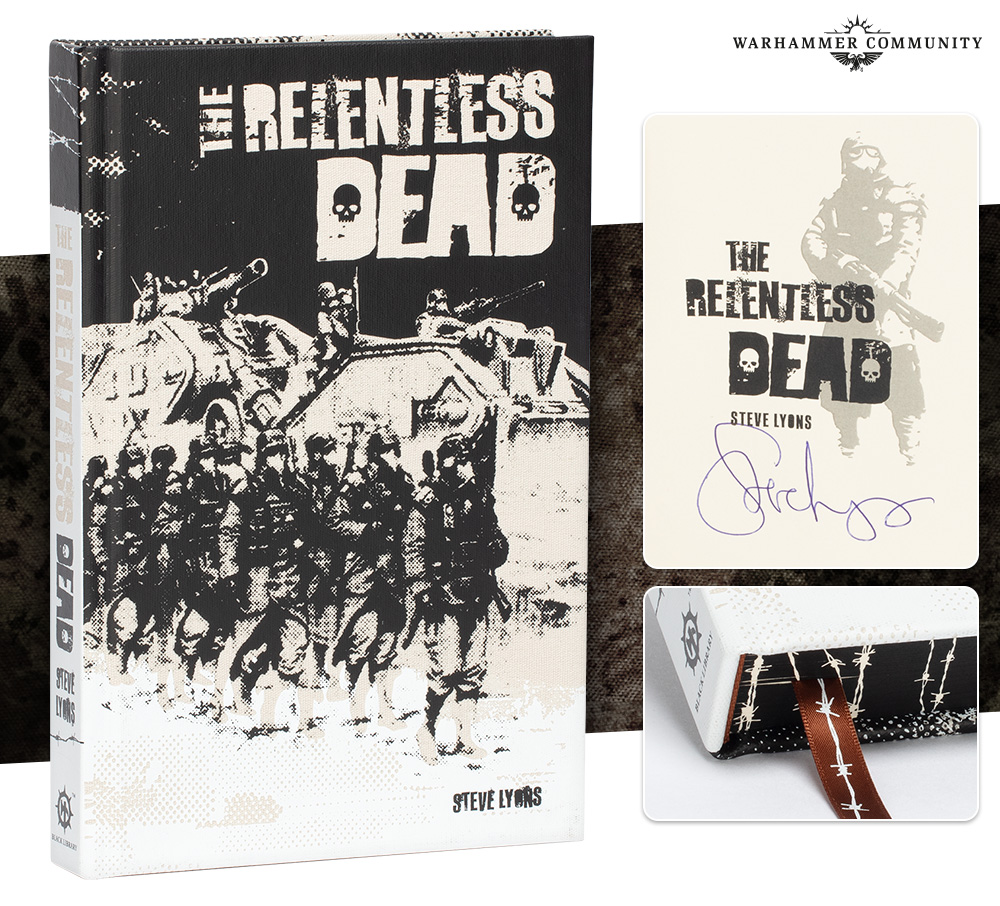 Image credit: Games Workshop
As Above, So Below
Ages ago a planetary governor of Oleris III made a pious and inspired vow, which was that all those who died in their sector fighting in the Emperor's name would have a place of hallowed rest on his planet. While such is the nature of war that many cannot be recovered, whether incinerated or atomized or ground under tread into earth, enough were recovered to give Oleris III the designation of a cemetery world.
It's the nature of cemeteries to be haunted in some way, but usually with the remembrances and memories of those who the departed have left behind. On Oleris III, however, these hauntings have taken on enough of a literal form that it's attracted the attention of the Inquisition- and not for the first time.
What Inquisitor Idelax finds on the cemetery world compels to send out an emergency summons for military aid, a call that the Colonel Graven and his Krieg 401st answer. But before they reach planetside, Idelax mysteriously disappears during a heretic uprising that sees the planet's Ecclesiarchal Tower captured by the forces of Chaos.
While the battle to reclaim the Tower rages on the surface, the Krieg must also hunt for the Inquisitor in the labyrinthine warrens of the planet's vast catacombs and ossuaries.
Catacombs and ossuaries that have held dark secrets for generations.
Beset on all sides by phantasmic apparitions, mutants, heretics, and witches on the one side, and the Vostroyan Firstborn and Sisters of Battle on the other, can Graven and his Death Korps thread a treacherous needle, save the Inquisitor, and put an end to the rot within the soul of Oleris III once and for all?
Danse Macabre
For most of the book, Lyons pulls off a gripping tale riven with a kind of suspense quite different from his more martially-centered previous works.
The Relentless Dead feels part haunted house, part Scooby-Doo mystery as the Krieg confront the supernatural forces at the heart of the world. And these aren't just unseen forces and things that go bump in the night. Rather, the Krieg find intangible spectres that feed on doubt and weakness preying upon the population, taking possession of those not strong enough to mentally resist them. Who can you trust when your enemy could be anywhere, anyone? The natives? Your allies? Your commanding officer?
The paranoia and asymmetric conflict ratchet the story's tension up magnificently, and imbues it with a whiff of the Vietnam War as Graven and his kill teams must explore villages whose allegiances are uncertain as well as cramped underground passages filled with traps, hazards, and unholy perils. The writing is brisk and efficient, the chapters short, and Lyons doesn't let the story get bogged down as it races towards its conclusion.
Meanwhile, a
who can you trust paranoia begins to infuse the narrative, even affecting how the Krieg begin to look at one another. It's less "us against the world" and more "every one for themself"
a la John Carpenter's
The Thing. This element does a lot to keep the pages turning, as I found myself repeatedly wondering which of the characters might be ready to re-enact a game of
Betrayal at House on the Hill.
If there's a weakness to the book, it comes as all of these different elements combine into the story's conclusion. Eventually things need to begin falling into place as the Krieg learn more and more about the world and its wicked history- this isn't
Lost, where every story arc answers one mystery and kicks off three more to replace it. And to his credit, even as things transition to more of an action story than a mystery he's able to keep some secrets until the end.
The biggest problem is that after all this intricate crafting, he falls back on some fairly tired characterizations of some of the story's other factions that don't match the consistent quality he'd crafted up until that point. I have to feel for Adepta Sororitas fans who, time and again, see their heroes and their faith reduced to almost cartoonish levels of obstinacy. "What do you mean every clue points back to the Building of Our Sacred Faith, the enemy could not
possibly be hiding in there because our faith is so faithfully faithful. And no, you can't peek inside really quick to make sure, because that would be questioning the strength of our faith."
Times like these I always recall Spaceball's Axiom on the Superiority of Evil: "Evil will always triumph because good is dumb."
It's all the worse as the Sororitas leader compounds foolishness with childish petulance after a passage of battlefield success.
She had come here hoping for something, but she couldn't fool herself. So, either Graven is mistaken or our saint bestows her blessing upon him and not me! Instinctively she knew which option she preferred, and that choice made her feel even more wretched.
And how was Graven's other rival in the story, the Vostroyan commander, taking the news? About the same.
As far as he was able, while fighting for his life, he had parsed the curt, breathless reports in his comm-bead's earpiece. He had heard of Imperial losses and gains in, it seemed, equal measure.
Graven! he had thought sourly, upon hearing the news- from three sources, overlapping, unable to hide the admiration in their voices. Why did it have to be Graven? A churlish thought, he knew.
It's a similarity hard to miss as one follows the other by only four pages, and it stuck a fairly flat note when compared to the earlier quality of the book.
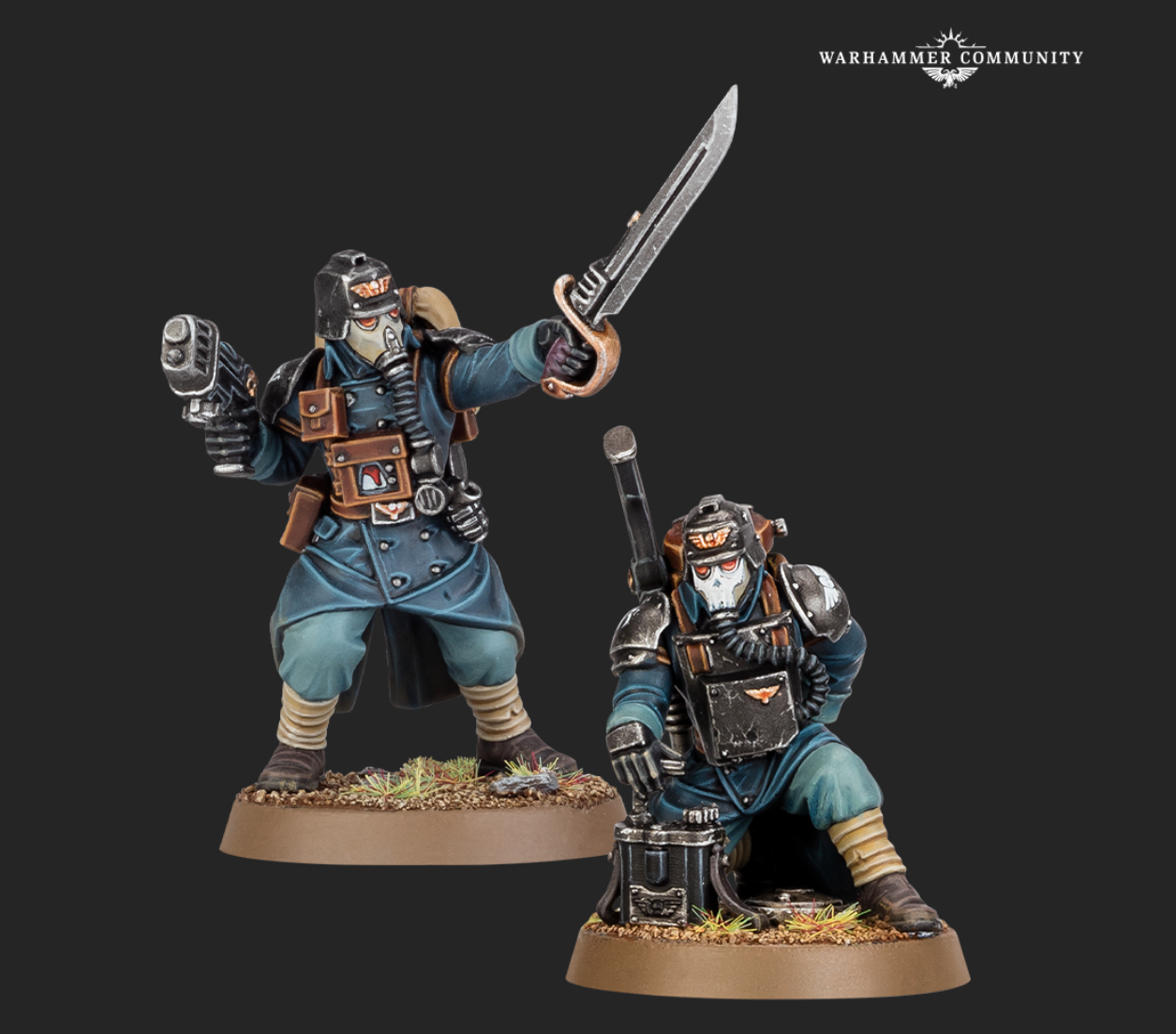 Image credit: Games Workshop
Final Thoughts
Overall, I'd caution against judging the book by the last 20% rather than the first 80%. Lyons may not have stuck the landing, but the gymnastics routine overall was superb. Taking the World War I trench-style regiment and sticking them in a supernatural mystery was an inspired touch, one he credited (in the Afterword) to a visit to the Parisian catacombs. It was the perfect counterpoint to the more prosaic Death Korps.
Lyons also did a terrific job keeping his action and suspense sequences varied in tone and urgency, reminding me quite positively of some of
Dan Abnett's legendary skill with the quill with his Gaunt's Ghosts.
For all that, and despite the quality dropoff in the final act,
The Relentless Dead is a terrific read. Four-and-a-half shovels out of five.
Footnotes
- As related in a Warhammer Community interview in July 2024.
- Prominent named Kreig, such as Jurten from Krieg and Tyborc from The Siege of Vraks, were not Lyons creations but rather pre-existing in the game lore.
Have any questions or feedback? Drop us a note in the comments below or email us at contact@goonhammer.com. Want articles like this linked in your inbox every Monday morning? Sign up for our newsletter. And don't forget that you can support us on Patreon for backer rewards like early video content, Administratum access, an ad-free experience on our website and more.Thank you for being a friend.
 This website uses cookies. Learn more.


 Goonhammer Hobby Round-Up: March 2026
 Goonhammer Reviews: Tribal Conquest
 Conquest: Weaver Courts Gemred Knights and Scaile Dancers Model Review