Games Workshop has been on a roll with its campaign books this year, releasing them not just with new
datasheets and Detachments but also with custom rules. The first two books gave us full campaigns for Vespator Front and the Maelstrom as well as rules for creating custom characters. Now in this third book they’ve released updated rules for Apocalypse games.
We’d like to thank Games Workshop for providing us with an advance copy of these rules for review purposes.
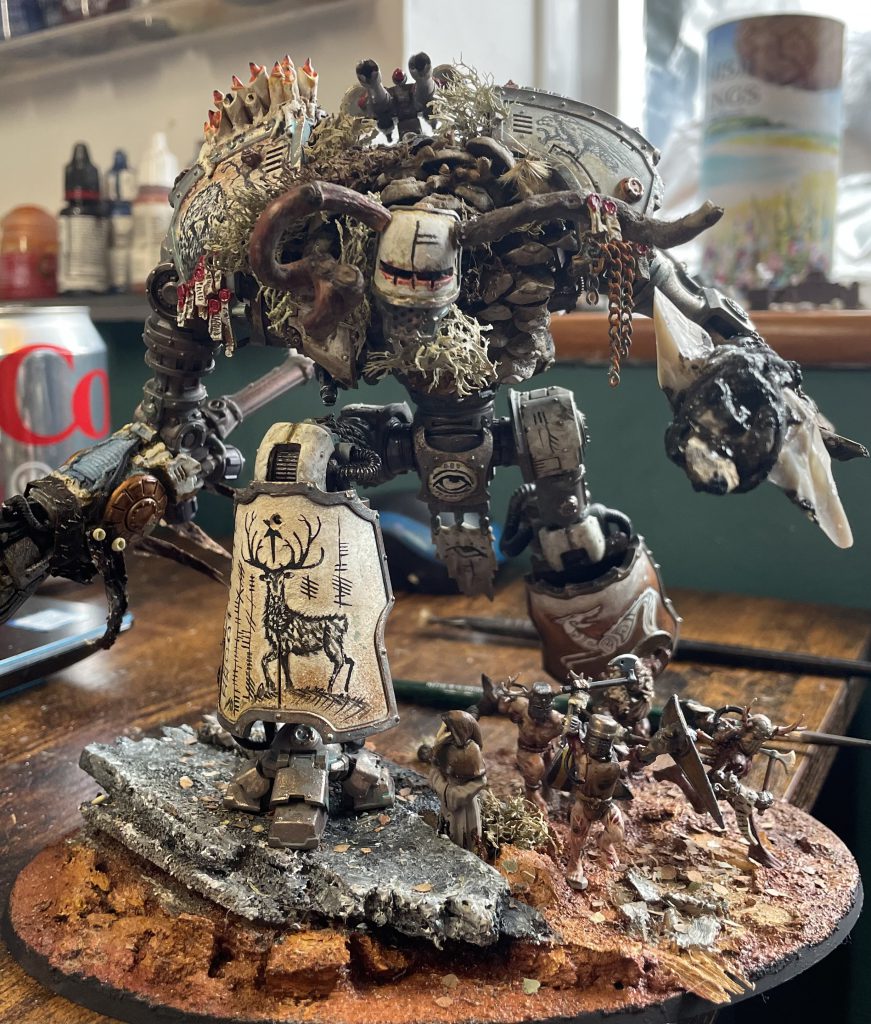 Some kind of big Knight, credit: Lenoon
Beanith:
Some kind of big Knight, credit: Lenoon
Beanith: Apocalypse games are what happens when Onslaught level games at 3,000 points aside don’t scratch that itch any more and that giant lump of Forgeworld resin (that you hope to hell that non Warham friends and family don’t find out how cost) cries out to be used on the battlefield against other people with more money than sense.
When you have the weekend free and you’re more than happy to spend 2-3 hours for everyone to deploy their entire collection of models onto a collection of tables lashed together whilst praying that no one bumps it and causes a very expensive game of Titan dominos.
In previous editions of Warhammer 40k, there have been various rules, suggestions and entirely new ways of playing Warhammer 40k to make things hopefully a little more streamlined when playing games at 3000 points or more a side.
TheChirurgeon: For my money, that 8th edition Apocalypse supplement - which was really more its own game system - was absolutely great and deserved a second iteration. 40k just doesn’t work at the 6000-point scale and needs to be streamlined significantly to work.
Beanith: For 10th Edition Apocalypse, Games Workshop has decided to stick with the basic rules that we all know and love from 10th and are suggesting some additional “optional rules” to help keep the games flowing and also make sure there are no true feel bad moments for those the side that goes second and that their giant Warlord titan they spent months building and painting gets a chance to do something on the battlefield before it goes back into the baby carrier.
It goes without saying, we consider most of these optional rules to be more essential.
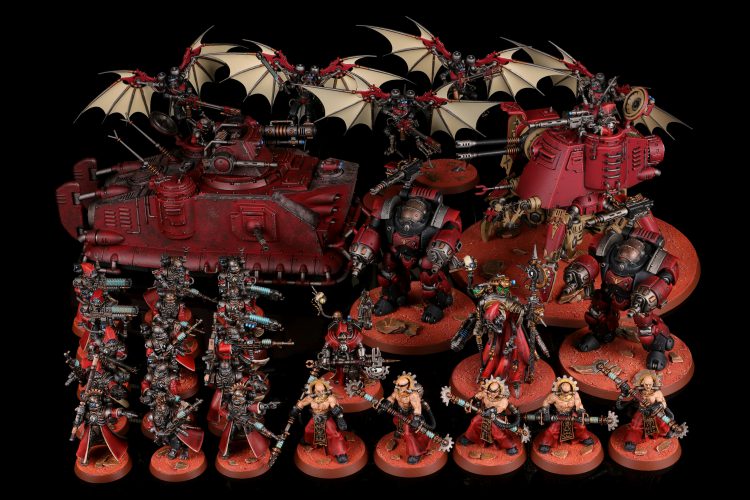 Adeptus Mechanicus First Army. Credit: Pendulin
Organising Apocalypse Battles
Organising and running these events takes a fair amount of planning and once again they recommend nominating someone to act as the Games Master to listen to feedback and suggestions but also make the call on rules to help keep things moving throughout the day.
The Games Master will want to assign people into two teams and ideally a warmaster on either side to decide how many points each side gets and how those points are distributed between players.
Once you’ve nailed down the people, you’re going to need a place with enough space to run this event. Starting out at 9000 points, they recommend a 6’ by 6’ playing area and for every 3000 points you add an extra 2’ of length to that space.
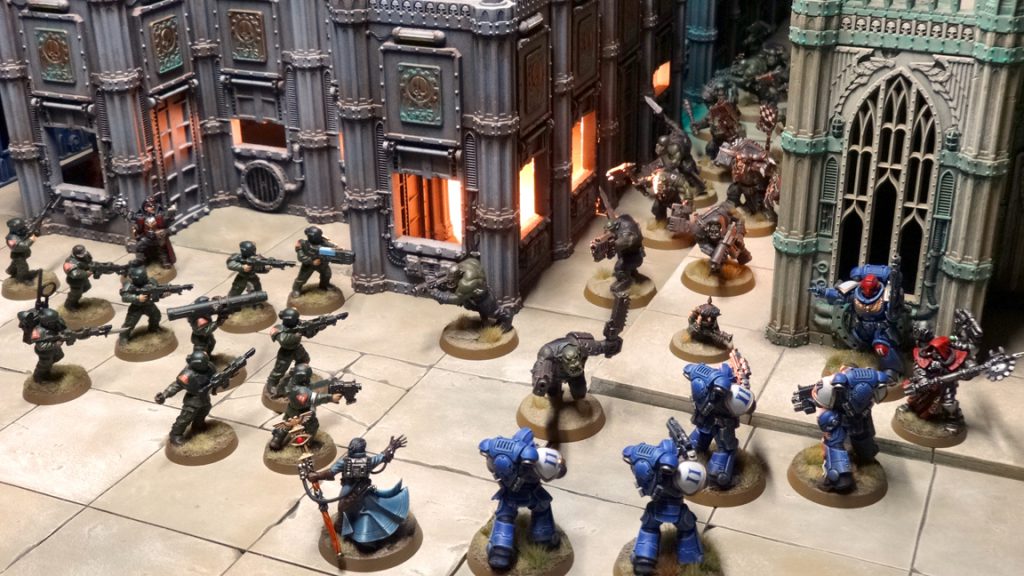 Cobalt Scions Space Marines and the Astra Militarum defend their city against an Ork raid. Credit: Charlie Brassley
Time wise it's the same with a 9000 point game expected to last 4+ hours, adding two more hours for each 3000 points on the table. Meaning you could spend 12+ hours on a 6’ by 14’ surface pushing around 21,000 points of models.
TheChirurgeon: This section of the book is bonkers. They recommend Apocalypse games start at 9,000 points and require a 6’x6’ table. Which sure, the games are supposed to be big, but I think you can start throwing Apocalypse rules out well before 9,000 points.
Rules Adaptations
An Apocalypse game is played normally with some Optional Rules. We would encourage people to use most of them - labeling them as “optional” is mostly a mistake in our estimation.
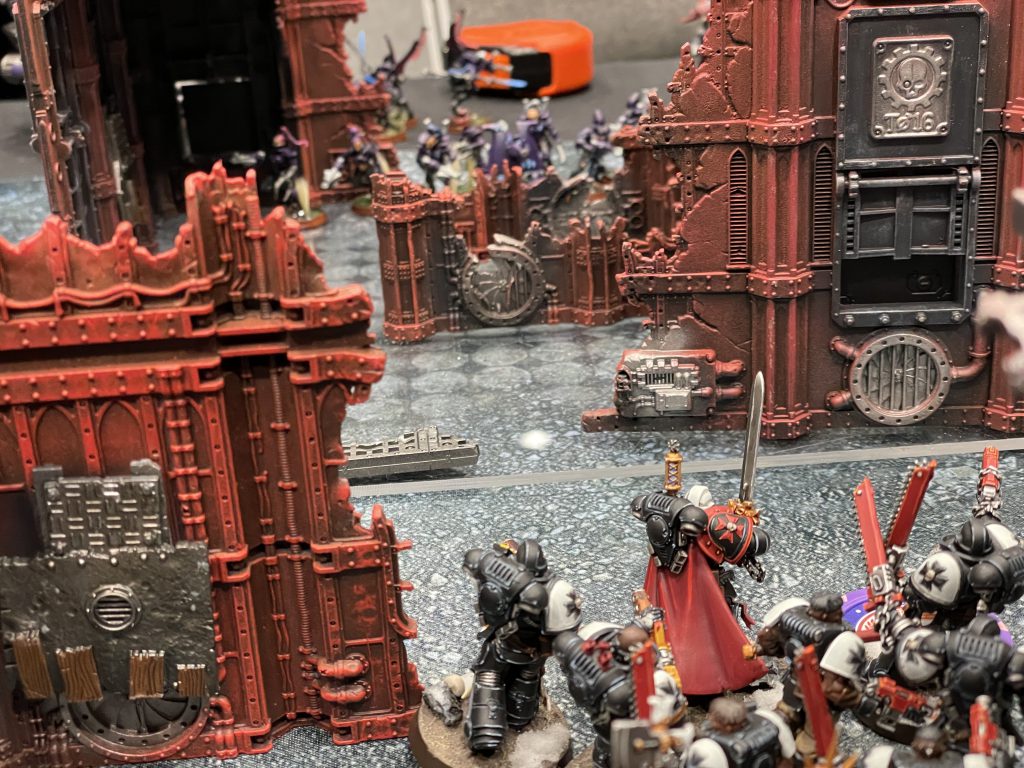 Black Templars vs. Eldar. Credit: SRM and Eric Lofgren
Setting Up
There are two “optional” rules here. The first is
Massive Organisation, which has players forego picking a Detachment, and the second is
Crashing Waves, which has players only deploy 50% of their forces and set up the remaining half in waves on rounds 2 and 3.
These are both good to have, but for different reasons. We’d recommend using Massive Organisation if players are operating with one big army per side, i.e. you brought 6,000 points of your Orks to play, but you could probably get away with keeping Detachments if your side was composed of three or four players with their own more manageable armies. That said, cutting out those Detachment rules and minutiae will help streamline things and there are other Stratagems you can replace those with in the book. If you do go Multiple Detachments per player, they recommend capping those at 3,000 points each.
Crashing Waves is just a good way to speed up Deployment and account for the fact that you’ll want things in Reserves anyways during the game to keep the action moving. Of the two, that’s the one we’d more strongly suggest not be optional. Detachment rules on the other hand you can take or leave, and there are rules in this book for using multiple Detachments for a single player if you prefer. We’re lukewarm on that idea as well since it just adds rules bloat to an already stuffed game but it’ll make sense for team games.
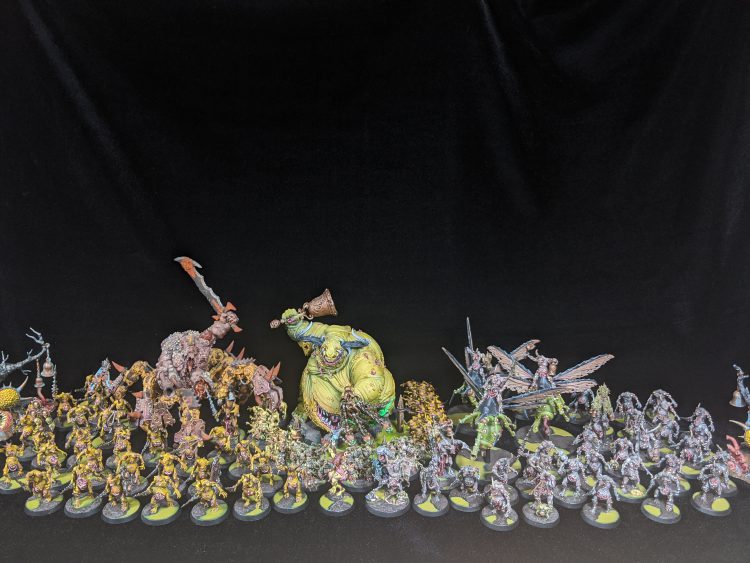 Credit: Gerald Miller
Turn Structure
The big optional rule here is
Strict Structure, which disallows rules that let you move, shoot, or fight outside of the normal turn structure. This is another one we’d recommend not be optional - reactive moves and Overwatch make a lot of sense in a smaller skirmish game, but they can bog down a large game quickly and just don’t fit the size of the battle.
The other optional rule that they recommend is
One Reaction where each time one or more abilities that could be used after an enemy unit does something in their turn, only one such ability can be used by that team.
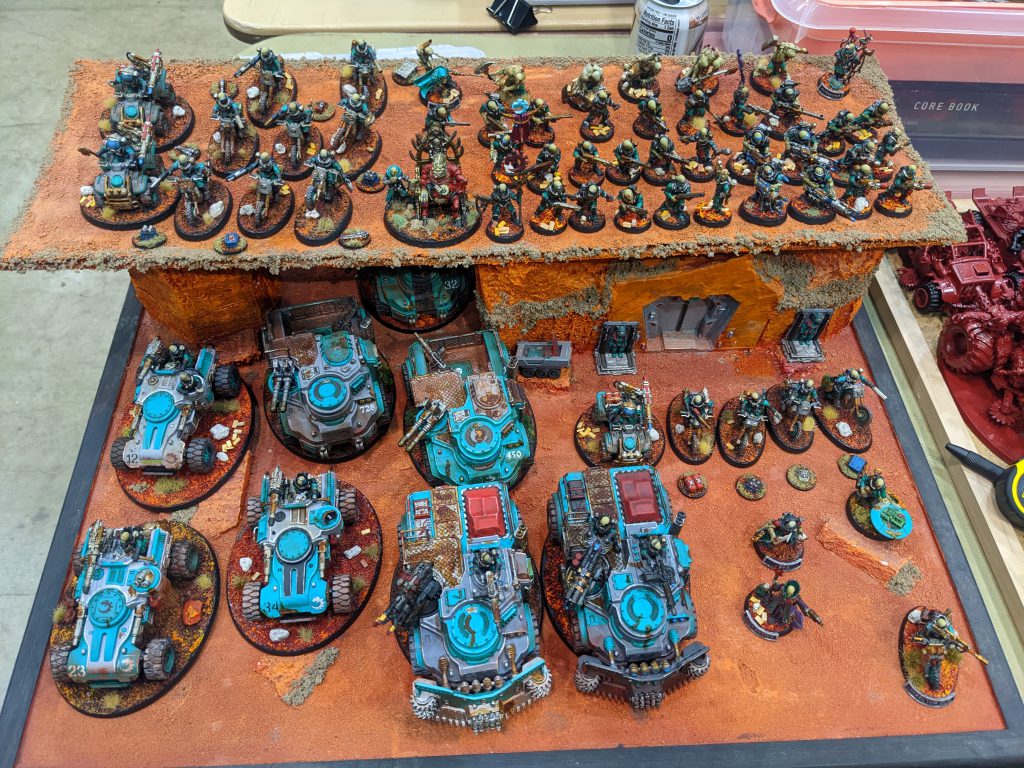 My Genestealer Cult 100 PL list. Credit: Mugginns
Command Phase
This one’s hidden in the Stratagems section but is really part of the turn structure. In Apocalypse games in your team’s Command phase each player generates 1 CP plus an additional 1 CP for every 3,000 points over 3,000 points they’re using in the battle. Additionally players can pool their CP to use more expensive Stratagems.
First Battle Round
This is where the most important rule in the whole thing sits and again, it is weirdly optional. There are two rules here - the first is
Fog of War, which limits ranged attack ranges to 24” unless the target and attacking model are TITANIC on the first battle round. This one is whatever - I’m not a big fan, honestly. The other one however is
Giving Their All, which has destroyed units stick around on the battlefield until the end of the battle round.
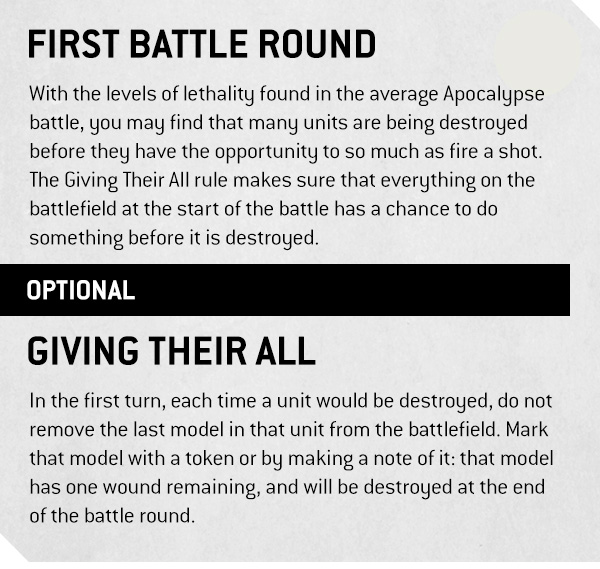 Apocalypse: Giving Their All. Credit Warhammer Community
TheChirurgeon:
Apocalypse: Giving Their All. Credit Warhammer Community
TheChirurgeon: Apocalypse as a game mode
needs this rule to function as anything other than a misery simulator. There’s nothing more heinous than painting a big titan, bringing it to a game, and watching opponents blow it up turn one before it gets to move or shoot, then being stuck at the game for the next eight hours with nothing to do. Far beyond turn 1, Apocalypse games should generally allow units to stick around and resolve damage at the end of each round, and you should do this with non-vehicle/monster units as well. As written, this rule really only works on big multi-wound models; a unit of marines will just be sitting around with one model left. Now if your reply is “don’t take a unit of marines in Apocalypse” well, I agree, but some people are sickos and I think the rule should work for them.
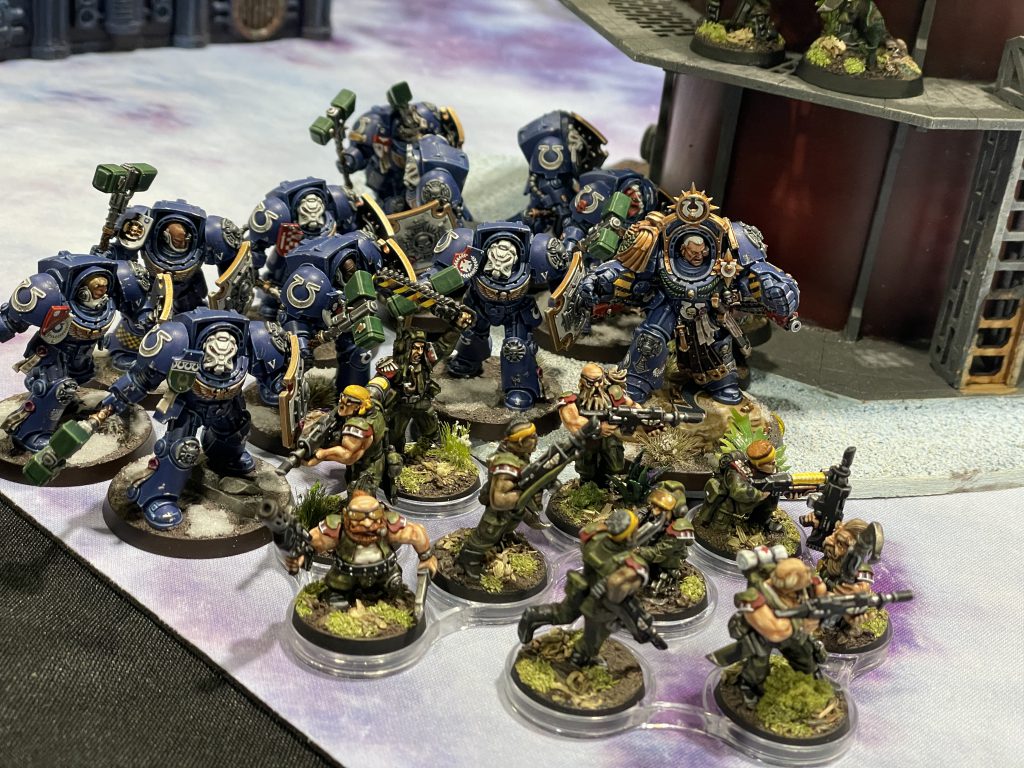 Ultramarines vs. Catachans at Adepticon 2026. Credit: SRM and Peter Dolan
Our recommendation is that you play things like the 8th ed Apocalypse supplement, and track damage for each unit, then resolve it all simultaneously at the end of the round. This ensures units get to act and go out in a heroic blaze doing cool stuff, but there’s still value in killing them.
Movement Phase
The optional rule here is that you allow Reinforcements to arrive at any point during the controlling player’s movement phase. This is fine and helps speed things up, especially if you have a lot of players who don’t want to wait to drop in reserves. This is also just kind of how a lot of players already play anyways, dropping reserves on the table early, so it’s pretty whatever to make it a regular rule.
Shooting/Fight Phases
To speed up the game when it comes to the Infantry running around on the table,
One Weapon wants you to choose one weapon equipped by one or more of that unit and only use that weapon in the shooting or fight phase. This speeds up things making you choose between firing 9 lasguns or that one missile launcher when shooting. Or having the Sarge punch something with their powerfist rather than swing wildly with boot knives. This is a fine change, though it’ll punish some units which have multiple good weapons like Noise Marines.
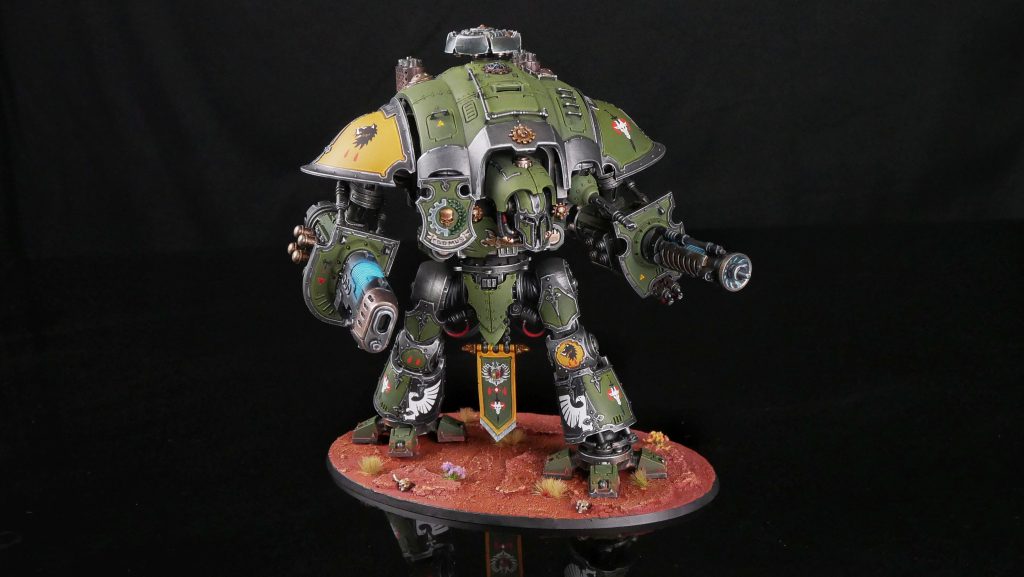 Knight Defender of House Cadmus by Craig "MasterSlowPoke" Sniffen
Alternatively there is
Conserve Resources where units can give up a round of shooting to perform an action that will net you a ‘Resource Point’ which never gets mentioned anywhere else in the book. It's a re-roll with a few slight differences.
Lastly is
Minor Skirmishes where the attacker and defender can both agree to skip all the dice rolling involved with Hit, Wound and Saves and just dish out D3 or D6 mortal wounds to the target unit. Great for chaff units plinking away at each other but you may want to ignore this one when firing the mega death ray missile of doooooom at that Rhino that looked at you funny.
Other Core Rules Changes
Finally there are a number of suggested core rules changes at the back of the Apocalypse rules, such as having Teams alternate fighting with units instead of players. Most of these are related to having teams instead of players on each side.
Apocalypse Stratagems
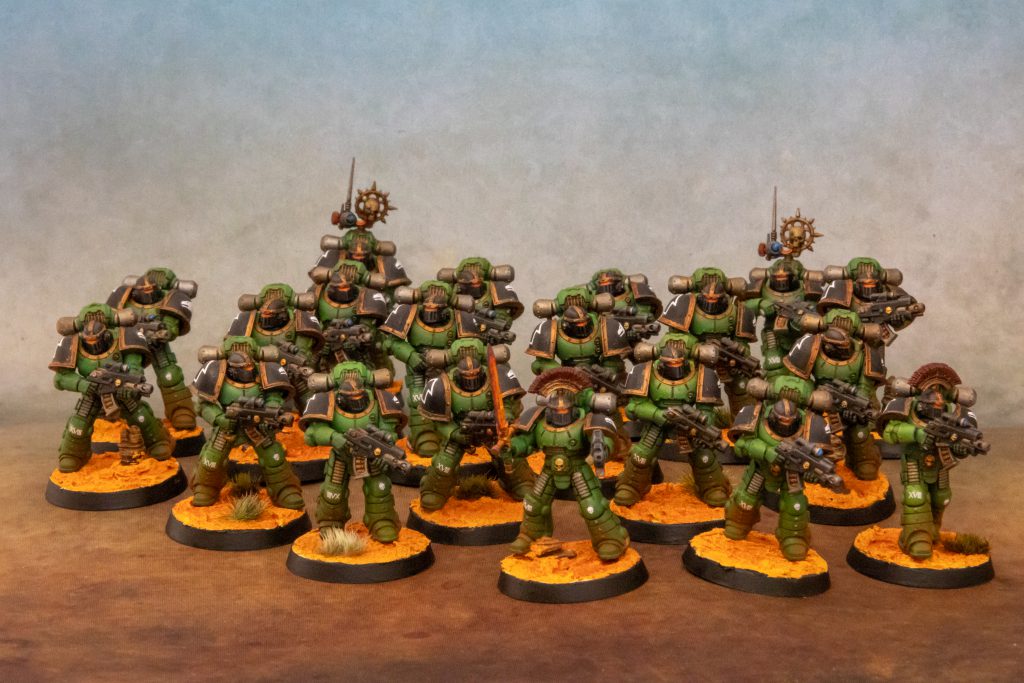 Salamanders Tactical Squads. Credit - Soggy
In addition to slightly modified rules for gaining Command Points, Apocalypse has a different set of Stratagems. The Core set make sense at least in that many of the ones you’d take in the Core rules for smaller games involve out-of-phase actions like Rapid Ingress, Fire Overwatch, and Heroic Intervention. There are a whopping twelve Core Apocalypse stratagems, and they all cost at least 2 Command Points to use. We won’t cover all of them but we will look at some of our favorites.
- Trophy Kill (2 CP) is used when one of your units destroys an enemy TITANIC unit and puts an objective marker on the table where that TITANIC unit was destroyed. This is such a cool Stratagem I wish it was in standard 40k.
- Mass Reinforcement (2 CP) is used to bring up to three destroyed units totaling up to 500 points back into your army, placing them in Reserves. I’m less a fan of this one because it makes games longer and feels like a cheap exchange rate for points.
- Void Shielding (2 CP) gives units within 12” of an objective marker you control a 5+ invulnerable save for a phase.
- Into the Heavens (3 CP) lets you pick up to two units and put them back into Reserves, giving every army uppy-downy.
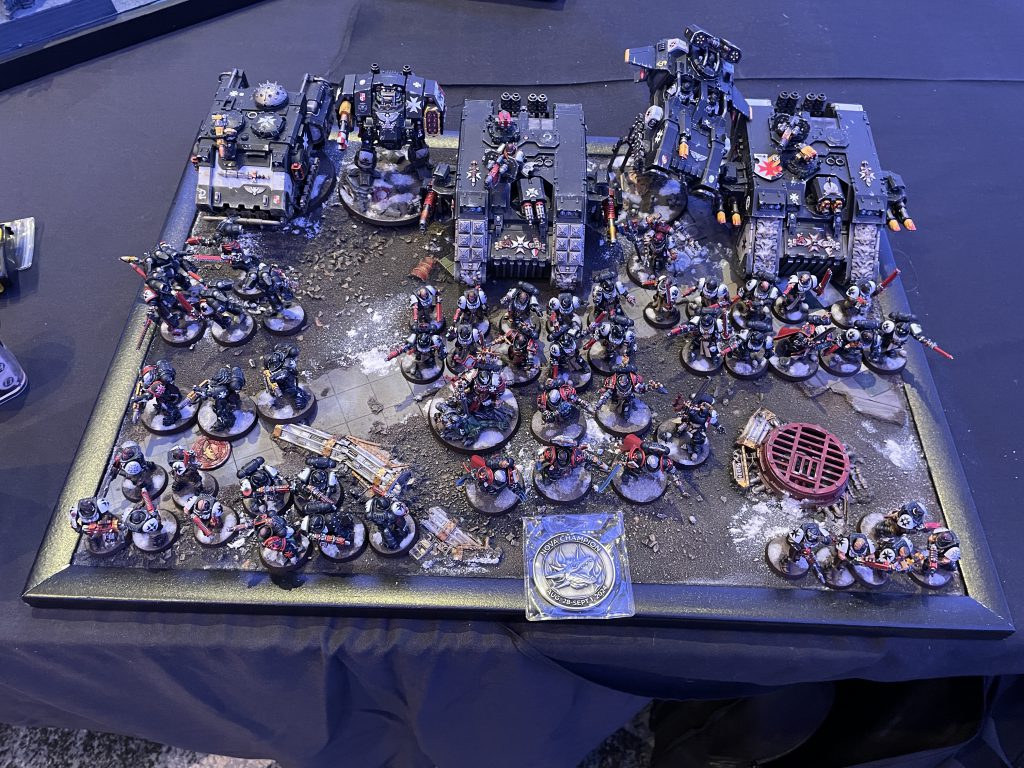 SRM's Black Templars at NOVA 2024. Credit: SRM
These are fine, but then they go and add a number of Stratagems for every single faction in the game. Specifically, six for each major faction and three for the supplement chapters and cult legions. There’s also a set here just for the Adeptus Titanicus, and they’ve been priced to account for that built-in +1 CP cost rule on Titans. Titans get
Apocalyptic Meltdown (2 CP) to Auto explode, and
Crushed Underfoot lets them trample units they move over in the Movement phase.
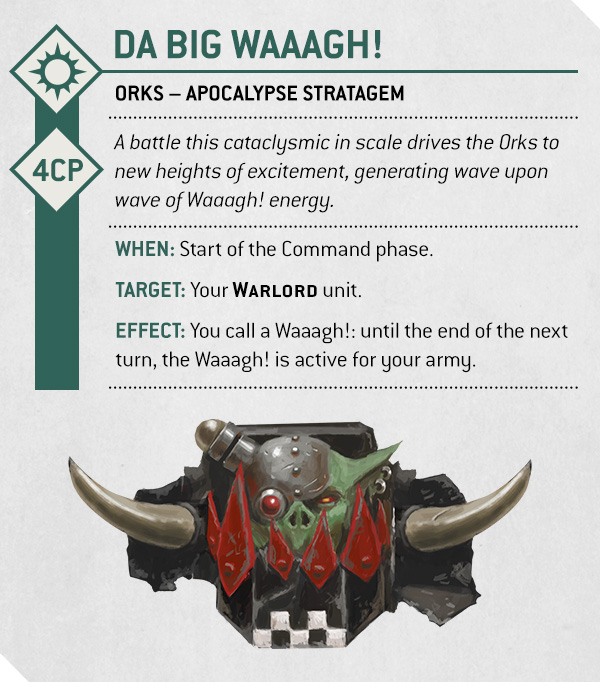 Apocalypse: Da Big Waaagh. Credit Warhammer Community
TheChirurgeon:
Apocalypse: Da Big Waaagh. Credit Warhammer Community
TheChirurgeon: I personally like the Death Guard
Sevenfold Strain Stratagem (3 CP), which gives you a 14” Contagion Range. For Necrons, the
Transcendent Power Stratagem (2 CP) lets your C’tan Shard units do some additional effects. And for the Orks, there’s a similar random effect with the
Big Dakka Button (2 CP), which gives you one of three random effects for your vehicle: Sustained Hits 2 on ranged weapons, Blast and Devastating Wounds on them, or Blast and Ignores Cover.
Apocalypse Missions
There are five Apocalypse Missions, and these have been arranged into a Campaign called “Fate of a World,” which is designed to model forces pushing each other as they battle for supremacy of the battlefield/planet/whatever.
There are two additional rules to apply to Apocalypse Missions. These are not optional.
- Objective Marker changes. Control range from an objective marker in these missions is 6” instead of 3”.
- Actions. These haven’t changed, but are re-stated/added here for this mission pack because they were hilariously not part of the rules at the edition’s launch.
The Apocalypse missions are, surprisingly, only five rounds long. They tend to care about kill counts and add a single rule to the mix to spice things up. The five missions here are intended to be played in a sequential order, laid out in the Apocalypse campaign rules. The basic mission you start with is Clash of Might.
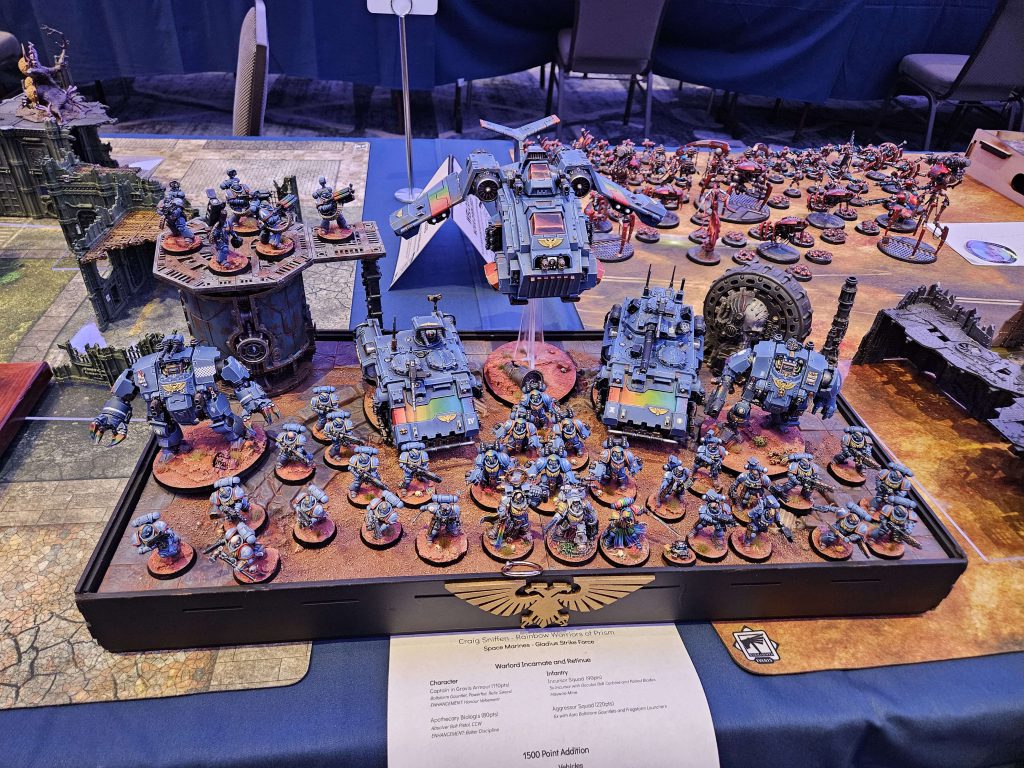
Clash of Might
The basic Apocalypse mission is Clash of Might, which has two armies starting 24” away from each other in a Dawn of War deployment. There are three objective markers in no man’s land. Teams score for destroying more enemy units than their opponents and controlling objectives, plus there are some end game objectives around holding more objective markers than the opponent. It’s worth noting that the VP totals are sparse here; you get 1 VP for being battle ready and the most you’ll get for anything is 3 VP.
 Andrew's cat, Spock, is very cute and just wanted to pretend to be a Titan
Apocalypse Campaign
Beanith: This section is very brief at two pages because what sick freak wanted to run three back to back apoc games?
In the Fate of a World Campaign, one side will be the Attackers and the other side gets to be Defenders. From that wildly unexpected curve ball, the first game of Apocalypse will use the Clash of Might mission. Depending on who wins decides the next mission moving left or right on the mission tree.
You can stop after playing three games or continue playing Apocalypse missions until the Attacker or Defender have managed to move all the way into their respective endzone. If you have chosen the somewhat more sensible option of three games and didn’t have a team with a clean sweep, you can refer to the Determining the Outcome table which will award a team with a Minor or Major victory depending on where you end up in the mission Tree or somehow end up with a draw?
Interesting way of deciding overall winner though
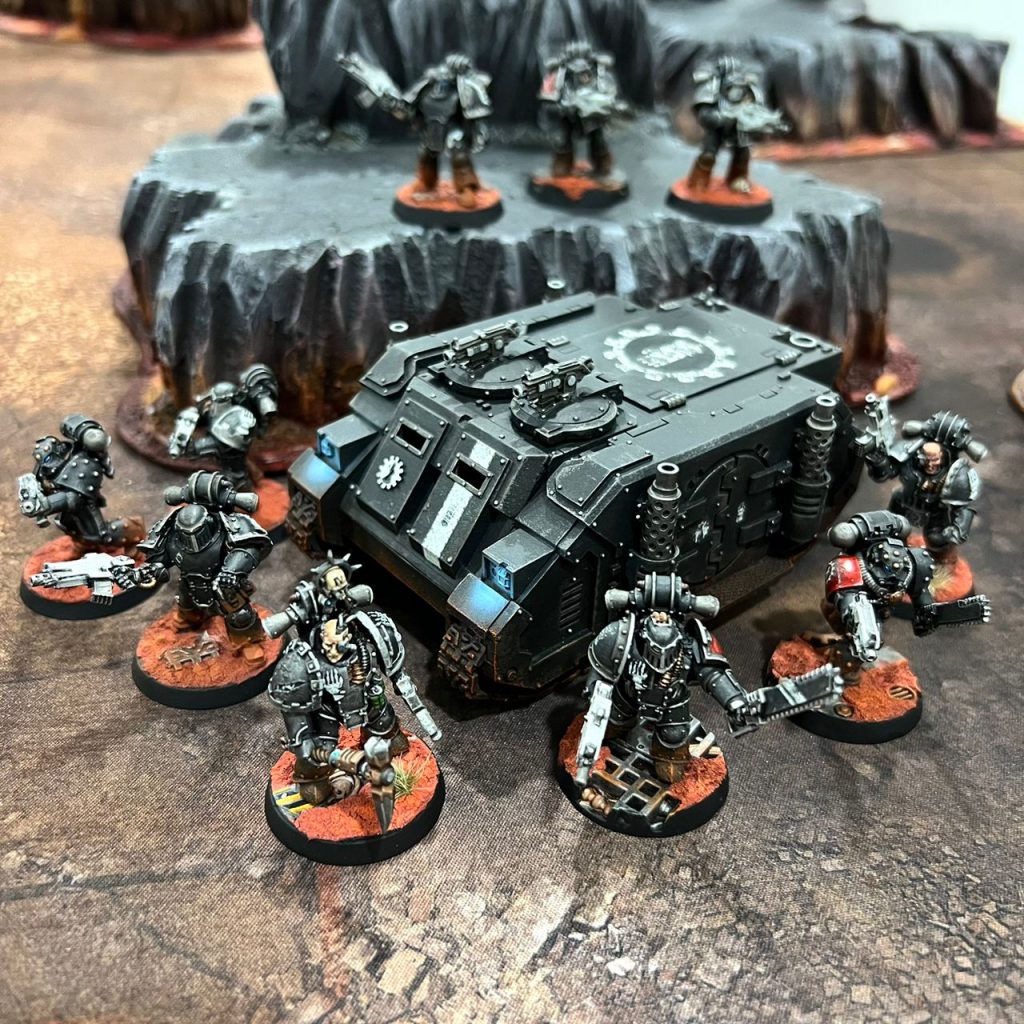 Iron Hands. Credit - @oa_gamer (IG)
Apocalypse 2026 Compared to Past Editions
Sky Serpent: This new rendition of Apocalypse has more in common with it’s beginning than the most recent release. Apocalypse was first seen in 2007 towards the end of 4th edition as a source book with a follow up ‘Reload’ in 2009, these saw miniature releases of the Baneblade and the Stompa. 2013 saw the next edition with the Lord of Skulls and Tesseract Vault accompanying the release but these were the last miniatures released alongside an Apocalypse edition.
However, 2007 and 2013 were all spin offs of the mainstream Warhammer 40,000 game and added extra rules to represent the massive warmachines and monsters that could be seen on the battlefields of the 41st millennium whereas the last edition in 2019 saw Games Workshop attempt a different format entirely.
This edition looked to streamline the game so that it took a lot less time to play. Players issued actions in secret, used a deck of command assets and even used D12s whereas we have now moved back to bolt on to the main game and part of an end of edition campaign like how Boarding Actions was introduced at the end of 9th edition.
It could be said that the standard approach to Warhammer 40,000 has changed with a focus on tournament play with Apocalypse ever more of a spin off but it will be a welcome return for many.
Final Thoughts
Beanith: By itself, I like it. When the points climb past 2000 in Warhammer, things get squirrelly pretty damn fast. I thought it was an excellent choice to stick with the core rules and add in a couple of ‘optional’ rules to help smooth out any potential speedbumps so you’re not still up at 3am on Turn 2.
One Optional Rule for me that has to to be used no matter what is the Giving Their All where units stick around until the end of the battleground giving the player who went second a chance to use their cool tank/gunship or freakish spider crab titan before packing it away. That, as Rob mentioned, is something that 8th Edition of Apocalypse did very well
My only complaint is that it was released just as the 11th edition was announced at Adepticon, making me feel that this was just filler for all the cool models that came with Eye of Terror and that it really should have just been a White Dwarf or Warhammer Community article.
TheChirurgeon: This feels like such an odd half measure. I understand why they didn’t stick to the 8th edition Apocalypse rules; while those were very good, they were, ultimately, a different game system altogether, using different dice and mechanics to standard 40k. That’s just a recipe for being forgotten, even if the rules are better.
That said, there are a number of rules from that game that this rules adaptation needs, chief among them its damage resolution. “I go, you go” just isn’t great for games of this size, and having a way to keep units around until they can do something is crucial for making sure everyone has a good time and making games more fun and exciting - and not just dependent on who gets the alpha strike. I also wouldn’t have minded seeing some guidelines on army construction to reduce the number of MSU units and chaff on the battlefield. That stuff just doesn’t matter in these big Apocalypse games.
On a similar note, too many of these optional rules feel like they should have been mandated. If you’re going to just jettison these and play big 40k, why bother with the Apocalypse supplement in the first place?
Have any questions or feedback? Drop us a note in the comments below or email us at contact@goonhammer.com. Want articles like this linked in your inbox every Monday morning? Sign up for our newsletter. And don't forget that you can support us on Patreon for backer rewards like early video content, Administratum access, an ad-free experience on our website, and subscriber-only content covering competitive Warhammer 40K!Thank you for being a friend.
 This website uses cookies. Learn more.


 Goonhammer App and Patron Updates: April, 2026
 Contemptor Kevin's Combat Patrol Issue 46 Review
 Kill Team Tournament Report: Engage, Party, Repeat's March Madness 2026