With Black Library recently announcing
First Marshal, the new Tahlia Vedra novel, let’s take a look at their previous offering,
Lioness of the Parch by Evan Dicken.
Tahlia Vedra was first introduced to the Age of Sigmar universe during the
Dawnbringer crusade series at the end of third edition and was accompanied by a gorgeous model for the Cities of Sigmar range, complete with lion-eagle-scorpion hybrid manticore mount. In
Lioness of the Parch we get our first real opportunity to really get to know the character.
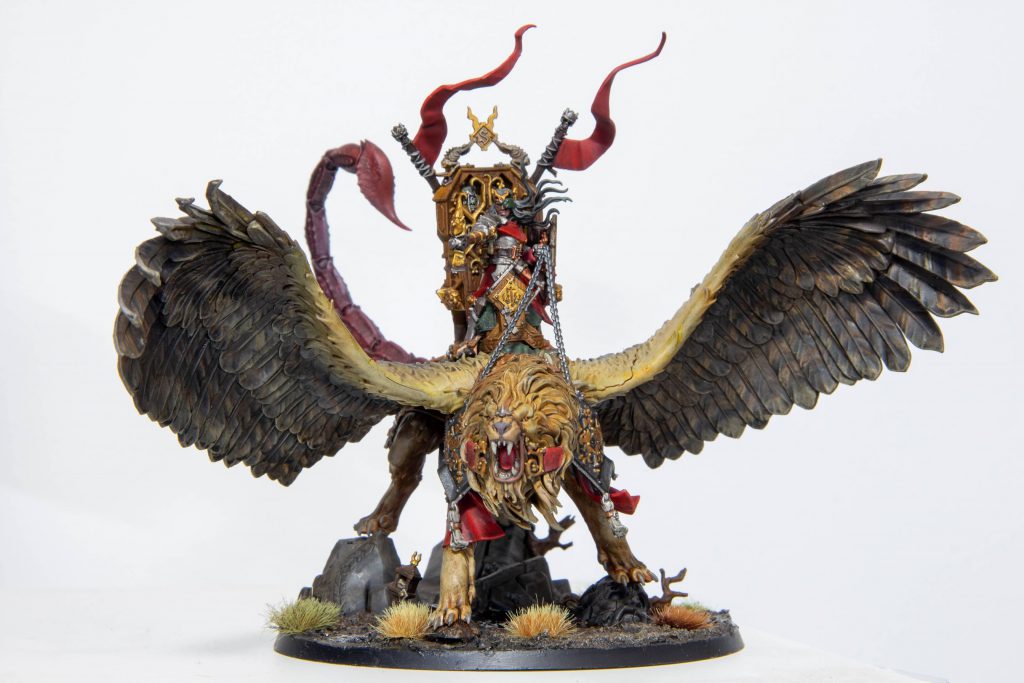 Tahlia Vedra. Credit - Soggy
Since the realmgates were thrown open at the dawn of the Age of Sigmar, Sigmarites have striven to reclaim the mortal realms, inch by inch, from the forces of Chaos, gradually founding new settlements as beacons of light among the darkness. The primary method for achieving this was to scour the city’s back-alleys, prisons and temples for the most desperate, devoted, greedy or crazy people that could be found, give them promises of divine blessing, riches, absolution or adventure (depending on the individual's motivations) and then send them beyond the walls to go found a new home.
These crusades often had little more going for them than pure faith and/or insanity, with authorities not wanting to risk too many resources on them (after all, lives are expendable – you can always make more). The rate of failure was massive. Out of dozens of attempts, the Cities of Sigmar would be lucky if even one resulted in a functioning citadel, and of those that did manage to survive long enough to establish themselves, a large number would be soon be overcome by one or other of the copious enemy forces surrounding them before they ever made it to city status.
Tahlia Vedra, a cutpurse-come-mercenary-come-Freeguild-soldier-come-marshal, born and bred in the crime-ridden, ash-strewn grime of Aqshy’s Parch, saw the human cost of this
throw everything at the wall and see what sticks approach and devised another way; the Casteline Doctrine. Instead of pouring out hundreds of badly armed, badly trained crusades in the hope that one or two of them might flourish (costing thousands of lives in the process) she argued for sending out a small number of well-resourced ones.
The Twin-Tail Crusades were the proof-of-concept for this method of expansion. Two extremely well-armed crusades were sent forth from the city of Hammerhal. Hammerhal is a mind-bogglingly large city, spanning two realms due to the Stormrift Realmgate in its centre linking the realms of Ghyran and Aqshy. The Twin Tail crusades left from both halves of the city at the same time, one from the realm of life (Ghyran) and the other from the realm of fire (Aqshy) with Tahlia personally overseeing the Aqshy tail of the crusade.
Tahlia's various military successes led to her becoming a very well-celebrated and decorated general, known especially for being able to turn around seemingly hopeless situations. But Vedra’s prominence, and subsequent promotion to First Marshal of Hammerhal, wasn’t without controversy, especially after that one time she beheaded four of Hammerhal’s highest ranking officials after suspecting them of corruption.
Tahlia is hard-drinking, party-loving, bull-headed and impetuous – a true daughter of the fiery realm of Aqshy. She is also a champion of the Sigmarite tribes of the wastes, people like the Ash Vipers, who have survived for generations in the harsh and punishing wilds of Aqshy, battling for survival against the horrors of Chaos. This often doesn't go well with the more civilized denizens of Hammerhal.
It is actually among the Ash Vipers that we first meet Tahlia, during in a boozy gathering of tribes-folk. She’s in a pit, blindfolded, hunting cat-sized scorpions for the viewing pleasure of the rabble who are busy throwing down their bets on her success. Thalia’s rough edges win her respect with the tribes of Aqshy, but disdain from the nobility, especially those from Azyr, realm of heaven.
To an Azyrite, who left the comfort of the Realm of Heaven and fought to reclaim the other realms, they see the calloused and violent cultures of the native-born Sigmarites of Aqshy to be little better than that of the Chaos tribes around them. They see themselves as the saviours of these barbarians, reclaiming them and trying to smarten them up a bit. However, to the Aqshyans, like the Ash Vipers and even to Tahlia herself, it is they, the people of Aqshy, who who held the line against the encroaching evil while Sigmar and his cronies retreated to the safety of Azyr. It was they who have proven their strength of arms, spirit and faith by resisting the forces of Chaos for centuries.
I’m a big fan of stories set in the thin grey area between Chaos and Order. We saw this done well in
Darkoath by Chris Thursten which sees the Chaos worshipping Darkoath tribes of Aqshy airing their legitimate gripes against the Cities of Sigmar and how deep the sense of betrayal goes that Sigmar left them in their hour of need. Often during the book Tahlia reflects on how it would have only taken a slight change of fate and perhaps she would have turned out to be one of the Chaos warlords that she now fights against.
Speaking of warlords, the book kicks off with a battle between an invading force commanded by Lord Ebonpyre, and a heretic stronghold. Ebonpyre is a striking character; a master strategist with a fiercely loyal, even devoted, army.
When Ebonpyre eventually slays the enemy warlord with his own blade, he holds her tenderly, almost comforting her, as she dies in his hands. He then offers redemption to any within the enemy ranks who would renounce their heresy and join him. Those who are too far gone, too corrupted by heresy, he dispatches, but with sadness and pity. He is also forgiving towards his own troops for any failures they may have committed during the battle. He refuses to punish them as they feel they deserve.
We then find out that Ebonpyre is the villain of the story (or maybe you find out before if you read the blurb on the back cover). It took me the course of the whole book to reconcile the merciful and graceful lord that I read about in the opening chapter of the book with the Chaos villain, Maulus Ebonpyre, that Thalia fears and portrays as the single biggest threat to Hammerhal since Korghos Khul.
Ebonpyre is a perfectly written villain. You don’t actually meet him until the very end of the book, but his presence is felt on almost every page. Tahlia is legitimately scared of him and fears that he may be the one warlord who could best her. He seems to have a counter for every move Tahlia makes and knows her strategies almost as well as she does. He even has his own chaos-corrupted manticore, upon which he flies above the battlefield, mocking Tahlia and beckoning her to battle.
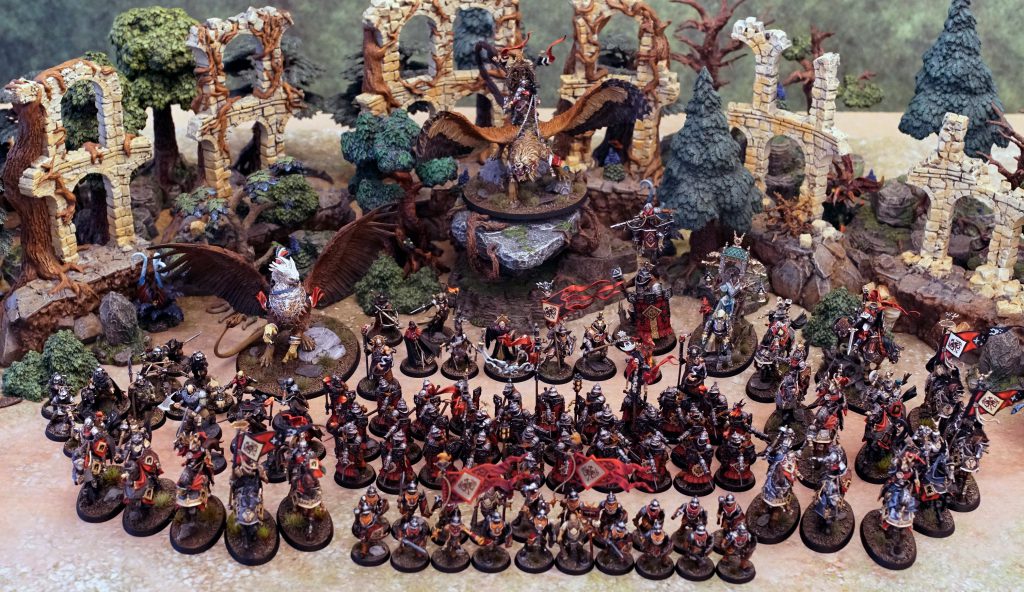 Conner Tolbert
Tahlia frantically pleads with the politicians of Hamerhal’s grand Convclave to take Ebonpyre seriously, especially as he topples the neighbouring citadel of Emberkell. But the conclave have enough on their plate, what with the need to build more temples and argue about how many cannons they need on the walls of Hammerhal.
It is here where Thalia’s first battle of the book is fought, in Hammerhal’s parliament. We are treated to just what we all want more of in a Warhammer book: meetings. Lots and lots of meetings. Other than the odd flashback to battles in the past, we don’t actually get to see any actual war until right near the end of the book. The bulk of the novel mostly focuses on Thalia as she navigates the political inner workings of Hammerhal; networking, planning and attending meetings. It’s the perfect book for anyone who finds themselves wishing Warhammer was a little more like the West Wing.
But, actually, I was surprisingly fine with it. Don’t let the politics put you off giving it a read. Firstly, there are plenty of flashbacks where we got to see Tahlia’s past, giving her a bit of character depth, but also giving us a little bit of violence to keep us going through all of the speeches and meetings. Secondly, Ebonpyre’s presence weighs so heavily over everything that it gives the parliamentary proceedings meaning and importance, raising the stakes of what’s going on.
Finally, it’s in the political world of Hammerhal that Tahlia is actually out of her comfort zone and has space to grow. She is already a master general, nearly flawless in her strategy and in martial matters. On the battlefield she acts with restraint, forethought and patience, but all of that discipline disappears when faced with slimy politicians. To watch Tahlia win battle after battle after battle would soon get dull. It is in the political arena that we most get to see Tahlia grow and develop as a character.
Indeed, the only way Tahlia is able to cope with Hammerhal is to think of it more along the lines of a battle - somewhere she feel comfortable. The lessons she has learned on the field can be applied in parliament. Of course, one of the lessons she also needs to learn is when certain tactics should be left on the field – after all, she has a habit of beheading politicians she doesn’t approve of.
Tahlia is majorly dependent on those around her for guidance and direction. The political direction of the chief treasurer Lord Myravel, the cool-headed advice of Aventis Firestrike, the Magister of Hammerhal’s Stormcast detachment, and the critical but fair rivalry with pyromancer and former boss Thumos, all help to shape how she acts in the chambers of power within Hammerhal. We also see her take military advice and council from former commanders and even from her underlings as she seeks for a way forward on the field.
But it is her deeper friendships that really shape her. She rose through the ranks of the Freeguilds with the very same friends she had picked pockets and burgled with as children. Halek, who always remained a paragon of kindness and grace to her, teaching her that it’s not all about beheadings and killing, and Katrik, who is now the chief commander of Hammerhal’s armies and much more adept at playing the political games of the chambers. It is Katrik, who despite having good political acumen does not lose sight of her humble past and the things that matter, who teaches Tahlia self-control and level-headedness.
It is also with Katrik that we see a rare moment of tenderness and affection from Tahlia, which I was glad to see. One of my personal bug-bears with a lot of female leads is that they are often just basically men, but with a girl’s name; still displaying ‘masculine’ traits but ticking a lazy diversity box. It’s important that representation is taken seriously and not just turned into tokenism. I think about the characters that my daughter resonates with most in stories (K-Pop Demon Hunters being the biggie at the moment) and they all kick ass, but whilst remaining distinctly female.
Thalia is potentially in danger of becoming just another male character disguised as a female for diversity reasons, much like Rey Skywalker, Captain Marvel or Margaret Thatcher. However, there are a few moments when we see her share a moment of vulnerability with her friend, or where we see that she wants to escape all of the bravado of marching about with medals and just go and take a nice long bath. I would love to see this dynamic explored more in the future.
As for the war part of the book, once the fighting eventually starts to happen it is clear and does a great job of painting the kinds of images in your head that you want from a Warhammer book. Whilst you do get blow by blow accounts of sward strokes and punches, the book also offers really well written army-wide perspectives, giving a great sense of place. You see the columns of soldiers moving against each other and get a real understanding of the choreography of war. Considering the title character is a master strategist, this perspective is actually really nicely done, helping to put us in the mindset of Vedra.
Finally I should take a bit of time to mention the world-building. Aqshy is perhaps one of the most vividly drawn of the Mortal Realms, and this book really does help flesh out the realm of fire. It especially gives us a unique insight into the political workings of Hammerhal and the fraught relationship between the Aqshyans and Azyrites. It’s also great to see something of the febrile and tense atmosphere left once the Goretide was fought back.
It’s always a real treat when Black Library moves away from Stormcast protagonists and gives us relatable, human heroes. I’m looking forward to the next book. I think Tahlia could be a really interesting character to explore in the coming years and I’m excited to get my hands on
First Marshal when it is released in the near future.
Have any questions or feedback? Drop us a note in the comments below or email us at contact@goonhammer.com. Want articles like this linked in your inbox every Monday morning? Sign up for our newsletter. And don't forget that you can support us on Patreon for backer rewards like early video content, Administratum access, an ad-free experience on our website and more.Thank you for being a friend.
 This website uses cookies. Learn more.


 Goonhammer Hobby Round-Up: March 2026
 Goonhammer Reviews: Tribal Conquest
 Conquest: Weaver Courts Gemred Knights and Scaile Dancers Model Review