It’s time to slap sword to shield, gird the loins of your lions, make the wizard dragon of your dreams and indulge every quick play fantasy of tabletop fantasy you’ve got - after a shamefully long time with it sat on my shelf, I’ve finally got Dragon Rampant second edition on the table and down for review.
Thanks to Osprey for sending this over for review!
If you’ve been paying attention to Osprey and Mersey’s impressive output you’ll know what you’re getting - is a tidied up, much improved version of Dragon Rampant first edition, that learns all the lessons in layout, rules design and illustration from the successful Lion Rampant second edition and (the slightly less popular) Xenos Rampant.
Dragons Rampants
At its simplest, Dragon Rampant is a slimmed down, fast-playing and clear fantasy rank and skirmish game, aimed at players with fantasy collections that are gathering dust under the weight of unfun games systems. You're looking at somewhere between 30 and 100 models per side (4-10ish units) and a rules set that will let you get them on the table within an hour of picking up the book.
At its most complex, the fun really begins. This is a ruleset designed to let you do just about anything you can imagine, with any models, on any theme. It remains a fast playing fantasy skirmish with a lot of tactical space, but it also becomes an amazingly facilitative canvas to paint your army onto. If you stretch and groan against the confines of other games' rosters and rulebooks because you want to play your exact vision, this is the game for you.
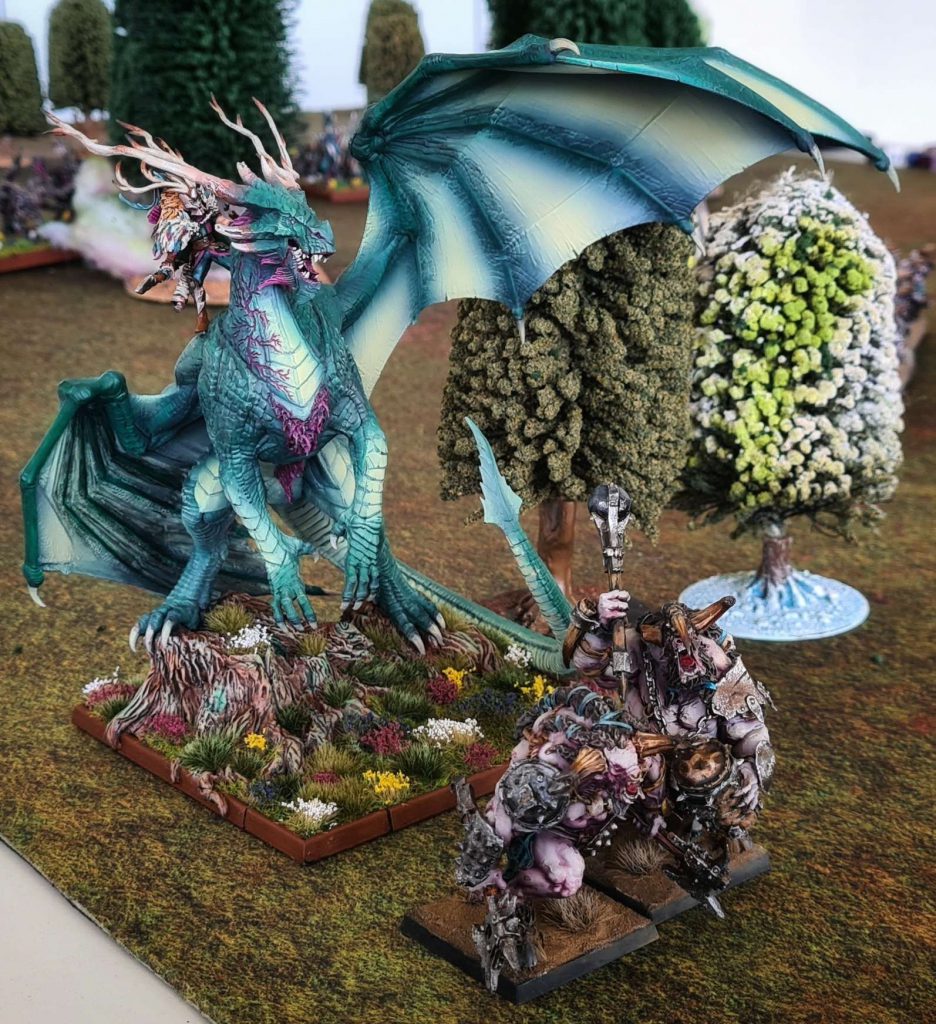 The Forest Dragon is a frightening sight on the battlefield. Credit: @Ednihilator
Dragon Rules
I could go into some serious depth on how the game works, but this shares a lot of DNA with the other Something Rampant systems, and Variance Hammer Eric has done a fantastic job
talking about these already. Unlike some other games that may have advertised "simplicity but not simple", this actually pulls it off. There are a lot of stats here and a lot of options, but they work in a slick, easy to understand way and you will have to try pretty hard to deliberately construct units and situations that aren't covered by the generous way the rules are written.
You're still looking at one of my favourite activation systems - alternating, test-based unit by unit - and a clear, straightforward system to moving, shooting, combat and all the rest. It's not an overly complex rule set but it gives a lot of space to play with and you'll be able to pick it up over an hour or so then master it, eventually. It's all very on-theme without being overly crunchy. You roll against a unit's relevant activation stat to activate, and shooty units activate to shoot easily, heavy armoured knights can charge easily, so on and so forth. Shooting, combat and magic all resolve in a straightforward, easily communicated manner and rules interactions are clear and ordered.
Games at the standard points level will play out over an hour or two at the most, particularly once you're familiar with the ruleset, and there's replayability in spades given the massive range of unit types and options. Picking it up to play down the club or against a regular opponent is absolutely the move here - it is a perfect, challenging, casual play experience. You're not going to be taking this to a tournament and working out all the edge cases, but that doesn't mean it's a wooly or poorly written ruleset that won't reward hard play.
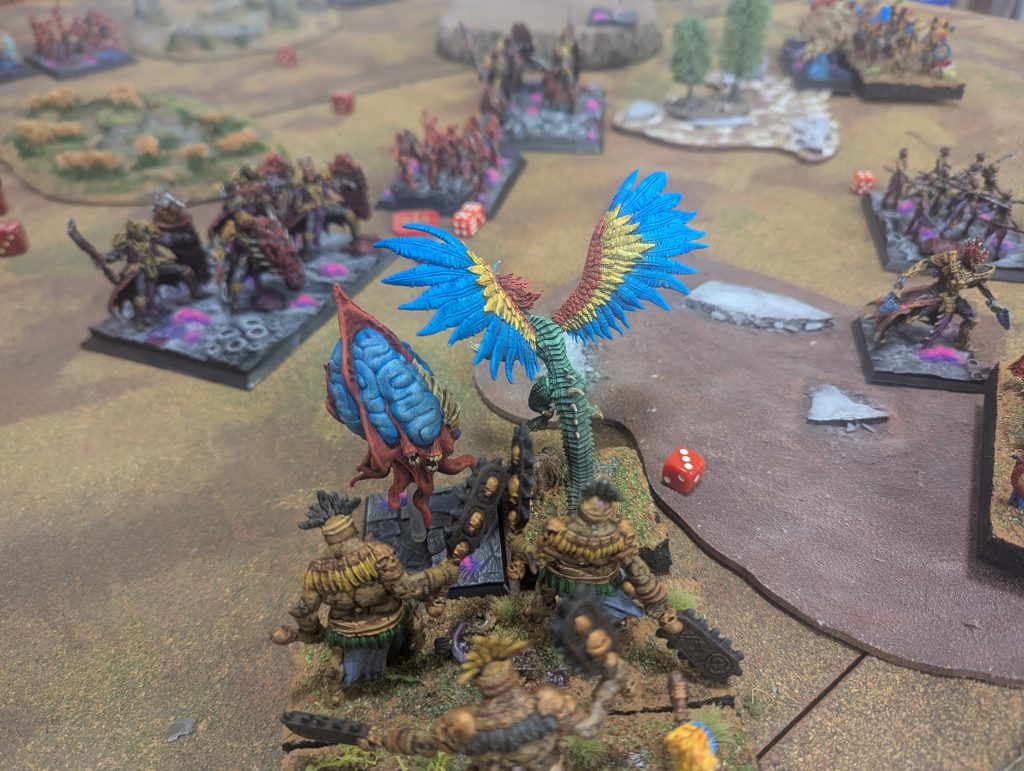 Twilight Kin vs Varangur. Credit: Urr
Dragons Changes
Indie games, if this counts as one - big name publisher, big name author! - don't tend to rush into second editions (
we talked with Rich Clarke about this several years ago), but an update of Dragon Rampant to bring it in line with Xenos and Lion was possibly inevitable and definitely appreciated. The core of the game is the same - tidied up, some rules interactions simplified - and the big change is the options you're given to play with. Dragon Rampant 1 allowed you to splash about in the shallows of fantasy, giving you a fun toolbox and a bit of a steer. Second edition smashes that right open. The bits that help you play with that toolbox - the unit options, scenarios, army lists, magic items and spells - are all much chunkier, with more range, more variation and more impact. If Dragon Rampant 1 said "ok, get playing with your collection!" and left it up to you to work that out, second edition provides a much more useful helping hand to do so.
The difference is fairly subtle, but important. Pitching a delightfully flexible system at someone who has come from the rigid structures of, say, Warhammer Fantasy, can overwhelm with options, and I think first edition probably did that on balance. There are more options here in every way, but the guides for how to use them, what you could do and even example illustrations are much better. The on-ramp is shallower, which will entice more people to get more creative with what they can do to and with an army list.
Some of the spiky corners that turned people off last time have been smoothed out - people who absolutely hate "fail a test and your unit can't move, opponent's go" rules will be delighted with changes to how leaders work, for example. Variation and chance still exists, and you're still pushing your luck and having to think about your activation order, but some of the bell curve has been smoothed out with rerolls, abilities and leader traits.
Dragon Lists
Okay, here's the fun part. It's a good system that's fun to play and improved from last time, but the meat here is in unit and list customisation, and what a meat it is. There's a lot here to play around with:
- 13 unit types: Ranging from Elite Riders (Knights, Pegasuses, chariots, whatever you like) all the way through to Ravenous Hordes (zombies, nurglings, swarms of sparrows, people who have strong opinions on L-shaped ruins), these cover just about every battlefield or support role you can imagine.
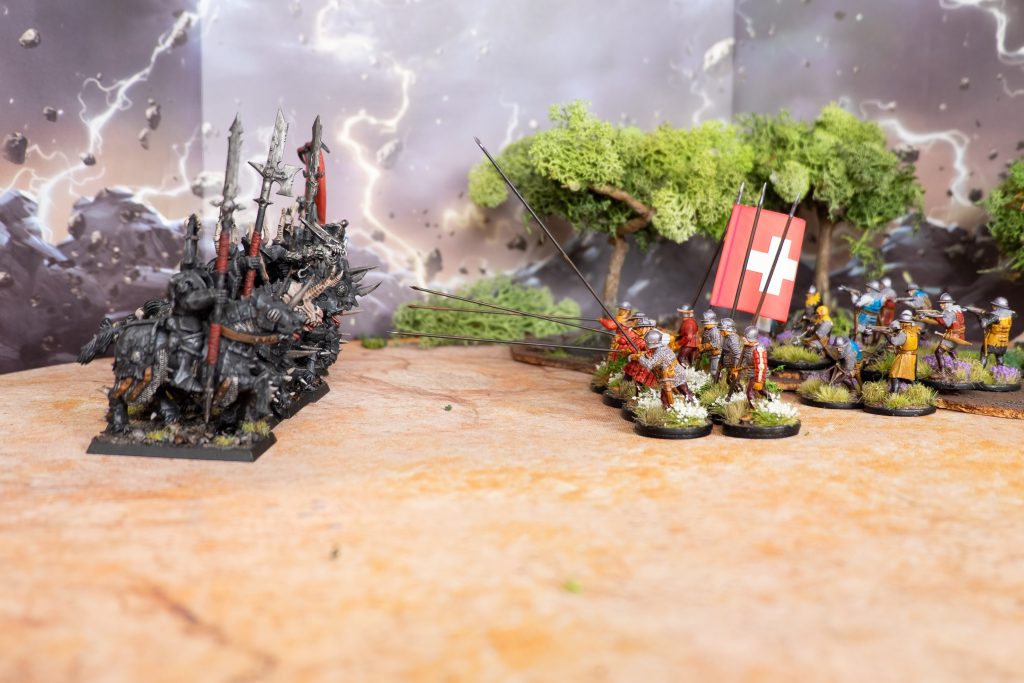 Credit: Mike Bettle-Shaffer
- Flexible rules on unit sizes: Your 12 strength points of Heavy Missiles could be 12 guys with crossbows or one absolutely massive cannon.
- Wide-open leader traits: Leaders can purchase traits (that's right! no more random rolling!) that they pass on to their units (and there are a lot of traits!)
- 42 unit traits: All purchasable on (more or less) any unit, all granting bonuses and or maluses. Make your Heavy Infantry fly, let your Trolls explode when they hit the enemy, make your missile armed scavengers were-horses to model fantasy dragoons, and etcetera. The range here is absolutely endless and man, it's fun.
- Nine Schools of Magic: 20 spells that successfully summarise just about every spell you could want (or imagine) your wizards to be chucking about.
All of that combines to create a really powerful (and, I think at least relatively well balanced? There's still a couple of very powerful combos out there) and flexible tool box. When the game says you can use any models, you really really can. An army of all the Vampire heroes from Warhammer? Easy - Undead, single model unit, elite cavalry and greater warbeasts, then sprinkle upgrades per Von Carstein. Did you buy Oops too many Hoplites and want to Jason your way around the Mediterranean fighting skeletons? Elite Foot, Champions, 18/100 Strength and Courageous. The challenge, really, is finding an army that doesn't work for Dragon Rampant - you could, if you wanted to live your best 1980s GW fantasies, field Chaos Space Marines against Slaan with nothing beyond what you get in the book.
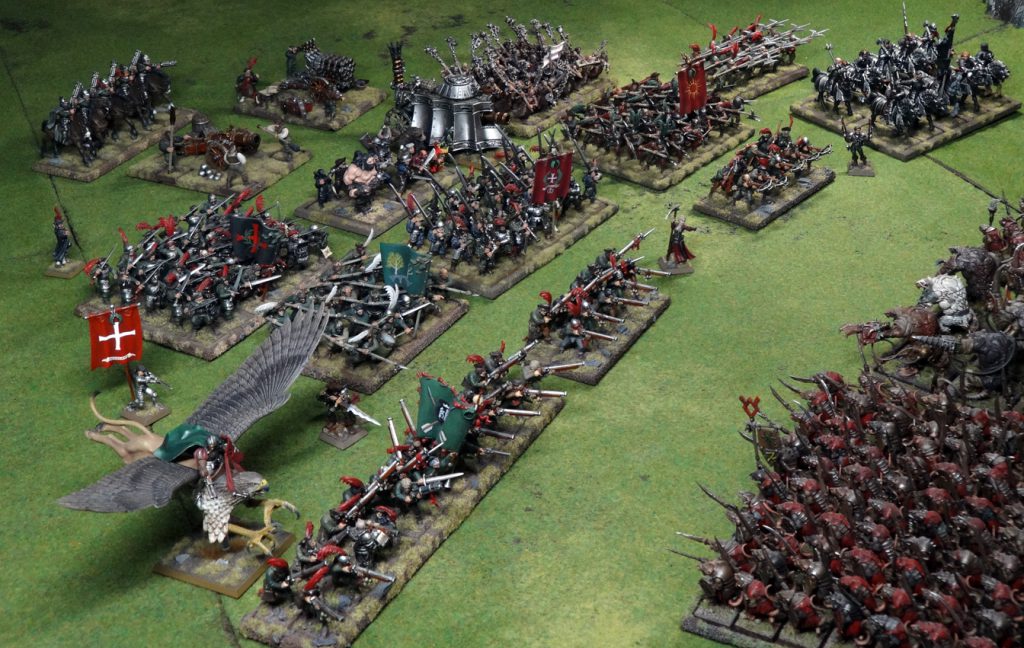 Empire army from Hochland. Credit: Charlie Brassley
Overall
The DNA of Dragon Rampant second edition shines through, and that means there’s a lot here to like! We reviewed Lion Rampant very positively when it came out, and it remains a solid system that provides a satisfying rank and flank experience at a variety of game sizes. The solid bones of Lion Rampant second edition and the flexibility of the Xenos Rampant list creation tools combine very well to force open a big space in the fantasy market. You’re unlikely to be playing this competitively (though fair play to you if you’re going to a Dragon Rampant tournament!), but as a ruleset and a space to create your own fantasy realms, it stands ahead of competitors in the space like Oathmark and Warhammer The Old World as both a simpler and, I feel, more satisfyingly tactical game than either.
The niche you’re looking at here is all in the list design and the flexibility it offers to you. You can play a good game here with any collection of fantasy models, at virtually any scale, and that will be the draw for Dragon Rampant second edition as it was with the first. Perhaps you want to play a different game with your Old World army, or perhaps you’ve got an eclectic mish-mash of fantasy stuff, or it could be that you want to do a project that doesn’t fit into the neater boxes provided by GW. You can do it here, and that’s a very tempting proposition, particularly as you can do it with a solid, interesting, challenging set of rules. While Dragon Rampant is probably going to market for the people who already have first edition, or people who prefer to play indie games, it should have a wider appeal and diving into it with a gaming group or regular opponent will be a fun and rewarding experience.
Have any questions or feedback? Drop us a note in the comments below or email us at contact@goonhammer.com. Want articles like this linked in your inbox every Monday morning? Sign up for our newsletter. And don't forget that you can support us on Patreon for backer rewards like early video content, Administratum access, an ad-free experience on our website and more.Thank you for being a friend.
 This website uses cookies. Learn more.


 Goonhammer Hobby Round-Up: March 2026
 Goonhammer Reviews: Tribal Conquest
 Conquest: Weaver Courts Gemred Knights and Scaile Dancers Model Review