In BattleTech, mercenaries are some of the most common forces seen, both narratively and for players to build their own units. They’ve been the star of the most recent video games, Wolf’s Dragoons and the Kell Hounds were key players in many of the earliest novels, and custom mercenary companies have always been a go-to for allowing players to run custom paint schemes and units without feeling like they’re violating canon.
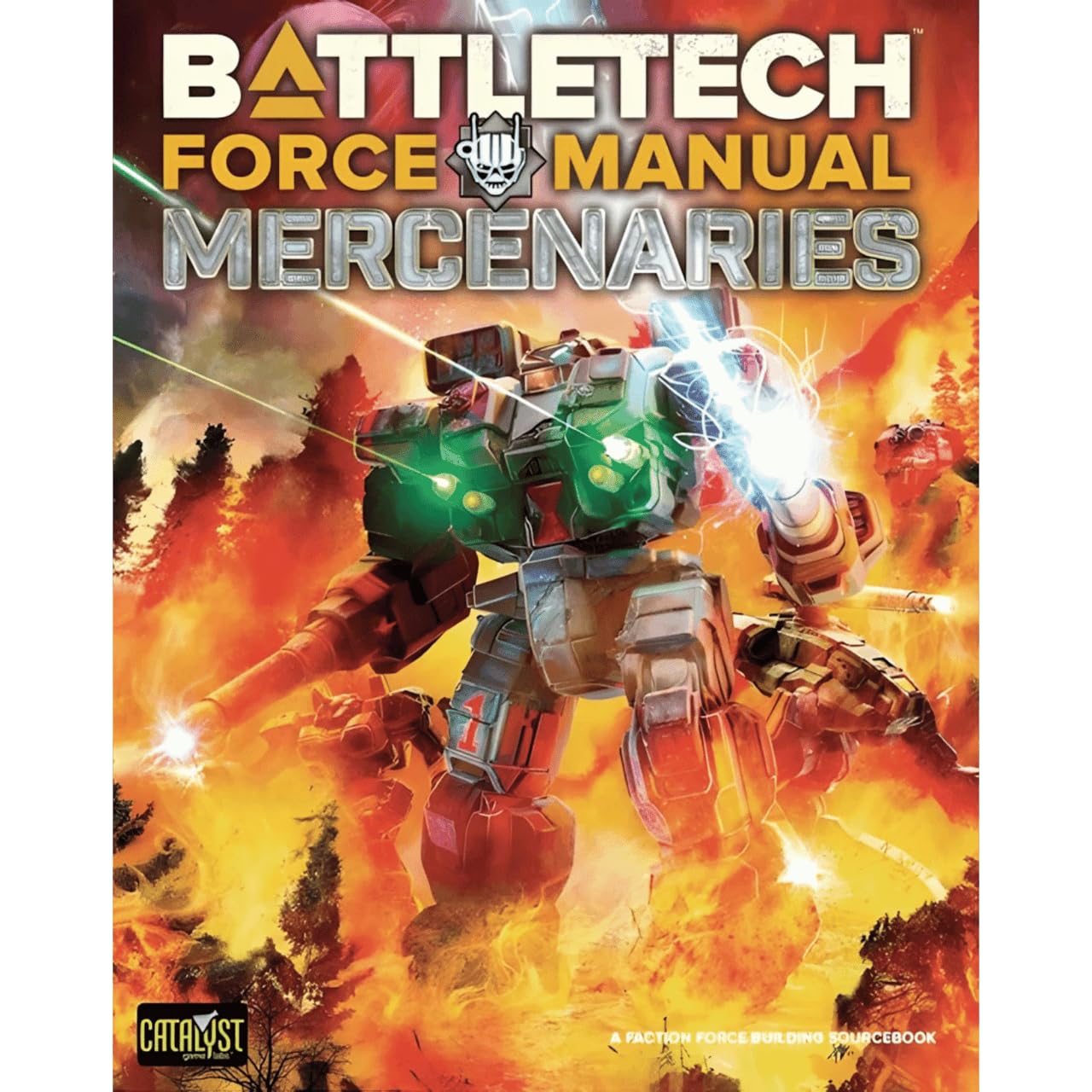
Force Manual Mercenaries is a sourcebook that addresses all these areas. It’s primarily narrative and background focused rather than providing rules you need to play, though there is a section on how to build custom units. The force building rules are based on the Formation Building section of
Campaign Ops or Alpha Strike: Commanders Edition, with their variety of specific lance types that grant gameplay bonuses. If you’re not using those rules, the force building rules found in this book are really just for fluff. After a short story, the first section of the book covers some basics generic to how mercenaries work – their history through the clan invasion, places they get hired, and how contracts work. After that we’re diving into some specific existing mercenary commands.
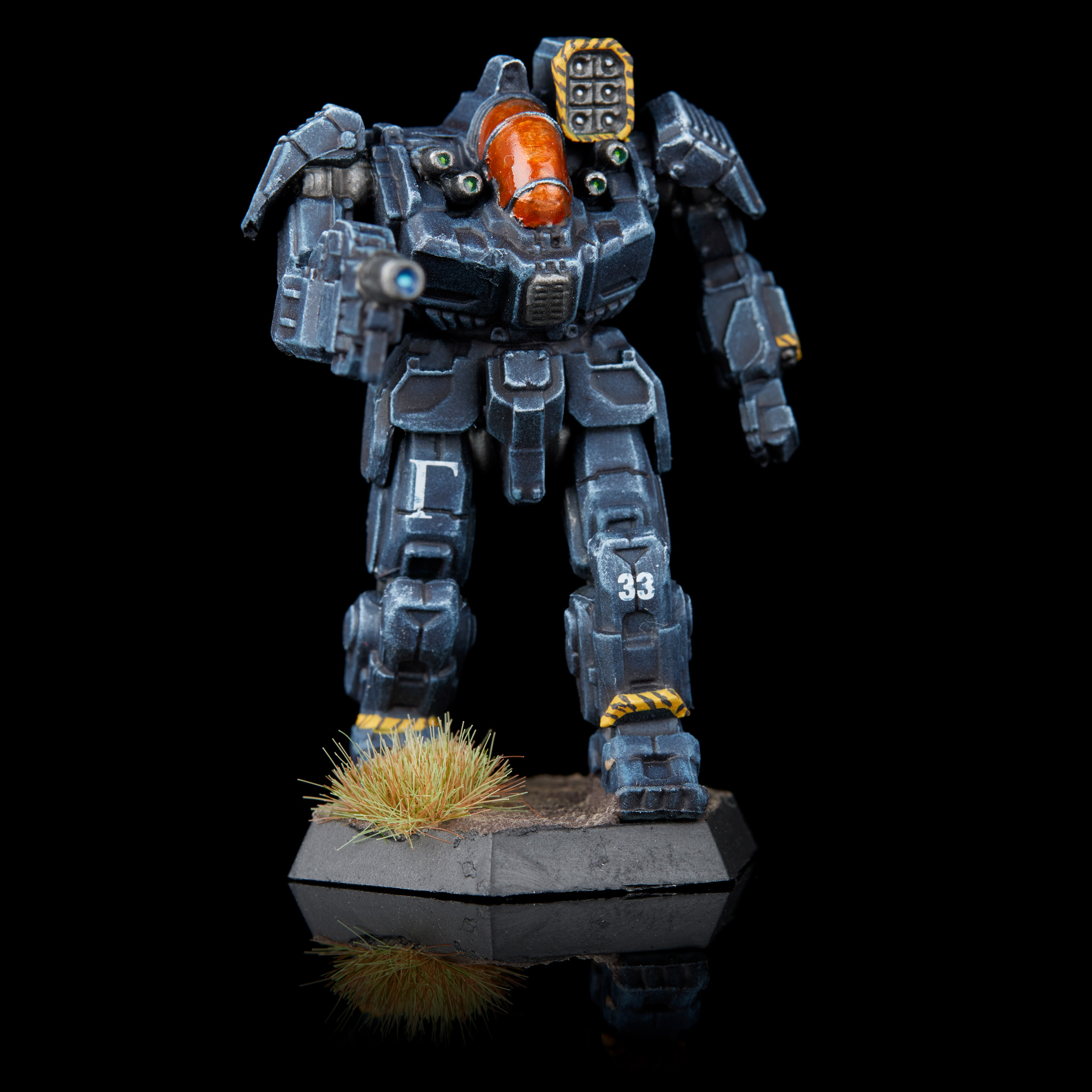 Wolf's Dragoons Battlemaster. Credit: Jack Hunter
Mercenary Commands
Each of the 39 different mercenary commands covered gets one or two pages of information about them, except the Wolf’s Dragoons, which get four pages. There are a couple paragraphs about the history of the unit, including a helpful boxout that covers their common allies (generally their employers), common enemies, any special command abilities shared by the entire command, and any force building rules that would apply to the entire command. As an example of those force building rules, the 15
th Dracon gets some extra access to star league era mechs not normally found on the availability lists later in the book.
Most mercenary commands will also include several sub-commands, each of which has some information about their experience and equipment ratings (used later in the book to determine unit skill level and what access to units they have), force composition, any specific force building rules for that subcommand, and any special command abilities or special rules for that force.
Finally, most mercenary commands have a special character, which has a specific mech, skill, and set of special pilot abilities. Some of these characters get additional special rules, such as Wolfgang Hansen having rules to deploy the collapsible command module off his Cyclops. Most special pilot abilities can be found in Campaign Ops (or Alpha Strike: Commanders Edition, though I’m focusing on classic rather than Alpha Strike), but some pilots get new ones that don’t otherwise exist – Major Johanson of the Screaming Eagles has an additional +1 to hit her at long range, though it doesn’t have an actual SPA name.
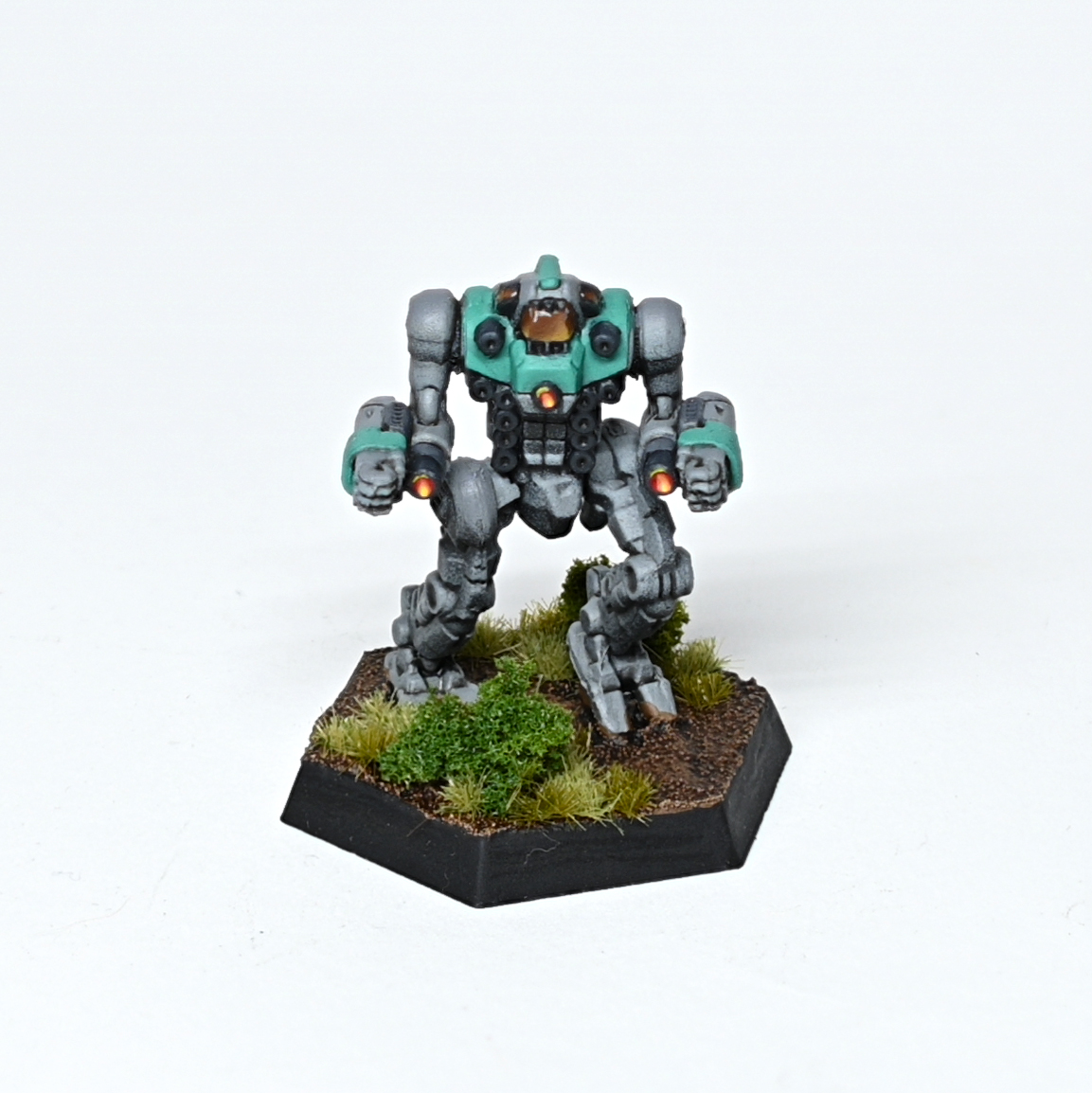 Piranha. Credit: Rockfish
One new SPA is provided with a name,
Backstabber, and it’s unusably powerful in classic BT. It turns every hit from the rear arc into a through armor critical, which if you’re not using the floating TAC special rules means they’ll all hit center torso rear, and means that on average a light mech with a couple machine guns will immediately delete any assault mech. It works fine in Alpha Strike, but appears to have been converted to classic with no regard for how the ruleset functions.
I’ve noticed the same Alpha Strike centered writing in a couple other spots, such as one of the Killer Bees sub-commands having a bonus ability that can only possibly function in Alpha Strike. This is a bit disappointing to me, as a book that claims to work with classic BT or Alpha Strike shouldn’t lock some things into one ruleset or the other, but it’s a bit understandable as most formation use is almost certainly in Alpha Strike.
Also found in this section are five short missions, each of which focuses on a specific engagement one of the mercenary commands had. Each one has specific force composition based on the mercenary command, and are written for Alpha Strike – they’re almost all company sized games, which would usually take a long time to resolve in classic. Disappointingly, while each one has a few modifications in deployment or special rules, every single one has victory conditions based on one side crossing the map and escaping off the other side. While it’s interesting to see the five different ways to run a similar mission, it feels like a miss to not have any other style of mission.
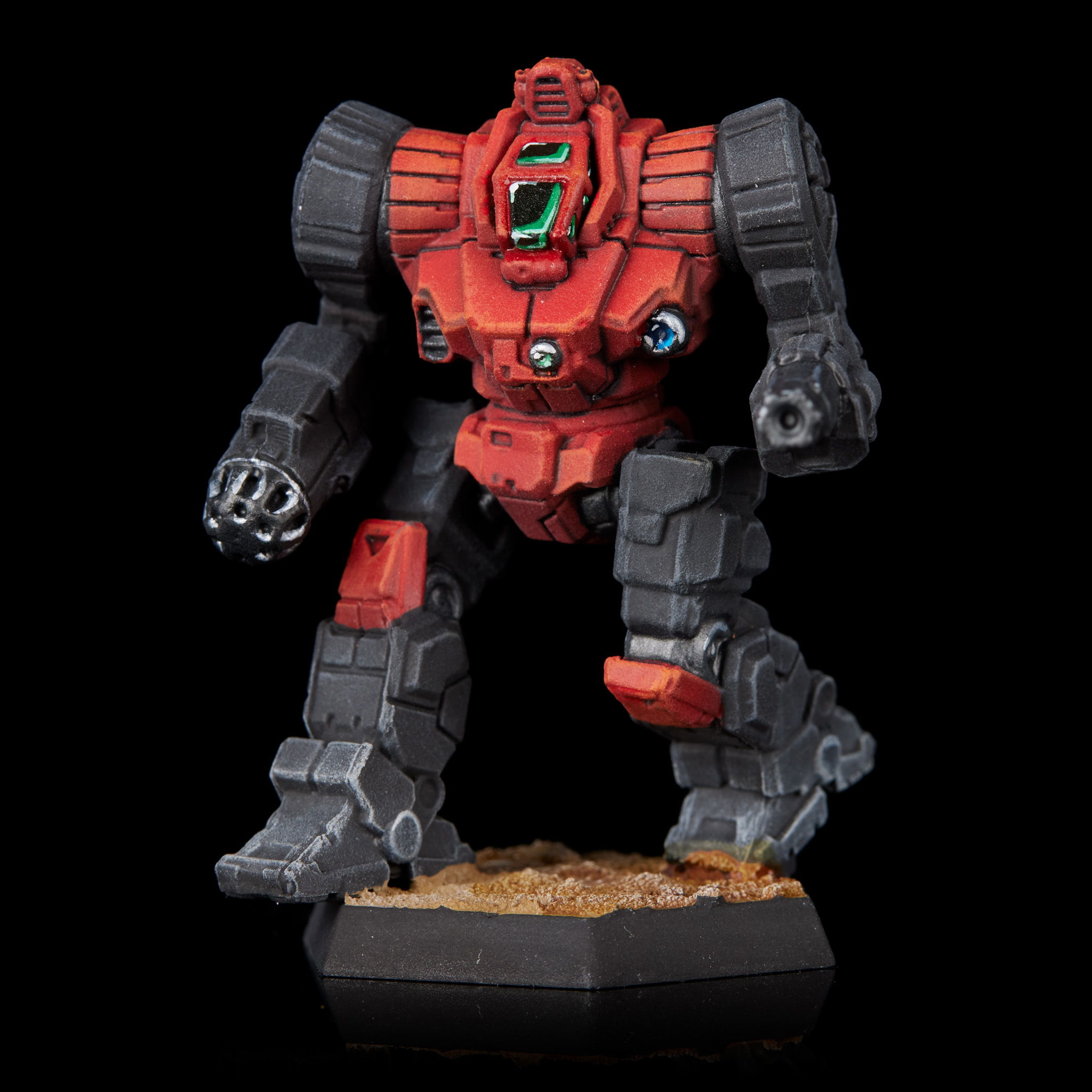 Kell Hounds Zeus. Credit: Jack Hunter
Force Building
Force building is based on Campaign Operations or Alpha Strike: Commanders Edition, is probably not going to play a huge role in most games of classic BT outside of a campaign (which makes sense, as the rules are in Campaign Ops). These rules are specifically designed for use in late succession wars or clan invasion eras, if you want to use them later than that you’re out of luck until the promised ilClan PDF updates to this and the other force manuals come out at an unknown later date.
These are pretty dense rules. One of the biggest complexities to my reading of it is that this section is written generically for all the Force Manual books, with some very basic tweaks for the specific book (replacing references to Kurita with references to Mercenary). If you’re unfamiliar, this can leave you confused when you read through the first couple page – one step is “Choose a Faction,” which seems like it’s choosing some part of your force background, but is actually about selecting whether you want to build from this book, or stop everything you’re doing and switch to Force Manual Kurita and build a Kuritan force instead of a mercenary one.
Starting on page 88 there’s an example of working through all these rules to build a force, and it’s very important to read as it includes some information about how salvage, common allies, and common enemies work. That same information is several pages later at the start of the Mercenary Availability Lists section, but that page is a giant block of text that’s hard to parse, and I read it several times before actually locating that information.
After the primary set of rules for building a force using the existing mercenary commands described in the book there’s a section on custom generating a custom mercenary unit. You get a limited number of points to spend in different ways – picking formation types, experience ratings, special command abilities, allies and enemies, special rules, and characters. Using these can give you a wide range of forces, from a small elite unit to a larger force with fewer skills.
I appreciate that none of this is randomized. If I want to use it I’m able to pick units and build my own force, rather than rolling stuff up at random, which makes it actually usable in a balanced game. The various special command abilities are still wildly unbalanced and for campaign play only, but if I want to build my own mercenary unit or put a force together than has the flavor of one of the existing commands I’m able to do so.
Following the force construction section is a mini-TRO covering the Locust, Ostscout, Shadow Hawk, and Warhammer. They’re nothing special if you’ve read existing TROs, but I believe the deployment information about them is new and covers their use by mercenaries.
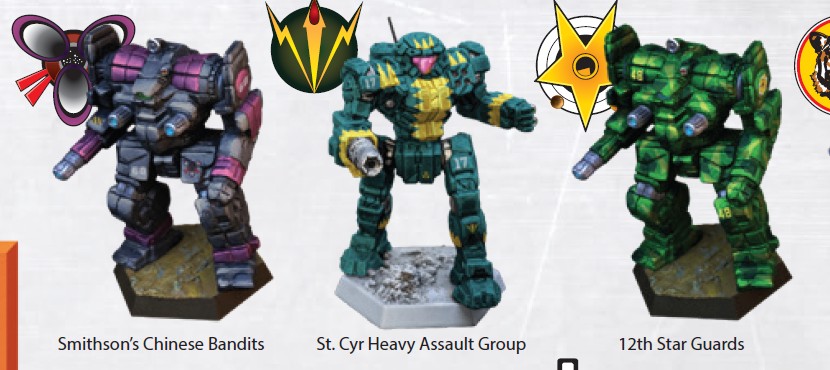
There’s a section of painted minis in here that shows the color schemes of all the various units in the mercenary commands section. There’s a mixture of properly painted models and digital paint-overs, which all look bad. Some of this is my bias from the high quality work shown in GW books, but this section just doesn’t look good – the minis are all taken from inconsistent angles with inconsistent quality, and so many of them are clearly obvious digital recolors – on one spread I can see the exact same Atlas four times. There’s a painting tutorial for the 12
th Vegan Rangers that I think is decent. While there are some statements in here I disagree with (the camospecs artist would be horrified by how I use the exact same water cup for metallic and non-metallic paints), it’s a straightforward tutorial that gives a good looking final product.
New Variants
This is going to be the most gameplay-relevant bit for most classic BT players. We’ve got seven new unique variants here tied back to some of the mercenary companies, all of which are either succession wars or clan invasion era.
These mechs have all been reviewed based on a standard F through S scale, which you can find described on our
landing page here (along with all of our other ‘mech reviews, the name of the box you can buy to get any of the mechs we have covered, and our general methodology).
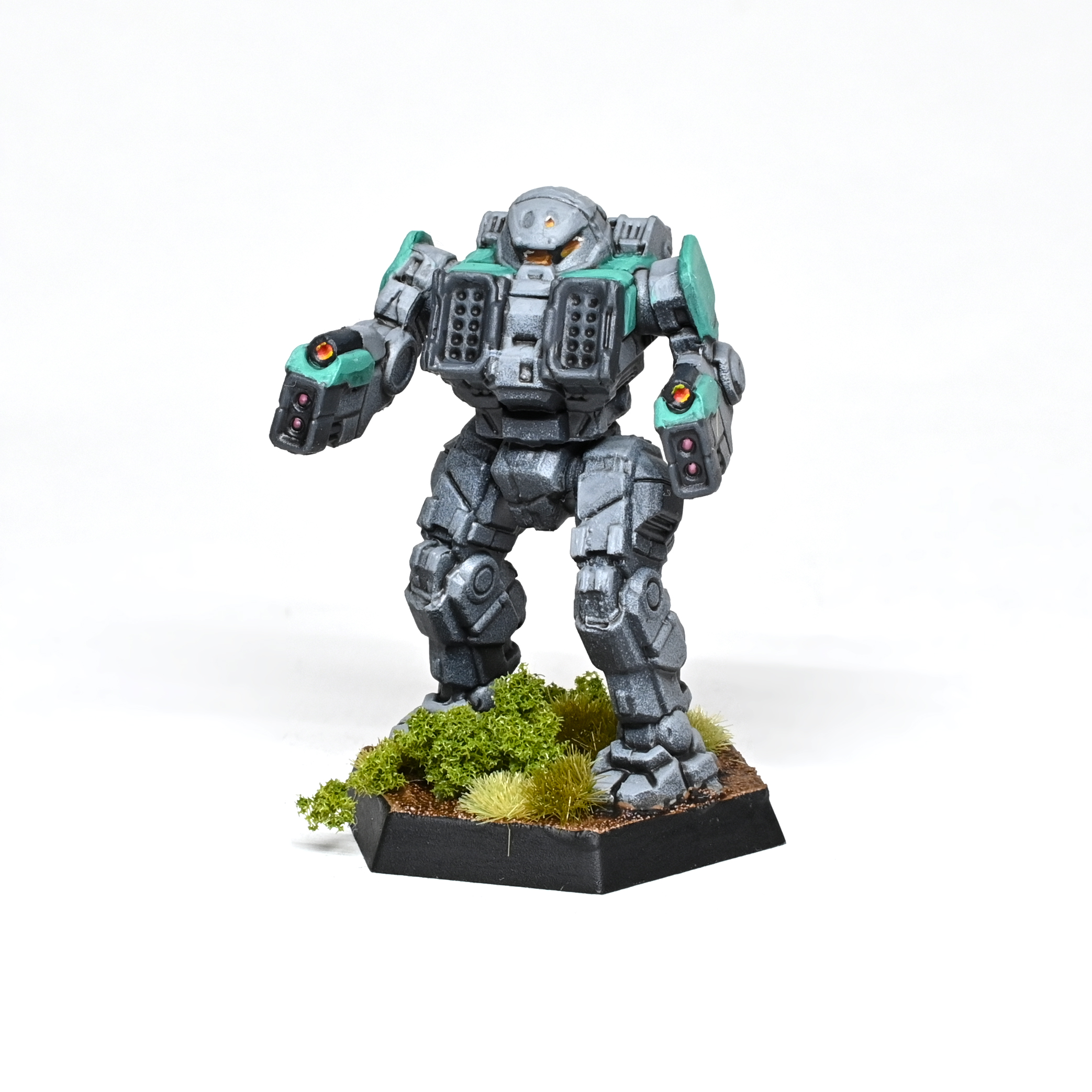 Dervish. Credit: Rockfish
Dervish DV-6M (Turner)
A simple clan invasion era upgrade to the standard Dervish 6M, this is a 55 ton 5/8/5 fire support mech with two LRM 15s, two medium lasers, and two SRM 2s. It’s underarmored at only 144 points (78%), but not by anywhere near as much as the standard variant, and LRM 15s are a big firepower bump over the standard LRM 10s. It’s got too much ammo for the SRMs with two tons. You could put infernos in, but I wouldn’t – while this variant doesn’t have heat issues, a pair of SRM 2s with inferno isn’t going to do much and I don’t think is worth the risk. The pair of LRM 15s means it most directly compares with the 6Md or Trebuchet 7M , and it does beat out both of them on armor, but at the cost of being 1,417 BV. If I want 30 LRMs on a 5/8 I’d rather field a Cobra CBR-03 that brings Artemis for less.
Jack’s Rating:
D
Scorpion SCP-1N (Wendall 2)
A 55 ton quad that moves 7/11, this carries 168 points of armor, a shocking amount for the BV and speed. There are a handful of mechs that come close, but not many. It’s relatively lightly armed with a large laser, medium laser, and SRM 6, but that’s still enough to harass. If you need fast armor this is pretty good, but I don’t think it makes for a particularly effective unit with the low damage – having high mobility and high armor doesn’t do anything for you if there’s no reason to actually attack your mech, and this is not going to be a primary target. For 1,220 BV I think you can do better.
Jack’s Rating:
C
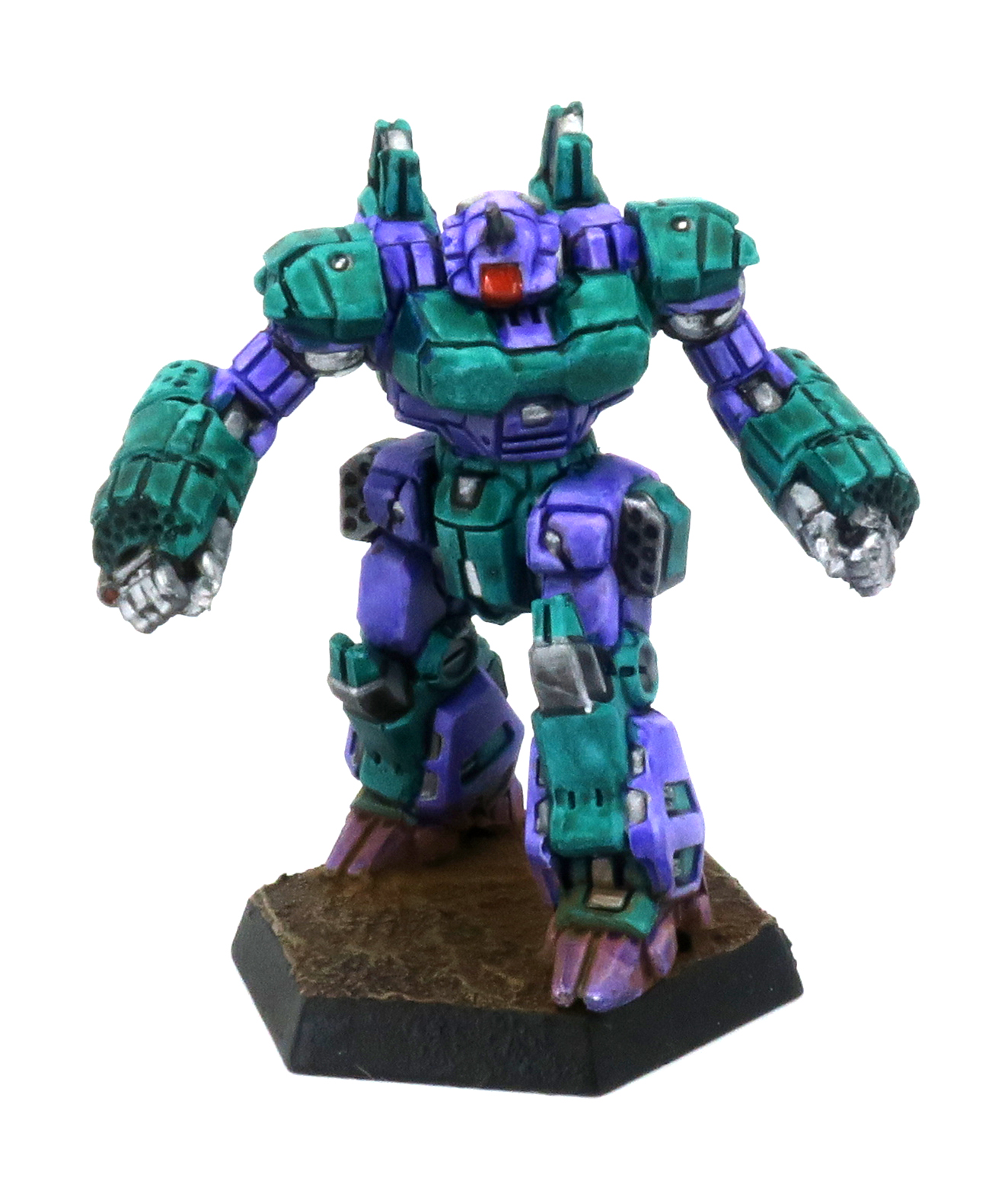 Crusader, Big Kev's Brigade
A fully short-range Crusader, this variant packs on four SRM 6s, two medium lasers, and two machine guns. Unfortunately, it keeps two of the SRMs in the legs and puts the other two in the arms. In isolation four SRM 6s for 1,206 BV is pretty good. In practice, these are weapons that want to be at short range, but you can’t make melee attacks while using them, and it’s got ammo in the CT with nothing more than a single heat sink in the side torsos, so you’re likely to end up with crits migrating to the CT.
Jack’s Rating:
D
Archer ARC-4M (Ismail)
This is another heavy SRM boat, only this time it is rude, good, and funny. The right torso has three SRM 4s, the left torso has five. They’re supported by two medium lasers and two medium pulse lasers, though you’ll mostly not be firing all the lasers as that causes you to overheat. Four tons of ammo lets you bring a ton of infernos, which you can easily make use of with all the launchers, and CASE + standard engine means you’ll probably survive an ammo explosion, to keep fighting. Worst case the medium pulses are in the CT, so even without both side torsos it’ll keep contributing. 1,500 BV for a fully armored 70 ton mech is a good deal as long as there are no glaring flaws, and this is a serious short range threat.
Jack’s Rating:
A
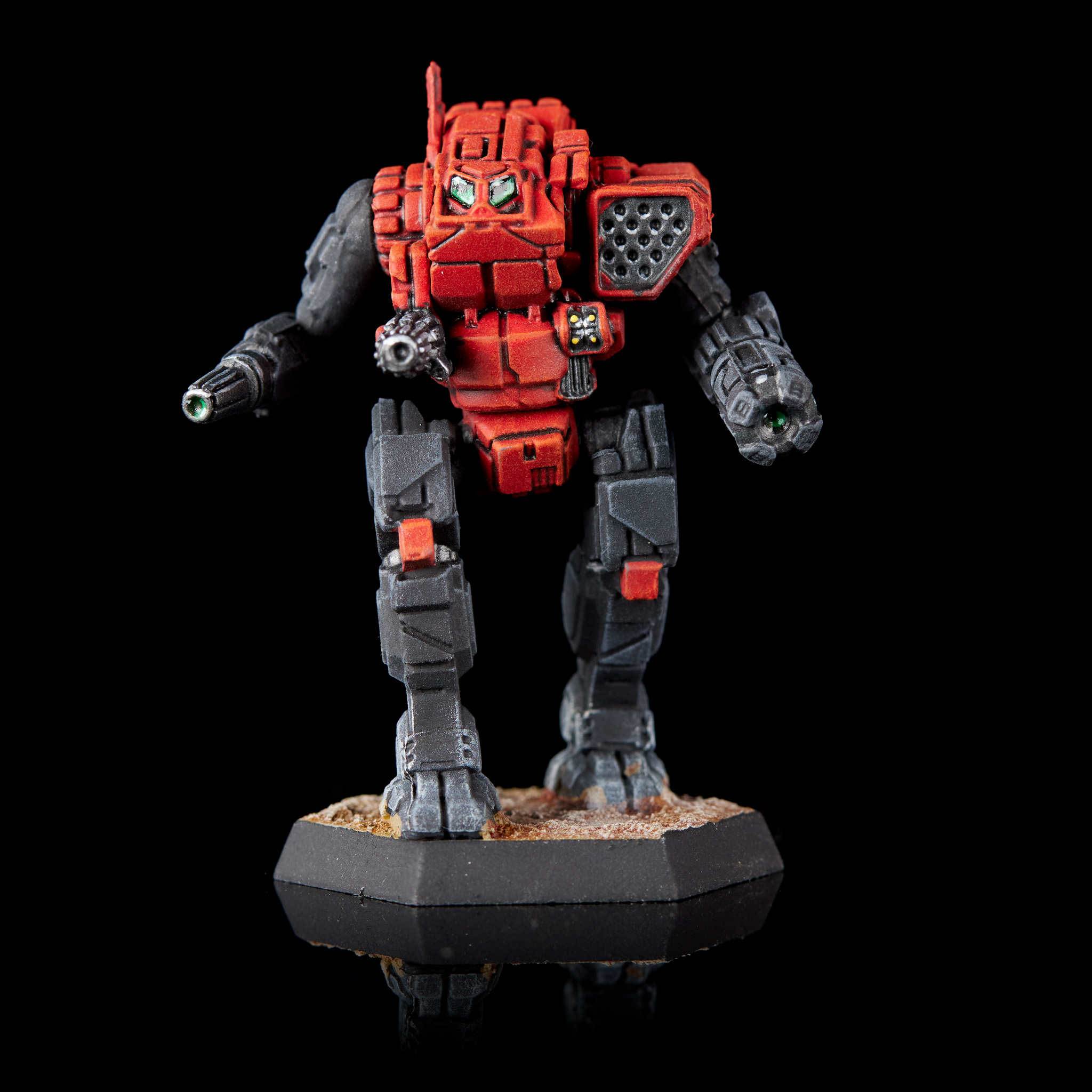 Kell Hounds Orion. Credit: Jack Hunter
Orion ON1-K (Muller)
At the very opposite end of the range band, this Orion carries a sniper artillery piece. Not the sniper cannon, the full up 20 damage artillery piece. I don’t use artillery too much, so it’s hard to evaluate, but at 1,224 BV for a full armor 4/6 this seems like a decent way to bring some AOE firepower onto a battlefield – the Heleopolis is the only other mech with sniper artillery and it’s slower, less armored, more expensive, or all three.
Jack’s Rating:
B?
Crockett CRK-5003-0 (Saddleford)
This is a very straightforward upgrade to the introtech Crockett and a side-grade to the standard 5003-1 variant. Double heat sinks give 30 dissipation to manage a weapon load of two PPCs, an AC/10, and two SRM 4s. Two tons of ammo is more than adequate for the AC/10, as you can swap that straight over to precision and have enough for most every game. It’s a full armor 3/5/3, and while there’s some concern over an ammo explosion I don’t think it’s enough to invalidate the mech – this is a straightforward brick at 1,855 BV.
Jack’s Rating:
B+
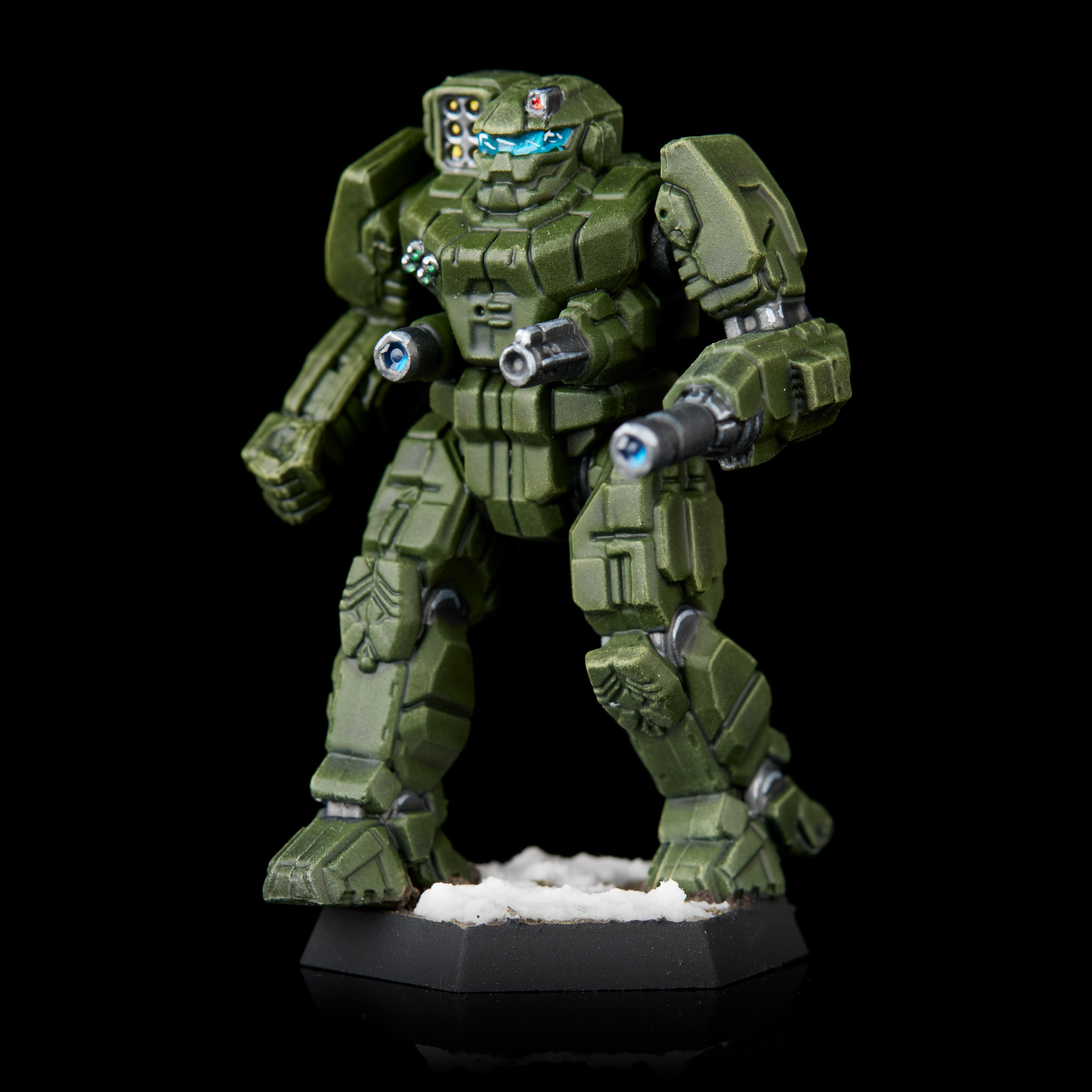 Eridani Light Horse Banshee. Credit: Jack Hunter
Banshee BNC-3E (El Guapo)
While listed as a BNC-3E, this feels more like a variant on the 3S. It’s got an LB 10-X AC, two ER PPCs, two medium pulses, and a small laser for some fucking reason. It’s moving 4/6, which is great, and has the heat sinking to fire the big guns and alternate one of the pulses without taking any penalties, or switch a PPC for both pulses. Great weapon set, great armor (288 points, 48 points more than most banshees until late era), great movement. At 1,956 BV this is terrific.
Jack’s Rating:
A
Final Thoughts
The value you get out of this book mostly depends on whether you want a book of fluff or not. Like most sourcebooks, there’s not a lot in here that’ll affect any individual game you play, though particularly for alpha strike players using formation rules there are some good mechanics to guide you in putting forces together that feel narratively coherent. I don’t see any glaring flaws in editing beyond the Backstabber SPA being completely broken for playing classic BT, which is a nice thing to see in CGL books, but I am very disappointed in the phoned in section of painted minis. If they’re going to be digital paintovers I’d rather see them as full digital art rather than trying to pass them off as painted minis.
Have any questions or feedback? Drop us a note in the comments below or email us at contact@goonhammer.com. Want articles like this linked in your inbox every Monday morning? Sign up for our newsletter. And don’t forget that you can support us on Patreon for backer rewards like early video content, Administratum access, an ad-free experience on our website, and subscriber-only content covering competitive Warhammer 40K!Thank you for being a friend.
 This website uses cookies. Learn more.


 Goonhammer Hobby Round-Up: March 2026
 Goonhammer Reviews: Tribal Conquest
 Conquest: Weaver Courts Gemred Knights and Scaile Dancers Model Review